Rewriting Eden, Victoria Redel interrogates the idea of paradise within the historical context of borders, exile, and diaspora that brought us to the present global migration crisis. Drawing from a long family history of flight and refuge, the poems in Paradise interweave religion and myth, personal lore and nation-building, borders actual and imagined. They What if what we fell from was never, actually, grace? What is a boundary, really? Redel navigates geopolitical perimeters while also questioning the border between the living and the dead and delineating the migrations aging women make in their bodies and lives. With stark lyricism and unflinching attention, Paradise considers how a legacy of trauma shapes imagination and asks listeners to see the threads that tie contemporary catastrophes to the exigencies and flight paths that made us.
Victoria Redel's newest novel is I Am You (September 30, 2025, SJP Lit/Zando), which Melissa Febos calls "A lush, sexy, absorbing novel that brings to life two artists who are inextricably linked in passion and competition."
Redel's work includes four books of poetry, most recently Paradise, and the novel Before Everything. Her short stories, poetry and essays have appeared in Granta, the New York Times, the Los Angeles Times, Bomb, One Story, Salmagundi, O, and NOON, among many others. She has received fellowships from the Guggenheim Foundation, The National Endowment for the Arts and the Fine Arts Work Center. She is a professor in the graduate and undergraduate creative writing programs at Sarah Lawrence College and splits her time between Utah and New York City. Redel is on the graduate and undergraduate faculty of Sarah Lawrence College. She has taught in the Graduate Writing Programs of Columbia University and Vermont College. Redel was the McGee Professor at Davidson College. She has received fellowships from The Guggenheim Foundation, The National Endowment For The Arts and the Fine Arts Work Center.
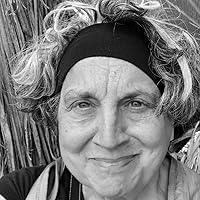
Victoria Redel was born in New York. She is a first generation American of Belgian, Rumanian, Egyptian and Russian and Polish descent. She attended Dartmouth College (BA) and Columbia University (MFA).
Paradise begins at “The Border” and in the “Garden” and keeps going from there. Victoria Redel weaves contemporary stories of refugees and climate catastrophe, stories from her own family in the 1930s and 1940s, and stories from the Judeo-Christian tradition as well. Reading Paradise, I am deeply grounded in a world of beauty and growth and survival, but in a world of catastrophe too. Redel renders landscapes and plants and animals as fully as she does the people in her poems, making me want to touch and hold on to so much. It hurts. One poem, “If You Knew” lists all the things people wanted to take with them, but couldn’t, when they left home: “He wanted to take the muddy stream where he sang with frogs./ She wanted to take dawn in the linden tree. . . . What would you take?”