Covering more than four decades, Tour of Duty is the definitive account of John Kerry's journey from war to peace. Written by acclaimed historian Douglas Brinkley, this is the first full-scale, intimate account of Kerry's naval career. In writing this riveting narrative, Brinkley has drawn on extensive interviews with virtually everyone who knew Kerry well in Vietnam, including all the men still living who served under him. Kerry also entrusted to Brinkley his letters home from Vietnam and his voluminous "War Notes" -- journals, notebooks, and personal reminiscences written during and shortly after the war. This material was provided without restriction, to be used at Brinkley's discretion, and has never before been published. John Kerry enlisted in the Navy in February 1966, months before he graduated from Yale. In December 1967 Ensign Kerry was assigned to the frigate U.S.S. Gridley ; after five months of service in the Pacific, with a brief stop in Vietnam, he returned to the United States and underwent training to command a Swift boat, a small craft deployed in Vietnam's rivers. In June 1968 Kerry was promoted to lieutenant (junior grade), and by the end of that year he was back in Vietnam, where he commanded, over time, two Swift boats. Throughout Tour of Duty Brinkley deftly deals with such explosive issues as U.S. atrocities in Vietnam and the bombing of Cambodia. In a series of unforgettable combat-action sequences, he recounts how Kerry won the Purple Heart three times for wounds suffered in action and was awarded the Bronze Star and the Navy’s Silver Star for gallantry in action. When Kerry returned from Southeast Asia, he joined the Vietnam Veterans Against the War (VVAW), becoming a prominent antiwar spokesperson. He challenged the Nixon administration on Capitol Hill with the antiwar movementcheering him on. As Kerry's public popularity soared in April-May 1971, the FBI considered him a subversive. Brinkley -- using new information acquired from the recently released Nixon tapes -- reveals how White House aides Charles Colson and H. R. Haldeman tried to discredit Kerry. Refusing to be intimidated, Kerry started running for public office, eventually becoming a U.S. senator from Massachusetts. But he never forgot his fallen comrades. Working with his friend Senator John McCain, he returned to Vietnam numerous times looking for MIAs and POWs. By the time Bill Clinton was elected president in 1992, Kerry was the leading proponent of "normalization" of relations with Vietnam. When President Clinton officially recognized Vietnam in 1995, Kerry's three-decade-long tour of duty had at long last ended.
Douglas Brinkley is a professor of history at Rice University and a contributing editor at Vanity Fair. The Chicago Tribune has dubbed him “America’s new past master.” His most recent books are The Quiet World, The Wilderness Warrior, and The Great Deluge. Six of his books have been selected as New York Times Notable Books of the Year. He lives in Texas with his wife and three children.
In his book, Douglas Brinkley accounts for John Kerry's early life, his time fighting in the Vietnam conflict, and his participation in the protest movement. Brinkley draws upon more than a hundred interviews, nine of them with Kerry himself, which he conducted as part of his research, and Kerry's personal archive, to which he had unrestricted access.
The author notes many significant aspects in Kerry's life that influenced his character: his cosmopolitan family, his lack of geographic roots and sense of alienation, his passion for the sea and for athletics, and the seriousness of purpose that began to develop in his teenage years. In St. Paul's School and Yale University, Kerry was well-known for his great ambition, affinity for the Kennedys, and obsession with public service. He was a young man who felt destined for something. Kerry had lost faith in the war by the time he graduated from Yale in 1966, but he joined the navy and enrolled in officer candidate school in Newport, Rhode Island, in August 1966, motivated by John F. Kennedy's call to duty and a desire for adventure.
On board the guided missile frigate Gridley, which spent many months patrolling the Gulf of Tonkin, Kerry arrived in Vietnam in March 1968. He requested for duty on a Swift boat, a fifty-foot patrol vessel deployed in the coastal seas of Vietnam, since he was dissatisfied with his responsibilities on the Gridley and ready for a command of his own. After receiving rigorous training in San Diego, Kerry landed at Cam Ranh Bay in November 1968 and started conducting coast patrols throughout the Vietnamese coastline. He read extensively about American and Vietnamese history, observed his new surroundings, and wrote messages tongis family every day while he painstakingly analyzed the conflict. When he eventually became the commander of a Swift boat in the Mekong Delta, he tape-recorded his observations and wrote in his "War Notes."
According to the author, Kerry had a "curious and reflective nature," and he was a peculiar blend of brains and brawn, of a disinterested soldier and a zealous fighter. He lacked confidence in Vietnamization, disapproved of how most Americans treated their South Vietnamese allies, and wished Washington's decision-makers would put an end to the conflict. Nevertheless, he also desired to fight. He wondered: "How one can oppose the war and still fight it?"
In the Mekong Delta, Kerry oversaw the operation of a Swift boat from December 1968 to March 1969. He quickly established himself as a natural leader, who was forceful in battle, but also concerned for the health and safety of his soldiers. He and his five crew members, all of whom were from working-class origins, worked closely together in the cramped space of a Swift boat, developing a bond that they would maintain after the war too. As he battled in the Delta, Kerry also grew more pessimistic about the Vietnam conflict and started to doubt the navy's understanding of riverine combat.
Elmo Zumwalt Jr.'s command allowed the navy to start sending its patrol boats up the Delta's congested rivers and canals to challenge the Viet Cong's control of the region. The loud, aluminum-hulled Swift boats were simple targets, though, and Kerry understood this. His lack of confidence in the navy's senior leadership grew together with his fatigue from patrols. His third Purple Heart permitted him to depart Vietnam in early April 1969.
In the final chapters, the author depicts Kerry's return to America as a war hero and his increasing anger and disillusionment with his country's involvement in Vietnam. He joined the Vietnam Veterans against War in January 1970 and became its leader not long after. He delivered strong speeches, which impressed many veterans. One of them said that Kerry "looks like Abe Lincoln and sounds like Jack Kennedy." Kerry was involved in the VVAW's investigations of war crimes, but the radicals in the organization made him uncomfortable, so he focused on working within the political system.
He delivered his infamous two-hour testimony before the Senate Foreign Relations Committee during Dewey Canyon III, the veterans' protest against the Vietnam conflict that took place on the Washington Mall in April 1971. Kerry criticized the war and the foreign policy establishment that had involved America in it. "How," he asked the senators, "do you ask a man to be the last man to die in Vietnam? How do you ask a man to be the last man to die for a mistake?"
He quickly became popular with the public, gave speeches around the nation, was added to the Nixon administration's list of enemies, and tried unsuccessfully to win a seat in the Massachusetts congressional district in 1972. He started law school in 1973, but he did not return to politics until 1982, when Massachusetts governor Michael Dukakis elected him lieutenant governor. In the epilogue, Brinkley summarizes Kerry's 1990s efforts to make America reconcile with Vietnam and discusses the ceremony that accompanied his announcement of his presidential campaign on September 2, 2003, in the presence of his Swift boat crew and other veterans.
TOUR OF DUTY is a well-written and well-researched biography. Brinkley's narrative is engaging and informative. This book will be of interest to anyone who wants to deepen his knowledge of John Kerry's story.
I would like to add that a mistake from a previous edition that the author made – he claimed that the famous photo Napalm Girl showed a girl fleeing from North Vietnam's bombing of her village, although it were the South Vietnamese who had actually napalmed it – was removed from this edition.
Just the preface alone is a five star summary of modern American history. The core of the book is a close up look at John Kerry and his service, but the book really speaks to what so many others endured during both Vietnam and other following Americans wars.
As this book is a campaign biography, written about John Kerry when he was running for President (he is currently America’s Secretary of State), he is shown to be a Perfect Gentleman. I don’t believe he is Perfect, but he definitely is a very interesting and exceptional person. There is a huge section in back of the book of Notes and a Selected Bibliography, along with an extensive Index, so if one is interested, fact-checking is easy, if not quick to do.
Kerry seems very energetic, intelligent, hard-working, and he is fortunate to be a man of depth, quick wit and in being born with the upper-class credentials (for which his parents worked hard and sacrificed) which gave him access to colleges and organizations that helped him realize his ambition to be a politician. Yes, I know, in many quarters around the world, being a politician is somewhat nasty, but since it is a career which definitely has a way of giving a nonentity a leg up into situations of influence, I’m not one who automatically mocks the job. Most of the time.
Kerry is a liberal who votes as a Democrat. Since I am too, I did not find much here about his ideas with which I disagreed. I was impressed by how hard he has worked to develop himself and the skills he needs to do the various jobs in public service he has been fortunate to attain as a politician. There have been plenty of news stories distorting his actions in creating the public servant John Kerry, Politician, which to my mind, were necessary actions if he were to actually do the important work of governance which is done out of the public eye. I’m positive the versions of his activities here are sweetened ones, but nonetheless, I like the man.
The book is about John Kerry’s early years. It quickly presents his childhood and education, outlining the achievements which led him to feel public service would be his career choice. John Kennedy, the President of the United States until he was assassinated in office, had a strong influence on his imagination, as he did on many of us young baby boomers. When the Vietnam War became the topic of dinner conversation, television and college dorms everywhere in America, Kerry felt he had to enlist. After a great deal of Navy transferring and training, he became a junior officer and eventually commanded a Swift boat, assigned to monitor the coastal waters of Vietnam to prevent the Viet Cong from bringing in weapons to fight American soldiers.
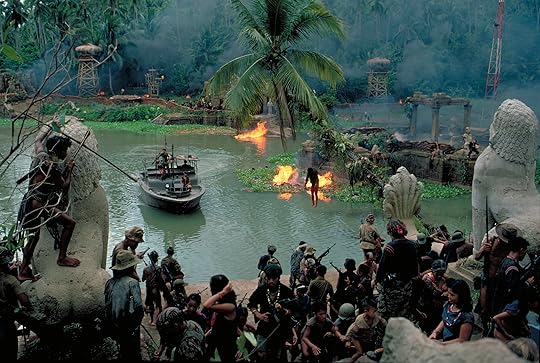
While I was curious about Kerry, the primary reason I picked up this book to read was my stronger curiosity about his experiences in Vietnam. Of course, this is clearly an expurgated version, but I feel it still gave an excellent overview of what was occurring in the Navy’s small-boat campaign. I had heard, and watched, and read, in the news at the time, the stories from the infantry soldiers and their embedded reporters. I had never heard about these lightly armed boats which were sent up the rivers and canals of Vietnam jungles. Those of us who have seen the movie ‘Apocalypse Now’ may recall how the assassin character was delivered on his mission in a similar boat. (This is a link to information about Kerry’s boat: http://en.wikipedia.org/wiki/Patrol_C... ). It turns out such an assignment delivering CIA operatives or other black ops troops upriver was more true than not, at least late in the war.
I know war is always terrible, but this war was without a specific to Vietnam game plan, and worse, without any Vietnamese allies, which amplified the agonies. Fighting Communism was a bit too general of a goal, as it turned out. The North Vietnamese wanted foreigners out of Vietnam. It was clear to American soldiers who fought there that that is also what most of our so-called South Vietnamese allies wanted as well. The South Vietnamese were not stepping up much when called upon for assistance or backup. Some people called it cowardice or lack of moral character. However, I think it was the same thing which haunted the Republican Party’s concurrent war of invading Iraq, while at the same time routing out the Taliban and Al Qaeda in Afghanistan. The people of Iraq may have hated Saddam Hussein, but they hate invaders, especially Western crusading Christian invaders, even more.
American soldiers often lost their lives when the South Vietnamese soldiers somehow did not ‘have their back’ when the shooting started. But it isn’t as if American soldiers had been given orders or training which would have assured the South Vietnamese we were really on their side and fighting for their freedom to choose democracy, not with ‘free fire zones’, where our soldiers had permission to kill every living thing in range, including children, set on fire homes, businesses, fishing boats, and wipe out fields of grain and vegetables, whether manned by North or South Vietnamese citizens. A northern farmer looked like a southern farmer in Vietnam, so foreign soldiers often killed everyone to be safe.
Not too surprising, but many American soldiers were devastated by their war memories when they returned to civilian life. Kerry was not involved in very many atrocities, which were not considered atrocities by the US Government, since he was on a boat for most of his tour, but on his return he became involved in the anti-war movement. He was a strong speaker of truth, and he testified before Congress. Although detractors have sneered at his mainstream choice of dealing through the system, I think organizations need many types of people to walk-the-walk and talk-the-talk if they want to reach all of the classes of people in this country. Kerry spoke the language of the educated upper-classes of politicians.
I am aware of the controversies which burst from haters and those who supported having the Vietnam War when this book was published. In reading it finally, and in having googled other sources of information, plus the fact I was a young American woman during the Vietnam War living on the west coast, and I had friends (those who came back) who had gone to Vietnam, I trust in the accuracy of the narrative, even though I know the book is a glamour biography for Kerry.
This book was well-written enough to earn four stars, but I had to dock it one star for both sloppy research & poor copy-editing. I did not write down every error, and I am not going to enumerate them here. I will, however, address the most egregious error of fact in this book, which is on page 271. Professor Brinkley states in the first paragraph that the young girl in Huynh Cong "Nick" Ut's well known photograph, Kim Phuc, was "[...] fleeing in anguish from North Vietnam's bombing of her village of Trang Bang.", which is obviously incorrect. Actually, it was the South Vietnamese Air Force which had bombed the village. As far as I know, the Air Force of North Viet Nam did not carry out any aerial bombing missions of any kind whatsoever during that war, and may not even have had the capability to do so. We are not speaking here of some arcane fact only known to the relative handful of Indochina specialists; the story behind that photograph is very well known even to the general public. Also, the surrounding context tends to indicate that this was not simply a typographical error. Although Professor Brinkley did a very good job on this book overall, this sort of half-assed scholarship is simply not acceptable at any level. You might think I am being overly harsh, but the reason I am ascribing such importance to this is that one error of such magnitude has the effect of tainting the entire work; in other words, nothing in this book can be accepted or cited as fact without double-checking against other sources.
This focuses on John Kerry's time in Vietnam, and his relationship with the war as an anti-war activist and then as a potential and then a real representative. It portrays him as a truly courageous guy, gung ho about getting done the job at hand, but thoughtful about the bigger picture as well, not only politically but in a tactical military sense. There is much detail about his time in 'Nam, much of it a chilling look at the murky line between atrocity and justifiable action. I found very interesting the section about his unsuccessful run for congress, when the Lowell newspaper and the Nixon attack dogs were able to smear and pummel him into a loss.
After reading Brinkley's Cronkite, which I felt was a good impartial book, I selected another. From the first page, it was plain Brinkley had bought Kerry's tales of his time in .'Nam. medals and all. Contrary to what the Coasties that were on the 82 ft'ers and the brown water Navy Swift boat crews that patrolled the Mekong were saying. I quickly skipped to the end of the book.
well this will be a fun review. at time of writing (10 Jan 2013), only 45 reads and 3 reviews. author Douglas Brinkley, not to be confused with the other professor/writer Alan Brinkley, is apparently something of a super teacher, convincing his university's administration to allow him to take an entire class on the road Ken Kesey style, a celebration of americana, hunter s. thompson, national parks, and hard rock music. god. i wish my professors were that cool. The Majic Bus
unfortunately, great teachers sometimes make only better than average writers. Brinkley's prose is skillful, but his career as a churner-out-of-thousand-page books seems to be somewhat marred by his tendency to pick microtopics rather than brilliant crowd-pleasers. Rosa Parks? I yes... the woman who started the Selma bus boycott. but do I actually want to read a book about Rosa Parks... well *cough... similarly, what could be interesting about Alaska-- maybe the Cold War, maybe the wildlife; instead "preservation efforts in Alaska"; etc etc etc
well I don't want to be too harsh... and this book about Kerry is relevant for a number of things outside the author's possible Democratic Party functionary function. specifically, Tour of Duty is a pretty well-research absolute refutation of the whole Swift Boating campaign... and the weirdness of the US navy operating riverine craft probably allows this book to join war literature in general. one of the people in the operation comments "i don't believe there is any exact precedent for what we're doing," and yeah exactly, the Japanese Navy tried to land Marines in Shanghai in the 1930s and sometimes SEAL teams get landed by submarines and run into media cameras and the Dnieppe Raid was a fiasco and Apocalypse Now is a fictional movie about a special riverine operation etc etc etc... navies operating inshore is just a weird thing.
the original 'asymmetric war,' Kerry's Swift Boat campaign has much of what is familiar in counter-intersurgency today; the continual grow back of guerillas, the civilians who all mysteriously disappear before an ambush, the anti-tank weapons being ill-suited against soft-skinned targets. anyway, a solid 3.5 stars, and of course, many kudos to ibooks for the weekly special price point.
this is a Swift Boat! on such a craft, Secretary of State John Kerry fought in the Vietnam War. democratic party operative david brinkley has researched and conclusively proven this fact. no more questions you stinkin' republican!!!!
*cough.
anyway such thin skinned boats made out of fiberglass were perversely invulnerable to anti-tank rockets. however, because of their irregular operation, kerry got sent up stream to bring back Kurtz
I saw the movie i saw the movie i saw the movie.
i sympathized with kurtz. why did SecState Kerry kill Kurtz?
the horror...
the horror...
Secretary of State John Kerry, a commander in the United States Navy, was sent up river to kill Special Forces Colonel Kurtz, because Kurtz had gone over the line. he had exceeded his missions mandates, and like a slug riding over a straight razor, he did not get hurt.
the man had compeltely lost his mind.
I voted for Kerry because he had what it took to bring the Communists back in line. it was radio transmissions yessir
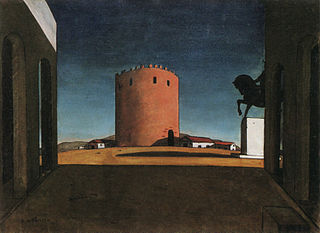
your mind wandering like a sole individual through a de Chirico painting, had completely lost all its bearings. reading Nkut hamsun could not save you''
i man what did the man mean? he was a saviour. he was a saviour. 0
by god
i mean who do you think you are? you think you can bring back Tomas?
stop it men relaly. mean really. i mean it now. you couldn't save them. what were you thinking?
BOOK REVIEW - Tour of Duty: John Kerry and the Vietnam War, by Douglas Brinkley (2004)
It has been my practice to read biographies of the major party presidential nominees in before each presidential election. That combined with my admiration of Douglas Brinkley this is the book I chose Tour of Duty: John Kerry and the Vietnam War is an absorbing and meticulously researched biography of one of the most complex and controversial figures of his generation. Published during the 2004 presidential campaign, the book traces John Kerry’s journey from a privileged New England upbringing through the crucible of Vietnam and into the turbulent moral and political aftermath that would define his public life.
Brinkley, an accomplished historian and skilled storyteller, reconstructs Kerry’s Vietnam experience in vivid detail. He portrays a young man shaped by idealism, courage, and deep ambivalence—both a soldier dedicated to his mission and a thinker already questioning the war’s purpose. Kerry’s service in the Mekong Delta as a Swift Boat commander is recounted with cinematic clarity: the heat, the fear, the impossible split-second decisions, and the moral uncertainty that shadowed every patrol. Brinkley draws on Kerry’s own journals, letters home, and interviews with his crewmates, which give the book an authenticity rare in campaign-season biographies.
After Vietnam, Kerry’s evolution from decorated war hero to outspoken anti-war activist forms the book’s emotional center. His testimony before the Senate Foreign Relations Committee in 1971—where he famously asked, “How do you ask a man to be the last man to die for a mistake?”—still stands as one of the defining moral moments of the Vietnam era. Brinkley does not shy away from the contradictions that have long defined Kerry: the disciplined officer turned critic of war, the Brahmin idealist struggling to connect with working-class America, and the political figure alternately admired and mistrusted for his careful intellect and guarded manner.
Brinkley’s prose is elegant and respectful, but occasionally reverential; the book feels more like a careful defense than a searching portrait. Still, as a work of historical reconstruction, it excels—especially in capturing the era’s moral complexity and the toll it took on those who fought and protested alike.
In the end, Tour of Duty reminds readers that John Kerry’s life—like the nation’s experience in Vietnam—was marked by courage, conviction, and controversy in equal measure. It is a compelling chronicle, even if not quite the definitive psychological portrait one might have hoped for.
Quotes:
“Vietnam was not a simple story of heroes and villains, of right and wrong. For those who fought there, it was a labyrinth of choices where morality and survival were often at odds. John Kerry’s journals revealed not a man seeking glory, but one struggling to make sense of duty in a war that no longer made sense.”
“The transformation of John Kerry—from a decorated officer into one of the nation’s most eloquent critics of that very war—was not a betrayal of service, but its fulfillment. He came to believe that patriotism sometimes demands dissent, and that the truest form of loyalty is the willingness to speak uncomfortable truths when silence would be easier.”
I started reading it before the Maryland Democratic primary, in part to figure out for whom to vote. The book left me with mixed feelings. I ended up voting for Kerry, but it was perhaps in spite of the book. Not that the book made him unlikable...
Of course, since I voted absentee ballot, my vote wasn't counted until after Edwards had already dropped out, so I'm not sure what the point of all that was.
The book made Kerry seem like a thoughtful, principled man. I like the idea of having a President who reads books and thinks about things. You know, like the good old days. Nevertheless, I'm a bit concerned about electing somebody who feels so defined by Vietnam. I recognize (even more after reading the book) that Vietnam was an important part of last century's American experience, but I might prefer someone a bit more forward-looking.
On the other hand, Edwards started hitting the protectionism note a little too hard and began to seem a bit inexperienced. So I went with Kerry. And I'll go with him again in the general election.
Douglas Brinkley's long account of John Kerry's Vietnam tour of duty makes transparent the frustrations and cruelties of an unjustified conflict. Perhaps, only in hindsight can we learn from the mistakes of the past. America is fortunate to have John Kerry serving as Secretary of State!
Good book I understand the strain that the soldiers were under and feeling that they were not respected and how they wanted answers why they were in Vietnam And who they were serving.