From the author of Losing Earth, a beautifully told exploration of our post-natural world that points the way to a new mode of ecological writing.
We live at a time in which scientists race to reanimate extinct beasts, our most essential ecosystems require monumental engineering projects to survive, chicken breasts grow in test tubes, and multinational corporations conspire to poison the blood of every living creature. No rock, leaf, or cubic foot of air on Earth has escaped humanity's clumsy signature. The old distinctions—between natural and artificial, dystopia and utopia, science fiction and science fact—have blurred, losing all meaning. We inhabit an uncanny landscape of our own creation.
In Second Nature, ordinary people make desperate efforts to preserve their humanity in a world that seems increasingly alien. Their stories—obsessive, intimate, and deeply reported—point the way to a new kind of environmental literature, in which dramatic narrative helps us to understand our place in a reality that resembles nothing human beings have known.
From Odds Against Tomorrow to Losing Earth to the film Dark Waters (adapted from the first chapter of this book), Nathaniel Rich’s stories have come to define the way we think of contemporary ecological narrative. In Second Nature, he asks what it means to live in an era of terrible responsibility. The question is no longer, How do we return to the world that we’ve lost? It is, What world do we want to create in its place?
Nathaniel Rich is an American novelist and essayist. He is the author of Losing Earth: A Recent History, which received awards from the Society of Environmental Journalists and the American Institute of Physicists and was a finalist for the PEN/E.O. Wilson Literary Science Writing Award; and the novels King Zeno, Odds Against Tomorrow, and The Mayor's Tongue. He is a writer-at-large at the New York Times Magazine and a regular contributor to Harper's and the New York Review of Books. His next book, Second Nature: Scenes from a World Remade, will be published in late March. Rich lives in New Orleans.
An easy, informative book to read that, to me, seemed to be a more-interesting-than-not, anecdotal take on a number of issues related to environment, climate change, and, in large part, the future. A hodge-podge of histories, of varying quality (and, more importantly, I'm guessing I'm not alone in finding them of varying interest).
I can't really remember why I bought this book, and I enjoyed it - and I don't regret reading it, but I can't say it's one of the stronger or better climate change-related books I've read, nor am I sure I'd recommend it strongly unless a reader was looking for a different voice on the topic or something a little different.
I chose to read this book because the front cover caught my attention. I saw the call number listed it under Geography / Anthropology / Recreation. Having read it, I suppose it has to do with how humanity has changed, and is changing the world. The chapters stand alone as though they are a compendium of vaguely related topics. The seeming randomness of the text made it a struggle for this reader to finish.
The cover is an adaptation of bio-art. An eccentric artist "collaborated" with French scientists to splice bioluminescent jellyfish with a white rabbit. The result was a short-lived rabbit who faintly glowed under the right conditions. Since then, science has spliced other creatures to make them glow in low-light conditions. It is based on an argument that science can do it, so why the heck not? Rich does point out that scientists around the world criticized the outcome as a meaningless waste - something akin to South Park parodying mad science by creating a monkey with 5 asses. Are glowing rabbits the future? Is this second nature? It is hard to tell. Much of the chapter focused on the subsequent feuding between the artist and the scientists. So what else is in the book?
The book is divided into three parts. I do not know what unifies or distinguishes each part. I suppose they could be relabeled as "polluters," "real world applications of science," and "science run amuck." The writing in each chapter varies from the dark humor to faux outrage. Everything is written very carefully. Rich is a talented author. My complaint is the lack of coherence in this narrative.
The book starts off with a depressing story of environmental pollution by DuPont Chemical. It should not surprise any of Rich's readers that property neighboring a massive chemical plant is polluted, or that people and animals nearby would get sick. Rich transitions the story to a lawyer who has spent decades pursuing his case against DuPont. Is that second nature? What about the short second chapter on the jellyfish that liquefy? Who knows? Rich cannot conclusively argue that the wasting has anything to do with mankind. The third chapter describes the accidental release of vast quantities of methane gas - and the efforts to cover it up.
The second part of the book opens with the jungle reclaiming the Lower 9th Ward of New Orleans and progresses onto growing chickens in test tubes. Up to this point in the book, each chapter was about 20 pages focused on a central topic, even if that topic is not readily connected to other chapters. Many of the other reviews of this book seem to stop commenting after faux meat chapter. I wonder if all of the positive reviewers made it past Chapter 5.
Chapter 6 concludes the second part of the book. It is a rambling chapter on Aspen, CO. I am not sure what is going on in this chapter. There is less snow, but more money. The chapter splinters off into different narratives. Part 4 was weird science. A light-hearted, humorous chapter on recreating a bird known for huge flocks, loud noise, and explosive diarrhea. Following that entertaining story was an agonizing jumble of "stuff" on Louisiana. Coastal erosion, corruption, environmentalists, flooding, history. It is all thrown together like gumbo or jambalaya. The two concluding chapters describe the immortal jellyfish and the glowing rabbit.
Overall, I am left with the impression that a talented writer wanted to document the future; but could not quite pull it off, so he threw together his research notes and said voila! Is he poking fun at science? Is he decrying environmental collapse? Is he calling for action? What is he doing? What is the purpose of this book? It reads like a portfolio, not a narrative. Some of it is interesting if quirky. Some of it is preachy. Some of it is funny. Some of it is deadly serious. Maybe it is a coffee table book.
I feel like a lot of climate change and anthropocene books, articles and documentaries try to inspire the reader to *do your part*, or end with a rousing call to action, a we-must-act-now! But in Second Nature, Rich takes a different approach - we are already fucked and now we have to figure out what comes next. Ultimately, the "natural" world we romanticize will be forever gone, and even the path of "saving" nature will involve fundamentally changing it. This realist tone threads through the entire piece. We ARE to blame to an irreversibly changed world. Now the question is really how we're going to deal with it.
In engaging, highly researched and very intimate human-centered stories, we cover examples of contemporary ecological issues, ranging from industrial capitalistic apathy, to rapidly changing landscapes, and the intersection of environmental techno-engineering. I especially appreciated the ethical discussions and the history of changing environmental views.
This gave me major Elizabeth Kolbert vibes (a big compliment). It is, in fact, a much better version of Kolbert's recent release Under a White Sky: The Nature of the Future, which I think had a very similar goal to this piece. I've also had How to Clone a Mammoth: The Science of De-Extinction on my TBR for a while now, and am inspired to pick it up next after reading the de-extinction chapter that specifically talks about Shapiro and her research.
"It is in the awkward, painful period, between the emergence of a new world and our realization that we already inhabit it, that imaginative art is most desperately needed. Enlightenment lies not in renouncing reality but in seeing it more clearly. Art, even flawed art, helps us to understand our own place in an unfamiliar landscape."
Honestly I haven’t been so engaged in a book since Percy Jackson. The best part about these essays are their complexity in perspective and ever expanding quality. It mimics what’s crazy but interesting about living in a “second” anthropogenic nature. He’s also such a good storyteller and always knows where and how to end it. Truly in awe.
Best line: “It is in the awkward, painful period, between the emergence of a new world and our realization that we already inhabit it, that imaginative art is most desperately needed. Enlightenment lies not in renouncing reality but in seeing it more clearly. Art, even flawed art, helps us to understand our own place in an unfamiliar landscape. It gives language to our most inchoate terrors and desires.”
The realization that we already inhabit it, I mean 🤯 so true.
Maybe should have given it 4 stars as this is very much the kind of book I tend to like. Some of it I was already familiar with though. For instance as a Long Now member I've been closely following Stewart Brand's efforts with de-extinction of carrier pigeons and wooly mammoths and the 10,000 year clock. I'd read about Alba the glowing rabbit when it was in the news.
While the shit show that is Louisiana was covered well in another book I've read (Strangers in Their Own Land: Anger and Mourning on the American Right, which explores why people in Louisiana vote against their own future), this section explored other angles with new details. I'd read some about that huge SoCal natural gas leak, but similarly this new depth was very interesting.
I loved the part about the Immortal Jellyfish and Shin Kubota though. If I could grow younger and start my career over, I'd love to study biotech but also maybe this species.
a powerful journalistic account that undergirds urgency with factfulness, this book documents little-known environmental crises that by themselves may form local curiosities and discarded news but altogether indicate a network of flashpoints and siren alarms on the downward cascade of climate. These crises include: DuPont's pollution of the water with DNA- damaging and terminal cancer-inducing chemical, PFOA; the wasting of sea stars due to temperature shifts that lead starfishes to get boils and lesions and to tear off their arms; the natural gas leak of SoCalGas in Aliso Canyon, which the company and the environmental oversight agency denied was happening, or was toxic; the profligacy of energy waste in Aspen, the conclave of America's wealthiest, who do acts such as 13000 flights of private jets droning overhead yearly and heating empty mansions, that runs contrary to their professed character as crusading champions on the issue of climate change.
Two stars reflects where I find myself, not the book itself. It’s not that the stories aren’t interesting or the writing isn’t good. Blame it on the times. Increasingly I find it difficult to finish books about the ways in which humans have irrevocably altered our world, and often not for the better. In the past, I almost never failed to finish a book, even one I didn’t like much. If this keeps up, I’m going to have to add an “unfinished” shelf.
I got about halfway through. The first chapter is about the unconscionable dumping of toxic chemicals in West Virginia by DuPont, about which I had seen a movie some time ago. Now the successor company, Chemours, produces those same chemicals and dumps them in the water in North Carolina.
Generally, I have little sympathy for people who could get a Covid-19 vaccination and refuse to do so. Generally, I trust science and scientists. But I have to say that the first chapter alone details such corporate malfeasance and callous disregard for human life when there is money to be made—and this is only one instance of many we could call to mind taking hardly any time to ponder (Purdue and the Sacklers, Big Pharma in general, the tobacco industry, auto industries producing cars “unsafe at any speed,” Tuskeegee, Henrietta Lacks, fossil fuel companies, etc.)—that I can almost understand where they are coming from. I guess I will just have to stick to Georgette Heyer to keep despair at bay until there is some kind of good news. Not holding my breath.
Disturbing and thought-provoking reporting from the strange frontiers of the ongoing ecological crisis as humans relentlessly alter our planet. Rich does a great job of seeking out interesting people on which to hang his chapter-long examinations of issues, places, and uncomfortable truths about where we are and where we're headed.
I may be biased because the author is from New Orleans, but I really enjoyed the stories in this book. Mr. Rich wrote in a way that was not inserting his own opinion or commentary, yet through the shaping of the story, it was easy to see how dire things are today for the Earth.
My favorite story was about the "immortal jellyfish" and the scientist who was obsessed with them.
One will find insightful information, researched writing that is of disturbingly true real horrors. What a tragedy upon this earth set in motion by humans, wether by greed or ignorance, and reading important works like this may have readers more in the know. But then again I am reminded of these words by Cormac McCarthy
“In history there are no control groups. There is no one to tell us what might have been. We weep over the might have been, but there is no might have been. There never was. It is supposed to be true that those who do not know history are condemned to repeat it. I dont believe knowing can save us. What is constant in history is greed and foolishness and a love of blood and this is a thing that even God—who knows all that can be known—seems powerless to change.” -Cormac McCarthy in All The Pretty Horses
There is this in the authors introduction:
“Two dovetailing observations from the novelist William Gibson describe the next chapter of this history. The first has hardened into platitude: “The future is already here—it’s just not evenly distributed.” The other is “soul delay,” the idea that during long-distance flights the human body travels faster than the spirit: “Souls can’t move that quickly, and are left behind, and must be awaited, upon arrival, like lost luggage.” The uneasy sensation of waiting for your soul to catch up is what we call jet lag. We now inhabit a similar lag: a nature lag. The future is already here, unevenly distributed. We recognize its hallmarks: rising sea levels, regular visitations of apocalyptic natural disasters, the forced migration of tens of millions, accelerating extinctions, coral bleaching, global pandemic. Also: cultured meat, reengineered coastlines, the reanimation of extinct species, bunny rabbits that glow fluorescent green. Our souls haven’t caught up. Even in the most optimistic future available, we will profoundly reconfigure our fauna, flora, and genome. The results will be uncanny. It will be difficult to remember that they will be no more uncanny than our carpeting of the American Southwest with lush lawns transplanted from the shores of the Mediterranean, our breast-augmented chickens, our taming of the world’s most violent rivers. If our inventions seem eerie, it is only because we see in them a reflection of our desires. It is impossible to protect all that we mean by “natural” against the ravages of climate change, pollution, and psychopathic corporate greed, unless we understand that the nature we fear losing is our own.”
Nathaniel Rich has a message for those hoping to reduce humanity’s technological and industrial impact so as to return our planet back to some halcyon days of a pristine natural world —it ain’t gonna happen. Instead, in his collection of essays entitled Second Nature, he says the engineer and the environmentalist are not enemies, but partners, quoting historian William Cronon’s view that, “the idealization of wilderness it not merely a myth; it is antagonistic to the aims of any environmentalist. For if, in the future, something resembling wilderness is to survive, it will be only ‘by the most vigilant and self-conscious management.” In essays that are at times infuriating, deflating, and energizing, he shows us several examples of the people trying to do just that sort of management.
The first essay, “Dark Waters,” is probably the one that will enrage readers most, even if they already know some of the story, which deals with Dupont’s manufacture and use (in both consumer and industrial goods) of the incredibly toxic perfluorooctanoic acid, despite decades of their own studies that showed it affected the organs in animals, accumulated in the blood of workers, caused birth defects in test animals and, when they discretely looked into it, in their own employees, and more. It’s a litany of corporate evil that in a movie would have you think the writer/director were pilling it on in ridiculous fashion to create a “super-villain” but that all really happened and was eventually made public by the efforts of a cattle farmer in West Virginia (Wilbur Tennant) and a dedicate lawyer (Robert Bilott), who actually used to defend corporations.
One might say this tale ends happily, in that Dupont ends up caught and paying hundreds of millions of dollars in fines and reparations, but as Rich notes:
if you are reading this, you already have PFOA in your blood. It is in your parents’ blood, your children’s blood … the blood or vital organs of Atlantic salmon, swordfish … polar bears, brown pelicans, sea turtles … albatrosses on Sand Island … in the middle of the North Pacific Ocean, about halfway between North American and Asia. Not only is it not a happy ending; it’s no ending at all. The other essays, though lacking the same sort of direct/obvious villainy, share this sort of open-endedness. In “The Wasting”, an unknown malady strikes starfish, wiping out huge populations and, in a ripple effect, creating “marine wastelands.” Scientists spent years trying to find the cause, and though in the end some populations came back, “the stars evolving before researchers’ eyes,” scientists still don’t know what happened, leaving them to wonder, “is it a onetime event or a harbinger of worse to come?” If that sounds ominous, Rich tries to offer a glimpse of hope in the way researchers are helped by children as young as three, who are better at finding the tiny juvenile stars — “they had excellent eyesight, boundless curiosity, inexhaustible energy … They enjoyed solving problems. They liked to feel that they held the fate of the world in their hands.” Though one might argue that last line is more chilling than optimistic.
“Aspen Saves the World” reports on the complex interweaving of privilege, environmental activism, and business in one of the ritziest resort towns in America, whose ski tourism is seemingly doomed by the effects of climate change. The next group of essays focuses on more direct and deliberate human manipulation of nature, with “Pigeon Apocalypse” exploring the idea of de-extinction, discussing several potential lost species but focusing mostly on the passenger pigeon. Meanwhile, several essays shift the focus from genetic engineering to civil engineering, reporting on the attempts to save Louisiana from disappearing into the sea, itself a process greatly accelerated by earlier human intervention via damming the great Mississippi. While scientists and engineers have come up with several ways of creating/reclaiming land in the southern reaches of the state, there is no solution for how such plans will affect the people living there, such as shrimpers whose economy will almost certainly be destroyed by the innocuously named “diversions” of the river. Finally, moving from solid ground (literally) to the surreal, the last two essays deal with a seemingly immortal jellyfish (it can “age backwards” and then start the living process again) and a glow-in-the dark rabbit, respectively.
Rich writes vividly, clearly, and engagingly, and has a gift for bringing the people who pepper the essay alive, such as the Japanese scientist who has spent decades studying the immortal jellyfish (we see him at karaoke for instance, and even get a few lines of lyrics from his original songs. The voice, while engaging as noted, is also a bit removed, more reportage than personal essay style, and one rarely finds Rich coming across as making any sort of judgments. That removed voice, and those mixed endings or endless ending also can make a few of the essays feel somewhat anticlimactic — they both compel and entertain in the reading but at the close one wonders sometimes just what we’re supposed to take away from them. Though perhaps that is just what Rich’s purpose is — to make his audience wonder, to make them think more attentively, more critically, about just what is happening to this planet, and to realize we’re well past the point of simple “good guys and bad guys” (outside of Dupont of course) or easy/no harm solutions. 3.5
Thoughtful, beautiful, and terrible, Rich is one of the best and most incisive chroniclers of climate change I've read. These essays cover a lot of ground and look at climate catastrophe from a wholistic perspective. It is not all doom and gloom, but the silver linings are tarnished. Rich reaches for complexity and humanity, when most reach for technocratic solutions. I had to really push through a couple of the essays cause I was getting bummed out, but I'm glad I did. Highly recommended.
I was blown away when I read Nathaniel Rich's Losing Earth earlier this year, which was a perfectly paced exposé on the failings of the Reagan administration towards addressing climate agreements. Second Nature is not quite as organized as it's predecessor, but it's still very much worth your time.
Nature is broken up into three sections ("Crime Scene", "Season of Disbelief", and "As Gods") with stories in each being loosely connected to the overarching theme. I do wish there had been an introduction to each section for Rich to further explain how they connected, as the introductory section "Crime Scene" did a solid job of setting the book's tone but felt too brief.
"Here Come the Warm Jets" was my favorite individual story/article here, discussing the Aliso Canyon gas leak in 2015. It gave a solid overview of the issues that aging gas refineries will continue to dredge up and I especially liked the interviews with the Porter Ranch residents—some being comically resistant to leaving the hazardous area. "Frankenstein In The Lower Ninth" was a powerful read as well, giving an oversight into the recovery issues still pertinent in the aftermath of Hurricane Katrina (also acting as a compliment to my current read of Rothstein's The Color of Law). "Aspen Saves the World" was another favorite, showcasing the hurdles facing local governments in enacting strong renewable energy policy even with citizen support.
The final section, "As Gods", was my least favorite overall. I felt the standout story was "Pigeon Apocalypse", discussing Ben Novak's endearing effort to resurrect the passenger pigeon and the wider discussions around "de-extinction" (e.g. does resurrection matter more than conservation? are we ever able to replicate a one to one of a missing species?). The story "Bayou Bonjour" is the centerpiece of this section (and arguably the whole of Second Nature), being the longest here and the only split into multiple parts. I think I got the gist of "Bonjour" within the first thirty pages, and it honestly felt like enough material for a whole other book, so I wouldn't reread this one. Unfortunately the final two stories "Immortal Jellyfish" and "Green Rabbit" were some of the weakest for me and I have trouble recalling their major points.
Despite the mixed stories in the final section, I liked Second Nature quite a bit. Nathaniel Rich's writing is as important as ever, and I think he does an exemplary job of synthesizing massive issues into article format (just read the first story, "Dark Waters" if you want a prime example of this). If you haven't read Losing Earth yet, definitely check that out first, and if you want something comparable to Nature, Thor Hanson's recent book is well worth your time.
Really, I give this book 3.5 stars. It's a collection of different non-fiction stories about human influence and environmental change, some of them more interesting than others. I purchased this book at a New Orleans book fair, where it was listed as a book about local environmental issues. There are two chapters in the book about Louisiana-specific environmental issues; Frankenstein in the Lower Ninth and Bayou Bonjour. Side note: I don't think you can really spoil a book like this, but if you are sensitive to that type of thing, read no further.
I thought Frankenstein in the Lower Ninth was disappointing. The premise was interesting, how the Lower Ninth ward was overgrown after Katrina and the struggle to clean it up. But it ended abruptly with no real conclusion. This book was first published in 2021, 16 years after Katrina, and people live in the Ninth ward right now. So why did this story only go to ~5 years post-Katrina? Surely there is more that happened. Overall, the chapter felt incomplete.
I did love the Bayou Bonjour chapter, it did a great job covering all the different perspectives surrounding the Mid-Barataria Sediment Diversion. To date, this is an ongoing hot-button issue and the future of the diversion is still unknown (the current Landry administration seems hell-bent on stopping it). This chapter felt exciting and tense as you wait to find out if the diversion will happen or not, and if it's even a good idea or not. And introducing unique characters that have some strong and different opinions about the diversion and the future of south Louisiana was a great way to approach the different factors when building coastal restoration projects. Albertine Kimble was such a character (they all were really, very typical of southern LA) and describing her feelings as "flood-lust" really got me.
Other stories I really enjoyed were the first one, Dark Waters. I've read about this in environmental policy class before, but this was an impactful and streamlined read. I also thought Pigeon Apocalypse was a good read. I don't agree that we should be "resurrecting" the passenger pigeon via somatic cell nuclear transfer cloning, but it was interesting to hear arguments for it. And again Ben Novak was such a character.
Overall, a good read if you're interested in how humans have irrevocably changed our environment and how we struggle (perhaps mostly in vain) to "restore" it.
Fantastic reporting on fascinating subjects. Bayou Bonjour is particularly stunning for the way it shows the clash between different perspectives, persons, and priorities, all of whom would say they’re on the same side re: the environment.
I have such immense love and respect for the people in this book, many of whom contend with the worst of humanity, bureaucracy, etc. but remain tenacious and hopeful. I am grateful to be aware of the work Rob Bilott, Auden Schendler, John M. Barry, Kinda Arnesen, and of course, Shin Kubota have been doing for decades. The word that comes to mind is faith. Against all odds, they doggedly pursue a future they believe in, one which is only made possible by the existence of people like them. When I’m next feeling hopeless about our current situation, I will remember them and feel better and ready to continue doing my part.
Some favorite quotes:
“The future is already here, unevenly distributed.”
“Even on the most optimistic future available, we will profoundly reconfigure our fauna, flora, and genome.”
“If everyone learns to love living organisms, there will be no crime. No murder. No suicide. Spiritual change is needed. And the most simple way to achieve this is through song. Biology is specialized.” He brought his palms within inches of each other. “But songs?” He spread his hands far apart, as if to indicate the size of the world.
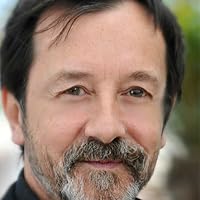
^Shin Kubota and Nathaniel Rich
“Shirahama is full of timeless natural wonders that are failing the test of time.”
“But their art (bio art), like science fiction, was not prophecy; it could not be. The artists could only respond to a reality that had already arrived. Their creations lagged the science and could never hope to catch up. This lag doesn’t reflect artistic failure. The lag gives art its highest meaning. It is in this awkward, painful period, between the emergence of a new world and our realization that we already inhabit it, that imaginative art is most desperately needed. Art, even flawed art, helps us understand our own place in an unfamiliar landscape. It shows us how the soul is worked on by an age of radical upheaval, and how the soul must respond.”
Everywhere around us one can witness signs of the natural world’s dramatic changes — often by human hands — that seem to presage an unsettling future. People have already begun to grapple with destructive hurricanes, crumbling coastlines, climate refugees, the genetic engineering of myriad species, and mass extinctions.
While humans have long sought to adapt, exploit, or control nature for their own needs, the changes now happen with new tools and at larger scales than ever before. In his latest book, “Second Nature: Scenes From a World Remade,” journalist Nathaniel Rich brings to life the uncanny result: Many people don’t know yet how to respond to widespread environmental and public health crises as well as ethical quandaries that pop up in decisions about where we live, the food we eat, what species’ genes we modify, and what environments we want to conserve. In short, our technologically-driven advances are outpacing our ability to anticipate their impacts.
Rich begins by paraphrasing novelist William Gibson: The future is already here, but our souls haven’t caught up with our rapidly changing natural world. “The trajectory of our era — this age of soul delay — runs from naivety to shock to horror to anger to resolve,” Rich writes...
Nathaniel Rich is great at this kind of writing. The handful of scientific and environmental stories he explores are hard hitting and compelling. And deeply, deeply disturbing. The one section of the book that will be familiar to most readers will be the fight against Dupont chemical over the harmful components in teflon and other things they produced. It's a great David and Goliath story, made for Hollywood. Perhaps you've seen the movie? But what really got to me is just how pervasive and entrenched these chemicals are in our environment. You can't slay this monster or lock it back up. It will be all through the bodies of children born years and years from now, in every corner of the world.
He has distressing stories that hit close to home everyplace I ever lived, but my current home in New Orleans is especially precarious. Or at least it gets more than it's fair share of attention. But whether your issue is climate change, genetic engineering, polution, agriculture, or extinctions, there is something here to keep you up at night, to keep you better informed, and to keep you motivated to make better choices. Should be required reading for all residents of planet Earth.
What was causing a horrific smell and strangely common illnesses in a suburb of Los Angeles? Why were sea stars (aka starfish) pulling off their limbs and then liquefying? What was killing animals and people in West Virginia? How are the new “meatless meats” made and why? These are just a few of the ten topics covered in Second Nature.
Is de-extinction, a la Jurassic Park, a good or a bad thing? The creations would not be the exact same creature. They would be a manmade version of the extinct bird, animal, or plant. Does anyone else feel a shiver of horror at that idea? In Second Nature, the cutting-edge ideas in climate change and what used to be called ecology are presented in a compellingly readable format. No science education is necessary for a full understanding of each topic.
I highly recommend this book! Everyone should read it. Some chapters are uplifting and some genuinely sad—but all are enthralling. 5 stars and a favorite!
Thanks to MCD, Farrar, Straus and Giroux and NetGalley for a copy in exchange for my honest review.
This is a vastly readable and engaging study into the various ways our world is morphing into something altogether changed--and not for the better. The persistence of the oil industry, in its various modes of destroying the natural world is brilliantly depicted in Rich's exploration of the deteriorating Louisiana coastline and just what maybe the fate of New Orleans and then some.
Everything has an effect on everything, and there is always a steep price to the stupidity that greed creates. Feast your eyes. Learn how the chemicals of Dupont and Dow are circulating in your bloodstream along with various mammals of the earth and sea. It is staggering. And worrisome. But Rich writes in a way that captivates and instructs in clear human terms. A vastly important book by a writer who should be better known. Wholeheartedly recommend.
After having read and thoroughly enjoyed Nathaniel Rich's The Odds Against Tomorrow, I was curious to read his narrative nonfiction. Second Nature is a collection of environmental essays centered around Man's relationship to Nature - much of what we now see as "nature" is not in fact natural. With each chapter was something surprising, thought provoking, and informative. Each of us in our corner of the world will have to reckon with our self-imposed "second nature". These stories of real people are impeccably researched and written in a style fit for magazine cover stories. Thank you Netgalley for the advanced reader copy!
An emotional (if rather unfocused and scattershot) read which dives deep into a series of stories that, in the end, do little to answer the question in the blurb: What world do we want to create in its place?
Still a compelling read that gave me a lot of background information on some climate disasters I knew little about. I zipped through half the book in the space of an hour and didn't even realize.
Worthwhile but uneven. This was a collection of essays on different subjects about interactions of humans with the Earth and other creatures. The first story about the forever chemicals was excellent and I plan to watch the movie on this topic, Dark Waters, which I had never heard of, until I did a little research. Took me awhile to finish because some of the later essays were not as interesting, to me at least...
hmm. good. i guess. feel like every chapter could have been a much longer story and I'm not sure i got everything i needed from the short chapters. touches on too much in too short time?
i certainly won't forget about the hospital that ground up unwanted bodies and that the dodo bird is a giant pigeon.
This was a collection of articles about industry overreach using science. The first and longest piece on the forever chemicals was devastating. Very descriptive storytelling about the lawyer who doggedly took on big chemical companies and finally won. Still, decades later we are still managing the PFAS chemical problem poorly. The rest of the articles were OK, but the first one was excellent.
A fascinating read on oddities and problems in modern science. The first story on the lawyer who fought big chemical companies and finally, sorta, kinda won was the best. A good place to start if you want to know more about recent history of 'forever chemicals.' The other pieces were pretty good, but the first one ,definitely a winner.
Reading Rich is like staring into the sun: the reckoning of climate change is here. Each chapter illustrates a highly visual anecdote about how society has begun to reconcile the incredulous mess it’s gotten itself into. Each chapter fantastically paints images of science that’s stranger than fiction.
As Rich puts it: “Enlightenment lies not in renouncing reality but in seeing it more clearly.”
This book was interesting and informative enough. But I get the feeling the author thought the 3 parts were more obviously related to each other than they are. It feels like reading 3 separate books, there's literally no attempt made to draw the topics together at all.
The complete lack of a bibliography of any kind also weirds me out.
The first story, Nathaniel Rich's account of the lawyer who took on a chemical giant over 'forever chemicals' pollution was excellent. I later learned they made a movie based on that story, 'Dark Waters'. The other stories were worthwhile. Some addressed topics I had seen elsewhere.