Dr. David Edminson is a thirty-six-year-old street-smart, iconoclastic clinical and forensic psychologist who works out of his customized van treating the inhabitants of Skid Row between midnight and 5:00 a.m. David’s patients and others in the area know him as the “midnight shrink.” He divides his practice between treating people in his van and his office in Hollywood, his work as a forensic psychologist with the LAPD and as a clinical professor at County-USC Medical Center, where he consults and teaches psychiatric residents and psychological interns.
Someone is trying to kill David. With the help of his longtime friends, LAPD Detectives Sal Catena and Paul Burns, David goes after the would-be assassin. Is it one of his patients? Is it his girlfriend’s ex-con brother? Or a mafia capo with whom David had a run-in (in the first book in the series) when trying to learn about his grandfather’s underworld connections? In the course of pursuing the shooter, we meet several of David’s patients, both from Skid Row and from his Hollywood practice.
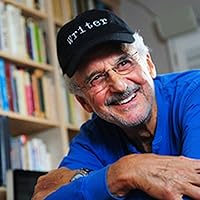
Before turning to writing fiction, I was a practicing clinical psychologist for fifty-plus years. I have been privileged to enter the lives of countless people as their psychotherapist. Their lives and struggles revealed profound truths about the human condition. Many of the stories I heard in my practice have provided themes for my books. Often a common issue rather than a particular individual stimulated the stories.
Everyone has a story to be told. Usually, we get so caught up in living our lives that we fail to see the extraordinary embedded in the ordinary. We look at our life as just putting one foot in front of the other, trying the best we can to live our lives in a meaningful, productive way. For some of us, the task is merely to survive in the world in which we find ourselves. Sometimes it takes an outsider to tell the story.
As a psychologist, I have tried to help people make sense of their life experiences, come to terms with their inner demons, cope with tragedy, and find greater fulfillment. As a writer, I try to tell their story in a way that might help others find meaning, purpose, and fulfillment.
A recurrent theme in my writing is the exploration of the light and dark sides inherent in all of us. I hope to encourage people to embrace both sides, learn to integrate them, and thereby experience a greater sense of wholeness and fulfillment.
More than once, their stories resonated with my own life and helped me to gain clarity and perspective. I am profoundly grateful for the insights provided by those who trusted me with their stories and permitted me to join them on their journey of self-discovery.
I have been married to my wife, Barbara, for almost forty years, have three grown children, five grandchildren, and two pooches named Charlie and Benji. My hobbies include vegan cooking, photography, woodworking, and physical fitness. I am active in nonprofit agencies that serve children, youth, and families. All profits from the sales of my books go to these charities.
Reviewed By Viga Boland for Readers’ Favorite-5 STARS When is crime fiction more than just crime fiction? When it’s written by Edward A Dreyfus and its protagonist is Almost Dead in the first chapter! Just picture yourself sipping your morning coffee and surfing your laptop when a bullet buzzes across the top of your head. What an opening! Now the big question becomes who would want to kill the socially conscious and generous-with-his-time Dr. David Edminson, a clinical and forensic psychologist who counsels Skid Row residents for free during the midnight hours? The first thing to check, of course, is his patient list, past and present. But there’s that little obstruction to this approach called “patient confidentiality”. So while David leaves the shooting to his two police buddies to figure out, he proceeds to share with us stories of several of his regular patients: a wife battling her suddenly-turned violent husband; a college professor accused of sexual advances on his students; a guy who could do so much more with his college degree than be a pimp; and a transgender former military soldier...just to name a few. Their stories, and how David guides them toward finding acceptable solutions to their unhappiness, are interesting reading and comprise much of Almost Dead’s content. So is the detailed relationship between David and three of his high school friends whom he sees regularly but realizes he no longer really knows as all of them have secrets they are afraid to share. The bottom line, Almost Dead is closer to literary fiction than it is to crime fiction in that its focus is less on the plot and more on the characters and what they learn about themselves. For readers who are more interested in gaining insight into human motivation than visualizing movie-style violent crime...and there certainly is enough of that in this novel too...Almost Dead is an absorbing read. As for the “midnight shrink’s” idea suggested toward the end for offering to counsel those who can’t afford it? Very cool indeed. Check it out!
David, AKA the Midnight Shrink, is abruptly jerked from his habits of peacefully practicing therapy out of his shrinkmobile and supporting his friends by an unexpected gunshot that barely misses his head. With the help of his good friend lieutenant Sal of the LAPD, David tries to track down the killer, but in the meantime, he continues his quest to help misunderstood people, from prostitutes to professors, both from his seat as a therapist and as a friend and neighbor.
If you're looking for a fast-paced thriller with many plot twists and deadly encounters, you probably won't enjoy this book very much. While there certainly are scenes of conflict and violence, most of this book is built around the idea of seeing a whole person: their past, present, and future. There are a lot of progressive ideas in this book and unique ways of looking at things. My two biggest critiques are that the dialogue isn't interesting (many of the characters sound the same or think the same), and there is an unfortunate amount of redundancy. In fact, I was in one of the final chapters, which begins, "A few days later, David, Sal, and Paul met at The Pantry for breakfast to catch up on the status of the hunt for the shooter, the missing POI in the café, updates on Henry, ... and David’s meeting about the storefront clinic." This effectively summarizes a lot of what happened in the plot so far. Well and good. But then the rest of the chapter is just David painstakingly repeating all this information in greater detail to Sal and Paul. I saw this at the top of the chapter and nearly shut the book because I had already read three summaries of David's meeting about the storefront clinic, and with only 20 pages left in the book, I just wanted to know if they would find the killer or not.
Overall, the editing was much better than book 1, and aside from the occasional agonizing repetitiveness, the story progressed in a meaningful and interesting fashion. I'd recommend it to adults who like seeing things from different perspectives and want to think outside the box.
I found that this book sort of wondered around. If the story was just that the Doc was a really great guy, then the author made his point. It just kept going in so many different directions that it was confusing. The main character tried to address every major social one after the other. It did not seem to flow very well.