

What do you think?

Deadwood: Gold, Guns and Greed in the American West
Sifting through layers and layers of myth and legend, Peter Cozzens - the award-winning author of The Earth is Weeping - unveils the true face of Deadwood, South Dakota, the storied mining town that sprang up in early 1876, and was made famous by the HBO series of the same name.
Built on land brazenly stolen from the Lakotas, Deadwood was not merely a place where outlaws lurked, but was itself an outlaw enterprise, not part of any US territory or subject to its laws or governance. This gave rise to the gunslinging, stage-coach robbing, whiskey-guzzling, rampant prostitution and gambling that has come to epitomise the town through the legendary figures of 'Wild Bill' Hickok and Calamity Jane. But this foundation also bred a self-reliance and a spirit of cooperation unique on the frontier, which made it an exceptionally welcoming place for Black Americans and Chinese immigrants at a time of deep-seated discrimination.
The first book to tell this complex story in full, Deadwood reveals how one frontier town came to embody the best and worst of the West-enduring truths about humanity's eternal quest for creating order from chaos, a greater good from individual greed, and security from violence.
Built on land brazenly stolen from the Lakotas, Deadwood was not merely a place where outlaws lurked, but was itself an outlaw enterprise, not part of any US territory or subject to its laws or governance. This gave rise to the gunslinging, stage-coach robbing, whiskey-guzzling, rampant prostitution and gambling that has come to epitomise the town through the legendary figures of 'Wild Bill' Hickok and Calamity Jane. But this foundation also bred a self-reliance and a spirit of cooperation unique on the frontier, which made it an exceptionally welcoming place for Black Americans and Chinese immigrants at a time of deep-seated discrimination.
The first book to tell this complex story in full, Deadwood reveals how one frontier town came to embody the best and worst of the West-enduring truths about humanity's eternal quest for creating order from chaos, a greater good from individual greed, and security from violence.
449 pages, Kindle Edition
First published August 19, 2025
About the author
Peter Cozzens
38 books266 followersPeter Cozzens is the award-winning author of seventeen books on the American Civil War and the West. Cozzens is also a retired Foreign Service Officer.
His most recent book is A Brutal Reckoning: Andrew Jackson, the Creek Indians, and the Epic War for the American South (New York: Alfred A. Knopf, 2023). Cozzens's next book is Deadwood: Gold, Guns, and Greed in the American West (Knopf: September 2025).
Cozzens's penultimate book, Tecumseh and the Prophet: The Shawnee Brothers Who Defied a Nation, was published by Knopf in October 2020. It won the Western Writers of America Spur Award and was a finalist for the George Washington Prize.
His The Earth Is Weeping: The Epic Story of the Indian Wars for the American West was published by Alfred A. Knopf in October 2016. Amazon selected it as a Best Book of November 2016. Smithsonian Magazine chose it as one of the ten best history books of 2016. It has won multiple awards, including the Gilder-Lehrman Prize for the finest book on military history published worldwide. It also was a London Times book of the year and has been translated into several languages, including Russian and Chinese.
All of Cozzens' books have been selections of the Book of the Month Club, History Book Club, and/or the Military Book Club.
Cozzens’ This Terrible Sound: The Battle of Chickamauga and The Shipwreck of Their Hopes: The Battles for Chattanooga were both Main Selections of the History Book Club and were chosen by Civil War Magazine as two of the 100 greatest works ever written on the conflict.
The History Book Club called his five-volume Eyewitnesses to the Indian Wars "the definitive resource on the military struggle for the American West."
His Shenandoah 1862: Stonewall Jackson's Valley Campaign was a Choice "Outstanding Academic Title" for 2009.
He was a frequent contributor to the New York Times "Disunion" series, and he has written articles for Smithsonian Magazine, The Wall Street Journal, True West, America's Civil War, Civil War Times Illustrated, and MHQ, among other publications.
In 2002 Cozzens received the American Foreign Service Association’s highest award, given annually to one Foreign Service Officer for exemplary moral courage, integrity, and creative dissent.
Cozzens is a member of the Advisory Council of the Lincoln Prize, the Western Writers Association, the Authors' Guild, and the Army and Navy Club.
Cozzens and his wife Antonia Feldman reside in Maryland.
His most recent book is A Brutal Reckoning: Andrew Jackson, the Creek Indians, and the Epic War for the American South (New York: Alfred A. Knopf, 2023). Cozzens's next book is Deadwood: Gold, Guns, and Greed in the American West (Knopf: September 2025).
Cozzens's penultimate book, Tecumseh and the Prophet: The Shawnee Brothers Who Defied a Nation, was published by Knopf in October 2020. It won the Western Writers of America Spur Award and was a finalist for the George Washington Prize.
His The Earth Is Weeping: The Epic Story of the Indian Wars for the American West was published by Alfred A. Knopf in October 2016. Amazon selected it as a Best Book of November 2016. Smithsonian Magazine chose it as one of the ten best history books of 2016. It has won multiple awards, including the Gilder-Lehrman Prize for the finest book on military history published worldwide. It also was a London Times book of the year and has been translated into several languages, including Russian and Chinese.
All of Cozzens' books have been selections of the Book of the Month Club, History Book Club, and/or the Military Book Club.
Cozzens’ This Terrible Sound: The Battle of Chickamauga and The Shipwreck of Their Hopes: The Battles for Chattanooga were both Main Selections of the History Book Club and were chosen by Civil War Magazine as two of the 100 greatest works ever written on the conflict.
The History Book Club called his five-volume Eyewitnesses to the Indian Wars "the definitive resource on the military struggle for the American West."
His Shenandoah 1862: Stonewall Jackson's Valley Campaign was a Choice "Outstanding Academic Title" for 2009.
He was a frequent contributor to the New York Times "Disunion" series, and he has written articles for Smithsonian Magazine, The Wall Street Journal, True West, America's Civil War, Civil War Times Illustrated, and MHQ, among other publications.
In 2002 Cozzens received the American Foreign Service Association’s highest award, given annually to one Foreign Service Officer for exemplary moral courage, integrity, and creative dissent.
Cozzens is a member of the Advisory Council of the Lincoln Prize, the Western Writers Association, the Authors' Guild, and the Army and Navy Club.
Cozzens and his wife Antonia Feldman reside in Maryland.
Ratings & Reviews
Friends & Following
Create a free account to discover what your friends think of this book!
Community Reviews
Displaying 1 - 30 of 124 reviews

August 1, 2025
There's just no way around it. You will immediately pick up this book and think, "But will this ruin my HBO Deadwood rewatch?" Great news, folks. Not only will this INCREASE your appreciation of the show, it's a damn fine book to boot! Let's review this thing.
Peter Cozzens' Deadwood knows exactly what it is and what it is up against. Cozzens leans right into it. He name checks the well-received show and reveals he is also a massive fan. Yes, they are all in here. Bullock, Swearengen, Sol Star, Wild Bill, and Calamity Jane all get their time in the sun. Don't worry, Cozzens doesn't miss a single one.
With that out of the way, Cozzens can do what he does best (read his other books if you haven't). He proceeds to tell the story of Deadwood by focusing on the people who made it what it was. You can almost feel how much fun Cozzens is having when he recounts many of the bizarre, exciting, depraved, or just fun anecdotes throughout the book. What makes Cozzens such a great author is that he finds something that he knows the reader will find interesting, but will present it in a way that isn't a diversion. Each story illuminates a part of the town which is so vital to understanding the bigger picture. It's not just Calamity Jane on another one of her drunken rants. It's a window into what Deadwood was willing to accept at that point in time that would be frowned upon as the town became well...an actual town as opposed to an illegal group of people on indigenous lands.
What I found so utterly shocking is how much time this book covers. Story after story rolls by. People show up and build businesses. Robberies, murders, and their trials occur. Halfway through the book I thought this must be 10-15 years into the life of Deadwood. Nope, it was 18 months. Deadwood was truly the quintessential Wild West mining town. Cozzens is the perfect author to spin this particular yarn.
(This book was provided as an advanced reader copy by A. A. Knopf.)
Peter Cozzens' Deadwood knows exactly what it is and what it is up against. Cozzens leans right into it. He name checks the well-received show and reveals he is also a massive fan. Yes, they are all in here. Bullock, Swearengen, Sol Star, Wild Bill, and Calamity Jane all get their time in the sun. Don't worry, Cozzens doesn't miss a single one.
With that out of the way, Cozzens can do what he does best (read his other books if you haven't). He proceeds to tell the story of Deadwood by focusing on the people who made it what it was. You can almost feel how much fun Cozzens is having when he recounts many of the bizarre, exciting, depraved, or just fun anecdotes throughout the book. What makes Cozzens such a great author is that he finds something that he knows the reader will find interesting, but will present it in a way that isn't a diversion. Each story illuminates a part of the town which is so vital to understanding the bigger picture. It's not just Calamity Jane on another one of her drunken rants. It's a window into what Deadwood was willing to accept at that point in time that would be frowned upon as the town became well...an actual town as opposed to an illegal group of people on indigenous lands.
What I found so utterly shocking is how much time this book covers. Story after story rolls by. People show up and build businesses. Robberies, murders, and their trials occur. Halfway through the book I thought this must be 10-15 years into the life of Deadwood. Nope, it was 18 months. Deadwood was truly the quintessential Wild West mining town. Cozzens is the perfect author to spin this particular yarn.
(This book was provided as an advanced reader copy by A. A. Knopf.)

March 31, 2026
This was a very good book about the town of Deadwood, South Dakota. When I picked it up, I thought that the death and gunfight involving Wild Bill Hickock would probably feature heavily in the story. It does not. Instead, it is a history of the town which began as a mining camp on land stolen from the Lakota tribe. The book starts book begins with this change of land ownership and the efforts of the US Army to initially prevent white settlement. We are then given a history of the early settlement and introduced to some of its early denizen. We see a famous western town and its everyday growth. Lawmen, criminals, businessmen, miners, and prostitutes grace the pages. We see the success and failure of the rich and the poor. The famous killing of Wild Bill Hickock is only a very small part of the story of this town.
If you like the Old West as it was not as it is depicted in movies and dime novels, you may find this book very interesting.
If you like the Old West as it was not as it is depicted in movies and dime novels, you may find this book very interesting.
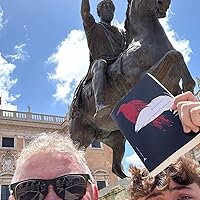
September 4, 2025
⭐️⭐️⭐️⭐️⭐️
Deadwood by Peter Cozzens
This book was a fantastic trip down memory lane for a longtime fan of the HBO series Deadwood. I loved the show, and I found myself feeling the same way about Cozzens’ book. What surprised me most was discovering that so many of the characters I thought were just brilliant creations of television were actually real, flesh-and-blood people with fascinating and complex backgrounds.
As a friend reminded me, the story of the West is a uniquely American story, and Cozzens unfolds the history of the Deadwood territory with a poetic, intriguing, and deeply engaging style. Just like in the show, Wild Bill meets his tragic end far too soon. Along the way, I picked up so many wonderful details—like Seth Bullock’s friendship with Teddy Roosevelt and the fact that he even taught Roosevelt’s children how to ride horses! And of course, Al Swearengen was as ruthless and unlikable in real life as he was on the screen.
Cozzens doesn’t shy away from showing the harsh realities: like so many gold rushes, few people struck it rich, and most were left with little more than hard work and hard luck. This book had all the drama and grit of the show, but with a less cussing! A great historical read that both fans of the series and lovers of Western history will thoroughly enjoy.
Deadwood by Peter Cozzens
This book was a fantastic trip down memory lane for a longtime fan of the HBO series Deadwood. I loved the show, and I found myself feeling the same way about Cozzens’ book. What surprised me most was discovering that so many of the characters I thought were just brilliant creations of television were actually real, flesh-and-blood people with fascinating and complex backgrounds.
As a friend reminded me, the story of the West is a uniquely American story, and Cozzens unfolds the history of the Deadwood territory with a poetic, intriguing, and deeply engaging style. Just like in the show, Wild Bill meets his tragic end far too soon. Along the way, I picked up so many wonderful details—like Seth Bullock’s friendship with Teddy Roosevelt and the fact that he even taught Roosevelt’s children how to ride horses! And of course, Al Swearengen was as ruthless and unlikable in real life as he was on the screen.
Cozzens doesn’t shy away from showing the harsh realities: like so many gold rushes, few people struck it rich, and most were left with little more than hard work and hard luck. This book had all the drama and grit of the show, but with a less cussing! A great historical read that both fans of the series and lovers of Western history will thoroughly enjoy.
December 30, 2025
It's solid but was a bit of slog for me, which was surprising given the author and subject matter.

January 11, 2026
Fascinating history of the raucous mining town of Deadwood, South Dakota and its people--some of great renown (Wild Bill Hickock, Calamity Jane) and others of lesser renown, but colorful, just the same. Cozzens does an impressive job of covering the vast history of Deadwood in its short-lived glory days and includes information to include the Native Americans who were denied their sacred land for gold seekers, Chinese and Jewish immigrants, prostitutes and criminals of all kinds. A perfect companion to the HBO series for anyone wanting the true story of this historic establishment.

December 18, 2025
I chose this book for two reasons:
1) I have really enjoyed other Peter Cozzens (Author) books, notably his series on Civil War campaigns. These were well-written.
2) I thoroughly enjoyed the HBO series Deadwood which, in my opinion, ranks up there with some of the best-written TV series ever.
Coincidentally, Cozzens was inspired by the HBO series too and decided to write a book about what "really happened". Many of the characters we were entranced by in the TV show were based on their real counterparts. For example, Al Swearingen, George Hearst, Seth Bullock, Sol Star, Calamity Jane, E.B. Farnum, Wild Bill Hickok and others.
Now, would I have read this book had I not seen the show? Maybe not. But don't let this deter you. Read the book and then watch the show.
Gold was discovered in the Black Hills of unceded Indian territory (now, western South Dakota). Needless to say, prospectors rushed in despite not having any legal right to the land. Coincidentally, Custer's 7th cavalry was wiped out the same summer and this led to the US Government getting involved that forced the Sioux off this land. More prospectors flooded in.
The story covers four years 1876-79 from when Deadwood became a town as depicted in the HBO show to its destruction by fire in 1879. This latter event occurred when Deadwood was more "civilized" as the placer miners had long since left and capital intensive quartz mine delivered substantial riches to the mining syndicates (Hearst and others).
The book is filled with fascinating anecdotes of the life of the town and its citizens. This is possible because there is a rich written primary source record that Cozzens could plumb. Deadwood made national news and was well covered by newspaper stories and memoirs. And why not? - what with Calamity Jane, a frequently drunk, prolific prostitute who dressed like a man and often performed good and nurturing deeds.
And speaking of prostitution, it was rampant and enthusiastically tolerated. Back then, these women were called "soiled doves" and, for the most part, led self-destructive lives tempered by opium addiction. Some were more entrepreneurial and became madams.
And then there were stage coach robberies. Over time, Deadwood was connected to other cities (on railroads) with weekly, then thrice weekly, then daily stage service. Passengers with money would be robbed; outbound stages with gold shipments were the bigger targets. Typically, the robbers would have short careers before their demise.
Oh, there was baseball too. Who knew? And some folks had telephone lines established between their homes and places of business. Who knew?
And all sorts of struggles with water. Water was critical for sluicing (let alone providing drinking water to the town) but it was hard to get Deadwoodites to work together to fund civic improvements. This came to a head when the fire broke out.
A modern day person would find 1877 Deadwood a pigsty, literally. Pigs roamed the streets, dead animals were everywhere. Not to mention human and animal waste. It is not hard to see why miners flocked to the saloons and "theatres" to drown themselves in drink, gamble at faro, and avail themselves on the "sporting girls". Surprisingly, there were relatively few murders despite ample armament. Most everyone had a veneer of gentility despite engaging in a variety of sins.
If you've seen the HBO show, you know there is non-stop profanity. I thought this was over the top by the show's writer. But perhaps not. Cozzens goes into detail with first-hand accounts of actual language that is not far off from the show. And delivered by men and women alike.
Overall, an interesting book. A good window into post-war America in the Great Plains territories. As I read it, I couldn't help but visualize the sets of the TV show. And only twelve years away from another Great Plains true story I recently read The Children's Blizzard.
Many photos and a few useful maps including a town plan.
And, watch the HBO show -- up there with "The Wire" and "The Sopranos". It's not family-friendly though.
1) I have really enjoyed other Peter Cozzens (Author) books, notably his series on Civil War campaigns. These were well-written.
2) I thoroughly enjoyed the HBO series Deadwood which, in my opinion, ranks up there with some of the best-written TV series ever.
Coincidentally, Cozzens was inspired by the HBO series too and decided to write a book about what "really happened". Many of the characters we were entranced by in the TV show were based on their real counterparts. For example, Al Swearingen, George Hearst, Seth Bullock, Sol Star, Calamity Jane, E.B. Farnum, Wild Bill Hickok and others.
Now, would I have read this book had I not seen the show? Maybe not. But don't let this deter you. Read the book and then watch the show.
Gold was discovered in the Black Hills of unceded Indian territory (now, western South Dakota). Needless to say, prospectors rushed in despite not having any legal right to the land. Coincidentally, Custer's 7th cavalry was wiped out the same summer and this led to the US Government getting involved that forced the Sioux off this land. More prospectors flooded in.
The story covers four years 1876-79 from when Deadwood became a town as depicted in the HBO show to its destruction by fire in 1879. This latter event occurred when Deadwood was more "civilized" as the placer miners had long since left and capital intensive quartz mine delivered substantial riches to the mining syndicates (Hearst and others).
The book is filled with fascinating anecdotes of the life of the town and its citizens. This is possible because there is a rich written primary source record that Cozzens could plumb. Deadwood made national news and was well covered by newspaper stories and memoirs. And why not? - what with Calamity Jane, a frequently drunk, prolific prostitute who dressed like a man and often performed good and nurturing deeds.
And speaking of prostitution, it was rampant and enthusiastically tolerated. Back then, these women were called "soiled doves" and, for the most part, led self-destructive lives tempered by opium addiction. Some were more entrepreneurial and became madams.
And then there were stage coach robberies. Over time, Deadwood was connected to other cities (on railroads) with weekly, then thrice weekly, then daily stage service. Passengers with money would be robbed; outbound stages with gold shipments were the bigger targets. Typically, the robbers would have short careers before their demise.
Oh, there was baseball too. Who knew? And some folks had telephone lines established between their homes and places of business. Who knew?
And all sorts of struggles with water. Water was critical for sluicing (let alone providing drinking water to the town) but it was hard to get Deadwoodites to work together to fund civic improvements. This came to a head when the fire broke out.
A modern day person would find 1877 Deadwood a pigsty, literally. Pigs roamed the streets, dead animals were everywhere. Not to mention human and animal waste. It is not hard to see why miners flocked to the saloons and "theatres" to drown themselves in drink, gamble at faro, and avail themselves on the "sporting girls". Surprisingly, there were relatively few murders despite ample armament. Most everyone had a veneer of gentility despite engaging in a variety of sins.
If you've seen the HBO show, you know there is non-stop profanity. I thought this was over the top by the show's writer. But perhaps not. Cozzens goes into detail with first-hand accounts of actual language that is not far off from the show. And delivered by men and women alike.
Overall, an interesting book. A good window into post-war America in the Great Plains territories. As I read it, I couldn't help but visualize the sets of the TV show. And only twelve years away from another Great Plains true story I recently read The Children's Blizzard.
Many photos and a few useful maps including a town plan.
And, watch the HBO show -- up there with "The Wire" and "The Sopranos". It's not family-friendly though.

September 21, 2025
Peter Cozzens is an American writer, specializing in historical nonfiction. His 2025 book Deadwood narrates the story of Deadwood, South Dakota, a canonical "Wild West" town in the late 19th century, and the various and colorful cast of characters that defined it and have entered American mythology.
These types of books are generally hit or miss for me - this one was unfortunately a miss for me as I found it difficult to keep track of all the characters and stories; I tend to prefer historical nonfiction with a narrower cluster of subjects and/or a defined event focus, rather than a broad history of a place. I DNFed at around 40% after multiple stops and starts. I'm sure it'd be an engaging read for those that love this genre more unconditionally.
Further reading: books about the American West of the late 19th/early 20th century I've read and would recommend:
The Divorce Colony: How Women Revolutionized Marriage and Found Freedom on the American Frontier by April White
The Wyoming Ranch Letters: The Collected Correspondence of a Woman Settler on the American Frontier-Letters of a Woman Homesteader & Letters on a by Elinore Pruitt Stewart
The Last Ride of the Pony Express: My 2,000-mile Horseback Journey into the Old West by Will Grant
Born of Lakes and Plains: Mixed-Descent Peoples and the Making of the American West by Anne Hyde
My statistics:
Book 291 for 2025
Book 2217 cumulatively
These types of books are generally hit or miss for me - this one was unfortunately a miss for me as I found it difficult to keep track of all the characters and stories; I tend to prefer historical nonfiction with a narrower cluster of subjects and/or a defined event focus, rather than a broad history of a place. I DNFed at around 40% after multiple stops and starts. I'm sure it'd be an engaging read for those that love this genre more unconditionally.
Further reading: books about the American West of the late 19th/early 20th century I've read and would recommend:
The Divorce Colony: How Women Revolutionized Marriage and Found Freedom on the American Frontier by April White
The Wyoming Ranch Letters: The Collected Correspondence of a Woman Settler on the American Frontier-Letters of a Woman Homesteader & Letters on a by Elinore Pruitt Stewart
The Last Ride of the Pony Express: My 2,000-mile Horseback Journey into the Old West by Will Grant
Born of Lakes and Plains: Mixed-Descent Peoples and the Making of the American West by Anne Hyde
My statistics:
Book 291 for 2025
Book 2217 cumulatively

September 2, 2025
Informative, interesting, and thorough as always. I had never seen the television series but am familiar with the town and driven by it along Interstate 90 decades ago. Cozzens focuses on the years 1876 through 1880. Lots of characters. Calamity Jane was total media misinformation. Hickok was on the way down hill when murdered. Bad girls, good girls, Chinese entrepreneurs, miners, Native Americans, and millionaires are all here.
Black Friday- September 26, 1879. A fire destroyed the town and it never bounced back as there was another place to go to- Leadville, Colorado.
Good maps and photos.
Black Friday- September 26, 1879. A fire destroyed the town and it never bounced back as there was another place to go to- Leadville, Colorado.
Good maps and photos.
January 18, 2026
If you ever thought “Ah, it would be so cool to live in the old west!”, read this book. Because no you would not.
I really enjoyed not only the history of how the frontiersmen sought to develop what was truly an “illegal town”, and bring order to a lawless land. But also, it was super intriguing to read about the Native Americans that were forced out of this area. Truly, white people were never supposed to be there.
Edit
I really enjoyed not only the history of how the frontiersmen sought to develop what was truly an “illegal town”, and bring order to a lawless land. But also, it was super intriguing to read about the Native Americans that were forced out of this area. Truly, white people were never supposed to be there.
Edit

September 7, 2025
An impressive, vibrant biography of a town that has secured a mythic place in American history.
April 10, 2026
Solid book, having lived in the area for over twenty years you take for granted all the history and wild things that happened. It's an easy read and moves along but still only covers the first couple years of the town. Very informative and the stories move along well from one to the next.
October 10, 2025
4.2 stars
September 17, 2025
Fabulous! You won’t be surprised to learn that many of the political shenanigans that are practiced today were also quite common back then.
August 21, 2025
Disappointing. Cozzens has long been one of my favorite History Authors, with his emphasis on the Civil War and the American West. Alas, his origins as a swamp denizen seem to be reasserting control, and this narrative leans heavily to the lefty point of view.
January 12, 2026
What a surprise! A fascinating journey of the American frontier! The book tracks the journey of one of the United States most fabled towns. "Deadwood" explores how the "white man" made his/her way into Western territories. Yes, the book is full of accounts tracking the lives and progress of the pioneers (Wild Bill Hickok, Calamity Jane, and Sheriff Seth Bullock). At the same time, it presents the wrongs done to the Native Americans. What happened to these people is criminal. The author clearly makes his case.
Deadwood came to life from 1876-1879. In one month the area population grew from 200 pan miners to 4,000. The author fills out the activity by sharing the tales of individuals and groups who made their way to the "Western territories.".
If you value history, the growth & exploration of the United States, as well as the tragic & colorful accounts of individuals along the way, you will quickly own this book!
I rate the book as four stars because the ending could have come a little sooner. Still, it is worth the read!
Deadwood came to life from 1876-1879. In one month the area population grew from 200 pan miners to 4,000. The author fills out the activity by sharing the tales of individuals and groups who made their way to the "Western territories.".
If you value history, the growth & exploration of the United States, as well as the tragic & colorful accounts of individuals along the way, you will quickly own this book!
I rate the book as four stars because the ending could have come a little sooner. Still, it is worth the read!
April 16, 2026
Deadwood (Dakota Territory) a boom town that grew from dreamers, hawkers, and "soiled doves" to respectability with Chinese, African, and European immigrants. Entrepreneurs, shady characters, corrupt politicians grew the town before a fire (nearly destroying the entire town) and riches elsewhere drew people away. In the legends and history of the "Wild West," Deadwood ranks right up there with Tombstone and Dodge City. But a town like Deadwood couldn't be anything but 'colorful' with residents like Wild Bill Hickok and Calamity Jane!
August 10, 2026
I learned a lot about the years surrounding Deadwood's founding, the main actors, and the historical events influencing those actors. The author weaves a nice tale with sometimes scant evidence to go off of.

December 26, 2025
interesting and entertaining look at Deadwood's first three years. if you liked the TV show, you will see familiar faces in this nonfiction book

January 23, 2026
Trodding the same ground as Watson Parker’s book, Peter Cozzens gives us one just as good, less scholarly and a bit easier to read. I suppose this is the better book, of the two, for those looking for background on the David Milch’s unsurpassed TV series masterpiece.
January 11, 2026
A beaut of a book.

September 24, 2025
For three seasons early in this century, HBO aired Deadwood, which won more than two dozen Emmy Awards. The series starred Timothy Olyphant as businessman and lawman Seth Bullock and Ian McShane as Al Swearengen, the violent criminal proprietor of a saloon and brothel.
Other leading characters included Wild Bill Hickok, Calamity Jane, George Hearst, and Wyatt Earp, names familiar to anyone with even a smattering of the history of the Old West. And it was great TV! (It’s available today on numerous streaming services.)
Most viewers, emphatically including me, rank Deadwood on a par with other HBO standouts such as The Sopranos and The Wire. At the time, I assumed it was largely based on historical fact. But I didn’t realize how closely it hewed to the record until I read Peter Cozzens’s remarkable new book about the real Old West, Deadwood: Gold, Guns, and Greed in the American West.
The HBO series got the history mostly right
Of course, David Milch, who created, directed, and wrote most of the series, had no choice but to compress certain events and somewhat simplify the historical record. Nor did he have the opportunity to tell the extraordinary backstories of the people he portrayed on the screen. But in the book, Peter Cozzens fills that bill. Following are some of the most significant historical facts missing or glossed over in the series. More importantly, he devotes considerable attention to the several Lakota leaders who also played pivotal roles in Deadwood’s history: Black Elk, Sitting Bull, Crazy Horse, and Red Cloud.
What comes to light in this book
The myth of the town
When word reached Eastern newspapers in 1873 that gold had been discovered in the Black Hills of South Dakota, hopeful miners established several rough camps in the hills. One, founded that year, was Deadwood. Unlike some of the others, though, Deadwood grew explosively when rich veins of gold turned up nearby. Newcomers flooded into the town. First, the miners. Then the prostitutes, confidence men, card sharps, and unscrupulous businessmen who fed off them.
Taken as a whole, they were a motley lot. Former Union soldiers and Confederates alike. Democrats and Republicans. Black and White and Chinese. And the town gained a well-deserved reputation for tolerance. The violence that often erupted there was almost always about money or competing mining claims, not ethnic or political differences. Which was rare during the years of Reconstruction.
Wild Bill
Wild Bill Hickok (1837-76) was not the noble force for law and order that mythology has sometimes featured. He was, in fact, a ruthless and impulsive killer, who had gained a reputation for having murdered more than 100 men by the time he arrived in Deadwood and met his death. But his murder there by a drunk and dissolute killer much like himself became the stuff of legend, exploded onto the national consciousness by the authors of the era’s ubiquitous dime novels. In fact, much of the lore about Deadwood that has entered the literature about the town was the product of the dime novelists’s imagination. And they made a lot of stuff up.
Calamity Jane
Calamity Jane (1852-1903) was born Martha Canary to a prosperous family in rural Missouri. She arrived in Deadwood in 1876, three years after its founding, at the age of 24. She was a drunkard, so Milch got that right. But she was best known in the town as an indiscriminate prostitute who would sleep with any man who paid her enough to keep her in liquor. Milch portrays her as bisexual, although there doesn’t appear to be any evidence that was the case. However, she was fond of wearing men’s clothing. Like Wild Bill Hickok and the town of Deadwood itself, her legend was largely the creation of the dime novelists. But her own fanciful, publicity-seeking autobiography played a part, too.
Seth Bullock
Seth Bullock (1849-1919), like his hardware store partner Solomon (Sol) Star (1840-1917), was, above all, a Republican politician. He and Sol moved to Deadwood in 1876 to advance their careers in politics. In the HBO series, he appears to be reluctant to take on local office. But in fact, both he and Sol campaigned actively for prominent positions in town. And, although the majority of the men in Deadwood were Democrats, they won elections again and again to a succession of public offices. The citizens regarded both as honest and effective. And Bullock was so well connected that, on more than one occasion, he called in favors from the President of the United States, Rutherford B. Hayes.
A brief review by Claude-AI
I asked the chatbot Claude-AI, version Sonnet 4, to write a 300-word review of this book. What follows is the result, verbatim, except for the two subheads I’ve added. It’s an excellent review, far more comprehensive than what I’ve written.
A masterful corrective to the mythology
Peter Cozzens delivers a masterful corrective to the mythology surrounding one of America’s most legendary frontier towns in Deadwood: Gold, Guns, and Greed in the American West. Rather than simply rehashing familiar tales of Wild Bill Hickok and Calamity Jane, Cozzens presents a nuanced historical portrait that spans seven decades, from the pre-gold rush era through the early 20th century.
What sets this work apart from typical Western histories is Cozzens’ commitment to showing Deadwood’s ordinariness alongside its transgressions. Busting myths can enhance our enjoyment of them, and Cozzens achieves exactly this paradox. The author’s meticulous research brings to life not just the famous gunfighters and gamblers, but the everyday miners, merchants, and families who built a functioning community in the Black Hills.
Deadwood was founded on stolen Indigenous land
Cozzens doesn’t shy away from the darker aspects of Deadwood’s story, particularly the theft of Indigenous Lakota land that made the gold rush possible. His portrayal of figures like Crazy Horse provides necessary context often missing from romanticized Western narratives. The book effectively demonstrates how this remote South Dakota town became a microcosm of American ambition, greed, and expansion.
The writing is vivid and accessible, allowing readers to experience the gritty reality behind the legend. Fans of the HBO series Deadwood will find their appreciation deepened, as many fictional characters were based on real people Cozzens expertly profiles, including Seth Bullock and Al Swearengen.
Deadwood succeeds brilliantly as both rigorous history and engaging storytelling. Cozzens reminds us that America’s frontier past was simultaneously more complex and more recognizably human than popular culture suggests, making this essential reading for anyone seeking to understand the forces that shaped the American West.
About the author
Peter Cozzens is an historian and retired US Foreign Service Officer. He has written more than 17 books on the Civil War and the Indian Wars. Cozzens was born in 1957 and graduated from Knox College in Illinois, near the small town where he grew up. He has received major awards for both his career in foreign service and for his military history. He lives with his wife in Kensington, Maryland.
Other leading characters included Wild Bill Hickok, Calamity Jane, George Hearst, and Wyatt Earp, names familiar to anyone with even a smattering of the history of the Old West. And it was great TV! (It’s available today on numerous streaming services.)
Most viewers, emphatically including me, rank Deadwood on a par with other HBO standouts such as The Sopranos and The Wire. At the time, I assumed it was largely based on historical fact. But I didn’t realize how closely it hewed to the record until I read Peter Cozzens’s remarkable new book about the real Old West, Deadwood: Gold, Guns, and Greed in the American West.
The HBO series got the history mostly right
Of course, David Milch, who created, directed, and wrote most of the series, had no choice but to compress certain events and somewhat simplify the historical record. Nor did he have the opportunity to tell the extraordinary backstories of the people he portrayed on the screen. But in the book, Peter Cozzens fills that bill. Following are some of the most significant historical facts missing or glossed over in the series. More importantly, he devotes considerable attention to the several Lakota leaders who also played pivotal roles in Deadwood’s history: Black Elk, Sitting Bull, Crazy Horse, and Red Cloud.
What comes to light in this book
The myth of the town
When word reached Eastern newspapers in 1873 that gold had been discovered in the Black Hills of South Dakota, hopeful miners established several rough camps in the hills. One, founded that year, was Deadwood. Unlike some of the others, though, Deadwood grew explosively when rich veins of gold turned up nearby. Newcomers flooded into the town. First, the miners. Then the prostitutes, confidence men, card sharps, and unscrupulous businessmen who fed off them.
Taken as a whole, they were a motley lot. Former Union soldiers and Confederates alike. Democrats and Republicans. Black and White and Chinese. And the town gained a well-deserved reputation for tolerance. The violence that often erupted there was almost always about money or competing mining claims, not ethnic or political differences. Which was rare during the years of Reconstruction.
Wild Bill
Wild Bill Hickok (1837-76) was not the noble force for law and order that mythology has sometimes featured. He was, in fact, a ruthless and impulsive killer, who had gained a reputation for having murdered more than 100 men by the time he arrived in Deadwood and met his death. But his murder there by a drunk and dissolute killer much like himself became the stuff of legend, exploded onto the national consciousness by the authors of the era’s ubiquitous dime novels. In fact, much of the lore about Deadwood that has entered the literature about the town was the product of the dime novelists’s imagination. And they made a lot of stuff up.
Calamity Jane
Calamity Jane (1852-1903) was born Martha Canary to a prosperous family in rural Missouri. She arrived in Deadwood in 1876, three years after its founding, at the age of 24. She was a drunkard, so Milch got that right. But she was best known in the town as an indiscriminate prostitute who would sleep with any man who paid her enough to keep her in liquor. Milch portrays her as bisexual, although there doesn’t appear to be any evidence that was the case. However, she was fond of wearing men’s clothing. Like Wild Bill Hickok and the town of Deadwood itself, her legend was largely the creation of the dime novelists. But her own fanciful, publicity-seeking autobiography played a part, too.
Seth Bullock
Seth Bullock (1849-1919), like his hardware store partner Solomon (Sol) Star (1840-1917), was, above all, a Republican politician. He and Sol moved to Deadwood in 1876 to advance their careers in politics. In the HBO series, he appears to be reluctant to take on local office. But in fact, both he and Sol campaigned actively for prominent positions in town. And, although the majority of the men in Deadwood were Democrats, they won elections again and again to a succession of public offices. The citizens regarded both as honest and effective. And Bullock was so well connected that, on more than one occasion, he called in favors from the President of the United States, Rutherford B. Hayes.
A brief review by Claude-AI
I asked the chatbot Claude-AI, version Sonnet 4, to write a 300-word review of this book. What follows is the result, verbatim, except for the two subheads I’ve added. It’s an excellent review, far more comprehensive than what I’ve written.
A masterful corrective to the mythology
Peter Cozzens delivers a masterful corrective to the mythology surrounding one of America’s most legendary frontier towns in Deadwood: Gold, Guns, and Greed in the American West. Rather than simply rehashing familiar tales of Wild Bill Hickok and Calamity Jane, Cozzens presents a nuanced historical portrait that spans seven decades, from the pre-gold rush era through the early 20th century.
What sets this work apart from typical Western histories is Cozzens’ commitment to showing Deadwood’s ordinariness alongside its transgressions. Busting myths can enhance our enjoyment of them, and Cozzens achieves exactly this paradox. The author’s meticulous research brings to life not just the famous gunfighters and gamblers, but the everyday miners, merchants, and families who built a functioning community in the Black Hills.
Deadwood was founded on stolen Indigenous land
Cozzens doesn’t shy away from the darker aspects of Deadwood’s story, particularly the theft of Indigenous Lakota land that made the gold rush possible. His portrayal of figures like Crazy Horse provides necessary context often missing from romanticized Western narratives. The book effectively demonstrates how this remote South Dakota town became a microcosm of American ambition, greed, and expansion.
The writing is vivid and accessible, allowing readers to experience the gritty reality behind the legend. Fans of the HBO series Deadwood will find their appreciation deepened, as many fictional characters were based on real people Cozzens expertly profiles, including Seth Bullock and Al Swearengen.
Deadwood succeeds brilliantly as both rigorous history and engaging storytelling. Cozzens reminds us that America’s frontier past was simultaneously more complex and more recognizably human than popular culture suggests, making this essential reading for anyone seeking to understand the forces that shaped the American West.
About the author
Peter Cozzens is an historian and retired US Foreign Service Officer. He has written more than 17 books on the Civil War and the Indian Wars. Cozzens was born in 1957 and graduated from Knox College in Illinois, near the small town where he grew up. He has received major awards for both his career in foreign service and for his military history. He lives with his wife in Kensington, Maryland.

May 26, 2026
Decent and exhaustive…for those with black hills history in mind…
Deadwood: Gold, Guns, and Greed in the American West by Peter Cozzens covers the formative years of the legendary western boomtown…from early white settlement to the fires…and all points in between…
After a healthy sized prologue about the black hills and broken treaties and military expeditions, we get to the good stuff…Deadwood in its prime…
Naturally a heavy focus is on 1876 and 1877 but they also cover the immediate aftermath and the later fire…
However there’s a huge cast of characters they have to cover from businessmen to gunfighters to road agents to celebrities to government officials and all other kinds…including the various communities such as the Chinese and African Americans…
It’s almost too much at times as there’s a lot of cover…but there’s also some good sourcing and index for any cross referencing you wanna do.
I loved the town and county maps that showed the other settlements and progression of Deadwood…
Deadwood: Gold, Guns, and Greed in the American West by Peter Cozzens covers the formative years of the legendary western boomtown…from early white settlement to the fires…and all points in between…
After a healthy sized prologue about the black hills and broken treaties and military expeditions, we get to the good stuff…Deadwood in its prime…
Naturally a heavy focus is on 1876 and 1877 but they also cover the immediate aftermath and the later fire…
However there’s a huge cast of characters they have to cover from businessmen to gunfighters to road agents to celebrities to government officials and all other kinds…including the various communities such as the Chinese and African Americans…
It’s almost too much at times as there’s a lot of cover…but there’s also some good sourcing and index for any cross referencing you wanna do.
I loved the town and county maps that showed the other settlements and progression of Deadwood…
February 5, 2026
I rarely stop listening to a book…especially 3/4 of the way through. Although it started off fairly well it got into a person by person breakdown. When it the language got pretty foul for no real reason other than to include it (it didn’t help you understand a person any better) I finally decided I’d had enough.

April 23, 2026
This is very enjoyable if you are a fan of the show Deadwood.
I will say the information is very well researched and the way the stories are told are riveting. However, the structure is a bit impressionistic and has a more tangential style, so I found myself losing interest here and there or feeling like I missed something when it jumps from topic to topic.
I will say the information is very well researched and the way the stories are told are riveting. However, the structure is a bit impressionistic and has a more tangential style, so I found myself losing interest here and there or feeling like I missed something when it jumps from topic to topic.

September 15, 2025
A look at the rapid development of this notable Western town made noteworthy for finding gold in the Black Hills. Insight into the interesting people that were attracted to wild west mining towns including Wild Bill Hickok and Calamity Jane.

December 29, 2025
From the Civil War to the American West, Peter Cozzens does a bang-up job every time.
So, yes, it's no surprise that 2025's Deadwood is excellent; it's thorough, well-organized, and well-told, just like all the handful of other Cozzens books I've read. Here he sorts through the myths and the tall tales to get to the real history of a town that, as an illegal settlement on land given to the Native American Lakotas, initially was not part of America at all. Deadwood came to be part of the U.S. Dakota Territory once the shameful machinations of the U.S. government, including outright war, forced the Lakota to give up their claim to their sacred land.
Like some other Western towns, Deadwood was founded on a mineral rush: Gold in the Black Hills was the lure that led to a rapid influx of miners, gamblers, businessmen, pioneers and prostitutes that in three short but eventful years made the town a Wild West legend.
Cozzens starts with a brief history of the area's native population, with the Lakota and their Northern Cheyenne Indian allies and the tribes' increasingly troublesome relationship with white settlers. When gold is found, the U.S. government's initial intent to keep the Lakota land free from white encroachment gradually crumbles.
Cozzens chronicles Deadwood's growing pains and the early days of notoriety produced by Easterners' fascination with the West and the few months Wild Bill Hickok spent there before his violent, colorful death. The myth-making started almost immediately, with splashy reporting and fantastical accounts in dime novels that led to the fame of the town and its denizens, such as Calamity Jane, a real person but one who became hard to separate from the highly fictionalized version Americans were told about.
There was filth, gambling, prostitution, and violence in Deadwood, to be sure. Though Cozzens' telling underscores that the town's reputation was somewhat exaggerated, that doesn't necessarily make Deadwood less interesting. Here we have colorful lawmen and lawbreakers; immoral "businessmen" such as the notorious Al Swearingen; miners; rogues; minorities who were treated reasonably well (considering the times), with a Black woman winning a Deadwood vote as the most popular woman in the Black Hills; and, yes, ordinary folk, many of whom were valuable, productive citizens trying to do good. Even in a place that was overwhelmingly male and whose women were mostly (but not all) "soiled doves," as its whores were called, there were plenty of folk who contributed to the rise (and fall) of Deadwood. Cozzens mines a huge number of sources from all walks of Deadwood life. He's also conscientious in writing about the towns surrounding Deadwood and the Black Hills area itself.
The book also nicely balances a roughly chronological history of Deadwood's early existence with various themes and subjects, including its vulnerability to fire. What I like about Cozzens' writing and approach is his ability to be thorough without exhausting the reader; that's an underrated gift — even if I wouldn't have minded if Deadwood were longer and more detailed, plenty of fascinating details come to light (as an Iowan, I didn't know Swearingen was born and buried in Oskaloosa).
Cozzens has written a long list of books about the Indian Wars, Native American history, and Civil War campaigns. This history of Deadwood is but a little sidestep in his typical chronicling of 19th-century America. It's not my favorite of his books, but it upholds his consistently high standards.
So, yes, it's no surprise that 2025's Deadwood is excellent; it's thorough, well-organized, and well-told, just like all the handful of other Cozzens books I've read. Here he sorts through the myths and the tall tales to get to the real history of a town that, as an illegal settlement on land given to the Native American Lakotas, initially was not part of America at all. Deadwood came to be part of the U.S. Dakota Territory once the shameful machinations of the U.S. government, including outright war, forced the Lakota to give up their claim to their sacred land.
Like some other Western towns, Deadwood was founded on a mineral rush: Gold in the Black Hills was the lure that led to a rapid influx of miners, gamblers, businessmen, pioneers and prostitutes that in three short but eventful years made the town a Wild West legend.
Cozzens starts with a brief history of the area's native population, with the Lakota and their Northern Cheyenne Indian allies and the tribes' increasingly troublesome relationship with white settlers. When gold is found, the U.S. government's initial intent to keep the Lakota land free from white encroachment gradually crumbles.
Cozzens chronicles Deadwood's growing pains and the early days of notoriety produced by Easterners' fascination with the West and the few months Wild Bill Hickok spent there before his violent, colorful death. The myth-making started almost immediately, with splashy reporting and fantastical accounts in dime novels that led to the fame of the town and its denizens, such as Calamity Jane, a real person but one who became hard to separate from the highly fictionalized version Americans were told about.
There was filth, gambling, prostitution, and violence in Deadwood, to be sure. Though Cozzens' telling underscores that the town's reputation was somewhat exaggerated, that doesn't necessarily make Deadwood less interesting. Here we have colorful lawmen and lawbreakers; immoral "businessmen" such as the notorious Al Swearingen; miners; rogues; minorities who were treated reasonably well (considering the times), with a Black woman winning a Deadwood vote as the most popular woman in the Black Hills; and, yes, ordinary folk, many of whom were valuable, productive citizens trying to do good. Even in a place that was overwhelmingly male and whose women were mostly (but not all) "soiled doves," as its whores were called, there were plenty of folk who contributed to the rise (and fall) of Deadwood. Cozzens mines a huge number of sources from all walks of Deadwood life. He's also conscientious in writing about the towns surrounding Deadwood and the Black Hills area itself.
The book also nicely balances a roughly chronological history of Deadwood's early existence with various themes and subjects, including its vulnerability to fire. What I like about Cozzens' writing and approach is his ability to be thorough without exhausting the reader; that's an underrated gift — even if I wouldn't have minded if Deadwood were longer and more detailed, plenty of fascinating details come to light (as an Iowan, I didn't know Swearingen was born and buried in Oskaloosa).
Cozzens has written a long list of books about the Indian Wars, Native American history, and Civil War campaigns. This history of Deadwood is but a little sidestep in his typical chronicling of 19th-century America. It's not my favorite of his books, but it upholds his consistently high standards.

September 14, 2026
HBO’s Deadwood over the last few years has become one of my favorite TV shows. It chronicles a fictionalized take of historical residents’ lives and Deadwood’s progression from illegal mining camp to a legitimate frontier town (still built on stolen Lakota Sioux land though). I got curious about how much the show took liberties with the town’s real history, so I checked out Peter Cozzens’ “Deadwood: Gold, Guns and Greed in The American West” to get a non-fictional account of the town that has captured the imaginations of myself and countless others.
Cozzens does a good job hitting the highlights of Deadwood’s early history that people would know from history or the HBO show (i.e., the book opens with an account of the fateful day in Number 10 Saloon with Wild Bill Hickok and the coward Jack McCall). In general it was neat comparing the show with history and seeing how the show did match up with events that did happen. For instance I was surprised to learn that the Mexican riding into camp 30 seconds after Will Bill was shot was not a fiction created for dramatic purposes but really did happen and added to the chaos of the day. Same with other assorted moments throughout the show based on fact be they comically surreal (Bummer Dan’s killing due to swapped coats and mistaken identity) to the more heroic (Calamity Jane looking after Smallpox patients). Not everything lined up with the show of course, like how there was some indication that George Hearst was a shady SOB but not to the extent of the show, the different fates of historical figures (i.e., Al Swearengen’s), and the profanity (the first hand documents had a distinct lack of “C**KSUCKA" was notable but apparently "F**K" utterances were common IRL).
Of course the book would be no good to me if I didn’t get exposure to real world details that HBO didn’t or couldn’t cover. As such the book had some good review of aspects of aspects like acting troupe actually becoming a town institution, the foreshadowed fires that destroyed the town for a bit, and added bits about historical/TV characters’ later lives (i.e., Seth Bullock’s association with Teddy Roosevelt). Also enjoyable was learning more about the Deadwood Dick novels which helped build the town’s legendary criminal status around the country. Probably the biggest thing the book covered that the show skimped on was the Sioux and Lakota tribes in the surrounding Black Hills. It was tragic and hard to learn about how much the region meant to these tribes and how much they lost via the annexation of the territory.
In general I think Cozzens did mostly succeed in expanding my knowledge of real life Deadwood and its colorful residents. I do think some sections were very dry and my interest did wane, particularly in the second half. But I got what I wanted out of the book.
Cozzens does a good job hitting the highlights of Deadwood’s early history that people would know from history or the HBO show (i.e., the book opens with an account of the fateful day in Number 10 Saloon with Wild Bill Hickok and the coward Jack McCall). In general it was neat comparing the show with history and seeing how the show did match up with events that did happen. For instance I was surprised to learn that the Mexican riding into camp 30 seconds after Will Bill was shot was not a fiction created for dramatic purposes but really did happen and added to the chaos of the day. Same with other assorted moments throughout the show based on fact be they comically surreal (Bummer Dan’s killing due to swapped coats and mistaken identity) to the more heroic (Calamity Jane looking after Smallpox patients). Not everything lined up with the show of course, like how there was some indication that George Hearst was a shady SOB but not to the extent of the show, the different fates of historical figures (i.e., Al Swearengen’s), and the profanity (the first hand documents had a distinct lack of “C**KSUCKA" was notable but apparently "F**K" utterances were common IRL).
Of course the book would be no good to me if I didn’t get exposure to real world details that HBO didn’t or couldn’t cover. As such the book had some good review of aspects of aspects like acting troupe actually becoming a town institution, the foreshadowed fires that destroyed the town for a bit, and added bits about historical/TV characters’ later lives (i.e., Seth Bullock’s association with Teddy Roosevelt). Also enjoyable was learning more about the Deadwood Dick novels which helped build the town’s legendary criminal status around the country. Probably the biggest thing the book covered that the show skimped on was the Sioux and Lakota tribes in the surrounding Black Hills. It was tragic and hard to learn about how much the region meant to these tribes and how much they lost via the annexation of the territory.
In general I think Cozzens did mostly succeed in expanding my knowledge of real life Deadwood and its colorful residents. I do think some sections were very dry and my interest did wane, particularly in the second half. But I got what I wanted out of the book.

September 3, 2025
Really 4.5
A well-researched and easy-to-read history of the gold-rush town Deadwood.
In this book, Cozzens covers the first three years of the settling of Deadwood, from the initial influx of gold seekers to the major fire that destroyed the town about three and half years later. Although the Black Hills were supposed to remain in the hands of the Lakota, once early scouts (including Custer) found traces of gold, there was no stopping the thousands of (mostly white) men from seeking their fortunes.
The book is arranged roughly chronologically, but each chapter focuses on a different aspect of Deadwood. We learn about daily life, dance halls and gambling, changes to treaties and federal laws to take the territory away from the Lakota people, current affairs (economic depression, end of Reconstruction), the establishment of law and order, outlaws and murder, and sickness and medicine.
Throughout, we meet familiar Wild West characters like Seth Bullock and Calamity Jane as well as savvy businessmen like George Hearst and get a sense of who these people really were outside of legend. We also learn of the surprising diversity of Deadwood, whose citizens seemed accepting of non-WASP neighbors (Chinese, Jews, Blacks), except, of course, Native Americans.
The author's writing style is conversational and engaging. I liked the way the material was organized and the way Cozzens tied what was happening in Deadwood to what was going on in other parts of the world and country. The epilogue fills us in what happened to major players after the fire and the rebuilding of Deadwood.
I appreciate that Cozzens remembers the Lakota and discusses Washington's broken treaties. I wish there had been more from the Lakota perspective, but perhaps confirmed and documented materials don't really exist.
All in all, highly recommended for people interested in American history. If you've watched the HBO series Deadwood, you'll enjoy comparing the fictional account to the real people and town.
Thanks to Knopf for the galley.
A well-researched and easy-to-read history of the gold-rush town Deadwood.
In this book, Cozzens covers the first three years of the settling of Deadwood, from the initial influx of gold seekers to the major fire that destroyed the town about three and half years later. Although the Black Hills were supposed to remain in the hands of the Lakota, once early scouts (including Custer) found traces of gold, there was no stopping the thousands of (mostly white) men from seeking their fortunes.
The book is arranged roughly chronologically, but each chapter focuses on a different aspect of Deadwood. We learn about daily life, dance halls and gambling, changes to treaties and federal laws to take the territory away from the Lakota people, current affairs (economic depression, end of Reconstruction), the establishment of law and order, outlaws and murder, and sickness and medicine.
Throughout, we meet familiar Wild West characters like Seth Bullock and Calamity Jane as well as savvy businessmen like George Hearst and get a sense of who these people really were outside of legend. We also learn of the surprising diversity of Deadwood, whose citizens seemed accepting of non-WASP neighbors (Chinese, Jews, Blacks), except, of course, Native Americans.
The author's writing style is conversational and engaging. I liked the way the material was organized and the way Cozzens tied what was happening in Deadwood to what was going on in other parts of the world and country. The epilogue fills us in what happened to major players after the fire and the rebuilding of Deadwood.
I appreciate that Cozzens remembers the Lakota and discusses Washington's broken treaties. I wish there had been more from the Lakota perspective, but perhaps confirmed and documented materials don't really exist.
All in all, highly recommended for people interested in American history. If you've watched the HBO series Deadwood, you'll enjoy comparing the fictional account to the real people and town.
Thanks to Knopf for the galley.

May 16, 2026
There’s a famous quote from one of the many John Ford/John Wayne westerns, 1962’s “The Man Who Shot Liberty Valance.” A newspaper editor, in a dilemma over what version of a story to print, declares the choice is actually simple: “When the truth becomes legend, print the legend.”
The quote has increasingly been name-checked by history writers, as it is by Peter Cozzens in his new “Deadwood: Gold, Guns, and Greed in the American West.” See, for a city that looms so large in American lore, Deadwood has adopted a reputation that occasionally outruns reality. The most glaring example from Cozzens’ book? When Wild Bill Hickok was shot and killed playing poker, he in fact was NOT holding ‘aces & eights,’ i.e., the “Dead Man’s Hand”… Those of us who have been regaled by this anecdote over the years will no doubt be deflated by this news.
However, despite such myth-busting, “Deadwood” is still a treasure-trove for Old West/American History readers. Cozzens’ puts the events of Deadwood and the Black Hills into a larger context that includes national politics, crime-and-punishment, and just who has the ‘right’ to a land… and if it even matters (Cozzens undoubtedly mines from his longtime research on Native people, the basis for his excellent 2016 “The Earth is Weeping: The Epic Story of the Indian Wars for the American West”).
Also, let’s be honest: in approaching this book, even history scholars and disciplined readers likely can’t resist a single question… and yes, Cozzens does mention the 2004-2006 HBO miniseries. Notice, though, I wrote “mention” and not “reference.” Scant few words are actually given to naming the series. However, if you’ve ever watched the show—or are considering a re-watch—“Deadwood: Gold, Guns, and Greed in the American West” will be rewarding simply for reminding us that those people actually existed. The players are all here: Calamity Jane, Sol Star, Seth Bullock, and—YES!—Al Swearengen (although I have to admit: the more I read about the ‘real’ Al Swearengen the less I would have ever wanted to meet him).
The quote has increasingly been name-checked by history writers, as it is by Peter Cozzens in his new “Deadwood: Gold, Guns, and Greed in the American West.” See, for a city that looms so large in American lore, Deadwood has adopted a reputation that occasionally outruns reality. The most glaring example from Cozzens’ book? When Wild Bill Hickok was shot and killed playing poker, he in fact was NOT holding ‘aces & eights,’ i.e., the “Dead Man’s Hand”… Those of us who have been regaled by this anecdote over the years will no doubt be deflated by this news.
However, despite such myth-busting, “Deadwood” is still a treasure-trove for Old West/American History readers. Cozzens’ puts the events of Deadwood and the Black Hills into a larger context that includes national politics, crime-and-punishment, and just who has the ‘right’ to a land… and if it even matters (Cozzens undoubtedly mines from his longtime research on Native people, the basis for his excellent 2016 “The Earth is Weeping: The Epic Story of the Indian Wars for the American West”).
Also, let’s be honest: in approaching this book, even history scholars and disciplined readers likely can’t resist a single question… and yes, Cozzens does mention the 2004-2006 HBO miniseries. Notice, though, I wrote “mention” and not “reference.” Scant few words are actually given to naming the series. However, if you’ve ever watched the show—or are considering a re-watch—“Deadwood: Gold, Guns, and Greed in the American West” will be rewarding simply for reminding us that those people actually existed. The players are all here: Calamity Jane, Sol Star, Seth Bullock, and—YES!—Al Swearengen (although I have to admit: the more I read about the ‘real’ Al Swearengen the less I would have ever wanted to meet him).
April 15, 2026
Having finished reading this book, I have a better appreciation of the plight of the American pioneer of the 19th Century. Deadwood: Gold, Guns, and Greed in the American West, by Peter Cozzens, painted a picture of a wild, booming Western mining camp turned city that shone very brightly, but, in its legendary state, only lasted about four years (1876-1879). Old West icons like Wild Bill Hickok and Calamity Jane made Deadwood their home during this era.
But the most noteworthy concept Cozzens presents in this book is to break down the early wildness of the place into pieces of humanity, pieces that illustrate the patchwork community that accepted hardship as well as serendipity. Racism held no sway here, either, with African Americans, Chinese, and Caucasians working side-by-side harmoniously. A few instances of intolerance occurred, but the community of Deadwood was mostly accepting and supportive of all citizens.
This book also acts as a chronicle of folks in 19th Century American West, the principals of manifest destiny: miners, ranch hands, saloon keepers, shop owners, civil servants, and prostitutes all were realistically rendered, if not sympathetically portrayed. Events such as the murder of Wild Bill Hickok, the robbery of a treasure coach, and the Great Deadwood Fire, punctuated life in the city at this time.
I enjoyed reading this book, and as I am also rewatching the HBO series of the same name, I make easy comparisons between the two. I highly recommend this book to lovers and scholars of the American West.
But the most noteworthy concept Cozzens presents in this book is to break down the early wildness of the place into pieces of humanity, pieces that illustrate the patchwork community that accepted hardship as well as serendipity. Racism held no sway here, either, with African Americans, Chinese, and Caucasians working side-by-side harmoniously. A few instances of intolerance occurred, but the community of Deadwood was mostly accepting and supportive of all citizens.
This book also acts as a chronicle of folks in 19th Century American West, the principals of manifest destiny: miners, ranch hands, saloon keepers, shop owners, civil servants, and prostitutes all were realistically rendered, if not sympathetically portrayed. Events such as the murder of Wild Bill Hickok, the robbery of a treasure coach, and the Great Deadwood Fire, punctuated life in the city at this time.
I enjoyed reading this book, and as I am also rewatching the HBO series of the same name, I make easy comparisons between the two. I highly recommend this book to lovers and scholars of the American West.
Displaying 1 - 30 of 124 reviews