

What do you think?
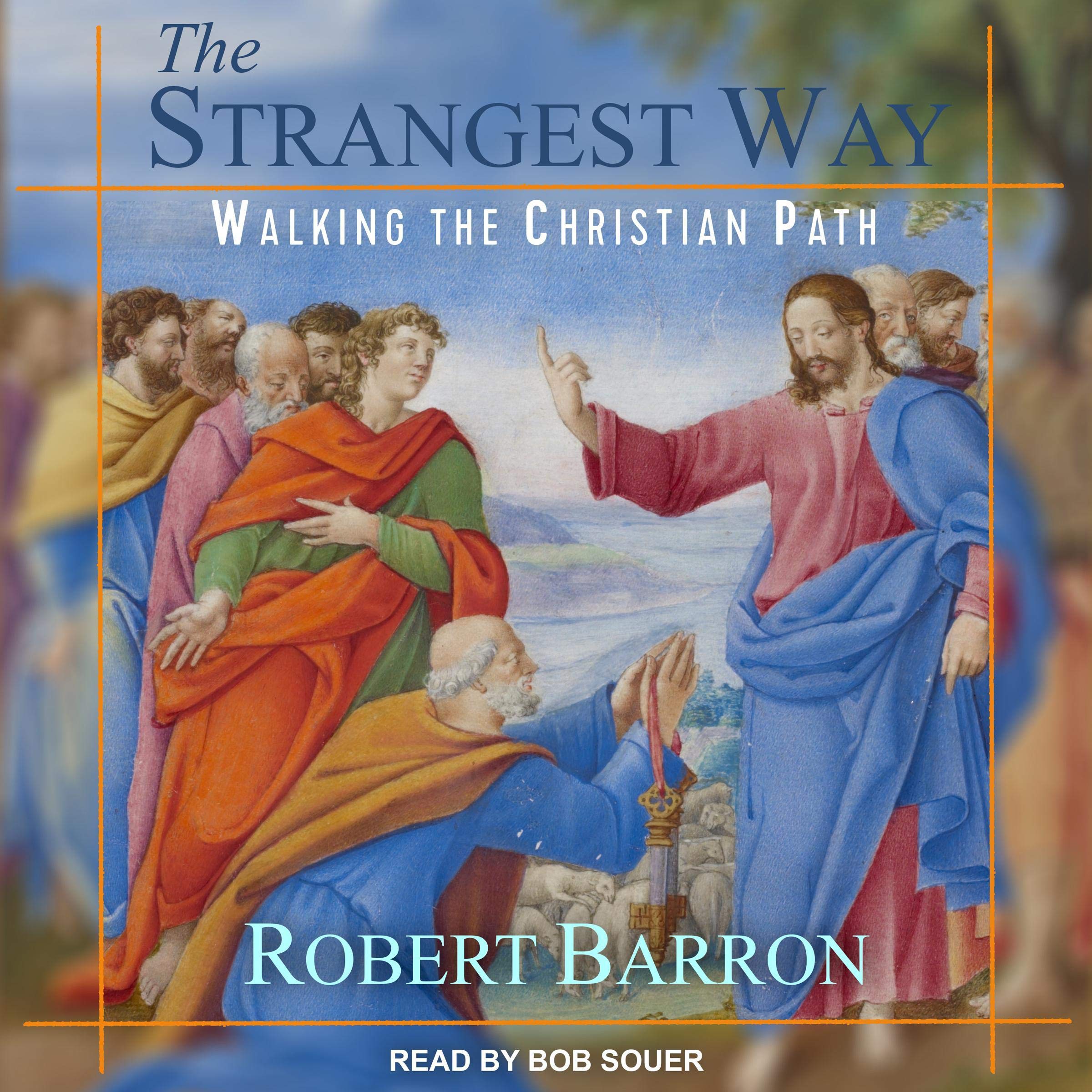
The Strangest Way: Walking the Christian Path
Is Christianity a bland, domesticated religion, unthreatening and easy to grasp? Or is it the most exotic, unexpected, and uncanny of religious paths? For the mystics and saints - and for Robert Barron, who discovered Christianity through them - it is surely the strangest way. "At its very center", writes Barron, "is a God who comes after us with a reckless abandon, breaking open his own heart in love in order to include us in the rhythm of his own life." What could be more compelling?
Audible Audio
First published April 1, 2002
About the author
Robert Barron
231 books902 followersBishop Robert Emmet Barron is an acclaimed author, speaker, and theologian. He is the former Francis Cardinal George Professor of Faith and Culture at Mundelein Seminary near Chicago and also is the founder of Word On Fire (www.WordOnFire.org).
Bishop Barron is the creator and host of CATHOLICISM, a groundbreaking ten-part documentary series and study program about the Catholic faith. He is a passionate student of art, architecture, music and history, which he calls upon throughout his global travels in the making of the documentary.
Word On Fire programs are broadcast regularly on WGN America, Relevant Radio, CatholicTV, EWTN, the popular Word on Fire YouTube Channel, and the Word on Fire website, which offers daily blogs, articles, commentaries, and over ten years of weekly sermon podcasts. In 2010, Father Barron was the first priest to have a national show on a secular television network since the 1950s.
Fr. Barron received his Masters Degree in Philosophy from the Catholic University of America in Washington DC in 1982 and his doctorate in Sacred Theology from the Institut Catholique in 1992. He was ordained to the priesthood in 1986 and has been a professor of systematic theology at the nation's largest Catholic seminary, the University of St. Mary of the Lake/Mundelein Seminary since 1992. He was visiting professor at the University of Notre Dame in 2002 and at the Pontifical University of St. Thomas Aquinas in 2007. He was also twice scholar in residence at the Pontifical North American College at the Vatican.
In addition, Fr. Barron lectures extensively in the United States and abroad. Cardinal Francis George calls Fr. Barron “one of the Church’s best messengers.
Fr. Barron was baptized at Queen of All Saints Basilica in Chicago and grew up at St. John of the Cross parish in Western Springs, Illinois.
WordOnFire.org - Fr. Barron's website launched in 1999 and currently draws over 1 million visitors a year from every continent. Fr. Barron posts weekly video clips, commentaries and radio sermons and offers an audio archive of over 500 homilies. Podcasts of his sermons are widely used by tens of thousands of visitors each month.
TV - EWTN (The Eternal Word Television Network) and CatholicTV broadcasts Fr. Barron's DVDs to a worldwide audience of over 150 million people.
Radio - Since 1999, Fr. Barron's weekly Word on Fire program has been broadcast in Chicago (WGN) and throughout the country (Relevant Radio - 950 AM Chicago) to 28 million listeners in 17 states. Fr. Barron also is a regular commentator on the "Busted Halo Show" on the Sirius satellite radio network based in New York.
DVDs - Fr. Barron's DVDs are used as powerful faith formation tools in universities, schools, churches and homes around the country. The series includes Seven Deadly Sins, Seven Lively Virtues; Faith Clips; Conversion: Following the Call of Christ; and Untold Blessing: Three Paths to Holiness.
YouTube - With over 180 online video commentaries by Fr. Barron, over 1 million viewers worldwide have made him the most popular of any evangelist on YouTube. These frequent, high-quality productions include brief and lively theological reviews of contemporary culture, including movies such as No Country for Old Men, Apocalypto, and The Departed, a three-part critical review of Christopher Hitchen's book God is Not Great, The Discovery Channel's The Jesus Tomb, the HBO series "The Sopranos", "Rome" and more.
Missions - MISSION CHICAGO features evangelization lectures by Fr. Barron at the behest of Cardinal George. These special missions and presentations throughout the Archdiocese are centered in downtown Chicago and attract business, civic, and cultural leaders.
Books - His numerous books and essays serve as critical educational and inspirational tools for seminarians, priests, parishioners and young people worldwide. His published works are also central to the numerous retreats, workshop and talks that h
Bishop Barron is the creator and host of CATHOLICISM, a groundbreaking ten-part documentary series and study program about the Catholic faith. He is a passionate student of art, architecture, music and history, which he calls upon throughout his global travels in the making of the documentary.
Word On Fire programs are broadcast regularly on WGN America, Relevant Radio, CatholicTV, EWTN, the popular Word on Fire YouTube Channel, and the Word on Fire website, which offers daily blogs, articles, commentaries, and over ten years of weekly sermon podcasts. In 2010, Father Barron was the first priest to have a national show on a secular television network since the 1950s.
Fr. Barron received his Masters Degree in Philosophy from the Catholic University of America in Washington DC in 1982 and his doctorate in Sacred Theology from the Institut Catholique in 1992. He was ordained to the priesthood in 1986 and has been a professor of systematic theology at the nation's largest Catholic seminary, the University of St. Mary of the Lake/Mundelein Seminary since 1992. He was visiting professor at the University of Notre Dame in 2002 and at the Pontifical University of St. Thomas Aquinas in 2007. He was also twice scholar in residence at the Pontifical North American College at the Vatican.
In addition, Fr. Barron lectures extensively in the United States and abroad. Cardinal Francis George calls Fr. Barron “one of the Church’s best messengers.
Fr. Barron was baptized at Queen of All Saints Basilica in Chicago and grew up at St. John of the Cross parish in Western Springs, Illinois.
WordOnFire.org - Fr. Barron's website launched in 1999 and currently draws over 1 million visitors a year from every continent. Fr. Barron posts weekly video clips, commentaries and radio sermons and offers an audio archive of over 500 homilies. Podcasts of his sermons are widely used by tens of thousands of visitors each month.
TV - EWTN (The Eternal Word Television Network) and CatholicTV broadcasts Fr. Barron's DVDs to a worldwide audience of over 150 million people.
Radio - Since 1999, Fr. Barron's weekly Word on Fire program has been broadcast in Chicago (WGN) and throughout the country (Relevant Radio - 950 AM Chicago) to 28 million listeners in 17 states. Fr. Barron also is a regular commentator on the "Busted Halo Show" on the Sirius satellite radio network based in New York.
DVDs - Fr. Barron's DVDs are used as powerful faith formation tools in universities, schools, churches and homes around the country. The series includes Seven Deadly Sins, Seven Lively Virtues; Faith Clips; Conversion: Following the Call of Christ; and Untold Blessing: Three Paths to Holiness.
YouTube - With over 180 online video commentaries by Fr. Barron, over 1 million viewers worldwide have made him the most popular of any evangelist on YouTube. These frequent, high-quality productions include brief and lively theological reviews of contemporary culture, including movies such as No Country for Old Men, Apocalypto, and The Departed, a three-part critical review of Christopher Hitchen's book God is Not Great, The Discovery Channel's The Jesus Tomb, the HBO series "The Sopranos", "Rome" and more.
Missions - MISSION CHICAGO features evangelization lectures by Fr. Barron at the behest of Cardinal George. These special missions and presentations throughout the Archdiocese are centered in downtown Chicago and attract business, civic, and cultural leaders.
Books - His numerous books and essays serve as critical educational and inspirational tools for seminarians, priests, parishioners and young people worldwide. His published works are also central to the numerous retreats, workshop and talks that h
Ratings & Reviews
Friends & Following
Create a free account to discover what your friends think of this book!
Community Reviews
Displaying 1 - 30 of 65 reviews

May 13, 2018
Good Story 184. Scott's walking the Christian path using Star Trek as his guide. Julie's reading Jeeves and Wooster for pointers. Bishop Barron thinks they'd better read his book again.
Original review below.
===========
This was written when Robert Barron was a priest, before he really came to wide-spread Catholic fame as an online presence. It is like Barron in a nutshell — engaging, conversational, explaining to believers how to live that "strangest way" of the cross in our everyday lives.
Barron takes three pieces of literature and uses them as guides to each of the three paths necessary for a fully engaged Christian life. Brideshead Revisited launches the discussion of Finding the Center, Dante's Purgatorio takes us through Knowing You're a Sinner, and Flannery O'Connor's The Violent Bear It Away engages us in Realizing Your Life is Not About You. Each path is woven through with a tapestry of philosophy, culture, and pop culture that deepen the conversation. Several practices for each path are recommended at the end of each section and these have their own rich discussions.
I found the book inspiring and enlightening. I have read and recommended several of Bishop Barron's books before but I'd say this is the key one of those I've read. Highly recommended.
Original review below.
===========
This was written when Robert Barron was a priest, before he really came to wide-spread Catholic fame as an online presence. It is like Barron in a nutshell — engaging, conversational, explaining to believers how to live that "strangest way" of the cross in our everyday lives.
Barron takes three pieces of literature and uses them as guides to each of the three paths necessary for a fully engaged Christian life. Brideshead Revisited launches the discussion of Finding the Center, Dante's Purgatorio takes us through Knowing You're a Sinner, and Flannery O'Connor's The Violent Bear It Away engages us in Realizing Your Life is Not About You. Each path is woven through with a tapestry of philosophy, culture, and pop culture that deepen the conversation. Several practices for each path are recommended at the end of each section and these have their own rich discussions.
I found the book inspiring and enlightening. I have read and recommended several of Bishop Barron's books before but I'd say this is the key one of those I've read. Highly recommended.
January 6, 2023
As far as I'm concerned, this is a devotional classic. Strongly Catholic, but highly useable for non-Catholics like me. It seems very accurate and sensible to me on what the Christian path is, why it is like it is, and the sort of walking we should do while we're on it. The few pages on discernment are some of the best I've read on the subject. Bonus points for lots of allusions from Dante to Flannery O'Connor to Susan Howatch to Bob Dylan.
September 27, 2008
This book altered me. I learned to love Catholics because of this book. It taught me of the Center. It's accessible and it uses art to convey Truth.

December 14, 2020
Undeniably pastoral and distinctly cultured, The Strangest Way... is a book I would recommend to most, if not all, Christians searching for something to kickstart or rewire their faith into something bolder and, you know, Christian. I read parts of the first two chapters for a class and decided to read the whole thing once the semester finished because it's short and interesting, and it's definitely worth the read if you like contemporary works on Christian spirituality.
This was written over a decade before Fr. Barron was consecrated a bishop. I am not the biggest fan of his media ministry, but he's still definitely one of the best ambassadors for the Church we see today and it's interesting how over ten years later, he still uses many of the same references to the same authors and books and different points of American culture. This isn't bad and it certainly tells me I need to read Flannery O'Connor, St. John of the Cross, Chesterton/Lewis and others, but if you're familiar with his videos, it seems like his writings are fairly similar.
The Strangest Way is well-written and systematic for the most part and does a remarkable job of articulating the Christian road - what he calls the strangest way - and his three fundamental marks of the Christian road are explained easy enough for laypeople. Strikingly, it can appeal to non-Catholics, although the bulk of his references go into Catholic tradition. Christians are, by baptism, initiated into the universal call to holiness and Barron seems to be especially reaching out to Christians who simply don't know how to be Christian. It helps to know basic theology before reading this, especially in the Catholic realm, but it is not necessary to understand what he's getting at for the most part.
For the book's faults and avoiding spoiling it, I don't like how the introduction and Ch. 1 start off sounding very academic and professional. Diving into a brief history of metaphysics in the past three centuries and also Brideshead Revisited among other points of reference, Fr. Barron sets an awkward pace for a book and dives into long and confusing (not so much in terms of content but in terms of figuring out his direction) tangents; he does this with a certain author already mentioned earlier in this review in the third chapter but to a greater extent. The concepts are interesting and help elaborate his point, but I don't see how the extent of his writing is really justified. A choppy pace hinders just about any book, especially because this isn't on philosophy (for the most part).
Barron's primary strength comes in founding the book's scope on a large scale for Christians looking to grow in holiness and, throughout each chapter, delineating the role of Catholicism in this call to holiness. Each chapter does this well, but it is most notable on the third chapter where Barron details the 'third path' that I won't reveal. I am biased as a Roman Catholic, as is he, but the general argument that Catholicism is true because it is the fullest and most sufficient way of living the Christian life which I argue, and Barron has many times before, is supported subtly in these 160 pages. But for other Christians, this book is still valuable and his explanations for walking the three paths of the Christian life are still applicable. Alas, Goodreads is not the medium for theological discourse - or is it? I would give this a 3.5 if possible but I feel comfortable with a 4-star rating.
This was written over a decade before Fr. Barron was consecrated a bishop. I am not the biggest fan of his media ministry, but he's still definitely one of the best ambassadors for the Church we see today and it's interesting how over ten years later, he still uses many of the same references to the same authors and books and different points of American culture. This isn't bad and it certainly tells me I need to read Flannery O'Connor, St. John of the Cross, Chesterton/Lewis and others, but if you're familiar with his videos, it seems like his writings are fairly similar.
The Strangest Way is well-written and systematic for the most part and does a remarkable job of articulating the Christian road - what he calls the strangest way - and his three fundamental marks of the Christian road are explained easy enough for laypeople. Strikingly, it can appeal to non-Catholics, although the bulk of his references go into Catholic tradition. Christians are, by baptism, initiated into the universal call to holiness and Barron seems to be especially reaching out to Christians who simply don't know how to be Christian. It helps to know basic theology before reading this, especially in the Catholic realm, but it is not necessary to understand what he's getting at for the most part.
For the book's faults and avoiding spoiling it, I don't like how the introduction and Ch. 1 start off sounding very academic and professional. Diving into a brief history of metaphysics in the past three centuries and also Brideshead Revisited among other points of reference, Fr. Barron sets an awkward pace for a book and dives into long and confusing (not so much in terms of content but in terms of figuring out his direction) tangents; he does this with a certain author already mentioned earlier in this review in the third chapter but to a greater extent. The concepts are interesting and help elaborate his point, but I don't see how the extent of his writing is really justified. A choppy pace hinders just about any book, especially because this isn't on philosophy (for the most part).
Barron's primary strength comes in founding the book's scope on a large scale for Christians looking to grow in holiness and, throughout each chapter, delineating the role of Catholicism in this call to holiness. Each chapter does this well, but it is most notable on the third chapter where Barron details the 'third path' that I won't reveal. I am biased as a Roman Catholic, as is he, but the general argument that Catholicism is true because it is the fullest and most sufficient way of living the Christian life which I argue, and Barron has many times before, is supported subtly in these 160 pages. But for other Christians, this book is still valuable and his explanations for walking the three paths of the Christian life are still applicable. Alas, Goodreads is not the medium for theological discourse - or is it? I would give this a 3.5 if possible but I feel comfortable with a 4-star rating.

August 26, 2013
I very much like Fr. Barron. He is a clear thinker who is very intelligent and has read widely. This comes out in his talks and in this book. One who has heard him speak can hear his voice distinctly in "The Strangest Way" where he tells us that the "odd particularity" of the Christian phenomenon is most known in its adherents worship of a God-Man nailed on an instrument of torture and death which means for Christian life "a conformity with a love unto death."
The bulk of the book is a final three chapters expounding upon his three paths of the Christian way: finding the center, knowing you are a sinner, and realizing your life is not about you. Throughout he is deft in weaving his knowledge of scripture, history, literature, culture, and languages to paint a vivid and poignant picture all the while providing much food for thought on how to practically live these paths. It is better read slowly and certainly would be even more appreciated the second time around.
Two things take away from the book, one specific, one general. The specific instance is a thirteen page summary of Flannery O'Connor's "The Violent Bear it Away" that really dragged along and failed to make any point I could relate to (even though the author attempts to weave it in to his writing afterward). I am barely familiar with O'Connor's work but this exercise seemed pointless and actually detracted from the book. More generally, it is unfortunate that the book is not accessible to a wider audience. There is much good that the average person in the pew could take away from it but I would not recommend it to any but the most engaged, interested, and educated church-goers. Had he brought it down a notch, or provided explanations for some of the more challenging theological concepts, it would be better suited for the masses.
The bulk of the book is a final three chapters expounding upon his three paths of the Christian way: finding the center, knowing you are a sinner, and realizing your life is not about you. Throughout he is deft in weaving his knowledge of scripture, history, literature, culture, and languages to paint a vivid and poignant picture all the while providing much food for thought on how to practically live these paths. It is better read slowly and certainly would be even more appreciated the second time around.
Two things take away from the book, one specific, one general. The specific instance is a thirteen page summary of Flannery O'Connor's "The Violent Bear it Away" that really dragged along and failed to make any point I could relate to (even though the author attempts to weave it in to his writing afterward). I am barely familiar with O'Connor's work but this exercise seemed pointless and actually detracted from the book. More generally, it is unfortunate that the book is not accessible to a wider audience. There is much good that the average person in the pew could take away from it but I would not recommend it to any but the most engaged, interested, and educated church-goers. Had he brought it down a notch, or provided explanations for some of the more challenging theological concepts, it would be better suited for the masses.

December 18, 2013
This book is not without some minor flaws, but overall, for the content it shares within it's relatively few pages, it is a solid powerhouse of truth. I am not Catholic, nor ever really thinking of becoming one, but I'll be the first to say Father Robert Barron is one of, if the the most, premier thinker and writer in our modern Christian world.
This book is not however for the lighter fare. If you are looking for your easy-to-read, surface, inspirational, spirituality, then you may find this book a bit too much philosophizing and heavy. The audience this book is more written for is the Christian who is struggling to juggle the walk of their faith among the midst of several paths the world seems to offer. The book's purpose is one of both reflection and centeredness. Recognizing (or Re-cognize as it is pointed out) yourself, detaching yourself to the things within that make you stray from your goals of walking with God, how modernity today is destroying it's own culture by giving us the illusion of strengthened independency, when connectedness to God and each other is so vital to our growth, and lastly, getting beyond our own personal desires and seeing how we our designed to accomplish God's will, that is how the kingdom of God survives and progresses.
This is a book I burned a few highlighters on and will forever be a staple in my library of spiritual books as it is soooo good for reference and reminders. The depth here is outstanding.
This book is not however for the lighter fare. If you are looking for your easy-to-read, surface, inspirational, spirituality, then you may find this book a bit too much philosophizing and heavy. The audience this book is more written for is the Christian who is struggling to juggle the walk of their faith among the midst of several paths the world seems to offer. The book's purpose is one of both reflection and centeredness. Recognizing (or Re-cognize as it is pointed out) yourself, detaching yourself to the things within that make you stray from your goals of walking with God, how modernity today is destroying it's own culture by giving us the illusion of strengthened independency, when connectedness to God and each other is so vital to our growth, and lastly, getting beyond our own personal desires and seeing how we our designed to accomplish God's will, that is how the kingdom of God survives and progresses.
This is a book I burned a few highlighters on and will forever be a staple in my library of spiritual books as it is soooo good for reference and reminders. The depth here is outstanding.

June 16, 2011
Mindblowing, metaphysical, and somehow surprisingly down to earth.
Positing that Christianity is about God's search for us and not the other way around, using Brideshead, Dante, and Flannery to illustrate God as center, man as forgiven sinner, and life as not our own, respectively, and going into some really heady theological philosophical stuff from there. There was some philosophy-writing structure that lost it the fifth star, but the premise that Catholicism is built on the idea that we're part of some strange cosmic plan rather than self-contained internalized beings responsible for and to ourselves is one I would like to hear more often.
Also, that premise is one that Harry Angstrom should hear, and something I was glad to follow up on Rabbit Run with. There's no existing without being part of community, as hard and complicated as that is. Personal freedom and liberty at the expense of one's community is a false god, jerko.
Also, I should probably read Dante's Purgatorio.
Positing that Christianity is about God's search for us and not the other way around, using Brideshead, Dante, and Flannery to illustrate God as center, man as forgiven sinner, and life as not our own, respectively, and going into some really heady theological philosophical stuff from there. There was some philosophy-writing structure that lost it the fifth star, but the premise that Catholicism is built on the idea that we're part of some strange cosmic plan rather than self-contained internalized beings responsible for and to ourselves is one I would like to hear more often.
Also, that premise is one that Harry Angstrom should hear, and something I was glad to follow up on Rabbit Run with. There's no existing without being part of community, as hard and complicated as that is. Personal freedom and liberty at the expense of one's community is a false god, jerko.
Also, I should probably read Dante's Purgatorio.
July 7, 2012
This book was really challenging for me to read, but it was very worth it! In fact, I'll probably need to add it to my "read every year or so" list of books. Why? Because it challenges the Sin in us that causes us to be self-focused. Self or God? What a question. It delves into the 7 manifestations of Sin in chapter 2 (the "seven deadly sins") and really adds light to what is happening in the soul to see those manifest (or not). It touches on disciplines of the Christian life that I tend to neglect. Primarily it instructs in the WAY of living that can actually become instinct when we are living out of Christ in our center. It also reveals the nature of our beautiful Trinitarian God and what that can stir in us. I'm not a writer, so don't judge my review. Just read this book...press through chapter one (it's got some good stuff, but is harder to read); chapter two is amazing; and chapter three brings it to action.

October 23, 2022
Pushing 4.5 ⭐'s
A great read for Christians of any denomination. Barron (Catholic) uses literature, personal anecdotes, theology, and scripture to illustrate the Christian life as a "way." Christianity is not just brain deep. It is rather a whole way of living. This was my first encounter with Bishop Barron and I deeply enjoyed it!
A great read for Christians of any denomination. Barron (Catholic) uses literature, personal anecdotes, theology, and scripture to illustrate the Christian life as a "way." Christianity is not just brain deep. It is rather a whole way of living. This was my first encounter with Bishop Barron and I deeply enjoyed it!

May 2, 2024
Barron writes a good book and carries on a compelling conversation in The Strangest Way. Though he admits the Catholic orientation of his book, I found much to learn from in his portrayal of the strange path that is Christianity.
Barron also deconstructs the Cartesian model that attempts to rationalize life and Christianity. He emphasizes an embodied approach to Christianity, outlined in the walking of three paths oriented around the Christ of the cross.
I find myself disagreeing with some of Barron's practices, especially those that feel iconic or sacramental. His practices are intentionally embodied, and I appreciate that focus.
I would definitely recommend the book for a thought-provoking read.
Barron also deconstructs the Cartesian model that attempts to rationalize life and Christianity. He emphasizes an embodied approach to Christianity, outlined in the walking of three paths oriented around the Christ of the cross.
I find myself disagreeing with some of Barron's practices, especially those that feel iconic or sacramental. His practices are intentionally embodied, and I appreciate that focus.
I would definitely recommend the book for a thought-provoking read.

July 16, 2026
Bishop Barron, you've done it again.
On its face, this book outlines three paths of the Way of Christianity: finding the center, knowing you're a sinner, and knowing your life is not about you. Along the way, you'll find rich literary and historical references, along with practices to guide you on each path.
But this book is not simply a "how-to" guide or a textbook. Rather, Bishop Barron peels back the curtain on a faith we may have grown complacent with to reveal the great strangeness and great beauty of Christianity. The text engages not only the intellect, but also the heart, piercing through the fog of mundane-ness (is that a word?)and galvanizing the heart in its pursuit of God.
TL;DR I highly HIGHLY recommend this book. Five stars.
On its face, this book outlines three paths of the Way of Christianity: finding the center, knowing you're a sinner, and knowing your life is not about you. Along the way, you'll find rich literary and historical references, along with practices to guide you on each path.
But this book is not simply a "how-to" guide or a textbook. Rather, Bishop Barron peels back the curtain on a faith we may have grown complacent with to reveal the great strangeness and great beauty of Christianity. The text engages not only the intellect, but also the heart, piercing through the fog of mundane-ness (is that a word?)and galvanizing the heart in its pursuit of God.
TL;DR I highly HIGHLY recommend this book. Five stars.

June 28, 2024
This is a broad-ranging book that covers vast theological territory in a way that treats its audience with immense respect. Barron outlines three paths of holiness: the first path is drawing close to Christ at the centre; the second, admitting our dysfunction (sin) and becoming healed and transformed; the third path is discerning and performing our mission.
He draws on many contemporary and ancient theologians, as well as the lives of the saints, to illustrate the playing out of these paths. To me, it's debatable whether these occur always in a neat sequence. It often seems like God is the universal project manager, using agile methodology (common in tech), creating multiple iterations of people over time, even as they are fulfilling their purpose in a state of imperfection. Illumination of conscience and Metanoia doesn't seem like a one-time thing in life, though this may be different for those who go through heavily guided spiritual direction in seminaries.
There are numerous treasures in this book, and many quotes and references that I wrote down to check out later. Obviously, Barron is more than a Dylan fanatic, he's also a theological powerhouse and brilliant communicator. This is a book that I will probably return to again and again.
This rest of this review is mostly a long, and maybe slightly clumsy, meditation on what Bishop Barron's ministry, peppered with Dylan and Dorothy Day references, symbolizes to me, and probably to many others in the world, with varying details. It's hugely optional reading, and also addresses a few more general trends I find both heartening and deeply concerning in current evangelization as a whole.
I've been following Bishop Barron's YouTube channel with avid interest for a while. With some caveats (below), I believe he represents a kind of apotheosis for many today, who are of a generation that wasn't really fully cathechized, or had a watered-down version of Christ fed to them as kids, then lived through one of the worst crises the Church has ever experienced. I relate elements of my own trajectory as a way of illustrating this, not because I believe my own story is in any way important or unique. I'd imagine it's all too common in outline, if not in the details, in relation to Catholics who came of age in the latter part of the 20th century in Western countries.
As a teen, my education in ethics largely consisted in ensuring I listened repeatedly to the entirety of my brother's back catalogue of Bob Dylan albums. I would sit with the yellow-covered book, Dylan's Writings and Drawings, with the headphones on and hope that nobody in the house would interrupt my intent meditations from the adjoining living room, which was in my mind a different universe, with its Sacred Heart picture and its loud TV news, somehow competing with one another.
Dylan took priority for a significant time over schoolwork, and certainly over religion. I was certain in that somewhat self-justifying teenage way that familiarizing myself with this artist's work was the best use of my time. My brother and I would go to see Dylan when he played Ireland with a reverence more reminiscent of pilgrims than mere pop fans. At the time, in Ireland of the 1980s and early '90s, popular music of any kind and religion were seen as largely at odds with one another. Those who advocated for one seemed to feel obligated to slam the other, apart from a few tentative souls who never really seemed to take off in the public arena.
I was also an avid reader of the music press. The official position of music critics on Dylan's Christian albums of the late '70s and early '80s was to present them as an anomaly. They were an unfortunate interruption in an otherwise pretty stellar music career.
At 20, I was required to do a college essay on Christian allegory in a Christina Rosetti poem. I read the Gospels again for the first time in some years purely to facilitate this, and became fascinated by this Yeshua person, in a similar vein and pattern to the excited beginnings of my fascination with Dylan as a 'tween'. Somehow, there was already a default pattern in my teens of developing a penchent for the creative output of radical Jewish men who were social critics speaking in prophetic language, which actually went beyond Dylan (extending to Leonard Cohen, Lenny Bruce and a few other figures).
This Yeshua, however, seemed to demand much more of society and individuals, than any of these modern figures, and was completely beyond reproach in terms of integrity, to the extent that He must actually be truth in embodied form. I became re-hooked in rapidly, after a sudden and violent collapse in health soon after that seemed to come out of nowhere. It was then that I started to listen to Dylan's Christian works intently. They were like oxygen to me at this time. Later, post-college, I saw footage of a community, including two priests, praying by a bonfire of draft cards they had set in the '60s, and knew immediately I was in trouble, but that's another story.
Despite this initial strange (and frightening) reversion experience, the idea that one day, a bishop of the Catholic Church would burst on to social media, catechising the world with Dylan quotes (among other things), would have seemed impossible at that time, in an Ireland and world in which the Chuch was beginning to deal with its own deeply problematic areas and blind spots. Struggles in the spiritual life were best dealt with elsewhere, was the conclusion of many of my generation, sadly, but in many ways, highly underestandably.
Some turned to gurus, some dabbled in shadowy New Age philosophies bordering on the occult, others just went into lukewarm 'nominal Christian' mode. Much of the time, all I knew was that I needed Christ in my life, and He wanted this friendship of me also - the rest was still to be worked out. What that meant in practice was sometimes highly sketchily discerned.
My generation was definitely not given the proper armour to deal with assaults on personal dignity, and this was especially the case if we were women (but was also true of many men I knew who dealt with abuses in the education system). There was just no adequate language available to us to deal with these scenarios, and it was made known that such matters required our silence instead of openness. Accordingly, many kept our suffering and confusion arising from adverse humiliating or challenging experiences in our social secular lives to ourselves.
The Church hierarchy can decry feminism all it wants, but women whose dignity has been violently assaulted will find a compassion and understanding in the Rape Crisis Centers (which cater to men also) or women's shelters, to give a couple of examples, that wouldn't typically be available to them in a Church setting. I differ with Bishop Barron on the idea that feminism is always problematic - services inspired by it fill a void that the Church simply doesn't, despite some of the points of difference on issues such as abortion (an issue that not all feminists agree upon).
On a personal faith level, you don't need to go beyond the Christ of the Gospels to find the ultimate advocate for upholding the dignity of women. On a societal, concrete level, you sometimes need to go beyond His church.
If I'd been in His band of followers, I would have no doubt felt safe enough not to need feminism. In terms of modern society and gender-based violence, the unfortunate fact was that in Christian societies, those who needed to heal from things like date rape or other forms of sexual assault often did not find this solidarity in Christian settings. They instead found judgment and re-victimization of the what-did-you-wear-to-make-this-happen variety (when you dressed normally, spoke normally, etc.) This is still true, at least to some extent, and it is a sad reality that the Church established by the ultimate scapegoat to prevent unnecessary sacrifice still has its own scapegoating mechanisms.
Chirstian evangelists such as Bishop Barron taking to social media to embrace, say, Jordan Peterson in his admittedly courageous faith journey, are all very well and good. But if in the process, they're slamming feminism, and thus the social resources many women desperately still need, without addressing this void in the Church, then it just gets a bit wearying and divisive. I am not even referring to an ideology here, really; it's just social reality.
The underlying, and slightly intellectually lazy, assumption that all manifestations of feminism represent misandry is also a huge part of this trend. It's an assumption that's often based on an assessment of the most extreme aspects of feminism in the US, and the most extreme spokespeople. The most extreme of anything in the US is generally highly misrepresentative as a rule. I'd agree that elements of US feminism are flawed and inconsistent. This is something European feminisms have often recognized, particularly the likes of Cixous and Kristeva. Think about how it would be if all Christians assumed all clergy were the same as the problematic clergy in the news from the 1990s onwards. Thankfully, all reasonable people know this is absolutely not the case.
We have the more alarming specatcle, now, though not courtesy of Bishop Barron, of Russell Brand being presented as a leading Christian spokesperson soon after getting baptized in the Thames, and possibly long before he has had time to come to terms with the sequence of events that led to his baptism in the first place. For those women in Christian communities who have suffered silently as a result of sexual violence, this is a difficult thing to watch, even as we may feel thankful for his conversion.
The overall point here is that Church figures should avoid criticizing feminism unless they're willing to put structures in place to support women who have experienced severe abuses in the wider and increasingly permissive, uncaring society, which is only getting worse, rather than better. Christian people already know that all 'isms' are less than ideal and contingent, and will not be necessary post-eschaton. However, sometimes the more moderate and compassionate proponents of those 'isms' deliver healing, and various works of mercy, in a way that explicitly Christian communities do not.
In retrospect, and despite the caveats outlined above, it seems inevitable that the wheel would turn full circle in the Church. Somehow, the very existence of this Dylan-spouting bishop in itself resolves something in me, and represents an essential milestone reached. Some day, someone had to emerge from the ashes of the scandals who would speak a somewhat recognizable language, quoting Dorothy Day, C.S. Lewis, and Dylan.
Stubbornly, I can claim the Church of my birth as belonging to me, as much as anybody else, and as belonging to women, as much as anybody else. It suddenly seems to be written in the sand, just as it was written in first-century Palestinian sand by the beautiful truth-telling Jewish God-man. I feel thankful for this. This sense of belonging was tentative in the past, for reasons outlined, as identification became automatically with those somewhat marginalized from that fold due to adverse life experiences that meant their broken hearts weren't welcome, let alone understood, in the Church of the man who sought out the marginalized as friends.
The hierarchy seemed somewhere in the ether, pushing paper, making pronouncements without explaining the logic or the theology, with limited regard for the concrete realities of the lives of the laity. Now it seems like it's time to step up and say: it's our chuch too; we are organs in the Body. This is definitely a plus of Barron's theology and minsitry: it provides that framework, even if I have areas of disagreement with his social outlook.
He draws on many contemporary and ancient theologians, as well as the lives of the saints, to illustrate the playing out of these paths. To me, it's debatable whether these occur always in a neat sequence. It often seems like God is the universal project manager, using agile methodology (common in tech), creating multiple iterations of people over time, even as they are fulfilling their purpose in a state of imperfection. Illumination of conscience and Metanoia doesn't seem like a one-time thing in life, though this may be different for those who go through heavily guided spiritual direction in seminaries.
There are numerous treasures in this book, and many quotes and references that I wrote down to check out later. Obviously, Barron is more than a Dylan fanatic, he's also a theological powerhouse and brilliant communicator. This is a book that I will probably return to again and again.
This rest of this review is mostly a long, and maybe slightly clumsy, meditation on what Bishop Barron's ministry, peppered with Dylan and Dorothy Day references, symbolizes to me, and probably to many others in the world, with varying details. It's hugely optional reading, and also addresses a few more general trends I find both heartening and deeply concerning in current evangelization as a whole.
I've been following Bishop Barron's YouTube channel with avid interest for a while. With some caveats (below), I believe he represents a kind of apotheosis for many today, who are of a generation that wasn't really fully cathechized, or had a watered-down version of Christ fed to them as kids, then lived through one of the worst crises the Church has ever experienced. I relate elements of my own trajectory as a way of illustrating this, not because I believe my own story is in any way important or unique. I'd imagine it's all too common in outline, if not in the details, in relation to Catholics who came of age in the latter part of the 20th century in Western countries.
As a teen, my education in ethics largely consisted in ensuring I listened repeatedly to the entirety of my brother's back catalogue of Bob Dylan albums. I would sit with the yellow-covered book, Dylan's Writings and Drawings, with the headphones on and hope that nobody in the house would interrupt my intent meditations from the adjoining living room, which was in my mind a different universe, with its Sacred Heart picture and its loud TV news, somehow competing with one another.
Dylan took priority for a significant time over schoolwork, and certainly over religion. I was certain in that somewhat self-justifying teenage way that familiarizing myself with this artist's work was the best use of my time. My brother and I would go to see Dylan when he played Ireland with a reverence more reminiscent of pilgrims than mere pop fans. At the time, in Ireland of the 1980s and early '90s, popular music of any kind and religion were seen as largely at odds with one another. Those who advocated for one seemed to feel obligated to slam the other, apart from a few tentative souls who never really seemed to take off in the public arena.
I was also an avid reader of the music press. The official position of music critics on Dylan's Christian albums of the late '70s and early '80s was to present them as an anomaly. They were an unfortunate interruption in an otherwise pretty stellar music career.
At 20, I was required to do a college essay on Christian allegory in a Christina Rosetti poem. I read the Gospels again for the first time in some years purely to facilitate this, and became fascinated by this Yeshua person, in a similar vein and pattern to the excited beginnings of my fascination with Dylan as a 'tween'. Somehow, there was already a default pattern in my teens of developing a penchent for the creative output of radical Jewish men who were social critics speaking in prophetic language, which actually went beyond Dylan (extending to Leonard Cohen, Lenny Bruce and a few other figures).
This Yeshua, however, seemed to demand much more of society and individuals, than any of these modern figures, and was completely beyond reproach in terms of integrity, to the extent that He must actually be truth in embodied form. I became re-hooked in rapidly, after a sudden and violent collapse in health soon after that seemed to come out of nowhere. It was then that I started to listen to Dylan's Christian works intently. They were like oxygen to me at this time. Later, post-college, I saw footage of a community, including two priests, praying by a bonfire of draft cards they had set in the '60s, and knew immediately I was in trouble, but that's another story.
Despite this initial strange (and frightening) reversion experience, the idea that one day, a bishop of the Catholic Church would burst on to social media, catechising the world with Dylan quotes (among other things), would have seemed impossible at that time, in an Ireland and world in which the Chuch was beginning to deal with its own deeply problematic areas and blind spots. Struggles in the spiritual life were best dealt with elsewhere, was the conclusion of many of my generation, sadly, but in many ways, highly underestandably.
Some turned to gurus, some dabbled in shadowy New Age philosophies bordering on the occult, others just went into lukewarm 'nominal Christian' mode. Much of the time, all I knew was that I needed Christ in my life, and He wanted this friendship of me also - the rest was still to be worked out. What that meant in practice was sometimes highly sketchily discerned.
My generation was definitely not given the proper armour to deal with assaults on personal dignity, and this was especially the case if we were women (but was also true of many men I knew who dealt with abuses in the education system). There was just no adequate language available to us to deal with these scenarios, and it was made known that such matters required our silence instead of openness. Accordingly, many kept our suffering and confusion arising from adverse humiliating or challenging experiences in our social secular lives to ourselves.
The Church hierarchy can decry feminism all it wants, but women whose dignity has been violently assaulted will find a compassion and understanding in the Rape Crisis Centers (which cater to men also) or women's shelters, to give a couple of examples, that wouldn't typically be available to them in a Church setting. I differ with Bishop Barron on the idea that feminism is always problematic - services inspired by it fill a void that the Church simply doesn't, despite some of the points of difference on issues such as abortion (an issue that not all feminists agree upon).
On a personal faith level, you don't need to go beyond the Christ of the Gospels to find the ultimate advocate for upholding the dignity of women. On a societal, concrete level, you sometimes need to go beyond His church.
If I'd been in His band of followers, I would have no doubt felt safe enough not to need feminism. In terms of modern society and gender-based violence, the unfortunate fact was that in Christian societies, those who needed to heal from things like date rape or other forms of sexual assault often did not find this solidarity in Christian settings. They instead found judgment and re-victimization of the what-did-you-wear-to-make-this-happen variety (when you dressed normally, spoke normally, etc.) This is still true, at least to some extent, and it is a sad reality that the Church established by the ultimate scapegoat to prevent unnecessary sacrifice still has its own scapegoating mechanisms.
Chirstian evangelists such as Bishop Barron taking to social media to embrace, say, Jordan Peterson in his admittedly courageous faith journey, are all very well and good. But if in the process, they're slamming feminism, and thus the social resources many women desperately still need, without addressing this void in the Church, then it just gets a bit wearying and divisive. I am not even referring to an ideology here, really; it's just social reality.
The underlying, and slightly intellectually lazy, assumption that all manifestations of feminism represent misandry is also a huge part of this trend. It's an assumption that's often based on an assessment of the most extreme aspects of feminism in the US, and the most extreme spokespeople. The most extreme of anything in the US is generally highly misrepresentative as a rule. I'd agree that elements of US feminism are flawed and inconsistent. This is something European feminisms have often recognized, particularly the likes of Cixous and Kristeva. Think about how it would be if all Christians assumed all clergy were the same as the problematic clergy in the news from the 1990s onwards. Thankfully, all reasonable people know this is absolutely not the case.
We have the more alarming specatcle, now, though not courtesy of Bishop Barron, of Russell Brand being presented as a leading Christian spokesperson soon after getting baptized in the Thames, and possibly long before he has had time to come to terms with the sequence of events that led to his baptism in the first place. For those women in Christian communities who have suffered silently as a result of sexual violence, this is a difficult thing to watch, even as we may feel thankful for his conversion.
The overall point here is that Church figures should avoid criticizing feminism unless they're willing to put structures in place to support women who have experienced severe abuses in the wider and increasingly permissive, uncaring society, which is only getting worse, rather than better. Christian people already know that all 'isms' are less than ideal and contingent, and will not be necessary post-eschaton. However, sometimes the more moderate and compassionate proponents of those 'isms' deliver healing, and various works of mercy, in a way that explicitly Christian communities do not.
In retrospect, and despite the caveats outlined above, it seems inevitable that the wheel would turn full circle in the Church. Somehow, the very existence of this Dylan-spouting bishop in itself resolves something in me, and represents an essential milestone reached. Some day, someone had to emerge from the ashes of the scandals who would speak a somewhat recognizable language, quoting Dorothy Day, C.S. Lewis, and Dylan.
Stubbornly, I can claim the Church of my birth as belonging to me, as much as anybody else, and as belonging to women, as much as anybody else. It suddenly seems to be written in the sand, just as it was written in first-century Palestinian sand by the beautiful truth-telling Jewish God-man. I feel thankful for this. This sense of belonging was tentative in the past, for reasons outlined, as identification became automatically with those somewhat marginalized from that fold due to adverse life experiences that meant their broken hearts weren't welcome, let alone understood, in the Church of the man who sought out the marginalized as friends.
The hierarchy seemed somewhere in the ether, pushing paper, making pronouncements without explaining the logic or the theology, with limited regard for the concrete realities of the lives of the laity. Now it seems like it's time to step up and say: it's our chuch too; we are organs in the Body. This is definitely a plus of Barron's theology and minsitry: it provides that framework, even if I have areas of disagreement with his social outlook.
September 7, 2019
This an awesome book. Very insightful and practical for living the Christian life. You can see many of Bishop Barrons themes in the book that are present in much of his other material. If you are afraid of spoilers for the novels Brideshead Revisited or The Violent Bear It Away I would suggest you read those two books first.
I also enjoyed his short treatment of modernity. It is a good summary for those who aren’t familiar with enlightenment thinkers and how their thought has affected how we think and perceive the world.
I also enjoyed his short treatment of modernity. It is a good summary for those who aren’t familiar with enlightenment thinkers and how their thought has affected how we think and perceive the world.

July 6, 2014
Robert Barron's Strangest Way: Walking the Christian Path distills the Christian journey towards the eternal partria into three roads: (1) Finding your center in Christ, (2) knowing that you are a sinner, and (3) realizing your life is not about you. In expounding on these three key elements of authentic discipleship, Barron weaves elements of philosophy, theology, and literature to illustrate what constitutes, and does not constitute, a life that adheres to the demands of Christian virtue.
There are many instances of fresh insight and novel angles on themes like faith and reason, the costs of discipleship, and overcoming vice, but the book at times suffers from a lack of cogency as the key themes are presented. References and citations of primary sources throughout the book, though interesting, sometimes detract from the overall narrative flow of the book; in my assessment, quotes and anecdotes appear to be chosen with a primary concern for augmenting the intellectual heft of the book, rather than to clarify a theological concept that Barron holds to be essential for understanding his core thesis.
Still, the book has many highlights. Here are some places where Barron is at his best:
Barron's analysis of Dante's Purgatorio is spot on. He highlights the seven deadly sins that Dante and Virgil encounter in their ascent of the seven story mountain of Purgatory, identifies the Marian scriptural response to weed out each sin, and presents a snapshot of the 14th Century's hierarchy of morality. Pride, the gravest of the seven deadly sins, must be addressed before the lighter vices--gluttony and lust being the least serious to the Medieval mind--can be overcome. The commentary on the Purgatorio culminates with a tidy aside on the interplay between philosophy and theology: "As [Dante] turns, at the summit of Purgatory, to consult with Virgil his loyal companion, he finds the Roman poet gone. Reason can take us only as far as honest introspection and purgation, but then it must give way to a surer guide."
The epigraphs at the start of each chapter draw upon scriptural, theological, and musical sources to suggest a theme for the ensuing pages. These wide ranging sources--Bob Dylan quotes are a favorite of Barron--show the breadth of the author's scholarship. One such quote by Thomas Aquinas leapt off the page upon reading: "All artists love what they give birth to--parents love their children; poets love their poems; craftsmen love their handiwork. How then could God hate a single thing since God is the artist of everything?" These sorts theological adages and one-liners abound in the text and are among the most interesting elements of the text.
Insights into the purpose of life and principles for discernment are presented intermittently throughout the text. Robert Barron's treatment of these guidelines for human flourishing are quite good and reflect his years as a seminary professor charged with helping people uncover their vocation in life. One helpful commentary that Barron offers is that people have unique temperaments. He summarizes the writings of Hans Urs von Balthasar in this regard, recognizing that faithful Christians can follow one of three different models of holiness in ministry: (1) Petrine ministry, which seeks to "order, direct, guide, and coordinate" though leadership; (2) Johannine ministry, which emphasizes the "mystical, contemplative, [and] liturgical" elements of spirituality; and (3) Pauline ministry as "preacher, proclaimer, and... missionary... Restless, unsatisfied, feisty, intellectually curious... the prototype of all Christian philosophers, theologians, teachers, adventurers, and missionaries." In describing the varied charisms of Christian life, Barron hastens to add that "all of us are born with the seeds of who we are destined to become planted within us. The success or failure of one's life is measured according to the development or frustration of these seeds."
And that overriding message, that we are called to cultivate our gifts and talents so that we may close the gap between what we are and what we ought to be, is an elegant summary of what it means to be a Christian. In touching upon this and other key themes of the Christian path, Fr. Barron's book shines. These high notes of theological wisdom make Strangest Way: Walking the Christian Path a good book; if these notes were brought into harmony with the at times discordant theological opus, it would be excellent.
Recommended to individuals interested in an overview of Catholic thought from a philosophical, theological, and literary perspective.
There are many instances of fresh insight and novel angles on themes like faith and reason, the costs of discipleship, and overcoming vice, but the book at times suffers from a lack of cogency as the key themes are presented. References and citations of primary sources throughout the book, though interesting, sometimes detract from the overall narrative flow of the book; in my assessment, quotes and anecdotes appear to be chosen with a primary concern for augmenting the intellectual heft of the book, rather than to clarify a theological concept that Barron holds to be essential for understanding his core thesis.
Still, the book has many highlights. Here are some places where Barron is at his best:
Barron's analysis of Dante's Purgatorio is spot on. He highlights the seven deadly sins that Dante and Virgil encounter in their ascent of the seven story mountain of Purgatory, identifies the Marian scriptural response to weed out each sin, and presents a snapshot of the 14th Century's hierarchy of morality. Pride, the gravest of the seven deadly sins, must be addressed before the lighter vices--gluttony and lust being the least serious to the Medieval mind--can be overcome. The commentary on the Purgatorio culminates with a tidy aside on the interplay between philosophy and theology: "As [Dante] turns, at the summit of Purgatory, to consult with Virgil his loyal companion, he finds the Roman poet gone. Reason can take us only as far as honest introspection and purgation, but then it must give way to a surer guide."
The epigraphs at the start of each chapter draw upon scriptural, theological, and musical sources to suggest a theme for the ensuing pages. These wide ranging sources--Bob Dylan quotes are a favorite of Barron--show the breadth of the author's scholarship. One such quote by Thomas Aquinas leapt off the page upon reading: "All artists love what they give birth to--parents love their children; poets love their poems; craftsmen love their handiwork. How then could God hate a single thing since God is the artist of everything?" These sorts theological adages and one-liners abound in the text and are among the most interesting elements of the text.
Insights into the purpose of life and principles for discernment are presented intermittently throughout the text. Robert Barron's treatment of these guidelines for human flourishing are quite good and reflect his years as a seminary professor charged with helping people uncover their vocation in life. One helpful commentary that Barron offers is that people have unique temperaments. He summarizes the writings of Hans Urs von Balthasar in this regard, recognizing that faithful Christians can follow one of three different models of holiness in ministry: (1) Petrine ministry, which seeks to "order, direct, guide, and coordinate" though leadership; (2) Johannine ministry, which emphasizes the "mystical, contemplative, [and] liturgical" elements of spirituality; and (3) Pauline ministry as "preacher, proclaimer, and... missionary... Restless, unsatisfied, feisty, intellectually curious... the prototype of all Christian philosophers, theologians, teachers, adventurers, and missionaries." In describing the varied charisms of Christian life, Barron hastens to add that "all of us are born with the seeds of who we are destined to become planted within us. The success or failure of one's life is measured according to the development or frustration of these seeds."
And that overriding message, that we are called to cultivate our gifts and talents so that we may close the gap between what we are and what we ought to be, is an elegant summary of what it means to be a Christian. In touching upon this and other key themes of the Christian path, Fr. Barron's book shines. These high notes of theological wisdom make Strangest Way: Walking the Christian Path a good book; if these notes were brought into harmony with the at times discordant theological opus, it would be excellent.
Recommended to individuals interested in an overview of Catholic thought from a philosophical, theological, and literary perspective.

November 19, 2021
One of the best theological/spirituality books I've read all year. Right up my alley as a humanities grad, Barron uses a plethora of examples throughout from literature, art, architecture, etc. to illustrate the principles of his rather simple (but immensely rich) formula for the Christian life.

November 5, 2025
4.5 ⭐️
I’m not catholic so while I didn’t agree with everything I appreciated this book so much. I love the idea that Christianity is a path we follow and several concepts have allowed me to teach in a much more embodied/tangible way- especially for young people.
I’m not catholic so while I didn’t agree with everything I appreciated this book so much. I love the idea that Christianity is a path we follow and several concepts have allowed me to teach in a much more embodied/tangible way- especially for young people.

March 30, 2015
One definitely hears Fr. Barron's voice in this book, as he is a very familiar from his Word on Fire website and with well over 300 videos on YouTube. This is the first of his books that I've read. His writing style is very much like his speaking style, gentle and conversational. I particularly enjoyed his analysis of Brideshead Revisited and Dante's Inferno. In fact, Barron is all over the place with literary analysis, really boggling my mind. I think I have a whole new reading list!
As Fr. Barron says, our lives are really not so much about our quest for God, as God's relentless quest for us. He says if we wander, there is always that connecting thread ready to yank us back. Somehow, it's also about the ritual and the full-body experience of worship that is our faith. Those days when we don't feel like praying or going to daily mass, but we "suit up and show up" anyway, we accept and submit. The more we do it, the stronger the bond, even if we aren't conscious of it. Fr. Barron points out that spending time with Jesus is the only way we can know him. It's a very thought-provoking book!
As Fr. Barron says, our lives are really not so much about our quest for God, as God's relentless quest for us. He says if we wander, there is always that connecting thread ready to yank us back. Somehow, it's also about the ritual and the full-body experience of worship that is our faith. Those days when we don't feel like praying or going to daily mass, but we "suit up and show up" anyway, we accept and submit. The more we do it, the stronger the bond, even if we aren't conscious of it. Fr. Barron points out that spending time with Jesus is the only way we can know him. It's a very thought-provoking book!

December 21, 2013
I find it is easy to explain why I disliked a book or movie. But when explaining why I liked something, I get somewhat incoherent.
Anywho, this is the only book I got for a college class that I still regularly read. Prior to reading this book I was Catholic but only because I'd been raised Catholic and had simply always been Catholic. But Father (now Bishop) Barron's book opened my eyes to just how strange Christianity is. It is, or at least it ought to be, more than just an hour Sunday morning. Christianity, when embraced, permeates the life and transforms you.
And now years later, I'm still not much of a Christian but can still see how I've grown and improved. And rereading Barron's book brings me back to the first steps of my journey and helps me see where I've been and where I still need to go.
Rereading that I realize it's not so much a review of the book as a confession or reflection on how it influenced me. C'est la vie I guess.
Anywho, this is the only book I got for a college class that I still regularly read. Prior to reading this book I was Catholic but only because I'd been raised Catholic and had simply always been Catholic. But Father (now Bishop) Barron's book opened my eyes to just how strange Christianity is. It is, or at least it ought to be, more than just an hour Sunday morning. Christianity, when embraced, permeates the life and transforms you.
And now years later, I'm still not much of a Christian but can still see how I've grown and improved. And rereading Barron's book brings me back to the first steps of my journey and helps me see where I've been and where I still need to go.
Rereading that I realize it's not so much a review of the book as a confession or reflection on how it influenced me. C'est la vie I guess.

May 17, 2024
Great read.
June 8, 2025
Spoiler alert: this book gives away the entire plot of Brideshead Revisited and The Violent Bear It Away.
Descartes seems to be misunderstood as the man who made society think in purely material terms ushering in the age of humanity killing God. While this may have been the effect he is unfairly maligned as his intention was to create common ground among philosophers. To start over in a sense, to lay a foundation of essential truths so that we could inevitably reach higher truths down the line. The only way he saw to do that was through doubt. Doubt and testing everything. This is a standard that itself can't be doubted making itself unable to be self-refuted. While it led to modern science and later scientism and an age of atheism I think it was a noble endeavor.
The problem of poverty is not an abstract social issue but a personal mandate. It is meant to change you and as well as the receiver. The groups that fight for "social justice" and "christianizing" society through government means and power are alleviating the personal responsibility from themselves and removing Christ from the act of charity replacing it with a false benevolent face on an unethical organization that commits atrocities without blinking and actively works against the church.
Wearing a crucifix or some other religious piece does not have to be a superstitious talisman but a physical reminder for us to cling and recenter our lives throughout the day towards christ. Like "breathwork" during The Jesus Prayer this can have physical and spiritual implications since we are both body and spirit intertwined and inseparable. The physical can aid in the spiritual.
Anger can be directed positively. Aquinas says anger is justified when righting a wrong and when it is used in an orderly and moderate way.
Christianity was an inversion of ancient religion. Man spills blood of an animal on an alter for a god to devour. This said god would give them gifts in return. God is self sufficient does not need our sacrifices. The Old Testament sacrifices were meant to change the hearts of the sacrificer. He needs nothing. He instead spilled out his own blood to be consumed by us as a gift. Our sacrifices in return are for us not for him. He is pursuing us all he want is our love.
A little too many Bob Dylan quotes for my taste.
A pet peeve of mine is Christians quoting MLK in books and sermons in regards to theology. I don't know how many of them know that he was expressly not a Christian as defined by the Apostles/Nicene Creed. He was appropriating the Old Testament for its slave liberation theology and using Chritianity in his movement because it was effective to appeal to the Christian concepts of non-violence, the equality of all men, universal brotherhood, protection of the vulnerable, etc. in a country that was at least culturally Christian at the time and steeped in the language and concepts.
Descartes seems to be misunderstood as the man who made society think in purely material terms ushering in the age of humanity killing God. While this may have been the effect he is unfairly maligned as his intention was to create common ground among philosophers. To start over in a sense, to lay a foundation of essential truths so that we could inevitably reach higher truths down the line. The only way he saw to do that was through doubt. Doubt and testing everything. This is a standard that itself can't be doubted making itself unable to be self-refuted. While it led to modern science and later scientism and an age of atheism I think it was a noble endeavor.
The problem of poverty is not an abstract social issue but a personal mandate. It is meant to change you and as well as the receiver. The groups that fight for "social justice" and "christianizing" society through government means and power are alleviating the personal responsibility from themselves and removing Christ from the act of charity replacing it with a false benevolent face on an unethical organization that commits atrocities without blinking and actively works against the church.
Wearing a crucifix or some other religious piece does not have to be a superstitious talisman but a physical reminder for us to cling and recenter our lives throughout the day towards christ. Like "breathwork" during The Jesus Prayer this can have physical and spiritual implications since we are both body and spirit intertwined and inseparable. The physical can aid in the spiritual.
Anger can be directed positively. Aquinas says anger is justified when righting a wrong and when it is used in an orderly and moderate way.
Christianity was an inversion of ancient religion. Man spills blood of an animal on an alter for a god to devour. This said god would give them gifts in return. God is self sufficient does not need our sacrifices. The Old Testament sacrifices were meant to change the hearts of the sacrificer. He needs nothing. He instead spilled out his own blood to be consumed by us as a gift. Our sacrifices in return are for us not for him. He is pursuing us all he want is our love.
A little too many Bob Dylan quotes for my taste.
A pet peeve of mine is Christians quoting MLK in books and sermons in regards to theology. I don't know how many of them know that he was expressly not a Christian as defined by the Apostles/Nicene Creed. He was appropriating the Old Testament for its slave liberation theology and using Chritianity in his movement because it was effective to appeal to the Christian concepts of non-violence, the equality of all men, universal brotherhood, protection of the vulnerable, etc. in a country that was at least culturally Christian at the time and steeped in the language and concepts.

May 18, 2024
In his foreword, Barron claims his intention is not to write an apologetics book in The Strangest Way; but he has, and it's brilliant.
Granted, this is the kind of book I'm apt to love: A non-lateral consideration of how startling Christianity's tenants and claims really are, how radically counter-intuitive, how unlikely to have emerged as an organic socio-cultural movement of human history, with recourse to the philosophic tradition & braced by summary and commentary on a few masterpieces of literature. Barron wasn't yet a bishop when he wrote the original version of this book, but he was already moving like one; which is to say, diagonally. Not only the content but the composition of this book is fresh and arresting.
Equally surprising, the book is practical, in that it is oriented toward practice. Each section ends, not with the usual easily-skipped half-page of discussion questions or personal reflection prompts, but a robust discussion of lifestyle augmentations which Barron urges and equips the reader to engage. These are satisfying to read, but not so easy to adopt. As Chesterton sagely observed, "The Christian ideal has not been tried and found wanting. It has been found difficult, and left untried."
Granted, this is the kind of book I'm apt to love: A non-lateral consideration of how startling Christianity's tenants and claims really are, how radically counter-intuitive, how unlikely to have emerged as an organic socio-cultural movement of human history, with recourse to the philosophic tradition & braced by summary and commentary on a few masterpieces of literature. Barron wasn't yet a bishop when he wrote the original version of this book, but he was already moving like one; which is to say, diagonally. Not only the content but the composition of this book is fresh and arresting.
Equally surprising, the book is practical, in that it is oriented toward practice. Each section ends, not with the usual easily-skipped half-page of discussion questions or personal reflection prompts, but a robust discussion of lifestyle augmentations which Barron urges and equips the reader to engage. These are satisfying to read, but not so easy to adopt. As Chesterton sagely observed, "The Christian ideal has not been tried and found wanting. It has been found difficult, and left untried."

January 8, 2019
Subtitled, Walking the Christian Path, this book covers Three Paths: Finding the Center; Knowing You're a Sinner; and Realizing Your Life is Not About You. The book is not lengthy but is requires concentration and focus.
Although difficult to read, Bishop Barron dissects among other writings, Evelyn Waugh's "Brideshead Revisited", Dante's "Purgatorio", and Flannery O'Connor's "The Violent Bear It Away." I had not read any of these previously, but that was unnecessary in the understanding of Barron's discussions. And although I consider that I have an excellent vocabulary, there were more than a few words that I needed to write down and then determine what they meant - whether in the context of this book's meaning, or just ANY meaning at all.
A friend lent me this book and I am grateful, even if plowing through the book took me time, it also produced a lot of deep thoughts.
Although difficult to read, Bishop Barron dissects among other writings, Evelyn Waugh's "Brideshead Revisited", Dante's "Purgatorio", and Flannery O'Connor's "The Violent Bear It Away." I had not read any of these previously, but that was unnecessary in the understanding of Barron's discussions. And although I consider that I have an excellent vocabulary, there were more than a few words that I needed to write down and then determine what they meant - whether in the context of this book's meaning, or just ANY meaning at all.
A friend lent me this book and I am grateful, even if plowing through the book took me time, it also produced a lot of deep thoughts.

January 1, 2022
Stuck in awe after putting this down. Been thinking a long time. And I guess that’s how it’s been every few chapters — whether to simply digest or imagine new ways of making disciples. I’m flipping back to page one now that I’ve finished.
Most intriguingly to me, Barron envisions a strange yet beautiful way forward for the union of individual giftings and faith traditions. He also speaks to the necessary radicalness of embracing faith, the enfleshed walk of the prayerful disciple, the means to spark spiritual hunger, and the complexity of the soul’s interior.
Incredible mind.
Most intriguingly to me, Barron envisions a strange yet beautiful way forward for the union of individual giftings and faith traditions. He also speaks to the necessary radicalness of embracing faith, the enfleshed walk of the prayerful disciple, the means to spark spiritual hunger, and the complexity of the soul’s interior.
Incredible mind.
February 17, 2025
As always Bishop Barron is a great theological teacher. He loves Jesus and he loves the Church. He shows the connection to the Church and history and art in a way no other person seems to want to tackle. The reason I gave this a three instead of a five is he spends too much of the book talking about what others say about the Church rather than telling what he thinks and why. He is a gifted theologian in his own right and doesn't need to base his conjecture and conclusions on the thoughts of others, rather he should just present his own truths and the reasons for those truths.
March 27, 2025
This short book is an excellent primer on Christianity for the curious, the seekers, and the faithful. Bishop (then Father) Barron explains the theology and the practice of Christianity using examples from literature, philosophy, and modern popular media, making the concepts accessible to people from different backgrounds, educational levels, and degrees of belief. If you pick up this book with no idea of God’s loving plan for us, you’ll have a solid foundation once you’ve finished it. If you’re already one of the faithful, you’ll be more fervently devoted to Our Lord.
December 30, 2018
On further reflection, I’m changing my rating for this book up to 4 stars. I realize that I’m unfairly penalizing Bishop Barron because my expectations for his work are so much higher than for others.
The material in this book is profound and full of meaning, but the style was hard to read. I bought this book to add depth to Bishop Barron’s Untold Blessings study. It succeeds in that, but it could definitely benefit from a re-layout. I particularly love the section on the Liturgy. That closed the book on a profoundly meaningful note.
The material in this book is profound and full of meaning, but the style was hard to read. I bought this book to add depth to Bishop Barron’s Untold Blessings study. It succeeds in that, but it could definitely benefit from a re-layout. I particularly love the section on the Liturgy. That closed the book on a profoundly meaningful note.
February 14, 2023
Read for my required introduction to (Catholic) theology class at Uni. While I don’t enjoy the professor or class discussion at all - I really found this book interesting and engaging. Great message for Christians who hold their faith the be a series of ontological commitments rather than a lived experience that demands something significant of you. If you are a Catholic or wanna learn about the Catholic worldview totally read this book.
March 4, 2025
The Strangest Way is a book that really wants to emphasize how bizarre and counter cultural the way of Jesus is. Robert Barron employs tons of references to get across this idea and at sometimes it goes a bit too far with its references (practically writing a full length synopsis for 3 different other books) but there are some good original thoughts sprinkled throughout. His portions on applying the way seemed exceptionally practical.

April 19, 2025
I shouldn’t be surprised that Bishop Robert Barron (then Father Robert Barron) integrated his close analyses of three major literary works—Evelyn Waugh’s Brideshead Revisited, Dante Alighieri’s Purgatorio, and Flannery O’Connor’s The Violent Bear It Away—into his exploration of Christian discipleship, given how masterfully he connects theological concepts with cultural narratives. I only wished that he didn’t spoil the stories!
April 2, 2018
No book has given me such clear insight into the message of the Gospel or such succinct direction for walking the Way. Using a unique blend of theology and classic literature, Father Barron identifies three paths to holiness: finding the center, knowing you're a sinner, and realizing your life is not about you.
Displaying 1 - 30 of 65 reviews