

What do you think?
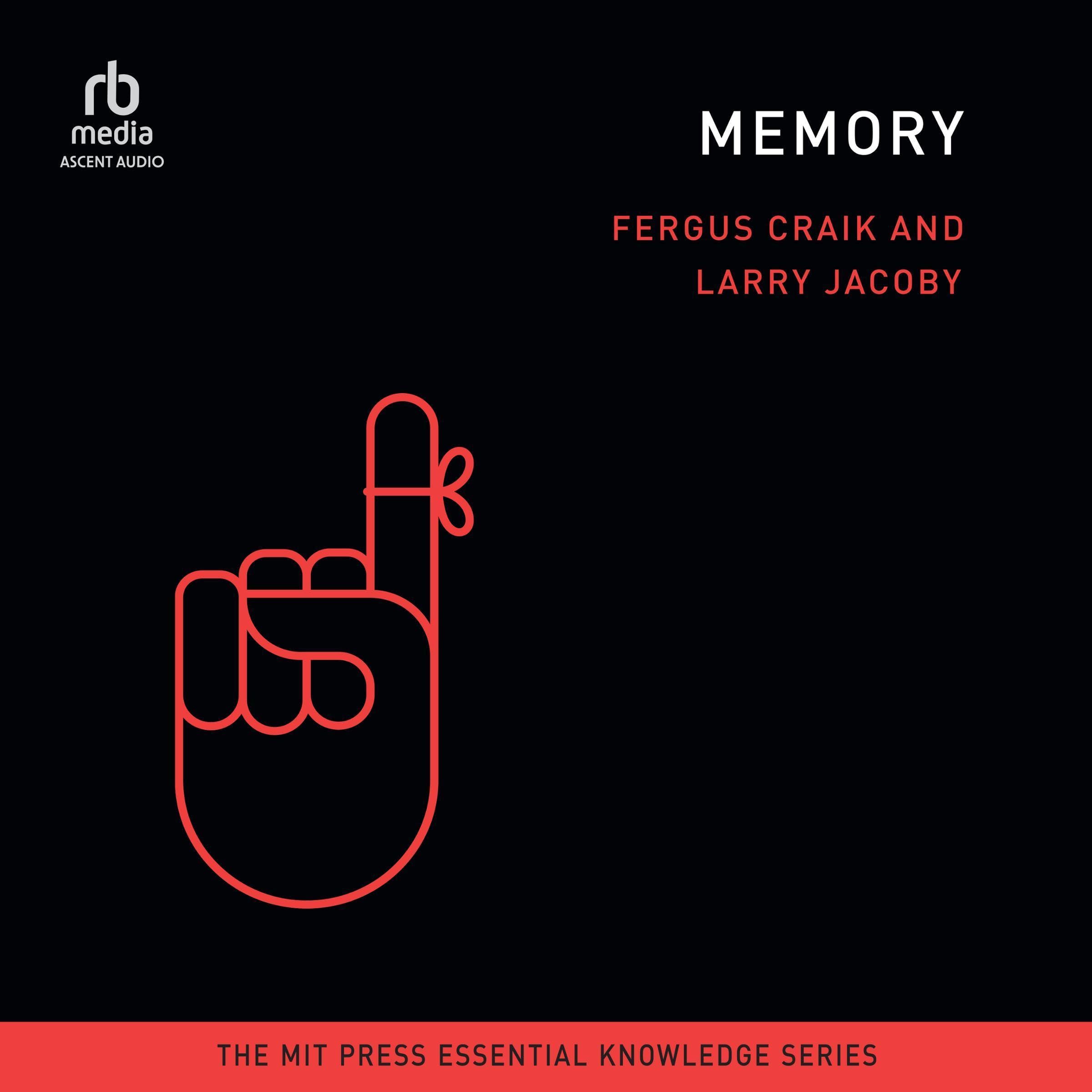
A short, accessible primer on human memory, its workings, feats, and flaws, by two leading psychological researchers.
Why do we vividly recall a traumatic childhood event but forget where we left our keys five minutes ago? How can a scent take us back fifty years while a colleague's name eludes us? In this compact introduction, two leading psychological researchers describe memory—how it works and why it sometimes doesn't; how it can be tricked, trained, or improved; and what changes with time.
In a manner as engaging as it is informative, Fergus Craik and Larry Jacoby explain the strengths and weaknesses of memory. They trace evolving ideas about memory's function and present a down-to-earth account of modern views. Citing the latest research, they outline the processes for acquiring and retrieving memories and explore the distinction between conscious and unconscious processes. With insights into the workings of the brain, Craik and Jacoby also provide a succinct account of feats and failures of memory, emotion and false memories, and the effects of aging. Their book draws a clear picture, at once broad and concise, of current and classical views of memory, that most essential and often mysterious feature of human life.
Why do we vividly recall a traumatic childhood event but forget where we left our keys five minutes ago? How can a scent take us back fifty years while a colleague's name eludes us? In this compact introduction, two leading psychological researchers describe memory—how it works and why it sometimes doesn't; how it can be tricked, trained, or improved; and what changes with time.
In a manner as engaging as it is informative, Fergus Craik and Larry Jacoby explain the strengths and weaknesses of memory. They trace evolving ideas about memory's function and present a down-to-earth account of modern views. Citing the latest research, they outline the processes for acquiring and retrieving memories and explore the distinction between conscious and unconscious processes. With insights into the workings of the brain, Craik and Jacoby also provide a succinct account of feats and failures of memory, emotion and false memories, and the effects of aging. Their book draws a clear picture, at once broad and concise, of current and classical views of memory, that most essential and often mysterious feature of human life.
Audible Audio
Published September 5, 2023
Ratings & Reviews
Friends & Following
Create a free account to discover what your friends think of this book!
Community Reviews
Displaying 1 - 7 of 7 reviews

January 2, 2026
An interesting and easy to understand guide about memory and how it processes and encodes information along with some great resources suggested if you want to research certain topics further.

October 9, 2023
Currently in an experimental behavior econ class and feeling a little lost on some of the background about memory (especially associative memory research), so I thought it would be good to get a survey! Really good comprehensive no-boul-shit background on memory for anyone interested.
A few things I learned:
1. Retrieval is a form of learning - reactivating pathways that generate a representation in one's mind is both a retrieval mechanism, but a further engraining of that piece of information in your own personal neural network.
2. Working memory is quite sepearate from short-term memory. Working memory is literally the amount of information you can hold in your mind (e.g., a number of digits) in a given instance where as short-term memory is more drawn out.
3. Prospective memory is about remembering to do things that you told yourself in the past to do in the future. This is something that older adults are much better than younger adults at in practice, but is likely do to the fact that older adults are just better at using associative memory and other strategies to get themselves to be successful.
It seems to me that a lot of "becoming an adult" is learning how to navigate the shortcomings of one's own memory and "weaponizing" the unlimited storage we have that can be accessed by using the power of association. We just need to be intentional about our associations!
A few things I learned:
1. Retrieval is a form of learning - reactivating pathways that generate a representation in one's mind is both a retrieval mechanism, but a further engraining of that piece of information in your own personal neural network.
2. Working memory is quite sepearate from short-term memory. Working memory is literally the amount of information you can hold in your mind (e.g., a number of digits) in a given instance where as short-term memory is more drawn out.
3. Prospective memory is about remembering to do things that you told yourself in the past to do in the future. This is something that older adults are much better than younger adults at in practice, but is likely do to the fact that older adults are just better at using associative memory and other strategies to get themselves to be successful.
It seems to me that a lot of "becoming an adult" is learning how to navigate the shortcomings of one's own memory and "weaponizing" the unlimited storage we have that can be accessed by using the power of association. We just need to be intentional about our associations!

April 21, 2024
If you were to choose memories to keep, which ones would you keep?
The way human memory works is very interesting. We don't fully understand why we remember certain things, how we keep them in our brain, and lastly that we don't really have a good control of it.
The best analogy of memory to me was by Freud - it's like typing machine paper. The harder you press, the stronger print you get. What contributes to strength though? Is it a dream of real life? How did you feel about it?
It's a good book and definitely good topic!
The way human memory works is very interesting. We don't fully understand why we remember certain things, how we keep them in our brain, and lastly that we don't really have a good control of it.
The best analogy of memory to me was by Freud - it's like typing machine paper. The harder you press, the stronger print you get. What contributes to strength though? Is it a dream of real life? How did you feel about it?
It's a good book and definitely good topic!

June 9, 2026
It's not a bad intro to memory research. They do go over the main research and findings. Yet the overall editing and style is lacking.
Instead of presenting memory as laymen see it they go over research using technical terms and academic definitions that even I, with a degree in the field, had a very hard time figuring out because you can't know all terms in all fields. I couldn't connect the studies to real life.
Similarly their writing style is "published study" type. So dry you can't really focus for long periods of time. I kept missing studies and claims they brought up. The engaging parts were the ones I already knew all about from textbooks as I could finally understand all the claims.
It's a valid intro by people who understand the science. Now, do they understand what memory is? Probably not in a way they can explain it. But clearly they know much of the science.
A book with only text in an audiobook version cannot ever be more boring than a textbook. That's an unforgivable sin. It's unfortunately also more boring than a lecture.
Instead of presenting memory as laymen see it they go over research using technical terms and academic definitions that even I, with a degree in the field, had a very hard time figuring out because you can't know all terms in all fields. I couldn't connect the studies to real life.
Similarly their writing style is "published study" type. So dry you can't really focus for long periods of time. I kept missing studies and claims they brought up. The engaging parts were the ones I already knew all about from textbooks as I could finally understand all the claims.
It's a valid intro by people who understand the science. Now, do they understand what memory is? Probably not in a way they can explain it. But clearly they know much of the science.
A book with only text in an audiobook version cannot ever be more boring than a textbook. That's an unforgivable sin. It's unfortunately also more boring than a lecture.

September 30, 2023
I really enjoyed learning about the inner working of the memory and the research methods. It is dense with information but easy to read.
March 26, 2025
Didn't fully finish. Sometimes it feels unnecessary to finish a non-fiction book. Taught me a lot of cool things though, I think about it often.

November 4, 2025
Short but stocky. A lot of material to digest in this 100% information concentrate package.
Displaying 1 - 7 of 7 reviews