Phenomena is a story of intrigue, psychological distress, and one scientist's quest to untangle the mysteries of human consciousness....
Amelia Charron is a neuroscientist researching brain disorders. She routinely uses astonishing mind-linking technology that allows her to enter the dream world of patients. Each night, Amelia acts as a guide through the bizarre wonderland of the mind-an assisted lucid dream. It's a technique that reroutes neural pathways to heal the brain, but it's not without psychological dangers for both the patient and the guide.
Orlando Kwon will do anything to keep the frightening voices at bay. Alien voices, he's sure, but he has no idea what they are saying. The medical early stage schizophrenia. With his life in tatters, a referral to a specialized neuroscience team might be his last chance.
Amelia is startled by what she sees in her newest patient's mind. Frightening dreams of an unknown world are accompanied by knowledge the man couldn't possibly have invented and a language no one has heard. In a race against time, Amelia must uncover the deep implications for her patient, herself, and humankind - before Orlando inserts the final component into a strange device he feels compelled to construct.
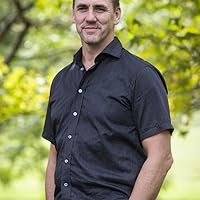
Douglas Phillips is the best-selling author of the Ascending Carbon Series, the Quantum Series, and more. The books are page-turning adventures that imagine scientific discovery as the path toward a positive future for humanity. Each story draws the reader deeper into mysteries that require intellect, not bullets, to resolve.
Doug has science degrees in Geomorphology and Meteorology, has designed and written predictive computer models, reads physics books for fun and peers into deep space through the eyepiece of his backyard telescope. He lives in Seattle, travels the world with his wife, hikes with his two sons, and becomes a child all over again with his grandchildren.
"I love science fiction, especially stories that begin with real science then ask, what if? I've studied a wide range of science throughout my life. Now, I'm turning that experience into the stories I've always wanted to read."
Phenomena is phenomenal. Sci-fi with an emphasis on the sci and I would imagine its a tricky tightrope to walk for the author to keep the story engaging and move the plot along at a good speed without bogging it down with all the necessary science but Douglas Phillips did a fantastic job.
This book is clever, has a lot of action, great characters and for a book about the mind it's got a lot of heart. 4.5⭐ and thank you Daniel for recommending it to me!! I never would have found this gem on my own.
PHENOMENA is something of a departure for Doug Phillips who burst onto the hard sci-fi scene in 2017 with the magnificent QUANTUM SPACE, followed at roughly yearly intervals by QUANTUM TIME and finally QUANTUM VOID. All were principally physics based, especially QUANTUM SPACE, and QUANTUM TIME and the scientific verisimilitude was terrific, the science up-to-date, timely and explained well enough so that almost anyone with a bit of curiosity could follow. The characters, were fully fleshed out and likable., There was more than a dash of mystery to go along with the sci-fi, especially in the first two novels. They were all real andI was waiting for Phillips' next book with high anticipation.
Unfortunately, PHENOMENA was not as strong as the preceding trilogy. Phillips switched gears and ventured away from hard physics based sci-fi into what should have been an equally fascinating arena, neuroscience-based sci-fi. Fair warning and full disclosure - I am a Professor of Neuroscience so almost certainly have a biased view of this and any novels based on neuroscience. But most of my pet peeves with PHENOMENA actually had little to do with the neuroscience. It was mostly the characters and the philosophical/metaphysical musings that turned me off.
The main premise is that there is a wonderful new technology that allows Ph.D. Neuroscientist Amelia Charron to enter the dreams of her experimental subjects. Exactly how this works is only loosely explained but it depends on something called a Bryson cap that can detect individual components of thought, termed NCCs for neural correlates of consciousness and a superpowerful computer that can decode these play them back into the brain of the scientist. This idea is perhaps not as far-fetched as it sounds and although it is not currently possible (not even close), but someday it might be. What Phillips calls NCCs are better known to neuroscientists as engrams that are known to be functional assemblies of hundreds or thousands of neurons, that encode memories. These are real.
Amelia discovers a subject/patient diagnosed as a schizophrenic who agrees to be a subject/patient in the hopes that by having Amelia enter his dreams, she might be able to help him figure out what the voices and images he sees are, and possibly cure him. Unsurprisingly, her patient turns out to be much more than your run of the mill schizophrenic.
One of the first things that I could not overcome was the confusion that runs throughout the book between a neuroscience researcher with a Ph.D and a psychiatrist or neurologist with an M.D. The former has experimental subjects (that are often humans beings) and the latter has patients with some sort of illness or condition that they hope to treat. Amelia is clearly not a clinician and although Orlando Kwan is initially described as a research subject, Phillips eventually drops all pretense of research and Orlando is referred to as Amelia's patient and she his doctor. This would never happen in any real neuroscience research institute today.
The second thing is that Orlando doesn't have any of the characteristics of a schizophrenic. He's holding down a managerial job with no problem, is engaged in society with a wife and kids, dresses and grooms neatly, does not exhibit disorganized thinking or behavior, is not paranoid, basically has none of the classic symptoms of schizophrenia except that he hears voices (quite common) and has visual hallucinations (not at all common). I knew from the beginning that he was not a schizophrenic as would any psychology or psychiatry student.
The last thing is kind of hard to talk about without giving away too much of the plot. Near the end of novel there is a long philosophical/metaphysical dialogue about mind, individual personality and the nature of consciousness, and the relationship of all these high level constructs to the brain. While these are very real, weighty issues that consume a certain type of neuroscientist, I found the main conclusions too far removed from anything that I could really wrap my (admittedly biased) head around.
Kudos to Phillips for trying but for me, I greatly preferred the QUANTUM SERIES novels.
I like my Science Fiction with hard, accurate, and up-to-date science and that is exactly what Douglas Phillips provides in his books. When I heard that he had a new book coming out I immediately put in a pre-order on Amazon for the Kindle version.
When I am not reading Science Fiction I am often reading science books. Of late, I have been fascinated by books about consciousness, brain studies, and neuroscience. What is consciousness? Where does the “me” reside in my brain? Where does the “me” go when I am asleep and my unconscious mind takes over and dreams? If the “me” does not control my heart, breathing, and digestion who is running these bodily functions and are they still a part of the “me”?
In Phenomena Phillips takes a lot of current neurological and dream research and postulates where the field might be in a couple of decades. Imagine being able to sit-in on a person’s dreams who is suffering from PTSD and being able to help them to deal with their fears and memories. Imagine being able to retrain and reroute brain pathways to help those who have just started to develop dementia in order to delay its onset. So much good could be done with this new science.
Of course, every new scientific development also feeds into the military’s desire to weaponize everything. Can you imagine how excited they would be to have the ability to read minds to gain state secrets, torture people inside of their own dreams, wipe out the memories of those who hold top secret information, and reprogram terrorists to turn on their former confidants?
As the title states, this book is A Neuroscience Thriller. Phillips has woven a tale of science fiction that is build on hard science yet reads like a spy novel. And of course there are aliens.
I was captivated by this story from the first paragraph. As always Phillips did extensive scientific research, developed very believable and engaging characters, came up with a gripping plot, and put in enough detail that the reader finds themselves right in the middle of the action. A bonus for me is that it all takes place in Seattle, a city I have visited numerous times as my daughter lives there. Knowing so many of the buildings and locations mentioned made the book that much more real for me.
Phillips does take the concept of consciousness just a step too far from my liking. I won’t give anything away here so let me just say that till chapter thirty-nine I would have given this a five star review but the last three chapters made me lower it.
I do want to make mention of the great Afterword Phillips has written. Here he separates out the science from the science fiction, what we know vs what he has created. He also provides some great links for those of us who are interested in learning more about the science discussed in the book. I hope that Phillips is already hard at work on his next book.
Pretty cool book that fits in with all the stuff I have been reading currently around science and sci-fi about the brain and how consciousness might fit into science and the universe.
There are some good big ideas in this book but also some far fetched ones that I didn't like. Also the "bad guy" in the story really just annoyed me. I don't mind horrible character development in sci-fi with great big ideas but this guy just felt like an after thought and I found myself fast-forwarding through the pointless (to me) chase / escape stuff.
This is another great book from Douglas Phillips. Each of his novels have a well researched foundation in current science and then moves a little further into what is conceivable in the not too distant future. This is one such book that leaves one thinking and curious to know more about the science, as well as enjoying a good page turning novel. It will leave you with a curiosity to know more about the science of the human consciousness while at the same time instilling a hope of where that understanding could lead.
Phenomena proved a wonderful read, pairing a compelling plot line with extensive thought-provoking neuroscience extrapolations. Is there such a thing as reincarnation? Does our conscience extend beyond our temporal life? What do we share with other sentient beings beyond planet earth? This story serves as a jumping off point for fun and interesting lines of thought regarding our place in the universe, along with the interconnection of all things.
The book melds neuroscience, psychology, and metaphysics into a compelling premise that kept me thinking for days afterwards. The setting is the near future, the science meticulously researched, the characters well developed (my favorite was the AI), and the story compelling. Highly recommend!
Douglas Phillips dares to go where no one has gone before in such spectacular ways. His novel, Phenomena, reads like a screenplay for a blockbuster movie produced by Steven Spielberg.
Between the search by neuroscientist Amelia Charron for the ability to help people with mental illnesses, a rare opportunity for interstellar communication blossoms.
When she is referred to a client exhibiting symptoms of schizophrenia, Amelia is hesitant at first to work in the Assisted Lucid Dreaming (ALD) environment with him. Because her role is to suggest behavioral changes during the ALD session, her client's awareness is crucial to the session's success.
Her client, Orlando Kwon, has been hearing what he claims are Alien voices educating him. He firmly sticks to his story that his visions are real communication from them. Amelia is afraid he doesn't have enough of a grasp on reality for her to assist him.
The magic of Phenomena begins to happen when Amelia accepts 5th-generation Korean American Orlando Kwon despite his exhibiting schizophrenic like symptoms. Something else appears to be going on as presented by Orlando's knowledge of an advanced chemistry formula that his education couldn't have produced.
Phenomena is a walk into the what-if world of Human Consciousness, a leap into the extraterrestrial world of what if Humanity has an equal partner out there. And a daring step into the future of what it would look like if we could get along with each other.
Douglas Phillips is a master of near-future Science Fiction. Phenomena represents a best-case scenario, in a challenging thriller setting, of what Humanity could achieve with a little help from the Universe.
I obviously loved Phenomena. The obstacles that Amelia and Orlando had to overcome put my heart in my throat and raised my blood pressure. The ending, well, you'll just have to read it for yourself but be prepared with Kleenex. I gave this book a full 5 stars and wish I could give it more. I highly recommend you read it.
When it was announced that Doug would be coming out with a new book, this time not about space fiction, I preordered it without even thinking twice because I had just finished another author's book and was so disenchanted with the writing stye after reading the Quantum series, I began reading it again because I couldn't find another author as appealing to me. I knew this book would arrive in my Kindle while I was in the middle of a 30 day vacation and thought I might have the time to read part of it before returning home. I was wrong. This book is such a page turner, I finished it in three days instead of making it last the entire vacation. Now, I'll go back to the Quantum series..
Phenomena is Doug's venture into a different kind of science fiction, that being neuroscience. As with his other books, he researches his subject quite extensively and blends fact with fiction in a writing style so well tuned, it becomes difficult to know what is real and what is not. Doug's character development, storyline development, attention to detail, and enormously vivid imagination blend into a writing style that I absorb completely. Fortunately for the reader less informed than he about his written subject, he explains in detail at the end of the book what is real and what is not.
I will not dive into the plot or storyline since others before me already have. In my opinion, this book deserves a five star review and is every bit as good as his Quantum series with its only fault being that it is shorter in length.
Perhaps Doug would be interested in writing a sequel to this. His character development of the protagonist was excellent and makes the reader want to know more. Whether it is a sequel to this book or another in a new vein of fiction, I anxiously await his next work.
A superb blend of science and fiction. Douglas Phillips does an excellent job of explaining his approach to research and writing in the epilogue. I have a PhD in Human Systems Engineering (HSE). HSE is a discipline that blends elements of engineering, psychology, neuroscience, and some philosophy in an effort to make technology work for people. HSE is a scientific approach applied to solving real world problems in the present and near future. I completely agree with the author’s stated sentiment that the job of science fiction is weave enough science into the plot to construct a believable theory of operation to support the speculative exploration of the fictional elements of the story. Good science fiction focuses on the the unknown future. Douglas Phillips is a master at writing excellent science fiction.
It was the very first book I read that was trying to deal with the concept of consciousness. It is a very intriguing and mind-blowing book. 0.5⭐ minus, since some of the chasing scenes were too long and unnecessary. I wish it had a second part, which focuses on Orlando in the alien world with the splitted consciousness and the other alien race as well, who invented the technology to travel and how all connects. It could be even better, if plot were connected to the Quantum series - end of part 1. (without soiling the Quantum series).
The author suggests that the consciousness is a "software" running on the "hardware", which is our brain, the connection between neurons. Since the framework for that is non-infinity (all neuron connections can be permutatedly connected creating another consciousness), the variability of the different consciousnesses is finite. The other race tries to connect with our human race, since we are at the same consciousness level, with the goal to expand their variability of their consciousnesses existing in their world. The plot also suggests, that the blueprint of a consciousness X can be identified with a previous consciousness Y, where consciousness X and Y are the same. In this case, the retrieved memories from consciousness Y could be implanted into consciousness X, which theoretically leads to the infinite existing, since the combination of the neurons are finite.
The author chose a very hard topics around existence, consciousness, neuroscience, sci-fi and even God. I do respect this author very much. All in all, if I need to describe this book with one word, it is UNIQUE.
This entire review has been hidden because of spoilers.
As an avid sci-fi reader, more than 100 books a rear, this was genuine thrill. It's far different than most that I read. This is a brain science sci-fi that has great characters to accelerate this great storyline to a thrilling page turner. Great imagination loved it
Admittedly this was a fast read with an interesting premise on alien contact. The first half or two-thirds of the book was hard to put down. The protagonist leverages neuroscience and advanced technology to enable her to treat a patient initially diagnosed with schizophrenia, by entering his dreams to diagnose and repair. What she encounters, however, is way beyond anything she has experienced. Naturally, the antagonist is a DARPA major who wants her patient because of the mental feats he is able to perform.
Where I thought this book would go was along the horror lines in which the protagonist must battle something in the patient's mind - like something evil. But that is not where this book went. Instead, it evolves into a cat and mouse chase as she and the patient attempt to avoid capture from DARPA. That part of the book was great, action-filled, and a page-turner. The last third of the book kinda got all nice and care-bearish. The tension built up in the first tw0-thirds of the book was quickly defused and the rest of the book explored as well as some far-out notions about the human psyche and notions of re-incarnation.
A pretty good book, albeit with a somewhat limp ending.
Orlando Kwon and Amelia Charron, patient and neuroscience researcher respectively are the primary characters. Kwon is depicted as age 39, works in Southern CA, has a wife and two kids. Charron as age 32, seemingly quite young for her many accomplishments and position.
Kwon has been hearing voices and seeing visions that no one else can see, so has been judged schizophrenic by a variety of doctors. No one seems able to mitigate his problems. Drugs don't seem to help.
Charron works for a company that has technology to enter people's dreams and repair the brain or erase memories in real time.
Kwon gets referred to Charron up in Seattle as a last resort and the story is off and running with the addition of a comic book stereotype military/government soldier who believes Kwon is someone who can be of great value to the military and intends to shanghai him.
Chases ensue across the Seattle area, the nature of consciousness is examined and discussed, aliens are introduced and Phillips introduces another way to potentially travel interstellar distances easily, different from his Quantum series books.
The ending is quite hokey and leaves us wondering if a sequel is possible.
All in all, this was a simple, predictable story that was fast paced, easy and enjoyable to read. Sometimes that is all one needs.
Okay! I thought a lot about how I would review this book while reading, as it was quite the unique experience. As a neuroscientist myself, I can say that the concepts were 95% accurate... i.e., significantly not bullshit. This was VERY impressive, and the creative ways in which the science was explored blew my mind to little neuronal bits. I won't spoil, but the author uses multiple brain and tech 'examples' of how a single concept may be affected by near future advances. That was clever as hell, and would have gotten the book a 5-star rating alone! The only reason I felt the need to give a 4-star was because the narrative and characters seemed a bit underdeveloped. I believe this novel is self-published, and saw other reviews with similar points to the present issue... it may indeed have ended up a 5 with better editing. Just some seemingly pointless chapters in terms of the narrative/character development that seemed to serve a Seattle-region tour guide (although I love Seattle so I get the sentiment), in addition to super unauthentic characters makes me feel at times like I was reading a manuscript draft about 80% complete. In any case, I will read whatever this author has/will put out there. It is awesome!
A regular guy (Orlando Kwon) starts hearing voices and psychiatrists think he’s gone schizo. But Orlando is convinced the voices are real - and from another world.
He has mysterious new abilities too - can recite Pi to 400 digits and writes down the formula for a new type of metal alloy that impresses even PhD chemists.
He’s directed to a “sleep research” lab where there’s an Inception-style machine that lets Doctor Amelia gain access into his dreams to try and figure out what’s going on, and things get weirder and weirder. There’s a secondary alien consciousness somehow in Orlando’s mind and it’s giving him knowledge to build a portal.
Prime Arc - is a spindly creature that’s got an elongated wooden head (kinda like grout) and bamboo-like limbs with 3 tripod legs and 3 arms. the alien creatures are obsessed with 3’s & Cube roots.
The theory is that since there’s only 10^16 possible neural connections in a human brain, there’s only 10^16 possible unique states. Meaning that at some point, the same exact pattern can repeat, which would mean a kind of reincarnation. Probabilities of a consciousness existing twice or three times over the course of history are small but non-zero.
3.5 stars. Fun book. Douglas Phillips is consistent in his writing and thoroughness. It shows he has fun writing these and has no problem building characters that are more than skin deep. That said, it was fairly obvious what was going on (although not the final revelations regarding shared consciousness) and never really felt like we were at risk of real drama/danger. Although he built the DARPA military man to be an over the top bad guy, he seemed a caricature of himself with absolutely zero morals, and in turn felt a bit non-believable. His sidekick performing evil tasks on his behalf while struggling with his moral compass was a believable character (although mostly spineless). All in al good read. If you liked his other books, this is right up there and an interesting look in to the many theories and postulations about what makes us human and who/what decides consciousness.
A story about a neuroscientist who is able to enter the dreams of patients who have brain disorders and help those patients find a way through their disorder. One particular patient presents the hardest case this scientist has come across and that is where this story takes off. It was a thrilling, fast paced read. I could not put this book down and towards the end was actually holding my breath. The book questions consciousness on a level I’ve never considered before and one I’ll keep contemplating for a long time. In the Afterword, the author explains the concepts in the book to a better degree and sheds light on the science behind it. All in all, a well done, well researched book that will take you to new heights.
It could have been a fun idea if not for the annoying characters. Each was a cringe-worthy cliche of the type of person you'd see in a B-grade movie and it was just too much.
The story is about a guy who has an alien consciousness within his mind and the doctor who is trying to help him with her sci-fi technology. Of course the crazy government agent wants him and will "stop at nothing" to get him. They get help along the way from a list of stereotypical people you might meet in Seattle, including an AI with a personality crisis.
The story just feels very rough, in a super predictable sort of way. A good editor could have saved parts, but it might lean too heavily on the tropes of this sort of genre to be really good.
I loved the first two-thirds of this novel: very intriguing premise, the bleeding-edge science was plausible, and the unfolding plot kept me on the edge.
But a sappy and underwhelming final third of the novel was a huge let-down. And the author's musings on the nature of consciousness bordered on the ludicrous. He seemed to use the term 'consciousness' as a synonym of 'personality'.
Having said that, I still think it was a great effort from a relatively unknown author, and, barring the soggy conclusion, this book was on par, if not better, than some of the big-name science-based thriller writers around.
When I read a Doug Phillips book, I imagine that out of a unique scientific fact blossoms an entire fictional event masterfully crafted into a story that brings that unique scientific fact into a real life experience accessible to us less educated humans. In short, Mr. Phillips makes science fun! A as a result, I am smarter and able to articulate real science to others. His books are tightly written to create fast paced exciting reads. Can’t wait for his next addition. I wish he were my science teacher in high school. I probably would have paid more attention.
The story moves along nicely with believable characters. Suspension of disbelief for the neuroscience was a small stretch to handle the directed patterns of dreaming. I had the most trouble with suspension of disbelief around communication across interstellar distance with no lag or latency. Perhaps there is a magic wand of entangled electrons, but how do you get the pairings created across such distances and create an instantaneous teleportation device that rides on the back of that?
This novel had a likeable protagonist with a believable personality as well as a sympathetic character in desperate trouble whom she was trying to help. The story progressed at a generally fast pace and was easy to read. The science fiction premise of the story (being able to join someone in their dreams and help them psychologically) was also interesting and originally presented. Holding the book back were the cartoon cutout character of a military villain and a somewhat weak ending. All in all, an enjoyable read.
I don't give 5 star ratings often. And I am not sure about this. But I'll let it stand since I don't want to rate it a 4 star. The concept is very intriguing but I am not sure about the writing execution. There seemed to be a lot of wasted scenes especially in the beginning. I really enjoyed the action sequences during the middle. The story seemed to change as it went along. The ending has a completely different feeling to it than the start. Overall this was a very good read. I probably will try another by Mr Phillips.
Kind of a twist on quantum entanglement, in a way. The struggles of a person suffering from a completely unknown condition, which from a diagnosis point of view fits perfectly with known psychology. A very good twist on that situation, leading to vast impacts on humanity. It's only a four star because there aren't really any meaningful consequences to the characters Douglas creates engaging characters you can root for or hate - a very good talent to have! Overall, I thoroughly enjoyed this story.
Great plot. Fun read. Great ideas. Advanced neuroscience. Lucid dreams. Active insertion. Something weird going on in that guy. Whispers of super intelligence. Starts off great. What’s not to like. But then loses it a bit. Could have been much harder, much deeper. The bad guy is a bit of a simplistic caricature. An endless chase. The ending is a bit gooey. So, you know, almost great.
I enjoyed this, although I don't always find it very believable when 2 technologies needed for something to happen, such as the alien portals and the caps allowing people to share minds, happen to just appear together. Still, it was a good yarn even if the lead male has no personality, and I finished it thinking I would at least take a look at more by the author. So only just a 4 stars, but a 4 all the same.
I give this book a 5 star review as it engaged all aspects of first contact along with an interesting spin on some alternative realities, specifically to what we humans think of past life concepts......enjoy the journey its a great storyline! Also Doug thanks for recommending it as a follow up to your quantum trilogy...... Write some more books please ;-)
Douglas Phillips draws you in with the first line and keeps you riveted until the last. I would suggest that anyone with an interest in how the human brain works or just likes to expand their basic knowledge of any scientific method, should read this fascinating book. The science goes a little out there but on the whole is believable. Thank you Mr Phillips for helping to expand my mind.
The characters are all recycled from the genre. The hard science fiction is actually really soft and cliche. The star gate is cliche. The mean military guy is cliche. The contrition of the mean military guy’s toadies at the end is cliche. By the end of the book, it’s so obvious what’s going to happen next that it’s almost unreadable.