The touching and nuanced portrait of the rise and fall of Nazi Germany through the eyes of a resourceful German boy.
Ludwig is an odd and introverted child, growing up in Hitler’s Germany. While Ludwig’s father, Wilhelm, is a senior Nazi and a true believer, Ludwig escapes the unfolding catastrophe by withdrawing into nature and books. Eventually, when the Allied bombing campaign intensifies, Ludwig is sent to a Hitler Youth camp, where his oddness makes him a target for bullying.
As the war turns against Germany, the Hitler Youth camp becomes ever more severe and militaristic, and the atmosphere spirals towards chaos. After the Nazis abandon the camp, Ludwig returns home, and his father is presumed dead. With Ludwig’s mother descending into depression, the 11-year-old bears increasing responsibility for the survival of the family as starvation sets in under Russian occupation. Soon, it will be impossible to leave the Russian zone, so Ludwig decides that he must rally his despondent mother and lead her and his three younger siblings in an escape attempt to the west.
Based on a true story, The Willow Wren is a unique, touching exploration of extremism, resilience, and the triumph of the small.
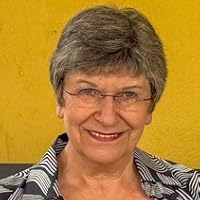
Philipp was born in Germany in 1965. A year later his family emigrated to Canada. Philipp grew up in Saskatoon, regularly returning to Germany to visit. He studied biology the University of Saskatchewan before switching to veterinary medicine. After graduation he moved to Winnipeg with his classmate and future wife, Lorraine. Except for a year taken to backpack around the world, Philipp has been in the same Winnipeg small animal practice since 1990.
His writing began with a travel blog and then a veterinary blog. His first book, "The Accidental Veterinarian", a collection of non-fiction stories from his practice, was published by ECW Press in 2019. It became a Canadian bestseller and was translated into five languages. "The Willow Wren" (ECW Press 2021) is his first novel. "How To Examine a Wolverine", a sequel to "The Accidental Veterinarian" was published in 2021, and the second sequel, "The Battle Cry of the Siamese Kitten" came out in 2023.
Philipp has also been writing cozy-ish mysteries featuring Dr. Peter Bannerman, veterinarian and amateur detective, ! So far there has been "Fifty-Four Pigs" (2022), "Six Ostriches" (2023), and "Eleven Huskies" (2024). "Three Bengal Kittens" should be out soon...
He and Lorraine live in a creaky old house on the river with two children and several pets. Although the clinic, writing, and his family keep him busy, he spends as much time outdoors as he can. He's a particular fan of long-distance walking, having completed the West Highland Way, the Hadrian's Wall Path, the Laugavegur, and the Inca Trail, among others. The pandemic has turned him to virtual walks, with the latest project being a 2300 km trek from The Shire to Mordor. He's learning how sturdy those hobbits really were.
From stories told by his father, Ludwig, Philipp Schott has written this fascinating book that allows us to see WWII from a viewpoint that I've rarely read. From the beginning, I'm drawn to introverted Ludwig, who feels so connected to birds and trees before, during, and after the horrors of WWII. Ludwig and his siblings are born to two people who are very different from each other. The imbalance between the lives of his German mother and father is highlighted by his mother's constant devotion to her children while his father seems a distant, cold, devotee of Hitler's regime. Father is a senior Nazi while it's obvious that Ludwig's mother believes that true believers are fools and throughout the book you can see that Ludwig and his older brother's doubt increase toward the propaganda that is forced on them through teachers, their father, and Hitler Youth camp.
As Germany suffers more and more defeats during WWII, shortages grow and the people suffer. While hearing of Germany's great wins and advances, it's impossible to ignore that food, supplies, electricity, and things that had been every day features of prewar life are dwindling and disappearing. Eventually Ludwig's mother and siblings must flee the city and split up to survive, with ten year old Ludwig and his older brother living in a Hitler Youth camp, where they are (reluctantly) prepared to do their duty to Hitler and their country. Ludwig's fourteen year old brother, Theodur, is finally sent to the front lines where children and old men alike become the latest cannon fodder for the ego of the leaders of Germany. If they can't win, they want every man, woman, and child to die for the lost cause.
During the years of Germany's increasing losses in the war and after their defeat, I'm amazed at the strength of Ludwig's mother. She is suffering from depression, malnutrition, pregnancy, nursing a baby while starving, and a constantly philandering husband but she still ekes out an existence for her six children. Both Ludwig and his older brother must grow up way too quickly and do not seem inclined to believe the party line that their father allows to rule his life. Possibly through hindsight, Ludwig's memories seem to be those of an older person, even when he's remembering things from his very early years. This is a boy who is obviously an old soul but also a boy who has lost his childhood along with so many other children of a war that destroys humans on all sides.
At the end of the book, the author lets us know what happens to Ludwig and his family, when they are reunited with their father, and up to the present day. I enjoyed knowing that although Ludwig didn't become a forest ranger like he dreamed of being, he did plant trees and grow food on his own place in Canada, where he raised a family. It's hard to believe there could be a life after the brutalities of war, but in this case, Ludwig carried his memories with him and shared them with his family, allowing them to now be shared with us.
Published March 23rd 2021
Thank you to the author, ECW Press, and NetGalley for this digital and print ARC.
I’ve read a good number of novels about WWII and I find there’s always something new to learn. This story is about a German family, told from the perspective of a young boy. I have not read much from this viewpoint and it gave me something to think about that I hadn’t given much thought to - the impact of the war on German families. It brought to light for me how children in particular were affected especially with the Russian occupation. This is a fictional memoir of the author’s father brought up by a Nazi father and an anti Nazi mother. In an interview, he says , “Ludwig is my father, or at least how I picture my father was as a boy. The Willow Wren is his first-person account, as imagined by me, of growing up in Nazi Germany through the terrible war and its aftermath.” (Link to the interview is below.)
When the book opens, Ludwig is ten years old. He’s more interested in nature and is fascinated by birds and trees. As the son of a Nazi he is sent with his brother to “military camp” for “Hitler Youth”. At ten, he is not always sure or interested in what is going on, until the bombs, the hunger. Over the next five years, we watch him mature and deal with his father’s absence , his mother’s depression, the responsibilities he takes on to find food for his mother and siblings. Ludwig is such a likable character and I loved that the author lets us know what happens to him after the war. This is a moving story made all the more meaningful given that it is based on Schott’s father’s life. The note at the end of the book is worth reading. “This book is born from a memory of memories. My memory of my father recounting his memories.” It’s very well done and I highly recommend it to those who enjoy historical fiction, especially new perspectives on WWII.
Wow, what a magnificent novel this is! All of you (like me) who are beginning to tire of WWII stories, dust yourselves off and make room for this one. This is a “historical fiction memoir,” if you will. The author, Philipp Schott, is the son of the real-life protagonist, Ludwig Schott. The frame of the story is Ludwig’s, the details are Philipp’s. Ludwig narrates all the way up to the epilogue. Philipp gives us the last chapter/epilogue.
This is unlike any other WWII book I have read, and I have read a lot of them. The story takes place from the mid 1930s through 1949. Ludwig was born in 1934 and was only 15 at the end of the book. Thus, we see the buildup, the actual war years, and the difficult aftermath through the eyes of an East German boy. His father, Wilhelm, is a hard-core Nazi and a philanderer. His mother, Luise, does not fall for Nazi propaganda and is more concerned about keeping her five children safe. Ludwig is an introverted soul, most comfortable in the forest with the birds (especially the wrens), animals, and trees. But times are bad; suffering is paramount. Ludwig must grow up fast. From his pre-teen years he is forced to skip childhood and begin making adult decisions and doing what he can to help his family and himself survive. Through the eyes of a young boy we see it all: The inevitable removal of nine-year-old Ludwig and his 13 year-old brother Theodur from their home and their forced participation in the militaristic Hitler Youth camp. The constant threat of death—by war or by starvation. The bullying. The absent father. The mother’s struggles. The challenges just to survive. As the war finally winds down, many of these challenges remain as the family, sans father, lives under Russian rule. Ultimately, at age 14, Ludwig realizes the only possible way to freedom and a good life lies within the dangerous attempt to escape from East Germany to the West.
It is a real eye opener to read a war novel through perspective of a young German. We see that the Germans during that time were just like us. Some were gaslighted by Nazi propaganda (Hitler actually won a democratic election) and fought for the rise of fascism. Others could see clearly and were frightened by what they could see happening. Countryman was pitted against countryman. What a jolt to see the rise of fascism from a situation very similar to what we have seen in America the last few years. Thankfully, so far, we have remained out of a world (and civil) war, but we are not out of the woods yet. When I first began reading WWII books, I wondered why the people did not rise up against the fascist leaders. Now I understand much better why they did not. A charismatic (in some eyes) leader, gaslighting and fake news.
Despite the horrors of the war, it was so inspiring to see how young Ludwig handled the overwhelming odds of all that confronted him. He was courageous, resourceful, resilient, and never gave up. You know that question about if you could have dinner with 5 people who would they be? Ludwig would be one of my guests. He was a phenomenal young man, and I’m glad his son made sure he would not be forgotten by writing his story. I highly recommend The Willow Wren for all readers of historical fiction.
Many thanks to Net Galley, Alex and the ECW Press, and Philipp Schott for the gift of an ARC. Opinions stated are mine alone and are not biased in any way.
Why I chose to listen to this audiobook: 1. I must've been influenced by a GR recommendation that I added it to my WTR list; 2. I found a free loan via Hoopla; and, 3. September 2024 is my "Fauna Titles" Month.
Praises: 1. using various memoirs and interviews from family members, author Philipp Schott tells his father, Ludwig Schott's story as a youngster growing up in WWII Germany, son to Wilhelm, a high-ranking Nazi official (and a real piece of work!), and Louisa, who often scoffed at the Nazi party line; 2. it was impressive as to how clear Ludwig's memory was from childhood, yet he was quick to admit not remembering various details. I could relate to his love of nature, being in forests and listening to birds (especially wrens.) I loved listening to how precocious he was at such a young age. His deep enchantment of reading books meant for older audiences led to a great knowledge of various topics, sometimes leading to being bullied by others. From him, I learned an easier way to tell a waning moon from a waxing moon! His knack for composing little ditties about Nazi Youth Camp leaders were quite humorous; however, he expressed many heartbreaking memories of his time living in this camp; 3. I also learned that the Nazis starting sending boys as young as 14 to the Front when they realized that victory might not be theirs. Schott used Ludwig's older brother, Theodore's musings about his time there; 4. Ludwig's memories of the Cold War when the Soviets ruled the East and how many people were starving were quite sobering. I didn't miss the irony between Ludwig and his family's destitution while his father had a more "easygoing" time in a British POW camp while being "deNazified"; and, 5. Brian Webber's narration bowled me over! His authenticity had me feeling like he was the one telling his own personal story.
Niggles: None!
Overall Thoughts: Another perspective from WWII, but quite enlightening as to how a young German boy survived during this time. Highly recommend!
A fictional memoir of the authors father, Ludwig, chronicling his life between the ages of 6 and fifteen, growing up in Hitler's Germany. It also covers the period after the liberation with his family stuck in the Eastern part of Berlin under Russian control.
Ludwig stole my heart from the beginning. The second oldest of five, though the mother would birth another during this, he is a nerdish boy, thick glasses, not very athletic, and loves nature, the woods. His parents have different political meanings, his father a higher up in the Nazi party, his mother hating anything to do with such horrific leanings. The family is separated as the American and Russians close in, the mother and children sent East for supposed protection, the two older boys, Ludwig and his elder brother sent to a state run camp. Eventually it would become a camp training Hitler's youth.
This covers a period that I knew little of, or should I say offers a viewpoint of which I was unfamiliar. An inside glimpse of a family trying to survive after liberation. A German family in Berlin. I never realized that at wars end, Germany had Hitler Youth, serving in their armies. tThey had run out of men and boys as young as twelve and thirteen were sent to fight. How hard it was to get food under the Russians, starvation a real concern and as a mother alone with now six children, Ludwig's mother had more of a challenge.
By centering on one family the author is able to portray the hardships of so many, many who did not believe in Hitler's ideology but suffered for it all the same. Ordinary Germans were all looked at, labeled the same as those who took more active roles. We get to know Ludwig well, this nerdie boy who would become his family's hope, his knowledge of the woods would save them from starvation and eventually much more. A very good look, inside a horrific time.
4 stars! An insightful and harrowing look into wartime years told through the eyes of a child.
Ludwig is the narrator of this story which spans from the year of his birth in 1934 to present day in reflection. Ludwig takes the reader through the devastation of the wartime years where his family was ripped apart as his father left to handle his Nazi duties. Ludwigs mother fends for her six children barely surviving on the rations provided and the scarce letters she receives from her husband.
Ludwig was a brilliant main character - I adored him! The author did a phenomenal job having him navigate the plot. Ludwig is a charming, clever, endearing, special boy who finds comfort in nature and joy in pleasing his mother.
The intensity of the family bond, especially the mother-son bond, within this heart warming and heart breaking novel is palpable. It hit me in the heart many times and had me feeling extreme emotions for Ludwig. His innocence and loyalty was so touching.
As with any WWII novel, there are many devastating scenes and situations. The author clearly but respectfully showed the varying levels of loss and destitution among families and communities in wartime years. Everyone did what they had to do to survive. Some had connections to make things “easier”.
I did have a stronger connection to the first half of the book. I found some of the details became too long winded and drawn out after the halfway point. My interest wavered slightly but I remained invested and curious to see how Ludwig’s story would conclude.
This book is based on the authors father, Ludwig, who told his children about his childhood. This is his family story. Knowing this reality behind the words made this novel even more impactful for me.
Thank you to the publisher for sending me a review copy!
Philipp Schott has crafted a wonderful novel based on the recollections of his father and his family of growing up in Germany before, during and after WW2. Philipp's father Ludwig was born in 1934 in Leipzig where his father Wilhelm was a lawyer and a member of the Nazi party. The second of six children Ludwig was a small, skinny boy, more interested in reading and nature than sport. He loved the books of Karl May that told the tale of the young Apache chief Winnetou and the American West. A favourite Grimms fairytale was that of the willow wren, a small, quiet bird that outsmarted all the others and his favourite pastime was to escape to the woods where he could soak up the tranquility and listen to the songs of the birds.
Through accounts told to him by his father, mother and siblings, Philipp has put together the story of the family's survival through the war and under occupation by Russia. Ludwig's father Wilhelm would eventually become the local Nazi group leader (Ortsgruppenleiter) for the Leipzig area, although his mother Sarah would remain resolutely against the party and anti-war. The war would remain somewhat remote for young Ludwig until 1941 when British bombing of German cities resulted in blackouts and rationing and the escalating bombing of Leipzig in 1943 would eventually lead to separation of the family with Ludwig and his older brother Theodor sent to a boy's evacuation camp near Colditz. Ludwig and Theodor's accounts of life in the militaristic camp were pretty grim, especially for the small and bookish Ludwig, and would culminate with Theodor being sent to fight at the front at the age of fifteen.
The description of the family's plight after the war also makes for grim reading. With her husband Wilhelm presumed dead, Sarah and the children settle in Colditz, now in the zone occupied by Russia and experience real hardship and near starvation for three years, while Ludwig dreams of convincing his mother and siblings to escape to the west.
Philipp Schott is a marvellous story teller and writer and this was a fascinating account of what it was like to be a German child, and son of a Nazi Party leader during WW2. It's a tale of the courage, resourcefulness and resilience of ordinary people. The descriptions of post war deprivation in what would become East Germany were no doubt typical of what the rest of the population experienced at the time, but were definitely eye-opening. 4.5★
With many thanks to and Netgalley for a copy of this book to read
Philipp Schott writes beautifully and also very lovingly about his father's childhood in nazi Germany. Only now and again books come out about the German side of the war, it's not only informative but it also shows that there were German victims too, especially the children.
Hitler wasn't born on the 22nd of April, but on the 20th. Minor detail :)
Ludwig was ten years old when Germany’s war impacted him and his family. His father was an important member of the Nazi Party and after their home was bombed in Liepzig, his mother and siblings fled to his aunt’s home. But she was unable to house Ludwig’s mother and five siblings, so the children were sent to separate places. Ludwig and his older brother Theodor were sent to a Hitler Youth camp where they spent the majority of the war, under the guise of schooling, when in fact it was bullying, cruelty and extremism.
Ludwig had always been a little different. A small child, his mind was his greatest asset. But because of his stature, he was always the butt of jokes and torment. His greatest love was the forests and birds, especially the willow wren. His love of books kept him centred, while his most read book was Winnetou by the German author Karl May. So, Ludwig’s time at the Youth Camp was something of a shock to him.
When the war was finally over, Ludwig returned to his mother’s home in Colditz where they continued to live, often with little to no food. The Russians had taken over and were cruel and heartless. But Ludwig wanted better for his mother and siblings. Would they be able to escape to the West?
The Willow Wren by Philipp Schott is based on the true story of his father, Ludwig, and right until the epilogue it is told in Ludwig’s voice. To start with, I thought this must have been nonfiction, but as Philipp explains, it is in small part fact, and in large part, his imagination. The intrigue and emotional rendition in the voice of a boy, with his views, horrors and utter disbelief, blended with his love of nature and love of his family, is beautifully done. The resilience of the young, especially in extreme circumstances, is amazing. Highly recommended.
With thanks to NetGalley and the publisher for my digital ARC to read in exchange for an honest review.
This one is a bit of memoir mixed with historical fiction and is set during one of my favorite book settings -- WWII. This time from the perspective of a young German boy, with a father who is a senior German official. Ludwig would much rather be out in nature enjoying the trees and the birds and reading. Forced to flee Leipzig due to bombing, the family eventually separates, with the two older boys at a youth camp and two other siblings with a farmer. The parents are able to pull some strings and eventually get an apartment in Colditz and work to reunite the family. Ludwig’s parents are nearly opposite with his father following strict adherence to the German ideology and his mother seems to know it is all propaganda. Ludwig doesn’t see his father for most of the war and much falls on his mother’s shoulders.
As the war drags on and with several younger siblings at home, Ludwig becomes their unofficial caretaker when his mother suffers with depression and the whole family struggles with trying to get enough to eat. Six children require a lot of food! At 14, his older brother is dragged from the camp into fighting the war.
This part of Germany eventually falls under first American control and then Russian control. Ration coupons don’t provide nearly enough for the family and they scrounge the farmer’s fields and the forest for anything edible. Money is complicated and bartering becomes critical. Travel between the zones is forbidden, but Ludwig tries convincing his mother to flee to the west where they have a better shot at a good life.
Philipp Schott pens this tale from stories he heard from his father Ludwig and we get a glimpse of the hardships that one family endured. It was insightful to see the perspective of a child for the times before, through, and after the war.
Thank you to ECW Press for the complimentary copy of this one.
Ludwig Schott lives with his parents Luise and Wilhelm in Leipzig, Germany. His father is a lawyer, with the rise of Hitler he supports the Nazi party and is a true believer. When Germany invades Poland, his father is positive they will be victorious and he has no idea what the future holds for his family.
Ludwig is small for his age, he loves exploring forests, looking for birds and reading. His father is absent most of the time, busy working and he’s a real ladies man. When the allies start bombing Leipzig, Mrs. Schott and the children move to Colditz and Ludwig and his older brother Theodor are sent to a nearby Hitler Youth camp. Here Ludwig is bullied, forced to perform marching drills, go on long hikes, dig trenches and take part in mock combat.
As the war drags on, Ludwig is stuck at KLV-Lager and one bully is replaced by another. Ludwig can hear the sounds of warfare getting closer, he’s finally had enough and he and a couple of other boys start walking towards Colditz. The Americans arrive first, they don’t mix with the German citizens and they hand the town over to the Russian army.
Ludwig is only eleven years old, he looks after his mother and younger siblings. The winters are brutal, food and fuel is scarce and Ludwig scavenges in the forests for mushrooms and anything edible. Stuck in the Russian Zone, Ludwig and his mother know they need to leave for the West and they form a plan. It’s going to be a hard trip, especially for the three youngest children, Ludwig doesn’t give up easily and he outsmarts the guards.
I received a copy of The Willow Wren from NetGalley and ECW Press in exchange for an honest review. The author Phillip Schott writes about his father’s experiences as a young boy, growing up in Germany during the Second World War and it’s an amazing coming of age story. How one small boy endured so much and he never gave up, his love for his mother and siblings, he was extremely resilient, smart and brave. Ludwig Schott had a big heart, he was fiercer than a lion and five stars from me.
Do you wonder what it was like to be a young German child during World War Two? How about going to war at eleven yrs old? This book takes you there! I have to say the father in this story made me furious, just furious. Who does that? This is a story of a average German family before and after the war. I’ve read several stories about the war but never anything quite like this. It was good. The narrator was excellent and I highly recommend listening to this. It’s really a child/YA view of experiences. I had no idea. I just thought everyone but Germans were suffering. Silly, I know but it’s the truth. A lot is talked about but these stuck out to me: • The fathers involvement during the war and after. • The aftermath that affected the whole family. • Families struggles because they were German. • Famine and starvation. • The crazy things the youth was forced to take in before and after. • The country’s devastation. There’s a lot more to this story and I thought it done quite well. Thanks to ECW Press Audio via Netgalley. I’ve voluntarily leaving my honest review.
I listened to the audiobook on Hoopla of The Willow Wren. It was expertly narrated by Brian Webber. This book was brought to my attention by Christine, a friend on goodreads. After I read her review and discovered what this book was about I set out to find it. I was extremely happy to have found the audiobook. The Willow Wren possessed many elements that I enjoy in a book. The first was that The Willow Wren was a historical fiction novel. Another thing I found intriguing about The Willow Wren was that it occurred during World War II. A bonus was that it was based on the true story of the author’s father and his family during the years of World War II and beyond. The best part was that young Ludwig Schott told the story and shared his impressions of Nazi Germany as only a ten year old German boy could have. Although the author admitted that most of the book was fictional there was enough authentic information that he gathered from his father’s and grandparent’s memoirs to make the overall reading experience feel believable. Philipp Schott’s father, Ludwig, shared his experiences with his son through his storytelling. The Willow Wren explored and exposed what it was like to grow up in Nazi Germany and witness the rise and fall of the Nazi party and then to live under Russian rule at the end of the war.
Ludwig Schott was ten years old when the Nazi party began to take its hold on Germany. He was a shy and sensitive young boy. His family had lived comfortably in a large apartment. Ludwig’s father was a senior Nazi member and supporter. His father, Wilhelm, was often absent from Ludwig’s everyday life. He claimed to be needed for very important party jobs and responsibilities. Ludwig craved his father’s attention and approval but rarely got it. His mother was loving and strong. Ludwig loved his mother very much. He had five siblings. Theodor was his older brother and Ludwig looked up to him and admired him. Ludwig was a very smart boy but he was often bullied at school because of his stature and oddities. He was slight and short and he always had felt more comfortable in the forest among the birds, especially the Willow Wren, than anywhere else.
As the war progressed, the allies started bombing German towns. Ludwig’s family home, located in Liepzig, was bombed and his home was destroyed. He and his family could no longer live there. His father decided to remain in Liepzig. He claimed he was needed by the Nazi party and could not leave. Ludwig, along with his mother and siblings, traveled to their aunt’s and uncle’s home to live. Ludwig’s aunt was not the most welcoming or the most hospitable. She claimed it was too crowded for Ludwig’s whole family to live with them. Ludwig and Theodor were sent to a Hitler’s Youth Camp where they lived for most of the war. His other siblings were sent to live with complete strangers. It was a sad and hard time. Ludwig’s experience at the Hitler Youth Camp exposed him to challenges, bullying and expectations he did not always believe in. Near the end of the war, he witnessed his brother Theodor, then part of the 14 to 16 year olds, being sent to the front to fight the enemy. When the Nazi camp leaders retreated from the Hitler Youth Camp as the war turned in favor of the allies and Russia, Ludwig found his way home to his mother. He still did not know where Theodor was or if he was even alive. Things should have started to get better for Ludwig and his family but life was harder now than ever. They found themselves living in the Russian Zone. Living under the Russians was difficult. The family was often cold and hungry. Things kept getting worse. Was history trying to repeat itself? Could Ludwig and his family escape and find freedom in the West?
The Willow Wren by Philipp Schott was a touching, tender story about a German boy who was both smart and resilient. It was his fate to grow up under the rule of the Nazi party. His love for nature and quiet understanding of the birds, animals and plants in the forest helped him survive the war and all he had been made to witness. Ludwig always dreamed of becoming a forest ranger. Although that dream never came true he never lost that deep connection and love for nature. The Willow Wren was a beautiful story that I highly recommend.
Seen through the eyes of a 10-year-old child, the author takes us through war-torn Germany. Ludwig Schott was a shy, introspective child whose father was a fervent Nazi, who was in charge of his region. Both he and his brother were given no choice but to attend a Nazi Youth camp until the Russians and Americans defeated Germany. With their father in prison, their mother kept the six children alive until they were able to escape to the west. This is the family’s story.
A fascinating story of perseverance and hope in the darkest days of the last century. The author is the son of Ludwig and uses his father’s memory and historical interviews to bring that time to life from a perspective rarely heard. Most stories are told by the conqueror, but this is told elegantly by a survivor.
Philipp Schott based this story on the musings of his father and other relatives. It is Nazi Germany from its beginning to its end, and also the aftermath. I thought it a fresh perspective from a former Nazi Youth whose father was adamantly pro Hitler while his mother was opposed. The denazification program after the war, lasting 3 years or thereabouts, was something I had not considered before and sounds like an excellent idea. Demagafication anyone?
The Willow Wren is the first novel by Canadian veterinary surgeon and author, Philipp Schott. He explains in his acknowledgements that the story relies heavily on the detailed memories recounted by his father, Ludwig, as well as his grandmother’s memoirs, his grandfather’s memoirs, and the recall of aunts and uncles. The flesh around these bones is filled in by Schott’s imagination.
Ludwig Schott is just five years old when the war begins, and for quite a while, partly due to being the family of a Nazi Ortsgruppenleiter, changes to his life are so insidious as to be barely noticed. He is still able to spend time in the woods amongst the trees he loves, watching and listening to the birds. He’s a very smart boy, bullied at school for it, but this is his refuge.
The various deprivations that war entails are unpleasant, but it’s when Leipzig is bombed in 1943, and their home becomes unliveable, that things really change. Suddenly the family is broken up: his father remains at the Ortsgrupe office in Leipzig. He and older brother Theodor are sent to a children’s evacuation camp near Colditz and made to join the Hitler Youth; his younger siblings are sent to live with a baker’s family in Aue; his mother and baby brother stay with her sister in Mellingen.
Whatever bullying school entailed is minor compared to what he endured at the camp: he learns to negotiate the moods of the boys in charge. Before that experience is over, Theodor has been sent to the Eastern front as the German administration scrambles to muster enough troops to fight.
The war ends; Theodor’s account of his time at the front leaves his family gasping; they somehow survive under Russian occupation; letters from a father who was always remote leave Ludwig unmoved; his pregnant mother’s physical and mental health are of much more concern. She has always been realistic, practical, honest and loving, but is now diminished.
His biggest challenge is to find food: ration cards only provide a limited supply; foraging the forest in winter doesn’t offer much; they are malnourished, often almost starved. Ludwig observes that former fascists instantly and opportunistically convert to socialism to fill positions of prestige; when school resumes, history lessons take on a socialist flavour.
It’s not until five years after the end of the war that Ludwig manages to convince his mother to pack up her family and escape to the West. Ludwig’s account of his father doesn’t endear Wilhelm to the reader: a philanderer who eventually sees the error of fascism but never acknowledges any responsibility for his part in it; a man whose self-interest trumps any care he might show for his family stuck under Russian occupation.
Reading about World War Two from the perspective of the young German son of a Nazi Party member is certainly unique. Ludwig’s descriptions of blackouts, air raid drills, rationing, having their home on Mozartstrasse bombed out, enduring deprivation and near starvation, add a very personal element to this story. A moving and fascinating tale.
With so many books about WWII out there, it can be easy to pass them by with the sense of "been there, done that". I can only read so many accounts of our human brutality before I lose all hope, so I space them out. But this one offered a very different take, and it was an interesting read.
Much has been written about the atrocities committed by Germans against others, but this offered a glimpse of how Germany made its own citizens suffer as well. There are no winners in war, and this story gives us that view through the eyes of a young boy trying to understand what is happening to his family and the larger world. It is an account strung together by a son based on stories heard from others, so it reads like a memoir, despite not being based on first hand experience.
As such, the content gave an interesting historical perspective, with a writing style that was clear and direct. Not a challenging read on any level, but if you are interested in what the day to day life was like for a young German boy during the war, this gives you a good view. And it's rated G for the most part, if you have any hesitations.
Addendum...in reading about how propaganda conflicted with the reality lived by many, it was chilling to be reminded of how easily people can be led astray when it is no longer easy to distinguish truth from fiction, or there is a concerted effort to deliberately deceive the many for the self-interest of the few.
A wonderful story based in truth upon the retelling of family history recounted over the years and partly the author's imagination. It was fascinating to learn of World War II Germany through the eyes of a young boy, Philipp Schott's father, Ludwig.
For example, Ludwig's time in a Hitler Youth Camp is described and we learn of his parent's differing political positions that cause division. While his father continues to support the family, his mother has the more challenging job of caring for all the children under very difficult circumstances and Ludwig, as the eldest at age eleven, has to grow up fast.
I truly appreciate the author's love of books and my favorite quotes regard his relationship with books:
"Those first books without pictures that we read when we are children have a way of weaving themselves deep into the fabric of our subconscious."
Then, in preparation for fleeing Russian occupied East Germany, the Schott family carefully begin selling their possessions doing their utmost to not alert the authorities to their ultimate intention to escape. After selling most of their things including a cooking stove, Ludwig notes that "the third major category to deal with was in many ways the hardest, the books."
They had what amounted to "the equivalent of a well curated small town library," and "it hurt to see them go," as "some seemed to have personalities, we could no more truly replace them with other copies than we could replace Paul with another tussle haired three and a half year old boy, similar but not identical." He adds that he was spared having to watching his mother "haggle over the value of these 'family members'" with booksellers in Leipzig.
Other quotes that I appreciated:
In February, 1945 during his last visit to Colditz, where his family is residing, his father tells Ludwig that "when the time comes you will know what to do," and that he is counting on him to help his mother. Ludwig remarks that "This was a strange and awkward conversation not at all typical of papa and it had numerous implications that I knew were going to plague my thoughts like clouds of flies."
Overall this is a wonderfully written tale with information I had not learned elsewhere and I remained enthralled throughout and especially at their escape attempt from East to West Germany. Narrator Brian Webber reads as if he is the author himself providing a truly authentic experience.
The Willow Wren is a wonderful story about a young boy’s view of Hitler’s war. Based on a true story. Ludwig was sent to a Hitler’s youth camp. His father Wilhelm, a senior Nazi and a believer in the cause, worked diligently for Hitler. Ludwig and his mother didn’t believe in Hitler and what he stood for, but didn’t let anyone know. His father was captured at the end of the war and sent to a camp to change his views. Ludwig became responsible for his family at the age of 11 because his mother was so depressed that she couldn’t properly care for her children. Ludwig leads his 3 siblings and mother into an escape to be with his father. I would recommend this book, it is an amazing story of survival under harsh conditions of a family left to defend for themselves. Thanks to NetGalley and the publisher for letting me have an ARC to review. All opinions are my own
Rounded to 4 stars. It’s well written and I was hooked during the first 30%, but after that I did loose interest. I don’t know what happened. I felt that something was lost on the retelling. I missed that heartbeat that I have always found between the lines of books with this topic, which is one of my favourite topics. The storyline is really good and interesting but I wasn’t wowed.
The Willow Wren is a based on memories about Germany seen through the eyes of a young German boy, during the Second World War and for a few years after, in East Germany.
The story began in 1944, with a memory from ten-year-old Ludwig; he and his mother looked on at the partly bombed house that was once their home in Leipzig. They’d returned to the city for Ludwig’s birthday and hoped to meet with his father.
The story then went back, and built up through the early years of Ludwig’s life. We were introduced to a young bookish boy who preferred the peace and quiet of a forest with birds and trees. When war broke out, much of it was far away from Ludwig’s life and was meaningless to him, until the bombs began to fall. While his father stayed in the city the family were split up; Ludwig and his older brother Theodore were sent to a camp, where they were ‘encouraged’ to join the Hitler Youth. Those were terrifying years for two small boys who didn’t like war games and preferred books, made worse when teenager Theodore was sent to the Russian front.
After the war they both found their way back to live in Colditz with their mother and younger siblings. It was now part of the Russian ruled East Germany and Ludwig’s memories of those years were very enlightening.
This book was such a pleasure to read, the writing flowed smoothly and I was engrossed by Ludwig’s life and his perceptions of all that went on around him. I thought that seeing the war years through an adult’s memories of his childhood worked really well; children notice different things and their understanding of events can be different from an adults. I also liked how the author interspersed parts of the narrative with what Ludwig knew later, comparing it to a current event.
Although I can recommend the whole book, two parts stood out for me; I was quite shocked to read that near the end of the war desperate German leaders kept lowering the age limit of Hitler Youth needed in the fighting fronts and children were sent to face the enemy. The other part of the book which I found very interesting was life in East Germany, especially the first few years after the end of the war, when the adjustments to living under Soviet rule were difficult.
I loved the ending and the author’s notes at the end were very enlightening and worth reading to add perspective to the narrative; I found them quite emotional after the final chapter. Definitely a book to read for fans of historical fiction and the war years.
The book jacket alleges the Willow Wren is a “touching and nuanced portrait of the rise and fall of Nazi Germany through the eyes of a resourceful German boy. Based on a true story, The Willow Wren is a unique, touching exploration of extremism, resilience, and the triumph of the small.”
I completely enjoyed this book. Philipp Schott captured my attention with his kind and careful handling of Ludwig, who is seemed to be inhibited, first by his small stature, and then by his young age. But mostly, Ludwig was an intellectually endearing character who tried to escape the reality of Nazi Germany by escaping into thoughts of trees and nature. He dreamed of being a forest ranger and was bullied for his oddities and introverted personality while at the Hitler Youth Camp.
Schot’s story reminds us that not every German was a member of the Nazi party and may or may not have known about how the Jews were treated. It is clear that the German population also faced hardships in Germany after the fall of Hitler and under the control of the allies. I am sure that it was difficult to have had a father who was a Nazi supporter as a high-ranking civilian Nazi and living in crumbling Germany under the control of Russian troops. Schott weaves all of his father’s memories into a very readable and sustaining story.
Many readers of historical fiction are well-versed in some elements of life in WW2-era Germany. The Willow Wren, based on the memories of the author’s father, Ludwig, presents a part of the story that is not told as often, that of the end of the war and life under Soviet occupation in East Germany. The characterizations, descriptive detail, and pacing are all executed effectively to convey terror, destitution, and resilience. The strength of Ludwig’s mother in keeping herself and six children alive is nothing short of heroic.
Ludwig told these stories for the remainder of his life, and his son has used them as the basis for The Willow Wren. The choice to tell it from the first person point of view is problematic. The voice is painfully inconsistent, moving from younger than makes sense at the moment to language that sounds more like a high school history text than a 11 year-old’s reckoning. Were it not for this distraction, the book would be a real stand-out in the genre.
Thank you to Philipp Schott, ECW Press, and NetGalley for an Advance Reader Copy in exchange for an honest review.
It pains me to rate this with three stars, but to borrow from Polonius, “This above all: to thine own self be true.” This doesn’t really read like novel. Although there are a few jumps in time, it’s basically a linear narrative, a secondhand memoir told in first person point of view. Another bad choice. It’s a damn good story, a remarkable one well worth the telling, but the chosen “format” just did not do it justice. Oftentimes, it read like a high school student’s textbook. If I took a shot for every time I read “I do not know,” I would be unable to write this, as I would be way too inebriated or perhaps dead from alcohol poisoning.
The blurb (and the book cover) misled me to think this would be a suspenseful story of escape, with an eleven-year-old leading his mother and siblings to freedom from the Russians. In fact, only the very last percentage relayed the actual escape. (NOTE TO SELF: Remember not to judge a book by its cover.)That it was not what I expected in this regard has little to do with mediocre rating, but it’s worth noting.
The detail given is extraordinary. Experiencing the onset of war, the Hitler youth camps, the rationing, starvation, etc. through the eyes of a child is of interest. Ludwig tells well of his thoughts and reactions. His mother, Luise, was my shining star, as her resourcefulness in feeding and caring for her large family had me in awe. Ludwig’s love of nature was endearing and gave me connection.
I’m certainly not saying don’t read this. As I stated it’s a story well worth the telling, but the author went about retelling it in a way that just didn’t do it justice. It could have been so much better.
So I was leaning towards needing a break from WWII Historical Fiction but then I requested this audiobook and never looked back! Now I have 3 more waiting for me to read and review and I have No Regrets 🤣
So Willow Wren is both fascinating and unique, in the sense that we get to see things from the Nazis side... Sorrrrta. See, the author is writing about his father as a child, who was part of Hitler's Youth camps and who's own father was a decorated Nazi officer. Usually with this genre we see the horrors from the victim's point of view, this book flipped the script on us! We get to see the insanity through the eyes of a boy who's country is being torn in two - and household as well, since his father is an officer and his mother quickly sees through the nonsense and propoganda and her own world quickly becomes terrorized and soon her only priority is to keep her children safe. It's a wild ride, believe me, so buckle up friends!
Thank you netgalley for giving me a copy of the audiobook so that I can share my thoughts and opinions with y'all 🧡
The Willow Wren is the story of Ludwig we get to live with him through the pages of this book every day of his life. we meet his mother, and siblings what they went through, and what they had to do to survive the war.
this book was great even if the story of Ludwig was very challenging and heartbreaking, he went through a lot, I was in shock to learned the terrible things his classmates did to others to bully them, there was a story that really broke me when Ludwig describes one of his great friends, that he liked to paint flowers and things, what the other boys did to him broke me immensely. Ludwig was an introvert and maybe he was afraid to say something but I just can't understand how at that age they where so evil, I cried so hard when Ludwig describe his friend crying.. this scene was too much for me I wanted to reach out and hug the little boy.
Ludwig life was not easy as his father was working for the Nazis so he lived many things that he and his mother didn't agree, his father was so immersed in his position leaving them behind with so many problems, making Ludwig and his brother grow even faster to be able to help with the house and with his siblings.
They were so many great characters in this story Ludwig brother, his mother many of them was a huge key to this story, the only one that I never liked was Ludwig father, he was the typical man cheating and being absent at all times as his job was more important than caring for his family.
Many things happened for Ludwig and his family to be able to escape and live in a safe place, but ill let you discover that on your own, I don't want to spoil the great amazing story of Ludwig.
What I really love about this story, is the strength, the kindness, and the determination Ludwig had, he was an amazing character in the book, and in real life, as we can read. he was strong and determine to help and save his family at all times, he was an introvert but he had so much love that his love connected with nature and birds... the author really did a great job portraiting and bringing to life Ludwig story. Thank you, Philipp for sharing with us the story of your family.
The Willow Wren by Philipp Schott is a good book. I read a lot of WWII books and this one stands out because I haven't read many books set in Germany, with non-Nazis, and then continuing after the war with the Russian occupation. I love that it's based on a real family and rooted in facts. It was a bit slow, maybe because it wasn't written on the front lines of the war, but it held my attention enough that I looked forward to reading more. Thanks to NetGalley and ECW Press for the advance copy.
Pour yourself a glass of chilled Goldener Oktober, sit back and let Philipp Schott’s prose in ‘The Willow Wren’ bring to light his grandfather’s experience through the rise and fall of Nazi Germany. This easy reading and wonderfully penned biography-like account is to be published March 23, 2020.
Ludwig Schott, an odd and introverted child, grew up knowing his father was a lawyer by day and a member of Hitler’s Sturmabteilung (Brownshirts) by night. Although he wasn’t aware of what his father did for the party, he knew that his father was extremely devoted to the cause. Ludwig’s mother, a wonderful counterbalance to her husband's extremism, often reminded him that he was born on a Sunday and therefore, was given the gift of understanding the language of birds. It’s this realization as well as his memory of the Grimm’s fairytale of The Fence King that enable Ludwig to escape into surrounding nature as a method of survival. His whole world changes on the day of his 10th birthday, December 4, 1943, as that was the day he was supposed to spend with his father, but the 442 RAF bombers with 1300 tons of explosive ordinance had other plans for Leipzig. Ludwig and his brother are shipped off to join the DJV, German Youngsters in Hitler Youth Camp, while his younger siblings are sent to an aunt for safekeeping. Ludwig recounts his experiences living and learning within the camp, what happened when the Americans liberated their city, and an insight into what it was like living under a Soviet ration system.
You’ll feel like you are reading your grandpa’s journal because Schott has a wonderful way of enlightening his readers by drawing them into the story through narrating unintrusive diary entries. He shows how the extremism of the Nazi party affected people, how resilience was a necessary trait to acquire, and how resourcefulness leads to triumph for the Schott family during World War II.
Thank you to Philipp Schott, ECW Press and Netgalley for this advance copy in exchange for an honest review.
This is a fictionalized memoir of the author’s father, Ludwig Schott. The focus is Ludwig’s life when he is between 6 and 15 years of age in the 1940s in Germany.
Ludwig’s father Wilhelm is a senior Nazi leader. His position means that initially the family does not suffer unduly when compared to other Germans. However, once fighting comes to Germany, Wilhelm is not able to protect his family and their situation becomes more challenging. Leaving her husband in Leipzig to continue his duties for the Reich, Luise takes her children to Colditz, a town deemed safe from bombing because it is home to a POW camp for officers. Once the war is lost, Colditz is controlled by the Soviets. The Schott family faces harsh conditions, including food shortages. Ludwig, as the second-eldest child, helps however he can to ensure that he, his mother, and his five siblings survive.
The book provides an interesting perspective of World War II, that of a German child living through the war and its aftermath. The book shows the situation in Germany during the war but also after the war. Civilians suffered greatly. The Americans entered Colditz, but they were replaced by Soviet occupation forces when Germany was divided into four occupied zones. It is this latter period that I found most interesting, since I have encountered little written from a first person perspective about the Soviet occupation of Germany.
As a child, Ludwig is exposed to differing political views. Ludwig’s father Wilhelm is devoted to Hitler; Luise tells her son that, “’If the Party said do not breathe on Sundays, [your father] would hold his breath until he passed out.’” Even when the war does not go well for the Germans, Wilhelm has no doubts: “The situation for our beloved Fatherland may appear to be difficult, but we must trust in the Fuehrer. He has knowledge that we do not have, and he has wisdom that we do not have.” Ludwig’s mother, on the other hand, is skeptical. She calls Goebbels an idiot and the Nazis clowns. Because of his parents’ differing views, his closeness to his mother, and his father’s emotional and physical distance, Ludwig questions what he is told.
Ludwig is an interesting child. He tends to be a loner who prefers his own company. He is bothered by excessive noise and finds solace in nature in the company of birds. He is an intelligent and observant boy. Though he is not able to always fully understand what is happening around him, he recognizes propaganda and “lethal fanaticism.” He is also a loving child who supports his mother as best he can even though he does not completely understand the burden she has of looking after six children. Though his life is very much at the mercy of forces beyond his control, he doesn’t give up. He certainly shows that he possesses the resourcefulness of the little wren, his favourite bird.
The story I would love to know more about is that of Wilhelm and Luise. How did two people with such opposite personalities come to marry? Luise seems not to wear blinders when it comes to her husband. When Ludwig asks about what his father does, she begins with “’When he is not combing his hair or smiling at pretty young women . . .” before explaining his duties. She emerges as an admirable person who looks after her children alone during very difficult circumstances. Wilhelm, on the other hand, as one of his sons points out, “’doesn’t accept personal responsibility. Not really anyway. Not in an honest emotional sense.’” Instead, he spouts, “‘Let us not burden our remembrances with a heaviness that’s gone.’” Wilhelm seems a stereotypical German: emotionally cold, inflexible, and extremely disciplined.
I enjoyed the book. It provides a look at a historical time period from an original perspective. It also offers advice on how to overcome obstacles.
Note: I received an eARC from the publisher via NetGalley.
I've been reading a lot of WWII historical novels lately and this is yet another perspective, although this one is particularly interesting because the bones of this story are based on the stories of the author's father and grandmother, with some contributions from his aunt and uncle (father's siblings). As he states at the end, he filled in plausible details and conversations to create the story, but much of what he describes is what his father and his father's family experienced during the war and after. The story is mostly written from a first-person POV and is written as if his dad is telling us the story of everything he went through. You would think that by the time I get to the sixth WWII historical fiction novel, it would seem like I am getting the same thing over and over. And yet there was something to intrigue me and teach me in each of these books and I learned something new each time about what different people went through in order to survive. I found Ludwig to be a very observant and introspective child and I really enjoyed getting to know him. This was not as emotionally charged as some of the other ones I've read, but I still found it to be very interesting seeing the world from this child's eyes. I liked that he would add the occasional asides as an adult telling this story that this is what he thought at that time but learned later that it was something else. If you're a fan of historical fiction, especially during this time period, I would definitely add this to your list.
I received an advance review copy for free, and I am leaving this review voluntarily.