

What do you think?

Incomplete Solutions: Harvester, Book 4
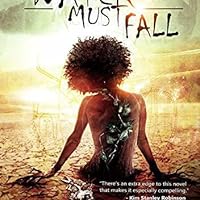
An elderly woman in early 22nd-century Lagos is called in to help test the artificial intelligence built from her genius mother’s mind, but all is not as it seems in the Nommo Award-winning story “The Regression Test”.
Exiled from Earth for a crime of passion, a young man must learn to survive a barely habitable prison planet and come to peace with his past in “Polaris”.
“Wednesday’s Story”, nominated for the 2018 Caine Prize, is at once a retelling of nursery rhymes and folklore and a meta-fictional meditation on the mechanics, art and power of storytelling.
In the novella “Incompleteness Theories”, an international team, led by a Nigerian physicist, try to invent teleportation technology with haunting, unforeseen results.
From the bustling streets of Lagos to the icy moons of Jupiter, this debut collection of twenty stories from the vivid imagination of the award-winning Wole Talabi explores what it means to be human in a world of accelerating technology, diverse beliefs, and unlimited potential, from a uniquely Nigerian perspective.
Exiled from Earth for a crime of passion, a young man must learn to survive a barely habitable prison planet and come to peace with his past in “Polaris”.
“Wednesday’s Story”, nominated for the 2018 Caine Prize, is at once a retelling of nursery rhymes and folklore and a meta-fictional meditation on the mechanics, art and power of storytelling.
In the novella “Incompleteness Theories”, an international team, led by a Nigerian physicist, try to invent teleportation technology with haunting, unforeseen results.
From the bustling streets of Lagos to the icy moons of Jupiter, this debut collection of twenty stories from the vivid imagination of the award-winning Wole Talabi explores what it means to be human in a world of accelerating technology, diverse beliefs, and unlimited potential, from a uniquely Nigerian perspective.
Audible Audio
Published August 9, 2022
About the author
Wole Talabi
58 books240 followersWole Talabi is an engineer, writer, and editor from Nigeria. He is the author of the acclaimed fantasy novel SHIGIDI AND THE BRASS HEAD OF OBALUFON, which was nominated for the Nebula, Locus, and World Fantasy awards; and the sci-fi thriller THE FIST OF MEMORY. His short fiction has appeared in places like Asimov’s, Clarkesworld, and The Africa Risen anthology and is collected in CONVERGENCE PROBLEMS and INCOMPLETE SOLUTIONS. He has been a finalist for the Hugo, Nommo, BSFA, Sidewise, Ignyte and Crawford awards, as well as the Caine Prize for African Writing. He has edited five anthologies. He likes scuba diving, elegant equations, and oddly shaped things. He currently lives in Perth, Australia. Find him at wtalabi.wordpress.com and at @wtalabi online.
Ratings & Reviews
Friends & Following
Create a free account to discover what your friends think of this book!
Community Reviews
Displaying 1 - 26 of 26 reviews

July 13, 2025
4,5 / 5
Creo que ya puedo decir que Wole Talabi es absolutamente mi descubrimiento de este año. Los relatos, que caminan por el mundo como un hijo bastardo del lado científico de Ted Chiang y el componente emocional de Ken Liu, se desenvuelven en un universo plagado de folclore africano que nos resulta fresco y nuevo a los lectores. La singularidad, la colectividad, conciencias subidas a la red, teorias de la incompletitud y mucho más aparecen en estas 7 historias extraídas de su libro de relatos Incomplete Solutions.
Reseña completa en el blog: https://boywithletters.blogspot.com/2...
Creo que ya puedo decir que Wole Talabi es absolutamente mi descubrimiento de este año. Los relatos, que caminan por el mundo como un hijo bastardo del lado científico de Ted Chiang y el componente emocional de Ken Liu, se desenvuelven en un universo plagado de folclore africano que nos resulta fresco y nuevo a los lectores. La singularidad, la colectividad, conciencias subidas a la red, teorias de la incompletitud y mucho más aparecen en estas 7 historias extraídas de su libro de relatos Incomplete Solutions.
Reseña completa en el blog: https://boywithletters.blogspot.com/2...

April 22, 2021
A solid collection of stories from a relatively new author. There are no bad stories here. (There is one where "I don't get it", but that's just me.)
Most of the stories are SF, including two that won a Nommo award: "The Regression Test" and "Incompleteness Theories". Several are fantasy, including two the author describes as "action-adventure type story featuring disillusioned deities operating in a kind of corporate environment." Think of something like "American Gods" but the two main gods are Naamah from Jewish mysticism and Shigidi from Yoruba mythology. And one, is a non-genre story about what a man will do for love, while not being able to admit he is in love.
Most of the stories have been published before and some are available on the web. Check the author's website. The story "Polaris" appears for the first time in this collection, and is one of my favorites. It tells of the terraforming of Mars by prisoners exiled from Earth. These people, who were criminals on Earth, have to develop their own form of society. In that, it reminded me of Heinlein's work.
There is a direct homage to Poe in "Connectome, or, The Facts in the Case of Miss Valerie Demarco (Ph. D)", and a story "If They Can Learn" about artificial intelligence and policing that feels ripped from the headlines of recent USA.
Highly recommended collection.
Most of the stories are SF, including two that won a Nommo award: "The Regression Test" and "Incompleteness Theories". Several are fantasy, including two the author describes as "action-adventure type story featuring disillusioned deities operating in a kind of corporate environment." Think of something like "American Gods" but the two main gods are Naamah from Jewish mysticism and Shigidi from Yoruba mythology. And one, is a non-genre story about what a man will do for love, while not being able to admit he is in love.
Most of the stories have been published before and some are available on the web. Check the author's website. The story "Polaris" appears for the first time in this collection, and is one of my favorites. It tells of the terraforming of Mars by prisoners exiled from Earth. These people, who were criminals on Earth, have to develop their own form of society. In that, it reminded me of Heinlein's work.
There is a direct homage to Poe in "Connectome, or, The Facts in the Case of Miss Valerie Demarco (Ph. D)", and a story "If They Can Learn" about artificial intelligence and policing that feels ripped from the headlines of recent USA.
Highly recommended collection.

June 28, 2023
9- I did quite enjoy this collection of SF-stories by Nigerian author Wole Talabi. I had seen an interview by him and read his great and touching story 'The Regression Test' in 'Best of World SF vol 2', which had stoked my enthousiasm. SF seems to be dominated by English and American voices, but that is an artefact of the system and how stories reach us, as it turns out great SF is also published elsewhere in the world. I know for a fact great SF is written in the Netherlands, but after reading a collection with Chinese stories, both the 'Best of World SF' volumes and so on, I can safely say that SF is a worldwide genre. Which is as it should be, as we all share the same world and have a say in how we imagine the future to be.
So it is refreshing reading stories with Nigerian protagonists against other cultural backgrounds (often the city of Lagos is featured), under different skies. Talabi has a hard SF-interest and has read a lot of classic and modern SF, so his stories remain accessible for someone without much knowledge of his culture. The Nigerian background shows up more in the few fantasy stories here, where gods and spirits play a role. I even liked the non-genre love story in the collection.
Talabi deals with universal questions, but interestingly with a more spiritual componant than most western SF. Several of his stories deal explicitly with the question: what is love? Is it more than just an attraction? A fling? Hormones? Being willing to sacrifice turns out to be a core quality of love: putting the other above oneself. But it's not only romantic love that is looked at. Also filial love, love between parents and children and friendship are taken apart - the suggestion being that there is a deep connection in these relationships that transcends the purely logical or cultural. In one story there is research done in teleportation and the existence of the Soul is discussed. I didn't think this (Incompleteness Theories) was the best story in the collection - it went on a bit too long, with too many unnecessary characters, for too little of a pay off (I love efficiency in story telling). But it shows the main concern in these stories. A couple of other stories are about the uploading of consciousness, artificial intelligence and the simulation theorie - where metaphysical or even theological questions are asked (if not answered). This made me think of the SF of Arthur C. Clarke, who also wrote about these metaphysical or theological subjects.
There is a lot of diversity here, as these are stories of an author finding his voice and trying out different things. There's an action filled space opera story, a post apocalyptic story of survival and a Neil Gaiman inspired weird fantasy. I must say I liked Talabi's writing style, which was clear, but not too clean, with some great imagery, but without too much showing off. I also liked that several of his stories are quite action packed. I've heard that the story 'I, Shigidi' will be the basis for a novel - color me interested as this story about gods and their alliances was fascinating and left me wanting more. Recommended for those liking hard SF and stories from different cultural backgrounds!
So it is refreshing reading stories with Nigerian protagonists against other cultural backgrounds (often the city of Lagos is featured), under different skies. Talabi has a hard SF-interest and has read a lot of classic and modern SF, so his stories remain accessible for someone without much knowledge of his culture. The Nigerian background shows up more in the few fantasy stories here, where gods and spirits play a role. I even liked the non-genre love story in the collection.
Talabi deals with universal questions, but interestingly with a more spiritual componant than most western SF. Several of his stories deal explicitly with the question: what is love? Is it more than just an attraction? A fling? Hormones? Being willing to sacrifice turns out to be a core quality of love: putting the other above oneself. But it's not only romantic love that is looked at. Also filial love, love between parents and children and friendship are taken apart - the suggestion being that there is a deep connection in these relationships that transcends the purely logical or cultural. In one story there is research done in teleportation and the existence of the Soul is discussed. I didn't think this (Incompleteness Theories) was the best story in the collection - it went on a bit too long, with too many unnecessary characters, for too little of a pay off (I love efficiency in story telling). But it shows the main concern in these stories. A couple of other stories are about the uploading of consciousness, artificial intelligence and the simulation theorie - where metaphysical or even theological questions are asked (if not answered). This made me think of the SF of Arthur C. Clarke, who also wrote about these metaphysical or theological subjects.
There is a lot of diversity here, as these are stories of an author finding his voice and trying out different things. There's an action filled space opera story, a post apocalyptic story of survival and a Neil Gaiman inspired weird fantasy. I must say I liked Talabi's writing style, which was clear, but not too clean, with some great imagery, but without too much showing off. I also liked that several of his stories are quite action packed. I've heard that the story 'I, Shigidi' will be the basis for a novel - color me interested as this story about gods and their alliances was fascinating and left me wanting more. Recommended for those liking hard SF and stories from different cultural backgrounds!

March 9, 2021
I only listened to the short story The Regression Test from this collection on the LeVar Burton Reads podcast. A regression test "is defined as a type of software testing to confirm that a recent program or code change has not adversely affected existing features", and in this story, an elderly woman is asked to test some new software that is based on the mind of her mother, who was considered a genius during her lifetime. As she asks this AI some probing questions, she realizes there must be some glitches, and then the story takes a hard turn. Author Wole Talabi is also an engineer, and I like how he combined his skill set with a sci-fi twist.
March 5, 2021
5.0⭐ “Don’t tell me what you think—tell me what you believe.”
**spoilers**
♡ LBR 2021♡
It’s LeVar Burton Reads season 8! Season of Choice, & Effect.
For me personally, we might have a Best-of-Season-8 here....
We’re on episode 5, gifted with “The Regression Test” by Wole Talabi.
I. Love. Psychology. I love the attempt at perceiving thought, outside of thought, and reflecting it back to myself. It's like looking into another dimension. Never forget, the brain named itself.
There are a couple ways to perceive AI, and the first is to take AI as a template of thoughts and emotions, with little or no genuine consciousness/self-awareness. The second way to perceive AI is to concede that it thinks, therefore it is. Just like us.
I used to think AI was only what a computer told the AI it could be. I did not realize AI could learn, and perceive things not programmed—it's eerie, but, it’s already here, yall. Technology....soul....
If you’re having an existential crisis, you’re in good company. BUT...as to who an AI is, I’m fairly confident Wole Talabi hits the nail on the head. AI cannot be someone else. It can only be itself, which is dictated by its own experience. We can assign it a human consciousness, but I think that's a ruinous choice.
Even if we assume Olusola’s consciousness was a complete and perfect upload, it’s pretty much immediately corrupted, right? Because her uploaded consciousness's lived experience is now marked by a profound change in venue, to start. The AI’s experiences will immediately begin to inform its own worldview and change Olusola’s perception in a way that is completely incompatible with Olusola (pre-upload). Though destined to share similarities, these people cannot be the same.
By the time Olusola’s daughter came around, she was confronted with a ghoulishly different...entity.
Wole is damn brilliant. Through fascinating dialogue, and a plot that ends in terrifying treachery, the author showcases the perversion of trying to find people in places they simply cannot be.
I come at the rice heap question another way.
The rice stops being a heap when you take one grain away. Just one. Even if you take away half a gain.
It’s a whole new heap.
Think about it in terms of self. If you lost a fingernail today, you might not be so different. If you lost a finger, you’d tell the story about how you lost your finger for the rest of your life, and the way you write would change, the way you operate with your most essential bodily extension will change. Your mind will adjust accordingly.
Now if you lost an arm, you’d face an entire life-trajectory change, you’d be filled with a host of new sensations and experiences. Adapting to clothing, adapting to phantom sensations, learning to do everyday tasks all over again. Again, your mind will adjust accordingly.
Maybe losing a nail seems inconsequential. Okay but maybe some stranger walked up to you with a nail clipper, took your hand, clipped the nail, and walked off without a word. You’d be stunned—alarmed, confused, outraged. You’ll never forget the day some weirdo walked up to you and clipped your nail without permission. You’re different now. And there’s nothing you can do about it.
"But that's a violation". Okay...well, make it about anything. You popped the top on a soda and your nail just hurt. You didn't even loose the nail. But now you're extra careful every time you pop the top on a soda, you use the side of your finger. Your brain received information, it made changes accordingly, and you're different now. And there's nothing you can do about it.
I posit that every lost cell, every newly generated cell, every biological, chemical, mental, emotional change makes us a new person every time. Haven’t you heard? We contain multitudes.
An AI will contain its own multitudes...just not yours.
I absolutely love Titilope, I love the world building set-up where she gives her name and entity index number (not person, because there are presumably several none-people entities in society now), I love the familial controversy going on, I even love that dark, nihilistic ending that just entombs the reader with dread for poor Titilope, who simply meant to do her mother justice.
How we arrive at our answers, are just as important as the answers themselves.
This is what I come to this podcast for. INCREDIBLE story.
Thanks for reading, and If you wanna chat about the latest LBR episodes, hit me up in the comments and come meet with us at LeVar Burton Reads: The Official Community on Facebook.
- 📚☕♥
Goodreads Official Star Representation
5 - It was amazing
4 - I really liked it
3 - I liked it
2 - It was okay
1 - Did not like it.
**spoilers**
♡ LBR 2021♡
It’s LeVar Burton Reads season 8! Season of Choice, & Effect.
For me personally, we might have a Best-of-Season-8 here....
We’re on episode 5, gifted with “The Regression Test” by Wole Talabi.
I. Love. Psychology. I love the attempt at perceiving thought, outside of thought, and reflecting it back to myself. It's like looking into another dimension. Never forget, the brain named itself.
There are a couple ways to perceive AI, and the first is to take AI as a template of thoughts and emotions, with little or no genuine consciousness/self-awareness. The second way to perceive AI is to concede that it thinks, therefore it is. Just like us.
I used to think AI was only what a computer told the AI it could be. I did not realize AI could learn, and perceive things not programmed—it's eerie, but, it’s already here, yall. Technology....soul....
If you’re having an existential crisis, you’re in good company. BUT...as to who an AI is, I’m fairly confident Wole Talabi hits the nail on the head. AI cannot be someone else. It can only be itself, which is dictated by its own experience. We can assign it a human consciousness, but I think that's a ruinous choice.
Even if we assume Olusola’s consciousness was a complete and perfect upload, it’s pretty much immediately corrupted, right? Because her uploaded consciousness's lived experience is now marked by a profound change in venue, to start. The AI’s experiences will immediately begin to inform its own worldview and change Olusola’s perception in a way that is completely incompatible with Olusola (pre-upload). Though destined to share similarities, these people cannot be the same.
By the time Olusola’s daughter came around, she was confronted with a ghoulishly different...entity.
Wole is damn brilliant. Through fascinating dialogue, and a plot that ends in terrifying treachery, the author showcases the perversion of trying to find people in places they simply cannot be.
I come at the rice heap question another way.
The rice stops being a heap when you take one grain away. Just one. Even if you take away half a gain.
It’s a whole new heap.
Think about it in terms of self. If you lost a fingernail today, you might not be so different. If you lost a finger, you’d tell the story about how you lost your finger for the rest of your life, and the way you write would change, the way you operate with your most essential bodily extension will change. Your mind will adjust accordingly.
Now if you lost an arm, you’d face an entire life-trajectory change, you’d be filled with a host of new sensations and experiences. Adapting to clothing, adapting to phantom sensations, learning to do everyday tasks all over again. Again, your mind will adjust accordingly.
Maybe losing a nail seems inconsequential. Okay but maybe some stranger walked up to you with a nail clipper, took your hand, clipped the nail, and walked off without a word. You’d be stunned—alarmed, confused, outraged. You’ll never forget the day some weirdo walked up to you and clipped your nail without permission. You’re different now. And there’s nothing you can do about it.
"But that's a violation". Okay...well, make it about anything. You popped the top on a soda and your nail just hurt. You didn't even loose the nail. But now you're extra careful every time you pop the top on a soda, you use the side of your finger. Your brain received information, it made changes accordingly, and you're different now. And there's nothing you can do about it.
I posit that every lost cell, every newly generated cell, every biological, chemical, mental, emotional change makes us a new person every time. Haven’t you heard? We contain multitudes.
An AI will contain its own multitudes...just not yours.
I absolutely love Titilope, I love the world building set-up where she gives her name and entity index number (not person, because there are presumably several none-people entities in society now), I love the familial controversy going on, I even love that dark, nihilistic ending that just entombs the reader with dread for poor Titilope, who simply meant to do her mother justice.
How we arrive at our answers, are just as important as the answers themselves.
This is what I come to this podcast for. INCREDIBLE story.
Thanks for reading, and If you wanna chat about the latest LBR episodes, hit me up in the comments and come meet with us at LeVar Burton Reads: The Official Community on Facebook.
- 📚☕♥
Goodreads Official Star Representation
5 - It was amazing
4 - I really liked it
3 - I liked it
2 - It was okay
1 - Did not like it.

February 23, 2024
Very good collection of short stories. I had read only one story from Talabi before (The Regression Test), but it was so good I wanted to explore his stories further. And I wasn't disappointed. The stories range from space adventures to Gaimanesque tales of gods trying to survive in the modern world, and they even include a non-SF slice-of-life love story. All are at least "good", some are very good. Talabi's second short fiction collection was just published, so I'm definitely going to read that as soon as I get my hands on it.

July 27, 2026
Excelente antología de relatos de ciencia ficción, más una novela corta que me ha dejado algo más frío. Todas las obras tratan sobre la conciencia: crear androides que puedan ir por ti a eventos sociales agotadores, preservar una copia de seguridad de tu mente tras tu muerte, los problemas de teletransportar materia viva, mentes colmena... Cifi dura, con buenas ideas y muy bien escrita.
Mis favoritos han sido "La prueba de regresión", "Si pueden aprender" y "La resonancia armónica...".
Por desgracia, la edición española es horrorosa. No conocía a la editorial, pero me sorprende que una empresa que dice amar la literatura y el libro (o eso he leído en su web) no sepa que las convenciones de escritura de diálogos son distintas en castellano y en inglés. En efecto, todos los diálogos están puntuados a la manera inglesa, con comillas en vez de rayas. Eso a mí lo que me suena es a una traductora poco acostumbrada a traducir literaria y cuyo trabajo nadie ha revisado. Dado que el texto está lleno de calcos, de comas criminales y de pasivas, me suena que algo de eso puede haber.
Dado que este libro en realidad es un extracto de una antología mayor, estoy deseando que una editorial que sepa lo que está haciendo traduzca esa.
Mis favoritos han sido "La prueba de regresión", "Si pueden aprender" y "La resonancia armónica...".
Por desgracia, la edición española es horrorosa. No conocía a la editorial, pero me sorprende que una empresa que dice amar la literatura y el libro (o eso he leído en su web) no sepa que las convenciones de escritura de diálogos son distintas en castellano y en inglés. En efecto, todos los diálogos están puntuados a la manera inglesa, con comillas en vez de rayas. Eso a mí lo que me suena es a una traductora poco acostumbrada a traducir literaria y cuyo trabajo nadie ha revisado. Dado que el texto está lleno de calcos, de comas criminales y de pasivas, me suena que algo de eso puede haber.
Dado que este libro en realidad es un extracto de una antología mayor, estoy deseando que una editorial que sepa lo que está haciendo traduzca esa.
March 15, 2025
{3.5 rounded up} An interesting collection of stories by the same author. As expected with every collections, the levels of each vary and it was not clear to me whether there was a specific common thread between them all and \ or the order in which they are set. There are some fantasy \ local folklore elements, but in general it lends itself heavily toward its futuristic sci-fi with various themes and cultural context {such as slavery, disparity versus the west etc}. It was refreshing to get a less frequent {for me} perspective {Afrofuturism?} from different parts of the world. At times the stories seem to try and use a multitude of concepts all at once, which was difficult due to their short length, but there were some touching gems among the lot.

May 13, 2020
Incomplete Solutions is black speculative fiction that offers a blend of fantasy and science fiction in poignant language that doesn’t alienate but rather embraces you. Talabi writes with sensitivity and perception in a form that transforms you—whether you’re sipping cocktails in Lagos Lagoon or plummeting across stars and asteroids in the black, silent fabric of space.

June 16, 2023
It was good but some of those stories weren't entertaining.

January 13, 2018
Stories within a story. A nursery rhyme reworked. This is Wole Talabi's ambitious modernist fantasy fable. Available on Lightspeed Magazine's website as text and accompanying well read audio.
Many of us will remember the English nursery rhyme Solomon Grundy, and if you have any contact with people from Nigeria you will also know that many people name their children for the day they were born. This is the core of Talabi's story told by Wednesday - she and her siblings tell the alternative story of Solomon Grundy - SPOILER ALERT one which has Grundy born of a English boatswain's rape of an African woman, Bamigbàlà , brought up by her employer Viscount Sydney Philips whose head servants fear Solomon will take over the business after the Viscount's death and plot with assassins to murder him.
So far a straightforward reworking of the rhyme with an African history twist. But this retelling of the Grundy story by the siblings is further disturbed by Wednesday's use of a "timestone" to enter into the story itself - this magical /fantastical intervention transforms this reworking into something else. Wednesday, overcome with the pain and suffering as told in the Grundy story at the part where his beloved wife Atinuke lies dying at the assassin's hands, uses the timestone to freeze reality and enter the story-world. There he meets Okeméji, the forest, and Ikoro-man, a cruel tree-man to whom he tries to appeal for help to end the Solomon's struggle with the assassins and change the outcome. Of course stories cannot be changed – neither by Wednesday within the story world or by Solomon within Wednesday's reality. Finally Wednesday tells us the ending of the Solomon Grundy story - which of we know from the nursery rhyme - "Died on Saturday, Buried on Sunday".
But even that is not the full extent of Talabi's tale. Interspersed within are fables - the unpunished rape of the young Emeh by a holy man leading to the insanity of her revengeful father; the story of the cruel Ikoro-man who cured barren women in the village of Oluronbi, wife of a poor woodcarver, who not having other forms of wealth and goods of value offered up her first born. She of course renege on this promise, her husband carving a replica daughter to try to trick the Ikoro-man - read the story to find out if he was successful or not! ; and the "no good deed goes unpunished" story of the hunter and the dragon and the tortoise. Each of these are good fables in and of themselves.
The complexity of this structure is further enhanced by Talabi having Wednesday as she tells this whole tale, her story talk about the structure of stories, with a beginning a middle and an end, or two beginnings, or many middles, all culminating in the one end - or is it the end?
I loved the final paragraphs SPOILER ALERT
"If I have already told you how the story ends, then which part of the story is this now?
I'm not sure.
I think this is the part of the story between the last written word and the bottom of the page on which it is written; the space between the breath with which the narrator exhales the final word of the story and his next in which there is no story; the distance between the height at which belief has been suspended and the solid, hard, floor or reality; the empty, fluid places where, for what is even less than a moment, the characters, the audience, the narrator, and the author of the story can all become equally real to one another, become intimately aware of one another, and maybe, just maybe, even become one another, depending on the shape of the story".
For me this almost sums up exactly what I want to be experiencing when I have finished a story - that is has become real through the telling, that I experience something on different levels within and from it and its telling.
ashramblings verdict 4* Well done Wole Talabi! This is the first story of yours I have read and I was truly impressed. I look forward to reading more.
Postscript note:
I came across Wole Talabi's name upon seeing his list of African Speculative Fiction - a great find. His Blog also lists this story.
There's an interview with author Wole Talabi also available on Lightspeed Magazine's website
Many of us will remember the English nursery rhyme Solomon Grundy, and if you have any contact with people from Nigeria you will also know that many people name their children for the day they were born. This is the core of Talabi's story told by Wednesday - she and her siblings tell the alternative story of Solomon Grundy - SPOILER ALERT one which has Grundy born of a English boatswain's rape of an African woman, Bamigbàlà , brought up by her employer Viscount Sydney Philips whose head servants fear Solomon will take over the business after the Viscount's death and plot with assassins to murder him.
So far a straightforward reworking of the rhyme with an African history twist. But this retelling of the Grundy story by the siblings is further disturbed by Wednesday's use of a "timestone" to enter into the story itself - this magical /fantastical intervention transforms this reworking into something else. Wednesday, overcome with the pain and suffering as told in the Grundy story at the part where his beloved wife Atinuke lies dying at the assassin's hands, uses the timestone to freeze reality and enter the story-world. There he meets Okeméji, the forest, and Ikoro-man, a cruel tree-man to whom he tries to appeal for help to end the Solomon's struggle with the assassins and change the outcome. Of course stories cannot be changed – neither by Wednesday within the story world or by Solomon within Wednesday's reality. Finally Wednesday tells us the ending of the Solomon Grundy story - which of we know from the nursery rhyme - "Died on Saturday, Buried on Sunday".
But even that is not the full extent of Talabi's tale. Interspersed within are fables - the unpunished rape of the young Emeh by a holy man leading to the insanity of her revengeful father; the story of the cruel Ikoro-man who cured barren women in the village of Oluronbi, wife of a poor woodcarver, who not having other forms of wealth and goods of value offered up her first born. She of course renege on this promise, her husband carving a replica daughter to try to trick the Ikoro-man - read the story to find out if he was successful or not! ; and the "no good deed goes unpunished" story of the hunter and the dragon and the tortoise. Each of these are good fables in and of themselves.
The complexity of this structure is further enhanced by Talabi having Wednesday as she tells this whole tale, her story talk about the structure of stories, with a beginning a middle and an end, or two beginnings, or many middles, all culminating in the one end - or is it the end?
I loved the final paragraphs SPOILER ALERT
"If I have already told you how the story ends, then which part of the story is this now?
I'm not sure.
I think this is the part of the story between the last written word and the bottom of the page on which it is written; the space between the breath with which the narrator exhales the final word of the story and his next in which there is no story; the distance between the height at which belief has been suspended and the solid, hard, floor or reality; the empty, fluid places where, for what is even less than a moment, the characters, the audience, the narrator, and the author of the story can all become equally real to one another, become intimately aware of one another, and maybe, just maybe, even become one another, depending on the shape of the story".
For me this almost sums up exactly what I want to be experiencing when I have finished a story - that is has become real through the telling, that I experience something on different levels within and from it and its telling.
ashramblings verdict 4* Well done Wole Talabi! This is the first story of yours I have read and I was truly impressed. I look forward to reading more.
Postscript note:
I came across Wole Talabi's name upon seeing his list of African Speculative Fiction - a great find. His Blog also lists this story.
There's an interview with author Wole Talabi also available on Lightspeed Magazine's website

August 17, 2022
I found the collection a bit of a mish mash of different types of story, which I suspect it is as it's just a collection of all the author's stories with any great editorial direction. Some of the stories are fully worked out while some are little more than the jotting down of an idea that might be later worked up into a complete story or a novel. Given such a diversity of stories it's inevitable that readers will like some and be unmoved by others.
There were no stories that wowed me, while there were some I found unimpressive. For example "Incompleteness Theories" felt like a rather juvenile faux mystical rambling. It had not been previously published so it's possible this was an early story that didn't find a home until this collection, and that it comes from early in the writer's life.
I didn't find Talabi's Nigerian background added any distinctive feel to the stories. They were set in Nigerian settings with Nigerian protagonists, but otherwise they felt like SF stories I'd read before just with Nigerian decoration. There was nothing distinctively different from stories written by European or American writers.
Overall I enjoyed the collection, but found it a bit routine. I feel as though I've read stories like them before and there was nothing very new here. It's OK but not great.
There were no stories that wowed me, while there were some I found unimpressive. For example "Incompleteness Theories" felt like a rather juvenile faux mystical rambling. It had not been previously published so it's possible this was an early story that didn't find a home until this collection, and that it comes from early in the writer's life.
I didn't find Talabi's Nigerian background added any distinctive feel to the stories. They were set in Nigerian settings with Nigerian protagonists, but otherwise they felt like SF stories I'd read before just with Nigerian decoration. There was nothing distinctively different from stories written by European or American writers.
Overall I enjoyed the collection, but found it a bit routine. I feel as though I've read stories like them before and there was nothing very new here. It's OK but not great.

March 17, 2026
Parse Error Reset (2015)
Alters are not quite clones. They're an edited version of a person's neurosocial profile and memories. Their most common use is to be sent out to do tedious or onerous tasks. After they sync with the original and then are disposed of, it's as if there was only ever one. However, after 90 days of existence they can file to be own their own separate person.
Enjoyable
A Short History of Migration in Five Fragments Of You (2015)
A multi-generational story from Atlantic slave trade to far beyond Earth.
Enjoyable
Drift-Flux (2018)
A Federation ship comes out of drift-flux to see a Confederacy ship explode in Jupiter orbit. Thus they become entangled in a conspiracy.
This has the worst dialogue of any story in this collection. Yes, the Confederacy is the Civil War one, and yes the polemics are ridiculous in their delivery.
Meh
A Certain Sort of Warm Magic (2014)
A story about what it means to love.
Enjoyable
Necessary and Sufficient Conditions (2016)
He's waited 20 years to take revenge against the man who murdered his mother.
Enjoyable
Wednesday's Story (2016)
This is loosely based on the rhyme of Solomon Grundy with the addition of anthropomorphized days of the week.
Meh
The Harmonic Resonance Of Ejiro Anaborhi (2018)
An artifact of universe altering power falls to Earth and is found by a young girl.
Meh
Crocodile Ark (2014)
A teenage boy believes her cause will bring meaning to his life. It does, in a way neither would've ever expected. Their space colony, their ark, is forever changed.
Enjoyable
Nested (2016)
The afterlife isn't what he thought it'd be.
Enjoyable
The Last Lagosian (2016)
Akin trudges through post-apocalyptic Lagos, searching for water and hope. There may not be any of either left in the world.
I want a novel of Akin's journey.
Enjoyable
If They Can Learn (2016)
A technical resolutions officer interrogates a Borg police officer. The Borg killed an unarmed civilian for no obvious reason. Her company wants to know why.
The Borg is both biological and technological, but wasn't ever human or have any human parts, so I'd prefer if a different term was used.
Enjoyable
Nneoma (2017)
A married man hopelessly falls for another woman. The opening sentence is: Technically speaking, I am dead.
Ok
I, Shigidi (2016)
This reads like a sequel to Nneoma, but was published the year before it. I guess that's why it's placed afterwards. A succubus and golem team-up to kill people and steal their souls on their own rather than as a part of a spirit company that does so by request. At first I was disappointed that this was the set of stories that that Talabi seems to have expanded into his currently sole novel. By the end, the scope expands a lot and becomes a mildly interesting supernatural urban fantasy with competing pantheons of gods. I may eventually try reading the novel, but I don't expect it be more than simply ok.
Ok
Polaris (2019)
Those unwanted by Earth, with its population of nearly 30 billion, are teleported to Mars. All are criminals, including Tunde. Eventually billions have been teleported. The time to strike back at Earth has come. Tunde reflects on his life and how it all came to this.
Meh
Connectome, Or, The Facts In The Case Of Miss Valerie Demarco (Ph.D) (2019)
A three time Nobel prize winner wants her mind preserved. There are complications.
Ok
The Regression Test (2017)
The sorites paradox applied to testing a simulated person.
Enjoyable
Eye (2015)
All possible choices lead to terrible outcomes. Even so, he must still choose.
Meh
Home Is Where My Mother's Heart Is Buried (2017)
The Chironi, an amorphous species from a far away galaxy, have come to Mars and established friendly relations with Earth. Tinu escaped Earth and her bad memories. Her sister Arin wishes to return. Tinu doesn't know how to feel about that. Her Chironi lover may have the answer.
Ok
Incompleteness Theories (2019)
A team of world class researchers work to develop non-lethal teleportation of living matter.
Ok
When We Dream We Are Our God (2018)
A hive mind births the Singularity.
Ok
Disclaimer: The following criticism is intended to be taken in the sense of something that was enjoyed, but which could've been much better. It's the kind where you see so much potential that they one day may fully express.
I came into this collection with more exuberance than was warranted and by the end much of its luster was tarnished. After I finished reading the stories and the author's notes at the end I began wondering if I had really enjoyed them as much as I've rated. I may have been too lenient. I hate that often my enjoyment depends on how much I suspend criticism.
Choosing to read this was based on how much I enjoyed his 2024 story "Encore", which even with that I thought was me enjoying for brittle reasons that wouldn't be applicable to most. This is a collection of almost all his early short fiction, from 2015 to 2019, though apparently he had earlier works.
The main problem is that all the little issues I had kept adding up and then all came together. Typos, word choices, clear inspirations, and narrative decisions. I dislike saying this, but his author's notes on each story dealt a blow to my enjoyment I didn't want it to, but I couldn't maintain plausible deniability about my concerns any longer. I'm aware that what I'm writing here is of a similar sort to the author's notes.
What I like most about Talabi's stories isn't how they're written, or even necessarily the ideas, at least for this collection. The attraction for me is how they made me feel and that's a fickle thing. So while I do have concerns about some I rated Enjoyable I'm leaving them as is. Maybe eventually some years from now I'll come back and change my mind. My current rating scheme for collections/anthologies/magazines would have me rate this 5 years simply because it has so many Enjoyable, but 4 stars it is due to the aforementioned issues.
Here's to hoping that his second collection, which I'll eventually read, has moved on past these concerns and doubts.
Alters are not quite clones. They're an edited version of a person's neurosocial profile and memories. Their most common use is to be sent out to do tedious or onerous tasks. After they sync with the original and then are disposed of, it's as if there was only ever one. However, after 90 days of existence they can file to be own their own separate person.
Enjoyable
A Short History of Migration in Five Fragments Of You (2015)
A multi-generational story from Atlantic slave trade to far beyond Earth.
Enjoyable
Drift-Flux (2018)
A Federation ship comes out of drift-flux to see a Confederacy ship explode in Jupiter orbit. Thus they become entangled in a conspiracy.
This has the worst dialogue of any story in this collection. Yes, the Confederacy is the Civil War one, and yes the polemics are ridiculous in their delivery.
Meh
A Certain Sort of Warm Magic (2014)
A story about what it means to love.
Enjoyable
Necessary and Sufficient Conditions (2016)
He's waited 20 years to take revenge against the man who murdered his mother.
Enjoyable
Wednesday's Story (2016)
This is loosely based on the rhyme of Solomon Grundy with the addition of anthropomorphized days of the week.
Meh
The Harmonic Resonance Of Ejiro Anaborhi (2018)
An artifact of universe altering power falls to Earth and is found by a young girl.
Meh
Crocodile Ark (2014)
A teenage boy believes her cause will bring meaning to his life. It does, in a way neither would've ever expected. Their space colony, their ark, is forever changed.
Enjoyable
Nested (2016)
The afterlife isn't what he thought it'd be.
Enjoyable
The Last Lagosian (2016)
Akin trudges through post-apocalyptic Lagos, searching for water and hope. There may not be any of either left in the world.
I want a novel of Akin's journey.
Enjoyable
If They Can Learn (2016)
A technical resolutions officer interrogates a Borg police officer. The Borg killed an unarmed civilian for no obvious reason. Her company wants to know why.
The Borg is both biological and technological, but wasn't ever human or have any human parts, so I'd prefer if a different term was used.
Enjoyable
Nneoma (2017)
A married man hopelessly falls for another woman. The opening sentence is: Technically speaking, I am dead.
Ok
I, Shigidi (2016)
This reads like a sequel to Nneoma, but was published the year before it. I guess that's why it's placed afterwards. A succubus and golem team-up to kill people and steal their souls on their own rather than as a part of a spirit company that does so by request. At first I was disappointed that this was the set of stories that that Talabi seems to have expanded into his currently sole novel. By the end, the scope expands a lot and becomes a mildly interesting supernatural urban fantasy with competing pantheons of gods. I may eventually try reading the novel, but I don't expect it be more than simply ok.
Ok
Polaris (2019)
Those unwanted by Earth, with its population of nearly 30 billion, are teleported to Mars. All are criminals, including Tunde. Eventually billions have been teleported. The time to strike back at Earth has come. Tunde reflects on his life and how it all came to this.
Meh
Connectome, Or, The Facts In The Case Of Miss Valerie Demarco (Ph.D) (2019)
A three time Nobel prize winner wants her mind preserved. There are complications.
Ok
The Regression Test (2017)
The sorites paradox applied to testing a simulated person.
Enjoyable
Eye (2015)
All possible choices lead to terrible outcomes. Even so, he must still choose.
Meh
Home Is Where My Mother's Heart Is Buried (2017)
The Chironi, an amorphous species from a far away galaxy, have come to Mars and established friendly relations with Earth. Tinu escaped Earth and her bad memories. Her sister Arin wishes to return. Tinu doesn't know how to feel about that. Her Chironi lover may have the answer.
Ok
Incompleteness Theories (2019)
A team of world class researchers work to develop non-lethal teleportation of living matter.
Ok
When We Dream We Are Our God (2018)
A hive mind births the Singularity.
Ok
Disclaimer: The following criticism is intended to be taken in the sense of something that was enjoyed, but which could've been much better. It's the kind where you see so much potential that they one day may fully express.
I came into this collection with more exuberance than was warranted and by the end much of its luster was tarnished. After I finished reading the stories and the author's notes at the end I began wondering if I had really enjoyed them as much as I've rated. I may have been too lenient. I hate that often my enjoyment depends on how much I suspend criticism.
Choosing to read this was based on how much I enjoyed his 2024 story "Encore", which even with that I thought was me enjoying for brittle reasons that wouldn't be applicable to most. This is a collection of almost all his early short fiction, from 2015 to 2019, though apparently he had earlier works.
The main problem is that all the little issues I had kept adding up and then all came together. Typos, word choices, clear inspirations, and narrative decisions. I dislike saying this, but his author's notes on each story dealt a blow to my enjoyment I didn't want it to, but I couldn't maintain plausible deniability about my concerns any longer. I'm aware that what I'm writing here is of a similar sort to the author's notes.
What I like most about Talabi's stories isn't how they're written, or even necessarily the ideas, at least for this collection. The attraction for me is how they made me feel and that's a fickle thing. So while I do have concerns about some I rated Enjoyable I'm leaving them as is. Maybe eventually some years from now I'll come back and change my mind. My current rating scheme for collections/anthologies/magazines would have me rate this 5 years simply because it has so many Enjoyable, but 4 stars it is due to the aforementioned issues.
Here's to hoping that his second collection, which I'll eventually read, has moved on past these concerns and doubts.

March 3, 2021
4.5 stars.
An AI based off of a great thinker has to be tested to make sure it hasn't drifted too far away from the original. In order to test this AI, they have to bring in someone who knew this great thinker more than anyone - her daughter.
I loved this story, it was truly captivating. I loved comparing the mother, the daughter and her grandson side by side (seeing how many grains of rice you must take from one to get the other), and the ending surprised me in a good way.
Listened to on the LeVar Burton Reads podcast.
An AI based off of a great thinker has to be tested to make sure it hasn't drifted too far away from the original. In order to test this AI, they have to bring in someone who knew this great thinker more than anyone - her daughter.
I loved this story, it was truly captivating. I loved comparing the mother, the daughter and her grandson side by side (seeing how many grains of rice you must take from one to get the other), and the ending surprised me in a good way.
Listened to on the LeVar Burton Reads podcast.

xx-dnf-skim-reference
October 20, 2023Thought-provoking. Diverse styles, themes. Interestingly, the ones most distinctly Nigerian were still evocative of the universal. I did skip the ones that had horror & other ugliness. None completely wowed me. I do recommend it to readers of speculative fiction who want to broaden their horizons.
June 2024
June 2024
January 28, 2025
Well, Wole Talabi, you just made yourself a new fan. You write some challenging stories, but every story is a good one.
For those of you who would like a breath of fresh air from the normal western sci-fi fare, this book will delight you, make you sit and ponder, and leave you with a sense of awe that no doubt readers during the Golden Age of sci-fi felt.
For those of you who would like a breath of fresh air from the normal western sci-fi fare, this book will delight you, make you sit and ponder, and leave you with a sense of awe that no doubt readers during the Golden Age of sci-fi felt.
July 21, 2020
An excellent collection of SF and with additional notes to highlight each story, adding to their resonance. Just reviewed in Strange Horizons too: http://strangehorizons.com/non-fictio...

March 22, 2020
Really strong collection of SF, fantasy and horror that is well worth a look
Full review - https://www.runalongtheshelves.net/bl...
Full review - https://www.runalongtheshelves.net/bl...

March 3, 2021
Listened to this on LeVar Burton Read’s. There’s something that LeVar does, which is to take a pretty solid and good story and make it amazing. Something about the way he narrates it and the musical cues and—well, just the whole production. It’s wonderful. This story is probably great in print. But, I really enjoyed it through the audio narration.
I also have a soft spot for stories about uploading consciousness and life beyond death through technological approaches. It really gets down to the philosophical questions of identity: Who are we? If we are constantly shifting, how do we pinpoint the “Self”? If what goes on in our brain is just neurons firing, electrical impulses shooting around, can we replicate that? Can we upload things like personality? Can we extrapolate? Can our “personality” be contaminated by other factors? How can we take something that is essentially inert (like a recording) and animate it and make it “alive”—with all the complex qualities of a person?
Is our understanding of others, even close others, just an interpretation? Would we even be able to recognize someone after so many years—and can we recognize someone as ‘themselves’ if they are uploaded, or is it just a projection of what we think of them? I think it’s also a lot about human growth and development… is there an underlying core self that can be identified and replicated upon which the stratum of growth sits? Is it cumulative like that… that if we dig down deep enough, we’ll find the core thing that makes us us? Or are we just constantly shedding and creating cells and constantly shedding and creating ourselves over and over again so that there really is no real sense of continuity, just an imagined one we impose upon ourselves to make the narrative whole and smooth?
Are we just an accumulation present selves/neurons firing or is there something gestaltic about ourselves that make us more than the sum of our parts?
Anyway, lots of questions. Not to mention ones of life and death.
This story is about a daughter trying to identify whether this AI which is supposed to be a replica of the Mom can actually answer questions in a way the daughter would deem is Mom-like enough to be Mom. All these philosophical questions arise. There’s questions of recognition, awareness and interaction… Can she even recognize the Mom as Mom, coming from the perspective of a daughter, or is her own understanding of ‘what Mom would think’ colored by her perspective and maybe false?
It gets at these pithy concepts about life, growth, identity and stasis vs. change. There was also humor to it and a kind of honesty. You could tell that this Mom was really a character.
I’m listening to this on the anniversary of my Mom’s passing, and it’s only an inadvertent coincidence that the theme resonates. It just happens to be the newest story out on LeVar Burton Reads and one that appeals to me because of the uploading consciousness theme. But, it brings up my own thoughts about my mom, during this day in which the Earth has orbited around the sun once after the moment of her passing. I have a recording of her voice from one of the conversations I had with her maybe within a year or so of her death. It was about math and grocery shopping, and you can hear her vivacity and her unique personality; her playfulness and her pride at her own skills—and her thoughts about me and interacting with me. I can’t imagine trying to take this recording and generating the wholeness of Mom that would be Mom from it. How do you capture all the incongruous aspects of us that makes us us? I think humans can be pretty inconsistent… I mean, even if we have general demeanors and dispositions, we’re multifaceted, complex and at different circumstances in our lives act and think in different ways. We face an array of stimuli and juggle competing thoughts, obligations and emotions. We snip away at the timeline of our lives and curate the overarching narrative to reduce cognitive dissonance and increase whatever factor we want to ring true at that moment in our life as to be compatible with everything that’s going on at that very moment. I think it would be hard to capture that roundedness, that richness, those disjunctures in a simulation.
Hard, but perhaps not impossible someday?
Or at least a simulation close enough to fool close family? (And is that the right litmus test?)
Anyway, a thought-provoking read and very timely for me.
4/5
Quotes and remarks:
“A small variation in the elements of the thought matrix is assumed not to alter who she is fundamentally, her core way of thinking. But, like a heap of rice from which grains are removed one by one, over and over again, eventually all the rice will be gone and the heap will then obviously be a heap no more. As the process proceeds, is it even possible to know when the heap stops being, essentially, a heap? When it becomes something else? Does it ever? Who decides how many grains of rice define a heap? Is it still a heap even when only a few grains of rice are all that remain of it? No? Then when exactly did it change from a heap of rice to a new thing that is not a heap of rice? When did this recording-of-my-mother change to not-a-recording-of-my-mother?”
—A question of the “quantum” or “quorum” or “critical mass” of a gestaltic whole of a person or thing or concept
“I’m not even made of the exact same molecules as I was forty years ago. Nothing is constant. We are all in flux.”
—Brings up the question of continuity and disjuncture; the shedding of molecules (of a physical self) as a way to consider the conscious self or totality of self (and whether that had been ‘replaced’ over the years)
I also have a soft spot for stories about uploading consciousness and life beyond death through technological approaches. It really gets down to the philosophical questions of identity: Who are we? If we are constantly shifting, how do we pinpoint the “Self”? If what goes on in our brain is just neurons firing, electrical impulses shooting around, can we replicate that? Can we upload things like personality? Can we extrapolate? Can our “personality” be contaminated by other factors? How can we take something that is essentially inert (like a recording) and animate it and make it “alive”—with all the complex qualities of a person?
Is our understanding of others, even close others, just an interpretation? Would we even be able to recognize someone after so many years—and can we recognize someone as ‘themselves’ if they are uploaded, or is it just a projection of what we think of them? I think it’s also a lot about human growth and development… is there an underlying core self that can be identified and replicated upon which the stratum of growth sits? Is it cumulative like that… that if we dig down deep enough, we’ll find the core thing that makes us us? Or are we just constantly shedding and creating cells and constantly shedding and creating ourselves over and over again so that there really is no real sense of continuity, just an imagined one we impose upon ourselves to make the narrative whole and smooth?
Are we just an accumulation present selves/neurons firing or is there something gestaltic about ourselves that make us more than the sum of our parts?
Anyway, lots of questions. Not to mention ones of life and death.
This story is about a daughter trying to identify whether this AI which is supposed to be a replica of the Mom can actually answer questions in a way the daughter would deem is Mom-like enough to be Mom. All these philosophical questions arise. There’s questions of recognition, awareness and interaction… Can she even recognize the Mom as Mom, coming from the perspective of a daughter, or is her own understanding of ‘what Mom would think’ colored by her perspective and maybe false?
It gets at these pithy concepts about life, growth, identity and stasis vs. change. There was also humor to it and a kind of honesty. You could tell that this Mom was really a character.
I’m listening to this on the anniversary of my Mom’s passing, and it’s only an inadvertent coincidence that the theme resonates. It just happens to be the newest story out on LeVar Burton Reads and one that appeals to me because of the uploading consciousness theme. But, it brings up my own thoughts about my mom, during this day in which the Earth has orbited around the sun once after the moment of her passing. I have a recording of her voice from one of the conversations I had with her maybe within a year or so of her death. It was about math and grocery shopping, and you can hear her vivacity and her unique personality; her playfulness and her pride at her own skills—and her thoughts about me and interacting with me. I can’t imagine trying to take this recording and generating the wholeness of Mom that would be Mom from it. How do you capture all the incongruous aspects of us that makes us us? I think humans can be pretty inconsistent… I mean, even if we have general demeanors and dispositions, we’re multifaceted, complex and at different circumstances in our lives act and think in different ways. We face an array of stimuli and juggle competing thoughts, obligations and emotions. We snip away at the timeline of our lives and curate the overarching narrative to reduce cognitive dissonance and increase whatever factor we want to ring true at that moment in our life as to be compatible with everything that’s going on at that very moment. I think it would be hard to capture that roundedness, that richness, those disjunctures in a simulation.
Hard, but perhaps not impossible someday?
Or at least a simulation close enough to fool close family? (And is that the right litmus test?)
Anyway, a thought-provoking read and very timely for me.
4/5
Quotes and remarks:
“A small variation in the elements of the thought matrix is assumed not to alter who she is fundamentally, her core way of thinking. But, like a heap of rice from which grains are removed one by one, over and over again, eventually all the rice will be gone and the heap will then obviously be a heap no more. As the process proceeds, is it even possible to know when the heap stops being, essentially, a heap? When it becomes something else? Does it ever? Who decides how many grains of rice define a heap? Is it still a heap even when only a few grains of rice are all that remain of it? No? Then when exactly did it change from a heap of rice to a new thing that is not a heap of rice? When did this recording-of-my-mother change to not-a-recording-of-my-mother?”
—A question of the “quantum” or “quorum” or “critical mass” of a gestaltic whole of a person or thing or concept
“I’m not even made of the exact same molecules as I was forty years ago. Nothing is constant. We are all in flux.”
—Brings up the question of continuity and disjuncture; the shedding of molecules (of a physical self) as a way to consider the conscious self or totality of self (and whether that had been ‘replaced’ over the years)
June 6, 2022
I have to be in a pretty particular mood to read short stories, but I'm so glad I picked this up at my local public library. I enjoy reading non-Western sci-fi / fantasy / speculative fiction authors occasionally to experience a different perspective and this collection did not disappoint! After a few of the stories I had to put the book down for awhile to absorb the message, particularly for If They Can Learn. The author's use of language is wonderful. Recommend!

July 14, 2021
I read Wednesday's Story and the Regression one and neither was good enough to make me want to read the other two. It felt pretentious to me - maybe for some people the speculative stories are attractive, but I like a little more closure.
July 21, 2023
Simply the best collection of Afro futuristic short stories I have ever read. Thoughtful inspiration on each and every page.

December 9, 2022
The Regression Test is a story about discerning the essence, self and identity of AIs, given learning and general evolution / growth over time. Judging that identity either via other AI or via a human inquisitor. Very philosophically interesting.

March 24, 2021
Levar burton reads
January 26, 2023
Great collection of stories that will make you reflect on distopian futures that might be closer than we think.
Displaying 1 - 26 of 26 reviews