"Wojnarowicz is a spokesman for the unspeakable." —New York Magazine
David Wojnarowicz, one of the most provocative artists of his generation, explores memory, violence, and the erotism of public space—all under the specter of AIDS.
Here are David Wojnarowicz’s most intimate stories and sketches, from the full spectrum of his life as an artist and AIDS activist. Four sections—"Into the Drift and Sway," "Doing Time in a Disposable Body," "Spiral," and “Memories that Smell like Gasoline”—are made of images and indictments of a precocious adolescence, and his later adventures in the streets of New York. Combining text and image, tenderness and rage, Wojnarowicz’s Memories that Smell like Gasoline is a disavowal of the world that wanted him dead, and a radical insistence on life.
The new and revised edition features a foreword by Ocean Vuong and a note from the editor, Amy Scholder.
David Wojnarowicz was a gay painter, photographer, writer, filmmaker, performance artist, and activist who was prominent in the New York City art world of the 1980s.
He was born in Red Bank, New Jersey, and later lived with his mother in New York City, where he attended the High School of Performing Arts for a brief period. From 1970 until 1973, after dropping out of school, he for a time lived on the streets of New York City and worked as a farmer on the Canadian border.
Upon returning to New York City, he saw a particularly prolific period for his artwork from the late 1970s through the 1980s. During this period, he made super-8 films, such as Heroin, began a photographic series of Arthur Rimbaud, did stencil work, played in a band called 3 Teens Kill 4, and exhibited his work in well-known East Village galleries.
In 1985, he was included in the Whitney Biennial, the so-called Graffiti Show. In the 1990s, he fought and successfully issued an injunction against Donald Wildmon and the American Family Association on the grounds that Wojnarowicz's work had been copied and distorted in violation of the New York Artists' Authorship Rights Act.
Wojnarowicz died of AIDS on July 22, 1992. His personal papers are part of the Downtown Collection held by the Fales Library at New York University.
We are missing an entire generation of gay men who were ignored by the US government that actively denied the existence of the AIDS epidemic. They were treated as disposable human beings, if human beings at all.
The final sections of Memories That Smell Like Gasoline were written while David Wojnarowicz was in the final moments before his AIDS-related death. His words are harrowing, but important for young queers to read so we know our history; a history that not many are around to tell (as they left us prematurely).
Reading in the introduction that David Wojnarowicz passed just before the first AIDS treatment went on the market destroyed me. But I needed to read it. I will be starting Wojnarowicz’s Waterfront Journals next; Rest in peace.
Thank you to edelweiss and Nightboat Books for my ARC! Nightboat Books will be re-releasing this title in June 2025.
this book is such a raw expression of what it felt like for david wojnarowicz to live under an unfeeling government while he died of AIDs. such an important queer archival text, so haunting beautiful painful visceral. that final section… the queer rage, the agony/desire. i’m a little in awe. he was just so smart and AWARE of the human/queer condition and what our government did/does and what it means to live in a body in this world.
i read a lot of this on our current sanitized and surveilled public transit system. it’s filled with scenes (and drawings) of public queer sex from a new york that doesn’t exist anymore.
"there was an air of desperation and possible violence around him like a rank perfume. and that was what suddenly became sexy to me. i tried to understand this sensation, why the remote edge of violence attracts me to a guy. i associate with certain gestures or body language or scars or other physical characteristics an entire flood of memories and fictions and mythologies. it's something in the blue ink tattoos or coal scratched rubbings made in prison cells or in delinquent basement parties. maybe it's the sense that he could easily and dispassionately murder someone or rob a liquor store or a small roadside gas station or bang some salesman in the head at a highway rest stop and steal his automobile ; it's something about the sense of violence carried as a distancing tool to break down the organized world. it's the weird freedom in his failure to recognize the manufactured code of rules. the violence that floats like static electricity that completely annihilates the possibility of future or security ; i'm attracted to living like that, moment to moment, with very little piling up of information, breaking the windows of cause and response. beyond all this it's also what happens when violence hangs above the road to the sexual act that gets subverted within the series of small kissing motions at the base of my dick or across the underside of my balls. the sweetness of the sad lips of that criminal face lowering itself around my dick and the quiet sucking motion that i guide him into. it is not just that violence fades into sweetness ; it's looking at the flesh of the body and recognizing that it is a restraint that keeps the blood inside the form ; where the blood of the body creates a pressure so that it would spray out in every direction if it were not for the skin holding it back ; it's sensing the history of that body and the temporariness of it all. i understand that his body and mind have no understanding of the proscriptions of this society's values ; that time is lost to him except for progressions of gestures that attempt to satiate hungers of various sorts. when i engage with a guy like this i am laying open a trust, illusory or otherwise, that can strip open all the body's desires, and for a brief moment of living we let ourselves get lost."
"no gesture can touch me. i've been dropped into all this from another world and i cant speak your language any longer. see the signs i try to make with my hands and fingers. see the vague movements of my lips among the sheets. im a blank spot in a hectic civilization. im a dark smudge in the air that dissipates without notice. i feel like a window, maybe a broken window. i am a glass human. i am a glass human disappearing in rain. i am standing among all of you waving my invisible arms and hands. i am shouting my invisible words. i am getting so weary. i am growing tired. i am waving to you from here. i am crawling around looking for the aperture of complete and final emptiness. i am vibrating in isolation among you. i am screaming but it comes out like pieces of clear ice. i am signaling that the volume of all this is too high. i am waving. i am waving my hands. i am disappearing. i am disappearing but not fast enough."
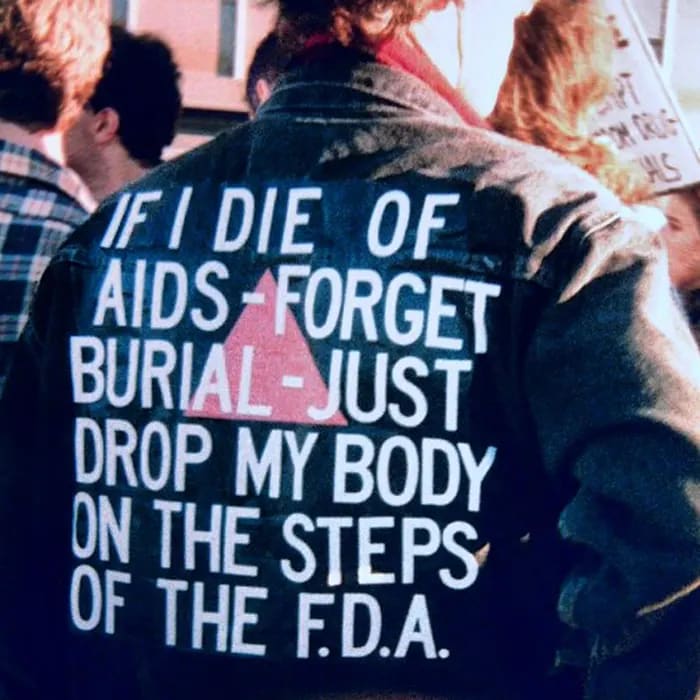
An absolutely vital piece of gay history republished here in a beautiful new edition by Nightboat Books. David Wojnarowicz was already on his deathbed when this, his first book, was published in 1992. Part of a generation of queer people gone too soon during that last great plague, aided and abetted by an uncaring government more than happy to watch its citizens die because they weren't the right kind of people. Wojnarowicz first came to my awareness as a then-closeted child in rural America, his incendiary invective lashing out at a nation that could not wait for him and those like him to die. His refusal, and the refusal of the rest of his cohort in Act Up, to suffer and die in silence first introduced me to the scope of the AIDS epidemic. Prior to seeing the back of his iconic leather jacket, I was unaware of the pervasive silence with which the government had approached the AIDS epidemic.
This new edition, with an introduction by Ocean Vuong, offers a look at Wojnarowicz the man. Finding lust and passion in truck stops, escaping the grind of adolescent prostitution in the city by riding a bus to the nearest clean source of water, seeing the face of a past rapist in the swell of a crowd exiting a film, here Wojnarowicz offers a look at a life scraped together in spite of the dominant culture's best efforts. An all too short ode to an all too short life, he offers the barest glimpse of the scale of loss that AIDS and governmental inaction brought about. That his works are so few is a tragedy, as his voice carries a strength that I would love to hear in our own terrifying era.
another one that feels wrong to rate or add on here at all tbh. very difficult to read, raw, heartbreaking knowing that Wojnarowicz died before it was published
my shelf talker - Unflinching, raw writings from a singwar voice of the NYC gay and queer movements of the 1970s-90s who made an enormous activist, literary, + artistic impact before his untimely death at 37 from complications of AIDS. This work, memoir/ poem/story wrapped up in one, screams of burning conviction and a fervent demand to be heard in a period where the popular opinion was to willfully disengage from experiences like those Wojnarowicz had and bore witness to.
God, I can’t believe the way he tells the truth. I keep thinking about how I’ve very rarely experienced such a raw artist, fully in the flow. Read this. I’ve loved Wojnarowicz since I got to visit his work at the NYU archives in college and yet I feel I haven’t understood him until I read this. I wish he got to stick around. Fuck AIDS, burn in hell Reagan.
I finished this in one day — a fully immersive look into sex, violence, power, and memory. More approachable than some of Wojnarowicz's other work that I tried to read. Ocean Voung's introduction provided some really helpful context when taking in the heaviness of some of the subject matter. A powerful read!
"I look familiar but i am a complete stranger being mistaken for my former selves (...) I am a glass human. I am a glass human disappearing in rain. I am standing among all of you waving my invisible arms and hands. I am shouting my invisible words (...) I am waving. I am waving my hands. I am disappearing. I am disappearing but not fast enough."
I wasn’t ready for what this book would reset in me. What a horrific tragedy and beautiful gift to read such raw thought and emotion from a dying man like this. It’s like a kind of synesthesia from your worst nightmare. Haunting, frank, and brutalizing.
A quick read, but NSFW. I didn't know what I was expecting, but this was certainly more explicit and darker than I thought it would be. I guess the title is fitting. Maybe the formatting also made it less enjoyable.
Beautiful drawings, some quite shocking, just like the stories. Didn't vibe with the stream of consciousness of the first one, kinda hated the second one, already forgot the third one, and felt a bit down wrt the last one. I don't think it's a book that has a lot of reread value.
Started and finished in the same morning. Incredibly interesting writing style. Rather rough and depressing but from a really unique perspective and somewhat poetic. Not my favorite thing ever but definitely moving at times and one of a kind
Sad and beautiful I know the stories of David Wojnarowicz from Olivia Laing’s lonely city, and I’ve read Ocean Vuong’s on earth we’re briefly gorgeous. This book/poem collection just gave the stories another perspective another layer.
“It is not just that violence fades into sweetness; it’s looking at the flesh of the body and recognizing that it is a restraint that keeps the blood inside the form”