

What do you think?

Orbit #4
Orbit 4
Fourth in the celebrated series includes stories by Kate Wilhelm, Charles L. Harness, James Sallis, Jacob Transue, Carol Emshwiller, R. A. Lafferty, Robert Silverberg, Vernor Vinge, Harlan Ellison, more.
222 pages, Mass Market Paperback
First published January 1, 1968
About the author
Damon Knight
590 books101 followersDamon Francis Knight was an American science fiction author, editor, and critic.
Knight's first professional sale was a cartoon drawing to a science-fiction magazine, Amazing Stories. His first story, "Resilience", was published in 1941. He is best known as the author of "To Serve Man", which was adapted for The Twilight Zone. He was a recipient of the Hugo Award, founder of the Science Fiction and Fantasy Writers of America (SFWA), cofounder of the National Fantasy Fan Federation, cofounder of the Milford Writer's Workshop, and cofounder of the Clarion Writers Workshop. Knight lived in Eugene, Oregon, with his wife Kate Wilhelm.
Knight's first professional sale was a cartoon drawing to a science-fiction magazine, Amazing Stories. His first story, "Resilience", was published in 1941. He is best known as the author of "To Serve Man", which was adapted for The Twilight Zone. He was a recipient of the Hugo Award, founder of the Science Fiction and Fantasy Writers of America (SFWA), cofounder of the National Fantasy Fan Federation, cofounder of the Milford Writer's Workshop, and cofounder of the Clarion Writers Workshop. Knight lived in Eugene, Oregon, with his wife Kate Wilhelm.
Ratings & Reviews
Friends & Following
Create a free account to discover what your friends think of this book!
Community Reviews
Displaying 1 - 8 of 8 reviews

September 18, 2018
7,5 I have mixed feelings about this collection. It's from the samen year as Analog 6, that I read earlier this week, but the content is totally different. The first one is edited by John W. Campbell - well known as the one who give rise to the 'golden age of science fiction' with science based stories around astronauts and scientist, where the idea is more important than the style. This collection however is from the 'new wave' side of the SF-spectrum. A story by Harlan Ellison (of Dangerous Visions-fame) is included. These stories with a few exceptions are more psychological, contain more character examination, are better written (more authors with a background in poetry and literature), so it's the more literary kind of sci fi. Also relationships are worked out more, there are several female authors in here, and while there's still some casual sexism going on, not as much as in Analog 6. I liked that. I found these stories better than those in Analog 6. But ... I enjoyed them less. Is it weird to admit to that? The best for me would be a combination: well written stories about scientific ideas. Here style is sometimes more important than substance (like in the last story here by James Sallis where a description like 'The night was pellucid, a crystal of blackness; hermetic with darkness' was one of the clearest. I didn't know what was going on in this tale). Likewise, the story by Harlan Ellison was gross, but it didn't really speak to me. It seemed shocking just to be schocking. Still, there were some powerful tales here, like 'Windsong' by Kate Wilhelm, that takes a psychological look at a mans missed opportunity of real love - and works to a chilling conclusion. 'Probable cause' was a fun tale about precognition used in court, and the ramifications of it. 'This corruptible' was an exploration of a new technology to attain eternal life, that comes back to the man trying to use it. With some body horror thrown in. 'One at a time' by R.A. Laverty was a rambuncuous tale, more fantasy than sf, but entertaining as heck. And Vernor Vinge is included here with a story that is half fantasy, half science fiction with lots of meta commentary on the Sf-magazines of the age, and some interesting twists and turns. Don't know if it couldn't have been a bit shorter for what it was trying to do, but it had a fun sense of adventure to it. I liked it. So all in all, not totally a success, but I'm going to read more in this series and broaden my knowledge of previous SF-authors!

October 15, 2025
I've read about 10 Orbits (out of publication order), and after this one, I'm going to take a long break from them. Sad fact is that most of them just weren't much good. Knight had a taste for what was called New Wave, where stories didn't make much sense.
This Orbit contained some of the best and worst stories of the series that I've read so far. This time around, Knight published more novellas, leading to less than the usual dozen selections. One of the novellas is brilliant -- "Grimm's Story" by Verner Vinge, which nods and winks at sci-fi and fantasy fiction magazines. Another, about the Supreme Court, winds up being more embarrassing than anything else, since the real history of the Supreme Court became so far removed from the ideal shown here.
Knight did short introductions to each story, but would soon stop that, perhaps because he basically published the same authors again and again.
Selections:
* "Windsong" by Kate Wilhelm/Mrs. Damon Knight. Typical bullshit from the wife. If it wasn't for hubby, she'd have been a failed writer, which is what she deserved to be.
* "Probable Cause" by Charles L. Harness. This Supreme Court novella, set in 1984, goes on far too long, and shows a lot of the 1960s sci-fi tropes of clairvoyance, other psychic powers, ghosts, Presidential assassinations and manned voyages to Mars. It is sad to think that anyone once thought that Supreme Court justices couldn't be bought, and actually cared about their jobs.
* "Shattered Like a Glass Goblin" by Harlan Ellison. Unlike some of Ellison's whacked-out titles, there really is a glass goblin here. Very creepy love story ... which reminds me most of what someone once said about Pink Floyd co-founder Syd Barrett, "He flew too close to the sun."
* "The Corruptible" by Jacob Transue. There isn't an introduction by Knight for this story, leading me to believe Transue might be a pen name, perhaps for Knight himself. A rich man tracks down an old scientist who seems to've found the fountain of youth. Predictable and full of plot holes.
* "Animal" by Carol Emschwiller. The Animal is a caveman, possibly Neanderthal. He's captured and sent to an exhibit at a city park. He eventually learns to write. It's a bizarre sketch of a parable ... but a parable about what is unclear. The story takes place in 1969 ... in an alternate universe, presumably.
* "One at a Time" by R. A. Lafferty. Once again, Lafferty proves to be an overrated hack.
* "Passengers" by Robert Silverberg. Although imaginative, the story suffers from being set in December 1987. I was a freshman in community college then. Sadly, I don't remember any helpful Central Computer, electric vehicles, instant purple hangover cures, or invisible parasites that take over your body.
* "Grimm's Story" by Verner Vinge. This the best novella published in the 10 or so Orbits that I've read. There is complex world-building here, including new sciences and new species, but it is understandable. There is even a popular magazine called Fantasie, which has been around for 700 years. Great stuff.
* "A Few Last Words" by James Sallis. Poorly written, convoluted end of civilization story, punctuated by a speeding car killing the last dog in town. Fuck you, Sallis.
This Orbit contained some of the best and worst stories of the series that I've read so far. This time around, Knight published more novellas, leading to less than the usual dozen selections. One of the novellas is brilliant -- "Grimm's Story" by Verner Vinge, which nods and winks at sci-fi and fantasy fiction magazines. Another, about the Supreme Court, winds up being more embarrassing than anything else, since the real history of the Supreme Court became so far removed from the ideal shown here.
Knight did short introductions to each story, but would soon stop that, perhaps because he basically published the same authors again and again.
Selections:
* "Windsong" by Kate Wilhelm/Mrs. Damon Knight. Typical bullshit from the wife. If it wasn't for hubby, she'd have been a failed writer, which is what she deserved to be.
* "Probable Cause" by Charles L. Harness. This Supreme Court novella, set in 1984, goes on far too long, and shows a lot of the 1960s sci-fi tropes of clairvoyance, other psychic powers, ghosts, Presidential assassinations and manned voyages to Mars. It is sad to think that anyone once thought that Supreme Court justices couldn't be bought, and actually cared about their jobs.
* "Shattered Like a Glass Goblin" by Harlan Ellison. Unlike some of Ellison's whacked-out titles, there really is a glass goblin here. Very creepy love story ... which reminds me most of what someone once said about Pink Floyd co-founder Syd Barrett, "He flew too close to the sun."
* "The Corruptible" by Jacob Transue. There isn't an introduction by Knight for this story, leading me to believe Transue might be a pen name, perhaps for Knight himself. A rich man tracks down an old scientist who seems to've found the fountain of youth. Predictable and full of plot holes.
* "Animal" by Carol Emschwiller. The Animal is a caveman, possibly Neanderthal. He's captured and sent to an exhibit at a city park. He eventually learns to write. It's a bizarre sketch of a parable ... but a parable about what is unclear. The story takes place in 1969 ... in an alternate universe, presumably.
* "One at a Time" by R. A. Lafferty. Once again, Lafferty proves to be an overrated hack.
* "Passengers" by Robert Silverberg. Although imaginative, the story suffers from being set in December 1987. I was a freshman in community college then. Sadly, I don't remember any helpful Central Computer, electric vehicles, instant purple hangover cures, or invisible parasites that take over your body.
* "Grimm's Story" by Verner Vinge. This the best novella published in the 10 or so Orbits that I've read. There is complex world-building here, including new sciences and new species, but it is understandable. There is even a popular magazine called Fantasie, which has been around for 700 years. Great stuff.
* "A Few Last Words" by James Sallis. Poorly written, convoluted end of civilization story, punctuated by a speeding car killing the last dog in town. Fuck you, Sallis.
May 16, 2021
Windsong: *** Interesting character study
Probable Cause: ** Interesting premise and ruminations of the legal consequences of clairvoyance and determinism, but overall the story and characters are boring
Shattered Like a Glass Goblin: * Hillariously heavy handed and cliche anti drug story.
The Corruptible: **** Good Cronenberg-esque body horror and commentary on whether the mind and body are separate.
Animal: * I understand that the writer was trying to make some commentary on society's value of other sentient beings and "what is the measure of a man" but I found the writing style off putting.
One at a Time: * A man goes on a night out with an immortal. The story is sadly nowhere near as exciting or intriguing as that premise suggests.
Passengers: *** Silverberg doesn't disappoint as usual.
Grimm's Story: **** Entertaining Jack Vance-esque planetary adventure. I guessed the twist at the end fairly early on and the last paragraph elaborating Grimm's motives was a bit cringeworthy
A Few Last Words: * I'm not even sure what this story is about. A lot of purple prose.
Probable Cause: ** Interesting premise and ruminations of the legal consequences of clairvoyance and determinism, but overall the story and characters are boring
Shattered Like a Glass Goblin: * Hillariously heavy handed and cliche anti drug story.
The Corruptible: **** Good Cronenberg-esque body horror and commentary on whether the mind and body are separate.
Animal: * I understand that the writer was trying to make some commentary on society's value of other sentient beings and "what is the measure of a man" but I found the writing style off putting.
One at a Time: * A man goes on a night out with an immortal. The story is sadly nowhere near as exciting or intriguing as that premise suggests.
Passengers: *** Silverberg doesn't disappoint as usual.
Grimm's Story: **** Entertaining Jack Vance-esque planetary adventure. I guessed the twist at the end fairly early on and the last paragraph elaborating Grimm's motives was a bit cringeworthy
A Few Last Words: * I'm not even sure what this story is about. A lot of purple prose.

April 28, 2019
The fourth of the ORBIT S.F. anthologies edited by Damon Knight (1922-2002), published in 1968.
Here's a listing of the stories and authors and my ratings:
"Windsong" by Kate Wilhelm (1928-2018) ****
"Probable Cause" by Charles L. Harness (1915-2005) *****
"Shattered Like A Glass Goblin" by Harlan Ellison (1934-2018) ****
"This Corruptible" by Jacob Transue ( Joan Matheson) (1924-1995) ***
"Animal" by Carol Emshwiller (1921-2019) **
"One at a Time" by R.A. Lafferty (1914-2002) ***
"Passengers" by Robert Silverberg (1935--) ****
"Grimm's Story" by Vernor Vinge (1944--) ****
"A Few Last Words" by James Sallis (1944--) *
I rate it a **** overall.
Here's a listing of the stories and authors and my ratings:
"Windsong" by Kate Wilhelm (1928-2018) ****
"Probable Cause" by Charles L. Harness (1915-2005) *****
"Shattered Like A Glass Goblin" by Harlan Ellison (1934-2018) ****
"This Corruptible" by Jacob Transue ( Joan Matheson) (1924-1995) ***
"Animal" by Carol Emshwiller (1921-2019) **
"One at a Time" by R.A. Lafferty (1914-2002) ***
"Passengers" by Robert Silverberg (1935--) ****
"Grimm's Story" by Vernor Vinge (1944--) ****
"A Few Last Words" by James Sallis (1944--) *
I rate it a **** overall.
June 17, 2026
Dr. Thornton has spent a year overseeing Project Phalanx, a weapons system supposedly computer-controlled. During his regularly scheduled psychology sessions Thornton reveals his knowledge of the disembodied brains that really control it and his suspicion that one of them may be someone he knows in “Windsong” by Kate Wilhelm. A man is on trial for assassinating the President but the evidence is mostly circumstantial. Charles L. Harness uses his legal background to look at the ramifications of obtaining incriminating evidence by psi, with regard to the 4th and 5th amendments, and the legality of clairvoyance in “Probable Cause”. Like a love letter to the Rhine Institute. Rudy gets out of the army and moves in with his ex-fiancee in a hippie flop called The Hill. There they gradually remove themselves from reality and he is “Shattered Like A Glass Goblin”. Worth it for Harlan Ellison’s luscious prose. Two ex-business partners are forcibly reunited when one discovers a longevity treatment and the other offers half his wealth for it. In “This Corruptible” Jacob Transue shows that revenge is sometimes best served old. Svir and his psi dorfox Ancho have been recruited by the beautious Tatja Grimm, ostensibly to save the 700 year-old run of Fantasie magazine, about to be offered up as a sacrifice by a mad ruler. But Tatja has different plans. “Grimm’s Story” by Vernor Vinge is fabulous adventure SF.

January 25, 2020
4.25/5 (collated rating: Very Good)
A quest for SF magazines! Alien possession and its psychological damage! The Supreme Court tackles future crime! And many more unusual visions….
Orbit 4 (1968) dethrones Orbit 3 (1968) for the overall collated rating crown (as of now) in the anthology sequence. All of the anthology so far contain worthwhile [...]
Full review: https://sciencefictionruminations.com...
A quest for SF magazines! Alien possession and its psychological damage! The Supreme Court tackles future crime! And many more unusual visions….
Orbit 4 (1968) dethrones Orbit 3 (1968) for the overall collated rating crown (as of now) in the anthology sequence. All of the anthology so far contain worthwhile [...]
Full review: https://sciencefictionruminations.com...

December 6, 2022
#4 in this series of original sf and fantasy stories.
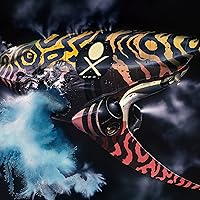
The stories in these anthologies are nothing less than interesting, even if some of them don’t work that well. Due to the vagaries of the Nebula Award nominating period during these early years Ellison’s story here, “Shattered Like a Glass Goblin”, was nominated for the 1970 Best Short Story Nebula Award, which it lost to Silverberg’s story in this volume, “Passengers”, both of which I enjoyed. Charles Harness’s novella Probable Cause was also nominated for a Best Novella Nebula Award in 1970 but seems to be making up the numbers there. It’s a long-winded story about the US Supreme Court dealing with psi abilities and would have been better placed in Campbell’s Analog. Others I enjoyed were Kate Wilhelm’s “Windsong”, Jacob Transue’s “The Corruptible”, and Lafferty’s “One at a Time” (showing, yet again, that he’s better at shorter length). I make that six out of nine starred stories I would put onto a recommended reading list for 1968; so, much better than average. A great Chris Foss cover here as well. R: 3.1/5.0
The stories in these anthologies are nothing less than interesting, even if some of them don’t work that well. Due to the vagaries of the Nebula Award nominating period during these early years Ellison’s story here, “Shattered Like a Glass Goblin”, was nominated for the 1970 Best Short Story Nebula Award, which it lost to Silverberg’s story in this volume, “Passengers”, both of which I enjoyed. Charles Harness’s novella Probable Cause was also nominated for a Best Novella Nebula Award in 1970 but seems to be making up the numbers there. It’s a long-winded story about the US Supreme Court dealing with psi abilities and would have been better placed in Campbell’s Analog. Others I enjoyed were Kate Wilhelm’s “Windsong”, Jacob Transue’s “The Corruptible”, and Lafferty’s “One at a Time” (showing, yet again, that he’s better at shorter length). I make that six out of nine starred stories I would put onto a recommended reading list for 1968; so, much better than average. A great Chris Foss cover here as well. R: 3.1/5.0

May 1, 2009
Fair collection of science fiction edited by Damon Knight and read during the summer.
Displaying 1 - 8 of 8 reviews