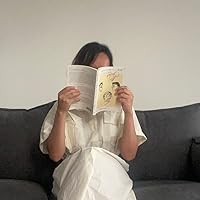
In the late '50s, Sandra Scoppettone (author of the Lauren Laurano mystery series) and her friend Louise Fitzhugh (author of Harriet the Spy) began a collaboration on a book that was both authors' first book, Suzuki Beane, first published in 1961 by Doubleday as a hardcover. It is the story of a hip, young New York City "baby beatnik".
Sandra Scoppettone first emerged as one of the best hard-boiled mystery writers using the name Jack Early for her first three novels that included A Creative Kind of Killer (1984) that won the Shamus Award from the Private Eye Writers of America for best first novel. She had started writing seriously since the age of 18 when she moved to New York from South Orange, New Jersey. Scoppettone in the 1960s collaborated with Louise Fitzhuh and in the 1970s wrote important young adult novels. The Late Great Me depicting teenage alcoholism won an Emmy Award in 1976. Her real name was revealed in the 1990s with the start of a series featuring PI Lauren Laurano. Scoppettone shares her life with writer Linda Crawford.
Longer than I expected for a picture' book that looks to be marketed towards children, but that's more of a pleasant surprise. It's quite a cute, funny story to read.
Two children from quite different backgrounds become close friends much to the dismay of their respective parents. (Honestly, the only 'decent adult' (through Suzuki's eyes) in the book is the woman who works as a maid for Henry's family.) The children have fun playing together and learning about each other, and despite their differences behave much more tolerant and 'grown-up' than any of the adults around them. There are lots of funny little moments throughout, and Suzuki and Henry are very believable characters - they 'sound' like little kids.
Definitely one I'd recommend reading - if you can find it. And that's a BIG if. Used is listing on Amazon as $300+ at the lowest. There's a link in the comments to an online scan... but when you get to the bottom, there are comments from the author requesting it be taken down so it's DEFINITELY not approved to be online. Oops - kinda bad for reading it now. There's no other place I'd have ever come across it to read, though... and as dated as it is with Suzuki's 'beatnik' background, it's unlikely to be re-published, sadly.
omg if copies of this weren't a zillion dollars i would give them out like hotcakes to my childlike adult friends... subversive, hilarious, and had a complex morality within
Probably the best written artifact to emerge from the whole bullshit "Beat writers" scene. It's fitting that Louise Fitzhugh contributed the illustrations, because Suzuki is a lot like Harriet Welch: they're both precocious girls and preternatural storytellers, guiding us through the now-gone New York of the early '60s.
This is my All Time Favourite Book EVER. I have the original copy, that I've hung on to, from when I was a kid in NYC. It is easily my most prized possession! We knew the author, who was a neighbour. It is the most Un-P.C. Children's book ever written! I love it because the main character lives where I grew up, and lives LIKE we did. 'Artists in lofts in the Village.' And she is a big mouth, like I was, and still am!!!
YOU CAN READ THE BOOK, AND SEE ALL OF THE IMAGES, HERE:
Yowsa, can I possibly be the first to review this very early 60's, quirky, unique, fun read?
Looks like it!
Ever have the experience of completely forgetting that you've read, seen, or done something and then--without warning--realize that not only did you experience it, but you loved it? Just had that experience reading reviews of Harriet The Spy, one of my childhood favs, written by Louise Fitzhugh, one of the authors of this small treasure, Suzuki Beane.
Haven't read or thought of this book in years, but read it I did, and loved it. Where is that copy now?
Evidently it's become something of a collector item, although if you check for it on Amazon, there it is (EVERYTHING is on Amazon). Check it out there, and you can see some of the charming pen and ink line drawings that illustrated it.
The copy I read is probably either in a used bookstore somewhere, or a landfill (talking pre-recycling here).
It's cute, funny, and bittersweet, the story of a little girl growing up in NYC with her beatnik parents (no, I won't explain to you who 'beatniks' were), her kooky apartment, off-beat lifestyle, straw-in-the-wind messy hair, and the start of her coming of age. It's NYC in the early 60's, niche market, what we might call, today, 'indie' material...marketed then, I believe, for 'all ages'.
I was once told, affectionately, that I LOOKED like Suzuki Beane...Could it have been the cute, floppy, Chukka-like ankle boots?
Now let's see, where ARE those ankle boots...They've got to be here, somewhere, right?
I read about this in a Joyce Brabner comic strip, "Beatnik Chicks," included in the otherwise forgettable anthology The Beats: A Graphic History. I can't tell if Suzuki Beane was intended for children, or if it only has the form of a picture book (with pictures by Louise Fitzhugh, of Harriet the Spy fame). Suzuki is a little hep chick who lives with her parents in 1950s Greenwich Village. It's Eloise in a cold-water walk-up with bongos and Gitanes. Suzuki paints and writes poetry and hates tv and squares. Her parents remind me, more than a little, of Clementine's. They're creative. He's bearded. She wears mannish clothes and head scarves. At the very least, I hate them like I hate Clementine's parents, the difference being that here, you're supposed to. They're immature and self-absorbed and as Suzuki's square friend Henry tells them, "You think you're so special - well you're not - you all dress alike and talk alike and think alike - and you're no different [from the squares] except you look nuttier." All in all, a fun find. My favorite part was the glossary, which defines "square" as "probably you."
Utterly charming. I had a few questions about word choices along the way...but why quibble? The way the text was laid out was perfect, as was the Courier typeface (and the couple of goofy poems we met along the way). And the illustrations were fun too. Hard to understand why this isn't considered a total classic. The TV show (available on YouTube) was also a hoot--which is how I found out about this book in the first place.
Like, a cool book both swinging cats and squares can dig. Like, people are different and that's okay. Deep.
I honestly have no idea how this would have done back in the early 60s as a kids' book, but I found it delightful as an adult. Definitely enhanced by Louise Fitzhugh's illustrations.
This is a delightfully quirky children's story about a little beatnik living in her parent's "pad" in the Village. It used to be impossible to get a copy of this, but it may have been reissued or easier to find through ebay.
Great story and illustrations, ideal for the Bob Dylan/Robert Frank/Jack Kerouac crowd.
This is an amazing children's book...hard to find. It's narrated by this young girl who has beatnik parents. She befriends a "total square" boy named Henry. Both sets of parents do not like that they are friends. It's priceless. A piece of trivia. Desilu Studios tried to make a sitcom out of it. It only made it to a pilot...which is priceless to watch. Check it out. It's on youtube.
This is the greatest little book in the world. It is about a little beatnik girl growing up in the Village. Her parents are artists and she digs poetry. Illustrations by Louise Fitzhugh of 'Harriet the Spy' fame.
This is a period piece, created as a counterculture response to "Eloise". It satirizes beatnic culture, as well as the straight/square scene in NYC during the late 1950s. Illustrated by the then young artist, Louise Fitzhugh (prior to the publication of "Harriet the Spy".)
Very sweet, if alarming, allegory about how the apparent differences of high and low society can be surmounted by love. Fantastic illustrations and text that really must be read out-loud to be fully appreciated.
This is by far the craziest kids' book I have read in my life. It is one that you'll either love or hate, but one thing is certain--you'll never forget it.
My parents got this when I was little. I thought Suzuki was the coolest kid ever. I wanted to be just like her! And now, at 70, I think I am! “Dance, Suzuki, dance!”
Okay, so three stars may be stretching it for a book so short on content. But it strikes me as the kind of kids' book Dharma Finkelstein might have written when she was a kid. The simple line drawings are the best part; they are so alive.
Suzuki is a "baby beatnik" who lives with her parents in a pad without real furniture in the Village. She mouths their hipster talk with great conviction, saying that the subway train is as forceful as a Ginsberg poem, etc. Suzuki really believes her parents are the coolest things going, so when she visits a school friend's dancing class and then goes to his comfortable upscale apartment (he is Greg to her Dharma) for dinner, she is both shocked and amused to see how the "fat cats" live. All that rhetoric doesn't seem to stop her enjoying the game hen, wild rice and other goodies, though. (Yeah, right. Like wealthy parents in the sixties didn't have the maid prepare separate, simpler kids' meals. I was around then, honey, and they did.)
Suzuki and her friend discover that tolerance cuts both ways, or at least it should. I found the ending rather abrupt, and unconvincing, but there we are.
Adorable book from 1961 about a beatnik child (with the unique name of Suzuki Beane) who learns some things about life, adults, and friendship. It's meant to be a parody of Eloise! The only thing I'd change is the number of pages- it needed to be shorter. Illustrated by the author of Harriet the Spy!
I suppose the message about not automatically stereotyping other people is fine, and the 50's beatnik lingo is interesting, but I wasn't particularly charmed by the story. Maybe Maynard G. Krebs would enjoy it...
Can we get the copyright negotiated? I want to buy loads of copies of this book and give them out. I want Suzuki Beane on tshirts, on backpacks—as a plush doll, as a tv series... this kid rules!
Recommended by my niece. Feels like riding a time machine to the 1950s. I am intrigued by the message; a nod to the principles of the Beat Generation -learnt something new today! And currently experiencing... movement-shock(?), this reminds me of Guy DeBord's Situationist movement in The Society of the Spectacle though. Question: the characters, they are kids right… but why do they act like young adults..? Is this.. normal for that movement? (apologies for the ignorance)