It is important to note that most of the themes explored in this book deal with sensitive subject matters. My review, therefore, touches on these topics as well. Many people might find the book's subject matters & those detailed in my review overwhelming. I suggest you steer clear of both if this is the case. Please note that from this point forward I will be writing about matters that contain reflections on Post Traumatic Stress Disorder (PTSD), violent crime, murder, the death of a loved one, grief, gun violence, rape, sexual violence, suicide, self-harm, the death of an animal, animal abuse, & others.
When written by an author with talent, certain stories can be like lightning to the skeletal system that holds us in place. There is no tender way to speak to the ways in which the mind can lose itself to pain.
It has become more commonplace to speak of the value of a healthy mind; the care that should be given to the ailing; the patience we all need to offer. In reality, when soaking wet the rain feels like acid; mental illness is not easy, it is not kind, it is not smooth or palatable; mental illness is painful, it is destructive, it is turmoil, & pain. I cannot fault the fallacy of misunderstanding that follows the innocent intent of the majority. It is nice to know that we are known, if still misunderstood.
In some sense, to meet people like Bonnie is a privilege. The world is very different for each of us & I remain inclined to acknowledge that we experience it in varying ways too. Sometimes, the small things feel like the end of the world; it is not bad to feel overwhelmed by the stone in our shoes. What becomes tricky to communicate is the monsoon in the heart that wallows the mind in dead water.
People familiar with life & its many facets will find in this story a character who merits a second chance. What is interesting about this story is the impact it has on its readers. Should you have come to the place where reviews live, you will see people degrade Bonnie & claim she is a horrible person who was impossible to root for. I cannot fault them for their opinions.
What I would like to propose in this critique is the opposite. Certainly, Bonnie is complex. She suffers from Post Traumatic Stress Disorder (PTSD) & in my unprofessional opinion, shows signs of Schizoaffective Disorder.
Our ability to share with one another has muddied our understanding of complex issues. One might feel nervous about speaking to a cashier but this does not mean that one has an Anxiety Disorder. A person who lives with conditions that shape the mind & in turn, the world around them, do not experience life in the same ways as those who do not.
Once again, I cannot necessarily fault people for not grasping the complexities of mental illness & mental disorders; if one is sheltered, one cannot know. Admittedly, I am rather happy to know that people experience life free of the burden that shadows out the light.
Unfortunately, due to this, conditions like the ones I listed above leave people upset, disgusted, & rather repulsed with the person in question. When exploring the realities that Bonnie has experienced throughout her life, it would be simple to conclude that she has had a rough go.
While growing up she lost her father to suicide; her mother fell into a Depressive episode due to grief; her mother attempted suicide; her mother died in palliative care. Her best friend adopted her into her family. Bonnie was welcomed into a home with a father & a mother; a brother, & a sister. She became a surrogate for the childhood she never got to experience; when she slept she was sound & secure.
Rather than accept that this was an experience that would advocate a change which Bonnie would be unprepared to deal with, the people in Bonnie’s life perpetrated actions that allowed her condition to worsen. This is not to say that it was their fault; Bonnie is responsible for her person. What is perhaps rather more difficult to accept is our participation in the lives of people we meet in passing & in whose precious time we nestle our hours.
Without a loving home, Bonnie would have had nothing to compare; her life would have remained a series of unfortunate events. She was accepted into a home & then these same people allegedly spoke badly about her when she was healing.
There is no easy way to reflect on the events of this book. I cannot fault the foster family for their uncertainty & annoyance towards Bonnie. In life, many things transpire; some regularly bad & others wonderfully good. At the end of each day, we remain in our own company & have the responsibility of owning the experiences we had along the way. There is no point in initiating change in a person’s life if the goal is to throw this same kindness in their face & reveal lies; cracks in the foundation of trust they thought they had with you.
The recollections that Bonnie shares with readers speak of a terrible thing. When Bonnie finally felt able to trust that life would not leave her out in the open alone, her adopted family was gunned down in their convenience store; Bonnie was violently sexually assaulted; & life was no more than a burdened reminder of everything she would never have again.
Throughout this book the main character is unlikeable, I will not pretend otherwise. For readers whose experience with the world is perhaps sheltered, or ground in the soil of a single neighbourhood, their time spent with Bonnie might feel altogether horrible. Bonnie does not have any redeeming features. What the reader will have to decide is whether or not she deserves forgiveness for the ways in which her brain chose to change as a consequence of the events that she experienced.
Again, to a certain extent, we are all responsible for the ways we act in the world. Bonnie did not need to leave the dog for dead by starving it & abandoning it in the woods. Bonnie did have a choice as to how she treated the innocent animals; she chose abuse & death.
I will not ask the reader to forgive Bonnie for the malaise she created in a sea of blue. Rather, what I want to draw the reader’s attention to is Bonnie’s inability to be a functioning human being.
Discussions surrounding mental health & disorders often integrate some of what I have already written; people are responsible for themselves & their actions. To be ill is not an excuse & an excuse is interpreted as being something that would automatically pardon or wipe clean the blood on the blade. The contrary is, in actuality, true.
People who are ill do not have the benefit of clear thought. Of course, journeys to heal open wounds help individuals flow through the seasons with more ease but, for some, the innocence of life is lost forever. It is positive to include details about a person’s mental state so as to better understand the facets of the illness or the disorder; in this way we become better informed as to the ways in which a brain can hanker down & demerit the life it is keeps breathing. This is true in Bonnie’s case.
Bonnie is a person whose personality is degrading; she is mean, insensitive, cruel, shallow-minded, simple-minded, & harbours a desire to mistreat others. As she maneuvers her way through memory lane, she presents the reader with a fulsome version of herself. This approach is odd given Bonnie has very little ability to see things in their entirety & rather views everything in fractions.
Perhaps, the author felt inclined to write Bonnie as a person who lived entirely in a darkness of their own making; a person who remains disinclined from turning on the light. On the other hand, readers might feel that Bonnie is lost in a catacomb that mazes under a city she has never visited. Regardless of a reader’s interpretation, this story allows them the opportunity to regard advanced stages of trauma on the brain.
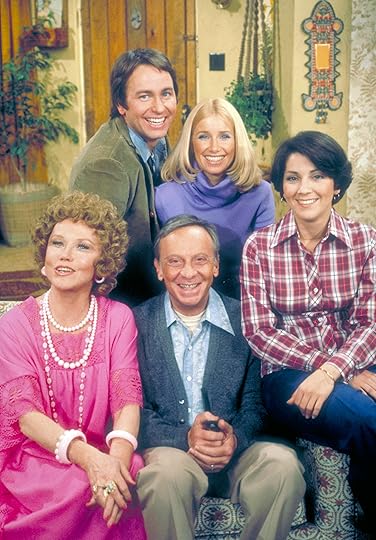
As her dream house is built, Bonnie allows herself the feeling of excitement; soon she will evade the human world for her personal paradise built in the likeness of “Three’s Company” (1976). I have never seen this show & for most of the book, I had to check records for references to the cast or search for photos of the scenes; most of what took place left me feeling apathetic.
Instead of wondering at the distance between myself & Bonnie’s comfort, I chose to look for my own. When I was young, my grandma & I used to watch episodes of “The Golden Girls” (1985) together. As I grew up, I found myself going back to the series over, & over again. Since my grandmother’s passing I meet her in the televised security of a story I know well; one that does not change in the ways of life; a series of events yet unknown to me.
I am inclined to believe that many people will understand Bonnie’s desire to live inside a place she deems as safe. In the world in which we live, safety can be a passing fancy or a concept one rarely encounters. Rather than roll the dice, Bonnie chose to take things into her own hands—I cannot blame her for that.
There is, however, a difference between having a favourite show, film, album, blanket, food, or hat rotate through life with you & what Bonnie has chosen which is to say; it is normal to find comfort in various aspects of life. It is unhealthy to shed the skin you live in to nestle through a groove so that you are never felt by life as a whole, ever again.
Though there were parts of this story that left me confused; the convict, the pets left behind by a contractor who knew a woman to be deliriously unwell; the storm; the best friend; the story as a whole tells the tale of an experience that deserves to be shared. One is lucky to never understand what it feels like to want to hide in the ground forever.
Ultimately, within this story, I found myself picking apart the plot to reveal the inner workings of a mind that could not voice reason into the malady it suffered. Surely, Bonnie could love the cold stone facade of the wandering convict & surely, she would have it in herself to love the story that allowed her to perish within its antiquated design.
As the train track & Christmas village that waited yearly for its time to make way into the hearth; Bonnie’s life will probably never be healed, wait & pace the halls of confinement as she did. Inside the dark there is always the form the human eye cannot absorb.
In Bonnie’s recollection she murdered her friend. Perhaps, she murdered the woman she loved & instead of admitting this to herself she wrote herself a letter in her lover’s hand. Perhaps, instead of murdering her best friend, Bonnie lashed a knife against her own skin. There is no set conclusion to this story. The reader will not receive the reprieve of a final moment between the characters they met within this book.
When all is said & done, that was not the point in their meeting. Readers, people at writ large, will probably never meet someone like Bonnie but, they will rewatch their favourite series; they will settle to re-watch their favourite film, replay their favourite song, & tell someone close to them about the intimacy of their prized piece of art.
Within books, one is granted the ability to live a life that does not belong to them. We grow as individuals when we expose ourselves to the wandering eye of the skylight; the omniscient being that heaves monstrosities in our mind.
Though, I would not like to be in Bonnie’s shoes, I wish her well. I am hopeful that stories like this one remind us of who we are. Whether one is at ease or weighed down; one is in this life, if only for a moment. In as much time as it might take to read this book, one is given permission to forgive the horrible violence of invisible illness & the ways in which it cauterizes the self; preventing thy own freedom from within.
Thank you to NetGalley, W. W. Norton & Company, & Ashley Hutson for the free copy of this book in exchange for an honest review!