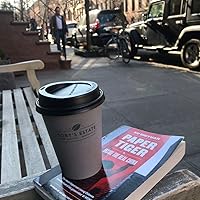
I happened upon this book almost by accident in a bookstore, with very little prior knowledge of Jimmy Lai or the depth of the Hong Kong pro-democracy movement. Like many people, my understanding had been pieced together from social media—images of protests, allegations of brutal crackdowns by the Chinese Communist Party, and fragments of news without much context.
What struck me immediately is that Troublemaker is exceptionally well written. It is narrative-driven, grounded in fact, and told from the perspective of an insider. The book traces Jimmy Lai’s life chronologically—from his birth in mainland China, through poverty and factory work, to his entrepreneurial success, and ultimately to his role as a central figure in Hong Kong’s democracy movement. It reads less like a political manifesto and more like historical storytelling anchored in a single, remarkable human life.
I won’t attempt to summarize every detail here. What matters more is the impact.
This is one of the most inspirational lives I have read about in decades. Quite frankly, I place Jimmy Lai’s story alongside figures like Martin Luther King Jr. and Mahatma Gandhi. No, his life does not mirror theirs perfectly. He was not a lifelong ascetic or spiritual leader, and his early life included its share of worldly indulgence. But history does not always call the polished or the pristine—it calls the willing.
When the moment arrived that required moral courage and public sacrifice, Jimmy Lai recognized it. He understood that history had placed him in a position of responsibility, and he accepted the cost. Ultimately, he made what may be the ultimate sacrifice: freedom itself.
I found this book profound. I did not realize that figures of this magnitude still existed in modern times. Jimmy Lai is one of them.
My prayer—quite literally—is that his life echoes beyond his imprisonment, and that it carries an influence comparable to Gandhi’s in India. I pray that the movement he helped lead will one day loosen the grip of the Chinese Communist Party over Hong Kong, and that his faithfulness will not have been in vain.
This book is essential reading—not only for understanding Hong Kong, but for understanding courage, conscience, and the price of freedom.