The first volume in Tim Robinson's phenomenal Connemara Trilogy - which Robert Macfarlane has called 'One of the most remarkable non-fiction projects undertaken in English'.
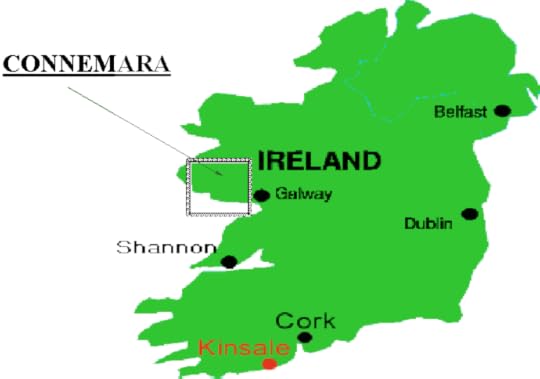
In its landscape, history and folklore, Connemara is a singular region: ill-defined geographically, and yet unmistakably a place apart from the rest of Ireland. Tim Robinson, who established himself as Ireland's most brilliant living non-fiction writer with the two-volume Stones of Aran, moved from Aran to Connemara nearly twenty years ago. This book is the result of his extraordinary engagement with the mountains, bogs and shorelines of the region, and with its folklore and its often terrible history: a work as beautiful and surprising as the place it attempts to describe.
Chosen as a book of the year by Iain Sinclair, Robert Macfarlane and Colm Tóibín
'One of the greatest writers of lands ... No one has disentangled the tales the stones of Ireland have to tell so deftly and retold them so beautifully' Fintan O'Toole
'Dazzling ... an indubitable classic' Giles Foden, Condé Nast Traveller
'He is that rarest of phenomena, a scientist and an artist, and his method is to combine scientific rigour with artistic reverie in a seamless blend that both informs and delights' John Banville
'One of contemporary Ireland's finest literary stylists' Joseph O'Connor, Guardian
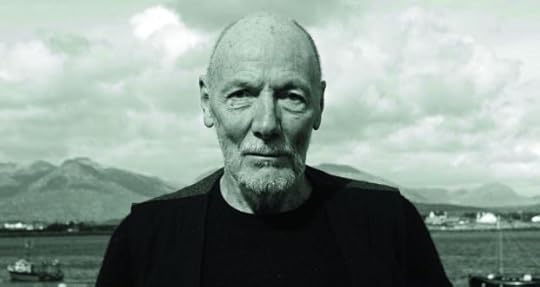
Timothy Robinson (1935 – 2020) was an English writer, artist and cartographer. A native of Yorkshire, Robinson studied maths at Cambridge and then worked for many years as a visual artist in Istanbul, Vienna and London, among other places. In 1972 he moved to the Aran Islands, and in 1984 he settled in Roundstone, Connemara. In 1986 his first book, Stones of Aran: Pilgrimage, was published to great acclaim. The second volume of Stones of Aran, subtitled Labyrinth, appeared in 1995. His last work was the Connemara trilogy. He died of Covid-19 in 2020.
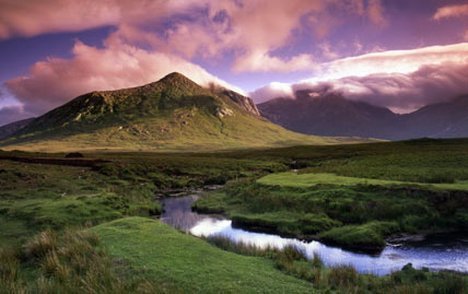
This was a great treat for me as a fan of literature that evokes a particular place and community whether fictional (like Wendell Berry’s series set in rural Kentucky) or immersive travel accounts (like Chatwin’s “In Patagonia”). This connected set of essays marries personal explorations of nature and geography with history and folklore for the southern region of Connemara. This highly rural province of Galway County in west central Ireland, roughly 60 by 40 miles in area, is beautiful in its range of bog lands and heather meadows between a rough Atlantic coast and the worn-down, ancient Maumturk Mountains. I have long been intrigued about this region from the accounts of a friend in Boston who went there seeking relatives and from the images and storyline in movies like “The Quiet Man” and “The Field.” Plus, I imagined lots of similarities in geography and ways of life between the fishing and farming communities of the rocky western coast of Ireland and those of the most eastern coast of Maine where I’ve lived for 23 years.
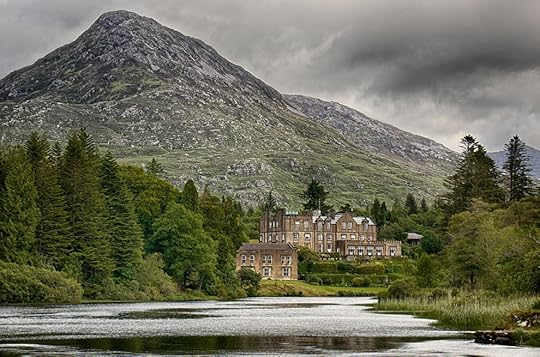
The author, Tim Robinson, comes from Yorkshire but lived in western Ireland for 20 years, first in the Aran Islands of Galway Bay and then in the coastal village of Roundstone, where he makes an income selling maps he lovingly created. Robinson shares with the reader a visit to the wave-tossed shores to the west, a hike of a craggy hill over Roundstone Bay, tours of Roundstone Bog to the north, a trip to the 17th century Ballynahinch Castle on an island in a lake (now a hotel catering to salmon fishing enthusiasts), an exploration of the ancient Derryclare Wood, and an ascent on a group pilgrimage to the mountain pass of Mám Éan in the Twelve Pins range of the Maumturk Mountains. As he did with his prior book on the Aran Islands, he delves deeply into the flora and fauna, physical terrain, and modes of human living in the sites he visits, tapping into the living memories, available oral and written histories, the testimony and studies of scientists, and analyses of the roots of the Gaelic words used to name geographical formations large and small. This made for a wonderful synthesis to me and a way to make places come alive. For example, maybe a name for a gulch translates to something like “parson’s hole”, and the oral history might reveal it the site of a murderous purge of Catholics by Cromwell’s henchman.
Connemara bog with Maumturk Mountains in the distance
Ballynahinch Castle, first built in 1684 for the Martin family
I learned a lot of things both worthwhile and trivial. Such as how these bog lands are full of rare species found in few other places and thus worth preserving from draining and conversion to farmland or vacation home tracts. About other carnivorous species there than the sundew and pitcher plant I know from nearby bogs in Maine and about unique and lovely heathers. How the bog’s floating mat of sphagnum moss rises above layers of dead plant matter that get deposited and compacted over millennia with much preservation due to acidity of the water. How a particular Dutch scientist who came there in the 30s learned to drill cores and study the diary of ecological history in the pollen. With wheat pollen and soot as signatures of agriculture and deforestation by burning came revelations about periods of extreme boom and bust in human habitation, such as signs of agriculture for 5-6 generations around 4,000 BC and then a gap for seven centuries. I liked how Robinson, while trying his hand at the cutting bog turf in slabs for fuel with some old timers, stops to ponder how with each few feet they were passing through several hundred years of deposition. The role of bogs as hideouts for robbers and rebels and for mythical creatures is tapped by Robinson for exploring the historical roots of local song and tales (reminding me of Hurd’s marvelous Stirring the Mud: On Swamps, Bogs, and Human Imagination.
As Robinson explores more solid terrain between the mountains and the sea, he gains a sense from the records of stones and bones how marginalized and oppressed the common people here were over the centuries, first under regional chiefs and then under exploitive barons placed over them by the English monarchy. In the mid-19th century, the tradition of neglect by remote masters contributed to Connemara sustaining even more deaths from the potato famine than less remote part of Ireland where relief efforts were more significant. Robinson is oppressed by so many ruins of abandoned communities and so many graves of the starved littering the landscape. Many bones about the countryside or along beaches correspond to infants who died before christening and thus were forbidden by past Catholic traditions to be buried in a sanctified graveyard, a target of special vitriol by Robinson. Long periods of tolerance between Catholics and Protestants was refreshing to learn about, but the times of conflict made the remote province quite the staging ground for violent forms of expression; e.g. Cromwell’s 17th oppression and property seizures of suspected Jacobites, the time of the Troubles over Irish independence in the 20s, and IRA terrorism in the 60’s.
Much changed for the region when the Industrial Revolution was extended to western Ireland. The role of a particular colorful character, Scottish engineer Alexander Nimmo, during the early 19th century gets some worthy focus from Robinson. He made extensive surveys, build roads, bridges, harbors, and villages and was critical to development of a railroad. Also making for a more positive story are the major landed gentry who were more benevolent as landlords. Such a one is Richard Martin, who lived at Ballynahich Castle, championed Catholic causes as a Member of Parliament, and became the founder of the Society for Prevention of Cruelty to Animals (earning him the nickname, ‘Humanity Dick’). Another interesting character in Robinson’s quiver is K.S. Ranjitsinhji (Ranji for short), the Mararajah and Prince of the Indian State of Nawanagar, who bought the Ballynahinch Castle and resided there annually in the 1920s and 30s. He was a cricket star during his college years in Cambridge and afterward in the 1890s, and was quite popular as an exuberant playboy in his time in Connemara.
All this interesting content of Robinson’s narrative is blessed with some extra lyrical writing skills that become apparent from passages that periodically leap up out of the page. Rather that reaching toward clichés of beauty, these tend to shake the reader up with surprising or disturbing perspectives. For example, here he pauses to dwell on the strange shadow cast by a water-strider insect on the surface of a puddle: It seemed at least marginally comprehensible that this minute display of clockwork jewelry should be staged by sunlight and insect and the laws of refraction to the delight of my eye, but not that it should be happening unobserved in a million sun-drenched pools all over the bogs at that moment; to be an ambulant point of view is a familiar mystery, but the existence of infinities of untenanted potential points of view is a destabilizing thought.
Later in this chapter he climbs a hill overlooking the bog and gets a sense of transformations of the landscape on a larger scale and includes this perspective in closing: Our awarenesses as individuals last between, say, a tenth of a second and a century; we can just about catch the dart of a water-skater and the symptoms of global warming. …But as biological entities we sail on a tiny raft of timescales between the atomic and the cosmic; we know that in a tenth of a second a world of things happen, and in a century virtually nothing.
As another example of his special vision, this passage comes from passing by remnants of abandoned habitation on a still lake mirroring a crag called Cashel Hill: One could be looking down through the great holes and rents in the skin of the earth at the impossibly lovely upside-down land that is the foundation of this one. And when the mountains have once seen themselves with terrible lucidity, surely they can never change; they know the truth of themselves. The world becomes abstracted, its attention all on their own image. Not a detail changes, but the earth’s unearthly beauty is suddenly terrifying. I have witnessed this awful transformation in the expression of Connemara very often. Perhaps the last person alive in the village by the lake, for whom hope was too far away, behind those mountains scissored out of the hard blue sky, saw it too: the landscape clenched against its reflection like the teeth of a skull.
For me this read was almost as good at evoking the history of places as Macfarlane’s The Old Ways: A Journey on Foot. While it may not explain geology as well as John McPhee or ecology as well as E.O. Wilson, Robinson makes up for it in his focused synthesis of a discrete region across multiple disciplines. I look forward to tracking down the other two volumes that followed this book, Connemara: The Last Pool of Darkness (2008), and Connemara: A Little Gaelic Kingdom (2011). As he is in his 80’s. I can’t expect much more from him, so moving backward to his two volumes on the Aran Islands is an option.
Tim Robinson died in spring 2020. He and his wife had relocated from Connemara to London after Tim developed Parkinson's Disease. He died of COVID, following the death of his wife two weeks earlier. Robinson's passing at the age of 85 is a tremendous loss. His documentation of the landscapes of the Aran Islands and of Connemara are unmatched.
Robinson started out in this book describing his work to document place names. This was a very complex task. Place names can change, be forgotten, and disappear. He sought out people who could guide him - either in words, or by taking him there - to places around Roundstone where he lived. Robinson also dedicated time to learning the Irish language, an important aspect of documenting place names. This work of course brings to mind Brian Friel's brilliant play Translations about the struggles in 19th century County Donegal, Ireland of local Irish speakers who push back against the anglicization of local place names.
Robinson takes us to a local cemetery and tells the stories of the numerous dead in unmarked graves including unbaptized babies and famine dead. There is a poignant story about a local man who was released from the workhouse in Clifden and got lost on the long walk back home. He died of exposure in the unrelenting winter cold, and was found in the spring, hidden beneath a hedge.
He tells the history of Roundstone is detail. At one time, a single family, the Martins owned a huge piece of this part of Connemara. Their legacy is mixed, but they certainly weren't among the worst of local landlords. Roundstone and its places has been visited over recent centuries by figures such as Grace O'Malley, the writers Thackery and Somerville and Ross. There used to be a luxury hotel directly across from a train station, until it was burned down during the Irish Civil War by the IRA. The book is chock full of local history and for that reason it is a great resource
Nature is at the heart of Robinson's work. The section that captivated me was his writing about the Derryclare woods "the best-preserved relic of the forests of the pre-human millennia. There are sessile oaks, ferns, lichen and shrubs. Because of the cool Atlantic climate, this forest is quite different from the conifer plantations that have taken over much of the Connemara landscape. Some of these plantations have been removed because they were interfering with local nature.
There is so much in this book, and so much more that could be said about the work of the brilliant and dedicated man.
Connemara: Listening to the wind, by Tim Robinson, 2006. This book reminded me why I read. I learned a lot; I was moved often; it caused me to think my own thoughts; I got into a conversation with the author in the margins of the book; the writing was compelling, descriptive, and often just beautiful. Even now, writing this, I can feel my heart beating, living life just a bit more fully because my sense of life has been enriched by another’s.
Listen to this, just one of many passages I could pick – the author is searching for one of Connemara’s “holy wells” on the island of Inis Ni, with an itinerant man of the area: “We had to grope around in the chaos of orange seaweed for some time before Beartla was sure we were looking at the right puddle of brine, but once we put our hands into it there was no doubt about its singularity: it is a round hole about ten inches across and the same in depth, ‘as smooth as a pot’, as Beartla put it. That it had ever been found and remarked upon was evidence of how this shore, and indeed the intertidal zone all around Connemara’s labyrinthine inlets and archipelagos, was explored by human hands throughout the hungry centuries in which seaweed fed the nearby potato fields as well as the kelp kilns. This repeated laying-on of hands, to me, is the human touch that has made such places holy.”
That deep sense of place is strong in this book.
But Robinson also has the colonialist’s blindness. He tells countless stories about English and Scottish overlords (and Irish managers) in Connemara once the English established control over Ireland for several centuries. Some he praises because “they needed no locks or bars on their doors” or “they paid boys well to work”, while mostly missing the systemic, ongoing injustice of the extraction of wealth and destruction of culture that is the imperialism of the English.
But this very fault led to a further insight. That is, the Irish are an indigenous people. I can see that, really feel that. For example, one of the ways the English asserted control (in addition to destroying language, enforcing impoverishment, stealing the land, etc.) was to get Irish leaders to agree to hold their power through the power of the English monarchy – to cede their lands and be given them back by the English. As Robinson points out, “Under Gaelic Law, these lands were not the chief’s either to bequeath or surrender…” Rather, the people appointed or chose their chieftains, but the land was held by all. Interesting, and more related to the landholding systems of indigenous people than those imposed by Europeans in the Western Hemisphere.
I remember, as a college student, the first time I met Russell Means from the American Indian Movement. I was studying Irish history, and Russell tied into it very much, which at first surprised me. But I now believe the story of Irish independence is not so similar that to the American Revolution of the 1770s, but more akin to that of India or other countries in which the colonized people, not the colonists, won independence. And that is powerful to me in thinking about tribal sovereignty in the context of the United States.
In sum, the parts of the book that describe and tell the story of the land, place names, plants, and native history are amazing. Robinson’s writing lifts and moves the reader. And even the parts I found lacking made me think. That’s good writing, too.
I visited Connemara for the first time last summer and fell in love with its beauty. I know it's a harsh place to live still but, like the far north west of Scotland, on a beautiful day there is nowhere more stunning on this earth. This book is a love letter to Connemara's landscape, its history and its people and all I want to do now is go back and read it again there so that I can visit all the places he writes about myself. Highly recommended.
The Irish Language in Tim Robinson’s Connemara Trilogy
For the title of the last volume in his Connemara trilogy, Tim Robinson looked to Patrick Pearse and his dream of a “little Gaelic kingdom” nestling in the intricate coves and islands in the southern part of the region. Indeed, Galway County is still part of the Gaeltacht, the area of Ireland where Irish is used by the community on a daily basis. Irish is the first official language of the Republic of Ireland, according to its Constitution (BBC, n.d). However, if the population of Ireland, as recorded by the census in 2016, is 4,761,865 (Central Statistics Office, Ireland, 2016, p. 8), only 1,761,420 people declare that they can speak Irish; of those, only 73,803 speak it daily outside the education system (Central Statistics Office, Ireland, 2017, p. 66). 9,445 of these speakers are in Galway County (Central Statistics Office, Ireland, 2017, p. 69). Regardless of all this, a study about attitudes towards the Irish language reveals that 64% of respondents “believe that Ireland would lose its identity without the Irish language” (Darmody and Daly, 2015, p. xi). Pearse probably viewed his little Gaelic kingdom as a utopia in miniature, a sample of what the whole country could become after the Easter Rising in which he would subsequently take part. In practice, this core of Irishness, ravaged by poverty and emigration, was a bilingual region, English valued as linguistic capital enabling the young to do well when resettling in England, America or Australia. Even nowadays, Robinson (2007, p. 155) mentions the case of a headmistress in his place of residence, Roundstone, who was enduring the boycott of parents opposing the use of Irish as a language of instruction in her school. The Irish language can be for many a part of their national identity, whether they speak it or not; for others, its role is secondary and pragmatism wins the day. So, how do foreign residents such as Tim Robinson, a Yorkshire man, approach their relationship with Irish, an official language they would not strictly need to conduct their day to day business, a language thus discarded by part of the Irish population but claimed especially as their own by others who do not even speak it? The nineteenth-century writer Dómhnall Ó Fotharta poetically described Irish as “the sweet lively tongue, the strong overflowing tongue, the noble high ancient tongue of our own ancestors” (Robinson, 2009, p.320). Tim Robinson explains that he does not allow his lack of conventional genetic credentials to deter him from learning, loving and owning the Irish language: “I don´t feel excluded, as English-born, even by those ´ancestors´, for to me ancestors are the former inhabitants of whatever ground I find myself inhabiting, and learning something of their language is part of my self-investment in that ground” (Robinson, 2009, pp. 320-321). For Robinson, his Irish language studies are part of the devotion he feels for Connemara, which is connected besides to his personal and professional life: here is his home and his publishing business, Folding Landscapes. The Irish language is also essential for Robinson´s primary project, the creation of maps of the Connemara region. The Irish toponyms are almost physically interlinked with the places they give name to, often constituting their detailed descriptions or providing clues to what they used to look like in the distant past. On other occasions they allude to the myths and legends with which the indigenous population at the time attempted to explain striking anomalies in the terrain. An extreme example is the placename Muckanaghederdauhaulia. Robinson unpicks this to mean ´the hog-back between two arms of the sea´ (Robinson, 2012, p. 275). In fact, the anglicization of Irish toponyms, a sinister part of the colonization process, deprived them of their true nature, and they became meaningless, whimsical-looking words that appear neither English nor Irish: “Irish placenames dry out when anglicized, like twigs snapped off from a tree. And frequently the places too are degraded, left open to exploitation, for lack of a comprehensible name to point out their natures or recall their histories” (Robinson, 2007, p. 81). As Robinson travels the land on foot, by bike or extracting lifts from friends and like-minded people, we see him chatting in English or Irish with parties of pilgrims or archaeologists, with residents he questions about placenames or holy wells in their area, with men who row him from island to island. The trilogy is permeated with the gratitude he feels for the welcome of the people of Connemara, who correspond with him about obscure stories and offer cups of tea when he knocks, drenched, on their front door, a traveller like of the olden days. This must have developed in him a strong sense of belonging, making all the more painful the occasional hostility he encounters on the road. Robinson recalls, in that sense, an experience he had in the 1980s when exploring Connemara for the first time. He greeted a lady who was working in her garden, in Irish, but she noticed his English accent and “turned away grumpily, saying, ´We got rid of the Protestants a long time ago´” (Robinson, 2012, p. 130). This animosity clearly has stayed in his mind for a long time, and reveals that English people might come across prejudice even when they are so integrated that they have learnt to speak Irish. A shared language does not always ensure communication: accent and/or culture can sometimes come in the way, creating conditions in which one of the interlocutors may not desire to interact at all: in this case, the legacy of colonization appeared to be still part of the local culture. Robinson digs deep into this local culture in that chapter of his book, researching the history of religious conflict, in the specific area, that lies beneath the negative reaction of the lady he greeted. Although Robinson claims not to be a linguist, he has such an affinity with the Irish language, and such a deep knowledge of its culture, that he is able to speak about it in an almost philosophical way. Towards the end of his project, he selects two words that hold special meaning, acting in a way as metaphors of the key elements in Irish culture: sean (´old´) and siar (´westwards or backwards in time or space´) (Robinson, 2012, p. 380). They are also the pillars of his trilogy, where he recounts for his readers the history of the landlord families, the geological movements that occurred in Ireland at inconceivably ancient periods of time, or the feats of the early Christian saints that take on a veneer of mythical heroes. In this journey backwards, there is a plenty of occasion for retelling the stories of many Irish language writers, teachers, singers, activists and enthusiasts. They are brought together by Robinson as a committed community reaching out to one another even across the centuries, gathered like those who visited the grave of the traditional singer Joe Éinniú (or Joe Heaney) in 2009, on the twentieth anniversary of his death (Robinson, 2012, pp. 128-129). Despite all this, Robinson might be pleased to hear that, as an Irish language learner, he is not representative of things old, not in the least. In fact, it turns out that, as indicated by John Walsh and Bernardette O´Rourke (2017), “there are now more new speakers of Irish than native speakers”. These experts look outside the Gaeltacht for the future of the Irish language, towards the rest of Ireland, the United States and international online communities (Walsh and O’Rourke, 2017). After all, when people choose to study a language, to become their votaries (Robinson, 2009, p. 324), they develop a form of belonging beyond ancestry or national politics.
References: BBC (n.d.) Languages across Europe: Ireland [Online]. Available at http://www.bbc.co.uk/languages/europe... (Accessed 23 November 2017) Darmody, M. and Daly, T. (2015) Attitudes towards the Irish Language on the Island of Ireland [Online]. Available at https://www.esri.ie/pubs/BKMNEXT294_V... (Accessed 23 November 2017) Central Statistics Office, Ireland (2017) Census 2016 Summary Results – Part 1 [Online]. Available at http://www.cso.ie/en/media/csoie/news... (Accessed 23 November 2017) Robinson, T. (2007) Connemara: Listening to the Wind, London, Penguin Books Robinson, T. (2009) Connemara: The Last Pool of Darkness, London, Penguin Books Robinson, T. (2012) Connemara: A Little Gaelic Kingdom, London, Penguin Books Walsh, J. and O´Rourke, B. (2017) “Census show we must rethink our approach to Irish and the Gaeltacht”, The Irish Times, 7 April [Online]. Available at https://www.irishtimes.com/opinion/ce... (Accessed 23 November 2017)
Wonderful collection on the social and natural history, geography and archaeology alike of Roundstone and the surrounding area in Connemara. Looking forward to the rest of this trilogy and getting into the Aran Island series too.
When I first started reading, I admit to having the thought, "My, he does go on!" but very soon after that I grasped that the very going on of Robinson's method is what takes the reader deeply into the place where Robinson spent many years of his life, first Roundstone and that area and then branching out into the farther parts of the region, ending with the magnificent mountain collection known as 'The Twelve Pins" that help to separate Connemara from the rest of the island. The art is in how Robinson is so entirely present himself, stubbing his toe, so to speak, while expressing his wonder in the existence of a remote lichen found nowhere else but some alpine tundra thousands of miles away. Always his telling is balanced, from the recounting of the fortunes and misfortunes of the Martin family of Ballynahinch, to the various misguided projects to tame Connemara, to pausing to remember the unmarked graves of those who died of famine and dispossession, to climbing one of the 'Pins' to witness an annual event that has likely taken place in some form or another for thousands of years. If you are interested at all in Ireland, you will want to read his work (this is my first of his books, but will not be the last) deceptively simple seeming and humbly written and presented, a delight. Sadly, Robinson, in his eighties succumbed early on in the first wave of Covid so there will be no more stories and wisdom from him. *****
The structure of this book was maddening to me. Because he is looking at various places which he approaches spatially, he often repeats references or stories, or he says "I'll tell you about that later" (not a direct quote, but if I weren't so lazy it would be easy to find one). So, when he tells you about it later, you feel like you've already heard about it.
I also find most nature writing uninteresting, which does not mean I find nature uninteresting. I just have trouble picturing the land the way he describes it and would get a lot more out of a nature documentary. I need to see it, or be there, because that's the way my brain works. Still, there are too many descriptions of rocks and plants and not enough of the people who live on this land. They're there, but they got lost in the landscape. If he were to make this two books, one on land, another on people, it would be much easier to process. I know he's trying to document all of Connemara, but the way this is structured doesn't work.
That said, I think most of this book is beautiful and a great deal of it is engaging, and it is often worth the read.
This was a beautiful factual portrait of one of my favorite places on earth, Connemara in the Republic of Ireland. Tim Robinson digs deep into the history, geology and general cultural atmosphere of this mysterious and wonderful place. At times the writing bogged down a bit, but often there was sheer poetry in his descriptions! Here is just one delicious passage:
" Sometimes the Twelve Pins seem to sleep all day, a pride of tawny beasts slumped together, breathing just perceptibly, their fur ruffled by cloud shadows. Then in the evening they rigidify, revert to the inorganic. Once when I was lying on the terrace of our house overlooking the bay, listening to the music from the room behind me and watching a summer night subvert the scale of all things, I felt I could raise my hands and spread my fingers over the mountain range, solidly dark against the still wine-flushed sky, as if over the keyboard of a piano, and produce one tremendous, definitive Connemara chord....."
I can only say to read this book when you can savor it in its depth, and not be worrisome of its length. It's well worth every minute for those who love great reading, history and Ireland in general.
Robinson is a crazy man - British living in Ireland, a mathematician by trade, and obsessed by the notion of place. His concern: of all that modernity has stripped from us, our loss of a sense of rootedness, of knowing the ground beneath us, is the biggest. Crazy Jane Talks to the Cartographer.
Tim Robinson's project is monumental, beautiful and a truly great work of literature. To map, literally and metaphorically Connemara: geographically, culturally, linguistically, geologically, historically. Robinson's prose is fantastic. He is a superb stylist, with a deft touch. This work is a triumph of prioritising the local, the specific and the concrete over the general and the abstract. Robinson lingers over details of individual beaches, hillsides and pools giving us a deep sense of specific place. What makes this little bit of Ireland special, unique, worth valuing and preserving. At times this obsession with the particular can verge on a fault - especially when the detail moves from the illuminating to the tediously observed. But these moments are few, and the best of his writing makes it worth persevering through these bits. Having read two of the trilogy (I read book two first, and nothing suffered for it) I will search out the final volume in the trilogy, and then look up his two volumes on the Aran Islands.
I purchased this book solely because my mother's family history is in the Connemara region of Ireland, but I found the book to be laborious at times to sit with. While I did find many of the retellings of local lore and conversations with locals to bring a feeling of familiarity and comfort, large portions of the author's thoughts are filled with long winded passages about the variations in sphagnum moss that grows along the bog lands throughout Roundstone. My other difficulty was with the use of roughly translated Gaelic and a breadth of vocabulary that seems only to satisfy the ego of the writer.
I can't say I did not enjoy the book, and to the right audience, with the desire to consume this slow, deliberate stroll of a book, it makes for a comforting and complete experience from which to feel present in Connemara from several thousand miles away.
Part of me loved this book, because of the topic. Connemara is one of the most gorgeous and unique places in the world. Its history and natural beauty are rich. Robinson details much about this region of Ireland, but at times for me it got a bit thick. He is clearly passionate about Connemara, but the depth of detail about the geology and plant life (while at times interesting) at times was tough to get through. There were times I was happy I was reading, other times I was frustrated and angry. But the way it ends brought things back to the topic -- a description and reflection on a beautiful part of Ireland. Even with the anger, I wound up happy I read this book.
I was looking forward to reading this book especially as a branch of family came from Connemara. The reviews were overwhelmingly glowing. But I just found the minute detail interminable and I struggled to keep track of the numerous Irish names of places and people. Others have said that the book conjures up images of places but I just didn’t find that at all. Sadly I found myself looking forward to the end. I don’t think I’ll be reading the other two books in this series.
The extreme attention to landscape, life, geography, naming, and history, combined with a penchant for long, lingering sentences (often with a sharp edge hidden somewhere) is a delight to read. Much to see, learn, and absorb. This book is more self-indulgent than others I’ve read by him, hence four stars.
This was a Very challenging book to read due to the slow narrative pace, the general lack of humor, and wave after wave of microscopic details. I stopped reading it for months and returning with hopes it would get easier, it didn’t. Connemara is beautiful and interesting, this is not the book to discover that fact. Read Yeats.
Place writing at its finest, especially for those who love Connemara in general but, specifically, chowder at O’Dowd’s, sunny days at Gurteen, bog roads at any time and trying to understand it all a little better.
Really captures the landscape and is almost like being there. Really enjoyed reading this before a trip to Connemara last year and planning to finish the trilogy soon.
I enjoyed this read prior to my trip to Ireland. Our trip doesn't include Round Stone, but I have a much better feel and understanding of Ireland and its history.
Trying to articulate all that Tim Robinson has accomplished and coming up very short. Reading his work on the Aran islands or Connemara is all that has come close to being there in person
A.A. Milne once forwarded the concept that a simple map can be the gateway to a great vacation taken in the mind; imagining the turns and bends of the roads, the bridges and rivers and streams... Tim Robinson, a cartographer by trade, presents a word-picture gazetteer for such a trip with his volumes on the Connemara District and the Aran Islands of Ireland.
It has been charged, although never unkindly, that they are unfocused, rambling works; and so they are. But they are such by need and nature, for such is the way of landscape. Where do you begin and where do you proceed to, when the map surrounds you in all directions? Robinson chooses naturally to begin at his own doorstep, wending out into the moor just yards west of his kitchen, and beyond, into the incredible terrain of loughs, ponds and bogs above it. It is unpopulated, barely navigable by foot, and unattainable by vehicle. A domain that forces you to meet and survey it personally, more daunting than any forest, as unforgiving as any desert. You enter into a conversation with the land there, become part of the landscape before you can see it for what it is.
And that is when the real use of Robinson's tomes reveal themselves. Because you may enter alone, but you are not the first to do so. The landscape is pocked with history, folklore, superstition; a seemingly barren land made rich with the knowledge of what surrounds you.
In a way, it seems like Robinson's books are best used as a travelogue, a guide book. But, having been there and skirted into the landscape pre-armed with his guide, I can say that it works every bit as well as Milne's dreamers vacation. Unfold the map. Look at that vast emptiness around Roundstone, and allow Robinson to fill it for you. Go to Google, and open the satellite view - find the small path that is Old Bog Road, unviewable until nearly zoomed in upon it, a path through the middle of nothing. You might, if you zoom far enough and look hard enough, find the murder house by the side of the road - it's not easy to spot now, even from the ground. But it's there. The bones of secret stills, grazing shelters, "haunted" pools and burrows...
Let Robinson show you around. On the road, or in your chair.
Mám Eán or Pass of the Birds is in the Mám Tuirc range of peaks in Galway in the west of Ireland, it marks the boundary between Joyce County and Connemara. There is an ancient story that Ireland’s patron saint, Patrick once stood here. He looked out at the land to the south which stretched to the sea and he prayed that it would benefit twice as much as the lands in Ireland he had walked. During the night he fell asleep and, whilst sleeping cursed the land before him three times. But the young lad who was with him deflected the curse from the people to the land: the sour sodden bogs, the choking bracken, the rivers which flow dark brown with acidic peat. Robinson’s work is a detailed study of the landscape, the land not walked by St Patrick the desolate, strange and incomparable beauty of Connemara, and of its people, long suffering and much abused. Robinson used to live on the Arain which is the subject of a two part study which secured his reputation as an outstanding writer, incredibly strong at describing landscapes. From Aran he moved to Roundstone, Galway and this is the first of three studies of the wild, windswept majesty of Connemara. It contains incredible stories of both the living and the dead. Especially tragic and moving are those about the Great Hunger and famine which devastated entire communities. Robinson writes: “ During the time I spent walking the shores, windy hillsides and briar tangled boreens of Connemara, while making my map, I was shown so many famine graves, marked, if at all by a few pebbles or a small boulder at head and foot, that I ceased, out of discouragement, to record them all. It was a failing. And despite all my imaginings of voices to be recaptured from them, there is nobody in those graves to hear my apology for it.” This is a powerful and absorbing study, which demonstrates the tragedy and beauty of a place whose people were exploited and abused and whose spirits still haunt the land.
Wow. I've known about Tim Robinson for year having used his wonderful maps of The Burren and the Aaron Islands as guides for hiking and finding wonderful neolithic and Iron Age ruins in my favorite areas of Ireland. I staying in Connemara this year and absolutely loved reading this first book of his decades of explorations of that area. Unfortunately, the map he made is no longer in print, and, although he still lives in Roundstone, his wife's illness has kept him from doing any new copies of it. I only read this first book, which is a very dense and lengthy description of the historical, geographical, and cultural aspects of Connemara. His research is personal and impeccable, and I can't think of another book that so thoroughly examines a place.
A beautiful book. As reflective as meditation. While the odd chapter might be a bit local to someone who doesn't know the area, for the most part it is universal. Robinson walks through the bogs of Connemara at one with the environment. There is history, biology, archeology, geology in every step. Enlightening and uplifting.One of the best books I have read in a long time.