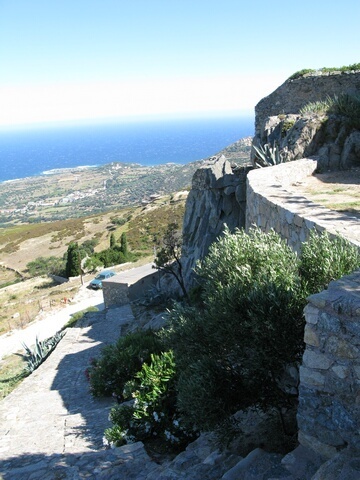
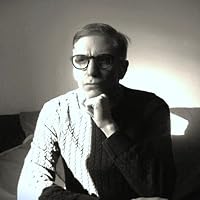
Sebald is kind a melancholy German version of Jorge Luis Borges. Like Borges, a fellow bibliophile, he was drawn to writing about arcane old books that almost nobody else reads anymore, or to topics (like firebombings in German memory, or the back roads of Corsica) that might be deliberately overlooked by a calculated amnesia. Like Borges, too, he was mostly known for his prose but was a killer poet.
His poems should be read with the notes at the end of this book, which are a fascinating look at the sources of this enigmatic gold mine. Sebald had a voracious hunger for unusual bits of history, folklore, and scattered poetry in old books and paintings. Which other recent European writers would mine the Quaker "naive" painter Edward Hicks for poetry? Which would be so captivated by the language of an American Shaker abecedarium of 1882? Sebald goes down well-known and little-known paths. He traces Kafka's footsteps, for sure -- then we find him quoting an obscure 17th-century Jesuit who invented an early form of braille, or astronomers, or botanists. (The second part of After Nature, another fabulous book of poetry by Sebald, is about the German naturalist Georg Steller, who went with Vitus Bering to Siberia and Alaska in the 1700s and died in misery there. I love that Sebald mines this man's abysmal subarctic fate for another delicious ounce of his characteristically melancholy perspective on the world -- which never annoys, since Sebald's melancholy, even when private, is thickly woven around other people's miseries, vicarious experience and tragedies that he latches onto to express some of his own perspective on life, and therefore is far more interesting than the yawningly self-reflexive ache of most contemporary poetry.
Yet like Borges' poetry, the "personality" of Sebald's sadness is not only based on academic, bookish wanderings, but transfixes in a way not ultimately intellectual. Sebald famously seeds some red-blooded emotion into what could have turned into distanced literary criticism or mere travelogue. And his poems take anything but a back seat to his better-known prose. The poetry and prose come from the same fantastics and often overlooked sources.
The titles alone are riveting. "Eerie Effects of the Hell Valley Wind On My Nerves" (about Daniel Paul Schreber's belief that God was slowly turning him into a woman, a case studied by Freud and Jung.) And this, from "Trigonometry of the Spheres" (like the German Romantic Novalis, Sebald is a great poet of the night):
"And once he said do not forget
the north wind brings
light from the house of Aries
to the apple trees"