

What do you think?
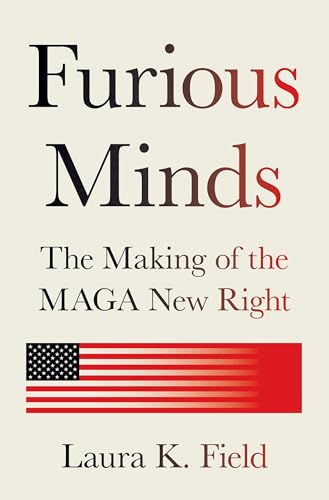
Furious Minds: The Making of the MAGA New Right
The story of the radical conservative intellectual movement shaping Donald Trump’s agenda—and how it threatens American freedoms, values, and democracy
Donald Trump is not a big thinker, but his 2016 presidential victory presented a grand opportunity for people who are, and it set off a radicalization and reconfiguration of the American conservative intellectual world. In Furious Minds, Laura Field, who spent close to a decade in conservative academic circles, chronicles the rise of the New Right—the network of academics, public intellectuals, and influencers who provide ideological fuel to Trumpism. This movement includes figures such as Patrick Deneen, Christopher Rufo, Peter Thiel, and JD Vance. Their agenda is built to last, and it has dire long-term implications for liberal democracy.
The New Right has precedents in American history, but it is distinct for its youthfulness, misogyny, and extraordinary successes—most notably the elevation of Vance to the vice presidency. The movement—which draws together associates of the right-wing Claremont Institute, National Conservatives, Postliberals, and the Hard Right—advocates nationalist economics, tight borders, isolationism, and reactionary social values. It helped to strategize January 6th and created Project 2025. But above all, the New Right is engaged in a vast culture war against modern liberal pluralism. It is determined to harness state power and use it in new, illiberal ways, from college campuses to the international scene—all driven by the fantasy of restoring a pure America.
Incisive and urgent, Furious Minds tells the story of the thinkers of the New Right—and their powerful assault on American freedoms, values, and ideals.
Donald Trump is not a big thinker, but his 2016 presidential victory presented a grand opportunity for people who are, and it set off a radicalization and reconfiguration of the American conservative intellectual world. In Furious Minds, Laura Field, who spent close to a decade in conservative academic circles, chronicles the rise of the New Right—the network of academics, public intellectuals, and influencers who provide ideological fuel to Trumpism. This movement includes figures such as Patrick Deneen, Christopher Rufo, Peter Thiel, and JD Vance. Their agenda is built to last, and it has dire long-term implications for liberal democracy.
The New Right has precedents in American history, but it is distinct for its youthfulness, misogyny, and extraordinary successes—most notably the elevation of Vance to the vice presidency. The movement—which draws together associates of the right-wing Claremont Institute, National Conservatives, Postliberals, and the Hard Right—advocates nationalist economics, tight borders, isolationism, and reactionary social values. It helped to strategize January 6th and created Project 2025. But above all, the New Right is engaged in a vast culture war against modern liberal pluralism. It is determined to harness state power and use it in new, illiberal ways, from college campuses to the international scene—all driven by the fantasy of restoring a pure America.
Incisive and urgent, Furious Minds tells the story of the thinkers of the New Right—and their powerful assault on American freedoms, values, and ideals.
432 pages, Hardcover
First published November 4, 2025
Ratings & Reviews
Friends & Following
Create a free account to discover what your friends think of this book!
Community Reviews
Displaying 1 - 30 of 178 reviews

December 10, 2025
This is perhaps the most serious and honest attempt by an academic to provide a taxonomy of the intellectual currents of the "New Right." It is specifically concerned with intellectuals and how ideas have developed in the before and during the rise of the political star of Donald Trump and what this means for politics after Trump's second term ends. The exact relationship Field sees between the Trump phenomenon and these ideas is somewhat unexamined or left intentionally ambiguous. She cites their connection to Trump administration figures or actual appointments in the administration as evidence of their influence, but she doesn't actually marshal much in the way of evidence to connect these ideas to the political agenda of Trump's MAGA movement. The closest we get is the "Stop the Steal" and Eastman's activities leading up to January 2020. Despite the political salience of this issue, it is clear that most people interpret these events as a small coterie of rogues (with Claremont backgrounds) tempting a deeply narcissistic leader. In other words, it has more to do with opportunism than any pioneering intellectual work. This isn't to say that the ideas of MAGA and the ideas of these Furious Minds don't meaningfully overlap, but it is hard to say who is influencing who, why certain ideas become salient, how much purchase any of these ideas have, and who has real decision-making power in right-wing politics besides Donald Trump and whether this will matter when he does exit the stage.
Furious Minds doesn't cover much in the way of new ground for readers who are passingly aware of active political discourse. Maybe the average NYT/WSJ reader will be unfamiliar with the distinctions between West Coast and East Coast Straussians or may not be aware of what integralism is, but they already have a well-developed caricature of what the political programs are that follow from figures in the right or far right, and this book is still eager to dramatize these ideas rather than really evaluate them epistemically, empirically, or ethically. In this case, the author wants these liberal readers to avoid smugness and sneering (though this recommendation appears more at the tactical rather than genuine level) and instead get serious about defending liberal thought from the left. Field doesn't address whether there are actually left-wing intellectual interested in providing intellectual defenses of liberalism...
An interesting aspect of the work is just how limited in scope it is. Field focuses mostly on actual academics or those in think tanks or at periodicals with real academic credentials and training. She also spends a lot of time recapitulating the arguments from major think pieces, polemics, and manifestos from the figures of interest. Ultimately, she settles on three fractious strains of loosely aligned New Righters, including West Coast Straussians (the Claremonsters in the Harry Jaffa tradition), the post-liberals (Deneen & Vermeule), and the National Conservatives (Yoram Harzony). Ideologically, the camps are united by a rejection of fusionism (communicated as Reagan's three-legged stool of social conservativism, free market economics, and strong proactive defense) and an embrace on a more paleoconservative project, which is isolationist, protectionist, and nativist. This new iteration of paleocon thought is also exceedingly flexible about the size and scope of government and is Machiavellian about the uses of power.
Field is trained as a Straussian but is a left-liberal so the book is inherently more attuned to the first camp. Interestingly, she never really provides a strong defense of the tradition, despite being of it, offering critiques of its esotericism. The general characterization of the strains of the New Right intellectuals and their points of agreement are uncontroversial, but Field omits quite a bit of the picture. First, the revenge of the paleocons is almost certainly powered very left-wing and some liberal defectors frustrated by the hegemony of progressive political pieties and/or hawkish foreign policy and, relatedly, a seemingly immovable and vast fourth estate comprised of a deeply ideological and solipsistic group of professional managerial class members. The revenge strategy has been to borrow the effective tactics and strategies pioneered by leftists intellectuals and activists. The closest we get to this is Field's passing comments on Paul Gottfried, who she does manage to point out was trained by Herbert Marcuse (she does this while dismissing the long-march narrative that Marcuse coined).
The focus on credentialed intellects handicaps the book. Credentials aren't required for intellectualism or intellectual work (not that she even offers a real distinction between intellectual work and political activism/hackery). This is a handicap because it is obvious that in the body politic and among segments of elites more friendly to Trump and opposed to the style and goals of the left, the pressing challenges to liberalism are surfaced mostly by pseud/anon or fringe bloggers wielding infohazards derived from myriad sources: paganism, primitivism, cybernetics, obscure history, psychometrics, evolutionary psychology, behavioral genetics, and population genetics. Field overlooks many of these currents, binning them as "Hard Right," basically just labelling them as racist and sexist. The only figure she covers in detail is Bronze Age Pervert (BAP) among the many figures of influence, though she name checks many of the others. Relatedly, the role that the "Tech Right" has played is omitted almost in its entirety. I don't think Andreessen is mentioned at all, though Thiel of course is (but really as a donor rather than a thinker). Nick Land is mentioned once, "Dimes Square" is given a few paragraphs wrt to horseshoe theory, and Charles Murray isn't mentioned at all. The last omission is the most interesting because the typical move for those like Field (i.e. left-wing types studying right-wing intellects like Quinn Slobodian, John Ganz, etc) is to label them all social Darwinists and eugenicists. Field, of course, knows that most of the religious thinkers in this space explicitly reject this type of thought (e.g. Ahmari, Lind, etc). She is thus more interested in playing up sexism and chauvinism, but this is very weak tea too as she doesn't really cover any of the scientific anti-feminism despite some superficial archaeology and usage of the "red pill" concept.
Anyway, the biggest issue with this work is that Field's attempts to rebut some of the ideas amounts to mere hand-waving about empirical errors or context collapse. The nature of the errors is rarely, if ever, specified in great detail. Meanwhile, she fails to define the paradigm that the "New Right" is attacking except in uncharitable reading of figures she hardly covers like Curtis Yarvin's "Cathedral" concept. We're left to infer the paradigm is the broad liberal tradition (i.e. Enlightenment philosophy), which she's often defends but does so in vague terms. However, this is really only the explicit target of the post-liberal camp, which also happens to harbor many thinkers and writers with left-of-center, non-Trump friendly politics. Moreover, her tepid defenses of liberalism also unreflectively include "woke" ideas, which is controversial and, in my view, in error. Most of the academics who pioneered ideas that now go under the woke label (e.g. critical theory, queer theory, intersectionality, etc) were explicitly reacting to what they saw as the failures of liberalism to redress structural racial and class grievances in addition to a general disgust for America as a hegemonic imperial power.
The book also explicitly assumes that "ideas have consequences," something also alleged to be an important premise for Straussians, but this is never examined either. Further, her definition of ideas (mostly as rhetoric) and critique of the Claremonsters on this front often defaults to a posture of historicism and materialism. On theoretical grounds, she is quite literally changing the terms of engagement in order to do her refutation. If she believes ideas matter, she should be telling reader why her ideas are correct and good and why the New Right's ideas are wrong. Such an argument would create issues for her later claims about moral relativism versus moral realism, which she also remains fairly ambiguous about other than to defend the subsidiarity of liberal philosophy. This is funny too when she's compelled to agree with the "New Right's" critique of "neoliberal" (a term she fortunately manages to avoid) economics which is more or less entirely aligned with left-wing materialists. It seems there are many materialists on the New Right, especially when it comes to economic policy. They just want to shed the sexual politics that the American left had jammed together with socialism or social democracy.
Another perplexing issue in her book is her belief that Adrian Vermeule is the most formidable intellectual in the space. This is basically premised on the fact he can obfuscate with ancient words and concepts, has impeccable credentials, and rejects Originalism (the right of center judicial philosophy) and living constitutionalism (the left of center judicial philosophy). But the "common good" framework is entirely pre-textual, which she points out but then hypocritically double backs on when it may be useful for left-wing political goals. The treatment of Vermeule is perplexing, especially when he is certainly the least meaningful figure when it comes to the more yeomen, day-to-day intellectual entrepreneurship New Right figures engage in.
What should emerge is that the "New Right" is more or less the re-education of Trump-friendly or Trump-curious intellectual in realism about political power (i.e. shedding much of the idealism of Reagan, Bush, Romney, etc) and, in so doing, they've adopted left-wing tactics and ideas for their own pre-existing political ends. Nothing has really changed much about their worldviews, moral intuitions, or normative vision for America. This is frightening for prudish members of the professional managerial class (PMC) with deep attachment to the left-liberal status quo, especially on social issues, but it's a natural response to the situation right-wing politics found itself in during the early 21st century (i.e. it was treated as a dinosaur version of politics that was inevitably doomed). The best guidance from Field is that lefty academics should start actually treating right-wing ideas fairly and seriously. They should actually work to understand how deep and diverse the intellectual traditions of the right are. It is probably too late for them to heed this advice as higher education, especially the humanities, may be entering an inescapable death spiral.
P.S. I may return to this review to expand and re-organize its ideas. The general tenor of my assessment is expected to be unchanged.
Furious Minds doesn't cover much in the way of new ground for readers who are passingly aware of active political discourse. Maybe the average NYT/WSJ reader will be unfamiliar with the distinctions between West Coast and East Coast Straussians or may not be aware of what integralism is, but they already have a well-developed caricature of what the political programs are that follow from figures in the right or far right, and this book is still eager to dramatize these ideas rather than really evaluate them epistemically, empirically, or ethically. In this case, the author wants these liberal readers to avoid smugness and sneering (though this recommendation appears more at the tactical rather than genuine level) and instead get serious about defending liberal thought from the left. Field doesn't address whether there are actually left-wing intellectual interested in providing intellectual defenses of liberalism...
An interesting aspect of the work is just how limited in scope it is. Field focuses mostly on actual academics or those in think tanks or at periodicals with real academic credentials and training. She also spends a lot of time recapitulating the arguments from major think pieces, polemics, and manifestos from the figures of interest. Ultimately, she settles on three fractious strains of loosely aligned New Righters, including West Coast Straussians (the Claremonsters in the Harry Jaffa tradition), the post-liberals (Deneen & Vermeule), and the National Conservatives (Yoram Harzony). Ideologically, the camps are united by a rejection of fusionism (communicated as Reagan's three-legged stool of social conservativism, free market economics, and strong proactive defense) and an embrace on a more paleoconservative project, which is isolationist, protectionist, and nativist. This new iteration of paleocon thought is also exceedingly flexible about the size and scope of government and is Machiavellian about the uses of power.
Field is trained as a Straussian but is a left-liberal so the book is inherently more attuned to the first camp. Interestingly, she never really provides a strong defense of the tradition, despite being of it, offering critiques of its esotericism. The general characterization of the strains of the New Right intellectuals and their points of agreement are uncontroversial, but Field omits quite a bit of the picture. First, the revenge of the paleocons is almost certainly powered very left-wing and some liberal defectors frustrated by the hegemony of progressive political pieties and/or hawkish foreign policy and, relatedly, a seemingly immovable and vast fourth estate comprised of a deeply ideological and solipsistic group of professional managerial class members. The revenge strategy has been to borrow the effective tactics and strategies pioneered by leftists intellectuals and activists. The closest we get to this is Field's passing comments on Paul Gottfried, who she does manage to point out was trained by Herbert Marcuse (she does this while dismissing the long-march narrative that Marcuse coined).
The focus on credentialed intellects handicaps the book. Credentials aren't required for intellectualism or intellectual work (not that she even offers a real distinction between intellectual work and political activism/hackery). This is a handicap because it is obvious that in the body politic and among segments of elites more friendly to Trump and opposed to the style and goals of the left, the pressing challenges to liberalism are surfaced mostly by pseud/anon or fringe bloggers wielding infohazards derived from myriad sources: paganism, primitivism, cybernetics, obscure history, psychometrics, evolutionary psychology, behavioral genetics, and population genetics. Field overlooks many of these currents, binning them as "Hard Right," basically just labelling them as racist and sexist. The only figure she covers in detail is Bronze Age Pervert (BAP) among the many figures of influence, though she name checks many of the others. Relatedly, the role that the "Tech Right" has played is omitted almost in its entirety. I don't think Andreessen is mentioned at all, though Thiel of course is (but really as a donor rather than a thinker). Nick Land is mentioned once, "Dimes Square" is given a few paragraphs wrt to horseshoe theory, and Charles Murray isn't mentioned at all. The last omission is the most interesting because the typical move for those like Field (i.e. left-wing types studying right-wing intellects like Quinn Slobodian, John Ganz, etc) is to label them all social Darwinists and eugenicists. Field, of course, knows that most of the religious thinkers in this space explicitly reject this type of thought (e.g. Ahmari, Lind, etc). She is thus more interested in playing up sexism and chauvinism, but this is very weak tea too as she doesn't really cover any of the scientific anti-feminism despite some superficial archaeology and usage of the "red pill" concept.
Anyway, the biggest issue with this work is that Field's attempts to rebut some of the ideas amounts to mere hand-waving about empirical errors or context collapse. The nature of the errors is rarely, if ever, specified in great detail. Meanwhile, she fails to define the paradigm that the "New Right" is attacking except in uncharitable reading of figures she hardly covers like Curtis Yarvin's "Cathedral" concept. We're left to infer the paradigm is the broad liberal tradition (i.e. Enlightenment philosophy), which she's often defends but does so in vague terms. However, this is really only the explicit target of the post-liberal camp, which also happens to harbor many thinkers and writers with left-of-center, non-Trump friendly politics. Moreover, her tepid defenses of liberalism also unreflectively include "woke" ideas, which is controversial and, in my view, in error. Most of the academics who pioneered ideas that now go under the woke label (e.g. critical theory, queer theory, intersectionality, etc) were explicitly reacting to what they saw as the failures of liberalism to redress structural racial and class grievances in addition to a general disgust for America as a hegemonic imperial power.
The book also explicitly assumes that "ideas have consequences," something also alleged to be an important premise for Straussians, but this is never examined either. Further, her definition of ideas (mostly as rhetoric) and critique of the Claremonsters on this front often defaults to a posture of historicism and materialism. On theoretical grounds, she is quite literally changing the terms of engagement in order to do her refutation. If she believes ideas matter, she should be telling reader why her ideas are correct and good and why the New Right's ideas are wrong. Such an argument would create issues for her later claims about moral relativism versus moral realism, which she also remains fairly ambiguous about other than to defend the subsidiarity of liberal philosophy. This is funny too when she's compelled to agree with the "New Right's" critique of "neoliberal" (a term she fortunately manages to avoid) economics which is more or less entirely aligned with left-wing materialists. It seems there are many materialists on the New Right, especially when it comes to economic policy. They just want to shed the sexual politics that the American left had jammed together with socialism or social democracy.
Another perplexing issue in her book is her belief that Adrian Vermeule is the most formidable intellectual in the space. This is basically premised on the fact he can obfuscate with ancient words and concepts, has impeccable credentials, and rejects Originalism (the right of center judicial philosophy) and living constitutionalism (the left of center judicial philosophy). But the "common good" framework is entirely pre-textual, which she points out but then hypocritically double backs on when it may be useful for left-wing political goals. The treatment of Vermeule is perplexing, especially when he is certainly the least meaningful figure when it comes to the more yeomen, day-to-day intellectual entrepreneurship New Right figures engage in.
What should emerge is that the "New Right" is more or less the re-education of Trump-friendly or Trump-curious intellectual in realism about political power (i.e. shedding much of the idealism of Reagan, Bush, Romney, etc) and, in so doing, they've adopted left-wing tactics and ideas for their own pre-existing political ends. Nothing has really changed much about their worldviews, moral intuitions, or normative vision for America. This is frightening for prudish members of the professional managerial class (PMC) with deep attachment to the left-liberal status quo, especially on social issues, but it's a natural response to the situation right-wing politics found itself in during the early 21st century (i.e. it was treated as a dinosaur version of politics that was inevitably doomed). The best guidance from Field is that lefty academics should start actually treating right-wing ideas fairly and seriously. They should actually work to understand how deep and diverse the intellectual traditions of the right are. It is probably too late for them to heed this advice as higher education, especially the humanities, may be entering an inescapable death spiral.
P.S. I may return to this review to expand and re-organize its ideas. The general tenor of my assessment is expected to be unchanged.

November 25, 2025
Laura Field says people often laughed when she said she was writing a book about MAGA intellectuals. "Sounds like an oxymoron," they supposedly said. I often have a similar experience when I tell people about how, in researching JD Vance for the Harris campaign, I became convinced he has deep, intellectual reasons for his MAGA turn. These reactions are wrong. Though Trump himself is no philosopher, there is a new wave of conservative intellectuals that are very different from the Reaganite Republican intellectuals touting free markets, bombastic evangelical culture wars, and military interventionism. Anyone following politics would do well to understand these new ideas and recognize how they are shaping everyday policy debates.
I think Field does a mostly very good job doing a tour of the so-called "New Right." I am not as qualified as someone on the New Right would be to judge this, but I think I am about as well positioned as a non-academic liberal could be. I spent a lot of time reading about the New Right during my time researching JD Vance since he has intertwined himself with the movement about as much as any politician could with an intellectual movement. And since moving to DC, I have now met a handful of people on the New Right and asked them lots of questions in a way that I'm sure was very annoying.
Field opens with one of the best concise definitions of the movement I've seen. Wheras the Reaganite right was the "three legged stool" of libertarian free markets, religious social conservatism, and an anti-communist activist foreign policy, the MAGA New Right is "three ribs" of opposition to immigration, economic protectionism, and America First isolationist foreign policy centered on the "spine" of commitment to the "strong gods" of family, faith, and community (the term strong gods comes from this essay — https://firstthings.com/return-of-the...). She then outlines various factions and subfactions of the New Right. Each chapter is more or less devoted to one of these groups.
Many of the chapters are devoted to groups that follow in the footsteps of Leo Strauss, a German-Jewish émigré political philosopher whose readings of classical texts emphasized the fragility of liberal democracy, the permanence of elite rule, and the need for guiding myths to stabilize mass society. Even before the emergence of the New Right, many of the most prominent conservatives were "Straussians," meaning they were trained to study texts in the distinctive way Strauss pioneered. Field is therefore well positioned to write this book, since she has Straussian academic training. As such, her chapters on The Claremont Institute, The Journal of American Greatness, and Bronze Age Pervert—all of whom are in the Straussian tradition—are by far the strongest in the book.
The rest of the chapters are more of a mixed bag. Each of them had to do three things. Most importantly, it had to comprehensively explain the ideas and influence of its subject. Second, it had to rebut the worst ideas of its subject. And third, since the New Right often does critique status quo liberalism in a way that committed liberals should be more attuned to, it had to acknowledge when there was at least a grain of truth to the ideas from these thinkers and use their critique to talk about what a better form of liberalism might be—one that is not so vulnerable to authoritarian critique.
The book worked best when Field focused on the description of the ideas. Too many chapters devolved into brief descriptions of the ideas, followed by long critiques of them. In most cases, these critiques weren't necessary since any liberal reading the book would have thought about them right away. The critiques that did help were usually those on more complex ideas or those with a historical lineage that most people wouldn't know. Field was less ambitious in trying to find the grains of truth to liberal critiques, but I was disappointed that she tended to be most charitable whenever a New Right critique of liberalism rhymed with a leftist critique of liberalism, which let Field seem less dogmatic without really ever breaking with the left-of-center tribe. That said, the chapters were still very well done and informative, even to someone who has spent a lot of time reading about this and follows politics closely.
A question that lingered in my head was how much influence these people *actually* have and how many followers of these ideas there *actually* are. Profiles of these ideas by journalists in newspapers and magazines often have an air of the circus master calling everyone to "step right up" and see the weirdos and monsters that every Republican in Washington is reading. This book was not nearly so sensationalist, but it didn't answer the extent to which people are reading and absorbing the most frightening thinkers on this list. I also can't lean on my own experience to answer this question. The New Righters that I have met are all on the comparatively reasonable side of things (meaning I disagree with them but can't imagine them mainlining racism or dreaming of an authoritarian takeover as some of the thinkers in this book were).
If anything, this indicates we should have varying degrees of alarm about the New Right. Amidst reports that followers of Nick Fuentes and fascists predominate young Republican staffer circles, prominent New Right Conservative Rod Dreher wrote in alarm that 40% of young Republicans fit this description (https://roddreher.substack.com/p/what...). I'll admit to being alarmed at the degree to which Dreher wants Catholic thought to influence politics, but this episode has taught me that not everyone whose ideas fit into Field's "three ribs and a spine" description of the New Right is equally dangerous.
In any case, these ideas are sure to remain important, and anyone who follows politics closely should be familiar with what motivates the New Right. This book is a strong way to get started or to broaden what you know if you have already read about them.
I think Field does a mostly very good job doing a tour of the so-called "New Right." I am not as qualified as someone on the New Right would be to judge this, but I think I am about as well positioned as a non-academic liberal could be. I spent a lot of time reading about the New Right during my time researching JD Vance since he has intertwined himself with the movement about as much as any politician could with an intellectual movement. And since moving to DC, I have now met a handful of people on the New Right and asked them lots of questions in a way that I'm sure was very annoying.
Field opens with one of the best concise definitions of the movement I've seen. Wheras the Reaganite right was the "three legged stool" of libertarian free markets, religious social conservatism, and an anti-communist activist foreign policy, the MAGA New Right is "three ribs" of opposition to immigration, economic protectionism, and America First isolationist foreign policy centered on the "spine" of commitment to the "strong gods" of family, faith, and community (the term strong gods comes from this essay — https://firstthings.com/return-of-the...). She then outlines various factions and subfactions of the New Right. Each chapter is more or less devoted to one of these groups.
Many of the chapters are devoted to groups that follow in the footsteps of Leo Strauss, a German-Jewish émigré political philosopher whose readings of classical texts emphasized the fragility of liberal democracy, the permanence of elite rule, and the need for guiding myths to stabilize mass society. Even before the emergence of the New Right, many of the most prominent conservatives were "Straussians," meaning they were trained to study texts in the distinctive way Strauss pioneered. Field is therefore well positioned to write this book, since she has Straussian academic training. As such, her chapters on The Claremont Institute, The Journal of American Greatness, and Bronze Age Pervert—all of whom are in the Straussian tradition—are by far the strongest in the book.
The rest of the chapters are more of a mixed bag. Each of them had to do three things. Most importantly, it had to comprehensively explain the ideas and influence of its subject. Second, it had to rebut the worst ideas of its subject. And third, since the New Right often does critique status quo liberalism in a way that committed liberals should be more attuned to, it had to acknowledge when there was at least a grain of truth to the ideas from these thinkers and use their critique to talk about what a better form of liberalism might be—one that is not so vulnerable to authoritarian critique.
The book worked best when Field focused on the description of the ideas. Too many chapters devolved into brief descriptions of the ideas, followed by long critiques of them. In most cases, these critiques weren't necessary since any liberal reading the book would have thought about them right away. The critiques that did help were usually those on more complex ideas or those with a historical lineage that most people wouldn't know. Field was less ambitious in trying to find the grains of truth to liberal critiques, but I was disappointed that she tended to be most charitable whenever a New Right critique of liberalism rhymed with a leftist critique of liberalism, which let Field seem less dogmatic without really ever breaking with the left-of-center tribe. That said, the chapters were still very well done and informative, even to someone who has spent a lot of time reading about this and follows politics closely.
A question that lingered in my head was how much influence these people *actually* have and how many followers of these ideas there *actually* are. Profiles of these ideas by journalists in newspapers and magazines often have an air of the circus master calling everyone to "step right up" and see the weirdos and monsters that every Republican in Washington is reading. This book was not nearly so sensationalist, but it didn't answer the extent to which people are reading and absorbing the most frightening thinkers on this list. I also can't lean on my own experience to answer this question. The New Righters that I have met are all on the comparatively reasonable side of things (meaning I disagree with them but can't imagine them mainlining racism or dreaming of an authoritarian takeover as some of the thinkers in this book were).
If anything, this indicates we should have varying degrees of alarm about the New Right. Amidst reports that followers of Nick Fuentes and fascists predominate young Republican staffer circles, prominent New Right Conservative Rod Dreher wrote in alarm that 40% of young Republicans fit this description (https://roddreher.substack.com/p/what...). I'll admit to being alarmed at the degree to which Dreher wants Catholic thought to influence politics, but this episode has taught me that not everyone whose ideas fit into Field's "three ribs and a spine" description of the New Right is equally dangerous.
In any case, these ideas are sure to remain important, and anyone who follows politics closely should be familiar with what motivates the New Right. This book is a strong way to get started or to broaden what you know if you have already read about them.

December 21, 2025
it's impressive how approachable Laura Field makes her subject matter, and for that reason, I highly recommend this book. there's both depth and breadth here, and she manages to give people she disagrees with a fair shot (much more charitable than I would be). along the way, I appreciated how the author synthesized so many philosophical backgrounds and sources, and I even learned to appreciate liberalism in a new way.
any quibbles I have are stylistic, and I won't enumerate them-- I am just picky
any quibbles I have are stylistic, and I won't enumerate them-- I am just picky

January 22, 2026
Probably the most comprehensive survey of the contemporary right-wing intellectual landscape to date. This has become a crowded field over the past decade, and much of the literature isn't very good, so it was refreshing to see Field devote attention to online media spaces as well as the substantive commitments of MAGA intellectuals. It's a necessary though disconcerting task, especially now that we're at a sufficient remove from the rise of Trump that the right's various transformations in the interim can now be properly historicized.
Field also does well to trace the influence of Strauss and his interpreters — genealogies of Straussianism made up a cottage industry in their own right around the time of the Iraq War, and their relative absence in analyses of Trumpism always seemed like a blind spot to me. This actually is one area where she might have stressed the continuities between fusionist conservatism (or something like it) and our "New" Right; Vermeule's expansive conception of executive authority during the Bush years is particularly illustrative in this regard. It strikes me that an overemphasis on rupture might feed into the New Right's self-aggrandizing claims that it rejects the "dead consensus." Altogether, though, the book is very well done.
Field also does well to trace the influence of Strauss and his interpreters — genealogies of Straussianism made up a cottage industry in their own right around the time of the Iraq War, and their relative absence in analyses of Trumpism always seemed like a blind spot to me. This actually is one area where she might have stressed the continuities between fusionist conservatism (or something like it) and our "New" Right; Vermeule's expansive conception of executive authority during the Bush years is particularly illustrative in this regard. It strikes me that an overemphasis on rupture might feed into the New Right's self-aggrandizing claims that it rejects the "dead consensus." Altogether, though, the book is very well done.

January 13, 2026
This was a very insightful and useful, intellectual history that I was largely unaware of. And indispensable in my mind for a deeper understanding of what is happening in our country right now.

January 29, 2026
I learned a lot from this book. Field covers a lot of ground that I haven't seen treated this comprehensively in any other academic source. There's a lot of great material on the Claremont Institute, on post-liberals like Patrick Deneen, and on fringy-er members of the hard right. That last group makes for some interesting reading. It's hard to keep a straight face while reading a book published by Princeton University Press containing the sentence "Raw Egg Nationalist was a guest on Bronze Age Pervert's podcast." But such is the world in which we live, I suppose.
This book is an intellectual history of sorts, but Field often brings a first-personal voice to the story, reflecting on her own experiences, or giving her own opinions of the people and arguments she surveys. Occasionally, that can feel somewhat distracting. But more often, it's a welcome dose of sanity in the midst of some truly, truly strange views.
I also appreciate that Field tries to acknowledge those cases in which these new right thinkers have a valid point, or at least a valid grievance. Granted, that usually tends to be cases where their critiques line up with her own much more progressive sensibilities - as with the post-liberal critique of 'neoliberal' economic excess. But Field is doing her best to strike something beyond a purely defensive posture here, and to think about how liberalism needs to grow and adopt in order to respond to the genuine challenges it faces.
Timely, readable, and important. And highly recommended.
This book is an intellectual history of sorts, but Field often brings a first-personal voice to the story, reflecting on her own experiences, or giving her own opinions of the people and arguments she surveys. Occasionally, that can feel somewhat distracting. But more often, it's a welcome dose of sanity in the midst of some truly, truly strange views.
I also appreciate that Field tries to acknowledge those cases in which these new right thinkers have a valid point, or at least a valid grievance. Granted, that usually tends to be cases where their critiques line up with her own much more progressive sensibilities - as with the post-liberal critique of 'neoliberal' economic excess. But Field is doing her best to strike something beyond a purely defensive posture here, and to think about how liberalism needs to grow and adopt in order to respond to the genuine challenges it faces.
Timely, readable, and important. And highly recommended.

March 9, 2026
Another very important book that those who would most benefit from it will likely never consider reading!
The author -- Ms. Laura Field -- presents us with her hard work and in-depth investigations of key figures in what has become the MAGA network as well as tracing the several interrelated ideological threads that make up its members. I was little surprised to find that MAGA is only the latest iteration of several troubling elements -- theories and people -- that have plagued our nation since its inception, including deep prejudice against non-white people, deep suspicion of democracy, and a yearning for authoritarian leadership that will keep to what they believe to be the straight and narrow.
Two key traits are their deep dishonesty and vile hatred for those whom they consider to either not belong, or who demonstrate by their thoughts and beliefs that they are not "true" Americans.
In this review, which I hope to keep brief, I just wish to give you an overview of her views and so, hereafter, I will be citing from her words in her introductory chapter.
"The story is one of ideological radicalization -- the mutual reinforcing radicalization of intellectuals, politicians, and the movement they led. The men of the New Right saw Trump as a major opportunity; they egged him and his supporters on, and they brought others into the fold. They saw that he shared some of their extremist, old-school conservative views, and they appreciated that he would use whatever means necessary -- including unconstitutional means -- to gain and exert power. They are people who sought to leverage real problems, as well as known vulnerabilities of liberalism, to impose their own homogenizing moral and political vision on the rest of the country. They wanted to turn back the clock on pluralistic liberal democracy, and even on modernity itself. Many were also articulating new visions for the future: new laws, schemas for education, modes of constitutionalism, traditionalist communities, and technological utopias."
"...the various New Right prongs are organized around a traditionalist (usually white, Christian, and patriarchal) social vision and homogenizing nationalism meant to counter and replace pluralistic liberalism. The New Right views mainstream liberal America -- the "woke" America that embraces plurality and equality, including across various formerly marginalized identities -- as an all-encompassing, monolithic 'regime' of elite oppression (which they often also refer to as the 'enemy'_. Culture warriorism -- which we might define as an excessive emphasis on rhetoric and media performance over policy formulation and real-world political negotiation -- plays a major role the New Right because at bottom this is a movement driven by reactionary social values and principles, not specific policy concerns."
"The New Right does have a defining core...[a] 'strong god' spine, supported by ...ribs of 'secure borders, economic nationalism, and America-first foreign policy... But it is not a monolith. I divide the New Right into three groups: the Claremont's, the Postliberals, and the National Conservatives. In brief, the Claremonters [from the Claremont Institute in California] idolize the American founding, the Postliberals a particularly (religiously inspired) conception of the 'Common Good,' and the National Conservatives the myth of a traditional American nation. These camps are not mutually exclusive...."
The Postliberals "are the most sophisticated thinkers of the New Right, and the ones who appear the sincerest in their critique of capitalism and commitment to the populist economic reforms that Trump and the New Right have sometimes promised. The Postliberals sometimes lean on mainstream Catholic thought to sustain their views; at other times they deploy ideas from much more controversial figures, like the German jurist (and Nazi) Carl Schmitt. The Postliberal aesthetic is sober, traditionalist, and highbrow."
"'National Conservatism' serves as a big tent and umbrella for the movement. It is organized and formal in a way that the rest of the New Right is not, with regular conferences in the United States and abroad. Ideologically, National Conservatism promotes the notion of a single, relatively homogeneous nation-state that is under threat from within and without and needs to be protected. The embrace of nationalism -- at times the open endorsement of Christian nationalism -- is highly exclusive. It cuts against America's tradition of religious pluralism, as well as against the Declarationist creedal elements of America's traditional self-understanding and civil religion."
"Finally, there is a rather capacious underbelly to the New Right movement, which I generally call the Hard Right....ideologically they span the other three. They are distinct insofar as they are more hard-line, racist, misogynistic, and violent in their rhetoric. The aesthetic here is hypermasculinity, desperate, and ruthless; several figures from the Hard Right are open racists and fascists. They push the movement ever further to the extremes."
The author -- Ms. Laura Field -- presents us with her hard work and in-depth investigations of key figures in what has become the MAGA network as well as tracing the several interrelated ideological threads that make up its members. I was little surprised to find that MAGA is only the latest iteration of several troubling elements -- theories and people -- that have plagued our nation since its inception, including deep prejudice against non-white people, deep suspicion of democracy, and a yearning for authoritarian leadership that will keep to what they believe to be the straight and narrow.
Two key traits are their deep dishonesty and vile hatred for those whom they consider to either not belong, or who demonstrate by their thoughts and beliefs that they are not "true" Americans.
In this review, which I hope to keep brief, I just wish to give you an overview of her views and so, hereafter, I will be citing from her words in her introductory chapter.
"The story is one of ideological radicalization -- the mutual reinforcing radicalization of intellectuals, politicians, and the movement they led. The men of the New Right saw Trump as a major opportunity; they egged him and his supporters on, and they brought others into the fold. They saw that he shared some of their extremist, old-school conservative views, and they appreciated that he would use whatever means necessary -- including unconstitutional means -- to gain and exert power. They are people who sought to leverage real problems, as well as known vulnerabilities of liberalism, to impose their own homogenizing moral and political vision on the rest of the country. They wanted to turn back the clock on pluralistic liberal democracy, and even on modernity itself. Many were also articulating new visions for the future: new laws, schemas for education, modes of constitutionalism, traditionalist communities, and technological utopias."
"...the various New Right prongs are organized around a traditionalist (usually white, Christian, and patriarchal) social vision and homogenizing nationalism meant to counter and replace pluralistic liberalism. The New Right views mainstream liberal America -- the "woke" America that embraces plurality and equality, including across various formerly marginalized identities -- as an all-encompassing, monolithic 'regime' of elite oppression (which they often also refer to as the 'enemy'_. Culture warriorism -- which we might define as an excessive emphasis on rhetoric and media performance over policy formulation and real-world political negotiation -- plays a major role the New Right because at bottom this is a movement driven by reactionary social values and principles, not specific policy concerns."
"The New Right does have a defining core...[a] 'strong god' spine, supported by ...ribs of 'secure borders, economic nationalism, and America-first foreign policy... But it is not a monolith. I divide the New Right into three groups: the Claremont's, the Postliberals, and the National Conservatives. In brief, the Claremonters [from the Claremont Institute in California] idolize the American founding, the Postliberals a particularly (religiously inspired) conception of the 'Common Good,' and the National Conservatives the myth of a traditional American nation. These camps are not mutually exclusive...."
The Postliberals "are the most sophisticated thinkers of the New Right, and the ones who appear the sincerest in their critique of capitalism and commitment to the populist economic reforms that Trump and the New Right have sometimes promised. The Postliberals sometimes lean on mainstream Catholic thought to sustain their views; at other times they deploy ideas from much more controversial figures, like the German jurist (and Nazi) Carl Schmitt. The Postliberal aesthetic is sober, traditionalist, and highbrow."
"'National Conservatism' serves as a big tent and umbrella for the movement. It is organized and formal in a way that the rest of the New Right is not, with regular conferences in the United States and abroad. Ideologically, National Conservatism promotes the notion of a single, relatively homogeneous nation-state that is under threat from within and without and needs to be protected. The embrace of nationalism -- at times the open endorsement of Christian nationalism -- is highly exclusive. It cuts against America's tradition of religious pluralism, as well as against the Declarationist creedal elements of America's traditional self-understanding and civil religion."
"Finally, there is a rather capacious underbelly to the New Right movement, which I generally call the Hard Right....ideologically they span the other three. They are distinct insofar as they are more hard-line, racist, misogynistic, and violent in their rhetoric. The aesthetic here is hypermasculinity, desperate, and ruthless; several figures from the Hard Right are open racists and fascists. They push the movement ever further to the extremes."

April 18, 2026
Almost dnfed this like 5 times. Sorry to my wonderful husband, but this book is just not my cup of tea. Although I thought it finally hit stride when she started discussing January 6th lead-up/events and the End of Man stuff.

December 31, 2025
One of the best books I’ve ever read.

March 4, 2026
With the patience of an anthropologist studying a newly discovered tribe, Dr. Field provides an invaluable field guide to the strange cast of characters who are using MAGAism as a front to push the Republican Party further to the right. These are angry white men who have had it with secularism, democracy, gynocracy, the enlightenment, liberalism, equity, government, and diversity. Many want to "burn it all down" and establish a powerful white, Christian, and male-ruled nation that draws its intellectual origins from the Bible and a selective reading of Greek and Roman thinkers.
It is tempting to lump these people in with the podcasters and conspiracy theorists who provide daily grist for the MAGA media-sphere, but Dr. Field cautions readers against this. These folks may seem strange and unAmerican, but they are often elite-university-educated (thanks again Ivy League) intellectuals who have spent years cherry picking historical texts to construct a smart-sounding salve for the wounds that women, minorities, liberals, and immigrants have allegedly inflicted on our nation. They populate some of the highest offices of government and conservative activism and churn out a steady stream of books and other media that find purchase among conservatives who would like a whiter and more Christian nation.
Regular readers of the news will have some degree of familiarity with these characters -- JD Vance, Peter Thiel, Curtis Yarvin, Bronze Age Pervert, the Claremont Institute, Patrick Deneen, Adrian Vermeule, Chris Rufo, Michael Anton, Steve Bannon, and Yoram Hazony, to name a few. They come to their views from a number of perspectives such as Christian Nationalism, techno-utopianism, Catholic Integralism, race science, masculinity, and a deep desire to shun the complications of a democratic republic in favor of control by a small group of elites.
Fans of Jane Mayer's "Dark Money," Nancy McClean's "Democracy in Chains," John Ganz's "When the Clock Broke," and James Dallek's "Birchers" will find much to like in Dr. Field's analysis.
It is tempting to lump these people in with the podcasters and conspiracy theorists who provide daily grist for the MAGA media-sphere, but Dr. Field cautions readers against this. These folks may seem strange and unAmerican, but they are often elite-university-educated (thanks again Ivy League) intellectuals who have spent years cherry picking historical texts to construct a smart-sounding salve for the wounds that women, minorities, liberals, and immigrants have allegedly inflicted on our nation. They populate some of the highest offices of government and conservative activism and churn out a steady stream of books and other media that find purchase among conservatives who would like a whiter and more Christian nation.
Regular readers of the news will have some degree of familiarity with these characters -- JD Vance, Peter Thiel, Curtis Yarvin, Bronze Age Pervert, the Claremont Institute, Patrick Deneen, Adrian Vermeule, Chris Rufo, Michael Anton, Steve Bannon, and Yoram Hazony, to name a few. They come to their views from a number of perspectives such as Christian Nationalism, techno-utopianism, Catholic Integralism, race science, masculinity, and a deep desire to shun the complications of a democratic republic in favor of control by a small group of elites.
Fans of Jane Mayer's "Dark Money," Nancy McClean's "Democracy in Chains," John Ganz's "When the Clock Broke," and James Dallek's "Birchers" will find much to like in Dr. Field's analysis.

December 2, 2025
A serious overview of the not-so-disparate conservative intellectual coalitions affiliated with Trumpism, like the postliberals, West Coast Straussians, Catholic Integralists, and National Conservatives. I knew most of these names, institutions, and blogs, but I imagine most of this country has never heard of any of them, which is deeply concerning because they hold so much power today. However, I’ve never come across a book that succinctly explains their intellectual roots, pathologies, “galaxy-brained” theories, and hedging explanations like this one. Also, Field’s background as a Straussian is essential because she can explain the bizarre philosophical and historical references from these thinkers that go over most people’s heads. This background also makes her a helpful interpreter of Leo Strauss and Harry V. Jaffa’s philosophies, which I always struggled to understand.
And… yeah…. we should be worried about these guys.
And… yeah…. we should be worried about these guys.

December 20, 2025
At its best when Field is an ex-conservative political theorist. At its worst when Field is a Brooking's fellow in illiberal studies.
The peaks are serious, knowledgeable engagement with the history and present of the intellectual American right. The troughs are understandable but low information density denouncements of deplorables.
Field also frequently criticizes the right for their under-determined "ideas approach" first, but the book can be read as presupposing this. It is entirely possible the intellectual currents of the new right are largely epiphenomenon, swirling alongside, but casually independent of MAGA-Trump. The book is so focused on cataloguing the new right, it fails to ask if it matters.
Nonetheless, Field still offers to my knowledge the most substantial summary of the New Right that doesn't fall into the understandable but unserious trap of treating their output simply terroristic ideologies, not the ideas of intelligent but misguided people.
The peaks are serious, knowledgeable engagement with the history and present of the intellectual American right. The troughs are understandable but low information density denouncements of deplorables.
Field also frequently criticizes the right for their under-determined "ideas approach" first, but the book can be read as presupposing this. It is entirely possible the intellectual currents of the new right are largely epiphenomenon, swirling alongside, but casually independent of MAGA-Trump. The book is so focused on cataloguing the new right, it fails to ask if it matters.
Nonetheless, Field still offers to my knowledge the most substantial summary of the New Right that doesn't fall into the understandable but unserious trap of treating their output simply terroristic ideologies, not the ideas of intelligent but misguided people.

February 9, 2026
DNF 20% | I can’t quite explain why I don’t like this book other than it makes the topic incredibly unapproachable. I think the intellectuals behind the new MAGA movement should be critiqued and criticized, but the average person cannot interact with this book in a meaningful way to do that.

Read
March 23, 2026Well that was a BANGER

March 3, 2026
A somewhat dry analysis of the intellectual currents of MAGA and its adjacent movements, which is quite the endeavor considering that populist movements are typically anti-intellectual. Field actively excludes people without certain credentials, such as people without PhDs or have not gone to graduate school, which is a double edged sword because pro-Trump intellectuals are an extreme minority in their own movement, so it's questionable just how much influence they have. The author also frequently interjects her own opinion as a somewhat liberal Straussian, and again, the effects of this are varied.

July 3, 2026
"Furious Minds" covers the more intellectual side of MAGA, describing both how long term conservative intellectuals (such as the Straussian Claremonters) came to embrace Trump and how new intellectual influences are predominating. Focusing on only those with degrees, Field's book is not quite "the" comprehensive book on the political thought of MAGA, but it may be the closest that currently exists.
Field covers the Claremonters, postliberalism, the alt-right and hard right, common good constitutionalism, and Christian nationalism, showing how the concept of conservatism as a fusionist tent persists in the New Right today. It's just that the tent has shifted territory compared to what it represented in the past - now embracing more reactionary, openly masochistic, and even fascist elements (NETR/No Enemies to the Right, as some - though not all - in the tent advocate). This fusionist tent metaphor remains useful and illuminating in describing the diversity that the Right still represents today, in spite of the otherwise cultic unifying influence of Trump himself. An understanding of this diversity is key to understand the contemporary Republican Party and its potential trajectories in the years ahead and is itself more explanatory than more simplifying labels such as "fascism" - in spite of the fascist echoes on the Right today.
Recommended reading for anyone seeking to better understand "conservative" (but, really, reactionary New Right) intellectual thought today, the book also clearly demonstrates just how ideological and non-intellectual such thought has become. A more comprehensive treatment of the New Right that embraces the podcast bros and other influences ought to be written, as this book remains incomplete in its coverage, but for now, this looks like the best that's out there.
Field covers the Claremonters, postliberalism, the alt-right and hard right, common good constitutionalism, and Christian nationalism, showing how the concept of conservatism as a fusionist tent persists in the New Right today. It's just that the tent has shifted territory compared to what it represented in the past - now embracing more reactionary, openly masochistic, and even fascist elements (NETR/No Enemies to the Right, as some - though not all - in the tent advocate). This fusionist tent metaphor remains useful and illuminating in describing the diversity that the Right still represents today, in spite of the otherwise cultic unifying influence of Trump himself. An understanding of this diversity is key to understand the contemporary Republican Party and its potential trajectories in the years ahead and is itself more explanatory than more simplifying labels such as "fascism" - in spite of the fascist echoes on the Right today.
Recommended reading for anyone seeking to better understand "conservative" (but, really, reactionary New Right) intellectual thought today, the book also clearly demonstrates just how ideological and non-intellectual such thought has become. A more comprehensive treatment of the New Right that embraces the podcast bros and other influences ought to be written, as this book remains incomplete in its coverage, but for now, this looks like the best that's out there.
December 17, 2025
God I hate listening to audiobooks but when every copy in the Bay Area is checked out and there are 3x more holds than books…
The best parts were her relating what goes on at conferences and mocking ci people, though she tends to be a bit too charitable to the new right in general. I have three main problems with her approach in the book whose cause is all probably her being an academic with a specific focus refusing to talk about things she doesn’t have specific expertise in. Cmon just lie!!!!
1. Eschews entirely the popular appeal of MAGA. No Trump voter is debating whether the Lincoln Douglas debates were improving upon or just realizing the Declaration of Independence. I get she’s focusing on the intellectual origins of trumpism but the way she starts the book relating Goldwater and pat buchanan’s mass appeal makes it odd that she just doesn’t talk abt maga as a popular movement
2. The most interesting section to me was the apocalypticism of the new right as a religious and secular phenomenon. Would have appreciated more on that, especially in comparison to other political “eschatology” like Marxism. She even says “late stage” at one point but just doesn’t elaborate on connections to the commies’ use of that phrase.
3. Little on how the nat con or new right or integralist philosophy actually affected the policy changes in new right? Idk maybe I missed this but I feel like she says so much about their political Phil and that it’s a rejection of fusionism without explaining the intellectual mechanism behind, eg, protectionism. Maybe I just overlooked something though
The best parts were her relating what goes on at conferences and mocking ci people, though she tends to be a bit too charitable to the new right in general. I have three main problems with her approach in the book whose cause is all probably her being an academic with a specific focus refusing to talk about things she doesn’t have specific expertise in. Cmon just lie!!!!
1. Eschews entirely the popular appeal of MAGA. No Trump voter is debating whether the Lincoln Douglas debates were improving upon or just realizing the Declaration of Independence. I get she’s focusing on the intellectual origins of trumpism but the way she starts the book relating Goldwater and pat buchanan’s mass appeal makes it odd that she just doesn’t talk abt maga as a popular movement
2. The most interesting section to me was the apocalypticism of the new right as a religious and secular phenomenon. Would have appreciated more on that, especially in comparison to other political “eschatology” like Marxism. She even says “late stage” at one point but just doesn’t elaborate on connections to the commies’ use of that phrase.
3. Little on how the nat con or new right or integralist philosophy actually affected the policy changes in new right? Idk maybe I missed this but I feel like she says so much about their political Phil and that it’s a rejection of fusionism without explaining the intellectual mechanism behind, eg, protectionism. Maybe I just overlooked something though
This entire review has been hidden because of spoilers.

June 15, 2026
Probably a very good book that I only thought was pretty good. All these people are so unpalatable to me, and I feel I already have a decent enough understanding of their world view (which is most essentially reactionary right-ism plus populist economics and a veneer of "judeochristian" values all powered by the Schmittian "friend enemy distinction") that many pages of the book were boring to me. I think I would have enjoyed a 200 page version of this book much more than the 330, frankly. The best parts, to me, were the parts about Jaffa and Bloom and the divide of the Straussians (by the way, would Strauss support these new righters? I doubt it) and kind of how their ideas were taken and modified. The whole weakness of liberal ethics is there in Strauss -- a key point of the new right today. Although I doubt that Bloom, Jaffa or Strauss would cosign the "this means we need a dictator" that MAGA arrived at.
Fields is clearly extremely intelligent and well read which shines on most pages of the book. She's read the primary documents and is ready to fight when she thinks these (mostly) pseudo intellectuals aren't read enough (she mocks those poking at Wilson's Iliad towards the end, she mocks Alamariu's hammed up accent, poor reading of Nietsche, etc).
I didn't read the book closely, so take all I say with grains and grains of salt.
Fields is clearly extremely intelligent and well read which shines on most pages of the book. She's read the primary documents and is ready to fight when she thinks these (mostly) pseudo intellectuals aren't read enough (she mocks those poking at Wilson's Iliad towards the end, she mocks Alamariu's hammed up accent, poor reading of Nietsche, etc).
I didn't read the book closely, so take all I say with grains and grains of salt.

July 11, 2026
With all the focus on Trump, what many don't realize is that the political movement that supports #47 will be around longer than him. Author Laura K Field dives deep into the making of the MAGA New Right. She examines the movements, the think tanks (Claremont especially with its ties to JD Vance), Christian Nationalism and various hard right groups. Field also looks at the personalities including Patrick Deneen, Chris Rufo, Adrian Vermeule, Yoram Hazony, Michael Anton (Flight 93 election article) and many, many more.
Field is a very skilled writer and for anyone interested in this topic, they will be sucked into reading about the larger political philosophies on the Right and how things are evolving on that side of the partisan divide. The other thing I was impressed by with Field's work is that I do think she tries to be fair. This specific book is approached with journalistic standards even while FIeld is honest about her own biases and perspective. Highly recommended for those wanting to understand our current political times and the movements that will last beyond them.
Field is a very skilled writer and for anyone interested in this topic, they will be sucked into reading about the larger political philosophies on the Right and how things are evolving on that side of the partisan divide. The other thing I was impressed by with Field's work is that I do think she tries to be fair. This specific book is approached with journalistic standards even while FIeld is honest about her own biases and perspective. Highly recommended for those wanting to understand our current political times and the movements that will last beyond them.

September 12, 2026
Each chapter is about another segment of intellectuals and ideas behind MAGA: hard-right racists, Catholic integralists, national conservatives, and many more. On one hand, this book was definitely polemical and aimed at uncovering how extreme the modern right’s ideas are, and how close those ideas are to real power (especially through JD Vance, who seems to be best buddies with every right-wing extremist under the sun). On the other, this is a relatively short but serious intellectual history of right-wing ideas, where they come from, and the problems they try to solve.
I’m not too surprised by one of the big themes of the book, that right-wing extremists aren’t on the fringe anymore, and they play a big role in the modern right and the Trump administration. These groups are different, but there are some common themes: Christian domination, making the left out to be an existential enemy, misogyny, a return to an idyllic past, fetishization of Great Books, and so forth. Great read if you want an intellectual history and analysis of MAGA.
I’m not too surprised by one of the big themes of the book, that right-wing extremists aren’t on the fringe anymore, and they play a big role in the modern right and the Trump administration. These groups are different, but there are some common themes: Christian domination, making the left out to be an existential enemy, misogyny, a return to an idyllic past, fetishization of Great Books, and so forth. Great read if you want an intellectual history and analysis of MAGA.

April 16, 2026
She covers a lot. Delineates all the players and strands of where and how and what conservative thinking has evolved into. I had to do A LOT of googling just to understand the terminology because I don’t hang out in this corner or maybe more accurately layer of the internet. How all these people coalesced into supporting ideas that clearly took on a life of its own and gets crazier and crazier as the roller coaster rockets along is eye- opening. There was a comedian I saw once who had a line - ‘you’re so smart you’re stupid’ that seems applicable. Lots of religious groups just engulfed in a fever dream of power and intellectuals so enamored with the product of their minds and by extension themselves. Not much ‘love God, love your neighbor’ here. The overarching theme is might makes right. Too much to digest. Don’t really want to do a deep dive but I feel I have to read it again. If nothing else just so I can stop sputtering ‘What the actual fuck just happened in America’.

February 12, 2026
This is incredibly interesting but also very dense and full of political philosophy - a genre I love but that might not be everyone’s cup of tea. I love that it focuses on the history of ideas and where MAGA people get their ideology and inspiration, we get the usual suspects but also some names I was less familiar with. Did not know that Stephen Miller once recommended THE book by Jean Raspail, probably one of the most racist book ever written, how this guy can be in the white house is beyond me.
One thing I could have done without is the writer giving her personal opinion from time to time, sorry not sorry but I was not interested in that. Still a pretty good read
One thing I could have done without is the writer giving her personal opinion from time to time, sorry not sorry but I was not interested in that. Still a pretty good read

December 30, 2025
Ajattelematta tartuin tähän juuri joulun alla ja luinkin kirjan sitten loppuun jouluaattona. Tämä ei todellakaan ole mitään kepeää lomaviihdettä vaan melkoisen tiukkaa tekstiä, ahdistavaakin, joten outo ajankohta kertonee kirjan vetovoimasta. Kirjan idea osuu hienosti siihen, mitä olen viime aikoina muutenkin harrastanut: halu ymmärtää ”niitä toisia” ajaa lukemaan sellaistakin, josta tulee lähinnä paha olo. Ehkä se silti on tärkeää.

December 21, 2025
I devoured this book over the course of one weekend. Having taken it out from my local library, I’m now going to buy a copy so I can turn back to it again more easily. An intellectual tour-de-force that explains much about why today’s New Right is so fiercely trying to undo the modern, tolerant, liberal order.

March 5, 2026
I highly recommend this book! Along with Jonathan Rauch's _Cross-Purposes_, I could not put these books down. Field is incredibly helpful in providing some of the intellectual origins of contemporary American politics.

November 23, 2025
2.5 stars

December 30, 2025
Field beschrijft een geschiedenis die nog aan het gebeurden is.

Read
January 16, 2026Super dry academic books like this are…rough for me. But I’m glad I listened to this one despite being terribly depressing.

Read
January 17, 2026Man undrar ju ibland ifall vissa som hyllade Deneen & postliberalismen för ett par år sedan i Sverige ngnsin begrundat sina val ¯\_(ツ)_/¯
March 29, 2026
Kirja käsittelee New Right -liikkeen ideologista taustaa ja sen keskeisiä ajattelijoita. New Right ei ole synonyymi Trumpille tai MAGA-liikkeelle, mutta näiden teoreettinen pohja nousee pitkälti juuri siitä. Käytäntö ei tietenkään aina seuraa teoriaa.
Pidin kirjaa hieman sekavana. Alku on vahva: siinä esitellään kolme erillistä ajatussuuntaa. Tämän jälkeen näistä kuitenkin aletaan johtaa uusia suuntauksia ilman, että niitä kytketään tarkasti alkuperäiseen jäsentelyyn. Sitten seuraa erilaisten tapahtumien käsittelyä, mutta nekin avataan pitkälti taas uusien ajattelusuuntien kautta. Lopussa mukaan tuodaan vielä lisää uusia ja tärkeitä suuntauksia. Tämän seurauksena kirjan alun tarjoama lukukehikko osoittautuu varsin vajavaiseksi. Kirja olisi kaivannut vielä yhden uudelleenkirjoittamisen, jossa kaikki palaset olisi sovitettu paremmin yhteen. Samalla lukijalle olisi voinut selkeämmin avata eri suuntausten välisiä eroja ja kitkoja sekä pohtia, miksi ne silti tulevat toimeen yhdessä, tulevatko edes, ja miten näin erilaisista lähtökohdista tulevat voivat tukea Trumpia.
Toinen asia, joka jäi mietityttämään, on väite siitä, että Straussin tapa lukea tekstejä olisi jotenkin erityisen hyvin kuvattuun oikeistoon sopiva tapa tehdä tutkimusta. Tekstien tiukka luenta ja olennaisen etsiminen ei ole mitenkään poikkeuksellista vain näissä piireissä. Althusser teki aikanaan samantyyppistä työtä Marxin teorian parissa: hän kaivoi teksteistä merkityksiä, joita Marx itse ei ehkä tiennyt niissä olevan, ja hylkäsi myös varhaiset tekstit epäoleellisina. Samoin kirjoittajan heitto siitä, että Straussin tapa lukea voi johtaa salaliittoajatteluun, jäi askarruttamaan. Hyvin suuri osa yhteiskunnallisesta ja humanistisesta tutkimuksesta on juuri merkitysten kaivamista teksteistä erilaisten teoriakehikkojen avulla. Vaikka Quentin Skinnerin tyyli olisi lähempänä omaa lukutapaani, siihenkin liittyy paljon oletuksia, puutteellisia tietoja ja oman ajan näkökulmasta tulkitsemisen sudenkuoppia.
Kirjassa New Right jaetaan kolmeen osaan: claremontilaisiin, postliberaaleihin ja kansalliskonservatiiveihin. Toisaalta myöhemmin tähän jakoon lisätään muita suuntia ja haarautumia. Koska en ollut tenttimässä kirjaa, en jaksanut tehdä itselleni taulukkoa eri suunnista ja niiden päällekkäisyyksistä. Kirjoittajan olisi kuitenkin kannattanut tehdä sellainen, sillä kirja olisi antanut siihen hyvän mahdollisuuden. Sen avulla aatesuuntausten erot ja yhtymäkohdat olisi voinut hahmottaa yhdellä sivulla.
New Rightia edelsi Reaganin ja Buckleyn edustama linja. Se pohjasi sosiaaliseen konservatismiin, talouskonservatismiin ja antikommunismiin. New Right on ainakin joidenkin ajattelijoidensa kohdalla talouspolitiikassa enemmän vasemmalla ja sosiaalisissa kysymyksissä oikeammalla. Se on sosiaalikonservatiivinen, maahanmuuttovastainen, isolationistinen ja talousnationalistinen. Siinä missä Reaganin ja Buckleyn linja yritti pitää äärilaidat edes jossain määrin loitolla, nykyään tästä ei juuri välitetä. Merkittävä ero uuden oikeiston ja vanhan republikaanioikeiston välillä on myös se, että uudessa oikeistossa on enemmän nuoria toimijoita, jotka ymmärtävät populismia ja mediaa. Uudet ovat myös misogynistisempiä ja hypermaskuliinisempia, ja republikaanipuolue on heille toiminnan keskeinen väline.
Claremontilaiset voidaan johtaa pitkälle perinteiseen Reaganin ja Buckleyn konservatismiin. Goldwaterin kuuluisan vuoden 1964 puoluekokouspuheen kirjoitti Harry Jaffa: “Extremism in the defense of liberty is no vice! And... moderation in the pursuit of justice is no virtue!” Jaffa puolestaan liittyy suoraan länsirannikon straussilaiseen ajatteluun. Claremontilaisille Yhdysvallat perustuu itsenäisyysjulistukseen ja sen ajan arvioihin, joissa lännen parhaat arvot antiikista alkaen yhdistyivät. Siksi heidän mielestään on palattava näihin arvoihin.
Tämän tulkinnan taustalla on osin straussilainen Jaffan näkemys siitä, että oikeaa tietoa on mahdollista saavuttaa. On olemassa oikea moraali. Keskeisiä ovat vapaus ja itsenäisyysjulistus. Tämä teoria joutuu helposti törmäyskurssille sellaisten suuntausten kanssa, jotka korostavat demokratiaa ja deliberaatiota. Lisäksi näitä tulkintoja voidaan pitää monessa asiassa varsin dogmaattisina ja useita ryhmiä poissulkevina.
Bloom jatkoi samaa teemaa teoksessaan The Closing of the American Mind. Hän arvosteli jo 1980-luvulla yhdysvaltalaista koulutusta siitä, että se tekee ihmisistä relativisteja ja yhden asian liikkeiden kannattajia: mitään suurempaa totuutta tai totuuksia ei enää myönnetä, vaan kaikki tasapäistetään. Claremontilaisille liberaalidemokratia moniarvoisena ja erilaisia arvoja hyväksyvänä järjestelmänä onkin kauhistus. Se hylkää heidän mielestään ne varmat arvot, jotka ovat pitäneet yhteiskunnan koossa, ja hajottaa sen.
Ajattelijoiden lisäksi Claremontin vaikutusvaltaa kasvatti sen poliittinen aktivoituminen vuoden 2016 vaalien jälkeen. Michael Anton, Claremontissa opiskellut entinen politiikan taustavaikuttaja ja silloinen BlackRockin osakas, kirjoitti kuuluisan Flight 93 -esseen. Sen idea oli, että kuten syyskuun 11. päivän Unitedin lentokoneessa, jotain oli pakko tehdä, vaikka se voisi johtaa tuhoon. Jos mitään ei tehtäisi, tuho olisi joka tapauksessa varma.
Moni claremontilainen on myös paleokonservatiivi eli nojaa Buchananin ja 1990-luvun ajatteluun. Isolationismia pidetään hyvänä vaihtoehtona, uusliberalismia huonona, ja sodat sekä managerialismin nousu herättävät huolta. Mutta samalla halutaan nostaa omat oikeat arvot kunniaan, ei moniäänisyyttä tai monikulttuurisuutta.
Postliberaalit ovat toinen ryhmä, joka tuki Trumpia. Patrick Deneen on heistä tunnetuin ja salonkikelpoisin. Ryhmässä on paljon katolilaisia sekä katolisen integralismin kannattajia, jotka haluavat tuoda katolisen opin yhteiskuntaan ja lakeihin. Myös JD Vance kuuluu tähän ryhmittymään.
Deneenin Why Liberalism Failed muistuttaa paljon Bloomin edellä mainittua teosta, mutta nyt kohteena ei ole koulutus vaan koko yhteiskunta. Nykyinen malli perustuu hänen mukaansa liikaa yksilölle ja luonnon riistolle. Näin sosiaalinen koheesio on heikentynyt ja liberalismista tullut oman menestyksensä vanki. Kirjoittaja huomauttaa tässä yhteydessä, että vähemmistöt voivat nähdä juuri nämä epäselvyydet ja koheesion heikkenemisen oman elintilansa ja pelastuksensa ehtona. Deneenille koulutuksen tulee tähdätä hyveeseen ja moraaliin. Tärkeintä ei ole olla kriittinen kaikkea kohtaan, vaan löytää oikeat totuudet. Nämä totuudet löytyvät jälleen antiikista ja Yhdysvaltain perustajiin liittyvästä perinteestä. Postliberaaleille olennaista on haastaa liberaalien käsitys yhteiskunnasta sekä heidän valtansa. Heidän mukaansa liberaalit eivät myönnä omia ennakkoluulojaan ja vaatimuksiaan, vaikka ne ovat silti olemassa.
Kansalliskonservatismi puolestaan tavoittelee kansakunnan tai kansan kunnianpalautusta, mutta vain tietynlaisena. Kansakunnat nähdään tietyn kulttuurin, kielen ja perinnön yhdistäminä yhteisöinä, eivät monikulttuurisina. Tämän vastakohtana pidetään imperialismia, johon luetaan erilaiset kansainväliset järjestöt ja kansallisvaltioiden valtaa kaventavat toimijat. Kansalliskonservatismissa on kahdenlaisia painotuksia: toisaalla kulttuurisodan ja antiwoken korostajat, toisaalla talousajattelua painottavat toimijat. Liike yritti aluksi pysytellä kunniallisena ja laajemmin hyväksyttävänä, mutta vuoden 2020 George Floydin mielenosoitusten myötä ovet aukesivat myös avoimille rasisteille.
Näiden kolmen pääsuunnan jälkeen kirjassa siirrytään Alt-Rightiin ja Hard Rightiin. Näihin suuntiin kuuluvat esimerkiksi Bannon, Miller ja Spencer.
Alt-Right selitetään muistiinpanojeni mukaan kirjassa sekavasti. Toki muistiinpanonikin ovat sekavia. Vuoden 2018 Charlottesvillen mellakat ja mielenosoitukset ajoivat liikkeen huonoon valoon, minkä jälkeen moni sen kannattaja joutui lähtemään Valkoisesta talosta. Kuten usein käy, tämä ei kuitenkaan johtanut liikkeen tuhoon, vaan sen tilalle muodostui uudenlainen oikeisto, Hard Right. Tässä suunnassa vihollisena nähdään hallitus ja akatemia, joiden katsotaan olevan liberaalien hallussa. Vaikka yhtymäkohtia aiemmin käsiteltyihin ryhmiin on, esiintymistapa on erilainen. Nimimerkit kuten Bronze Age Man ja Raw Egg Nationalist kertovat jo, minkälaisesta toiminnasta on kyse: mukana on trollausta ja toisenlaista julkista esiintymistä. Toki esimerkiksi Bronze Age Man kirjoittaja on huippuyliopistosta väitellyt, joten pelkkiä ennakko-oletuksia ei pidä tehdä.
Tässä vaiheessa aletaan puhua pronssikaudesta ja sen vahvoista miehistä ihanteena. Jaffan tavoin ei enää nojauduta vanhoihin teksteihin samalla tavalla. Pronssikausi on sinänsä kiinnostava viittaus, eihän edes tiedetä tarkasti, mikä johti pronssikauden sivilisaatioiden tuhoon. Kuka ties liian maskuliininen kulttuuri johti huonoon resilienssiin ilmaston muuttumisen ja sen seurausten kanssa.
Tammikuun 6. päivä teki Alt-Rightista ja monesta muusta oikeiston haarasta monien silmissä epäonnistujia. Sisäisesti siitä tuli kuitenkin uusi lost cause -myytti, johon uskominen alkoi toimia uskollisuuden testinä. Ensimmäinen lost cause viittasi etelävaltioiden kapinaan. Kirjoittaja selittää tammikuun 6:n ja sen roolin eräänlaisena oikeiston politiikkanäkemyksen luottamustestinä: politiikka nähdään absoluuttisena kamppailuna, jossa ei saa hävitä, koska toinen osapuoli on aina väärässä ja tarkoitus pyhittää keinot.
Tämän jälkeen kirjassa alkaa kuitenkin tulla lisää ajattelijoita ja teorioita. En ymmärrä, miksi ne on sijoitettu juuri tähän kohtaan. Kun ensin käydään läpi pääsuunnat ja sen jälkeen päätapahtumat, mukaan ei enää tässä vaiheessa pitäisi tuoda uudenlaisia teorioita ja ajattelijoita ilman kunnollista jäsentelyä. Heidät olisi pitänyt sijoittaa paremmin rakenteeseen, koska he ovat olennaisia ja kiinnostavia.
Esimerkkeinä näistä ovat Critical Race Theory, LGBT ja ESG, joiden rooli käsitellään tässä vaiheessa.
Adrian Vermeule käsitellään myös vasta lopussa, vaikka hän on niin olennainen ja kiinnostava hahmo, että sijoittelu tuntuu oudolta. Harvardin oikeustieteen professorina hän tarjoaa oikeusteoreettista tukea monelle edellä kuvatulle toiminnalle ja nojaa vahvasti katolilaisuuteen. Siksi hän olisi sopinut hyvin esimerkiksi postliberaalien katolilaisia käsittelevään osioon. Vermeule kannattaa vahvaa valtiota ja hallintoa, kunhan ne tekevät oikeita asioita. Oikeat asiat määritellään katolisen moraalin kautta. Samalla kirkon ja valtion suhde kytketään hyvin tiiviiksi: maallinen valta säilyy valtiolla ja uskonnollinen kirkolla, mutta viime kädessä uskonto on ensisijainen auktoriteetti.
Lopussa mukaan tulee myös kristillinen nationalismi omana teemanaan. Sen kannattajat tavoittelevat täydellistä poliittista valtaa. He haluavat, että Yhdysvallat on kristillinen ja pysyy sellaisena. He kannattavat vahvaa maskuliinisuutta ja voimakasta ulkopolitiikkaa. Tämä on jo lähellä Reaganin ja Buckleyn ajattelua, ja tavallaan siihen se kytkeytyykin. Tässä kertomuksessa Yhdysvallat on kristittyjen perustama maa, joka rakentui kristinuskolle ja sen moraalille. Kirjoittaja nostaa esiin myös rinnakkaisen tai kilpailevan tulkinnan monen perustajaisän ateistisuudesta. Molemmat tulkinnat ovat omalla tavallaan tosia.
Uusi kristillinen nationalismi ei kuitenkaan nojaa niinkään käsitykseen kristillisestä founding erasta, vaan enemmän christian revivalism -tulkintaan ja siihen liittyvään globaaliin karismaattiseen verkostoon. Tämä karismaattisuuteen nojaava verkosto on myös maailmassa ainoa kasvava kristillinen yhteisö. Näihin evankelisiin verkostoihin Trumpilla on hyvät ja vanhat suhteet, vaikka sitä onkin vaikea uskoa tai nähdä ilmeisiä yhtäläisyyksiä. Nämä uskovaiset kuitenkin uskovat vahvaan johtajaan ja joskus myös epämääräisiin profetioihin, ja heidän mielestään Trump täyttää tämän roolin.
Pidin kirjaa hieman sekavana. Alku on vahva: siinä esitellään kolme erillistä ajatussuuntaa. Tämän jälkeen näistä kuitenkin aletaan johtaa uusia suuntauksia ilman, että niitä kytketään tarkasti alkuperäiseen jäsentelyyn. Sitten seuraa erilaisten tapahtumien käsittelyä, mutta nekin avataan pitkälti taas uusien ajattelusuuntien kautta. Lopussa mukaan tuodaan vielä lisää uusia ja tärkeitä suuntauksia. Tämän seurauksena kirjan alun tarjoama lukukehikko osoittautuu varsin vajavaiseksi. Kirja olisi kaivannut vielä yhden uudelleenkirjoittamisen, jossa kaikki palaset olisi sovitettu paremmin yhteen. Samalla lukijalle olisi voinut selkeämmin avata eri suuntausten välisiä eroja ja kitkoja sekä pohtia, miksi ne silti tulevat toimeen yhdessä, tulevatko edes, ja miten näin erilaisista lähtökohdista tulevat voivat tukea Trumpia.
Toinen asia, joka jäi mietityttämään, on väite siitä, että Straussin tapa lukea tekstejä olisi jotenkin erityisen hyvin kuvattuun oikeistoon sopiva tapa tehdä tutkimusta. Tekstien tiukka luenta ja olennaisen etsiminen ei ole mitenkään poikkeuksellista vain näissä piireissä. Althusser teki aikanaan samantyyppistä työtä Marxin teorian parissa: hän kaivoi teksteistä merkityksiä, joita Marx itse ei ehkä tiennyt niissä olevan, ja hylkäsi myös varhaiset tekstit epäoleellisina. Samoin kirjoittajan heitto siitä, että Straussin tapa lukea voi johtaa salaliittoajatteluun, jäi askarruttamaan. Hyvin suuri osa yhteiskunnallisesta ja humanistisesta tutkimuksesta on juuri merkitysten kaivamista teksteistä erilaisten teoriakehikkojen avulla. Vaikka Quentin Skinnerin tyyli olisi lähempänä omaa lukutapaani, siihenkin liittyy paljon oletuksia, puutteellisia tietoja ja oman ajan näkökulmasta tulkitsemisen sudenkuoppia.
Kirjassa New Right jaetaan kolmeen osaan: claremontilaisiin, postliberaaleihin ja kansalliskonservatiiveihin. Toisaalta myöhemmin tähän jakoon lisätään muita suuntia ja haarautumia. Koska en ollut tenttimässä kirjaa, en jaksanut tehdä itselleni taulukkoa eri suunnista ja niiden päällekkäisyyksistä. Kirjoittajan olisi kuitenkin kannattanut tehdä sellainen, sillä kirja olisi antanut siihen hyvän mahdollisuuden. Sen avulla aatesuuntausten erot ja yhtymäkohdat olisi voinut hahmottaa yhdellä sivulla.
New Rightia edelsi Reaganin ja Buckleyn edustama linja. Se pohjasi sosiaaliseen konservatismiin, talouskonservatismiin ja antikommunismiin. New Right on ainakin joidenkin ajattelijoidensa kohdalla talouspolitiikassa enemmän vasemmalla ja sosiaalisissa kysymyksissä oikeammalla. Se on sosiaalikonservatiivinen, maahanmuuttovastainen, isolationistinen ja talousnationalistinen. Siinä missä Reaganin ja Buckleyn linja yritti pitää äärilaidat edes jossain määrin loitolla, nykyään tästä ei juuri välitetä. Merkittävä ero uuden oikeiston ja vanhan republikaanioikeiston välillä on myös se, että uudessa oikeistossa on enemmän nuoria toimijoita, jotka ymmärtävät populismia ja mediaa. Uudet ovat myös misogynistisempiä ja hypermaskuliinisempia, ja republikaanipuolue on heille toiminnan keskeinen väline.
Claremontilaiset voidaan johtaa pitkälle perinteiseen Reaganin ja Buckleyn konservatismiin. Goldwaterin kuuluisan vuoden 1964 puoluekokouspuheen kirjoitti Harry Jaffa: “Extremism in the defense of liberty is no vice! And... moderation in the pursuit of justice is no virtue!” Jaffa puolestaan liittyy suoraan länsirannikon straussilaiseen ajatteluun. Claremontilaisille Yhdysvallat perustuu itsenäisyysjulistukseen ja sen ajan arvioihin, joissa lännen parhaat arvot antiikista alkaen yhdistyivät. Siksi heidän mielestään on palattava näihin arvoihin.
Tämän tulkinnan taustalla on osin straussilainen Jaffan näkemys siitä, että oikeaa tietoa on mahdollista saavuttaa. On olemassa oikea moraali. Keskeisiä ovat vapaus ja itsenäisyysjulistus. Tämä teoria joutuu helposti törmäyskurssille sellaisten suuntausten kanssa, jotka korostavat demokratiaa ja deliberaatiota. Lisäksi näitä tulkintoja voidaan pitää monessa asiassa varsin dogmaattisina ja useita ryhmiä poissulkevina.
Bloom jatkoi samaa teemaa teoksessaan The Closing of the American Mind. Hän arvosteli jo 1980-luvulla yhdysvaltalaista koulutusta siitä, että se tekee ihmisistä relativisteja ja yhden asian liikkeiden kannattajia: mitään suurempaa totuutta tai totuuksia ei enää myönnetä, vaan kaikki tasapäistetään. Claremontilaisille liberaalidemokratia moniarvoisena ja erilaisia arvoja hyväksyvänä järjestelmänä onkin kauhistus. Se hylkää heidän mielestään ne varmat arvot, jotka ovat pitäneet yhteiskunnan koossa, ja hajottaa sen.
Ajattelijoiden lisäksi Claremontin vaikutusvaltaa kasvatti sen poliittinen aktivoituminen vuoden 2016 vaalien jälkeen. Michael Anton, Claremontissa opiskellut entinen politiikan taustavaikuttaja ja silloinen BlackRockin osakas, kirjoitti kuuluisan Flight 93 -esseen. Sen idea oli, että kuten syyskuun 11. päivän Unitedin lentokoneessa, jotain oli pakko tehdä, vaikka se voisi johtaa tuhoon. Jos mitään ei tehtäisi, tuho olisi joka tapauksessa varma.
Moni claremontilainen on myös paleokonservatiivi eli nojaa Buchananin ja 1990-luvun ajatteluun. Isolationismia pidetään hyvänä vaihtoehtona, uusliberalismia huonona, ja sodat sekä managerialismin nousu herättävät huolta. Mutta samalla halutaan nostaa omat oikeat arvot kunniaan, ei moniäänisyyttä tai monikulttuurisuutta.
Postliberaalit ovat toinen ryhmä, joka tuki Trumpia. Patrick Deneen on heistä tunnetuin ja salonkikelpoisin. Ryhmässä on paljon katolilaisia sekä katolisen integralismin kannattajia, jotka haluavat tuoda katolisen opin yhteiskuntaan ja lakeihin. Myös JD Vance kuuluu tähän ryhmittymään.
Deneenin Why Liberalism Failed muistuttaa paljon Bloomin edellä mainittua teosta, mutta nyt kohteena ei ole koulutus vaan koko yhteiskunta. Nykyinen malli perustuu hänen mukaansa liikaa yksilölle ja luonnon riistolle. Näin sosiaalinen koheesio on heikentynyt ja liberalismista tullut oman menestyksensä vanki. Kirjoittaja huomauttaa tässä yhteydessä, että vähemmistöt voivat nähdä juuri nämä epäselvyydet ja koheesion heikkenemisen oman elintilansa ja pelastuksensa ehtona. Deneenille koulutuksen tulee tähdätä hyveeseen ja moraaliin. Tärkeintä ei ole olla kriittinen kaikkea kohtaan, vaan löytää oikeat totuudet. Nämä totuudet löytyvät jälleen antiikista ja Yhdysvaltain perustajiin liittyvästä perinteestä. Postliberaaleille olennaista on haastaa liberaalien käsitys yhteiskunnasta sekä heidän valtansa. Heidän mukaansa liberaalit eivät myönnä omia ennakkoluulojaan ja vaatimuksiaan, vaikka ne ovat silti olemassa.
Kansalliskonservatismi puolestaan tavoittelee kansakunnan tai kansan kunnianpalautusta, mutta vain tietynlaisena. Kansakunnat nähdään tietyn kulttuurin, kielen ja perinnön yhdistäminä yhteisöinä, eivät monikulttuurisina. Tämän vastakohtana pidetään imperialismia, johon luetaan erilaiset kansainväliset järjestöt ja kansallisvaltioiden valtaa kaventavat toimijat. Kansalliskonservatismissa on kahdenlaisia painotuksia: toisaalla kulttuurisodan ja antiwoken korostajat, toisaalla talousajattelua painottavat toimijat. Liike yritti aluksi pysytellä kunniallisena ja laajemmin hyväksyttävänä, mutta vuoden 2020 George Floydin mielenosoitusten myötä ovet aukesivat myös avoimille rasisteille.
Näiden kolmen pääsuunnan jälkeen kirjassa siirrytään Alt-Rightiin ja Hard Rightiin. Näihin suuntiin kuuluvat esimerkiksi Bannon, Miller ja Spencer.
Alt-Right selitetään muistiinpanojeni mukaan kirjassa sekavasti. Toki muistiinpanonikin ovat sekavia. Vuoden 2018 Charlottesvillen mellakat ja mielenosoitukset ajoivat liikkeen huonoon valoon, minkä jälkeen moni sen kannattaja joutui lähtemään Valkoisesta talosta. Kuten usein käy, tämä ei kuitenkaan johtanut liikkeen tuhoon, vaan sen tilalle muodostui uudenlainen oikeisto, Hard Right. Tässä suunnassa vihollisena nähdään hallitus ja akatemia, joiden katsotaan olevan liberaalien hallussa. Vaikka yhtymäkohtia aiemmin käsiteltyihin ryhmiin on, esiintymistapa on erilainen. Nimimerkit kuten Bronze Age Man ja Raw Egg Nationalist kertovat jo, minkälaisesta toiminnasta on kyse: mukana on trollausta ja toisenlaista julkista esiintymistä. Toki esimerkiksi Bronze Age Man kirjoittaja on huippuyliopistosta väitellyt, joten pelkkiä ennakko-oletuksia ei pidä tehdä.
Tässä vaiheessa aletaan puhua pronssikaudesta ja sen vahvoista miehistä ihanteena. Jaffan tavoin ei enää nojauduta vanhoihin teksteihin samalla tavalla. Pronssikausi on sinänsä kiinnostava viittaus, eihän edes tiedetä tarkasti, mikä johti pronssikauden sivilisaatioiden tuhoon. Kuka ties liian maskuliininen kulttuuri johti huonoon resilienssiin ilmaston muuttumisen ja sen seurausten kanssa.
Tammikuun 6. päivä teki Alt-Rightista ja monesta muusta oikeiston haarasta monien silmissä epäonnistujia. Sisäisesti siitä tuli kuitenkin uusi lost cause -myytti, johon uskominen alkoi toimia uskollisuuden testinä. Ensimmäinen lost cause viittasi etelävaltioiden kapinaan. Kirjoittaja selittää tammikuun 6:n ja sen roolin eräänlaisena oikeiston politiikkanäkemyksen luottamustestinä: politiikka nähdään absoluuttisena kamppailuna, jossa ei saa hävitä, koska toinen osapuoli on aina väärässä ja tarkoitus pyhittää keinot.
Tämän jälkeen kirjassa alkaa kuitenkin tulla lisää ajattelijoita ja teorioita. En ymmärrä, miksi ne on sijoitettu juuri tähän kohtaan. Kun ensin käydään läpi pääsuunnat ja sen jälkeen päätapahtumat, mukaan ei enää tässä vaiheessa pitäisi tuoda uudenlaisia teorioita ja ajattelijoita ilman kunnollista jäsentelyä. Heidät olisi pitänyt sijoittaa paremmin rakenteeseen, koska he ovat olennaisia ja kiinnostavia.
Esimerkkeinä näistä ovat Critical Race Theory, LGBT ja ESG, joiden rooli käsitellään tässä vaiheessa.
Adrian Vermeule käsitellään myös vasta lopussa, vaikka hän on niin olennainen ja kiinnostava hahmo, että sijoittelu tuntuu oudolta. Harvardin oikeustieteen professorina hän tarjoaa oikeusteoreettista tukea monelle edellä kuvatulle toiminnalle ja nojaa vahvasti katolilaisuuteen. Siksi hän olisi sopinut hyvin esimerkiksi postliberaalien katolilaisia käsittelevään osioon. Vermeule kannattaa vahvaa valtiota ja hallintoa, kunhan ne tekevät oikeita asioita. Oikeat asiat määritellään katolisen moraalin kautta. Samalla kirkon ja valtion suhde kytketään hyvin tiiviiksi: maallinen valta säilyy valtiolla ja uskonnollinen kirkolla, mutta viime kädessä uskonto on ensisijainen auktoriteetti.
Lopussa mukaan tulee myös kristillinen nationalismi omana teemanaan. Sen kannattajat tavoittelevat täydellistä poliittista valtaa. He haluavat, että Yhdysvallat on kristillinen ja pysyy sellaisena. He kannattavat vahvaa maskuliinisuutta ja voimakasta ulkopolitiikkaa. Tämä on jo lähellä Reaganin ja Buckleyn ajattelua, ja tavallaan siihen se kytkeytyykin. Tässä kertomuksessa Yhdysvallat on kristittyjen perustama maa, joka rakentui kristinuskolle ja sen moraalille. Kirjoittaja nostaa esiin myös rinnakkaisen tai kilpailevan tulkinnan monen perustajaisän ateistisuudesta. Molemmat tulkinnat ovat omalla tavallaan tosia.
Uusi kristillinen nationalismi ei kuitenkaan nojaa niinkään käsitykseen kristillisestä founding erasta, vaan enemmän christian revivalism -tulkintaan ja siihen liittyvään globaaliin karismaattiseen verkostoon. Tämä karismaattisuuteen nojaava verkosto on myös maailmassa ainoa kasvava kristillinen yhteisö. Näihin evankelisiin verkostoihin Trumpilla on hyvät ja vanhat suhteet, vaikka sitä onkin vaikea uskoa tai nähdä ilmeisiä yhtäläisyyksiä. Nämä uskovaiset kuitenkin uskovat vahvaan johtajaan ja joskus myös epämääräisiin profetioihin, ja heidän mielestään Trump täyttää tämän roolin.
Displaying 1 - 30 of 178 reviews