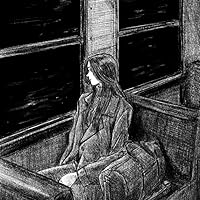
'I was like a man washed ashore on an island, half mad and only my warrant card and blood-soaked uniform to vouch for me. But I had to act as if I knew what the hell to do.' In Autumn of 1912, mounted trooper August Hawkins arrives at his new post in the fading gold town of Colley, NSW. On his first day, he is ambushed by a hidden gunman, his junior officer is killed before his eyes, and he escapes back to town to find the police station burning to the ground. Someone has it in for the mounted troopers. A traumatised veteran of the Boer War, and a stranger to Colley, Hawkins is deeply shaken and ill-equipped to solve the case. But with only green troopers and a drunken, incompetent detective available to hunt down the murderer, he is forced to take the lead. Soon he finds that Colley hides a lot more than gold beneath its surface, for anyone who knows where to dig. In Skull River, Gus Hawkins returns for a gripping and immersive hunt through a small town at the edge of a troubled empire. With black humour, Fioretti weaves a story that's both a cracking murder mystery and a razor-sharp portrayal of a country on the verge of transformation.
I loved the sound of this historical rural crime and mystery book. It is the second book to feature Gus Hawkins, a war vet and now police officer. I haven’t read Bone Lands yet, and I am wondering how that one passed me by. I will certainly be rectifying that omission very soon after loving Skull Riverrl.
I could not stop reading this once I started it, Hawkins is back and this time sent to the small town of Colley. He hasn’t been there long when chaos erupts. His partner is shot, and the police station with all its records is burnt to the ground. This is just the beginning. There is a high body count in this one, with plenty of dodgy characters. But it was hard to know who to trust.
I really did love the main character of Hawkins. He is damaged and suffers PTSD after what her did and saw in the war. He loves his lady despite not being with her, and he is a dog lover. What else do you need to know.
With an intriguing ending, I will absolutely be looking out for book 3 in the future, thanks to Simon and Schuster Australia, Affirm for my NetGalley copy and physical arc.
Big thanks to Affirm Press for sending us a copy to read and review. As part of a challenge (#36for2026) this choice was picked from that unread pile. Australia was emerging as a nation in the period post Federation and its participation in the Boer War showed the unity and grit our people had. Life in the country towns were a little slower in adapting to modern ways, they were trapped in a colonial gold rush phase where the gun was king and violence a key player. Gus Hawkins has just been assigned a post as a mounted trooper in Colley. His first night was chaotic and sets the scene for life in the bush. An ambush, murder and an arson attack on his police station. As a veteran of the African war he leads the charge in executing justice. Incompetence, gruesome deaths and mutilation and a kidnapping hinder the delivery of the truth and capturing the culprits. A crime suspense set in a unique time period for Australia. What I found intriguing and interesting was the social scape that was conjured up whilst reading. Relationships between parents and children, the public and the law and a hint of forbidden liaisons. Humour and some descriptions of brutality swayed together in this enjoyable saga.
Book 2 in this fabulous series. Gus is in charge of a tiny police station in a very small and remote NSW country town. He’s in a pretty bad way, suffers from violent assaults more than once, his horse even more so. His superiors are again manipulative, the locals untrustworthy. The murder of his constable starts things off disastrously for him in his new post. Once again, it’s tough,dark, physical stuff, but such compelling writing I couldn’t put it down.
⭐️4.5 Stars⭐️ Skull River is the first book I’ve read by Pip Fioretti and wow it’s such a fantastic historical rural mystery/crime read, I will definitely be reading the first book Bone Lands which also features the same protagonist August Hawkins.
It’s not a good first day on the job in a new town when you’re ambushed by a hidden shooter and your junior officer is killed right next to you as well as your horse and to top it off your police station is burnt to the ground.
Set in 1912, Australia, August Hawkins is a mounted trooper assigned to a fading gold town named Colley in NSW to oversee a number of rural police stations. August is a fascinating character, he is suffering PTSD as a Boer War veteran.
The story felt like an Australian western, it was so informative learning about Australia in that time period and I loved it, the characters, scenery and plot were excellent, I highly recommend.
Publication Day 2025 Publisher Affirm Press
Thank you to the fabulous team Affirm Press for a copy of the book
We continue the story of Gus Hawkins in this second book by Pip Fioretti. This time the story is set in small gold mining town and the characters we see are just as deplorable as those in the first. Fioretti does a great job of developing Gus as a character, he is still mightly flawed but more redeemable and likeable in this second book. As a crime novel it's a sold read. The crimes are shocking, sad and frustrating. The pacing of the story is good, the ending well done.
i liked this book, love a good murder/rural/australian setting vibes. book went fast then really slow then really fast then somehow slow again after you got the answer. -1 star for all the horses that got shot
Pip Fioretti burst onto the Australian crime fiction scene with her historical rural crime fiction debut Bone Lands. That book was set in 1911 in the sheep station region of far west New South Wales. It centred around Gus Hawkins, a serviceman returned from the Boer War with injuries and PTSD who is the only policeman in the tiny town of Calpa when three children of a local landowner are found dead. What set this book apart was Fioretti’s detailed rendering of the time and place – remote Australia in the time between Federation and the First World War – and its exploration of the mercantile truths that sit behind some of our firmly held myths. While it did not seem likely, Hawkins is back in a sequel, set in a different part of the state – Skull River. Skull River opens with what can only be considered a terrible day for Hawkins. After deciding to stay with the police, Hawkins has been given a promotion and has ridden out to the town of Colley, 8 hours from the regional centre of Bathurst, where he is to oversee a number of small rural stations. But on his first day his partner is killed in an ambush and the police station is burnt down, killing a prisoner being kept inside. His PTSD well and truly triggered and fearing for his life, Hawkins calls for assistance. Once again, Hawkins has to push against the authorities to drive the investigation which is being manipulated by other agendas. Bone Lands did not take long to firmly establish Hawkins as a fascinating character and left him with some additional issues, including a love interest locked up in an asylum. With all of that set up done, Skull River, set the not long after those events, cuts right to the chase. Hawkins appears fully formed and once again is a strong centre for this story. Intuitive, resourceful and handy with a gun (and his fists) but also damaged (both physically and mentally) by his time in the army. Hawkins does not suffer fools and has a strong sense of justice and so is perfect for what is essentially an Australian Western. As with the previous book, Fioretti is careful to explore modern issues in a historic setting. Hawkins has some more liberal views but not to the extent that he feels like a man out of his time. It is more that his experiences have taught him to live and let live. Skull River is a great follow up to what was a strong debut. A visceral crime novel set in a tough time that once again delivers a great sense of time and place. And with the future looking a little different for Gus Hawkins, it will be interesting to see where Fioretti seems to be taking him next.
I loved reading this book. Believe me, I don't often say this. I'm a super fussy reader. But Skull River really grabbed me and lured me into its depths. That's not to say it's a perfect tale. The pacing was a little slow in parts, at least for a mystery, and there were a few minor untied threads at the end. BUT I loved the complexity of the characters and the utterly believable historical setting. So atmospheric and engrossing.
So what's it all about? Gus Hawkins is a damaged survivor of the Boer War, a British war in South Africa that dragged in colonials like Australian Gus. He's thoroughly disillusioned with the British Empire and falls back on policing as a mounted trooper in 1912 rural Australia to make a living. Barely has he got to his new posting before the only other policeman in his town is shot before his eyes (queue Gus's barely suppressed war trauma) and Gus must fumble his shocked way towards finding the killer.
While this is, on the surface, a book largely about men hunting down the male killer of another man, some of the most memorable secondary characters are female. Madame Foufoune, the wildly disreputable travelling brothel owner, is one of my favourites. I'm not so keen on the passive Hilde and Flora, but their attitude is believable within the context. We can't all be feisty under oppression.
Skull River is the second in the series of Gus Hawkins mysteries. I haven't read the first, but I'm absolutely going to.
Skull River is book two in the Gus Hawkins mystery series by Pip Fioretti. In 1912, on his first day in Colley, New South Wales, mounted trooper Gus Hawkins and a junior officer were ambushed. By the time he got back to Colley, he found the police station burnt to the ground and the town in disarray. Not really equipped to lead, still traumatised by the Boer War, he had to step up and take charge of the town and the case. Readers of Skull River will continue to follow mounted trooper Gus Hawkins to discover what happens.
I love the cover of this book, which helped me to picture the beautiful Australian countryside. We do forget about the Boer War, so I was pleased that Pip Fioretti highlighted it and the issues it caused for returning Australian soldiers.
Pip Fioretti is a new author for me, and, keeping up the tradition, I read the second book in her Gus Hawkins series. I was impressed with Pip Fioretti's writing style and the way she portrays her characters, so I have to go back and read the first book in this excellent series. Skull River took me on a gripping mystery-and-history journey, with a writing style that engaged me from the first page to the end of the book. I felt part of the book's plot because of the way Pip Fioretti described its settings, which made me think about rural Australia during this period.
Another Gus Hawkins action packed crime thriller and I was all in for it.
When Hawkins’s junior officer is killed right in front of him, he is determined to get to the bottom of it, find the killer and get justice for his officer - he unravels a lot more than what the town was hiding.
I actually really enjoyed this one a lot more than Bone Lands. It is always very fascinating and informative learning about Australia during the 1900’s. The plot is very cleverly written and I enjoyed the plot reveals and was satisfied with the end. I really loved Gus’s will and determination despite multiple setbacks due to the time, nature and situations he was in.
The only thing that bugged me was the vast number of side characters in the book, and this is probably completely my brain not keeping up, it was just hard remembering the names and who was what. But yeah, like I said, that could be just me!
Overall, a great Australian histroical crime thriller novel, I had a great time reading it!
Thank you Affirm Press for sending the ARC my way for an honest review.
An historical fiction tale set in 1912 outback New South Wales, Skull River (2025) by Pip Fioretti is a first-rate Aussie crime mystery tale. Mounted Police Sergeant Gus (Augustus) Hawkins is appointed to the town of Colley, as supervising officer responsible for a number of outposts. A returned veteran of the Boer War, Gus still suffers nightmares and just survives an ambush by a gunman on his first call out, that killed his junior officer. He returns to Colley to discover the police station was destroyed in an arson attack and frosty greetings from the locals. Reinforcements are sent to help solve the case, as Gus battles the police hierarchy, his own tarnished reputation and hostile locals. This an atmospheric crime thriller that graphically captures the time period with a five star must-read gritty thriller rating. As always, the opinions herein are totally my own, freely given and without any inducement.
I read "Bone Lands". Introduced to Gus Hawkins and the rural NSW of the early twentieth century. Loved it. Real. Waited for Fioretti's next installment with a scarcely held breath. Could exhale with pleasure after finishing "Skull River" (book). Gritty. Evocative. Captivating. Violent. Gentle. A pastiche of characters with Augustus Hawkins at the fulcrum of the story arc. I had to get it finished. I wanted to see what could be possible. In addition, Fioretti manages to educate us about how we treat each other and perhaps why we do. We also learn about the lives rural people had to endure to make their way in a hostile environment. Her characters are strong, resonant and real, as they were in "Bone Lands". I await her next development of Augustus Hawkins. Another setting. New people. More enjoyment for me. I highly recommend this read.
I was really impressed by Pip Fioretti's second offering. Gus Hawkins is such a complex character; he's great. So is the story of Australia between the Boer War and the Great War (WW1). Women have only had the vote for ten years, but men still control women's lives. Racism is rampant, and although neither racism nor patriarchal power has been defeated and dismantled in Australia, it is affirming to know how far we have come between 1912, when this book was set, and 2025. The story is engrossing, and our 'hero' is a beautifully flawed one. One can't help but like him. Another issue addressed is the traumatic post-Boer war suffering that Gus is experiencing. He's living in a time when talking of his screaming nightmares, et cetera, is impossible. Another recognition of positive progress for we people living in the early 21st Century. Very impressive, Pip Fioretti. Super readable.
I think I’ve just read my first historical thriller! And I’m sure I’ve just read my first Australian western! This was fantastic! Clever, really plotty, strong characters I believed…although Gus Hawkins felt fair and broad minded I didn’t not believe he wasn’t of a 1912 mindset. The town of Colley was complete too- see, feel and smell (hahaha) I didn’t work out who killed Scanlon and when I wasn’t so immersed in the time and place (I could just feel the massive social change coming) you had better believe I was trying to work it out. I haven’t read Bone Lands yet but I definitely will; Skull River worked as a stand-alone definitely, im just keen for more. Thank you affirm press for my arc, I loved it!
This is the second instalment in the Gus Hawkin's syndicate, and equally as enjoyable as the first. The great news is you don't have to have read the first to completely follow this second mystery.
I would call this a police procedural; but, being set at the turn of the century around outback NSW made it far more interesting and engaging than other novels. There is a sense of understanding if you are an Australian reader, which is really great.
Gus Hawkins needs to find out who shot his fellow trooper in broad daylight while they were riding abreast. The drama is far too close for Gus and he is haunted from his time in the Boer War. But he won't sleep until he has solved the case - which, of course, he does.
Brilliant, I loved this book. I really enjoyed the first book in this series, and before I had even completed it, I purchased Skull River. Pip Fioretti has done an amazing job, with a thoroughly entertaining story. You can really see how hard it must have been to live in the early 1900's. Gus Hawkins is such a great character. He manages to somehow keep his life together after being involved in the terrible Boer War, coming back to Australia injured. Now a mounted trooper in the outback, chasing down a murderer. I can't wait to hopefully see book 3 in this wonderful series. Easily worth the 5/5 Star Rating.
The first 5 chapters open at breakneck speed with a police officer shot and the station burnt down and the chaos of Colley in outback NSW in 1912, barely a decade after Federation and just before the stirrings of the Great War.
Sergeant Gus Hawkins is posted out here and it's his first day on the job. Lucky for him he's a plucky Boer veteran and this isn't his first rodeo.
Can be read as a standalone but I think I would have benefited from reading Bone Lands first for context
A murder mystery set in western NSW in the early 1900s. The central character is a mounted policeman who is suffering from trauma following his experience in the Boer War. It is a small rural community that has experienced the gold rush but is now on a downward slide. The story keeps you engaged and is intriguing. The misogyny, racism and poverty is confronting but of its time. I did think it took a while to get going and then ‘went on a bit’ hence 3 stars.
What a cracking sequel to Bone Lands. Once again, there is a lot going on behind the scenes and old injustices abound, in a very clever plot. I hope there is another book to come, as I really want to see what Gus gets up to next. The characters and the settings in this were excellent, as was the historical context.
No point in summarising the plot. Gus is back and the scene is still pretty rugged. I think Fioretti has captured what rural Australia was probably like in the early years of the 20th century. The baddies get what's coming. Gus is still looking for his lost love. A good read in my opinion. Looking forward to the next instalment.
Pip Fioretti's prose is amazing, the sentences sparse but effective at painting images in your mind of remote living. In 1912 in outback NSW Trooper Hawkins is confronted in solving the murder of junior officer with difficulties because the police station burned down on the same night. A clever revealing of things along the way with twists and turns until the climax at the end.
with a 1/2 Gus is the type of protaganist you 'root' for. This is a good example of historial rural noir that many australian authors are writing....delporable characters coupled with a gruesome murder ! A good second book in the series...and await the next instalment.
Another brilliant read in the Gus Hawkins series. Gus has moved stations and on the day he arrives, his offsider is killed. There follows a harrowing investigation, and more deaths. Great characters, story and love the history portrayed too. Hope there is another one to come.
Enjoyable who-done-it set in rural NSW in the years between Federation and WW1. Villains and heroes in the classical mode. My first foray into this author’s work and will definitely look for other offerings. 3.5 stars from me.