

What do you think?
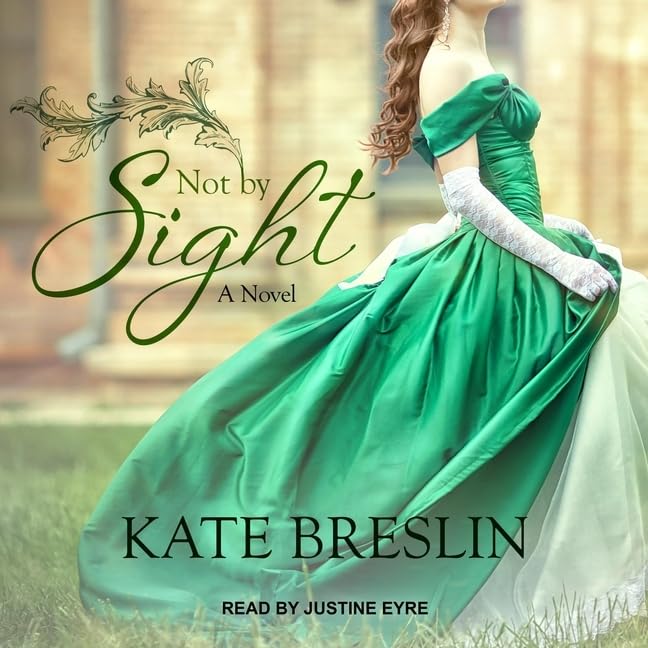
Not by Sight Lib/E
Gripping Sophomore Novel from a Rising Historical Romance Talent
With Britain caught up in WWI, Jack Benningham, heir to the Earl of Stonebrooke, has declared himself a conscientious objector. Instead, he secretly works for the Crown by tracking down German spies on British soil, his wild reputation and society status serving as a foolproof cover.
Blinded by patriotism and concern for her brother on the front lines, wealthy suffragette Grace Mabry will do whatever it takes to assist her country's cause. When she sneaks into a posh London masquerade ball to hand out white feathers of cowardice, she never imagines the chain of events she'll set off when she hands a feather to Jack.
And neither of them could anticipate the extent of the danger and betrayal that follows them--or the faith they'll need to maintain hope.
With Britain caught up in WWI, Jack Benningham, heir to the Earl of Stonebrooke, has declared himself a conscientious objector. Instead, he secretly works for the Crown by tracking down German spies on British soil, his wild reputation and society status serving as a foolproof cover.
Blinded by patriotism and concern for her brother on the front lines, wealthy suffragette Grace Mabry will do whatever it takes to assist her country's cause. When she sneaks into a posh London masquerade ball to hand out white feathers of cowardice, she never imagines the chain of events she'll set off when she hands a feather to Jack.
And neither of them could anticipate the extent of the danger and betrayal that follows them--or the faith they'll need to maintain hope.
Audio CD
First published July 28, 2015
About the author
Kate Breslin
10 books1,128 followersFormer bookseller-turned-author Kate Breslin enjoys life in the Pacific Northwest with her husband and family. A writer of travel articles and award-winning poetry, Kate received Christian Retailing's 2015 Best Award for First Time Author and her first novel, For Such A Time, won American Christian Fiction Writers 2015 Carol Award. Kate's latest novel, As Dawn Breaks, released in November, 2021. When she's not writing inspirational fiction, Kate enjoys reading or taking long walks in Washington's beautiful woodlands. She also likes traveling to new places, both within the U.S. and abroad, having toured Greece, Rome, Barcelona, and much of Western Europe. New destinations make for fresh story ideas. Please visit her at www.katebreslin.com
Ratings & Reviews
Friends & Following
Create a free account to discover what your friends think of this book!
Community Reviews
Displaying 1 - 30 of 444 reviews

November 13, 2017
*applauds* Well done, Ms. Breslin, well done! I just don't even know where to start with describing this gem.
I guess we can start off with the cover first. Oh. My. Goodness. It is just beyond gorgeous! Talk about design goals! The fonts, the colors, the arrangement, just everything is so perfect and so beautiful. I can't wait till I have a gorgeous paperback to grace my bookshelves.
The characters. Grace is an incredibly multifaceted character. I was a little wary at first, as she is a very outspoken suffragette, but thankfully it wasn't as much in the story as I anticipated. I particularly related to her close relationship with her brother and her desire to help him, even if some of her actions weren't the best, the heart was right. And Jack. <3 He was amazing. I've found a lot of romance novels to surround the female being insecure about herself, and the guy helping her overcome that, but it was really intriguing that in this one, the guy was insecure. Their story and character arcs were so well done.
The romance was without a doubt, the best part of this book for me. I love, love loved how it was almost entirely focused on a personal\heart attraction as opposed to a physical attraction that is often portrayed in so many romance novels. Due to certain circumstances that I can say (#spoilers), the characters had to dig deeper, instead of focusing on physical characteristics and attraction. It was just so good, okay?
The plot was incredibly well done, and especially towards the end, I couldn't put the book down! The ending was beautiful and had me sobbing. The WWI setting was absolutely amazing, as I expected.
All in all, this was a phenomenal novel, and I cannot wait to read more by this incredibly author! Definitely go grab yourself a copy of this beautiful piece of literature!
Recommended for ages 14-15+ for romance
I guess we can start off with the cover first. Oh. My. Goodness. It is just beyond gorgeous! Talk about design goals! The fonts, the colors, the arrangement, just everything is so perfect and so beautiful. I can't wait till I have a gorgeous paperback to grace my bookshelves.
The characters. Grace is an incredibly multifaceted character. I was a little wary at first, as she is a very outspoken suffragette, but thankfully it wasn't as much in the story as I anticipated. I particularly related to her close relationship with her brother and her desire to help him, even if some of her actions weren't the best, the heart was right. And Jack. <3 He was amazing. I've found a lot of romance novels to surround the female being insecure about herself, and the guy helping her overcome that, but it was really intriguing that in this one, the guy was insecure. Their story and character arcs were so well done.
The romance was without a doubt, the best part of this book for me. I love, love loved how it was almost entirely focused on a personal\heart attraction as opposed to a physical attraction that is often portrayed in so many romance novels. Due to certain circumstances that I can say (#spoilers), the characters had to dig deeper, instead of focusing on physical characteristics and attraction. It was just so good, okay?
The plot was incredibly well done, and especially towards the end, I couldn't put the book down! The ending was beautiful and had me sobbing. The WWI setting was absolutely amazing, as I expected.
All in all, this was a phenomenal novel, and I cannot wait to read more by this incredibly author! Definitely go grab yourself a copy of this beautiful piece of literature!
Recommended for ages 14-15+ for romance

November 6, 2017
*slow clap* bravo. . . well done indeed! review coming soon.
//R E V I E W//
This book was FABULOUS!!!! Definitely made the favorites in my fiction pile. Aside from the cover (which I swooned over to no end) the inside was just as lovely! Fabulous characters that had you rooting for them the WHOLE TIME, Settings so vivid and set in England during WW1 (HELLO), And did I mention that there were two main characters that I adored?
Goodness, this review is coming off a bit fangirl-ish. . . *shrugs* I don't care. This is the first Kate Breslin book that I have read and it made me a DIE HARD FAN.
I just cannot even. . .
I really don't know what else to say. . . If you like historical fiction, you will love this novel!
//R E V I E W//
This book was FABULOUS!!!! Definitely made the favorites in my fiction pile. Aside from the cover (which I swooned over to no end) the inside was just as lovely! Fabulous characters that had you rooting for them the WHOLE TIME, Settings so vivid and set in England during WW1 (HELLO), And did I mention that there were two main characters that I adored?
Goodness, this review is coming off a bit fangirl-ish. . . *shrugs* I don't care. This is the first Kate Breslin book that I have read and it made me a DIE HARD FAN.
I just cannot even. . .
I really don't know what else to say. . . If you like historical fiction, you will love this novel!

February 9, 2015
I won Not By Sight by Kate Breslin in a giveaway, and I'm oh so happy to add this gorgeous book to my five-star-reads-list! I loved it! It is simply one of those historical novels that sweeps you away to another time and tells a delightful story - with dashes of danger and intrigue!
Set in Britain, during World War I, this novel introduces us to the lovely patriot, Grace Mabry; and the roguish heir to the Earl of Stonebrooke, Jack Benningham. They speak not a word to each other on their first meeting, but never forgot that day. Months later, they are pushed into each other's lives, and are in for quite the beautiful, and bumpy, ride.
Where secrets abound and masks are intact, is there any room for love and new beginnings?
I love books set during WWI and WWII ... the historical detail is so wonderful! In Not By Sight, we attend balls, learn about the white feather cowardice, witness bombings from enemy planes overhead, and travel to a farm where a group of young women work hard to aid the war effort. It was all so interesting to read about.
I really liked Grace. There was something about her personality, both fiery and sweet. And she's a writer! ^_^ Jack frustrated me sometimes, but you definitely could understand where he was coming from. Overall, it was a perfect delight to get to know these two. They had some fun, kind of summer day, adventures.
Oh! And did anyone else feel like there was a fairytale-ish thread going on? Yes, this is certainly a Beauty and the Beast tale! ^_^ While I was reading, I kept thinking Jack was kind of like the Beast. And now as I'm thinking back over all the scenes, I'm seeing all kinds of nods to Beauty and the Beast! I just love it!! *hugs book* What an enchanting idea to incorporate that classic fairytale into this World War I romance story. It's so lovely, my friends.
It was also great getting to know the young ladies Grace worked with. They each had a little secondary storyline filled with secrets and mishaps. I loved watching the friendships develop.
It was just a fabulous story that kept me captivated from beginning to end. I loved the plot, and all the different little things that happened. And the fairytale thread. And the bit of suspense and mystery. Wonderful, wonderful book. The little faith theme was also beautiful.
The only concern I had was while Grace was a faith-filled woman and strived to help others find healing, physically and spiritually; she failed to take a step back when she realized she was falling for a man who wasn't very interested in following God at that point. The man did find his way back to the Lord in the end ... But that doesn't always happen in real life. I don't think women should believe that they can date a guy who isn't a strong Christian and somehow they'll lead them to Christ. It doesn't always work that way.
But other than that, I adored this book. If you are a fan of Christian historical (especially set during WWI or WWII), or if you love Beauty and the Beast stories, you must give Not By Sight a try!
I can't wait to read more by Kate Breslin!
Set in Britain, during World War I, this novel introduces us to the lovely patriot, Grace Mabry; and the roguish heir to the Earl of Stonebrooke, Jack Benningham. They speak not a word to each other on their first meeting, but never forgot that day. Months later, they are pushed into each other's lives, and are in for quite the beautiful, and bumpy, ride.
Where secrets abound and masks are intact, is there any room for love and new beginnings?
I love books set during WWI and WWII ... the historical detail is so wonderful! In Not By Sight, we attend balls, learn about the white feather cowardice, witness bombings from enemy planes overhead, and travel to a farm where a group of young women work hard to aid the war effort. It was all so interesting to read about.
I really liked Grace. There was something about her personality, both fiery and sweet. And she's a writer! ^_^ Jack frustrated me sometimes, but you definitely could understand where he was coming from. Overall, it was a perfect delight to get to know these two. They had some fun, kind of summer day, adventures.
Oh! And did anyone else feel like there was a fairytale-ish thread going on? Yes, this is certainly a Beauty and the Beast tale! ^_^ While I was reading, I kept thinking Jack was kind of like the Beast. And now as I'm thinking back over all the scenes, I'm seeing all kinds of nods to Beauty and the Beast! I just love it!! *hugs book* What an enchanting idea to incorporate that classic fairytale into this World War I romance story. It's so lovely, my friends.
It was also great getting to know the young ladies Grace worked with. They each had a little secondary storyline filled with secrets and mishaps. I loved watching the friendships develop.
It was just a fabulous story that kept me captivated from beginning to end. I loved the plot, and all the different little things that happened. And the fairytale thread. And the bit of suspense and mystery. Wonderful, wonderful book. The little faith theme was also beautiful.
The only concern I had was while Grace was a faith-filled woman and strived to help others find healing, physically and spiritually; she failed to take a step back when she realized she was falling for a man who wasn't very interested in following God at that point. The man did find his way back to the Lord in the end ... But that doesn't always happen in real life. I don't think women should believe that they can date a guy who isn't a strong Christian and somehow they'll lead them to Christ. It doesn't always work that way.
But other than that, I adored this book. If you are a fan of Christian historical (especially set during WWI or WWII), or if you love Beauty and the Beast stories, you must give Not By Sight a try!
I can't wait to read more by Kate Breslin!

January 3, 2015
Not by Sight is the story of Jack and Grace set in England during WWI. The author uses facts of the time and war to shape the novel, but it is largely about the two of them maturing and not as much about the war itself. For Jack, it is about maturing in both faith and wisdom and for Grace it is about removing her rose colored glasses and seeing the realities of war. Much of the novel is set in the English countryside.
It's a lovely novel and I recommend it to readers that enjoy historical fiction.
It's a lovely novel and I recommend it to readers that enjoy historical fiction.

December 18, 2014
An unbelievably well-written and heart-wrenching exposition on the power of faith to see through treason and uncertainty. Ripe with deft metaphor, Breslin puts her skilled pen to the test weaving a tale with all the enigma and romance that reminds you why you LOVE reading. A throwback to the classics such as Phantom of the Opera, the Scarlet Pimpernel and others, Breslin's talent is optimized in her passion-meets-poetry take on the Great War and the British experience. Literary crossover fiction with perfect faith themes, expert characterization and a heart-wrenching climax. The perfect read.

February 28, 2015
Not by Sight will sweep you away with romance and intrigue to World War One England where a spirited young women seeks to live out her patriotism and faith in challenging times. Well researched with captivating characters, Kate Breslin bring us another story that will touch our hearts and lift our spirits.

March 2, 2019
4.5 stars for a beautiful, relational/suspense tale which was somewhat a rendering of Beauty and the Beast. I stayed up until 1am for two nights in a row to finish it quickly—fully knowing my children could very well wake up at 6am. But still, no regrets. I loved the atmosphere, the characters, the descriptions. I remember being super impressed with Breslin’s debut novel back in 2014... and realizing with disappointment that it would be up against my own debut novel for any debut novel awards that year! Not that I read a ton if debut novels that year—her For Such a Time was also the very last book I read before having my first baby about a month later. And as it turned out, her book did happen to end up a finalist in the ACFW Carol Awards right but next to mine. I knew she would win, and despite the “competition”, we became friends that weekend of the award ceremony at the 2015 ACFW conference, and we’ve enjoyed reading each other’s novels from then on. So believe me, when I say her writing is worth reading. I’ve been a fan because of that first book (that did, in fact, beat The Hesitant Heiress in the Carol Awards that year), and now, after all of the babies and books I’ve produced since then, I’m finally back to reading and can not wait to dig in to the next two of her books! ❤️

February 5, 2018
DNF
I just couldn't finish this right now.
Honestly, the only thing appealing to me about this book is the cover (IT'S SO SOFT <3). The characters weren't likable, the writing/dialogue was awkward, the plotline felt very boring, and the MC'S had no chemistry.
I might pick this up again when I'm in the mood to, uh, trudge through a book I don't like *cough*. . . but for now, I just have so little time for reading that I don't want to spend that on something I'm not enjoying.
For now, I'm assigning it a temporary rating of two stars with the hope that I will return to it and hopefully raise that rating in the future. ;)
2.5 stars
I just couldn't finish this right now.
Honestly, the only thing appealing to me about this book is the cover (IT'S SO SOFT <3). The characters weren't likable, the writing/dialogue was awkward, the plotline felt very boring, and the MC'S had no chemistry.
I might pick this up again when I'm in the mood to, uh, trudge through a book I don't like *cough*. . . but for now, I just have so little time for reading that I don't want to spend that on something I'm not enjoying.
For now, I'm assigning it a temporary rating of two stars with the hope that I will return to it and hopefully raise that rating in the future. ;)
2.5 stars

October 29, 2014
A little bit Scarlet Pimpernel, a little bit Beauty and the Beast, and a little bit Phantom of the Opera, Kate Breslin’s sophomore novel Not By Sight is more than a little bit perfect. Romance, espionage and friendship collide in this stunning tale set in England during the First World War.
You might guess this from the title Not By Sight, but the themes of blindness and faith play off each other so poignantly throughout the book. As in life, every character seems to suffer from some sort of blindness – be it physical, spiritual, or metaphorical. Watching them journey through the darkness – while some do find their light -is part of what makes this book such an emotionally tender masterpiece. The idea that we see by faith, not by sight, is illuminated most through the character interactions and the acknowledgment that there is more to everyone than what we can see. Steps of faith taken, no matter how small or how giant, provide those glimmers of light for the reader too, the reminder that walking by faith is not without potholes but is also brimming with those vistas that leave you breathless in wonder.
Along with blindness, nearly every character in Not By Sight harbors a secret or ten. From espionage to true identities to guilt to family secrets, the men and women gathered at Lord Roxwood’s estate are a regular Pandora’s box of subterfuge. As for what happens when that box is cracked open, little by little? Well, you’re just going to have to read the book to find out but trust me you will not be disappointed! A word of caution, though: Don’t schedule anything (including sleep) once you start reading Not By Sight because you will find it most difficult to put down until you’ve finished it!
The romance between Jack and Grace is electric, the breathless tension apparent from their first meeting and in every encounter thereafter. Theirs is the best sort of love, in my opinion – linked like lightning at first sight but then forged by friendship over the course of time. They lose nothing of the sizzle to this friendship; it only deepens into something tender and beautiful and strong … as all the great ones do :)
Speaking of friendship, the girls of the Women’s Forage Corps added a whole new layer to this story and in my opinion gave Grace her best chances to bloom. Anyone who has ever lived in a college dorm (or watched reality TV) knows that when you put more than 1 female at a time in close quarters, conflict will erupt. It’s only a matter of time. In Not By Sight, that conflict leaps forward pretty much the second Grace sets foot on Lord Roxwood’s estate and meets the other WFC girls. While I would have been tempted to open my mouth and give back sass for sass, Grace’s pure heart shines through in her replies and actions. The effect she has on this particular WFC gang leaves behind a lesson we would all do well to learn in this society of social media and volatile opinions. The WFC also provided Grace her best opportunity to grow as a person, as a woman, and as a friend. She struggled at first to adapt to these new-to-her tasks, absorbing the criticism and mockery, but was determined to do her part to help the troops. To me, these things put Grace on my favorite heroine’s list… even if her self-control can be a little annoying ;)
And Jack… there’s something about flawed heroes. There’s something about scarred heroes, too. But deep within, Jack has a soft heart (though I wouldn’t necessarily say that to his face lol). It shows up whenever he’s in Grace’s presence, which will probably make you all melty inside. Out of everybody in Not By Sight, Jack perhaps has the most to lose… but also the most to gain. Watching him juggle those two outcomes – along with his feelings for Grace – set him on my favorite heroes list. Which is nice for him, since Grace is there to keep him company lol.
Bottom Line: Penned in the exquisite writing style that made an award winner of Breslin’s debut novel For Such A Time, her second novel Not By Sight is not to be missed. With intriguing history and vivid characters, you will be swept away to the English countryside and the world of espionage and spunky women. Highly recommended for anyone and everyone but especially for those readers who love historical fiction, spy novels, and/or the themes of Beauty and the Beast & Phantom of the Opera.
(I received a copy of this book from Bethany House Publishing as well as Netgalley in exchange for only my honest review.)
You might guess this from the title Not By Sight, but the themes of blindness and faith play off each other so poignantly throughout the book. As in life, every character seems to suffer from some sort of blindness – be it physical, spiritual, or metaphorical. Watching them journey through the darkness – while some do find their light -is part of what makes this book such an emotionally tender masterpiece. The idea that we see by faith, not by sight, is illuminated most through the character interactions and the acknowledgment that there is more to everyone than what we can see. Steps of faith taken, no matter how small or how giant, provide those glimmers of light for the reader too, the reminder that walking by faith is not without potholes but is also brimming with those vistas that leave you breathless in wonder.
Along with blindness, nearly every character in Not By Sight harbors a secret or ten. From espionage to true identities to guilt to family secrets, the men and women gathered at Lord Roxwood’s estate are a regular Pandora’s box of subterfuge. As for what happens when that box is cracked open, little by little? Well, you’re just going to have to read the book to find out but trust me you will not be disappointed! A word of caution, though: Don’t schedule anything (including sleep) once you start reading Not By Sight because you will find it most difficult to put down until you’ve finished it!
The romance between Jack and Grace is electric, the breathless tension apparent from their first meeting and in every encounter thereafter. Theirs is the best sort of love, in my opinion – linked like lightning at first sight but then forged by friendship over the course of time. They lose nothing of the sizzle to this friendship; it only deepens into something tender and beautiful and strong … as all the great ones do :)
Speaking of friendship, the girls of the Women’s Forage Corps added a whole new layer to this story and in my opinion gave Grace her best chances to bloom. Anyone who has ever lived in a college dorm (or watched reality TV) knows that when you put more than 1 female at a time in close quarters, conflict will erupt. It’s only a matter of time. In Not By Sight, that conflict leaps forward pretty much the second Grace sets foot on Lord Roxwood’s estate and meets the other WFC girls. While I would have been tempted to open my mouth and give back sass for sass, Grace’s pure heart shines through in her replies and actions. The effect she has on this particular WFC gang leaves behind a lesson we would all do well to learn in this society of social media and volatile opinions. The WFC also provided Grace her best opportunity to grow as a person, as a woman, and as a friend. She struggled at first to adapt to these new-to-her tasks, absorbing the criticism and mockery, but was determined to do her part to help the troops. To me, these things put Grace on my favorite heroine’s list… even if her self-control can be a little annoying ;)
And Jack… there’s something about flawed heroes. There’s something about scarred heroes, too. But deep within, Jack has a soft heart (though I wouldn’t necessarily say that to his face lol). It shows up whenever he’s in Grace’s presence, which will probably make you all melty inside. Out of everybody in Not By Sight, Jack perhaps has the most to lose… but also the most to gain. Watching him juggle those two outcomes – along with his feelings for Grace – set him on my favorite heroes list. Which is nice for him, since Grace is there to keep him company lol.
Bottom Line: Penned in the exquisite writing style that made an award winner of Breslin’s debut novel For Such A Time, her second novel Not By Sight is not to be missed. With intriguing history and vivid characters, you will be swept away to the English countryside and the world of espionage and spunky women. Highly recommended for anyone and everyone but especially for those readers who love historical fiction, spy novels, and/or the themes of Beauty and the Beast & Phantom of the Opera.
(I received a copy of this book from Bethany House Publishing as well as Netgalley in exchange for only my honest review.)

October 10, 2014
In the midst of WWI, Jack Benningham is the heir to the Stonebrooke earldom. While most other young men his age are fighting in the trenches in France, Jack's wild reputation as a rogue as well as his high status in society provide the perfect cover for him to track down German spies on English soil. Grace Mabry has a twin brother fighting on the front. She's fiercely patriotic. She's also a wealthy suffragette. When she sees Jack across a ballroom, she is determined that he pay for his cowardice by handing him a white feather. She never dreams that her actions would have far reaching results. To escape London, she seeks work with one of the haying crews in the countryside. When her path crosses with Jack's again, will Grace be able to find the courage to admit she was wrong? Neither of them can predict the danger and betrayal that follows them.
I LOVED this book! After loving the author's debut book last summer, I was almost afraid to pick up the second book. I didn't want to be disappointed. I worried for nothing. I wasn't disappointed at all. I was quickly drawn into a tale rich in history, full of adventure and romance, and had the pain of suffering.
Both Jack and Grace were deep characters. There was so much to them than what appeared on the surface. As the story unfolds and their layers are pulled back, my heart hurt for the child Jack was once. I hurt over Grace's unknowing if her twin was dead or alive. And I cried when all the secrets came to light.
I wondered about the title "Not By Sight" and how it came about. Yet it's revealed rather quickly that one must learn to see with the eyes of faith as well as to trust. There's another more obvious reason, but I'm not going to be mentioning that for fear of spoilers.
This may very well be the best book that I've read this year. I know it's been one of my most highly anticipated ones. It's certainly one of the most character driven ones. I literally got the book in one evening, started it the next day AND finished it about 6 hours later.
Fans of historical fiction will love this book.
I received a copy for free from the author for the purpose of promoting. My thoughts and opinions are my own.
Recommended to fans of historical fiction, Francine Rivers, Laura Frantz, Jody Hedlund, Sarah Sundin, Julie Klassen
Rating - 5 stars
I LOVED this book! After loving the author's debut book last summer, I was almost afraid to pick up the second book. I didn't want to be disappointed. I worried for nothing. I wasn't disappointed at all. I was quickly drawn into a tale rich in history, full of adventure and romance, and had the pain of suffering.
Both Jack and Grace were deep characters. There was so much to them than what appeared on the surface. As the story unfolds and their layers are pulled back, my heart hurt for the child Jack was once. I hurt over Grace's unknowing if her twin was dead or alive. And I cried when all the secrets came to light.
I wondered about the title "Not By Sight" and how it came about. Yet it's revealed rather quickly that one must learn to see with the eyes of faith as well as to trust. There's another more obvious reason, but I'm not going to be mentioning that for fear of spoilers.
This may very well be the best book that I've read this year. I know it's been one of my most highly anticipated ones. It's certainly one of the most character driven ones. I literally got the book in one evening, started it the next day AND finished it about 6 hours later.
Fans of historical fiction will love this book.
I received a copy for free from the author for the purpose of promoting. My thoughts and opinions are my own.
Recommended to fans of historical fiction, Francine Rivers, Laura Frantz, Jody Hedlund, Sarah Sundin, Julie Klassen
Rating - 5 stars

May 6, 2015
With her brother fighting in France, Grace Mabry is determined to do her part for the Great War effort, even though her constant efforts to display her patriotism are met by disapproval from her father—most recently in particular, sneaking into a masquerade ball to hand out white feathers to upper class conscientous objectors. Since baling hay seems safer and less scandalous than any of Grace's other suggestions on how she could support their country, Grace and her maid are soon sent to a Kent to bale hay for the Women's Forage Corps. There Grace is introduced to a group of hardworking women—who are understandably sceptical of Grace's farm skills—as well as the mysterious masked Lord Roxwood, on whose property they are based.
Lord Roxwood has little interest in the WFC volunteers who are working on his land, until one of them lets a litter of pigs ruin his rose garden and and stumbles upon him on one of the rare occasions that he's unmasked. Recently blinded and significantly scarred as the result of an accident, Jack is struggling to come to terms with his new appearance, especially given his fiancee's less than appreciative reaction to it. Grace Mabry quickly becomes a welcome distraction from the responsibilites of his future and his work for the government, but he can't help but shake the feeling that Grace's presence in his life is more than coincidental. Have they met before? How did she come to work for the WFC on his property? And does she have ties to his accident?
As Grace and Jack's relationship draws them closer together, the harder it will be for them to trust each other when Jack's suspicions are brought to light. Can they ever trust each other again?
I adored Kate Breslin's debut novel and have been tentatively awaiting Not By Sight. Isn't that the way with a second novel—you're excited to read it, but worried that it might be overshadowed by its predecessor? Stumbling across the synopsis for Not By Sight a couple of months ago, I was pleased to learn that Kate wasn't sticking to the WWII setting from her first novel. As much as I loved For Such a Time, I'm glad that the focus of this novel is entirely different, forcing me to concentrate on the story at hand rather than comparing the two books. If you're looking for another For Such a Time, you'll probably be disappointed. If you're interested in a WWI novel with a focus away from the trenches, a fiesty but niave suffragette, and a bit of espionage, you're in for a treat!
If you read my review of The Hourglass Factory, you'll know that I love reading about the suffragette movement. While this book doesn't delve too deep into the movement itself, it fuels a lot of Grace's ideology. Grace is far from your model feminist, and at times her beliefs are heartfelt but incredibly flawed. To begin with, I felt frustrated by Grace's attempts to help her fellow WFC workers. She had an answer to all of their problems, but often this answer was just a pat on the back and an encouragement that, when the suffrage movement had won, women would be free to do anything they wished. But as the story developed, I realised that there was a reason why Grace's behaviour was like that of an incredibly naive fairy godmother. She's supposed to be young and idealistic. At times, her open-mindedness and optimistim are beneficial to others—like Jack, who is scared that no woman can look at him after his accident, and appreciates Grace's unusual outlook on life. At others times, Grace offers help but doesn't have enough understanding to truly follow through with her aid. I appreciated this flawed side of her. She has a lot to learn—especially about those who haven't come from such a fortunate background as hers. If Grace irritates you to begin with, please stick with her—her journey does make her a lot more likable.
Another reviewer likened Grace and Jack's relationship to that of Beauty and the Beast, and I quite liked this comparison. A large part of their relationship revolves around Grace driving Jack all over the English countryside and describing to him the scenes that they witness. This seems gimmicky, but given Jack's blindness and Grace's desire to be a novelist, it makes sense, and there are some really sweet scenes between them. Jack challenges Grace's creativity, and she confronts some of his misconceptions about his appearance and how others perceive him. They rile each other up a lot, but seem to make a good match. I enjoyed the way in which their relationship developed, as well as the beautiful descriptions of the countryside surrounding Kent. Given that Jack is technically engaged to another woman at the start of the novel, I felt a little uneasy about the idea of him falling for Grace, but most of their relationship is very innocent, and the author approaches this issue very well.
While there are many things I like about Britain, I would never call myself patriotic. As such, I was a little wary about this aspect of Grace's character. There are some wartime romances that have rubbed me the wrong way because of their in-your-face patriotism and blind support of the war, which often skims over the darker, grimier aspects of warfare. Not By Sight, thankfully, was not one of these novels. While Grace initially exerts blind patroitism and commitment to Britain's part in the war, her time in the WFC slowly causes her to reconsider her attitude. Witnessing men who, like her brother, have fought in France and returned with broken bodies and spirits, Grace realises that war is about more than inspiring words and a hearty spirit—and that she may have misjudged the men whom she handed her white feathers to. The message of this novel is neither pro- or anti-war, simply truthful about the damage and loss of life that occurs in any war.
The espionage mentioned on the back cover of this book intrigued me, but it was often overshadowed by the romance between Grace and Jack. The details about Jack's job as a spy definitely became more prominent towards the end of the novel, but by then I already had my suspicions about a secondary character, and they turned out to be right (although I hadn't been sure about their motivations). If you're thinking of reading this book because of the espionage storyline, I wouldn't particularly recommend it. The details about this part of the war are interesting, but they don't take up a lot of the book, and several of the events at the end of the novel felt very contrived and rushed. I'm not sure if this is because I was reading an ARC, but I felt that too many things came together in too short a period of time. Given the wartime setting, the Happily Ever After was a little bit too perfect.
Ultimately, I did really enjoy Not By Sight. The romance was endearing, the subject of the WFC was intriguing, and I appreciated the friendships that Grace formed and the character growth she experienced. My biggest issue is probably the speed at which events occurred towards the end of the novel, which caused several of them to feel contrived or a little too perfect. I'm not too disappointed, but it keeps this novel from finding a place among my favourites. I do appreciate that Kate Breslin chose to explore some lesser known aspects of Britain's war efforts, and that she chose such a wonderfully flawed heroine to explore them with. Not By Sight is certainly a unique novel, and I hope other readers enjoy its beauty as much as I did.
Review title provided by Bethany House.
Lord Roxwood has little interest in the WFC volunteers who are working on his land, until one of them lets a litter of pigs ruin his rose garden and and stumbles upon him on one of the rare occasions that he's unmasked. Recently blinded and significantly scarred as the result of an accident, Jack is struggling to come to terms with his new appearance, especially given his fiancee's less than appreciative reaction to it. Grace Mabry quickly becomes a welcome distraction from the responsibilites of his future and his work for the government, but he can't help but shake the feeling that Grace's presence in his life is more than coincidental. Have they met before? How did she come to work for the WFC on his property? And does she have ties to his accident?
As Grace and Jack's relationship draws them closer together, the harder it will be for them to trust each other when Jack's suspicions are brought to light. Can they ever trust each other again?
I adored Kate Breslin's debut novel and have been tentatively awaiting Not By Sight. Isn't that the way with a second novel—you're excited to read it, but worried that it might be overshadowed by its predecessor? Stumbling across the synopsis for Not By Sight a couple of months ago, I was pleased to learn that Kate wasn't sticking to the WWII setting from her first novel. As much as I loved For Such a Time, I'm glad that the focus of this novel is entirely different, forcing me to concentrate on the story at hand rather than comparing the two books. If you're looking for another For Such a Time, you'll probably be disappointed. If you're interested in a WWI novel with a focus away from the trenches, a fiesty but niave suffragette, and a bit of espionage, you're in for a treat!
If you read my review of The Hourglass Factory, you'll know that I love reading about the suffragette movement. While this book doesn't delve too deep into the movement itself, it fuels a lot of Grace's ideology. Grace is far from your model feminist, and at times her beliefs are heartfelt but incredibly flawed. To begin with, I felt frustrated by Grace's attempts to help her fellow WFC workers. She had an answer to all of their problems, but often this answer was just a pat on the back and an encouragement that, when the suffrage movement had won, women would be free to do anything they wished. But as the story developed, I realised that there was a reason why Grace's behaviour was like that of an incredibly naive fairy godmother. She's supposed to be young and idealistic. At times, her open-mindedness and optimistim are beneficial to others—like Jack, who is scared that no woman can look at him after his accident, and appreciates Grace's unusual outlook on life. At others times, Grace offers help but doesn't have enough understanding to truly follow through with her aid. I appreciated this flawed side of her. She has a lot to learn—especially about those who haven't come from such a fortunate background as hers. If Grace irritates you to begin with, please stick with her—her journey does make her a lot more likable.
Another reviewer likened Grace and Jack's relationship to that of Beauty and the Beast, and I quite liked this comparison. A large part of their relationship revolves around Grace driving Jack all over the English countryside and describing to him the scenes that they witness. This seems gimmicky, but given Jack's blindness and Grace's desire to be a novelist, it makes sense, and there are some really sweet scenes between them. Jack challenges Grace's creativity, and she confronts some of his misconceptions about his appearance and how others perceive him. They rile each other up a lot, but seem to make a good match. I enjoyed the way in which their relationship developed, as well as the beautiful descriptions of the countryside surrounding Kent. Given that Jack is technically engaged to another woman at the start of the novel, I felt a little uneasy about the idea of him falling for Grace, but most of their relationship is very innocent, and the author approaches this issue very well.
While there are many things I like about Britain, I would never call myself patriotic. As such, I was a little wary about this aspect of Grace's character. There are some wartime romances that have rubbed me the wrong way because of their in-your-face patriotism and blind support of the war, which often skims over the darker, grimier aspects of warfare. Not By Sight, thankfully, was not one of these novels. While Grace initially exerts blind patroitism and commitment to Britain's part in the war, her time in the WFC slowly causes her to reconsider her attitude. Witnessing men who, like her brother, have fought in France and returned with broken bodies and spirits, Grace realises that war is about more than inspiring words and a hearty spirit—and that she may have misjudged the men whom she handed her white feathers to. The message of this novel is neither pro- or anti-war, simply truthful about the damage and loss of life that occurs in any war.
The espionage mentioned on the back cover of this book intrigued me, but it was often overshadowed by the romance between Grace and Jack. The details about Jack's job as a spy definitely became more prominent towards the end of the novel, but by then I already had my suspicions about a secondary character, and they turned out to be right (although I hadn't been sure about their motivations). If you're thinking of reading this book because of the espionage storyline, I wouldn't particularly recommend it. The details about this part of the war are interesting, but they don't take up a lot of the book, and several of the events at the end of the novel felt very contrived and rushed. I'm not sure if this is because I was reading an ARC, but I felt that too many things came together in too short a period of time. Given the wartime setting, the Happily Ever After was a little bit too perfect.
Ultimately, I did really enjoy Not By Sight. The romance was endearing, the subject of the WFC was intriguing, and I appreciated the friendships that Grace formed and the character growth she experienced. My biggest issue is probably the speed at which events occurred towards the end of the novel, which caused several of them to feel contrived or a little too perfect. I'm not too disappointed, but it keeps this novel from finding a place among my favourites. I do appreciate that Kate Breslin chose to explore some lesser known aspects of Britain's war efforts, and that she chose such a wonderfully flawed heroine to explore them with. Not By Sight is certainly a unique novel, and I hope other readers enjoy its beauty as much as I did.
Review title provided by Bethany House.

October 15, 2014
"For King, For Country, For Freedom", the lovely suffragette Grace Mabry reminds herself. Masquerading as the mythical Pandora, she politely infiltrates a posh society ball, intent on distributing white feathers of cowardice to able-bodied men who have ignored the call to arms on behalf of her beloved Great Britain. When by chance her eyes meet those of the renowned London playboy, and albeit viscount Jack Benningham, Grace discreetly places a white feather into the palm of his hand; opening a plethoric sequence of life changing events from which neither of them may ever recover.
Jack Benningham cannot see. Blinded and disfigured by an explosion after covertly following a trail of spies, he has fled to his grandfather's country manor as a virtual recluse. Haunted by memories of the lovely woman with the auburn curls and emerald eyes, he continually berates himself for never having discovered her identity. Not that it matters, he is beholden to another; an arranged betrothal of sorts, driven by the need to repay a family debt.
When Grace literally and very awkwardly stumbles onto Jack's rural estate, she is working as a member of the Women's Forage Corps. Terrified that this brusque, bitter version of Jack Benningham will discover they were silently introduced, Grace never directly indicates when she met her new landlord. Suspecting that Patrick Mabry's daughter is involved in espionage against the British government, Jack decides to keep Miss Mabry in his employ as a chauffeur, in order to discreetly interrogate her. Grace, in effect, becomes Jack's new eyes, as they travel the countryside sharing infinitely more than details of her background and animated descriptions of lush, poetic scenery; until one fateful day, grave news shatters everything.
"Not by Sight" proves that indeed, some of life's most beautiful blessings are never seen by the human eye, rather they are beheld deep within the recesses of the human heart. What a relief to know that God truly intended for us to "walk by faith and not by sight". Kate Breslin is to be congratulated on a novel that is masterful, meaningful and mesmerizing from beginning to end.
I was given an advance copy of this book in exchange for my honest opinion.
Jack Benningham cannot see. Blinded and disfigured by an explosion after covertly following a trail of spies, he has fled to his grandfather's country manor as a virtual recluse. Haunted by memories of the lovely woman with the auburn curls and emerald eyes, he continually berates himself for never having discovered her identity. Not that it matters, he is beholden to another; an arranged betrothal of sorts, driven by the need to repay a family debt.
When Grace literally and very awkwardly stumbles onto Jack's rural estate, she is working as a member of the Women's Forage Corps. Terrified that this brusque, bitter version of Jack Benningham will discover they were silently introduced, Grace never directly indicates when she met her new landlord. Suspecting that Patrick Mabry's daughter is involved in espionage against the British government, Jack decides to keep Miss Mabry in his employ as a chauffeur, in order to discreetly interrogate her. Grace, in effect, becomes Jack's new eyes, as they travel the countryside sharing infinitely more than details of her background and animated descriptions of lush, poetic scenery; until one fateful day, grave news shatters everything.
"Not by Sight" proves that indeed, some of life's most beautiful blessings are never seen by the human eye, rather they are beheld deep within the recesses of the human heart. What a relief to know that God truly intended for us to "walk by faith and not by sight". Kate Breslin is to be congratulated on a novel that is masterful, meaningful and mesmerizing from beginning to end.
I was given an advance copy of this book in exchange for my honest opinion.
August 25, 2015
My ‘re-read’ was courtesy of the audible edition expertly narrated by one of my fave narrators ever — Justine Eyre!
---
A soul-stirring read. It's definite Downton Abbey ambiance holds huge appeal while the gripping plot kept me spellbound. There are so many twists and turns and downright surprises! And the history revealed -- aspects of the British home front in World War I that I wasn't even aware of made this read all the richer.
I grew to love Grace -- she's passionate about every cause she embraces, from the suffragette movement to supporting the war effort. And though she is from a privileged class, she isn't afraid to get her hands dirty in order to help either cause. Her naivety at the beginning of the novel gradually falls away as she begins to grasp the fact that not everything can be measured in black and white.
Her hero, Jack, is as brooding as Mr. Rochester in Jane Eyre. I loved their encounters. Witty dialogue highlights Grace's gumption and humour. Jack is intrigued in spite of himself. But a different kind of intrigue is afoot as well. This is a spy story after all, and Breslin sets her characters (and readers) on a merry chase.
Absolutely loved the scripture tie-in for the book -- both in story and title. For we live by faith, not by sight (2 Corinthians 5:7) It is intricately woven throughout the plot and affects a multitude of characters in various ways. Breathtaking and uplifting stuff.
https://kavsbestreads.ca/2023/08/29/n...
---
A soul-stirring read. It's definite Downton Abbey ambiance holds huge appeal while the gripping plot kept me spellbound. There are so many twists and turns and downright surprises! And the history revealed -- aspects of the British home front in World War I that I wasn't even aware of made this read all the richer.
I grew to love Grace -- she's passionate about every cause she embraces, from the suffragette movement to supporting the war effort. And though she is from a privileged class, she isn't afraid to get her hands dirty in order to help either cause. Her naivety at the beginning of the novel gradually falls away as she begins to grasp the fact that not everything can be measured in black and white.
Her hero, Jack, is as brooding as Mr. Rochester in Jane Eyre. I loved their encounters. Witty dialogue highlights Grace's gumption and humour. Jack is intrigued in spite of himself. But a different kind of intrigue is afoot as well. This is a spy story after all, and Breslin sets her characters (and readers) on a merry chase.
Absolutely loved the scripture tie-in for the book -- both in story and title. For we live by faith, not by sight (2 Corinthians 5:7) It is intricately woven throughout the plot and affects a multitude of characters in various ways. Breathtaking and uplifting stuff.
https://kavsbestreads.ca/2023/08/29/n...

January 26, 2019
First off, I have to say I loved the cover on this book. With Britain caught up in WWI, Jack Benningham, heir to the Earl of Stonebrooke, has declared himself a conscientious objector. Instead, he secretly works for the Crown by tracking down German spies on British soil, his wild reputation and society status serving as a foolproof cover. Meanwhile, suffragette, Grace Mabry, filled with patriotism is handing out white feathers to give notice to cowards that they should be serving on the front the same as her brother. In turn, she has joined the Women's Forage Corps and is working on a farm to grow and harvest hay for the calvary as well as sundry other duties as needed by the troops.
This is a sweet WWI romance that immerses the reader in the time period and setting. Grace's descriptions of the scenery and surrounding sights when Jack was blind added to the experience of the setting. Breslin's spiritual thread was sincere and realistic especially in Jack's case due to his brother's death. The value of family and the presence of God in impossible situations permeated the storyline with each of the members in Grace's group of WFC. I found the pacing a bit slow for the first half of the book; but once the action picked up, I enjoyed it more.
This is the third book I have read from Kate Breslin. I didn't enjoy it quite as much as the other two but would still recommend it.
** I received a complimentary copy of this book from the author in a Facebook Giveaway. Opinions are mine alone. I was not compensated for this review.
This is a sweet WWI romance that immerses the reader in the time period and setting. Grace's descriptions of the scenery and surrounding sights when Jack was blind added to the experience of the setting. Breslin's spiritual thread was sincere and realistic especially in Jack's case due to his brother's death. The value of family and the presence of God in impossible situations permeated the storyline with each of the members in Grace's group of WFC. I found the pacing a bit slow for the first half of the book; but once the action picked up, I enjoyed it more.
This is the third book I have read from Kate Breslin. I didn't enjoy it quite as much as the other two but would still recommend it.
** I received a complimentary copy of this book from the author in a Facebook Giveaway. Opinions are mine alone. I was not compensated for this review.

August 4, 2020
When I saw this was a white feathers of cowardice story, I immediately wanted to read it. How could I not when its premise reminded me of The Four Feathers movie, which I always weep my way through? The feathers aspect of this story was unique to the storyline and well written. I liked that the feathers kept coming back, because that showed a good attention to detail and great usage of props.
The steel mask was reminiscent of The Man in the Iron Mask, yet, again, it was handled with the author’s unique style and voice. I liked the details of the mask and how it was used throughout the story. I also appreciated the reasons for the mask, which I’ll keep secret so you have something interesting to discover when you read this book.
Suffrage is not my favorite topic, but it was written very well in this story. It seemed completely natural rather than in your face, which made it more enjoyable to read about.
The heart, hope, and mystery threaded throughout this story kept me focused and intrigued. It was neat that friendship was a huge theme. This book was so enjoyable, from the cover to the characters’ journeys to the heart-wrenching surprises along the way.
I really wish I would have read this book before Far Side of the Sea, because these books technically should be marketed as a series. Not by Sight is about Grace Mabry, while Far Side of the Sea is about her twin brother, Colin Mabry. How are these books not labeled as a series???
Content: one expletive, unwed pregnancy mentioned, prostitution mentioned, alcohol
The steel mask was reminiscent of The Man in the Iron Mask, yet, again, it was handled with the author’s unique style and voice. I liked the details of the mask and how it was used throughout the story. I also appreciated the reasons for the mask, which I’ll keep secret so you have something interesting to discover when you read this book.
Suffrage is not my favorite topic, but it was written very well in this story. It seemed completely natural rather than in your face, which made it more enjoyable to read about.
The heart, hope, and mystery threaded throughout this story kept me focused and intrigued. It was neat that friendship was a huge theme. This book was so enjoyable, from the cover to the characters’ journeys to the heart-wrenching surprises along the way.
I really wish I would have read this book before Far Side of the Sea, because these books technically should be marketed as a series. Not by Sight is about Grace Mabry, while Far Side of the Sea is about her twin brother, Colin Mabry. How are these books not labeled as a series???
Content: one expletive, unwed pregnancy mentioned, prostitution mentioned, alcohol

July 6, 2015
Kate Breslin's debut novel, "For Such a Time" was an amazing entry into Christian fiction. It was absolutely outstanding!
With her sophomore effort, 'Not By Sight', Breslin once more proves she is a writer to watch and watch closely.
Set in the spring of 1917, in the midst of World War I Britain, Grace Mabry is a patriot who will do whatever it takes to assist her country in this war effort. Jack Bennington is heir to the Earl of Stonebrooke, but yet remains unlisted in the war. Grace is infuriated at men like Jack, who refuse to aid their country. So she goes to a fancy masquerade ball and hands Jack the white feather of cowardice.
However, Grace had no idea what would be set into motion by her actions, the dangers, the betrayal and scars on those she loves. With the war raging overseas and spies among their midst, Grace and Jack will learn the true meaning of courage. Their lives will depend on their trust and faith in God.
Kate Breslin writes convincingly of a time when life seemed to hang in the balance for many and those that emerged alive, did not emerge whole. A time when trust was something precious and not to be given lightly. She has created memorable characters who stay with the reader long after the last page has turned. I intend to follow Kate Breslin. Always.
*I was given a copy of this book by the publisher in exchange for an honest review. I was not encouraged to leave a positive review and my opinions are my own and honest.
With her sophomore effort, 'Not By Sight', Breslin once more proves she is a writer to watch and watch closely.
Set in the spring of 1917, in the midst of World War I Britain, Grace Mabry is a patriot who will do whatever it takes to assist her country in this war effort. Jack Bennington is heir to the Earl of Stonebrooke, but yet remains unlisted in the war. Grace is infuriated at men like Jack, who refuse to aid their country. So she goes to a fancy masquerade ball and hands Jack the white feather of cowardice.
However, Grace had no idea what would be set into motion by her actions, the dangers, the betrayal and scars on those she loves. With the war raging overseas and spies among their midst, Grace and Jack will learn the true meaning of courage. Their lives will depend on their trust and faith in God.
Kate Breslin writes convincingly of a time when life seemed to hang in the balance for many and those that emerged alive, did not emerge whole. A time when trust was something precious and not to be given lightly. She has created memorable characters who stay with the reader long after the last page has turned. I intend to follow Kate Breslin. Always.
*I was given a copy of this book by the publisher in exchange for an honest review. I was not encouraged to leave a positive review and my opinions are my own and honest.

January 5, 2015
Kate Breslin and I met last September at the 2014 ACFW conference. After spending time with Jewess aka Stella and Aric in For Such a Time, I couldn’t wait to read more of Breslin’s writing. When I found out she was writing another book, I jumped at the chance and contacted her, asking to read an ARC copy of Not by Sight. She agreed. Not by Sight is an impressive historical romance by one of my favorite writers. I think it is because I connect instantly with the characters.
I really enjoyed getting to know Jack Benningham, a wealthy man who first comes onto the scene as a playboy and a gambler. But three months later, I met a totally different guy. He was humbled with less hubris leading his choices. Now Jack was blind with scars on his face. Throughout the book, I watched Jack change and transform, not only physically, but also spiritually.
As for Grace Mabry, when we first encounter her, she was a woman who wants to shame the men who weren’t fighting. Three months later, she was a very strong heroine who I related to instantly and liked. She fought for women who worked with the Women’s Forage Corps (WFC) and wanted more with their lives.
Breslin’s use of imagery and descriptive language welcomed me into Jack and Grace’s world. I smelt the roses in Jack’s garden. I imagined the hay, laying down waiting to be picked. I imagined the dirt and sweat rolling across Grace’s body after she spent a day unsuccessfully digging a trench. Jack’s estate came alive in my imagination. I felt like I have left the twentieth-century and moved into the conflict of the early nineteenth century.
The historical detail is top-notch and really brought the historical period to life in my imagination. I learned a lot about the treason that went on behind the line during the 1917’s and the fight for women’s equal rights. I enjoyed how Breslin included a mystery surrounding Grace’s father who was accused of being a traitor. This captured my attention, and I couldn’t wait to see the resolution.
The romance was sizzling. Beauty and the Beast is my all-time favorite Disney movie because of Belle’s ability to look past Beast’s outer appearance and discover his true personality. Breslin fashioned a classic romance with Grace and Jack, tugging at my heart along the way. Every time Grace would drive Jack around town, Grace would find another reason to fall a little more in love with this scarred and damaged man beside her. Likewise, Jack learned that someone could love him, no matter what his scars looked like. Their romance was sigh-worthy, and I prayed for their happily-ever-after together.
At times, I had a hard time believing that Grace could be so perfect and polite to everyone, even Clare who treated her badly at their first encounter. But her personality did not stop me from loving Breslin’s heroine.
In literary fashion, Kate Breslin’s Not by Sight gave me a glimpse into the world of World War I with treason and women suffrage, while creating a romance that reminded me a lot of classic literature’s Beauty and the Beast and Phantom of the Opera. I will definitely recommending Not by Sight to fans of classic romance novels and good literature.
I received a complimentary copy of Not by Sight from Bethany House Publishers and all the opinions are my own.
I really enjoyed getting to know Jack Benningham, a wealthy man who first comes onto the scene as a playboy and a gambler. But three months later, I met a totally different guy. He was humbled with less hubris leading his choices. Now Jack was blind with scars on his face. Throughout the book, I watched Jack change and transform, not only physically, but also spiritually.
As for Grace Mabry, when we first encounter her, she was a woman who wants to shame the men who weren’t fighting. Three months later, she was a very strong heroine who I related to instantly and liked. She fought for women who worked with the Women’s Forage Corps (WFC) and wanted more with their lives.
Breslin’s use of imagery and descriptive language welcomed me into Jack and Grace’s world. I smelt the roses in Jack’s garden. I imagined the hay, laying down waiting to be picked. I imagined the dirt and sweat rolling across Grace’s body after she spent a day unsuccessfully digging a trench. Jack’s estate came alive in my imagination. I felt like I have left the twentieth-century and moved into the conflict of the early nineteenth century.
The historical detail is top-notch and really brought the historical period to life in my imagination. I learned a lot about the treason that went on behind the line during the 1917’s and the fight for women’s equal rights. I enjoyed how Breslin included a mystery surrounding Grace’s father who was accused of being a traitor. This captured my attention, and I couldn’t wait to see the resolution.
The romance was sizzling. Beauty and the Beast is my all-time favorite Disney movie because of Belle’s ability to look past Beast’s outer appearance and discover his true personality. Breslin fashioned a classic romance with Grace and Jack, tugging at my heart along the way. Every time Grace would drive Jack around town, Grace would find another reason to fall a little more in love with this scarred and damaged man beside her. Likewise, Jack learned that someone could love him, no matter what his scars looked like. Their romance was sigh-worthy, and I prayed for their happily-ever-after together.
At times, I had a hard time believing that Grace could be so perfect and polite to everyone, even Clare who treated her badly at their first encounter. But her personality did not stop me from loving Breslin’s heroine.
In literary fashion, Kate Breslin’s Not by Sight gave me a glimpse into the world of World War I with treason and women suffrage, while creating a romance that reminded me a lot of classic literature’s Beauty and the Beast and Phantom of the Opera. I will definitely recommending Not by Sight to fans of classic romance novels and good literature.
I received a complimentary copy of Not by Sight from Bethany House Publishers and all the opinions are my own.

May 31, 2021
3 stars
After reading Far Side of the Sea , I was excited to dig into another Kate Breslin book. However, Not by Sight did not live up to my expectations.
First of all, the plot. The blurb on the back of the book sounded so interesting, and the first chapter or so was as I'd expected. However, after certain events occurred, and Grace went to work for the WFC at Roxwood, the plot began to drag. The development of the romance really took over the direction of the book, and although there were other side plots (which I did appreciate), the romance was just not something I wanted to read that much about. There wasn't anything inappropriate, but I just never really like Jack, and even Grace wasn't my favorite. I tried to sympathize with Jack's problems, but he really just came off as a spoiled, selfish guy. On top of that, he wasn't even a Christian, and Grace fell in love with him with no mention of his lack of salvation being a problem. Basically, the only reason Jack wasn't out womanizing and doing his thing was because of his injury. That's not a legitimate change of heart, and at the end, he eventually "had faith," which doesn't really mean anything. Faith in Christ saves, not just "faith." Perhaps the author just implied that, but clarity is so important in writing. Finally, the whole spy plot had potential, but it fell flat. The perpetrator was surprise for most of the book (or should have been, if I hadn't glanced at the author's discussion questions at the end - oops), but it was just an infodump in foresaid person's scene that explained everything. This whole thing felt extremely rushed, and the ending ... there was so much potential there. Jack could have had some really quality scenes, but the entirety of what could have been an amazing climax was completed skipped over. That was such a letdown.
Ok, aside from those complaints, there were good things about this book. One of the main things that I really liked was the emphasis on the side characters. So many times, there's just one side character who gets all of the attention, but in this book, several side characters got their own little plots and interesting moments. That was nicely done, and I could see a book about Clare and Marcus coming up. The writing was fine - nothing spectacular, but nothing offensive, either. This being Breslin's second book, I really see a ton of improvement between this one and Far Side of the Sea . It's great to see growing authors, and although this book was not my favorite, I'm excited to see what else Breslin will write in the future!
After reading Far Side of the Sea , I was excited to dig into another Kate Breslin book. However, Not by Sight did not live up to my expectations.
First of all, the plot. The blurb on the back of the book sounded so interesting, and the first chapter or so was as I'd expected. However, after certain events occurred, and Grace went to work for the WFC at Roxwood, the plot began to drag. The development of the romance really took over the direction of the book, and although there were other side plots (which I did appreciate), the romance was just not something I wanted to read that much about. There wasn't anything inappropriate, but I just never really like Jack, and even Grace wasn't my favorite. I tried to sympathize with Jack's problems, but he really just came off as a spoiled, selfish guy. On top of that, he wasn't even a Christian, and Grace fell in love with him with no mention of his lack of salvation being a problem. Basically, the only reason Jack wasn't out womanizing and doing his thing was because of his injury. That's not a legitimate change of heart, and at the end, he eventually "had faith," which doesn't really mean anything. Faith in Christ saves, not just "faith." Perhaps the author just implied that, but clarity is so important in writing. Finally, the whole spy plot had potential, but it fell flat. The perpetrator was surprise for most of the book (or should have been, if I hadn't glanced at the author's discussion questions at the end - oops), but it was just an infodump in foresaid person's scene that explained everything. This whole thing felt extremely rushed, and the ending ... there was so much potential there. Jack could have had some really quality scenes, but the entirety of what could have been an amazing climax was completed skipped over. That was such a letdown.
Ok, aside from those complaints, there were good things about this book. One of the main things that I really liked was the emphasis on the side characters. So many times, there's just one side character who gets all of the attention, but in this book, several side characters got their own little plots and interesting moments. That was nicely done, and I could see a book about Clare and Marcus coming up. The writing was fine - nothing spectacular, but nothing offensive, either. This being Breslin's second book, I really see a ton of improvement between this one and Far Side of the Sea . It's great to see growing authors, and although this book was not my favorite, I'm excited to see what else Breslin will write in the future!

July 31, 2015
With Britain caught up in WWI, Jack Benningham, heir to the Earl of Stonebrooke, has declared himself a conscientious objector. Instead, he secretly works for the Crown by tracking down German spies on British soil, his wild reputation and society status serving as a foolproof cover.
Blinded by patriotism and concern for her brother on the front lines, wealthy suffragette Grace Mabry will do whatever it takes to assist her country's cause. When she sneaks into a posh London masquerade ball to hand out white feathers of cowardice, she never imagines the chain of events she'll set off when she hands a feather to Jack.
And neither of them could anticipate the extent of the danger and betrayal that follows them--or the faith they'll need to maintain hope.
This was a really good book! The story flowed smoothly and you are drawn into it from the first. There are twists and turns that you don't anticipate. And although the espionage and intrigue is more behind the scenes, it does fuel aspects and attitudes in the book. Most of the book focuses on Grace and Jack's relationship. And although Grace can be quite feisty and Jack can be somewhat grumpy, they develop a sweet relationship that will make you laugh and cry!
I really liked the character of Grace. She's fiercely patriotic and although she's a wealthy suffragette, she's willing to work hard to help provide for the troops. She's a little naive but she does show character growth during the story. She's loyal to her friends and is caring and giving to everyone she meets.
Jacks's character is a little less likable but the reasons for this are understandable and he does mellow as the story goes on. I loved how he supported and encouraged Grace to be more descriptive of what she was seeing in order to enhance her novelist aspirations. Grace, in turn, helps Jack to start living again and to not be afraid of the future.
When the espionage escalates and the danger becomes real, the betrayals will force Jack and Grace to make decisions that will change their lives. They also learn to lean on their faith in God to bring them through the hard times.
*Thanks to Bethany House for the complimentary copy of this book for review purposes. All opinions stated are my own.*
Blinded by patriotism and concern for her brother on the front lines, wealthy suffragette Grace Mabry will do whatever it takes to assist her country's cause. When she sneaks into a posh London masquerade ball to hand out white feathers of cowardice, she never imagines the chain of events she'll set off when she hands a feather to Jack.
And neither of them could anticipate the extent of the danger and betrayal that follows them--or the faith they'll need to maintain hope.
This was a really good book! The story flowed smoothly and you are drawn into it from the first. There are twists and turns that you don't anticipate. And although the espionage and intrigue is more behind the scenes, it does fuel aspects and attitudes in the book. Most of the book focuses on Grace and Jack's relationship. And although Grace can be quite feisty and Jack can be somewhat grumpy, they develop a sweet relationship that will make you laugh and cry!
I really liked the character of Grace. She's fiercely patriotic and although she's a wealthy suffragette, she's willing to work hard to help provide for the troops. She's a little naive but she does show character growth during the story. She's loyal to her friends and is caring and giving to everyone she meets.
Jacks's character is a little less likable but the reasons for this are understandable and he does mellow as the story goes on. I loved how he supported and encouraged Grace to be more descriptive of what she was seeing in order to enhance her novelist aspirations. Grace, in turn, helps Jack to start living again and to not be afraid of the future.
When the espionage escalates and the danger becomes real, the betrayals will force Jack and Grace to make decisions that will change their lives. They also learn to lean on their faith in God to bring them through the hard times.
*Thanks to Bethany House for the complimentary copy of this book for review purposes. All opinions stated are my own.*

August 1, 2015
Read my full review on my blog Bookshelves and Daydreams.
My Take in 3 Parts
The Theme
Unfortunately, I was quite unmoved by the theme, if there was a single identifiable theme apart from romance. Possibly it was the theme of a young woman, Grace, learning that she must go above and beyond mere one time fixes for people and that she needs to guard her tongue more carefully.
In all truth, the plot lagged. A lot. There is action for the first 50 pages or so and then nothing for the following 200 pages apart from Grace learning to bale hay and make friends with women from varying backgrounds and experiences all while either mooning over Jack or yearning to hit him.
It felt like Downton Abbey without actually being Downton Abbey. Even down to a plot line involving Jack that I won't go into here because it would be spoilers. Let's just say that Matthew had a remarkably similar experience in DA.
The theme was truly nothing new, and I found that to be highly disappointing. Where I expected a serious spy drama, that plot element felt thrown in at the last minute. It's bad when I can guess what's going to happen 60 pages before the big reveal actually happens. Which I did, and then it just felt awkward to the story, like trying to force a round peg into a square hole.
The Characters
I disliked Grace almost from the very first. Settled in her own sense of duty, incapable of looking outside her own take on the circumstances of the people around, she behaves in a highly moralizing, very self-righteous attitude throughout the majority of the book. When she wasn't irritating me, she was boring me.
Jack wasn't quite so bad, but I was never completely sold on him either. It seems his emotional capacity consists of either yearning for Grace, doubting her feelings for him, or doubting his own feelings for her. I desperately need my men to be stronger and more than their mere hang-ups over their "feelings" for the love of their life. Surely men are capable of thinking of something other than women.
The girls in a group known as the Women's Forage Corps who helped with the war effort were the most interesting of everyone, but even their back stories were entirely too diverse to be genuine. You have a girl with a starving family, a girl who was a prostitute, a girl who was impregnated by some lord or other and bore an illegitimate child, and then you have Grace, the suffragette/Christian.
The Writing
The writing was merely average, almost mediocre. There was only one moment in the entire book that really grabbed me, and then we spent the next 150 pages out in the English countryside baling hay and driving his lordship on outings into the country so we could work on their budding romance. The moment got lost when it could have been superb.
Also, one goof that I blame equally on the editor and on the writer, the heroine of Gaston Leroux's The Phantom of the Opera is named Christine, not Christina.
NOTE - I received this book as a complementary copy from Bethany House Publishers in exchange for an honest review, which I have given.
My Take in 3 Parts
The Theme
Unfortunately, I was quite unmoved by the theme, if there was a single identifiable theme apart from romance. Possibly it was the theme of a young woman, Grace, learning that she must go above and beyond mere one time fixes for people and that she needs to guard her tongue more carefully.
In all truth, the plot lagged. A lot. There is action for the first 50 pages or so and then nothing for the following 200 pages apart from Grace learning to bale hay and make friends with women from varying backgrounds and experiences all while either mooning over Jack or yearning to hit him.
It felt like Downton Abbey without actually being Downton Abbey. Even down to a plot line involving Jack that I won't go into here because it would be spoilers. Let's just say that Matthew had a remarkably similar experience in DA.
The theme was truly nothing new, and I found that to be highly disappointing. Where I expected a serious spy drama, that plot element felt thrown in at the last minute. It's bad when I can guess what's going to happen 60 pages before the big reveal actually happens. Which I did, and then it just felt awkward to the story, like trying to force a round peg into a square hole.
The Characters
I disliked Grace almost from the very first. Settled in her own sense of duty, incapable of looking outside her own take on the circumstances of the people around, she behaves in a highly moralizing, very self-righteous attitude throughout the majority of the book. When she wasn't irritating me, she was boring me.
Jack wasn't quite so bad, but I was never completely sold on him either. It seems his emotional capacity consists of either yearning for Grace, doubting her feelings for him, or doubting his own feelings for her. I desperately need my men to be stronger and more than their mere hang-ups over their "feelings" for the love of their life. Surely men are capable of thinking of something other than women.
The girls in a group known as the Women's Forage Corps who helped with the war effort were the most interesting of everyone, but even their back stories were entirely too diverse to be genuine. You have a girl with a starving family, a girl who was a prostitute, a girl who was impregnated by some lord or other and bore an illegitimate child, and then you have Grace, the suffragette/Christian.
The Writing
The writing was merely average, almost mediocre. There was only one moment in the entire book that really grabbed me, and then we spent the next 150 pages out in the English countryside baling hay and driving his lordship on outings into the country so we could work on their budding romance. The moment got lost when it could have been superb.
Also, one goof that I blame equally on the editor and on the writer, the heroine of Gaston Leroux's The Phantom of the Opera is named Christine, not Christina.
NOTE - I received this book as a complementary copy from Bethany House Publishers in exchange for an honest review, which I have given.

October 24, 2014
I really, really loved Kate Breslin’s first book, “For Such a Time” – it was so excellent – so I was excited by this new release of hers and absolutely delighted when I was chosen to be part of her influencer team – it’s been immensely enjoyable!!
The book cover is gorgeous – it really is an eye-grabber (hehe, that sounds slightly on the creepy side; how about ‘attention-grabber’?) and I love all the colours blending together. It represents the novel beautifully.
While “For Such a Time” will remain my favourite between Mrs. Breslin’s two books, I must say I did enjoy “Not By Sight”. The tale was gripping, and the characters delightfully flawed, each with their own secrets, as one character, Lucy, said in the book. It’s true – we all have some kind of pain in our lives. But God can take our brokenness and create a master piece!
It took me a little while to really relate with main character Grace Mabry. Especially since it started out by her handing out the white feathers of cowardness…but as the book got going, and we got to really know her more, I did begin to really enjoy her character. And Jack’s I liked nearly right away. :) I think the romance between the two was really sweet, and I loved the banter between them. I think the romance was nicely done in this book, though one concern I had about it was the fact that between the two of them, especially for Grace, there wasn’t a problem or even wariness that Jack himself was not a strong believer in Christ. And I think that should be very important to believers – we are not to be unequally yoked together, so it is very important that we don’t simply give into the lust of the flesh and cast aside the care of faith. This is not to say the characters were completely casting aside their faith – Grace showed some faith and did genuinely desire for Jack to be saved too, but it wasn’t in the deciding factor of their relationship, which saddened me. I don’t want girls out there to think that matter isn’t important. :)
On the topic of a faith strand, there was one present, which was nice. For me, personally, I would have liked it to be stronger and imperatively evident. I didn’t necessarily see that. Sometimes it seems like it was added as a side thought, but there were deeper aspects to it, and the characters grew through out the book which is always excellent!
My favourite part was definitely the relationship between Grace and Jack! I loved it and enjoyed it. Kind of like a ‘beauty and the beast’ story, which is always lovely!!
Mrs. Breslin writes exceptionally well, and the history she entwines throughout the story is marvelous! Very real, and helpfully depicted.
My sincere thanks, Mrs. Breslin, and Bethany House for providing me with a complimentary copy of this splendid book.
The book cover is gorgeous – it really is an eye-grabber (hehe, that sounds slightly on the creepy side; how about ‘attention-grabber’?) and I love all the colours blending together. It represents the novel beautifully.
While “For Such a Time” will remain my favourite between Mrs. Breslin’s two books, I must say I did enjoy “Not By Sight”. The tale was gripping, and the characters delightfully flawed, each with their own secrets, as one character, Lucy, said in the book. It’s true – we all have some kind of pain in our lives. But God can take our brokenness and create a master piece!
It took me a little while to really relate with main character Grace Mabry. Especially since it started out by her handing out the white feathers of cowardness…but as the book got going, and we got to really know her more, I did begin to really enjoy her character. And Jack’s I liked nearly right away. :) I think the romance between the two was really sweet, and I loved the banter between them. I think the romance was nicely done in this book, though one concern I had about it was the fact that between the two of them, especially for Grace, there wasn’t a problem or even wariness that Jack himself was not a strong believer in Christ. And I think that should be very important to believers – we are not to be unequally yoked together, so it is very important that we don’t simply give into the lust of the flesh and cast aside the care of faith. This is not to say the characters were completely casting aside their faith – Grace showed some faith and did genuinely desire for Jack to be saved too, but it wasn’t in the deciding factor of their relationship, which saddened me. I don’t want girls out there to think that matter isn’t important. :)
On the topic of a faith strand, there was one present, which was nice. For me, personally, I would have liked it to be stronger and imperatively evident. I didn’t necessarily see that. Sometimes it seems like it was added as a side thought, but there were deeper aspects to it, and the characters grew through out the book which is always excellent!
My favourite part was definitely the relationship between Grace and Jack! I loved it and enjoyed it. Kind of like a ‘beauty and the beast’ story, which is always lovely!!
Mrs. Breslin writes exceptionally well, and the history she entwines throughout the story is marvelous! Very real, and helpfully depicted.
My sincere thanks, Mrs. Breslin, and Bethany House for providing me with a complimentary copy of this splendid book.

December 29, 2014
Intrigue, danger, and romance in a time of the Great War--this book captivated me from the gorgeous cover clear through to the very last page! One of my favorite reads of the year so far!
Grace's misguided attempt at patriotism sets the dominos falling, with some irreversible and damaging consequences. As she begins to mature, working hard in the country in the Women's Forage Corps and developing friendships with the other women on her team, she realizes that things aren't always as they seem, especially in a time of war.
The thread of intrigue and a bit of mystery throughout were interesting, keeping me guessing to the identity of the traitor, with clues dropped here and there. The real heart and soul of this story though was about faith and friendship: believing without seeing, despite the circumstances, that God was at work in people's lives, and the strength of the bond of true friendship.
Grace's character bloomed as she extended grace to others, encouraging them in times of trouble, and having it returned to her when she was in dire need. The banter between her and Jack was fun to read at times, and other times heartbreaking. He had a lot to learn about faith and forgiveness also. Loved how he rose to the challenge though, especially to help her out later. The snippets of Scripture and timely wisdom really added depth to the story. The documented index with historical facts was interesting too, especially about the Women's Forage Corps.
Flawless writing, historical interest, romance and mystery all added up to make this a solid 5 star read. Highly recommend!
(Thank you to the Book Club Network and Bethany Publishing for the copy of the book given to me; this review is my honest, unsolicited opinion.)
Grace's misguided attempt at patriotism sets the dominos falling, with some irreversible and damaging consequences. As she begins to mature, working hard in the country in the Women's Forage Corps and developing friendships with the other women on her team, she realizes that things aren't always as they seem, especially in a time of war.
The thread of intrigue and a bit of mystery throughout were interesting, keeping me guessing to the identity of the traitor, with clues dropped here and there. The real heart and soul of this story though was about faith and friendship: believing without seeing, despite the circumstances, that God was at work in people's lives, and the strength of the bond of true friendship.
Grace's character bloomed as she extended grace to others, encouraging them in times of trouble, and having it returned to her when she was in dire need. The banter between her and Jack was fun to read at times, and other times heartbreaking. He had a lot to learn about faith and forgiveness also. Loved how he rose to the challenge though, especially to help her out later. The snippets of Scripture and timely wisdom really added depth to the story. The documented index with historical facts was interesting too, especially about the Women's Forage Corps.
Flawless writing, historical interest, romance and mystery all added up to make this a solid 5 star read. Highly recommend!
(Thank you to the Book Club Network and Bethany Publishing for the copy of the book given to me; this review is my honest, unsolicited opinion.)

June 21, 2015
Captivating sophomore novel from the wonderfully talented author who brought us For Such a Time, Kate Breslin. If you loved Kate’s first novel, you will absolutely adore her second. If you enjoy historical romance, this is a book you will have difficulty putting down.
Set during WWI in England, the characters include Jack Benningham, heir to the Earl of Stonebrooke and Grace Mabry, a patriotic, wealthy suffragette who is willing to do anything to help her country in time of war. While Jack is posing as a conscientious objector to the war, he is secretly working for the Crown by tracking down German spies.
Grace is blinded by her patriotism and concern for her twin brother fighting on the front lines. She actually sneaks into a masquerade ball in London to hand out white feathers to those she views as cowards. Jack Benningham happens to be a recipient of a white feather from Grace. Even though Grace can be shortsighted and judgmental regarding others and their willingness to fight for the Crown, she is also a kind and loyal friend. Her character matures throughout the story as does Jack’s. Ms. Breslin’s character development throughout the novel is simply superb.
I give five stars to books that I know I would enjoy reading again and Not by Sight is most definitely one of those books. This is a novel you will want to read with minimum interruptions because it is just that difficult to put down. I have found in Kate Breslin, an author that I thoroughly enjoy and anxiously await her next book. She writes my favorite genre with passion and intensity. I highly recommend this novel.
Set during WWI in England, the characters include Jack Benningham, heir to the Earl of Stonebrooke and Grace Mabry, a patriotic, wealthy suffragette who is willing to do anything to help her country in time of war. While Jack is posing as a conscientious objector to the war, he is secretly working for the Crown by tracking down German spies.
Grace is blinded by her patriotism and concern for her twin brother fighting on the front lines. She actually sneaks into a masquerade ball in London to hand out white feathers to those she views as cowards. Jack Benningham happens to be a recipient of a white feather from Grace. Even though Grace can be shortsighted and judgmental regarding others and their willingness to fight for the Crown, she is also a kind and loyal friend. Her character matures throughout the story as does Jack’s. Ms. Breslin’s character development throughout the novel is simply superb.
I give five stars to books that I know I would enjoy reading again and Not by Sight is most definitely one of those books. This is a novel you will want to read with minimum interruptions because it is just that difficult to put down. I have found in Kate Breslin, an author that I thoroughly enjoy and anxiously await her next book. She writes my favorite genre with passion and intensity. I highly recommend this novel.

July 25, 2026
Grace and Jack meet at an event and then Jack is injured later that night and loses his sight. A number of months later they meet again but Jack doesn't know he has met Grace previously. Grace leaves the city for the country to work for the Women's Forge Corp and ends up working as Jack's driver in addition to her duties on the farm. Jack is unsure if Grace can be trusted or not. A friendship slowly develops between and trust is built, but this trust is tested when Grace is accused of something. The girls Grace works with set out to show that Grace is innocent and Jack seeks answers to find what is true. I liked his redemption arc and Grace's kindness to everyone. I was very pleased with the way the story wrapped up.

March 6, 2019
This is a story of a young woman during WW1. I was intrigued by the time period and the Beauty and the Beast plot line. I read a couple of rave reviews and thought I'd give it a try. This is a Christian book with a bit of preaching done by our very perfect heroine. There were things I liked about this book but there was more I disliked.
I liked the whole idea and the setting. I liked the movement and the love story. They were all well done. The end was a really a surprise, I had no idea who the spy was. I liked that everything wasn't easy and clear cut and both Hero and Heroine learned some good life lessons.
What I didn't like was the Heroine. Holy cow she was so perfect and self righteous it was nauseating. She knew what was good for everyone and how to help them all and never did anything wrong. Except in her own head, made up guilt over things that were clearly out of her control. She was young and naive and learned this lesson in the last pages of the book but gosh it was hard to read. There was a little too much repetition of thoughts and feelings. YES we get she is patriotic and her bother is serving and she misses him, we were told in every chapter. Everything was just a bit too easy and perfect, some times I like that in a story but this needed some reality dropped in.
This was very clean, some talk of war and sex before marriage, violence was talked about but never happened. A kiss.
I liked the whole idea and the setting. I liked the movement and the love story. They were all well done. The end was a really a surprise, I had no idea who the spy was. I liked that everything wasn't easy and clear cut and both Hero and Heroine learned some good life lessons.
What I didn't like was the Heroine. Holy cow she was so perfect and self righteous it was nauseating. She knew what was good for everyone and how to help them all and never did anything wrong. Except in her own head, made up guilt over things that were clearly out of her control. She was young and naive and learned this lesson in the last pages of the book but gosh it was hard to read. There was a little too much repetition of thoughts and feelings. YES we get she is patriotic and her bother is serving and she misses him, we were told in every chapter. Everything was just a bit too easy and perfect, some times I like that in a story but this needed some reality dropped in.
This was very clean, some talk of war and sex before marriage, violence was talked about but never happened. A kiss.

February 23, 2015
Once I picked this up, I did not stop to sleep until it was done! There is incredible suspense in this, and there's no way to know who to trust. There were lots of lines to keep up with–Grace's missing brother, Jack's career, her father's likely treason, the girls on the work farm...and I doubt I'd have had such a rich reading experience if I hadn't read it all in one glorious gulp. As it was I noticed the poetry of moments like when she's learning how to describe scenery properly, or felt the significance of someone's headache on a dance night, or caught the little ironic hints from Dr. Strum, who obviously knows more about Jack's actions than he lets on, or the nuances of what's happening with Jack's imperiled inheritance. It's a spy story at its best, and there were so many twists that it kept me guessing to the very end. The plot even reminded me of one of my favorite spy-story writers from that very era, E. Phillips Oppenheim.

December 27, 2014
Sigh. I'm a little bit in love myself. Here's what Kate does consistently well--she takes actual, factual history and weaves it into luscious romance. Not only am I goofy over Jack (even though he's blonde--I prefer dark hair), I now know about the Women's Forage Corps--something I didn't know existed before I picked up the book.
I agree with some other reviewers who suggest that the heroine, Grace, may be a little TOO good. But I don't care. The whole business of falling in love with the blind, scarred hero is too tempting. And the supporting cast has failings enough to make up for Grace's perfection. (Well, she IS a bit over-confident.)
Kuddos to Kate for another great historic romance.
I agree with some other reviewers who suggest that the heroine, Grace, may be a little TOO good. But I don't care. The whole business of falling in love with the blind, scarred hero is too tempting. And the supporting cast has failings enough to make up for Grace's perfection. (Well, she IS a bit over-confident.)
Kuddos to Kate for another great historic romance.

November 7, 2016
I LOVED this book! It pulled me right in. The writing brought everything alive. The characters, the scenery, the emotions…it was so real and I felt like I was right there. This is the first book I’ve read by Kate Breslin. I’ve found another must-read author!

Read
January 11, 2019RTC! Potentially. If I can find time. 😂

October 19, 2014
About this book:
“In the spring of 1917, all of Britain’s attention is on the WWI war front and the thousands of young men serving their country o the front lines. Jack Benningham, dashing heir to the Earl of Stonebrooke, is young and able-bodied but refuses to enlist despite the contempt of his peers.
A wealthy young suffragette, Grace Mabry will do anything to assist her country’s cause. Men like Jack infuriate her when she thinks of her own brother fighting in the trenches of France, so she has no reservation about handing him a white feather of cowardice at a posh masquerade ball.
But Grace could not anticipate the danger and betrayal set into motion by her actions, and soon she and Jack are forced to learn the true meaning of courage when the war raging overseas suddenly strikes much closer to home and their fervent beliefs become a matter of life and death.”
Series: As of now, no.
Spiritual Content- 2 Corinthians 5:7 at the beginning & quoted later a couple times; A few Scriptures are quoted; Talks about, God, Faith, deals & who’s fault it is when something bad happens; ‘H’s are capital when referring to God; Prayers; Church going; Mentions of Church going & sermons; Grace was raised in a Christian household & has a strong faith; Jack does not believe in God (or that God is real) and says he believes in himself (*Spoiler* *End of Spoiler*);
*Note: a “go to the devil”; A mention of a devilish smile; The war is called a “kind of hell”; Dressing up as Pandora & many mentions of gods & goddess.
Negative Content- Minor cussing including: a ‘blasted’, an ‘idiot’ and a ‘what the devil’; Curses are said but not written (all said by Jack); Sarcasm; Drinking champagne, sherry & wine; Gossip that Jack drinks (to the point of being drunk) & gambles; Mentions of drinking, pubs & playing cards; A story of a cat that’s killed (boarder-line barely-above-not-detailed // semi-detailed); Plucking chickens (semi-detailed); Mentions of the slaughterhouse (barely-above-not-detailed); A mention of getting a birch rod to your behind; Mentions of starving; Mentions of firing squads (not-detailed); Bombs, dead bodies & blood (barely-above-not-detailed); All about the War.
Sexual Content- Two hand kisses, a check kiss, a semi-detailed kiss & a detailed kiss; Remembering kisses (up to semi-detailed); Mentions of kisses; Wanting to kiss (semi-detailed); Noticing, Nearness & Smelling (semi-detailed); Touches (semi-detailed); A mention of a seductive smile; Mentions of flirting; One of the girls at WFC had a child out of wedlock; One of the girls at WFC was used to be a prostitute & mentions of being ill-used (barely-above-not-detailed); Mentions of the gossip that Jack “is a playboy, a gambler, and stays out until the dawn.”, a womanizer and that “his nights destroying the reputation of the fairer sex.”; a mention of a wedding night; Love, falling in love, & the emotions.
-Grace Mabry, age 20
-Jack Benningham
P.O.V. switches between them, Agnes (4 times), Clare (4 times) & Marcus (once).
Set in 1917
369 pages
~*~*~*~*~*~*~*~*~*~*~*~*~*~*~*~*~*~*~*~*~*~*~*~*~*~*~*~*~*~*~*~*~*~*
Pre Teens- One Star
New Teens- One Star (and a half)
Early High School Teens- Two Stars (and a half)
Older High School Teens- Three Stars (and a half)
My personal Rating- Three Stars (and a half)
Hmmm. I’m having a hard time with this novel. Kate Breslin is a great author, there’s no doubt about that. “For Such a Time” by her is the only WWII book on my historical shelf as nearly all of them are gory and that one wasn’t so. “Not By Sight” was different and though I liked Grace I had difficulty liking Jack. He got better by the end, but I think it’s because he never said he wasn’t a womanizer/playboy. I was shocked at the plot twist & actually was a bit disappointed with it. Some parts were a bit unlikely (it is fiction, though. ;) ), but this author is very good in her descriptions of places. :)
Link to review:
http://booksforchristiangirls.blogspo...
*BFCG may (Read the review to see) recommend this book by this author. It does not mean I recommend all the books by this author.
*I received this book for free from the Publisher (Bethany House Publishers) for this review.
“In the spring of 1917, all of Britain’s attention is on the WWI war front and the thousands of young men serving their country o the front lines. Jack Benningham, dashing heir to the Earl of Stonebrooke, is young and able-bodied but refuses to enlist despite the contempt of his peers.
A wealthy young suffragette, Grace Mabry will do anything to assist her country’s cause. Men like Jack infuriate her when she thinks of her own brother fighting in the trenches of France, so she has no reservation about handing him a white feather of cowardice at a posh masquerade ball.
But Grace could not anticipate the danger and betrayal set into motion by her actions, and soon she and Jack are forced to learn the true meaning of courage when the war raging overseas suddenly strikes much closer to home and their fervent beliefs become a matter of life and death.”
Series: As of now, no.
Spiritual Content- 2 Corinthians 5:7 at the beginning & quoted later a couple times; A few Scriptures are quoted; Talks about, God, Faith, deals & who’s fault it is when something bad happens; ‘H’s are capital when referring to God; Prayers; Church going; Mentions of Church going & sermons; Grace was raised in a Christian household & has a strong faith; Jack does not believe in God (or that God is real) and says he believes in himself (*Spoiler* *End of Spoiler*);
*Note: a “go to the devil”; A mention of a devilish smile; The war is called a “kind of hell”; Dressing up as Pandora & many mentions of gods & goddess.
Negative Content- Minor cussing including: a ‘blasted’, an ‘idiot’ and a ‘what the devil’; Curses are said but not written (all said by Jack); Sarcasm; Drinking champagne, sherry & wine; Gossip that Jack drinks (to the point of being drunk) & gambles; Mentions of drinking, pubs & playing cards; A story of a cat that’s killed (boarder-line barely-above-not-detailed // semi-detailed); Plucking chickens (semi-detailed); Mentions of the slaughterhouse (barely-above-not-detailed); A mention of getting a birch rod to your behind; Mentions of starving; Mentions of firing squads (not-detailed); Bombs, dead bodies & blood (barely-above-not-detailed); All about the War.
Sexual Content- Two hand kisses, a check kiss, a semi-detailed kiss & a detailed kiss; Remembering kisses (up to semi-detailed); Mentions of kisses; Wanting to kiss (semi-detailed); Noticing, Nearness & Smelling (semi-detailed); Touches (semi-detailed); A mention of a seductive smile; Mentions of flirting; One of the girls at WFC had a child out of wedlock; One of the girls at WFC was used to be a prostitute & mentions of being ill-used (barely-above-not-detailed); Mentions of the gossip that Jack “is a playboy, a gambler, and stays out until the dawn.”, a womanizer and that “his nights destroying the reputation of the fairer sex.”; a mention of a wedding night; Love, falling in love, & the emotions.
-Grace Mabry, age 20
-Jack Benningham
P.O.V. switches between them, Agnes (4 times), Clare (4 times) & Marcus (once).
Set in 1917
369 pages
~*~*~*~*~*~*~*~*~*~*~*~*~*~*~*~*~*~*~*~*~*~*~*~*~*~*~*~*~*~*~*~*~*~*
Pre Teens- One Star
New Teens- One Star (and a half)
Early High School Teens- Two Stars (and a half)
Older High School Teens- Three Stars (and a half)
My personal Rating- Three Stars (and a half)
Hmmm. I’m having a hard time with this novel. Kate Breslin is a great author, there’s no doubt about that. “For Such a Time” by her is the only WWII book on my historical shelf as nearly all of them are gory and that one wasn’t so. “Not By Sight” was different and though I liked Grace I had difficulty liking Jack. He got better by the end, but I think it’s because he never said he wasn’t a womanizer/playboy. I was shocked at the plot twist & actually was a bit disappointed with it. Some parts were a bit unlikely (it is fiction, though. ;) ), but this author is very good in her descriptions of places. :)
Link to review:
http://booksforchristiangirls.blogspo...
*BFCG may (Read the review to see) recommend this book by this author. It does not mean I recommend all the books by this author.
*I received this book for free from the Publisher (Bethany House Publishers) for this review.
Displaying 1 - 30 of 444 reviews