

What do you think?

L’amica geniale #1-4
My Brilliant Friend Deluxe Edition: The Four Volumes: My Brilliant Friend, The Story of a New Name, Those Who Leave and Those Who Stay, The Story of the Lost Child
“Nothing quite like this has ever been published before,” proclaimed The Guardian about the Neapolitan novels in 2014. Against the backdrop of a Naples that is as seductive as it is perilous and a world undergoing epochal change, Elena Ferrante tells the story of a sixty-year friendship between the brilliant and bookish Elena and the fiery, rebellious Lila with unmatched honesty and brilliance.
The four books in this novel cycle constitute a long, remarkable story, one that Vogue described as “gutsy and compulsively readable,” which readers will return to again and again, and each return will bring with it new revelations.
1248 pages, Hardcover
First published October 6, 2015
About the author
Elena Ferrante
35 books20.8k followersElena Ferrante is a pseudonymous Italian novelist. Ferrante's books, originally published in Italian, have been translated into many languages. Her four-book series of Neapolitan Novels are her most widely known works.
Ratings & Reviews
Friends & Following
Create a free account to discover what your friends think of this book!
Community Reviews
Displaying 1 - 30 of 617 reviews

March 11, 2017
This book(s) is a detailed map of life. It paints the roads and gorges that remain invisible to the eye. It captures the essence of existence in a way the I never could.
It is not about friendship. It is about the inexplicable bonds to places and faces. It is about how our parents live within us and how our children live outside of us. It is about the complex device that is one human being and the fleeting mass that all human beings are. It, ultimately, is about the meaning of every little thing in the grand scheme of futility.
This is not just a mere book, not just simple words. It is so much more, and I don’t want to use any adjective to describe it. It will only provide a one-dimensional image of something that is unimaginable. Words are our most powerful tool, and this novel is the proof of it, but there are some things words are powerless to express.
I will keep rereading this for as long as the eyes can see and the I can feel.
It is not about friendship. It is about the inexplicable bonds to places and faces. It is about how our parents live within us and how our children live outside of us. It is about the complex device that is one human being and the fleeting mass that all human beings are. It, ultimately, is about the meaning of every little thing in the grand scheme of futility.
This is not just a mere book, not just simple words. It is so much more, and I don’t want to use any adjective to describe it. It will only provide a one-dimensional image of something that is unimaginable. Words are our most powerful tool, and this novel is the proof of it, but there are some things words are powerless to express.
I will keep rereading this for as long as the eyes can see and the I can feel.

May 8, 2022
There is a Calvino novella called The Cloven Knight. I have only read it once and that was a very long time ago. It is about a Knight who goes off to fight in Turkey, I think – although, part of me thinks that might be wrong – anyway, he gets hit by an enemy cannon ball that literally splits him in two. Bad way to die. Except, he doesn’t die. Both the Italian and Turkish sides of the war get hold of the respective halves of his body and, through the wonders of medicine (and fairy-tales) both halves are brought back to life: one side all good, the other side all bad.
I couldn’t help thinking of this story the entire time I was reading these novels. The two girls are, at least in the mind of the narrator, incomplete without the other. A major theme throughout here is that the narrator is only ever truly successful when she develops the ideas of her double. But, I think rather than one being all good and the other all evil, this is a story of a tragic divide in good and bad luck.
Large parts of this book could have been written by Bourdieu. All of his ‘characters’ are here – the gentlemen who are born into and therefore live and breathe culture and thus have a naturalness to the life of the mind that is impossible to hide, not least since there is rarely any need to hide it. The scholar who desperately wants to be the gentleman, but who has been relegated to having learned culture through books and study, rather than through lived experience, and so can never feel the assured naturalness that they come to believe is the true measure of taste. Then the autodidact whose intellectual and cultural life is a series of missteps and byways that too often lead nowhere, certainly not to the depth of knowledge they think pursuing their own path will provide, and even when successful, can never be assured in their knowledge. And finally, the majority, the self-excluded, those who know that the choices that exist beyond those that have been the forced choices they have already made are for things that are ‘not for the likes of us’.
We are told this story through the eyes of the scholar – but with all novels, we should wonder how being told this story by any of the other characters might have changed the story. I don’t want to give spoilers, but as is already clear from this review so far, the dichotomy is set up from the very beginning of these novels of the two main characters – would Lila have told the same story? Part of me thinks that it wouldn’t have been unreasonable for Lila to have regretted having ever met the narrator. There is an ironic sense in which the narrator sucks the life out of Lila, while implying Lila has done the same to her. But we are left to guess, having only one set of eyes with which to see this particular world through. And not the most reliable of eyes, I must say.
I generally have a fairly bleak vision of interpersonal relationships, especially romantic ones. I can’t say this book did anything to disabuse me of that view. Stunningly good novels. I must read more of her.
If you finish the last book, you might want to think about the meaning of the contents of the parcel. If that parcel came from who the narrator believes it came from, you might want to think about how that was possible, all these decades later, for them to have had the contents to send, something the narrator doesn't really do.
I couldn’t help thinking of this story the entire time I was reading these novels. The two girls are, at least in the mind of the narrator, incomplete without the other. A major theme throughout here is that the narrator is only ever truly successful when she develops the ideas of her double. But, I think rather than one being all good and the other all evil, this is a story of a tragic divide in good and bad luck.
Large parts of this book could have been written by Bourdieu. All of his ‘characters’ are here – the gentlemen who are born into and therefore live and breathe culture and thus have a naturalness to the life of the mind that is impossible to hide, not least since there is rarely any need to hide it. The scholar who desperately wants to be the gentleman, but who has been relegated to having learned culture through books and study, rather than through lived experience, and so can never feel the assured naturalness that they come to believe is the true measure of taste. Then the autodidact whose intellectual and cultural life is a series of missteps and byways that too often lead nowhere, certainly not to the depth of knowledge they think pursuing their own path will provide, and even when successful, can never be assured in their knowledge. And finally, the majority, the self-excluded, those who know that the choices that exist beyond those that have been the forced choices they have already made are for things that are ‘not for the likes of us’.
We are told this story through the eyes of the scholar – but with all novels, we should wonder how being told this story by any of the other characters might have changed the story. I don’t want to give spoilers, but as is already clear from this review so far, the dichotomy is set up from the very beginning of these novels of the two main characters – would Lila have told the same story? Part of me thinks that it wouldn’t have been unreasonable for Lila to have regretted having ever met the narrator. There is an ironic sense in which the narrator sucks the life out of Lila, while implying Lila has done the same to her. But we are left to guess, having only one set of eyes with which to see this particular world through. And not the most reliable of eyes, I must say.
I generally have a fairly bleak vision of interpersonal relationships, especially romantic ones. I can’t say this book did anything to disabuse me of that view. Stunningly good novels. I must read more of her.
If you finish the last book, you might want to think about the meaning of the contents of the parcel. If that parcel came from who the narrator believes it came from, you might want to think about how that was possible, all these decades later, for them to have had the contents to send, something the narrator doesn't really do.

September 28, 2018
My Brilliant Friend
↠ 3 stars
The Story of a New Name ↠ 2 stars
Those Who Leave And Those Who Stay ↠ 2 stars
The Story of the Lost Child ↠ 2 stars
Childhood friends – one naïve, the other bright yet manipulative – four long-arse books about their very, very toxic relationship, loads of marriage drama, back and forth pettiness, while silly, insecure girl seeks the mean one’s approval ad nauseam. Why are the continually pretending to be friends when all they do is use and hurt each other? I didn’t care about their story with Nino, a pseudointellectual and pathetic excuse of a man. For someone who is a writer, Elena is unbelievably stupid when it comes to reading people. Therefore, the ending was, as expected, disappointing, too many things left unresolved.
These, to me, are nothing more than romance novels with an ultra-realist twist. I got the themes, the socio-political context, but I simply didn’t care. There are better books out there... I would not recommend!
Thank goddess it’s over!
Reading Women Challenge 2018
#6. A book published by an independent press
The Story of a New Name ↠ 2 stars
Those Who Leave And Those Who Stay ↠ 2 stars
The Story of the Lost Child ↠ 2 stars
Childhood friends – one naïve, the other bright yet manipulative – four long-arse books about their very, very toxic relationship, loads of marriage drama, back and forth pettiness, while silly, insecure girl seeks the mean one’s approval ad nauseam. Why are the continually pretending to be friends when all they do is use and hurt each other? I didn’t care about their story with Nino, a pseudointellectual and pathetic excuse of a man. For someone who is a writer, Elena is unbelievably stupid when it comes to reading people. Therefore, the ending was, as expected, disappointing, too many things left unresolved.
These, to me, are nothing more than romance novels with an ultra-realist twist. I got the themes, the socio-political context, but I simply didn’t care. There are better books out there... I would not recommend!
Thank goddess it’s over!
Reading Women Challenge 2018
#6. A book published by an independent press
September 22, 2016
i read one after the other after the other, and lived their lives.

February 1, 2023
3.5★
A friend recommended My Brilliant Friend, and I did stumble across the book and have it on my shelf. I found this audio compilation through Indyreads at my public library and couldn’t resist. I still have the physical book to be read as it must be an adapted version, and I feel I may miss out on a lot of the girls’ friendship, and the intricate and layered storyline.
This performance spans decades, centring on two best friends, their volatile families, and their tempestuous relationships. Such a European vibe! And as I don’t read a lot of historical fiction, this was an eye opener.
I decided I liked some passages and will include these. I found the additional inclusions such as music, background noises, laughter, props, sound effects and music to be fantastic, adding a tremendous layer to an interesting story. The cast of characters made me feel like I was sitting in a theatre; Italy came to life, with many characters to love, and to hate. It was absorbing.
These are my notes from audio, from an abridged source, but the message speaks loud and true.
I raged. I insulted him in dialect. I hit him. I could have plunged a knife into his heart. This rage Lila, the rage of my mother, of our female ancestors. What was I to do with it? The rage of powerlessness. I told him everything was over between us. I drove back to Genoa, picked up De De and Elsa and drove to my sister-in-law in Milan. Maria Rosa welcomed me in the casual way she welcomed everyone who used the flat and assigned us one big room.
We were delicate, we were brutal, fury, anxiety, mingled with tenderness. And at the end we were both annihilated by wonder. What happened? I don’t know Lina, but luckily it happened..
…oh, you’re like everyone else Antonio. You’ve just betrayed your beautiful German wife. I haven’t betrayed anyone. My wife before now in the then, doesn’t exist yet. I know. We live today the missing fragment of 20 years ago. Thank you.
A friend recommended My Brilliant Friend, and I did stumble across the book and have it on my shelf. I found this audio compilation through Indyreads at my public library and couldn’t resist. I still have the physical book to be read as it must be an adapted version, and I feel I may miss out on a lot of the girls’ friendship, and the intricate and layered storyline.
This performance spans decades, centring on two best friends, their volatile families, and their tempestuous relationships. Such a European vibe! And as I don’t read a lot of historical fiction, this was an eye opener.
I decided I liked some passages and will include these. I found the additional inclusions such as music, background noises, laughter, props, sound effects and music to be fantastic, adding a tremendous layer to an interesting story. The cast of characters made me feel like I was sitting in a theatre; Italy came to life, with many characters to love, and to hate. It was absorbing.
These are my notes from audio, from an abridged source, but the message speaks loud and true.
I raged. I insulted him in dialect. I hit him. I could have plunged a knife into his heart. This rage Lila, the rage of my mother, of our female ancestors. What was I to do with it? The rage of powerlessness. I told him everything was over between us. I drove back to Genoa, picked up De De and Elsa and drove to my sister-in-law in Milan. Maria Rosa welcomed me in the casual way she welcomed everyone who used the flat and assigned us one big room.
We were delicate, we were brutal, fury, anxiety, mingled with tenderness. And at the end we were both annihilated by wonder. What happened? I don’t know Lina, but luckily it happened..
…oh, you’re like everyone else Antonio. You’ve just betrayed your beautiful German wife. I haven’t betrayed anyone. My wife before now in the then, doesn’t exist yet. I know. We live today the missing fragment of 20 years ago. Thank you.

October 1, 2015
Elena Ferrante’s Neapolitan novels—all four of them—are stunning. They are sophisticated, funny, heartfelt, and sizzling with feminist anger. But above all—and what makes them totally unique—is the friendship between Elena and Nina that hums and crackles at the saga’s heart. Building an epic historical saga with a female friendship at its core (instead of, say, a male/male friendship or a male/female romance) is much more radical than it should be. Plus, these characters! Lila is completely unforgettable, and she leaps off the page. The setting is lush and vivid, the sweep of history is ever-present, and the reader can’t help but be swept away. I read them all back-to-back very quickly and I can’t wait to read them again.

June 19, 2019
More so than any other series I have read, Ferrante’s saga feels like a continuum. The division of the body of work in four books serves but practical purposes, without having an impact in the rhythm of the narrative. It was only in the forth book that I found my interest faltering in some chapters, although I was compensated with some of the most intense parts of the whole series, particularly in the section leading up to Tina’s disappearance.
On the surface, the premise of the saga likens to the one of so many other dramatic stories. It chronicles the life of two women as they grow up; navigate life and experience love and loss. It is however so much more than that. Their stories unfold against the backdrop of a post-WWII, poverty-stricken Naples, where tensions abound due to societal upheavals, political turmoil and the criminal activity of the Camorra.
Amidst such a harsh and unforgiving environment people are forced to act accordingly. Natural proclivities, capabilities and aspirations are not sufficient to produce something substantial, and if predisposed to kindness, one needs to develop a callous exterior in order to survive. These circumstances were all the more challenging for women, who lived in a man-dominated world, completely subdued by the will of their fathers and then their husbands. Physical violence was the norm, and it appears very matter-of-factly in the books – it is only upon circumspection that it appears shocking.
"We had seen our fathers beat our mothers from childhood. We had grown up thinking that a stranger must not even touch us, but that our father, our boyfriend, and our husband could hit us when they liked, out of love, to educate us, to reeducate us."
“The mothers of the old neighborhood … appeared to have lost those feminine qualities that were so important to us girls and that we accentuated with clothes, with makeup. They had been consumed by the bodies of husbands, fathers, brothers, whom they ultimately came to resemble, because of their labors or the arrival of old age, of illness.”
Ferrante’s two protagonists are a blend of virtues and weaknesses, very rarely depicted in fiction so clearly and richly. Both left me feeling confused about whether I liked them or not. From time to time they are perceived as annoying or even blatantly evil, and evoke righteous indignation to the reader. The judgment and disapproval, however, never fail to subside when filtered through the lens of the fallible human nature. Each follows different strategies to escape their environment, and in doing so, Ferrante delves into the nature vs. nurture argument.
Elena, the narrator, follows a less trodden path - at least for those in her neighborhood: she focuses on education and on honing her mental faculties. Her path is challenging as she tries to figure out her identity without any role model in her community.
Particularly in the first two volumes I was continuously frustrated with her. I was thinking to myself: why does she keep doubting her worth in spite of her achievements - why does she always see Lila as superior in abilities and in experiences and in passion - why does she accept her belittling comments without protest - why does she not account herself as a full-fledged person with valid thoughts and feelings - why does she contend herself in being the Plain Jane who others will confide in but that no one will take seriously –– why is she keen on restricting herself to the role of the loyal friend who people will turn to for solace?
Her university years were eye-opening, her world expanded and she encountered people and ideas very different than her own. However, her need to conform and please others intensified, as she found herself involved in subjects that were not necessarily close to her heart.
"I had been excessive, I had striven to give myself male capacities. I thought I had to know everything, be concerned with everything. What did I care about politics, about struggles. I wanted to make a good impression on men, be at their level ... I had been conditioned by my education, which had shaped my mind, my voice. To what secret pacts with myself had I consented, just to excel. And now, after the hard work of learning, what must I unlearn."
“Maybe there’s something mistaken in this desire men have to instruct us; I was young at the time, and I didn’t realize that in his wish to transform me was the proof that he didn’t like me as I was, he wanted me to be different, or, rather, he didn’t want just a woman, he wanted the woman he imagined he himself would be if he were a woman.”
The pattern persists throughout her life; she is not her own person. She feels the need to prove herself and to become SOMETHING, without having any driving passion and concrete ideas about her aspirations. Instead she attempts to earn the approval of people she deems authority figures by steering herself professionally towards their topics of interest (she delved into class conflicts because of Lila, politics due to Nino, the feminist movement due to Pietro’s mother and sister). She does not trust her gut and is not content with subjects she finds herself drawn to naturally (like human relationships, which became the subject of her most personal and easy to write novels – the first and the two last ones).
“I discovered that, with Lila set aside, I didn’t know how to give myself substance except by modeling myself on Nino. I was incapable of being a model for myself. Without him I no longer had a nucleus from which to expand outside the neighborhood and through the world, I was a pile of debris”.
For that exact reason, I thoroughly enjoyed the moments when she fleetingly defies her inferiority complex and feels at peace with herself and her limitations (e.g. when she decides to attend Lila’s wedding dressed simply, although generally wanting to feel wanted // when later on in her life she acknowledges the refutation of expectations of what she would achieve).
"I said to myself every day: I am what I am and I have to accept myself; I was born like this, in this city, with this dialect, without money; I will give what I can give, I will take what I can take, I will endure what has to be endured."
She can be very unsympathetic from time to time, particularly with respects to her husband: she treats him horribly and without an ounce of respect, she does not acknowledge his moral integrity or any good trait in his character and she failed to defend him even when he was ridiculed in his own house. She then acted selfishly and did not accept the blame and the responsibility concerning the way in which she betrayed him; she rather chose to express her indignation about people’s comments and reactions to her own actions. I found her relationship with Nino particularly tedious, her childlike behavior, her blindness to his perfectly consistent inconsistency and her oblivion to his “worst kind of meanness, that of superficiality.” Although this whole ordeal was, I guess, necessary for her disillusionment and her finding her feet, it was very disappointing to me.
(I also appreciated the depiction of her relationship with her mother, the mother’s conflicting feelings towards her - love, acceptance, pride, hate and resentment – and how everything fell away before her death).
Contrary to Lenu, Lila is unapologetically herself. She is the beautiful, naturally gifted, rebellious, uncompromising one, who does not attune to the needs of others and does not care to entertain the whims of anyone but herself. The one whose intellect is incontrovertible both as a child and as a woman. A force to be reckoned with. Her fiery temperament is so effortlessly radiant that it attracts and beguiles even the foulest of characters, like Michele,
"He didn't want her the way he generally wanted women, to feel them under him, to turn them over, turn them again, open them up, break them, step on them, and crush them. He didn't want her in order to have sex and then forget her. He wanted the subtlety of her mind with all its ideas. He wanted her imagination. And he wanted her without ruining her, to make her last."
but also calculating, self-serving womanizers, like Nino. While he normally holds women to low regard, and treats them like expendable objects and as means to an end, he finds himself drawn to the spirit and magnetism of Lila (although eventually he is not able to stand the competition and the constant proof of her raw, uneducated superiority).
“She possessed intelligence and didn't put it to use but, rather, wasted it, like a great lady for whom all the riches of the world are merely a sign of vulgarity. That was the fact that must have beguiled Nino: the gratuitousness of Lila's intelligence.”
Due to lack of support of the familial environment her intelligence goes to waste – she marries for comfort and the deal soon festers. She is broken in more ways than one, physically, emotionally, mentally. She slowly relinquishes herself to the situation and her future – it is not an act of resignation but rather of a conscious understanding and acceptance of her circumstances. But even amongst lost hopes, broken dreams and unfulfilled potential, her temperament shines through: she manages to fight convention in small and big ways, and thus maintains a sense of self and imposes her presence.
"If nothing could save us, not money, not a male body, and not even studying, we might as well destroy everything immediately."
"In the fairy tales one does as one wants, and in reality one does what one can.”
“To write, you have to want something to survive you. I don’t even have the desire to live, I’ve never had it strongly the way you have. If I could eliminate myself now, while we’re speaking, I’d be more than happy".
She is not, however, a one-dimensional, martyr-like persona. In fact, far from it. She often comes across as harsh and unlikeable. She is volatile, mean-spirited, obnoxious and talks to Lenu in a demeaning manner with no regard towards her feelings – or maybe even to deliberately cause her pain and to somehow punish her for leaving her behind.
Their relationship is not consistent; they complete and push each other, but they also wear each other down. Love, respect and idolization alternates/coexists with bitterness, resentment and jealousy.
Lila is often inconsiderate and blatantly hurtful, especially when feeling out of place and condemned to a particular lifestyle, but she also pushed Lenu to succeed and to rise above the restrictions and the predetermined fate of the neighborhood’s residents.
“Not for you,” Lila replies ardently, “you’re my brilliant friend, you have to be the best of all, boys and girls.”
"I expect the best from you, I'm too certain that you can do better, I want you to do better, it's what I want most, because who am I if you aren't great, who am I?"
Lenu exalts and idolizes Lila, she admires her and sees in her a model of what a woman should be. She wants her to reach her full potential, but she also does not want her to attain a success that she, herself, hasn’t managed to in years. At times she feels the need to flaunt how far she’s come and sometimes she even wishes Lila dead.
“she ignited my brain… we tore the words from each other’s mouth, creating an excitement that seemed like a storm of electrical charges.”
“I knew - perhaps I hoped - that no form could ever contain Lila, and that sooner or later she would break everything again.”
Despite the ups and downs of their relationship, the world of the one seemed to revolve around the other, even when it did not contain the other.
“I traced lines between moments and events distant from one another, I established convergences and divergences. In that period it became a daily exercise: the better off I had been in Ischia, the worse off Lila had been in the desolation of the neighborhood; the more I had suffered upon leaving the island, the happier she had become. It was as if, because of an evil spell, the joy or sorrow of one required the sorrow or joy of the other”.
“It's only and always the two of us who are involved, she who wants me to give her what nature and circumstances kept, I who can't give what she demands; she who gets angry at my inadequacy and out of spite wants to reduce me to nothing, as she has done with herself, I who have written for months and months to give her a form whose boundaries won't dissolve, and defeat her, and calm her, and so in turn, calm myself.”
In this exploration, Ferrante subverts the stereotypes of friendship. Although I doubt such a relationship would be sustainable in real life, the writer manages to expose a heightened and more intense version of feelings encountered in our own friendships. Are those characteristics pertinent to female friendships in particular, or generally between any two people? I cannot say for sure.
In the end, not everything goes as hoped and not all loose ends are tied – perhaps expecting such a development from a novel (and from life) is an exercise in futility. The book left me with an uneasy feeling, a vacancy that I did not know how to address.
"Where is it written that lives should have a meaning?"
“Only in bad novels people always think the right thing, always say the right thing, every effect has its cause, there are the likable ones and the unlikable, the good and the bad, everything in the end consoles”.
On the surface, the premise of the saga likens to the one of so many other dramatic stories. It chronicles the life of two women as they grow up; navigate life and experience love and loss. It is however so much more than that. Their stories unfold against the backdrop of a post-WWII, poverty-stricken Naples, where tensions abound due to societal upheavals, political turmoil and the criminal activity of the Camorra.
Amidst such a harsh and unforgiving environment people are forced to act accordingly. Natural proclivities, capabilities and aspirations are not sufficient to produce something substantial, and if predisposed to kindness, one needs to develop a callous exterior in order to survive. These circumstances were all the more challenging for women, who lived in a man-dominated world, completely subdued by the will of their fathers and then their husbands. Physical violence was the norm, and it appears very matter-of-factly in the books – it is only upon circumspection that it appears shocking.
"We had seen our fathers beat our mothers from childhood. We had grown up thinking that a stranger must not even touch us, but that our father, our boyfriend, and our husband could hit us when they liked, out of love, to educate us, to reeducate us."
“The mothers of the old neighborhood … appeared to have lost those feminine qualities that were so important to us girls and that we accentuated with clothes, with makeup. They had been consumed by the bodies of husbands, fathers, brothers, whom they ultimately came to resemble, because of their labors or the arrival of old age, of illness.”
Ferrante’s two protagonists are a blend of virtues and weaknesses, very rarely depicted in fiction so clearly and richly. Both left me feeling confused about whether I liked them or not. From time to time they are perceived as annoying or even blatantly evil, and evoke righteous indignation to the reader. The judgment and disapproval, however, never fail to subside when filtered through the lens of the fallible human nature. Each follows different strategies to escape their environment, and in doing so, Ferrante delves into the nature vs. nurture argument.
Elena, the narrator, follows a less trodden path - at least for those in her neighborhood: she focuses on education and on honing her mental faculties. Her path is challenging as she tries to figure out her identity without any role model in her community.
Particularly in the first two volumes I was continuously frustrated with her. I was thinking to myself: why does she keep doubting her worth in spite of her achievements - why does she always see Lila as superior in abilities and in experiences and in passion - why does she accept her belittling comments without protest - why does she not account herself as a full-fledged person with valid thoughts and feelings - why does she contend herself in being the Plain Jane who others will confide in but that no one will take seriously –– why is she keen on restricting herself to the role of the loyal friend who people will turn to for solace?
Her university years were eye-opening, her world expanded and she encountered people and ideas very different than her own. However, her need to conform and please others intensified, as she found herself involved in subjects that were not necessarily close to her heart.
"I had been excessive, I had striven to give myself male capacities. I thought I had to know everything, be concerned with everything. What did I care about politics, about struggles. I wanted to make a good impression on men, be at their level ... I had been conditioned by my education, which had shaped my mind, my voice. To what secret pacts with myself had I consented, just to excel. And now, after the hard work of learning, what must I unlearn."
“Maybe there’s something mistaken in this desire men have to instruct us; I was young at the time, and I didn’t realize that in his wish to transform me was the proof that he didn’t like me as I was, he wanted me to be different, or, rather, he didn’t want just a woman, he wanted the woman he imagined he himself would be if he were a woman.”
The pattern persists throughout her life; she is not her own person. She feels the need to prove herself and to become SOMETHING, without having any driving passion and concrete ideas about her aspirations. Instead she attempts to earn the approval of people she deems authority figures by steering herself professionally towards their topics of interest (she delved into class conflicts because of Lila, politics due to Nino, the feminist movement due to Pietro’s mother and sister). She does not trust her gut and is not content with subjects she finds herself drawn to naturally (like human relationships, which became the subject of her most personal and easy to write novels – the first and the two last ones).
“I discovered that, with Lila set aside, I didn’t know how to give myself substance except by modeling myself on Nino. I was incapable of being a model for myself. Without him I no longer had a nucleus from which to expand outside the neighborhood and through the world, I was a pile of debris”.
For that exact reason, I thoroughly enjoyed the moments when she fleetingly defies her inferiority complex and feels at peace with herself and her limitations (e.g. when she decides to attend Lila’s wedding dressed simply, although generally wanting to feel wanted // when later on in her life she acknowledges the refutation of expectations of what she would achieve).
"I said to myself every day: I am what I am and I have to accept myself; I was born like this, in this city, with this dialect, without money; I will give what I can give, I will take what I can take, I will endure what has to be endured."
She can be very unsympathetic from time to time, particularly with respects to her husband: she treats him horribly and without an ounce of respect, she does not acknowledge his moral integrity or any good trait in his character and she failed to defend him even when he was ridiculed in his own house. She then acted selfishly and did not accept the blame and the responsibility concerning the way in which she betrayed him; she rather chose to express her indignation about people’s comments and reactions to her own actions. I found her relationship with Nino particularly tedious, her childlike behavior, her blindness to his perfectly consistent inconsistency and her oblivion to his “worst kind of meanness, that of superficiality.” Although this whole ordeal was, I guess, necessary for her disillusionment and her finding her feet, it was very disappointing to me.
(I also appreciated the depiction of her relationship with her mother, the mother’s conflicting feelings towards her - love, acceptance, pride, hate and resentment – and how everything fell away before her death).
Contrary to Lenu, Lila is unapologetically herself. She is the beautiful, naturally gifted, rebellious, uncompromising one, who does not attune to the needs of others and does not care to entertain the whims of anyone but herself. The one whose intellect is incontrovertible both as a child and as a woman. A force to be reckoned with. Her fiery temperament is so effortlessly radiant that it attracts and beguiles even the foulest of characters, like Michele,
"He didn't want her the way he generally wanted women, to feel them under him, to turn them over, turn them again, open them up, break them, step on them, and crush them. He didn't want her in order to have sex and then forget her. He wanted the subtlety of her mind with all its ideas. He wanted her imagination. And he wanted her without ruining her, to make her last."
but also calculating, self-serving womanizers, like Nino. While he normally holds women to low regard, and treats them like expendable objects and as means to an end, he finds himself drawn to the spirit and magnetism of Lila (although eventually he is not able to stand the competition and the constant proof of her raw, uneducated superiority).
“She possessed intelligence and didn't put it to use but, rather, wasted it, like a great lady for whom all the riches of the world are merely a sign of vulgarity. That was the fact that must have beguiled Nino: the gratuitousness of Lila's intelligence.”
Due to lack of support of the familial environment her intelligence goes to waste – she marries for comfort and the deal soon festers. She is broken in more ways than one, physically, emotionally, mentally. She slowly relinquishes herself to the situation and her future – it is not an act of resignation but rather of a conscious understanding and acceptance of her circumstances. But even amongst lost hopes, broken dreams and unfulfilled potential, her temperament shines through: she manages to fight convention in small and big ways, and thus maintains a sense of self and imposes her presence.
"If nothing could save us, not money, not a male body, and not even studying, we might as well destroy everything immediately."
"In the fairy tales one does as one wants, and in reality one does what one can.”
“To write, you have to want something to survive you. I don’t even have the desire to live, I’ve never had it strongly the way you have. If I could eliminate myself now, while we’re speaking, I’d be more than happy".
She is not, however, a one-dimensional, martyr-like persona. In fact, far from it. She often comes across as harsh and unlikeable. She is volatile, mean-spirited, obnoxious and talks to Lenu in a demeaning manner with no regard towards her feelings – or maybe even to deliberately cause her pain and to somehow punish her for leaving her behind.
Their relationship is not consistent; they complete and push each other, but they also wear each other down. Love, respect and idolization alternates/coexists with bitterness, resentment and jealousy.
Lila is often inconsiderate and blatantly hurtful, especially when feeling out of place and condemned to a particular lifestyle, but she also pushed Lenu to succeed and to rise above the restrictions and the predetermined fate of the neighborhood’s residents.
“Not for you,” Lila replies ardently, “you’re my brilliant friend, you have to be the best of all, boys and girls.”
"I expect the best from you, I'm too certain that you can do better, I want you to do better, it's what I want most, because who am I if you aren't great, who am I?"
Lenu exalts and idolizes Lila, she admires her and sees in her a model of what a woman should be. She wants her to reach her full potential, but she also does not want her to attain a success that she, herself, hasn’t managed to in years. At times she feels the need to flaunt how far she’s come and sometimes she even wishes Lila dead.
“she ignited my brain… we tore the words from each other’s mouth, creating an excitement that seemed like a storm of electrical charges.”
“I knew - perhaps I hoped - that no form could ever contain Lila, and that sooner or later she would break everything again.”
Despite the ups and downs of their relationship, the world of the one seemed to revolve around the other, even when it did not contain the other.
“I traced lines between moments and events distant from one another, I established convergences and divergences. In that period it became a daily exercise: the better off I had been in Ischia, the worse off Lila had been in the desolation of the neighborhood; the more I had suffered upon leaving the island, the happier she had become. It was as if, because of an evil spell, the joy or sorrow of one required the sorrow or joy of the other”.
“It's only and always the two of us who are involved, she who wants me to give her what nature and circumstances kept, I who can't give what she demands; she who gets angry at my inadequacy and out of spite wants to reduce me to nothing, as she has done with herself, I who have written for months and months to give her a form whose boundaries won't dissolve, and defeat her, and calm her, and so in turn, calm myself.”
In this exploration, Ferrante subverts the stereotypes of friendship. Although I doubt such a relationship would be sustainable in real life, the writer manages to expose a heightened and more intense version of feelings encountered in our own friendships. Are those characteristics pertinent to female friendships in particular, or generally between any two people? I cannot say for sure.
In the end, not everything goes as hoped and not all loose ends are tied – perhaps expecting such a development from a novel (and from life) is an exercise in futility. The book left me with an uneasy feeling, a vacancy that I did not know how to address.
"Where is it written that lives should have a meaning?"
“Only in bad novels people always think the right thing, always say the right thing, every effect has its cause, there are the likable ones and the unlikable, the good and the bad, everything in the end consoles”.
This entire review has been hidden because of spoilers.

August 8, 2018
Elena Ferrante's Neapolitan Novels are, as she's acknowledged, actually a single 1,700 page novel in four volumes about the lives of and relationship between two girls becoming women in Naples: Lina and Elena. I've never read anything quite like this. Is it like Trollope? Proust? Knausgaard? What is this creation? What does it mean and what do I do with it now that I've read it? When I first heard the buzz I resolved never to read the collection. Four books? So many pages? I could read Morrison, Pynchon, Chang, and Wallace instead. And I'm always suspicious of translation. But the buzz continued and got louder, became hype. People I respected recommended the series ... I gave in. First, I read her "memoir" Frantumaglia and thought it was brilliant. Likewise her second novel, Days of Abandonment; Ferrante's writing style was strong, fresh, unique and won me over. The Neapolitan Quartet grew naturally from her earlier works (particularly the tightrope act that is The Lost Daughter -- the story Ferrante is closest to). So I read My Brilliant Friend, The Story of a New Name, Those Who Leave and Those Who Stay, and The Story of the Lost Child. The first book is by far the shortest (and for her, the most arduous), so that Ferrante (like a drug dealer) can lure and hook the unwary reader. She's an immensely gifted storyteller, who establishes an immaculate tone for her story. She writes of strong women who, even though they're our heroines, are far (distant, even) from perfect. The four novels move through Childhood, Adolescence; Youth; Middle Time; and Maturity, Old Age. I see and make little distinction between the four books in terms of quality. They all seem of a piece, equally good and equally necessary. Having read one the reader must complete them all. Fortunately, they're an easy and quick read. The first person narrator of the books is the diligent, intelligent Elena, who becomes an author. She sees herself as the shadow of her indefinable friend Lina, the wild, undisciplined genius who inspires, goads, challenges, and threatens Elena. They are not simply opposites, but facets, permutations, different aspects of each other. We need both characters, both narratives. Both parts of Ferrante. Emotionally, it's an excruciating story to tell. Usually described as about a "friendship," that word is wholly inadequate for what comprises these four books and binds these two women. Here friendship is uncharted, unknowable, and uncontrollable. The two are connected, but more by destiny and necessity than friendship. At least any friendship I've ever known. They are the necessary witnesses to each others' lives. Two different people who are linked by equal amounts of good and bad, of love and chaos. They are bound by something in their DNA, their psyches, more like two junkies whose addiction is each other. At the same time, the stories of mothers and daughters saturate both the books and their lives. We learn that loss, complete and utter loss, is never far for women. For anyone perhaps, but especially for women, who always live on the edge as they (as we see with Elena and Lina) try to adapt to their changing conditions. In the danger and challenge of crossing borders, harms and wounds are inevitable. These are not just social novels, but political and historical ones as well. A setting in which Elena grows as Lina disappears, as we only know Lina's writing though Elena's, and we only know Lina though Elena's writing. Writing that tries to control the uncontrollable. All set in a very specific time and place, which is, paradoxically, accessible to everyone. All of which we get to taste in our experience of reading this autobiography, our experience of sharing Elena's and Lina's lives. 🐢

October 18, 2022
راستش این مجموعه رمان اینقدر برام سرشار از دلالتهای شخصیه و بهقدری خودم و روابط دوستانه و خانوادگیم رو در کاراکترهاش میبینم که کمی برام سخته موضع خنثی بگیرم و کتاب رو صرفن براساس قابلیتهای ادبیش قضاوت کنم. در مورد دومی میتونم بگم که کاش ایتالیایی بلد بودم و کتاب رو به زبان اصلی میخوندم. بخش قابلتوجهی از توجه نویسنده معطوف زبان و لهجهست. یکی از کسانی که اینجا ریویو نوشته، بهدرستی اسم بوردیو رو آورده بود و اینکه آنچه بوردیو در تمایز گفته رو میشه در کاراکترهای رمانهای ناپلی پیدا کرد. یکی از نشانههای این تمایز، زبانه که خودش حامل سرمایهی نمادینه و میتونه به ما دربارهی پیشینهی افراد و طبقهی اقتصادی-اجتماعی اونها چیزهایی بگه. خب متأسفانه تو ترجمهی انگلیسی این اتفاق بهتمامی محقق نمیشه. ما از زبان راوی میشنویم که فلان کاراکتر زبان اتوکشیدهای داره یا رسمی حرف میزنه یا سعی میکنه لهجهش رو پنهان کنه ولی احتمالن در نسخهی اصلی کتاب، این تفاوتها بهتر و ملموستر از ترجمه بیان شده.
نکتهی بعدی به مضمون مرکزی کتاب یعنی رابطهی دوستانهی النا و لیلا برمیگرده. اتفاقی که سبب شده بسیاری از روابط دیگه تاحدی مقوایی یا پرداختنشده بهنظر بیان. مثلن رابطهی النا و دخترانش. یا النا و دوستان دیگرش. در برهههایی از زندگی النا، ما به جز آدمهای گذشته، هیچ کاراکتر جدیدی رو نمیبینیم. همین کمی تصویر آکواریومیای از زندگی النا به ما میده. انگار نویسنده با تمرکز روی آدمهای محله، تعامل با دیگران و رد پای اونها بر زندگی کاراکتر اصلی رو نادیده گرفته.
تجربهی خوندن این کتاب (که مصادف شد با روزهای آغازین جنبشی با شعار زن، زندگی، آزادی) برای من تجربهی عجیب و لذتبخشی بود. در عین حال مدام من رو به گذشته برگردوند و وادارم کرد در نسبتم با آدمهای اطرافم و با محیط زندگیم تآمل کنم و به بازسازی تاریخ شخصی-سیاسی خودم بپردازم. نسبت النا با مادرش، با دوست نابغهش، با مردان زندگیش، مواجههش با فاشیستها، با کمونیستها، با مردان و زنان طبقات مختلف، پر از دقایق و نکات ظریفیه که میتونست ناگفته بمونه ولی نویسنده با توصیف صریح و حتا اعترافگونه، ماهیت پروبلماتیک این روابط رو نشون داده. مهمترین کاری که فرانته میکنه بهنظرم همینه: بداهتزدایی از لحظات روزمره، از افکار و احساسات پیشپاافتاده، از ترسها، ناامنیها، حسادتها، رقابتها.
فکر میکنم برای لذتبردن از کتاب هم نیازه آدم چنین خودانتقادی رادیکالی رو نسبت به خودش داشته باشه یا حدقل نسبت بهش گشوده باشه. در غیر این صورت میتونه دقیقن مسائل مبتذل و سانتیمانتال «زنانه»ای تلقی شه که ارزش خوندن نداره. النای میانسال یه جا تو کتاب میگه بیشتر خوانندههاش زنان هستن. در مورد فرانته هم بهنظرم همین صادقه. نگاه نویسنده به اطرافش و به تاریخش، حساسیتی رو بازتاب میده که فقط در قسمی نگریستن زنانه به زندگی میتونه تبلور پیدا کنه. طبیعتن منظورم زنانگی بهعنوان یه هویت بیولوژیکی نیست بلکه از نوعی نگاه حرف میزنم که نیازمند داشتن شاخکهایی بسیار حساس برای دریافت محرکهای محیطیه. شیوهی اندیشیدنی که ماحصل رفت و برگشتی مدام بین تجربهی زیسته و اون محرکها و همینطور آگاهی تاریخیه.
نکتهی بعدی به مضمون مرکزی کتاب یعنی رابطهی دوستانهی النا و لیلا برمیگرده. اتفاقی که سبب شده بسیاری از روابط دیگه تاحدی مقوایی یا پرداختنشده بهنظر بیان. مثلن رابطهی النا و دخترانش. یا النا و دوستان دیگرش. در برهههایی از زندگی النا، ما به جز آدمهای گذشته، هیچ کاراکتر جدیدی رو نمیبینیم. همین کمی تصویر آکواریومیای از زندگی النا به ما میده. انگار نویسنده با تمرکز روی آدمهای محله، تعامل با دیگران و رد پای اونها بر زندگی کاراکتر اصلی رو نادیده گرفته.
تجربهی خوندن این کتاب (که مصادف شد با روزهای آغازین جنبشی با شعار زن، زندگی، آزادی) برای من تجربهی عجیب و لذتبخشی بود. در عین حال مدام من رو به گذشته برگردوند و وادارم کرد در نسبتم با آدمهای اطرافم و با محیط زندگیم تآمل کنم و به بازسازی تاریخ شخصی-سیاسی خودم بپردازم. نسبت النا با مادرش، با دوست نابغهش، با مردان زندگیش، مواجههش با فاشیستها، با کمونیستها، با مردان و زنان طبقات مختلف، پر از دقایق و نکات ظریفیه که میتونست ناگفته بمونه ولی نویسنده با توصیف صریح و حتا اعترافگونه، ماهیت پروبلماتیک این روابط رو نشون داده. مهمترین کاری که فرانته میکنه بهنظرم همینه: بداهتزدایی از لحظات روزمره، از افکار و احساسات پیشپاافتاده، از ترسها، ناامنیها، حسادتها، رقابتها.
فکر میکنم برای لذتبردن از کتاب هم نیازه آدم چنین خودانتقادی رادیکالی رو نسبت به خودش داشته باشه یا حدقل نسبت بهش گشوده باشه. در غیر این صورت میتونه دقیقن مسائل مبتذل و سانتیمانتال «زنانه»ای تلقی شه که ارزش خوندن نداره. النای میانسال یه جا تو کتاب میگه بیشتر خوانندههاش زنان هستن. در مورد فرانته هم بهنظرم همین صادقه. نگاه نویسنده به اطرافش و به تاریخش، حساسیتی رو بازتاب میده که فقط در قسمی نگریستن زنانه به زندگی میتونه تبلور پیدا کنه. طبیعتن منظورم زنانگی بهعنوان یه هویت بیولوژیکی نیست بلکه از نوعی نگاه حرف میزنم که نیازمند داشتن شاخکهایی بسیار حساس برای دریافت محرکهای محیطیه. شیوهی اندیشیدنی که ماحصل رفت و برگشتی مدام بین تجربهی زیسته و اون محرکها و همینطور آگاهی تاریخیه.

September 24, 2023
1720 صفحۀ این کتاب رو خوندم. خیلی جاها پا به پای «النا» بغض کردم، از ترس به خودم لرزیدم، با مرگ شخصیتها نتونستم به خودم بیام و با بیرحمیهای «لینا» ازش متنفر شدم، حرص خوردم، بهش حسودی کردم و نخواستم سر به تنش باشه. هیچ کجای کتاب نتونستم دلیل این همه عشق و علاقه به «لینا» رو درک کنم و یخورده هم که شده دوستش داشته باشم... تا اینکه رسیدم به صفحات آخر.
داستان از اینجا شروع میشه که «النا» و «لینا» عروسکهاشون رو توی زیرزمین خونۀ مردی گم میکنن که کل محله از سایهش هم فراریان. تمام جرئتشون رو جمع میکنن و میرن سراغ طرف تا عروسکهاشون رو پس بگیرن. اون هم، بعد از کلی گیرودار، بهشون پول میده تا دو تا عروسک دیگه بخرن. این دو نفر هم بجای عروسک، میرن یه نسخه از «زنان کوچک» رو میخرن و انقدر با همدیگه میخوننش که کتاب بیچاره پارهپاره میشه. همین باعث میشه که جفتشون عاشق کتابها بشن و تصمیم بگیرن با هم یه رمان بنویسن و پول رو پول بذارن. سالها میگذره، «النا» یه نویسنده موفق میشه اما «لینا» نویسندگی رو میبوسه میذاره کنار و توی زندگیش هر کاری میکنه جز کتاب خوندن و کتاب نوشتن. توی سالهای پیری، «النا» بو می.بره که دوستش داره بیخبر از اون یه چیزهایی مینویسه؛ میره سراغش و سعی میکنه از زیر زبونش حرف بکشه. «لینا» تقریباً همچین جوابی بهش میده:
«آدما برای این مینویسن که میخوان بعد از مرگشون، یه چیزی ازشون توی این دنیا باقی بمونه. من حتی دلم نمیخواد زنده بمونم، هیچوقت نمیخواستم. خیلی خوشحال میشدم اگه میتونستم همین الان که داریم با هم حرف میزنیم خودم رو از صفحه زندگی پاک کنم.»
و بالاخره یه روز، همه چیز رو میذاره و میره، و جوری هیچ ردی از خودش به جا نمیذاره که انگار هیچوقت روی این زمین نفس نکشیده.
درسته که این کتاب توی وهله اول میخواد داستان زندگی دو تا دوست رو تعریف کنه، ولی مباحثی که پیش میکشه عمیقتر و پیچیدهتر از این حرفهاست؛ از میل در افتادن با جبر جغرافیایی و شرایط سیاسی و اجتماعی ایتالیای اون سالها گرفته تا به تصویر کشیدن «زن» و مسیری که هر کدوم از شخصیتها برای پیدا کردن خود واقعیشون طی کردن. مدتها بود همچین کتابی نخونده بودم که انقدر «واقعی» به زندگی یه گروه آدم بپردازه؛ آدمهایی که توی زندگیشون، به اقتضای انسان بودن، خطاهای زیادی کردن، تاوان خطاهاشون رو پس دادن، گاهاً عاقبت به خیر شدن و بعضیوقتها هم، در ادامۀ زندگی پَستشون، با یه مرگ پَستتر مجازاتشون تکمیل شده.
خوندن این سری رمان بیشتر از اون چیزی که فکر میکردم طول کشید. خیلی جاها حوصلهم سر رفت و به این فکر کردم که بهتره کنارش بذارم؛ اما هر دفعه نویسنده با plot twistهاش تونست منو قانع کنه که به خوندن ادامه بدم.
خوشحالم که این کتاب رو خوندم. قرار نیست هیچ وقت «النا» رو فراموش کنم.
داستان از اینجا شروع میشه که «النا» و «لینا» عروسکهاشون رو توی زیرزمین خونۀ مردی گم میکنن که کل محله از سایهش هم فراریان. تمام جرئتشون رو جمع میکنن و میرن سراغ طرف تا عروسکهاشون رو پس بگیرن. اون هم، بعد از کلی گیرودار، بهشون پول میده تا دو تا عروسک دیگه بخرن. این دو نفر هم بجای عروسک، میرن یه نسخه از «زنان کوچک» رو میخرن و انقدر با همدیگه میخوننش که کتاب بیچاره پارهپاره میشه. همین باعث میشه که جفتشون عاشق کتابها بشن و تصمیم بگیرن با هم یه رمان بنویسن و پول رو پول بذارن. سالها میگذره، «النا» یه نویسنده موفق میشه اما «لینا» نویسندگی رو میبوسه میذاره کنار و توی زندگیش هر کاری میکنه جز کتاب خوندن و کتاب نوشتن. توی سالهای پیری، «النا» بو می.بره که دوستش داره بیخبر از اون یه چیزهایی مینویسه؛ میره سراغش و سعی میکنه از زیر زبونش حرف بکشه. «لینا» تقریباً همچین جوابی بهش میده:
«آدما برای این مینویسن که میخوان بعد از مرگشون، یه چیزی ازشون توی این دنیا باقی بمونه. من حتی دلم نمیخواد زنده بمونم، هیچوقت نمیخواستم. خیلی خوشحال میشدم اگه میتونستم همین الان که داریم با هم حرف میزنیم خودم رو از صفحه زندگی پاک کنم.»
و بالاخره یه روز، همه چیز رو میذاره و میره، و جوری هیچ ردی از خودش به جا نمیذاره که انگار هیچوقت روی این زمین نفس نکشیده.
درسته که این کتاب توی وهله اول میخواد داستان زندگی دو تا دوست رو تعریف کنه، ولی مباحثی که پیش میکشه عمیقتر و پیچیدهتر از این حرفهاست؛ از میل در افتادن با جبر جغرافیایی و شرایط سیاسی و اجتماعی ایتالیای اون سالها گرفته تا به تصویر کشیدن «زن» و مسیری که هر کدوم از شخصیتها برای پیدا کردن خود واقعیشون طی کردن. مدتها بود همچین کتابی نخونده بودم که انقدر «واقعی» به زندگی یه گروه آدم بپردازه؛ آدمهایی که توی زندگیشون، به اقتضای انسان بودن، خطاهای زیادی کردن، تاوان خطاهاشون رو پس دادن، گاهاً عاقبت به خیر شدن و بعضیوقتها هم، در ادامۀ زندگی پَستشون، با یه مرگ پَستتر مجازاتشون تکمیل شده.
خوندن این سری رمان بیشتر از اون چیزی که فکر میکردم طول کشید. خیلی جاها حوصلهم سر رفت و به این فکر کردم که بهتره کنارش بذارم؛ اما هر دفعه نویسنده با plot twistهاش تونست منو قانع کنه که به خوندن ادامه بدم.
خوشحالم که این کتاب رو خوندم. قرار نیست هیچ وقت «النا» رو فراموش کنم.
This entire review has been hidden because of spoilers.

Read
February 1, 2016This review is for all the books of this series: My Brilliant Friend, The Story of a New Name, Those Who Leave and Those Who Stay, The Story of the Lost Child
Never have I read four books by the same author with such speed. Now that I think of it, I have never read four books by the same author, ever! But I could not put the Neapolitan Novels down. I read in the middle of the night, in the line at the grocery store, in between sets at the gym, and yes, even in traffic. It’s difficult to pinpoint what made this series so compelling for me.
From a distance, it seems to be a story of neighborhood gossip and intrigue. But the stories go so much deeper. Ferrante creates a web of intriguing relationships, a story of the ebb and flow of life, pushed forward by the characters as they go along through their lives from childhood to old age. The characters become yours. You love them. You will not want the story to end.
Each story is told from inside the mind of Elena Greco. Her every thought is laid out for you to examine. Most of her thoughts were not pretty. Since she was 6 years old, she has been obsessed with and is in competition with her best friend, Lila. In every thought she has, every move she makes, she wonders if Lila will do better than her. She lives her life every day comparing herself to Lila, defining herself by Lila, denying her own feelings to impress Lila. As she matures, she relies on Lila to provide inspiration for her career as a writer. But she never shares her feelings with Lila. In fact, she expends a great deal of energy denying her true feelings to Lila.
Growing up in an impoverished neighborhood in Naples, Italy in the 1960’s, we follow the girls as they develop, from scrawny and awkward girls to beautiful women. Lila is brilliant, but her parents do not allow her to go to middle school. Middle school is a luxury only for the few who can afford it. Elena goes to middle school, high school and college, with the financial assistance of her professors. Lila goes to the library, she studies alone, she learns Latin and Greek and even tutors Elena. As she grows, Lila becomes the object of every man’s obsession. It first appears that her life will be charmed, that she will have all the things money can buy and great happiness.
As time goes on, we see how their circumstances and their decisions define their hardships and successes throughout life. We follow the women as they become estranged, then intensely close. Never is anything steady in this relationship. Elena writes constantly about Lila, yet many times through her life she wants to avoid her.
These books address many of the issues present during these times in Italy, from the ‘60’s to the beginning of this century. Politics and corruption, violence and poverty, the abuse of the workers, the advent of technology and the personal computer.
Marriage and motherhood suppress the talents of women. All men misbehave in these stories. Each one proves himself to be a disappointment in one way or another. One man physically abuses, another sexually abuses, one abandons his responsibility to his children, another is a philanderer and deceiver.
Elena has a successful career as a writer, but her husband minimizes her career. She is “just” a fiction writer, while he is an important university professor. He torments her nightly with his sexual demands, never thinking of pleasing her. She must carry the responsibility of the children herself. She raises the children alone. Her three girls believe she thinks only of herself. They complain that she thinks only of her own career, and not of them. Yet they do not hold their father to the same standard. In fact, even though the father was largely absent in their lives, they idolize him.
The Story of the Lost Girl is the most poignant of the four stories. I will not spoil the story by revealing the plot. I will only say that Elena Ferrante nails human nature in this story. She nails what is the normal and often very hurtful response to tragedy. She has great insight into human nature, and the nature of relationships. I hope that she will continue the series with the lives of the children of Elena and Lila. I want more from this wonderful writer.
Never have I read four books by the same author with such speed. Now that I think of it, I have never read four books by the same author, ever! But I could not put the Neapolitan Novels down. I read in the middle of the night, in the line at the grocery store, in between sets at the gym, and yes, even in traffic. It’s difficult to pinpoint what made this series so compelling for me.
From a distance, it seems to be a story of neighborhood gossip and intrigue. But the stories go so much deeper. Ferrante creates a web of intriguing relationships, a story of the ebb and flow of life, pushed forward by the characters as they go along through their lives from childhood to old age. The characters become yours. You love them. You will not want the story to end.
Each story is told from inside the mind of Elena Greco. Her every thought is laid out for you to examine. Most of her thoughts were not pretty. Since she was 6 years old, she has been obsessed with and is in competition with her best friend, Lila. In every thought she has, every move she makes, she wonders if Lila will do better than her. She lives her life every day comparing herself to Lila, defining herself by Lila, denying her own feelings to impress Lila. As she matures, she relies on Lila to provide inspiration for her career as a writer. But she never shares her feelings with Lila. In fact, she expends a great deal of energy denying her true feelings to Lila.
Growing up in an impoverished neighborhood in Naples, Italy in the 1960’s, we follow the girls as they develop, from scrawny and awkward girls to beautiful women. Lila is brilliant, but her parents do not allow her to go to middle school. Middle school is a luxury only for the few who can afford it. Elena goes to middle school, high school and college, with the financial assistance of her professors. Lila goes to the library, she studies alone, she learns Latin and Greek and even tutors Elena. As she grows, Lila becomes the object of every man’s obsession. It first appears that her life will be charmed, that she will have all the things money can buy and great happiness.
As time goes on, we see how their circumstances and their decisions define their hardships and successes throughout life. We follow the women as they become estranged, then intensely close. Never is anything steady in this relationship. Elena writes constantly about Lila, yet many times through her life she wants to avoid her.
These books address many of the issues present during these times in Italy, from the ‘60’s to the beginning of this century. Politics and corruption, violence and poverty, the abuse of the workers, the advent of technology and the personal computer.
Marriage and motherhood suppress the talents of women. All men misbehave in these stories. Each one proves himself to be a disappointment in one way or another. One man physically abuses, another sexually abuses, one abandons his responsibility to his children, another is a philanderer and deceiver.
Elena has a successful career as a writer, but her husband minimizes her career. She is “just” a fiction writer, while he is an important university professor. He torments her nightly with his sexual demands, never thinking of pleasing her. She must carry the responsibility of the children herself. She raises the children alone. Her three girls believe she thinks only of herself. They complain that she thinks only of her own career, and not of them. Yet they do not hold their father to the same standard. In fact, even though the father was largely absent in their lives, they idolize him.
The Story of the Lost Girl is the most poignant of the four stories. I will not spoil the story by revealing the plot. I will only say that Elena Ferrante nails human nature in this story. She nails what is the normal and often very hurtful response to tragedy. She has great insight into human nature, and the nature of relationships. I hope that she will continue the series with the lives of the children of Elena and Lila. I want more from this wonderful writer.

November 17, 2022
I have so much to say that i ended up sppechless
But just love love love
But just love love love

January 2, 2020
A long, long, LONG and oh, so very detailed account of lives of a lot of very unlikeable people; with intervals of boring political rambling. It’s hard to decide whether the mean one or the insecure self-centered whiny one is more annoying. Thank God it’s over, I cannot understand all the hype.
P.S. Most frequent thought while reading:
(to the insecure self-centered whiny one): You are an idiot 🙄
P.S. Most frequent thought while reading:
(to the insecure self-centered whiny one): You are an idiot 🙄

June 13, 2016
I love these books so much that I want to spend the rest of my life rereading them, circling the text and subtext, drawing ever nearer, mining it endlessly. I'm heartbroken to be through; it's hardly been two weeks but I almost can't imagine how I went about my life without being able to dip into Naples, cuddled between Elena and Lila.

August 22, 2024
dos melhores se não o melhor livro que já li.
escrita incrível, história incrível, personagens incríveis. nao tenho palavras.
percebo perfeitamente por que razão foi eleito o melhor livro deste século. caralho.
obrigada luana por me dares isto, 100% das melhores prendas que já recebi.
porra tou abesbilica que livro espetacular.
escrita incrível, história incrível, personagens incríveis. nao tenho palavras.
percebo perfeitamente por que razão foi eleito o melhor livro deste século. caralho.
obrigada luana por me dares isto, 100% das melhores prendas que já recebi.
porra tou abesbilica que livro espetacular.

April 8, 2025
i wish i hadn’t guilt-tripped myself into finishing this
May 30, 2025
Rating: 4.85/5
A collection of four books, but they all follow the same long story with such cohesion that I feel like they deserve to be rated together.
This series was amazing. It traces the lives of two girls from a run-down, violent Naples, from early childhood to old age. The relationship between the girls, although constantly referred to as a "friendship" by both themselves and other characters, contains incredible complexity that constantly shifts amid personal, local, national, and international problems and transformations. While this relationship takes center stage throughout all four novels, the myriad of characters and plot lines surrounding the protagonist, Elena, and Naples itself, creates an amazing realism that made me so engaged in the novels that I can reasonably say they are closest I've ever come to watching a TV drama in book format. To be fair, though, I think this is way better than what a TV drama could conjure up.
I could talk about a million things here, so I'll confine this review to some of my favorite and least favorite patterns/parts of the series.
Some parts I didn't like:
- Especially in the second and third novels, I think sex played too much of a role. I understand that Ferrante is placing sexual desire and sexual relationships within broader themes of feminism, gender, and so on. However, I just think it's a little bit overdone at some points. It can also be pretty graphic at times, too, so I guess be warned.
- The relationship between Lina and Elena can become a bit repetitive. The same issues are presented in slightly different formats time and again, so that at some points, reading about the relationship can become slightly predictable. Overall, however, I think the creation, development, and constant examinations/reflections of the relationship are interesting and engaging, so this isn't too much of a flaw.
Parts I did like:
- The setting, the environment, the constant tension in the city between progress and maintaining the status quo... so so good. Especially in the latter two books, seeing Naples in contrast to Elena's expanding perception of the larger world is both frightening and alluring.
- The realism of the series (and characters) is pretty incredible. The way that Ferrante is able to explore the intricacies and nuances of characters, and describe extraordinarily niche yet relatable emotions is fascinating. I think I related the most to Elena in the first two novels (childhood up through her college career) due to my own current stage in life. And I think this made her character all the more believable. There were multiple moments when I found that Ferrante was able to put an amorphous feeling I myself have had before into precise, accurate words. HUH.
- The pacing of these novels was immaculate. I never wanted to put the books down. The chapters were generally short (some were only a page), which made them very readable. It also helped contribute to the sense that there wasn't a whole lot in the book that was unnecessary–almost all of the pages contributed something meaningful and important to the development of the larger story.
Other interesting notes:
- I found that throughout the novels, my perspective of different characters was constantly shifting. There were no characters that were purely good, and none that were purely bad. Rather, since the books are narrated by Elena, as readers we see the characters in different ways as time progresses and Elena's perspective changes. As a result, I found I didn't actually like most of the characters (including Elena herself), but found pockets of empathy for everyone at various points. And I guess it all lends to the realism of the novels—the characters act like real people, bound by personal desire, local custom/tradition, changing relationships, and larger societal patterns and systemic issues.
- There's a show! Currently watching it (I just finished season one), and I can tell it's going to be quite good. Not as good as the original books, though.
- There's probably a million themes that could be analyzed in the series, although I read it just for pleasure. And I think it's definitely worth reading either way!!
I would highly, highly recommend this series. Give it a go!
A collection of four books, but they all follow the same long story with such cohesion that I feel like they deserve to be rated together.
This series was amazing. It traces the lives of two girls from a run-down, violent Naples, from early childhood to old age. The relationship between the girls, although constantly referred to as a "friendship" by both themselves and other characters, contains incredible complexity that constantly shifts amid personal, local, national, and international problems and transformations. While this relationship takes center stage throughout all four novels, the myriad of characters and plot lines surrounding the protagonist, Elena, and Naples itself, creates an amazing realism that made me so engaged in the novels that I can reasonably say they are closest I've ever come to watching a TV drama in book format. To be fair, though, I think this is way better than what a TV drama could conjure up.
I could talk about a million things here, so I'll confine this review to some of my favorite and least favorite patterns/parts of the series.
Some parts I didn't like:
- Especially in the second and third novels, I think sex played too much of a role. I understand that Ferrante is placing sexual desire and sexual relationships within broader themes of feminism, gender, and so on. However, I just think it's a little bit overdone at some points. It can also be pretty graphic at times, too, so I guess be warned.
- The relationship between Lina and Elena can become a bit repetitive. The same issues are presented in slightly different formats time and again, so that at some points, reading about the relationship can become slightly predictable. Overall, however, I think the creation, development, and constant examinations/reflections of the relationship are interesting and engaging, so this isn't too much of a flaw.
Parts I did like:
- The setting, the environment, the constant tension in the city between progress and maintaining the status quo... so so good. Especially in the latter two books, seeing Naples in contrast to Elena's expanding perception of the larger world is both frightening and alluring.
- The realism of the series (and characters) is pretty incredible. The way that Ferrante is able to explore the intricacies and nuances of characters, and describe extraordinarily niche yet relatable emotions is fascinating. I think I related the most to Elena in the first two novels (childhood up through her college career) due to my own current stage in life. And I think this made her character all the more believable. There were multiple moments when I found that Ferrante was able to put an amorphous feeling I myself have had before into precise, accurate words. HUH.
- The pacing of these novels was immaculate. I never wanted to put the books down. The chapters were generally short (some were only a page), which made them very readable. It also helped contribute to the sense that there wasn't a whole lot in the book that was unnecessary–almost all of the pages contributed something meaningful and important to the development of the larger story.
Other interesting notes:
- I found that throughout the novels, my perspective of different characters was constantly shifting. There were no characters that were purely good, and none that were purely bad. Rather, since the books are narrated by Elena, as readers we see the characters in different ways as time progresses and Elena's perspective changes. As a result, I found I didn't actually like most of the characters (including Elena herself), but found pockets of empathy for everyone at various points. And I guess it all lends to the realism of the novels—the characters act like real people, bound by personal desire, local custom/tradition, changing relationships, and larger societal patterns and systemic issues.
- There's a show! Currently watching it (I just finished season one), and I can tell it's going to be quite good. Not as good as the original books, though.
- There's probably a million themes that could be analyzed in the series, although I read it just for pleasure. And I think it's definitely worth reading either way!!
I would highly, highly recommend this series. Give it a go!

October 3, 2020
Elena Ferrante's Neapolitan Novels (rumored to be at least in part semi-autobiographical) have turned this mysterious, pseudonymous Italian novelist—whose real identity is still unknown thirty years since the publication of her first book—into a world-wide sensation. I enjoyed my time with this series, but it ultimately fell short and didn't blow me away, as I had come to expect, given the hype.
The author considers these to be one long Bildungsroman, published serially solely because of its length—this is quite apparent, since each installment ends abruptly, which makes rating them individually a bit of a challenge. I can tell you that the second book was my least favorite, but I'm finding it impossible to rank the others.
A poor, working-class neighborhood in Naples serves as the backdrop for an intense, often difficult, sometimes toxic female friendship between smart but naive and insecure Lenú, and clever but manipulative Lila. As they grow up (and apart, and back together, and apart again), so does the world around them: Their love-hate relationship, intellectual competition, and co-dependence (which stands at odds with their will for self-affirmation) are the heart and soul of this story, but the themes of social, gender, and class norms get more explicit and hard to overlook as the story progresses. The tense and violent political and social upheaval Italy historically went through is an important part of the narrative, which makes the fact that these books have had such international success kind of a marvel to me. I suppose it's a testament to how involving Ferrante's writing is, and how all-consuming the tale she's telling.
A lot of the drama feels melodramatic and petty, I could've done with a lot less romance, and despite a vast cast of well-rounded and flawed characters, there really isn't a single one a reader is likely to consistently root for, and yet Ferrante has a way of making simple facts of ordinary life gripping. The author captures all the turmoil of a woman's inner life and identity struggles with such passion and candor that I feel that she must definitely be a woman, and that there also must be a very strong autobiographical element in this story.
My individual reviews can be found here:
1: My Brilliant Friend · ★★★
2: The Story of a New Name · ★★½
3: Those Who Leave and Those Who Stay · ★★★
4: The Story of the Lost Child · ★★★
The author considers these to be one long Bildungsroman, published serially solely because of its length—this is quite apparent, since each installment ends abruptly, which makes rating them individually a bit of a challenge. I can tell you that the second book was my least favorite, but I'm finding it impossible to rank the others.
A poor, working-class neighborhood in Naples serves as the backdrop for an intense, often difficult, sometimes toxic female friendship between smart but naive and insecure Lenú, and clever but manipulative Lila. As they grow up (and apart, and back together, and apart again), so does the world around them: Their love-hate relationship, intellectual competition, and co-dependence (which stands at odds with their will for self-affirmation) are the heart and soul of this story, but the themes of social, gender, and class norms get more explicit and hard to overlook as the story progresses. The tense and violent political and social upheaval Italy historically went through is an important part of the narrative, which makes the fact that these books have had such international success kind of a marvel to me. I suppose it's a testament to how involving Ferrante's writing is, and how all-consuming the tale she's telling.
A lot of the drama feels melodramatic and petty, I could've done with a lot less romance, and despite a vast cast of well-rounded and flawed characters, there really isn't a single one a reader is likely to consistently root for, and yet Ferrante has a way of making simple facts of ordinary life gripping. The author captures all the turmoil of a woman's inner life and identity struggles with such passion and candor that I feel that she must definitely be a woman, and that there also must be a very strong autobiographical element in this story.
My individual reviews can be found here:
1: My Brilliant Friend · ★★★
2: The Story of a New Name · ★★½
3: Those Who Leave and Those Who Stay · ★★★
4: The Story of the Lost Child · ★★★

February 9, 2022
4.5 stars
When a friend gushed about My Brilliant Friend, I had no idea that it was simply the first sampling of Elena and Lila's lives but that of a long series. With one book ending without resolution and the next book picking up the thread in the exactly the same place, it is essential that all four books be read in succession. Although certain parts of these girls' lives resonated more with me than others, I felt that Ferrante had a deeper purpose which wove throughout the entire series.
Told from Elena's perspective, we watch this friendship ebb and flow through all the challenges of life - grief, love, happiness, terror and shame. From day 1, the strong character of Lila dominated the mousy personality of Elena, making their relationship feel imbalanced. But, as the decades rolled by, I began to truly question Elena's monologue and wondered if Elena's self-centered, victim standpoint stained my view of Lila. Who was the sociopath? Who was the victim?
A fascinating study of character and social interaction. Chapeau!
When a friend gushed about My Brilliant Friend, I had no idea that it was simply the first sampling of Elena and Lila's lives but that of a long series. With one book ending without resolution and the next book picking up the thread in the exactly the same place, it is essential that all four books be read in succession. Although certain parts of these girls' lives resonated more with me than others, I felt that Ferrante had a deeper purpose which wove throughout the entire series.
Told from Elena's perspective, we watch this friendship ebb and flow through all the challenges of life - grief, love, happiness, terror and shame. From day 1, the strong character of Lila dominated the mousy personality of Elena, making their relationship feel imbalanced. But, as the decades rolled by, I began to truly question Elena's monologue and wondered if Elena's self-centered, victim standpoint stained my view of Lila. Who was the sociopath? Who was the victim?
A fascinating study of character and social interaction. Chapeau!

April 11, 2016
I loved these books while I was reading them and yet, thinking back, I am not sure what I loved about them. They deal with a time that I lived through (post WWII: I am almost the same age as Elena), but a society that is totally alien to me. It is a primitive society where women are a lower life form to be used an discarded, where it is a waste of money to educate daughters, where men habitually beat their women, everybody beats children and violence is the accepted answer to the challenges of daily life.
The first book is about two young girls growing up in A tough part of Naples and is told through their eyes: narrowly focused and seeing without comprhending. As the girls become women, marry, have children and their vision begins to mature, the vision of the books begins to widen as well. We follow the lives of Elena and Lila, their friends and families through the decades, we see the neighborhood power structure upended again as fortunes rise and fall. Childhood dreams are dashed. Ugly reality is confronted, and the cycle begins again with each new generation. Taken as a whole, these four books are wonderful even if I cannot put my finger on exactly why.
The first book is about two young girls growing up in A tough part of Naples and is told through their eyes: narrowly focused and seeing without comprhending. As the girls become women, marry, have children and their vision begins to mature, the vision of the books begins to widen as well. We follow the lives of Elena and Lila, their friends and families through the decades, we see the neighborhood power structure upended again as fortunes rise and fall. Childhood dreams are dashed. Ugly reality is confronted, and the cycle begins again with each new generation. Taken as a whole, these four books are wonderful even if I cannot put my finger on exactly why.

May 4, 2020
Letto e riletto e amato e riamato. Una volta ho scritto a una mia amica "La Ferrante ci ha restituito quell'epopea dell'amicizia al femminile che ho sempre cercato nella letteratura". Lei ha risposto "Sì, totalmente. Una di quelle cose in cui ti rispecchi tu, tua madre e pure tua nonna, e sono sicura che anche le nostre figlie si rispecchieranno. E questo vuol dire essere un classico".
September 23, 2021
Beautiful character development t
I loved the strong characters and how you could see yourself in them, how real they were and how you followed their lives from childhood to old age. They were so real I felt like they are my own friends.
I loved the strong characters and how you could see yourself in them, how real they were and how you followed their lives from childhood to old age. They were so real I felt like they are my own friends.

April 11, 2017
NON NAUFRAGARE
Da dove iniziare? Una serie meravigliosa, che ho scelto di leggere perché ambientata nella città di Napoli, mio luogo di nascita, da cui sono tutt'ora costantemente attratta - quanto mi piacerebbe ritornarci! Al di là di ciò, comunque, i meriti dei romanzi sono altri.
Se "L'amica geniale" e "Storia del nuovo cognome" non mi avevano presa del tutto, poiché li ritenevo troppo "semplici" per meritare le cinque stelline (a me, si sa, piacciono quei libri in cui è difficile raccapezzarti), "Storia di chi fugge e di chi resta" e "Storia della bambina perduta" mi hanno travolta con innumerevoli colpi di scena e l'impatto con una realtà che si faceva via via più dura da affrontare. Era come se la vivessi assieme ai personaggi, e assieme a loro sognavo di cambiarla o quantomeno cercavo di inquadrarla sotto una luce differente, una che consentisse di sopportarla senza lasciarsi contaminare dalle sue storture.
Ognuno di essi, inoltre, per quanto numerosi fossero, vivi o morti che siano, mi sono rimasti nel cuore. Più di tutti, naturalmente, Elena e Lila, il cui legame va al di là di qualsiasi spiegazione razionale. Innumerevoli le volte in cui ho tentato invano di comprenderlo appieno, ancora di più quelle in cui ho sbraitato contro di loro, non approvandone le scelte e desiderando un esito diverso per le loro vite.
"C'era qualcosa di insostenibile nelle cose, nelle persone, nelle palazzine, nelle strade, che solo reinventando tutto come in un gioco diventava accettabile. L'essenziale, però, era saper giocare e io e lei, io e lei soltanto, sapevamo farlo."
"Nessuno ci capiva, solo noi due – pensavo – ci capivamo."
Ma, alla fine, ho compreso la vera bellezza della serie: si riesce ad accettare anche una prospettiva nient'affatto rosea, ma comunque realistica e ricca di piccole gioie a cui aggrapparsi per non naufragare nel periglioso mare della vita.
"Nelle favole si fa come si vuole e nella realtà si fa come si può."
***
Conclusasi la prima stagione della serie TV di Saverio Costanzo, non posso astenermi dal profondermi in lodi: fedelissima la trasposizione, spettacolari le attrici, un toccasana quel dialetto napoletano che dà al tutto una vividezza e genuinità senza eguali. E si aspetta con ansia (chissà per quanti mesi!) il seguito...
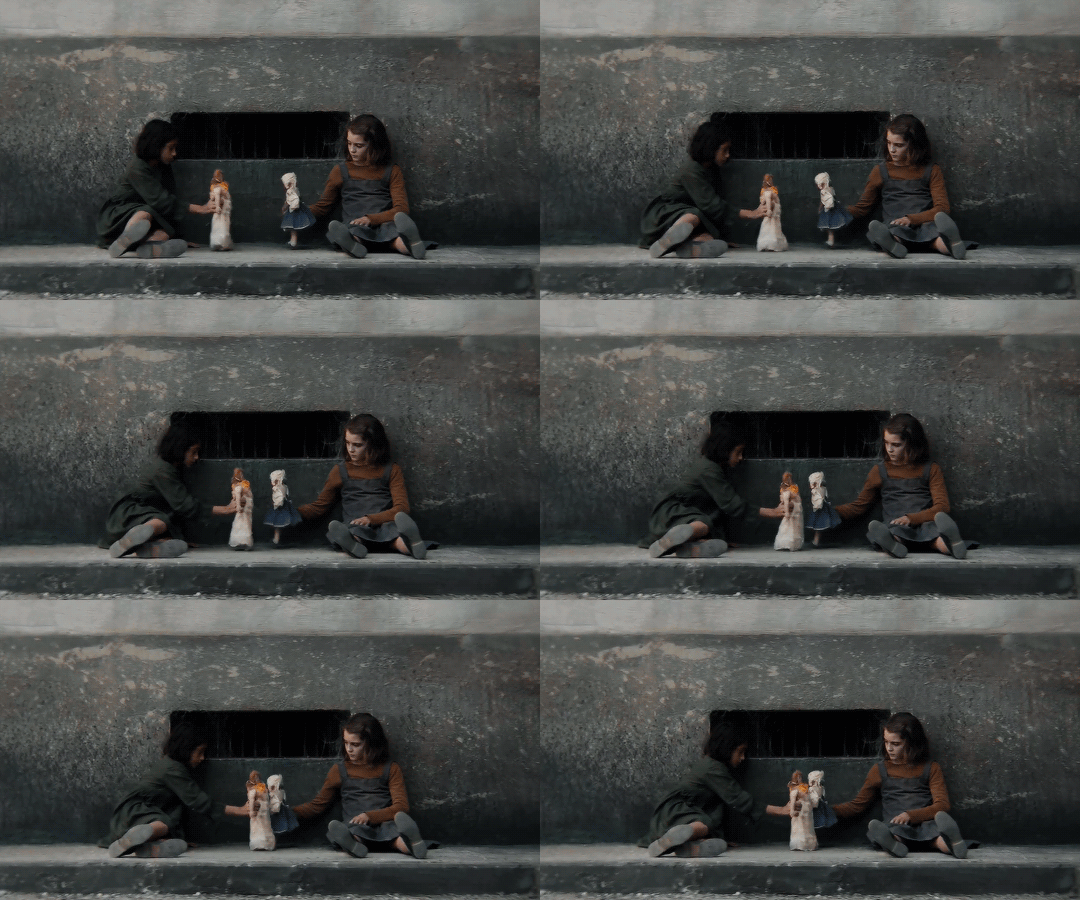

***
E si aspetta il seguito... chissà per quanti anni! Ne sono passati ormai sette da quando lessi per la prima volta questa meravigliosa serie. L'ultima stagione era quella che attendevo con più ansia, e il fatto che mi sia piaciuta da impazzire, quasi quanto il libro, mi ha fatto rendere conto di quanto io ami le storie senza lieto fine rispetto a quelle che invece ce l'hanno.
Quanto già emergeva dalla mia recensione, l'ho realizzato insomma quando tutte le mie amiche si lamentavano per le sventure di Lila e Lenù e per l'odioso finale. Io, che al contrario soffrivo con loro due tanto da non riuscire a sopportare persino un dolore che non mi apparteneva, ricevevo in tal modo la conferma della grandezza di quest'opera straordinaria.
Ciò detto, permettetemi alcuni commenti:
- Immense le attrici Irene Maiorino (Lila) e Anna Rita Vitolo (Immacolata Greco);
- In un mondo di Nino, Michele, Marcello, Stefano... tenetevi stretto Enzo!
- Infine, ovviamente: NINO SARRATORE OMM' E MERD!
Da dove iniziare? Una serie meravigliosa, che ho scelto di leggere perché ambientata nella città di Napoli, mio luogo di nascita, da cui sono tutt'ora costantemente attratta - quanto mi piacerebbe ritornarci! Al di là di ciò, comunque, i meriti dei romanzi sono altri.
Se "L'amica geniale" e "Storia del nuovo cognome" non mi avevano presa del tutto, poiché li ritenevo troppo "semplici" per meritare le cinque stelline (a me, si sa, piacciono quei libri in cui è difficile raccapezzarti), "Storia di chi fugge e di chi resta" e "Storia della bambina perduta" mi hanno travolta con innumerevoli colpi di scena e l'impatto con una realtà che si faceva via via più dura da affrontare. Era come se la vivessi assieme ai personaggi, e assieme a loro sognavo di cambiarla o quantomeno cercavo di inquadrarla sotto una luce differente, una che consentisse di sopportarla senza lasciarsi contaminare dalle sue storture.
Ognuno di essi, inoltre, per quanto numerosi fossero, vivi o morti che siano, mi sono rimasti nel cuore. Più di tutti, naturalmente, Elena e Lila, il cui legame va al di là di qualsiasi spiegazione razionale. Innumerevoli le volte in cui ho tentato invano di comprenderlo appieno, ancora di più quelle in cui ho sbraitato contro di loro, non approvandone le scelte e desiderando un esito diverso per le loro vite.
"C'era qualcosa di insostenibile nelle cose, nelle persone, nelle palazzine, nelle strade, che solo reinventando tutto come in un gioco diventava accettabile. L'essenziale, però, era saper giocare e io e lei, io e lei soltanto, sapevamo farlo."
"Nessuno ci capiva, solo noi due – pensavo – ci capivamo."
Ma, alla fine, ho compreso la vera bellezza della serie: si riesce ad accettare anche una prospettiva nient'affatto rosea, ma comunque realistica e ricca di piccole gioie a cui aggrapparsi per non naufragare nel periglioso mare della vita.
"Nelle favole si fa come si vuole e nella realtà si fa come si può."
***
Conclusasi la prima stagione della serie TV di Saverio Costanzo, non posso astenermi dal profondermi in lodi: fedelissima la trasposizione, spettacolari le attrici, un toccasana quel dialetto napoletano che dà al tutto una vividezza e genuinità senza eguali. E si aspetta con ansia (chissà per quanti mesi!) il seguito...
***
E si aspetta il seguito... chissà per quanti anni! Ne sono passati ormai sette da quando lessi per la prima volta questa meravigliosa serie. L'ultima stagione era quella che attendevo con più ansia, e il fatto che mi sia piaciuta da impazzire, quasi quanto il libro, mi ha fatto rendere conto di quanto io ami le storie senza lieto fine rispetto a quelle che invece ce l'hanno.
Quanto già emergeva dalla mia recensione, l'ho realizzato insomma quando tutte le mie amiche si lamentavano per le sventure di Lila e Lenù e per l'odioso finale. Io, che al contrario soffrivo con loro due tanto da non riuscire a sopportare persino un dolore che non mi apparteneva, ricevevo in tal modo la conferma della grandezza di quest'opera straordinaria.
Ciò detto, permettetemi alcuni commenti:
- Immense le attrici Irene Maiorino (Lila) e Anna Rita Vitolo (Immacolata Greco);
- In un mondo di Nino, Michele, Marcello, Stefano... tenetevi stretto Enzo!
- Infine, ovviamente: NINO SARRATORE OMM' E MERD!
July 23, 2020
Wow. I’m sad but also relieved to have finished this series, as I’ve stayed up so many late nights unable to put these down. I read this because Lynn said it was her favorite book series (hi Lynn) but she can’t even remember what happened — classic Lila, right??
Not even sure what to say about this series — I like the description of “angry Jane Austen” or like the olden days predecessor of Caroline Calloway. Gossip-y, fun, light, violent, dark, depressing. It captured feelings in a terrifyingly striking way — the unbounded love for a friend, fear and insecurity from trying to keep up, the passion and craze of falling in love, a slow and deep depression.... in many ways this series kind of terrified me. It’s not optimistic in many senses, as you watch all the lead women trapped in marriages, struggling with motherhood, experiencing violence, hurting and being hurt by each other. Doesn’t exactly paint a pretty picture of the future — is this the fate women are bound to??
I guess what I liked about it was how honest it felt in the descriptions of female friendship. I definitely don’t think I’ve read anything like it. How much you can love and admire someone, how that relationship ebbs and flows over time, how painful it can be too. And it was fun to read too, somehow.
The most boring part was a bunch of the political ramblings, but I just skimmed those.
Not even sure what to say about this series — I like the description of “angry Jane Austen” or like the olden days predecessor of Caroline Calloway. Gossip-y, fun, light, violent, dark, depressing. It captured feelings in a terrifyingly striking way — the unbounded love for a friend, fear and insecurity from trying to keep up, the passion and craze of falling in love, a slow and deep depression.... in many ways this series kind of terrified me. It’s not optimistic in many senses, as you watch all the lead women trapped in marriages, struggling with motherhood, experiencing violence, hurting and being hurt by each other. Doesn’t exactly paint a pretty picture of the future — is this the fate women are bound to??
I guess what I liked about it was how honest it felt in the descriptions of female friendship. I definitely don’t think I’ve read anything like it. How much you can love and admire someone, how that relationship ebbs and flows over time, how painful it can be too. And it was fun to read too, somehow.
The most boring part was a bunch of the political ramblings, but I just skimmed those.

November 7, 2018
La scomparsa di Raffaella Cerullo non sorprende né mette in allarme l’amica Elena Greco: pur trattandosi di una donna di ormai sessantasei anni, non è la prima volta che “Lila” si allontana sola da casa. Quando però si scopre che ogni possibile traccia è stata accuratamente cancellata – non si trovano né vestiti o paia di scarpe o anelli, né una sola fotografia, un biglietto, un documento o una mail, anche il computer è sparito – Elena (“Lenù”) comincia davvero a preoccuparsi; allora, nel tentativo di mettere ordine nei ricordi alla ricerca di qualche indizio, comincia a scrivere la storia della loro amicizia.
Prende corpo in questo modo un lungo racconto che copre un arco di sei decenni; dagli anni dell’infanzia vissuti nel cortile di un rione periferico di Napoli (quasi un mondo a parte, chiuso tra mura invisibili) e nelle aule di una scuola elementare del dopoguerra (1950) a quelli della disillusione, della solitudine e della vecchiaia. Sullo sfondo di agitazioni e fatti di cronaca salienti della vita italiana – in una società profondamente conservatrice, sempre affascinata da “viceré” e “gattopardi”, costantemente attratta da corsie preferenziali e scorciatoie di ogni genere – rivive l’amicizia “splendida e tenebrosa” tra Lila, cattiva e generosa, e Lenù, giudiziosa e pervasa dall’ossessione di piacere ed essere gradita. È un’amicizia scandita da incomprensioni e persino venata di rivalità, che si rinsalda e si allenta di continuo nel grigiore di una faticosa quotidianità e sotto la minaccia di eventi drammatici e cruenti.
Elena scrive con uno stile piano, quasi incolore, tuttavia efficace. Anche la struttura è semplice: a parte il prologo iniziale (flashforward) e alcuni flashback, la narrazione segue l’ordine cronologico degli avvenimenti. L’intreccio degli eventi e delle coincidenze è talvolta romanzesco ma i personaggi sono realistici: non ci sono “santi” né “eroi” e ciascuno prima o poi – in qualche misura – dimostra un minimo di umanità o, al contrario, insospettabili debolezze e ambiguità (compresa la narratrice, che non fa nulla per apparire simpatica o nascondere atteggiamenti meschini e contraddittori).
L'approfondimento psicologico dei personaggi è proporzionale all’intensità del rapporto che essi hanno con Elena, la quale, essendo parte della storia, può avere soltanto una visione parziale; perciò si trovano ad agire caricature quasi bidimensionali e figure un po’ stereotipate accanto a caratteri accuratamente delineati e personalità complesse.
Sembra non accadere mai nulla di decisivo, ma sotto traccia ogni cosa (persone, progetti, sentimenti, ambizioni) sembra trascinata da una forza irresistibile verso una destinazione incerta e oscura. Favorita da una scrittura semplice ma non banale, senza pause né incongruenze la lunga storia di Lila e Lenù corre verso l’epilogo; dopo l’ultima pagina resta il ricordo di una casa di ringhiera, di un cortile, di una palla che rimbalza, tanti volti di bambini, di persone e mille cose che non ci sono più, immagini sfocate, echi di un mondo svanito e mai dimenticato.
Prende corpo in questo modo un lungo racconto che copre un arco di sei decenni; dagli anni dell’infanzia vissuti nel cortile di un rione periferico di Napoli (quasi un mondo a parte, chiuso tra mura invisibili) e nelle aule di una scuola elementare del dopoguerra (1950) a quelli della disillusione, della solitudine e della vecchiaia. Sullo sfondo di agitazioni e fatti di cronaca salienti della vita italiana – in una società profondamente conservatrice, sempre affascinata da “viceré” e “gattopardi”, costantemente attratta da corsie preferenziali e scorciatoie di ogni genere – rivive l’amicizia “splendida e tenebrosa” tra Lila, cattiva e generosa, e Lenù, giudiziosa e pervasa dall’ossessione di piacere ed essere gradita. È un’amicizia scandita da incomprensioni e persino venata di rivalità, che si rinsalda e si allenta di continuo nel grigiore di una faticosa quotidianità e sotto la minaccia di eventi drammatici e cruenti.
Elena scrive con uno stile piano, quasi incolore, tuttavia efficace. Anche la struttura è semplice: a parte il prologo iniziale (flashforward) e alcuni flashback, la narrazione segue l’ordine cronologico degli avvenimenti. L’intreccio degli eventi e delle coincidenze è talvolta romanzesco ma i personaggi sono realistici: non ci sono “santi” né “eroi” e ciascuno prima o poi – in qualche misura – dimostra un minimo di umanità o, al contrario, insospettabili debolezze e ambiguità (compresa la narratrice, che non fa nulla per apparire simpatica o nascondere atteggiamenti meschini e contraddittori).
L'approfondimento psicologico dei personaggi è proporzionale all’intensità del rapporto che essi hanno con Elena, la quale, essendo parte della storia, può avere soltanto una visione parziale; perciò si trovano ad agire caricature quasi bidimensionali e figure un po’ stereotipate accanto a caratteri accuratamente delineati e personalità complesse.
Sembra non accadere mai nulla di decisivo, ma sotto traccia ogni cosa (persone, progetti, sentimenti, ambizioni) sembra trascinata da una forza irresistibile verso una destinazione incerta e oscura. Favorita da una scrittura semplice ma non banale, senza pause né incongruenze la lunga storia di Lila e Lenù corre verso l’epilogo; dopo l’ultima pagina resta il ricordo di una casa di ringhiera, di un cortile, di una palla che rimbalza, tanti volti di bambini, di persone e mille cose che non ci sono più, immagini sfocate, echi di un mondo svanito e mai dimenticato.
April 16, 2026
I just can't read any more... 128pages.
For me, this has dragged and I can't invest anymore time 😭.
The tone, the characters and the context/content. Nothing was working for me.
However, I do like this book cover and the colours used. One positive
For me, this has dragged and I can't invest anymore time 😭.
The tone, the characters and the context/content. Nothing was working for me.
However, I do like this book cover and the colours used. One positive
Read
November 4, 2025qué nos queda después de esto? esta es la forma justa en la que quiero leer relatos sobre amistad (contextualizando y teniendo en cuenta infinidad de intersecciones que empiezan en el feminismo y terminan en el uso del lenguaje más basto), dejando de lado a Hombres que intentan aproximarse a nuestro imaginario, desde ese modo de vivencia bárbaro, con el mero objetivo de hacerse propietarios de nuestros cuerpos. todas somos y seremos lenù y lila, al final es esto lo que realmente compartimos.
“fíjate lo que me había hecho: me había engañado, me había llevado por donde quería ella, desde el comienzo de nuestra amistad. durante toda la vida había contado su propia historia de rescate, usando mi cuerpo vivo y mi existencia” !!!!!!!! pelos de punta.
“fíjate lo que me había hecho: me había engañado, me había llevado por donde quería ella, desde el comienzo de nuestra amistad. durante toda la vida había contado su propia historia de rescate, usando mi cuerpo vivo y mi existencia” !!!!!!!! pelos de punta.

May 22, 2016
What is it about the narrative structure of some books that makes them impossible to put down? This series had that - all I wanted to do for a few weeks was just read these books at any spare moment. I needed to find out what was going to happen next, even if just to confirm what was already predictable. From a psychological standpoint I found the process of reading these books fascinating. They were violent, and painful, and heartbreaking, interleaved with moments of joyful relief. The unconditional bond between the characters yet their mutual love and hatred for each other was like a female friendship on steroids - why did they have to be so mean? Was their brutality toward each other and their loved ones just a natural product of the violence they witnessed in their neighborhood? The picture Ferrante painted of the world is more Hobbesian than the one I'd like to believe exists, and I can't say that I *enjoyed* reading these books, rather, they felt more like an addiction. In any case, I'm glad I'm done reading them and can move on with my life, and I'm glad for the reflection they inspired.
September 20, 2024
The beginning of my love affair with Elena Ferrante's books.
My Brilliant Friend: ★★★★
The Story of a New Name: ★★★★
Those Who Leave and Those Who Stay: ★★★★★
The Story of the Lost Child: ★★★★
My Brilliant Friend: ★★★★
The Story of a New Name: ★★★★
Those Who Leave and Those Who Stay: ★★★★★
The Story of the Lost Child: ★★★★
January 17, 2020
I found the first two books in the series enjoyable but as I slogged through the final two, I found myself less and less interested in all of the characters, particularly the 2 female protagonists and their most unappealing, toxic "friendship." It felt as though much was squeezed into the last 2 volumes in order to wrap things up, despite what was, for me, a very unsatisfying conclusion. The most valuable part of reading this series was the way it motivated me to take an inventory of the relationships in my life and steer clear of any that reminded me of those in these volumes!
Displaying 1 - 30 of 617 reviews