

What do you think?
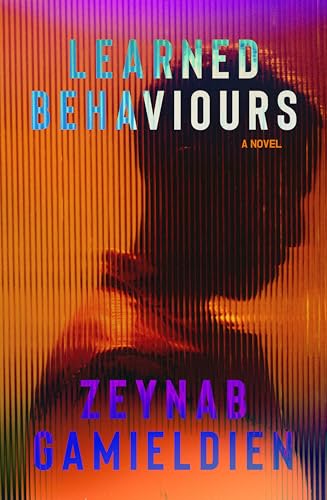
Learned Behaviours
The past is calling him home ...As a prospective barrister, Zaid Saban is on the cusp of achieving everything he has dreamed of. His social and professional world is far removed from his schoolyard days in the suburbs of western Sydney, even more far removed from the traumatic events of his final year of school in which his best friend, Hass, was arrested for murder.
Zaid thinks he has put all this behind him. But when Hass’s sister, Amira, finds him and asks him to read her brother’s diary, Zaid is pulled back to the very world he had left behind. Is it possible that Hass was innocent? As Amira and Zaid seek to solve the mystery of what happened all those years ago, Zaid is forced to confront the ugliness of the past and what it means for who he is today.
PRAISE FOR LEARNED BEHAVIOURS
‘a yarn that’s both a page-turner and a warm-hearted analysis of human nature, as humane as it is sophisticated’ – Readings Monthly
‘Compelling and pacy, it demonstrates an acute awareness of experiences of privilege and subordination, without being preachy.’ – Guardian
‘Storytelling at its most gripping, a gaze at its most unflinching... A mystery that twists the genre’s tropes to excavate injustices and the mythologies of guilt and innocence that fuel them—layer by layer, truth by uncomfortable truth.’ – Sara M Saleh, author of Songs for the Dead and the Living
‘A clear-eyed and deeply moving exploration of past injustice, privilege, and belonging. Zeynab Gamieldien lays bare what it is to inhabit two worlds in contemporary slipping in and out of your skin to navigate the spaces you are granted entry to and perpetually second-guessing the rules of admittance.’ – Dinuka McKenzie, author of The Torrent
‘Compelling, complex and even chilling. Learned Behaviours is a concentrated look into the murderous cycle of stereotypes. Yet, within its pages of crime and consequence lies a quiet defiance – the possibility of unlearning, reclaiming, and rupturing that very cycle. A thrilling and thought-provoking read.’ – Winnie Dunn, author of Dirt Poor Islanders
‘A compelling new novel filled with a genuine sense of mystery, set against a western Sydney backdrop.’– Amani Haydar, author of The Mother Wound
Zaid thinks he has put all this behind him. But when Hass’s sister, Amira, finds him and asks him to read her brother’s diary, Zaid is pulled back to the very world he had left behind. Is it possible that Hass was innocent? As Amira and Zaid seek to solve the mystery of what happened all those years ago, Zaid is forced to confront the ugliness of the past and what it means for who he is today.
PRAISE FOR LEARNED BEHAVIOURS
‘a yarn that’s both a page-turner and a warm-hearted analysis of human nature, as humane as it is sophisticated’ – Readings Monthly
‘Compelling and pacy, it demonstrates an acute awareness of experiences of privilege and subordination, without being preachy.’ – Guardian
‘Storytelling at its most gripping, a gaze at its most unflinching... A mystery that twists the genre’s tropes to excavate injustices and the mythologies of guilt and innocence that fuel them—layer by layer, truth by uncomfortable truth.’ – Sara M Saleh, author of Songs for the Dead and the Living
‘A clear-eyed and deeply moving exploration of past injustice, privilege, and belonging. Zeynab Gamieldien lays bare what it is to inhabit two worlds in contemporary slipping in and out of your skin to navigate the spaces you are granted entry to and perpetually second-guessing the rules of admittance.’ – Dinuka McKenzie, author of The Torrent
‘Compelling, complex and even chilling. Learned Behaviours is a concentrated look into the murderous cycle of stereotypes. Yet, within its pages of crime and consequence lies a quiet defiance – the possibility of unlearning, reclaiming, and rupturing that very cycle. A thrilling and thought-provoking read.’ – Winnie Dunn, author of Dirt Poor Islanders
‘A compelling new novel filled with a genuine sense of mystery, set against a western Sydney backdrop.’– Amani Haydar, author of The Mother Wound
297 pages, Kindle Edition
Published July 29, 2025
Ratings & Reviews
Friends & Following
Create a free account to discover what your friends think of this book!
Community Reviews
Displaying 1 - 30 of 40 reviews

June 14, 2026
Learned behaviours by Zeynab Gamieldien
⭐️⭐️⭐️
Read as apart of Libby Reads Ben Hobson's Bookclub 📚
This is Australian Author Zeynab's second novel. It is a slow burn story about passive racism, ethnic divide, complex family dynamics, prejudice and injustice. I really wanted more fir the ending however it was a bit ambiguous.
"The past is calling him home ... As a prospective barrister, Zaid Saban is on the cusp of achieving everything he has dreamed of. His social and professional world is far removed from his schoolyard days in the suburbs of western Sydney, even more far removed from the traumatic events of his final year of school in which best friend, Hass, was arrested for murder.
Zaid thinks he has put all this behind him. But when Hass's sister, Amira, finds him and asks him to read her brother's diary, Zaid is pulled back to the very world he had left behind. Is it possible that Hass was innocent? As Amira and Zaid seek to solve the mystery of what happened all those years ago, Zaid is forced to confront the ugliness of the past and what it means for who he is today."
Unfortunately I wanted more between Zaid and Amira, I left the characters were two dimensional and I wasn't really invested. However I enjoyed the slow unravelling of past secrets and the back and forth from present to past.
⭐️⭐️⭐️
Read as apart of Libby Reads Ben Hobson's Bookclub 📚
This is Australian Author Zeynab's second novel. It is a slow burn story about passive racism, ethnic divide, complex family dynamics, prejudice and injustice. I really wanted more fir the ending however it was a bit ambiguous.
"The past is calling him home ... As a prospective barrister, Zaid Saban is on the cusp of achieving everything he has dreamed of. His social and professional world is far removed from his schoolyard days in the suburbs of western Sydney, even more far removed from the traumatic events of his final year of school in which best friend, Hass, was arrested for murder.
Zaid thinks he has put all this behind him. But when Hass's sister, Amira, finds him and asks him to read her brother's diary, Zaid is pulled back to the very world he had left behind. Is it possible that Hass was innocent? As Amira and Zaid seek to solve the mystery of what happened all those years ago, Zaid is forced to confront the ugliness of the past and what it means for who he is today."
Unfortunately I wanted more between Zaid and Amira, I left the characters were two dimensional and I wasn't really invested. However I enjoyed the slow unravelling of past secrets and the back and forth from present to past.
December 21, 2025
Learned behaviours is Zeynab Gamielden’s second novel, set in Sydney’s working class migrant suburbs. It follows Zaid, and Hass, who are best friends and students at a local selective public school. The story alternates between their time in their final year of school, and many years later, when Zaid is a 30-something barrister trainee.
It appears to be a mystery - Hass is accused of killing schoolmate Becky, and commits suicide. Even at the start of the novel there are questions about whether he really did it.
However the book is really a coming of age story, and a comment on class, privilege, racism and the impact of our upbringing and schooling on our later years. I definitely enjoyed it, but I noticed some details that didn’t make complete sense to me:
- Tapey is frequently described as gentle, but Zaid is best friends with Hass, and later Amira, who are from a much poorer family, and who have violent older brothers. It’s true they have Islam in common, but is this enough?
- In the same vein, Zaid’s sister Iman also married an abusive man in London. Why does she do this, if there’s no family history of it? Why doesn’t she ask her family for help sooner?
- Hass commits suicide after being accused of killing Becky. It’s true he wouldn’t have had money for legal representation, and his older brothers’ crimes might make him look guilty. But why does he commit suicide at that point, and not wait to fight his case (perhaps with help of Legal Aid) if he is in fact innocent? Is the suicide really about the criminal accusation or about the betrayal by Zaid?
- Zaid betrays Hass due to jealousy - of his academic success and possibly his relationship with Becky. But the book suggests this is the first time he does this after a friendship that spans many years. Why does he suddenly throw the friendship away like this? He has been aware of Hass’ ability for some time - is it really so hard to have him recognised even once? Is Becky the first time Hass has had a friend apart from Zaid? Surely not?
- Mr Tanner is depicted as inappropriate with his students at times, and we later find out he has been abusing Becky. Do the other girls not already know this? Is Becky the only one who Mr Tanner abuses? Why is Hass the first person she has told? Why doesn’t Mr Tanner have a worse reputation at the school, and why does Ms Gregory not suspect more/ do more at the time?
It appears to be a mystery - Hass is accused of killing schoolmate Becky, and commits suicide. Even at the start of the novel there are questions about whether he really did it.
However the book is really a coming of age story, and a comment on class, privilege, racism and the impact of our upbringing and schooling on our later years. I definitely enjoyed it, but I noticed some details that didn’t make complete sense to me:
- Tapey is frequently described as gentle, but Zaid is best friends with Hass, and later Amira, who are from a much poorer family, and who have violent older brothers. It’s true they have Islam in common, but is this enough?
- In the same vein, Zaid’s sister Iman also married an abusive man in London. Why does she do this, if there’s no family history of it? Why doesn’t she ask her family for help sooner?
- Hass commits suicide after being accused of killing Becky. It’s true he wouldn’t have had money for legal representation, and his older brothers’ crimes might make him look guilty. But why does he commit suicide at that point, and not wait to fight his case (perhaps with help of Legal Aid) if he is in fact innocent? Is the suicide really about the criminal accusation or about the betrayal by Zaid?
- Zaid betrays Hass due to jealousy - of his academic success and possibly his relationship with Becky. But the book suggests this is the first time he does this after a friendship that spans many years. Why does he suddenly throw the friendship away like this? He has been aware of Hass’ ability for some time - is it really so hard to have him recognised even once? Is Becky the first time Hass has had a friend apart from Zaid? Surely not?
- Mr Tanner is depicted as inappropriate with his students at times, and we later find out he has been abusing Becky. Do the other girls not already know this? Is Becky the only one who Mr Tanner abuses? Why is Hass the first person she has told? Why doesn’t Mr Tanner have a worse reputation at the school, and why does Ms Gregory not suspect more/ do more at the time?
This entire review has been hidden because of spoilers.
June 21, 2026
Complex. Compelling. Clear-eyed.
'As Amira and Zaid seek to solve the mystery of what happened all those years ago, Zaid is forced to confront the ugliness of the past and what it means for who he is today.'
'As Amira and Zaid seek to solve the mystery of what happened all those years ago, Zaid is forced to confront the ugliness of the past and what it means for who he is today.'
December 28, 2025
I enjoyed the premise. Found it interesting that Zaid never had to face consequences for his actions lol. I also couldn’t understand why fingers were pointed at Vinnie when he had one moment of anger at Becky?
I think Zaid needs to do some self reflection on his attachment issues. Hass is allowed to have more than one friend!
Also justice for Emily for being a good person to Zaid and Zaid treating her like shit.
The more I write this review, the more I really dislike Zaid
I think Zaid needs to do some self reflection on his attachment issues. Hass is allowed to have more than one friend!
Also justice for Emily for being a good person to Zaid and Zaid treating her like shit.
The more I write this review, the more I really dislike Zaid
This entire review has been hidden because of spoilers.

July 12, 2026
This was more a 3.75, but not quite a 4 for me. That said, it was much better read than The Scope of Permissibility. I didn’t much like Zaid either, but I found him far more intriguing than the characters from The Scope of Permissibility.
As a whole, I see what Gamieldien is trying to do. I appreciate the topics being spoken about and her writing as a whole. I enjoyed the social commentary and the setting, especially with some insight into the dynamics being commented on, but I didn’t quite find its conclusion to hit a satisfying note. I understand that the ending is supposed to be open ended and somewhat inspiring and I really do appreciate that. We don’t always get the answers we seek. I think part of it stems from my frustration with Zaid and the moments where his characterisation flickers in the light of this actions. Also how much some of the other characters felt like cardboard cutouts propped up to lead him to certain conclusions. Another part of it stems from being annoyed as I watch him coming to realisations at thirty-something that I’ve processed in my teens and it feeling a lot like watching a man discover empathy… (am I just a hater…?) I did feel like his journey was shaping up really well but it sort of fell apart towards the end for me, with commentary racing a little beyond the character and landing just a little too short.
As a whole, I see what Gamieldien is trying to do. I appreciate the topics being spoken about and her writing as a whole. I enjoyed the social commentary and the setting, especially with some insight into the dynamics being commented on, but I didn’t quite find its conclusion to hit a satisfying note. I understand that the ending is supposed to be open ended and somewhat inspiring and I really do appreciate that. We don’t always get the answers we seek. I think part of it stems from my frustration with Zaid and the moments where his characterisation flickers in the light of this actions. Also how much some of the other characters felt like cardboard cutouts propped up to lead him to certain conclusions. Another part of it stems from being annoyed as I watch him coming to realisations at thirty-something that I’ve processed in my teens and it feeling a lot like watching a man discover empathy… (am I just a hater…?) I did feel like his journey was shaping up really well but it sort of fell apart towards the end for me, with commentary racing a little beyond the character and landing just a little too short.
July 7, 2026
The best book I've read in the last 12 months.
It's a murder mystery, but also an exploration of guilt, aspiration and ethics. The anti-hero, Zaid, is smart and ambitious, but he's also very naive. He's desperately trying to leave the past behind him, doing everything he can to fit in with the privileged people he works with as a trainee barrister,
but his disadvantaged ethnic background keeps jumping back out at him. The casual racism and discrimination that he faces at work is very obvious, but when he's forced to look back at his school days, he sees that it existed there as well. Worse, looking back at his time at school (a fictional boys' school that could be anywhere from Canterbury Bankstown to Fairfield in Sydney), he realises that compared to his peers, he was actually one of the more privileged students. His best friend Hass, who came from a home of domestic violence and crime, was written off by most of his teachers, even though Zaid knew he was very gifted. But at the time, Zaid didn't even realise that Hass had so much to contend with in his life before he could even make it to school.
There's so much more to this book -- family, friendships, betrayal and love. Other reviewers have criticised Zaid's character as shallow, but I think the opposite. Zaid is an everyman who is still learning about how to be the best person he can be. Unlike Hass, whose ambition in life was 'to be a good person', Zaid is still learning what's important in life and what isn't. Like me (and maybe a lot of others), he'll still be working on this for the rest of his life.
Congratulations Zeynab Gamieldien, I loved this book!
It's a murder mystery, but also an exploration of guilt, aspiration and ethics. The anti-hero, Zaid, is smart and ambitious, but he's also very naive. He's desperately trying to leave the past behind him, doing everything he can to fit in with the privileged people he works with as a trainee barrister,
but his disadvantaged ethnic background keeps jumping back out at him. The casual racism and discrimination that he faces at work is very obvious, but when he's forced to look back at his school days, he sees that it existed there as well. Worse, looking back at his time at school (a fictional boys' school that could be anywhere from Canterbury Bankstown to Fairfield in Sydney), he realises that compared to his peers, he was actually one of the more privileged students. His best friend Hass, who came from a home of domestic violence and crime, was written off by most of his teachers, even though Zaid knew he was very gifted. But at the time, Zaid didn't even realise that Hass had so much to contend with in his life before he could even make it to school.
There's so much more to this book -- family, friendships, betrayal and love. Other reviewers have criticised Zaid's character as shallow, but I think the opposite. Zaid is an everyman who is still learning about how to be the best person he can be. Unlike Hass, whose ambition in life was 'to be a good person', Zaid is still learning what's important in life and what isn't. Like me (and maybe a lot of others), he'll still be working on this for the rest of his life.
Congratulations Zeynab Gamieldien, I loved this book!

August 21, 2026
‘Zaid couldn't even say that he was uncomfortable here because he was not white, because Kruti was not white either and Lara had mentioned a Chinese tiger mother who was an oncologist. But he felt the same weariness from earlier engulf him again. The correct colour here was not white but the red and yellow and green of banknotes. In London he had waded through layers of unspoken behavioural codes entrenched through centuries of gentry and underclasses, but here in Sydney the rules were simpler: do you live in the right suburb, or do you not? It was a question that had preoccupied him and Noreen when planning for their future. They had understood the stigma of The Area instinctively. But Emily and her friends wouldn't have had to ask themselves such a question. They had been born on the side of the road that Zaid was endeavouring to reach.’

September 10, 2025
A long ago murder lies unscrutinized following the suicide of the accused. A murder mystery in such a unique revisionist form, with the need to right wrongs, discover truths, and maybe find themselves in their examining of the past.
A young professional barrister is visited in his office one Friday afternoon by the sister of his best friend from high school. She wants to review the traumatic past of their finals weeks at school, that led to the demise of her brother. He has been trying to live as far away from those memories, and that life and personal history, as he can as he seeks to climb the career ladder.
Tales of his teenage self, those final months of schooling and the culmination of events that shaped him. Zaid faces a reckoning he has not allowed himself to consider in all this time. Until now.
High school in Western Sydney, with all the labels and reputations, the expectations, good and bad, placed upon each young person, is a brutal place. Trying to be yourself, make friends, and be somebody is a fesa stacked against kids, right from the start.
The burden of expectations, reputations, unfair judgements and assumptions, and the unfair challenge of battling those narratives, as well as the usual quest for good marks, ambitious dreams, and the hope of friendship, all form this mix of much looking back, and re-examining.
Such a problematic character, Zaid is difficult to like, and yet a compelling creation to move through this quagmire of emotions, memories, and confronting personal truths.
A book to challenge assumptions and postcode tropes, and an intriguing set of histories and present to form an engaging read.
A young professional barrister is visited in his office one Friday afternoon by the sister of his best friend from high school. She wants to review the traumatic past of their finals weeks at school, that led to the demise of her brother. He has been trying to live as far away from those memories, and that life and personal history, as he can as he seeks to climb the career ladder.
Tales of his teenage self, those final months of schooling and the culmination of events that shaped him. Zaid faces a reckoning he has not allowed himself to consider in all this time. Until now.
High school in Western Sydney, with all the labels and reputations, the expectations, good and bad, placed upon each young person, is a brutal place. Trying to be yourself, make friends, and be somebody is a fesa stacked against kids, right from the start.
The burden of expectations, reputations, unfair judgements and assumptions, and the unfair challenge of battling those narratives, as well as the usual quest for good marks, ambitious dreams, and the hope of friendship, all form this mix of much looking back, and re-examining.
Such a problematic character, Zaid is difficult to like, and yet a compelling creation to move through this quagmire of emotions, memories, and confronting personal truths.
A book to challenge assumptions and postcode tropes, and an intriguing set of histories and present to form an engaging read.
October 3, 2025
2.5. Murder mystery, cautionary tale, love story? Left strong impression of experience of racism and classism for Zaid pursuing law career. But found the murder mystery painfully drawn out, with Amira drip feeding Zaid notes from Hass's diary (her brother, Zaid's best friend, accused murderer). As for Amira forgiving Zaid's betrayal of her brother ... hmmm.
June 19, 2026
I wanted to love this but painfully predictable coming from someone who rarely successfully guesses a plot twist. Interesting themes regarding race and class but only superficially explored at best 😭

June 30, 2026
3.85⭐️

June 9, 2026
Started strong as a mystery but found the ending unsatisfying. Enjoyed insights into parts of Sydney I know nothing about.
August 24, 2025
.....📚 𝑩𝒐𝒐𝒌 𝑹𝒆𝒗𝒊𝒆𝒘 📚.....
Learned Behaviours by Australian author Zeynab Gamieldien’s is a gripping novel that masterfully weaves together a murder mystery, a love story, and a coming-of-age narrative. This compelling novel delivers a sharp, nuanced commentary on race, class, privilege, and identity in contemporary Australia.
As a prospective barrister, Zaid Saban is on the cusp of achieving everything he has dreamed of. His social and professional world is far removed from his schoolyard days in the suburbs of western Sydney, even more far removed from the traumatic events of his final year of school in which his best friend, Hass, was arrested for murder.
Zaid thinks he has put all this behind him. But when Hass’s sister, Amira, finds him and asks him to read her brother’s diary, Zaid is pulled back to the very world he had left behind. Is it possible that Hass was innocent? As Amira and Zaid seek to solve the mystery of what happened all those years ago, Zaid is forced to confront the ugliness of the past and what it means for who he is today.
What unfolds is a layered investigation not just into the crime, but into the social structures and personal histories that shaped it.
This story doesn't easily fit into a genre. Whilst it does look back on an old crime, it's more a story of connection and a social commentary on the intimate struggles of identity and the resounding reverberations of cultural history. Zeynab Gamieldien exposes the reality of living between two worlds in modern Australia, where you’re constantly adjusting to fit into spaces you’re allowed into, all while questioning whether you truly belong and what it takes to be let in. This is one I'll be thinking about for a while.
.
.
.
.
Thank you @ultimopress for my copy in exchange for an honest review.
.
.
.
Learned Behaviours by Australian author Zeynab Gamieldien’s is a gripping novel that masterfully weaves together a murder mystery, a love story, and a coming-of-age narrative. This compelling novel delivers a sharp, nuanced commentary on race, class, privilege, and identity in contemporary Australia.
As a prospective barrister, Zaid Saban is on the cusp of achieving everything he has dreamed of. His social and professional world is far removed from his schoolyard days in the suburbs of western Sydney, even more far removed from the traumatic events of his final year of school in which his best friend, Hass, was arrested for murder.
Zaid thinks he has put all this behind him. But when Hass’s sister, Amira, finds him and asks him to read her brother’s diary, Zaid is pulled back to the very world he had left behind. Is it possible that Hass was innocent? As Amira and Zaid seek to solve the mystery of what happened all those years ago, Zaid is forced to confront the ugliness of the past and what it means for who he is today.
What unfolds is a layered investigation not just into the crime, but into the social structures and personal histories that shaped it.
This story doesn't easily fit into a genre. Whilst it does look back on an old crime, it's more a story of connection and a social commentary on the intimate struggles of identity and the resounding reverberations of cultural history. Zeynab Gamieldien exposes the reality of living between two worlds in modern Australia, where you’re constantly adjusting to fit into spaces you’re allowed into, all while questioning whether you truly belong and what it takes to be let in. This is one I'll be thinking about for a while.
.
.
.
.
Thank you @ultimopress for my copy in exchange for an honest review.
.
.
.
December 24, 2025
This book was a brilliant one. At first it looked like a murder mystery, then a story of triumph against odds, and loss of loved ones, then a slow burn thriller. Finally, a critical look at race, class, privilege and intersection of all of them.
I found it as a fascinating read.
I found it as a fascinating read.

December 8, 2025
The Sydney settings in this excellent novel - Canterbury-Bankstown area, the business district of Martin Place, and the eastern and northern beach suburbs – collectively illuminate a collision of worlds that’s not frequently portrayed in crime fiction.
Barrister-in-training Zaid Saban grew up in ‘The Area’ in western Sydney and is struggling to fit into a Martin Place law firm. An early career lawyer, he’s trying to impress the partners. He’s smart, intuitive and likeable, but those gifts don’t guarantee him an accurate read of the social nuances. Zaid is always ‘on’: analysing the people and places around him. From board room meetings to social gatherings at a colleague’s beach house, his experience is nettled with socially awkward moments in which he feels like he’s saying or doing the wrong thing. Adding to the pressure is his lack of money. Trainee barristers have inconsistent payment schedules, and for those without savings or parental help, it’s difficult.
One day Amira, a woman he knows from high school, turns up at the office. She believes that an innocent man was blamed for the murder of a fellow student when they were teenagers and she needs his help. This is the catalyst for a gripping mystery that weaves between the past and the present, unravelling a web of secrets, hidden trauma, betrayal and misplaced loyalties in the pursuit of justice.
What makes this novel so interesting and satisfying is not just the fascinating conversations that unfold over bubble tea, and in Zaid's family home, and at work, but the scope of backstories that include apartheid in District 6, South Africa, the issue of reparations, and domestic violence in London. Learned Behaviours also offers a blistering assessment of the ways teachers can elevate or devastate a student’s potential, a situation heightened when a family is unable to provide support for that student.
Swimming is a clever metaphor in this book. Zaid can float, but he can’t swim, and it’s a useful statement about white privilege. Despite working hard and having a prestigious degree, Zaid’s ability to navigate a legal career is challenged by not having the same generational advantages, education and lifestyle of the other young lawyers. Swimming reveals geographic disadvantages in a city like Sydney, where kids don’t have equal access to swimming pools and the ocean, and swimming lessons. Underlying this social commentary is a beautiful creek near Zaid’s school that is a place of respite and of tragedy.
Zaid is an observant and compelling narrator, and combined with Amira’s sharp, heartfelt and funny perspective, Learned Behaviours is a brilliant literary mystery, and a thought-provoking commentary on race and class in contemporary Australia.
Barrister-in-training Zaid Saban grew up in ‘The Area’ in western Sydney and is struggling to fit into a Martin Place law firm. An early career lawyer, he’s trying to impress the partners. He’s smart, intuitive and likeable, but those gifts don’t guarantee him an accurate read of the social nuances. Zaid is always ‘on’: analysing the people and places around him. From board room meetings to social gatherings at a colleague’s beach house, his experience is nettled with socially awkward moments in which he feels like he’s saying or doing the wrong thing. Adding to the pressure is his lack of money. Trainee barristers have inconsistent payment schedules, and for those without savings or parental help, it’s difficult.
One day Amira, a woman he knows from high school, turns up at the office. She believes that an innocent man was blamed for the murder of a fellow student when they were teenagers and she needs his help. This is the catalyst for a gripping mystery that weaves between the past and the present, unravelling a web of secrets, hidden trauma, betrayal and misplaced loyalties in the pursuit of justice.
What makes this novel so interesting and satisfying is not just the fascinating conversations that unfold over bubble tea, and in Zaid's family home, and at work, but the scope of backstories that include apartheid in District 6, South Africa, the issue of reparations, and domestic violence in London. Learned Behaviours also offers a blistering assessment of the ways teachers can elevate or devastate a student’s potential, a situation heightened when a family is unable to provide support for that student.
Swimming is a clever metaphor in this book. Zaid can float, but he can’t swim, and it’s a useful statement about white privilege. Despite working hard and having a prestigious degree, Zaid’s ability to navigate a legal career is challenged by not having the same generational advantages, education and lifestyle of the other young lawyers. Swimming reveals geographic disadvantages in a city like Sydney, where kids don’t have equal access to swimming pools and the ocean, and swimming lessons. Underlying this social commentary is a beautiful creek near Zaid’s school that is a place of respite and of tragedy.
Zaid is an observant and compelling narrator, and combined with Amira’s sharp, heartfelt and funny perspective, Learned Behaviours is a brilliant literary mystery, and a thought-provoking commentary on race and class in contemporary Australia.

August 12, 2025
To describe Learned Behaviours as a crime novel feels crass because the story is far more sophisticated, restrained and introspective than the genre implies. Zeynab Gamieldien’s expertly woven mystery novel doubles as an unflinching and defiant interrogation of class and racial marginalisation in Sydney. Her searing depiction of the way class power operates to alienate the disenfranchised is tempered with her compassion and respect for those victimised by it — this is not a murder mystery that dehumanises the death central to its plot. Zaid’s past and his reckoning with his present will leave some uncomfortable, others seen. I read almost all of it in one sitting, and as someone who grew up in western Sydney and now lives elsewhere, working in a profession that is largely white and which class plays a major role in success, it was deeply resonant.
(These review is an excerpt from my book column with Missing Perspective.)
(These review is an excerpt from my book column with Missing Perspective.)

February 23, 2026
An enticing mix of murder mystery and coming-of-age tale, Zeynab Gamieldien’s Learned Behaviours (2025) is a literary fiction novel. Zaid Saban is beginning his career as a barrister when Amira, the sister of his schoolboy friend, attends his chambers. Amira has found her brother Hass’s school diary, and together with Zaid, they read it to make sense of the tragedy years earlier. The narrative switches back and forth between the boys' past friendship and current-day family struggles in the western Sydney suburbs. Can Amira and Zaid discover what happened and who is responsible for the murder? An engaging multicultural story of confronting the dark past and its implications for today, makes for a four and a half star read rating. As always, the opinions herein are totally my own, freely given and without any inducement.

August 8, 2025
Learned Behaviours is a compelling mystery that delves deep into issues of privilege, class, and racial dynamics. Through a tightly woven plot, the story unravels secrets and tensions within a seemingly ordinary community, revealing the complexities beneath the surface. The characters are nuanced and the writing sharp, offering a thought-provoking exploration of social inequalities wrapped in a suspenseful narrative. A powerful read for those who appreciate mysteries with meaningful social commentary.

September 17, 2025
Set in Sydney the story follows a young man coming to terms with his past. He comes from the Western suburbs, is a man of colour and Islamic. He is now learning to be a barrister and has buried his background. However a young woman appears and asks for his help in deciphering a diary of her brother’s. Her brother had been his best friend but was accused of murder and committed suicide. The book moves between the past and present and addresses the class system and racism of Australia as the young man engages more and more with his own history. Interesting read

September 8, 2025
4.5 Well written and engrossing. An exploration of racism, class, stereotyping, privilege, relationships, family and expectations set in Western Sydney. Told in alternating narratives of the present and the past - the final years of school and the events that unfolded at that time for Zaid, the protagonist and his circle, and the reverberations and implications for his present as a young barrister.

Read
October 30, 2025read to see how one life-changing event can touch so many lives. solid debut with some plot points that I wish were given more attention or space to breathe. felt like somewhere in-between a YA and adult fiction because of the nature of the flashbacks to 'then' and moving back to the 'now'.
I do wish we got to see the story from Hass' perspective, not that Zaid wasn't compelling but it was very much looking from the outside in.
I do wish we got to see the story from Hass' perspective, not that Zaid wasn't compelling but it was very much looking from the outside in.

June 24, 2026
[Audiobook]
Enjoyed this a lot. The characters developed nicely as the plot evolved, whilst the Sydney descriptions and events provided solid anchors to date the story.
The ending is likely controversial, but after initial disappointment, my view is now positive. The ending is the final illustration of the main character’s struggles. It leaves hope, but also left me thinking “what would happen now”. Good stuff.
Shoutout to the narrator who brought the story to life magnificently.
Enjoyed this a lot. The characters developed nicely as the plot evolved, whilst the Sydney descriptions and events provided solid anchors to date the story.
The ending is likely controversial, but after initial disappointment, my view is now positive. The ending is the final illustration of the main character’s struggles. It leaves hope, but also left me thinking “what would happen now”. Good stuff.
Shoutout to the narrator who brought the story to life magnificently.
This entire review has been hidden because of spoilers.

September 1, 2025
Coming of age novel set in contemporary south-west Sydney, offering a cultural viewpoint different to other novels I have read that are set in Sydney. My local public library attached a genre sticker on the spine indicating it was a detective style novel - nope. There is a crime but this novel is about how the characters are affected by it, not really about the solving of a mystery.
March 2, 2026
Things in this book for me were not pluasible.
The attaining of a a lw degree and confronting classism and racism is sadly no surprise even in a so-called egalitarian country such as Australia.
Whilst growing up in sydney I am not privy to the macchinations of western sydney but the issues that are reveaaled are pertinent.
The 'murder' part of the novel was VERY drawn out.
The attaining of a a lw degree and confronting classism and racism is sadly no surprise even in a so-called egalitarian country such as Australia.
Whilst growing up in sydney I am not privy to the macchinations of western sydney but the issues that are reveaaled are pertinent.
The 'murder' part of the novel was VERY drawn out.

August 3, 2026
This was an interesting consideration of the question of privilege. It was a little heavy handed and relied on cliches but did not stoop to overt nastiness.
There was a bit of a disconnect between the reality of Zaid's legal training and his willingness to indulge in rampant speculation, but it wasnt a significant obstacle.
Not enough books written by Australian lawyers, so that was a plus.
There was a bit of a disconnect between the reality of Zaid's legal training and his willingness to indulge in rampant speculation, but it wasnt a significant obstacle.
Not enough books written by Australian lawyers, so that was a plus.

Did Not Finish
September 12, 2026This started off well and I thought I was going to enjoy but by page 97 I was fed up with the slow drip-feed of the plot which felt stretched out to allow for repetitive commentary about class and racism, none of it original or insightful. I didn't want to read 200 pages more of it.
I don't rate books I don't finish.
I don't rate books I don't finish.
July 1, 2026
captivating storyline that kept me engaged and lead to a one nighter to finish the book cause I couldn’t put it down! Despite being fiction the setting of early 2000s Australian summer felt like de ja vu and had me reminiscing. 10/10
August 11, 2026
gripping and poignant in equal measure, this weaves its study of privilege, guilt and regret around a propulsive uncovering of the past. occasionally heavy handed (which itself is excused by its hyperaware narrator) but an excellent read
8/10
8/10

August 26, 2025
This validates so many of my feelings about working in corporate Sydney. I fear I see too much of myself in Zaid.
October 18, 2025
Fantastic read… couldn’t put it down.
Displaying 1 - 30 of 40 reviews