The subject of this book is the formation of Western Europe from the late 10th to the early 13th century. During these years the economic face of Europe and its position in the world were transformed. Civilization, as we understand it today, was born. Although the period witnessed great historical events, such as the capture of Jerusalem by the Crusaders in 1099 and of Constantinople by their successors in 1204, the most significant events are often the obscure ones and the most significant utterances are often those of men withdrawn from the world and speaking to the very few.
Sir Richard William Southern was a noted English medieval historian, based at the University of Oxford. He was educated at the Royal Grammar School, Newcastle, and at Balliol College, Oxford, where he graduated with a first-class honours degree in history. At Oxford, Southern's mentors were Sir Maurice Powicke and Vivian Hunter Galbraith. He was a fellow of Balliol from 1937 to 1961 (where he lectured alongside Christopher Hill), Chichele Professor of Modern History at Oxford from 1961 to 1969, and president of St John's College, Oxford, from 1969 to 1981. He was president of the Royal Historical Society from 1969 to 1973, and was knighted in 1974.
This is certainly an elegant summation, equally I find it idiosyncratic and highly personal which is no bad thing. Maybe though if you see the title you might be expecting something other than what you get, what Southern is most interested in is the change of mentalities from Epic to Romance as the last chapter has it, the addition of emotional intensity in religious life, first in fairly restricted circles then from St. Anselm to Bernard of Clairvoux, to the Franciscans, and from them to all sorts of people.
On page 17 we are told "For a thousand years Europe has been The chief centre of political experiment, economic expansion & intellectual discovery in the world. It gained this position during the period with which we are concerned; it is only losing it in our own day. ", which makes one think that that Southern might be looking for, or looking at the causes of European political power and what was to make Europe distinctive. But he isn't, or maybe he does if he believed that European distinctiveness was rooted in certain forms of intellectual life for a few people in monasteries and in and around certain Cathedral towns.
Further it turns out that the Middle Ages he is interested in are not strictly speaking European, what he addresses himself to are mostly Francophone areas of Europe - though his examples work somewhat against his stated intentions in places. In this way I found the book big in concept, but narrow in execution. In time that Romantic mindset with its emotional religiosity was to escape Francophone regions and was to be found in many other places, but equally we might feel that Epic and Romance are two complementary mindsets that have possibly long been around, in the Iliad and the Odyssey for instance and that what we see in Francophone intellectual circles in the 11th and 12th is not an invention but a shift, he himself tells us that stories stressing an emotional connection to the Virgin Mary that can save sinners were already present in the Greek speaking world long before they were taken seriously by Latin speaking ecclesiastics. He is interesting throughout on the impact of Muslim intellectual culture which provides the Aristotle and commentaries upon him that drive a new interest in logic in the cathedral schools from whence spring generations of prominent churchmen and government officials .
I felt that Southern over emphasised the bottom up growth of Papal power and authority and later of violence against minorities. He leaves the reader with the impression that the Papacy developed into a major institution purely because churches in particular but authorities generally needed some kind of supreme court to which they could appeal, completely ignoring that the Papacy was at the same time very deliberately pursing a top down pursuit of power in pushing for clerical celibacy and in the Investiture crisis. Equally blaming 'the people' for violence against minorities is a bit of hand washing, R.I. Moore in The Formation of a Persecuting Society: Power and Deviance in Western Europe, 950 - 1250 is far more fertile reading here, but possibly not before breakfast if you are of a gentle disposition.
There are bits of this book which I really liked for instance the discussion of the formation of the feudal duchy of Anjou and the last chapter, but for me it is a read and release, I had the feeling in places that Southern saw the the 11th and 12th centuries as the beginning of an evolutionary process that would culminate in the Oxbridge Tutorial and the senior common room and I wondered if this contributed much, if anything, to European distinctiveness, I had the suspicion that much of this intellectual culture and its relation to popular culture might well have been very similar to other regions beyond Europe with monastic traditions too.
1st review From memory a rather top down view of the middle ages, heavily slanted towards the doings of the ecclesiastical hierarchies. To some extent this reflects the sources, but to an extent also the habits of the scholarship of Southern's day. I'd be inclined to recommend Bartlett's The Making of Europe instead as a more general and wide ranging book.
An acknolwedged classic of european history, R.W. Southern's "The Middle Ages" focuses on the period between 900 and 1200 A.D. His geopgraphic focus is mostly northern france, with some asides to Germany, Italy, Southern France and England. His main thesis is the idea that this period saw the emergence of a personal devotion to faith via monasticism that in turn prefigured the rise of invdividual identity in western culture.
No small accomplishment, that thesis, and no small accomplishment this book. Southern's style of writing is charming and concise. You don't get the thesis till the last chapter, but the preceding chapters are entertaining, enjoyable reading.
The author who turned me on to this book was the recently deceased Norman F. Cantor in his dishy "The Making of the Middle Ages", which I also recommend for any one who is reading on this subject outside the academy. Cantor's main point was to show how the empire building mind set of the "Annales" school of the history of the middle ages (which concentrates its focus on the role of the peasant in the society of the middle ages), had deprived other "schools" of much needed oxygen. Well, he didn't put it that way exactly, but that's what he said.
Cantor, of course, studied under Southern, so the bias is there. None the less, having read several books from the Annales school and none from Southern and his progeny, I would have to say that the two compliment one another (and Southern cites Marc Bloch, the much revered founder of Annales school).
So read this book if you want to learn more about the history of the middle ages and the growth of invdividualism in the west. You won't be dissapointed.
After this brief appearance he vanished from history, and the whole incident might be dismissed as one of those inexplicable approaches of worlds moving in different orbits and disturbing for a moment the even tenor tenor of their course, were it not for what followed.
My reading progression was routinely distracted last week. This is customary, hardly an aberration. A return to Chinese literature was a possibility. The killings at Charlie Hebdo changed that. I really appreciate Dr. Southern's work. I'm sure there have been successive waves of disputation and engagement since its publication. This remains a brilliant portrait of an age. The 11th and 12th Centuries were brazen efforts at stability. Augustine, Anselm and Boethius appear to be the heroes in this text. I also appreciated Southern's characterization of the opposition between Byzantines and the Latin West: the obscure rituals of the former appearing to the latter like a visit to the Kremlin. There is a subsequent explanation of the Fourth Crusade which appears to be an attempted justification of the sacking of Constantinople. That aside this is a wonderful text.
This is a well written and interesting book, a pleasure to read and illuminating, with many small gems along the way.
It is a commentary really on cultural changes over the tenth, eleventh and twelfth centuries. Its first section concerns the opening up of Western European minds to the existence of very different cultures beyond their boundaries. There was a total absence of strategic, large scale thinking, so that the crusades and the eventual capturing of Constantinople provoked changes that were neither anticipated nor welcome. The Byzantine Empire had acted as a buffer zone, protecting against Islamic expansion into Europe, while the ill organised Islamic opposition encountered by the first crusade was transformed into a much better organised and coherent opposition by the time of the later crusades.
The second section, looking at the "bonds of society", reviews the development of serfdom, free men and their concept of liberty, and the nobility. It is describing the development of the feudal state out of the chaos prevailing at the start of this period. A key point made is that serfs would be subject to the arbitrary directions of their master, while there was a pressure in the development of the nobility to insist on the right to exercise arbitrary power and authority. Liberty was therefore equated with the operation of laws, and the more free men could appeal to the principles of law, the more free they were from arbitrary authority. There was active consideration of the notion that kings exercised a divine / priestly role, but this was seen to provide excessive power at the expense of all other orders, not least the local nobility from dukes down to knights. Knights, incidentally, evolved in this period from simply men of violence, who could exercise control through their physical violence, to become increasingly incorporated into local government, subject to controls and regulation which permitted the progression of society from chaos to the order of the feudal world.
The book then examines the changing organisation of the Christian Church, and considers a variety of innovations that later - in the Reformation - would be seen in a new and negative light. For some centuries prior to this period, the papacy simply presided over some valuable shrines of saints and martyrs and benefited from the tradition of pilgrimages, especially to the shrine for St Peter. As both the Church and the state began to enter into more formal, legal structures, a demand emerged for a court of appeal as it were, somewhere to permit a resolution to interminable legal wrangles over matters including rights of succession and rights over property and land. The creation of a strong papacy, with legal jurisdiction throughout Western Europe, was not an imposition but a response to demand. The religious potency of shrines and the graves and bones of saints and martyrs originally favoured southern lands, notably Rome itself, for simply reasons of history. During this period, local churches set about securing - by theft as well as trade - their own share of relics and bones, until any self respecting church or monastery could preside over its own collection of these potent tokens of religious prestige and authority. The book also describes in some detail the development of monastic life and rule, primarily the rule of St Benedict but later the emergence of others such as the Cistercians. It is clear minded regarding both their defects and their genuine strengths, since there was no gap between the monastic and secular worlds and the monasteries played important roles in social life.
Finally the book turns to the development of ideas in this seminal period. Monasteries and cathedrals played a role initially in gathering together and placing into a systematic order the scope of available knowledge, and while this might appear restricted in its scope, it was the necessary and unavoidable prelude to permit the later development of creative and original thinking. Without doubt, the extent to which knowledge gained in antiquity had been lost to the Western mind was profound. The book describes the utter ignorance about quite basic mathematics and geometry as an example of the ground to be recovered. This recovery was, of course, made possible primarily through contact with the Islamic world, notably in Spain.
The values and structures painfully constructed in this period were of course the very things on which the Reformation and the Enlightenment would later direct their anger. This is not a defensive book however, since what it describes is, in its context, highly attractive and impressive. The turn to logic and reasoning and the exploration of new knowledge from foreign and alien sources were optimistic and potentially exciting developments in their time and indeed, potentially threatening to established dogmatic thought. Other books have pointed out the obvious, which is that in the absence of the achievements described here. neither the Reformation nor the Enlightenment would have been possible.
I especially enjoyed this quote though I regret it is at the expense of the period in question: it attacks the optimistic mediaeval confidence that the truth would be arrived at through logic and reasoning.
"Is there anything more inconsistent with civil conversation, and the end of all debate, than not to take an answer, though ever so full and satisfactory, but still to go on with the dispute as long as equivocal sounds can furnish a 'medius terminus', a term to wrangle with on the one side or a distinction on the other?......for this in short is the way and perfection of logical disputes, that the opponent never takes any answer, nor the respondent ever yield to any argument." John Locke, Thoughts Concerning Education, 1690,.
I like it because it caused me to notice that people who appeal to logic and reasoning claim to be employing the values of the Enlightenment but are sometimes doing nothing of the kind. They are appealing to the mediaeval thought of St Anselm. An example I suggest is classical economics, Austrian economics and neoliberal economics and even the absurd but popular (in the USA) Ayn Rand. Depending - or so they claim - on logical progression from first principles, they are devoid of empirical grounding for their seemingly rational and totally unscientific theories. Another example is the traditional American game of appealing to the constitution and to the first principles on which it is allegedly (but not really) grounded. Again, that is an appeal to dogma dressed up as Enlightenment thinking. They often appeal to Locke but Locke, it seems from this quote, has other thoughts.
Another clear example of current relevance is to consider the claims made by a significant (meaning popular in the USA) libertarian writer, Hans-Hermann Hoppe, about the evolution of government in this period. http://www.demos.org/blog/12/31/14/ha.... In this case, the libertarian argument is made to hang on an account that cannot be reconciled with the historical record in this book by R.W.Southern.
Hopefully though I have not based this review only on the argument that this is a useful let alone a topical book. Heaven protect us from utility. It is instead an attractive and pleasing book, an exploration of ideas and a respectful remembrance of times past. It is a light read and provokes much that is amusing and enlightened. After reading so many weighty academic tomes of history, how pleasant to find this one as a reward for my continued effort.
This was a favorite text from one of my undergraduate history courses and I have owned it for so long that the Yale University Press paperback edition that cost me $2.45 so many years ago is no longer in print. I'm glad the book is still available, because it is a small (less than 300 pages) gem of intellectual history. The author examines the period from AD 972, when a scholar named Gerbert probably left Rome in order to take up the study of logic at Rhiems, until the fall of Constantinople in 1204. During this period of not quite 250 years Western Europe experienced major intellectual, political and religious growth that led to the flowering of the period known as the Middle Ages. It is an elegantly written work of scholarly synthesis and vivid imagination.
Ďalšia kniha do série "ak chceš pochopiť stredovek, musíš si to prečítať". Nech sa publicisti akokoľvek snažia očistiť stredovek, stále počúvame kadejaké reči o tom, že tí a tí sa chovajú ako v stredoveku, že sú zaostalí a spiatočnícki. Richard Southern vás však presvedčí, že stredovek o ktorom hovorí on (koniec 10. a začiatok 13. storočia) je na míle vzdialený predstavám dnešného človeka. Ale aby som sa len nepohorošoval nad stereotypmi ohľadom stredoveku, povedzme si niečo aj o samotnej knihe.
Autor v tejto knihe háji tézu, že obdobie, ktoré popisuje, je obdobím veľkej zmeny oproti minulým storočiam. Táto zmena sa nedá popísať jedným slovom, ale išlo o kultúrnu zmenu, ktorá mala vplyv na vzdelávanie, teológiu, bežný život človeka, jeho osobné prežívanie a spiritualitu. Southernov prístup môžeme nazvať aj ako dejiny mentalít. Na popis týchto zmien si pozýva na scénu konkrétne postavy, ich životy, myšlienky a diela a na ich základe vykresľuje konkrétne zmeny.
Napríklad v poslednej kapitole nazvanej Od eposu k romanci porovnáva Pieseň o Rolandovi z Karolínskej doby a dvorskú literatúru Chrétiena de Troyes - zatiaľ čo jeden popisuje epickú katastrofu v podobe neúspešnej bitky, kde sa cnosť získava odvahou a lojalitou k pánovi, druhý rozpráva príbehy romantických dobrodružstiev, ktorých cieľom sú cnosti, získané v osobných súbojoch so zlom a osobnou premenou. Tento prerod k individualizmu a sebapoznaniu je badateľný taktiež v duchovnej literatúre sv. Anselma a sv. Bernarda, ktorí sú priekopníkmi novej spirituality, zameranej na vnútro človeka. Popisuje tiež, akým spôsobom začal dominovať tomuto obdobiu kult Panny a vôbec, akým spôsobom do spirituality človeka 11. až 13. storočia vstúpili emócie.
Svoje rozprávanie začína vymedzením oblasti, ktorej sa venuje a ktorú nazýva Západne Kresťansto a jej susedov, vzťahov k Moslilom, k poznatkom o nich, ale aj k pohanom a iným, ďalekým krajinám a popisuej predstavy ľudí o tomto svete mimo hranice Kresťanstva. Následne sa pozerá na samotnú spoločnosť Kresťanstva, rozpráva o základným pojmoch a vzťahoch tejto spoločnosti, aké stavy existovali v tomto období, ako sa vytvárali, rozoberá významy slov ako nevoľník a slobodný muž, sloboda. Odtiaľto prechádza k základným prvkom kresťanského života, rádom, ich vplyvom, reformám, k pápežom a organizácii kresťanského života. Najzaujímavejšími (čo sa veľmi ťažko hovorí, ale pre mňa určite), boli však poslendé dve kapitoly, jedna o myslení tejto doby, druhá už spomínana, popisujúca zmenu spirituálneho života a jeho zameranie sa na seba a emócie.
Jediné, čo mi ostáva povedať je, že v očiach Southerna je stredovek iným miestom, ako som ho doteraz poznal a to som už pár kníh o stredoveku prečítal. Southern rozpráva zas iné príbehy z inej (anglickej) perspekívy, zameriava sa na iné postavy, mentality a hlavná vec, čo si z knihy odnášam je, že na stredovek sa určite nemožno pozerať ako na 1000 rokov jednotvárnosti. Tu v tomto období sa formuje predstava jedinca a individuality, tu sa formuje postoj k vzdelaniu a poznaniu. Toto je jednoducho obdobie, o ktorom by sme mali čítať, ak chceme porozumieť aj dnešnému svetu.
The humanization of Christ (born from the changes in monasticism wrought by St. Anselm and St. Bernard), the birth of a new piety of interiority, the move in the arts and in literature from epic to romance -- nothing less than this -- the origins of the modern subjective self, which Southern traces to the new monasticism of the 12th cen -- is the thesis of this final chapter (of which all the earlier chapters are simply prelude). An important book, though the topic itself is predictably dry (medieval theology, monastic rule, St. Anselm, etc...).
Enjoyed especially the final chapters detailing what Southern terms (borrowing from literary historian W.P. Kerr, an influence on Tolkien) the shift from Epic to Romance. During the early middle ages and up until the 12th century, Christians saw themselves as torn in an heroic and cosmic battle between the forces of God and the devil. The kingliness of Jesus is emphasised while his humanity is played down. This begins to shift as religion turns inward and becomes and intellectual and emotional journey. Christ is depicted as a man suffering on the cross.
Southern leaves us in the 12th century just as these new emotional and intellectual under-currents were starting to ripple to the surface of everyday life. He takes up this theme in another of his works, Western Society and the Church in the Middle Ages. also worth reading, where he demonstrates how the mendicant orders would give corporate expression to this new intensity of religious feeling. This would also become an age of new heresies and persecutions.
Another theme touched on here is the papal ascendency, which Southern attributes to practical necessity and popular desire rather than to the manoeuvrings of ideologue popes. During a period when it was difficult to settle intricate legal disputes about land, the high authority of the pope, as well as the existing mechanisms for transporting this via papal legates, meant that local lords began of their accord to defer to the Vatican. This is another theme explored in greater detail in Western Society and the Church in the Middle Ages.
Don't let my 'star-rating' fool ya. This is a really good overview of the essential bits that tie together what made medieval Europe what it was c 900-1205 (and what it would revolve against later). Anyone at least mildly interested in the era should give this take at least a quick once-over look. Written after WWII it really does seem to be trying to say all that was necessary about this formative period in euro-history, at a time when the western world was wanting to start over, again. Highlights: The families of Inglegarius, Counts of Anjou, France, c. 900-1150: how they got that way, how they kept it up. The changed and changing relations of serf and noble, free and dependent. The changed and changing relations between pope and emporer and king and what that meant for the administration of justice. The growth of monasteries, abbeys, canons, cloisters, scholastics. And with fits and starts, knowledge of things like Rhetoric (thanx Gerbert!) and Logic (thanx Gerbert!) through intermediaries (thanx Boethius!) and shut-in copyists from Malta and Sicily to the Pyrenees, Burgundy to Ireland. Hildesheim and Bognor Regis . . .
But the reality, despite the mammoth tasks of running one of these cloisters or cathedral complexes that took care of a communities health care and trade needs and so much else, despite all this is that there were rudiments of knowledge that were only beginning to be understood. It was the 1000's when the west discovered that the three angles of a triangle added up to the sum of two right angles!
My most recent Crusader-research read: RW Southern's classic The Making of the Middle Ages. In hindsight, this book was quite different to what I expected. It focused on the eleventh and twelfth centuries, which was very helpful, but it was a very birds-eye view of the history. Southern rarely descends to details. In this book he is most concerned with the tides of thought and belief and cultural development occurring between AD 972 and 1206, and so I found the book just a little bit esoteric and dry. If anything, the fewer than three hundred years which he covers seems almost too short a time for a history of the prevailing cultural winds.
But Southern is writing with an evident knowledge of and sensitivity to the intellectual and spiritual life of the time. His comments on the love affair the medievals had with logic and reason, for instance, were really interesting. I also particularly enjoyed the final chapter, on the transition from epic (or perhaps more specifically, chansons de geste like THE SONG OF ROLAND) to romance (like Chretien de Troyes, whom I still haven't read in full!), particularly since it mirrored a change in spiritual life from man as essentially passive and submissive in his own fate to man as actively and emotionally seeking for God. The idea of quest as individual, passionate, and miraculous spiritual journey is quite different to ROLAND's communal and naturalistic battle in clear sunlight.
The seminal work on the Twelfth Century in Western Europe. Big ideas in a little book. This was actually a rereading for me. Long, long ago in a galaxy far away I was a graduate student studying under Norman Cantor at SUNY Binghamton. He studied under Southern as a Rhodes scholar in the mid 50s. They did not get along. But Cantor admired the man and his ideas immensely. He sought to extend Southern's thesis that a real sea change in Western Civilization occurred in that time and place. It amounted to a creation of the individual, where there had only been a group identity. For a brief, shining moment I stood with giants exploring a new way of interpreting the past of Western Man. I was not good enough to keep the flame alive. I sold out in the end and followed the Law into a career. Life happens and the decision to leave the dream and follow the career is mourned but not regretted. I will never lament the years I spent in that study of History. For a time I broke bread with dreamers and scholars of the first order. One should never repent of the chance for greatness and honor. Even if one is unable to grasp it, one is better and richer for having experienced it. It is not given to many.
A short, difficult book but very comprehensive in exposing the role of Christianity in shaping the European continent after the fall of the Roman empire. Very interesting and detailed the life in the monasteries and the re-discovery of ancient knowledge.
All roads lead from Rome? It's impossible to read this book in anything other than the light of the post-War Britain R.W. Southern was writing in: countering the Germanic-worshipping Victorians he remains locked into a discourse of cultural evolution. The German societies of Victorian England were quickly forgotten after WWI, presenting something of an embarrassment and a little of that is present here too.
Southern sets out in this book to write a history of European thought of the eleventh and twelfth centuries (a fact at once obvious and obscured by the title as we read it today). Writing in Britain he very plainly sees British history as a part of this greater whole and, if not linking England to Germany then where to? He solves the answer at a stroke by relying on the Norman aristocracy as being somehow representative of Britain (explicitly including Ireland and Scotland in the Romance language orbit by proxy). Such an artificial dichotomy is weakened by the necessity to cast Northern Europe (including the Holy Roman Emperor) as "Barbarian", constructing a narrative which in the early parts of the book expends more effort in styling them as the other than it does Muslim or Orthodox churches.
This point is further emphasised by Southern's aside that the "problems of acquiring servants" in a prosperous society are well known and his strong dismissal of peasants as living a "dignified" life "in their poverty". So far, so very much of its age: a strong focus on the "great men" of history is symptomatic not only of a historiography at this time untroubled by ideas of feminism, Post-modernism or even (barely) by Marxism but of one which is wholly reliant on written sources. In recent years it has become common for historians of the Mediaeval period to refer to the archaeological record on a more or less equal footing with the historical record (sometimes displaying a worrying inability to appreciate the differences in the two lines of evidence) and it is easy to forget that history, properly, is the study of the past through written records.
In essence then, this history is not without bias but it does have the advantage of having an obvious bias: something which it is more difficult to say of histories being written now. It is also not a history of Mediaeval Europe, or of the Making of Mediaeval Europe, or even of the transition from Early to High Mediaeval Europe (in another nod to the time it was written, Southern uses Dark Ages to Mediaeval as his preferred terms). It is, however, a very well written history of a Mediaeval Europe.
Southern succeeds in throwing light onto the Latin Church (particularly in Northern France) in the eleventh and twelfth centuries in a way that is both engrossing and inspiring. His research is wide-ranging but he has a remarkable ability to make his subject easy to understand even to a reader nearly sixty years later. Above all, I finished this book not only wanting to know more about the period but wanting to read some of the classical philosophers and Mediaeval liturgies which contributed to and reflected the beliefs and systems described so well here.
You could say it would be a good introduction to medieval history, but Southern presumes you already know who figures are like Gregory VII and name drops a variety of other events or movements without explanation. This would be all well and good if he actually offered some depth in his commentary on these events.
But at the same time, it's scholarship that belongs to a different era, and it is strikingly obsolete now.
I loved this one. If you still think that history books need to read as some sort of novel, if you believe that only biographies can be interesting, then you haven`t grabbed this one yet. The perfect book for a first approach into history
Southern's book is one which I have often seen referenced as authoritative in discussions of early medieval society. Perhaps because of this, I had always imagined it as quite a weighty and ponderous text. I was pleasantly surprised, then, to discover that it is actually quite a short and readable book, with a sensible systematic analysis of the themes of the early medieval period livened up with specific examples and quotations. It is by all accounts good history, too, which makes it a rare achievement.
The overall thrust of the analysis, covering roughly two centuries of what might be termed Latin Christendom, is that this period is one of slowly moving from an internally-focused heroic vision of life as something that happens to you, to a romantic vision of a world that might be explored and in which some agency is expected. The slow and repetitive study of theological texts gives way somewhat, due to the translation of ancient Greek texts, to a world of more secular intellectual struggle. This is a poor paraphrase of the complex picture Southern paints, however, which covers the physical, religious and intellectual dimensions of his subject.
As with all writing on this period, there is necessarily a great deal of weight given to church proceedings, which often bore me. Southern manages to keep it lively by showing how the church transforms itself over the period, and how it is intimately tied into the legal landscape. The pictures of the church as a geopolitical power are far more interesting than the accompanying discussion of evolution in liturgical procedure and theology. Having kept me awake through these patches is quite a testament to the engaging writing, especially for a book more than 60 years old itself. As an entry point to study of the medieval world, this would be an excellent text.
Despite its age, Southern's text remains an important, fundamental text to the understanding of how men in the Middle Ages thought about the world around them, and how that really differed from the era of post-Carolingian reconstruction that had preceded them.
Southern approaches the subject in a way that, for me, enabled a better understanding of the period (not to mention retention of what he talks about). Instead of throwing reams of data about this period (he lovingly refers to it as "our period" - it is bookended by the years 972 and 1204.), Southern masterfully introduces anecdotes about prominent (and sometimes not so prominent figures) which illustrate quite well a certain concept he is trying to get across.
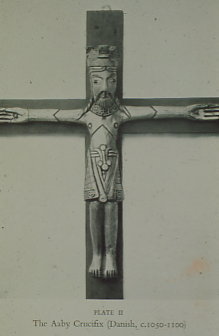
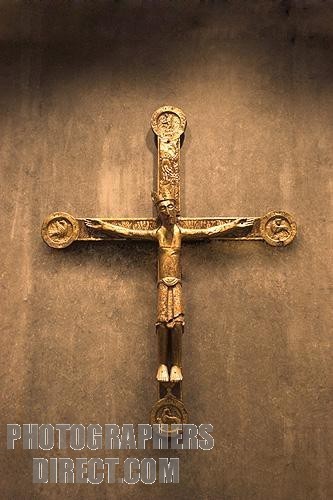
The example that comes most readily to mind (and I won't do it justice) is how the image of the crucifixion changed in this period. Southern calls up his favorite figure, St. Anselm, (to whom he would devote much of his scholarly career) and offers up a concise, but powerful explanation how Christ began the period as a divine distant figure in artistic depictions of the crucifixion, and ended it as quite human, expressing all the pain and suffering of mankind. And some of this change, Southern posits, was due to the refutation of an earlier argument by Anselm which had depicted man as a static character in his own salvation, etc etc. It's pretty heady stuff, but worthwhile in the end.
In summation, if you'd like to get into the head of the medieval mind, Southern's book is a decent place to start. His anecdotal style is well-suite to beginners, but readers should have some exposure to medieval European history beforehand. Great, great read!
This was a very good work, covering the mid-tenth century to the beginning of the 13th century. Southern's narrative is very broad in scope; he discusses the geographic boudaries of Latin Christendom and follows this with discussions on society, the church, and the rising intellectualism which led to the formation of the universities. In discussing society, he examines serfdom and the interesting legal foundations of serfdom and its place in northern and central Europe. His discussion of the church naturally centers around Gregory VII and the Gregorian reforms which fostered the rise of the monasteries in the context of the Cluniac and Cistercian reforms.
This was an extremely well written work, and Southern doesn't get bogged down in minutiae unless it serves to illustrate his point. A foundational text for medieval history and medieval studies.
First published in 1953, Southern's study of Western Europe between 972 and 1204 is widely considered a seminal contribution to our understanding of the medieval period. In one or two places it now feels slightly weighed down by the assumptions of its time. Nonetheless, it remains an extraordinarily well-written book, full of insights into the developing mind-set of the Middle Ages. In particular, the writing in the last chapter, which describes the growth of a culture of affective piety and relates it to the transition from epic to romantic literature, is quite luminous. No history of the period I have previously encountered has been so subtle and yet so clear.
The arc of history is long but it bends toward ... a rather neat stained glass window in Chartres, or Bourges, perhaps ... But besides such visceral evidence, nothing captures so well that ultimately mysterious world than this glowing icon of erudition, scholarship and story-telling
April 2016: just re-read this. The Southern moves from a difficult generality to the exemplification thereof by way of a carefully reconstructed (and selected) individual, human story, is at times breathtaking. A work of genius.
A really interesting survey of how the Middle Ages came to be, and of the Europe that went through them. Doctor Southern explains things clearly and isn’t afraid of going down rabbit holes if he thinks it will explain things further or be of interest to his readers. My only complaint would be that I wanted some sections to be longer or that my knowledge of the topic let me down in some areas. But you have to love a scholar who quotes Jane Austen to make a point about profligate elder sons.
This book was a great book for fundamental knowledge about the Middle Ages in Europe from about the 10th to the 13th centuries. While it is dry in many places, I do think this makes for an interesting and reliable read for anyone looking to learn about the Middle Ages in Europe more generally.
Richard Southern's The Making of the Middle Ages is a remarkably good book. I decided to read it after learning in Norman Cantor's Inventing the Middle Ages that Cantor considers it one of the two greatest books on medieval history written in the 20th century, and possibly the most influential. As a layman out to increase my historical knowledge, I figured I'd take the plunge. I'm very glad I did.
The first thing that struck me about this book is that Southern is a phenomenal prose stylist. Very few authors write this well. Another point worth mentioning is that this book requires some background knowledge. If you have little to no basic understanding of the Middle Ages, this is probably not the book you should start with. Also, Southern's book, though relatively short, requires some patience. Only toward the end of The Making of the Middle Ages, after much preparation, does Southern articulate his thesis that the most important development in medieval culture was a romantic revolution, occurring largely (but not exclusively) in northern France and southern England from the 11th to the early 13th centuries.
Chapter 5, "From Epic to Romance," is the heart of the book and a stunning performance. Here, in the final chapter, Southern talks of a great spiritual and emotional deepening in Western Europe as well as a corresponding rise in individuality. This change was made possible by greater stability, productivity, and optimism after roughly 1000 AD. Southern says of the shift from Epic to Romance, by which he means a general change in attitude: "Briefly, we find less talk of life as an exercise in endurance, and of death in a hopeless cause; and we hear more of life as a seeking and a journeying. Men begin to order their experience more consciously in accordance with a plan: they think of themselves less as stationary objects of attack by spiritual foes, and more as pilgrims and seekers."(p.222)
Anselm and Bernard of Clairvaux are presented as outstanding, spearheading representatives of this development. In Anselm's program of inquiry, "faith seeking understanding," "The static act of acceptance was replaced by a movement from acquiescence to understanding, in which there was no resting place short of a final illumination." (p.226) Anselm also managed to overthrow the then prevailing understanding of the atonement by force of logic, making room for alternate theories more attuned to the new piety which Anselm shared. And though Anselm was not a widely known personage in his own time, his circle at Canterbury played a large role in inaugurating the Cult of the Virgin, which proved wildly popular. The Cistercian Bernard was a much better known figure than the earlier Anselm; his many writings and his formulation and elaboration of the movement from carnal to rational to spiritual love reached and moved a very wide audience. Southern also points to St. Francis as the culmination of the trend represented by Anselm and Bernard.
Southern argues that religious art dealing with the crucifixion and with the Virgin and Child bear witness to the new piety, as did the aforementioned Virgin Cult. Of course, the deepening of emotion and focus on individual feeling was not limited to religious channels. The Arthurian writer Chretien of Troyes is presented as a secularized version of Bernard. Southern grants that perhaps "the pioneers of medieval spirituality in the eleventh century did not so much initiate, as give way to a prevailing sentiment of pity and tenderness, which they interpreted and expressed in arts and letters." (p.256) Either way, "This union of learning and high spirituality with popular forms and impulses is something which meets us everywhere in the eleventh and twelfth centuries." (ibid.)
Although "From Epic to Romance" is the highlight, the first 4 chapters that "set the stage" for chapter 5 are interesting in their own right, and worthy of some treatment.
Chapter 1 examines medieval Europe in relation to its neighbors. In the time period Southern focuses on in this book, 972 to 1204, Europe became much more stable as violent disturbances from the North and East slowed down, then stopped altogether. This gave Europe some breathing room to develop internally. European influence radiated outward to the North and East in the form of Christian civilization, though the Normans managed to make inordinately large contributions to European development. Also, Europe went from being isolated from the more civilized world to largely controlling the Mediterranean. Increased productivity and trade, the Crusades, and the researches of scholars all contributed to opening up Europe to a wider world. Here, influence ran from Byzantium and the Muslim lands into Europe, and was to prove fertile.
Chapter 2 examines the growth of effective political power and the change from sacred kingship and an appeal to supernatural judgment to secular government and rational legal procedure. The conditions of men are explored as serfdom, liberty, and nobility are examined. Southern has interesting things to say about the evolving perceptions of knighthood on the part of educated churchmen, culminating in John of Salisbury's sanctification of knighthood as a way of life at home, at a time when local elites were becoming more instrumental in the local governance of the realm. John idealized knighthood with a view to influencing their daily conduct.
In chapter 3, we see how pope Gregory VII and his band of idealistic reformers shook up the religious/political status quo. We also learn that the new strengthened papacy turned out to be a bureaucratic phenomenon, a triumph of administrative technique. Also, dissatisfaction with prevailing Benedictine monasticism and the rise of the Cistercians and Carthusians is touched upon. My favorite part of chapter 3 was Southern's discussion on how, in the minds of many, Rome was more an object of real spiritual veneration prior to Gregory VII's reforms than after.
Chapter 4 deals with educational developments in the time period. I find this, with the exception of chapter 5, the most interesting part of the book. Gerbert, later Pope Sylvester II, breathed new life into all ancient learning, and emerges in Southern's account as the man who more than anyone helped turn medieval attention to the study of logic. Gerbert greatly admired Boethius, and utilized his translations and commentaries, which for many centuries had been largely forgotten. Gerbert probably taught Fulbert, who in the early 11th century became the "father" of the cathedral school movement based on his work at Chartres. Students started making their way to France to study logic, which in an age of receding pessimism and increasing social optimism "opened a window on to an orderly and systematic view of the world and of man's mind." (p.180) Famous masters (of which Fulbert was the first) gained enthusiastic student followers. Bernard of Chartres, a successor to Fulbert, said that scholars were like "dwarfs standing on the shoulders of giants, " indicating that scholars were gaining a real sense of mastery over the past. There was much to be proud about. Famous summaries were created by the likes of Peter Lombard in theology and Gratian in cannon law. Many of these summaries remained in use until the 17th century. Cathedral schools became universities, where more and more students flocked because a degree was increasingly a ticket to career advancement.
An interesting contrast is made between Gerbert and any student after the rise of the Universities. It was relatively easy for later students to know where to obtain knowledge and to know that possession of such knowledge would be rewarded. In comparison, Gerbert hunted in an almost trackless wilderness of ignorance for knowledge that offered no certain personal rewards. Although the contrast is indicative of progress, it is Gerbert's personal example, rather than the progress, that strikes me as most impressive. The Benedictine contribution to knowledge during this time period is also touched on. Though the Benedictine subordination of education to the daily monastic routine did not always sit well with restless, questing minds, the monks' steady, patient effort to build up florilegia-the extracted fruit of their lifetime reading endeavors-was quite admirable and proved socially useful.
Cantor points out that Southern's book legitimated a whole new set of questions and set up an entirely new discourse in medieval history. Those influenced by Southern have expanded, modified, questioned and corrected aspects of his work. And his general approach to cultural history has proved influential. He has even influenced those who feel compelled to challenge root and branch his positive evaluation of the Middle Ages. Southern's interpretation is too powerful and influential to be simply ignored. This is a seminal text. Cantor was on the mark when he said that The Making of the Middle Ages fulfilled Southern's prescription that "the first duty of the historian is to produce works of art." (Inventing, p. 346) The Making of the Middle Ages is a beautiful work of art that manages to capture something truly beautiful about the medieval world. Though there are other, often uglier, truths about the Middle Ages, Southern's account seems (to this lay reader) perhaps the most compelling truth of all.
Book 8 of a short reading course recommended by Norman F Cantor.
I posted a pic on instagram of my non-fiction reading goals for this year, which was the reading list I'm currently ploughing through. A friend commented R W Southern being one to follow in particular. Having now finished it, I can see why. To be fair, there really hasn't been a dud among them, important as each one is. Mind you, the volume of Early Medieval Philosophy was a push to get through...
The more I read about medieval history, the more I'm seeking some new insight into this fascinating period, and will judge a book worthy if it does reveal some aspect that I'd not encountered before, or some greater context for my fragmented understanding. In this case, once again, I've encountered exactly that, in this book covering the couple of centuries that really laid the foundation for the High Middle Ages, and I guess properly cuts the umbilical cord of the Medieval period from the Ancient Roman period (The Holy Roman Empire notwithstanding).
Southern manages to open with the kind of breathtaking vista that Pirenne was capable of, but with far more grounding and research into the subject. The opening chapter contextualizes Europe within the broader scope of its neighbours, emphasizing how vulnerable the European peninsula was after the fall of Rome for a very long time, and how culturally and materially poor and beseiged Europe was. The second chapter examines feudalism and doesn't shy away from challenging aspects of serfdom in particular that don't come about from knee-jerk reactions to our contemporary views of this kind of subjugation.
The third chapter concentrates on how Christian institutes ordered themselves during this formative period and the rise of bureaucracy and attempts at reform. The fourth chapter examines how teaching undergoes crucial transformation, largely at the hands of various Catholic institutes. The final chapter gives an interesting transformation from a warrior society, focused culturally upon the Epic, to a rising culture more focused on the individual spirit, partially one suspects as a result of learning being unlocked from the cloisters and broadened to more members of the medieval public. The chapter does admit that this current of thought as presented by eminent members of society may well reflect a more prevalent and widespread culture outside of the monasteries rather than driven by them. Mind you, with some of the horrors awaiting in the next few centuries, one wonders just how this new found spirit becomes such a mess.
All in all, a pithy one volume examination of a transformative period in Europe, and a solid reading investment.
In his examination of society, he looks at serfdom, its fascinating legal underpinnings, and its history in northern and central Europe. Gregory VII and his Reform, which encouraged the growth of monasteries in the context of the Cluniac and Cistercian reforms, were given more attention in writing about the Church, but before this, Sir Southern explores people's ideologies regarding the idea of the Pope, whom they believed to be the high-Priest of the Roman pilgrimage, the dispenser of benedictions, privileges, and anathemas. Rome was transformed into the center of spiritual power by this doctrine. He went on to highlight Gregory VII, whom he described as a man about whom numerous erroneous legends circulated, as a magnificent character and the prophet of the Reforms. The majority of Southerners' Middle Ages appear to have been dominated by the Angevins and a small group of northern French and English academics, like Gerbert, Anselm, and Peter of Blois. Not to mention the nations and people who are already marginalized in the field in Eastern and Southern Europe, even Italians and Germans are ignored in the narrative. The final chapter, "From Epic to Romance," has attempted perhaps too hard to attribute the differences between the eleventh and twelfth centuries to various attitudes towards “movement,” when he started by analyzing the journey of this era to the Latinisation of the Church when he says we have witnessed the expansion of western Christendom's geographical and intellectual borders until, at the start of the thirteenth century, statesmen and academics stand face to face with monumental issues finally understood in all their complexity and majesty. The chaotic activity of the Crusades has finally forced the West to confront the harsh issue of a Muslim world that doesn't appear to be dying but rather is active and vast. And it has pitted the Western Church against the steadfast devotion of the Greek church, which did not make any official preparations for the conquest of Constantinople, the installation of a Latin Patriarch, or the Latinization of a captured nation's rituals. Furthermore, we know that during the early middle ages and up until the 12th century, Christians perceived themselves as torn in a heroic and cosmic conflict between the forces of God and the devil, expressing what Southern terms “borrowing from literary historian W.P. Kerr”, an influence on Tolkien. Jesus' kingliness is emphasized, and his humanity is downplayed. As a result, religion becomes more inward, and an intellectual and emotional journey. Thus, Christ is shown as a man suffering on the cross. This depicts mostly the logical assessment of their time their rationality was primarily governed by Logic and intellectualism.
A great classic, written with a beautiful literary sense and a thoughtful approach that explains historical change without resorting to narratives of progress or cultural superiority. It's chiefly an intellectual history (to my surprise): even its chapters on the organization of society, conceptions of geography, and church history come back to the history of ideas and how those ideas shaped cultural categories. In that sense, I wonder if you could place Southern within (or at least in dialogue with) the Annales school, contrary to our expectations of British historians of the time. The book does an exceptional job of making the various moments and geographies it contains feel like one world, in illustrating a vision of our history that is endlessly complex, but coherent and profoundly interconnected. It is one of the great joys of good history writing to see "the forest amongst the trees" and The Making does that superbly. Southern's primary tool in this regard is a limited cast of characters and places, which he treats in case studies and which he regards as emblematic of the major themes and attitudes of his period. Characters are routinely pop up and disappear in his narrative, only to return at an astonishing time later, sometimes in a completely different chapter. The strength of this method is the minimization of information overload. Its weakness: whose "making" of the Middle Ages is this? For the most part, Southern's Middle Ages seem to belong to the Angevins and to a select few scholars of northern France and England--Gerbert, Anselm, Peter of Blois. Even Italians and Germans are neglected in the narrative, not too mention the countries and people who are marginalized in the field already in Eastern and Southern Europe. I always felt like the coherence of the book was diminished by the last chapter, "From Epic to Romance," which perhaps tried too hard to pin the differences between the eleventh and twelfth centuries down to differing attitudes towards "movement" and which I felt delved too deep into the intricacies of Anselm and Bernard's theologies as definitive of the period. These discussions certainly could have belonged with his treatment of monasticism or the tradition of thought.
At times, the book could provide astonishing little gems of thought beyond their merit as good history. My favorite: "Satire is an unwilling tribute to power." How wonderful!
"Richard William Southern, The Making of the Middle Ages, Yale University Press, 1953, 280 p.
Discuţiile despre schimbările instituţiei suveranităţii în relaţiile internaţionale au condus la o serie de speculaţii, mai mult sau mai puţin potrivite, dintre care recent a reapărut ce referitoare la neomedievalism. Prin aceast termen s-ar înţelege o suprapunere de autorităţui definite prin criterii diferite de cel al monopolului teritorial, un sens originar în studiile lui Hedley Bull şi Ruggie, dar care păstrează un caracter vag[1]. Putem însă reduce o epocă la un anumit set de relaţii, este feudalismul elementul fundamental al societăţii medievale, nu riscăm oare ca, prin analogii forţate să nu înţelegem nici trecutul. Nici viitorul?
Aici, lucrările de sinteză pot juca un rol clarificator. Mai întâi, putem remarca complexitatea şi diversitatea unor lumi demult uitate sau, cel puţin, percepute şablonar. Apoi, ele ne sugerează că trecutul este şi el supus interpretărilor, cum autorii şi contextul publicări diferă, accente specifice puse pe un factor sau altul sunt evidenţiate, de unde reiese şi importanţa interpretării, nu doar a acumulării de fapte brute.
Richard William Southern a realizat una dntre cele mai cunoscute prezentări generale ale lumii medievale, o realizare cu valoare exemplară, prin concizie şi capacitate de explicare. Caracterul fundamental al lumii medievale, a fost, în opinia sa, ca şi la Toynbee, cel de Creştinătate latină, un tip specific de societate[2]. Temporal, originile sunt situate între cel de-al doilea val de migraţii (arabă, maghiară şi vikingă), care au coincis cu un moment de invigorare intelectuală şi căderea Constantinopolelui în 1204; spaţial, este evidenţiată regiunea Nord-Vestului european, îndeosebit Franţa, Anglia, Flandra şi Italia[3].
Pentru Southern, epoca marchează naşterea lumii occidentale contemporane. „Modelul monarhiei şi aristocraţiei ... al dreptului şi tribunalelor, al parohiilor şi bisericilor de ţară, sunt mult prea evident opera acestor secole pentru a insista asupra acestei chestiuni”, subliniază autorul[4]. Altfel spus, o concepţie evoluţionistă de tip clasic, în care ideile şi politica explică schimbarea socială, definită ca „o mişcare a spiritului cavaleresc şi a educaţiei”[5].
Spre deosebire de-o interpretare populară odată cu dezvoltarea instituţională a Uniunii Europene, Richard William Southern nu este foarte blând cu Sfântul Imperiu Roman de Naţiune Germană, pe care îl consideră drept „un eşec”, nu ca pe o anticipare a viitorului, nici ca esenţa medievalismului[6]. Iniţial, „cea mai solidă structură politică”[7], acesta ar fi devenit o victimă a propriului succes: „cei care aveau cel mai puţin s-au dovedit a fi cei mai capabili să se mişte liber în noua lume”[8]. În fundal, şi aici se poate remarca o schemă de interpretare asemănătoare celei dezvoltate de Toynbee, cu schema provocării şi a răspunsului creator; sursele schimbării regăsindu-se în Nord Vestul continentului şi în Italia[9].
Discutăm despre lume agricolă condusă de nobili legaţi prin relaţii de loialitate personală şi prin căsătorii. „Până în secolul al XIII-lea... principalele trăsături ale vieţii rurale au fost stabilite aşa cum vor exista timp de cinci sute de ani”, consideră Southern[10]. Istoria comitatului de Anjou ilustrează pentru autor consolidarea autorităţii senioriale: „guvernarea a devenit ceva mai mult decât un sistem de impunere a unui teritoriu cucerit şi s-a dezvoltat o rutină pentru exploatarea paşnică a resurselor şi pentru administrarea justiţiei”[11].
În paralel cu aceste evoluţii, s-au dezvoltat şcolile, politica a căpătat o nouă anvegură, iar mentalităţile elitelor s-au schimbat[12]. Spre deosebire de monarhi, nobilii sufereau de un deficit de legitimitate, pe care au încercat să-l compenseze aderând la idei despre datorie, protecţie şi sprijinirea respectării principiilor creştinismului[13]. „La începutul perioadei, apelul la supranatural era cel mai uzual instrument de guvernare ... În secolul al XII-lea, această mentalitate se schimbă rapid ... Oamenii au fost obligaţi să prefere probabilităţile gândirii... certitudinii judecăţii divine”, sublinia istoricul[14].
Mentalităţile au influenţat şi relaţiile sociale; de exemplu, iobăgia fiind justificată prin consecinţele păcatului originar, o servitute transmisă ca şi acesta, în mod ereditar[15]. Metodă convenabilă atunci pentru a instrumentaliza dependenţa ţărănimii, şerbia devine mai importantă odată cu consolidarea autorităţilor seculare, consideră autorul[16]. Justificată religios şi utilitarist, instituţia contrastează cu libertăţile sau privilegiile, în principal a celor nobiliare, bazate mai curând pe posesie şi omagiu, decât pe descendenţă[17].
În centrul imaginarului acelei epoci se află religia catolică şi administraţia bisericii romane, iniţial ameninţate de simonie şi atomizare[18]. Descrierea reformelor lui Grigorie al VII-lea, a caracterului acelui papă controversat, a structurilor de cult, a susţinătorilor şo rivalilor săi constituie unul dintre momentele importante ale lucrării. „Deşi aproape a distrus maşinăria, el a reprezentat-o mai intens şi a exprimat mai clar decât oricine altcineva impulsul oamenilor care au construit-o”, apreciază Southern, caracterizându-l pe adeptul unei politici de câştigare a autonomiei bisericii faţă de laici, de consolidare a celibatului preoţilor şi de accentuare a legitimitîţii apostolice[19].
The Making of the Middle Ages conţine capitole interesante despre educţie, ordinele călugăreşti, teologie sau literatură. Odată consolidată, societatea medievală s-a deschis spre lume prin cruciade, expediţii de cucerire justificare religioas, dar şi surse de idei noi şi prin dezvoltarea comerţului mediteranean[20]. Per ansamblu, lucrarea ne oferă o cale de acces către mentalul şi structurile sociale ale acelei lumi, a cărei cunoaştere ne poate ajuta să înţelegem, prin comparaţie şi bun simt, mai bine lumea contemporană.
[1] Hedley Bull, Societatea anarhică: Un studiu asupra ordinii în politica mondială, Ştiinţa, Chişinău, 1998; John Gerard Ruggie, “Continuity and Transformation in the World Polity: Towards a Neorealist Synthesis”, în Robert O. Keohane (coord.),, Neorealism and its Critics, Columbia University Press, 1986; Ronald J. Deibert, “Neomedievalism”, în R. J. Barry Jones (coord.), Routledge Encyclopedia of International Political Economy: Entries G-O, Routledge, 2001, pp. 1114-1116. [2] Richard William Southern, The Making of the Middle Ages, Yale University Press, 1953, pp. 11-19 [3] Idem, pp. 11, 201. [4] Idem, p. 13. [5] Ibidem. [6] Idem, p. 19. [7] Idem, p. 20. [8] Ibidem. [9] Vezi Arnold J. Toynbee, D.C Somervell, Studiu asupra istoriei, Humanitas, 1997. [10] Richard William Southern, op. cit., p. 75. [11] Idem, p. 88. [12] Idem, pp. 88-89. [13] Idem, pp. 95-96. [14] Idem, p. 97. [15] Idem, pp. 99-100. [16] Idem, pp. 102-103. [17] Idem, pp. 110-111. [18] Idem, pp. 130-131. [19] Idem, pp. 139-142. [20] Idem, pp. 11, 77."
I would say that Southern continues the eighteenth-century historical narrative of the Middle Ages being a transition to modernity. The narrative was supported by historians like David Hume, Richard Hurd, Adam Ferguson and William Robertson, who considered trade to be one of the most important instruments of civilisation. Similarly, Southern acknowledges that the “growth of Meditteranean trade “undoubtedly affected the lives of many people" and built the “foundation of modern commerce and industry” in Western Europe. Nonetheless, instead of featuring trade as the centrepiece, Southern’s writing was only concerned with it "as one of a number of activities which bound Latin Christendom to its neighbours.” Accordingly, Southern saw physical movements from commercial activities as a precondition on which a more important trend emerged - “the traffic of ideas”. To Southern, this “traffic of ideas'' - specifically, Greek science and philosophy - ushered in a “revolution" that dramatically altered the academic landscape in Western Europe, and “opened out a world quite as new as that was discovered by the voyages of the fifteenth and sixteenth centuries". This argument is discussed extensively in the Bonds of Society, and I think the chapter is Southern's most unique contribution to the historiography of the Middle Ages.