

What do you think?

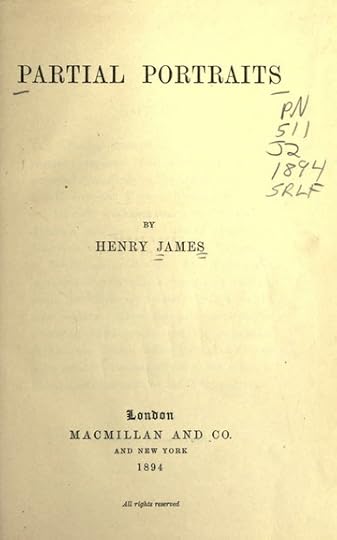
Partial Portraits
Contents--Emerson; The Life of George Eliot; Daniel Deronda: A Conversation; Anthony Trollope; Robert Louis Stevenson; Miss Woolson; Alphonse Daudet; Guy de Maupassant; Ivan Turgenieff; George du Maurier; The Art of Fiction.
- GenresEssaysNonfiction
408 pages, Hardcover
First published January 1, 1888
About the author
Henry James
4,687 books4,136 followersHenry James was an American-British author. He is regarded as a key transitional figure between literary realism and literary modernism, and is considered by many to be among the greatest novelists in the English language. He was the son of Henry James Sr. and the brother of philosopher and psychologist William James and diarist Alice James.
He is best known for his novels dealing with the social and marital interplay between émigré Americans, the English, and continental Europeans, such as The Portrait of a Lady. His later works, such as The Ambassadors, The Wings of the Dove and The Golden Bowl were increasingly experimental. In describing the internal states of mind and social dynamics of his characters, James often wrote in a style in which ambiguous or contradictory motives and impressions were overlaid or juxtaposed in the discussion of a character's psyche. For their unique ambiguity, as well as for other aspects of their composition, his late works have been compared to Impressionist painting.
His novella The Turn of the Screw has garnered a reputation as the most analysed and ambiguous ghost story in the English language and remains his most widely adapted work in other media. He wrote other highly regarded ghost stories, such as "The Jolly Corner".
James published articles and books of criticism, travel, biography, autobiography, and plays. Born in the United States, James largely relocated to Europe as a young man, and eventually settled in England, becoming a British citizen in 1915, a year before his death. James was nominated for the Nobel Prize in Literature in 1911, 1912, and 1916. Jorge Luis Borges said "I have visited some literatures of East and West; I have compiled an encyclopedic compendium of fantastic literature; I have translated Kafka, Melville, and Bloy; I know of no stranger work than that of Henry James."
He is best known for his novels dealing with the social and marital interplay between émigré Americans, the English, and continental Europeans, such as The Portrait of a Lady. His later works, such as The Ambassadors, The Wings of the Dove and The Golden Bowl were increasingly experimental. In describing the internal states of mind and social dynamics of his characters, James often wrote in a style in which ambiguous or contradictory motives and impressions were overlaid or juxtaposed in the discussion of a character's psyche. For their unique ambiguity, as well as for other aspects of their composition, his late works have been compared to Impressionist painting.
His novella The Turn of the Screw has garnered a reputation as the most analysed and ambiguous ghost story in the English language and remains his most widely adapted work in other media. He wrote other highly regarded ghost stories, such as "The Jolly Corner".
James published articles and books of criticism, travel, biography, autobiography, and plays. Born in the United States, James largely relocated to Europe as a young man, and eventually settled in England, becoming a British citizen in 1915, a year before his death. James was nominated for the Nobel Prize in Literature in 1911, 1912, and 1916. Jorge Luis Borges said "I have visited some literatures of East and West; I have compiled an encyclopedic compendium of fantastic literature; I have translated Kafka, Melville, and Bloy; I know of no stranger work than that of Henry James."
Ratings & Reviews
Friends & Following
Create a free account to discover what your friends think of this book!
Community Reviews
Displaying 1 - 7 of 7 reviews

June 2, 2021
Review to come.

August 11, 2024
The essays on Emerson and George Eliot (which are really reviews of biographies of both) are priceless. James is a guy whose literary criticism gets quoted in little morsels here and there: his connection and appreciation of Hawthorne, his dislike for “loose baggy monsters” like Bleak House and War and Peace, his devotion to the French titans like Balzac. We tend to pick out the sentences that are most “critical”, or the most like gossip. I dunno why, but we love to hear about writers disliking other writers seemingly much more than the ones they love.
I was thus steeled and very interested in how he would deal with Emerson. Ralph Waldo was a hero to James’ pop, and (I have to research this definitively) but I thougth that Emerson had known the James family personally, even maybe teaching some of the youngsters? Hank’s essay here doesn’t allude to any personal acquaintance with the Sage of Concord, but there is the event of James satirizing Emerson in The American as a stuffy little hypocondriact with transcendental pretensions. There’s something biting in James: he’s the quintessential literary hero you’d never want to meet, because he would clown on your ass like a true Ice Queen. But reading his essay on Emerson you find the younger novelist to be very gracious, both appreciative and cognizant of Emerson’s literary power and at the same time superbly able to see him as a human being, meaning infallible. It becomes an exercise in remembering that while Art is open to any and all criticism, artists deserve the same slack one would want for oneself.
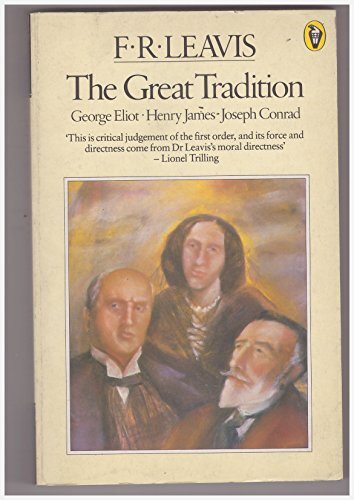
George Eliot, or Mrs Lewes (the Mrs instead of Miss being a sign of respect in itself) more or less gets the same treatment. Having just finished Daniel Deronda I noticed a syntax, and especially the use of aliteration, to be very Jamesian; which could only mean that he borrowed it from her, since she came first. James gives her the respect that is her due, for craft and cognition, but remembers that she too was a woman, and that even saints were human beings.
The Conversation on Deronda however shows James more biting side—which is still playful instead of bitter, but with that zing that comes with confident levity. It was written in the late 80s (that’s 1880s, but I have a theory that the 80s of every century are awesome and can’t wait for the 2080s…) and James is in his literary and cultural prime, the established writer of Portrait of a Lady and The Bostonians, and still a decade before he’d get pelted with tomatoes upon the stage after a disatsrous opening night of his sterile lil play Guy Domville. And he obliterates Eliot’s final novel. In the most hilarious way. He does it in a way such that his critique is actually balanced yet all of the compliments are bakchanded and the complaints are praise. Ultimately, it’s really fun to finish a book and realize someone else, a writer you really like, felt the same way 150 years ago. That’s the magic of literature.
Lastly, in “The Art of Fiction” (where Paris Review got the name?) he plays the rôle of the bemused author responding to critics that demand certain things from novels. A novel must be this, and this and this, and it can’t do this, no never this, but it would be great if it did this. It’s comforting to know that writers have been coming across this problem since the dawn of time. In essence, he’s saying, a novel can be about anything and a writer can employ any means necessary; the only thing that matters is if it’s interesting. And of course that’s subjective. So there you go. Trying to reduce it further than that doesn’t make much sense. He even goes so far as to point out the ridiculousness of describing a book as “character driven” or “plot driven.” Can you imagine what he would think of today’s book world, where lit agents demand “dystopian domestic thrillers” and “under-represented YA voices”? He’d find himself in a Kafkaesque nightmare, for you can’t ask something specific of your fiction you have to be open to the surprise of execution and take the authors theme and style for what it is, right?! I have grave doubts as to whether James would be published today. But no matter. He’d keep writing anyway.

I was thus steeled and very interested in how he would deal with Emerson. Ralph Waldo was a hero to James’ pop, and (I have to research this definitively) but I thougth that Emerson had known the James family personally, even maybe teaching some of the youngsters? Hank’s essay here doesn’t allude to any personal acquaintance with the Sage of Concord, but there is the event of James satirizing Emerson in The American as a stuffy little hypocondriact with transcendental pretensions. There’s something biting in James: he’s the quintessential literary hero you’d never want to meet, because he would clown on your ass like a true Ice Queen. But reading his essay on Emerson you find the younger novelist to be very gracious, both appreciative and cognizant of Emerson’s literary power and at the same time superbly able to see him as a human being, meaning infallible. It becomes an exercise in remembering that while Art is open to any and all criticism, artists deserve the same slack one would want for oneself.
George Eliot, or Mrs Lewes (the Mrs instead of Miss being a sign of respect in itself) more or less gets the same treatment. Having just finished Daniel Deronda I noticed a syntax, and especially the use of aliteration, to be very Jamesian; which could only mean that he borrowed it from her, since she came first. James gives her the respect that is her due, for craft and cognition, but remembers that she too was a woman, and that even saints were human beings.
The Conversation on Deronda however shows James more biting side—which is still playful instead of bitter, but with that zing that comes with confident levity. It was written in the late 80s (that’s 1880s, but I have a theory that the 80s of every century are awesome and can’t wait for the 2080s…) and James is in his literary and cultural prime, the established writer of Portrait of a Lady and The Bostonians, and still a decade before he’d get pelted with tomatoes upon the stage after a disatsrous opening night of his sterile lil play Guy Domville. And he obliterates Eliot’s final novel. In the most hilarious way. He does it in a way such that his critique is actually balanced yet all of the compliments are bakchanded and the complaints are praise. Ultimately, it’s really fun to finish a book and realize someone else, a writer you really like, felt the same way 150 years ago. That’s the magic of literature.
Lastly, in “The Art of Fiction” (where Paris Review got the name?) he plays the rôle of the bemused author responding to critics that demand certain things from novels. A novel must be this, and this and this, and it can’t do this, no never this, but it would be great if it did this. It’s comforting to know that writers have been coming across this problem since the dawn of time. In essence, he’s saying, a novel can be about anything and a writer can employ any means necessary; the only thing that matters is if it’s interesting. And of course that’s subjective. So there you go. Trying to reduce it further than that doesn’t make much sense. He even goes so far as to point out the ridiculousness of describing a book as “character driven” or “plot driven.” Can you imagine what he would think of today’s book world, where lit agents demand “dystopian domestic thrillers” and “under-represented YA voices”? He’d find himself in a Kafkaesque nightmare, for you can’t ask something specific of your fiction you have to be open to the surprise of execution and take the authors theme and style for what it is, right?! I have grave doubts as to whether James would be published today. But no matter. He’d keep writing anyway.
February 19, 2023
Henry James provided precisely as promised: partial portraits. He picks up aspects of a writer's work or personality and does some analysis, and moves on. I found it quite readable and informative. It is not coruscating, scintillating or world-shaking. However, it is well wroth reading for people with an interest in literature and writing.
September 21, 2015
Read a shitty ebook with poor formatting which is equivalent to tacky font in real books. Torturous but dealable.
John Singer Sargent's Henry James is the only Henry James in my head so I cannot really imagine him having a thing for Miss Woolson or being very impressed with Turgenev. Like his novels he appears solid and complete, not needing any other people for pleasure or worship. These essays are impressions of mostly contemporary authors and friends. Most of them don't coincide with opinions that are largely valid today and some of them are vague and adulatory to be of any value.
I really enjoyed the opening essay on Emerson. Emerson's cultural context in New England- its special status having people who wanted to be moral and who wanted to listen to scholars give lectures like rock concerts undoubtedly allowed Emerson to lead the life he did. Emerson's capacity for moral experience can be understood as his position as a succcessor among men who led people, and his lack of experience with vices or disorder, lending transcendentalism a mysticism that's too idealistic; helped certainly by a lack of change of life. James finds funny the expectations Emerson makes of the "scholar", they are even more ridiculous today.
James's essay on George Eliot was interesting, on how her experience may have been shaped by positivism and the scientific outlook and the protective world that Lewes constructed around her-"a temperate zone of independence". While saving her considerable trouble, the freedom may have been a little lost. It is debatable whether it diminishes her work, because without the moral compass she may very well be like Gaskell or Sand and ordinary.
Trollope's lack of popularity is also understandable when you read James's opinion. He fashions Trollope's work as conventional and without a system, aimed at pleasing the readers in a recognizable world and that is not the kind of popularity that posterity cares much for- the not groundbreaking type. It is this flitting nature that explains Daudet as well- the vendor of happiness- mixing the beautiful and the happy in his work despite absence of a philosophy. These qualities may make you a best selling author but not much space after you are dead maybe.
James kicks holes in Maupassant's logic, hinting at the psychological realism of his own novels. Maupassant believes psychology needn't be analysed or presented because existence happens in action and the bustle of life and events, which explains his hard realism. However James points out that his focus on sex or physical instincts is itself a selection that eliminates angles he is overlooking. You need only think vaguely about James's novels to notice the difference; James isn't omniscient but comprehensive?
In the midst of the gushing on Turgenev, a Jamesian sentence:
Apart from the helpful distinction between good and bad novels, 'The Art of Fiction' expounds the arbitrariness that is the heart of James's novels. The novel as a personal impression of life, as your individual sense of reality all attest to the translucent feeling I get when I read James, like I am right in the middle of it. The essay ends with James saying that the first duty is to make as perfect a work as you can and- "Be generous and delicate and pursue the prize".
John Singer Sargent's Henry James is the only Henry James in my head so I cannot really imagine him having a thing for Miss Woolson or being very impressed with Turgenev. Like his novels he appears solid and complete, not needing any other people for pleasure or worship. These essays are impressions of mostly contemporary authors and friends. Most of them don't coincide with opinions that are largely valid today and some of them are vague and adulatory to be of any value.
I really enjoyed the opening essay on Emerson. Emerson's cultural context in New England- its special status having people who wanted to be moral and who wanted to listen to scholars give lectures like rock concerts undoubtedly allowed Emerson to lead the life he did. Emerson's capacity for moral experience can be understood as his position as a succcessor among men who led people, and his lack of experience with vices or disorder, lending transcendentalism a mysticism that's too idealistic; helped certainly by a lack of change of life. James finds funny the expectations Emerson makes of the "scholar", they are even more ridiculous today.
James's essay on George Eliot was interesting, on how her experience may have been shaped by positivism and the scientific outlook and the protective world that Lewes constructed around her-"a temperate zone of independence". While saving her considerable trouble, the freedom may have been a little lost. It is debatable whether it diminishes her work, because without the moral compass she may very well be like Gaskell or Sand and ordinary.
Trollope's lack of popularity is also understandable when you read James's opinion. He fashions Trollope's work as conventional and without a system, aimed at pleasing the readers in a recognizable world and that is not the kind of popularity that posterity cares much for- the not groundbreaking type. It is this flitting nature that explains Daudet as well- the vendor of happiness- mixing the beautiful and the happy in his work despite absence of a philosophy. These qualities may make you a best selling author but not much space after you are dead maybe.
James kicks holes in Maupassant's logic, hinting at the psychological realism of his own novels. Maupassant believes psychology needn't be analysed or presented because existence happens in action and the bustle of life and events, which explains his hard realism. However James points out that his focus on sex or physical instincts is itself a selection that eliminates angles he is overlooking. You need only think vaguely about James's novels to notice the difference; James isn't omniscient but comprehensive?
In the midst of the gushing on Turgenev, a Jamesian sentence:
He was not all there, as the phrase is; he had something behind, in reserve. It was Russia of course, in large measure; and especially before the spectacle of what is going on there today, that was a large quantity.
Apart from the helpful distinction between good and bad novels, 'The Art of Fiction' expounds the arbitrariness that is the heart of James's novels. The novel as a personal impression of life, as your individual sense of reality all attest to the translucent feeling I get when I read James, like I am right in the middle of it. The essay ends with James saying that the first duty is to make as perfect a work as you can and- "Be generous and delicate and pursue the prize".

owned-and-waiting-to-be-read
April 25, 2013Free version here at Internet Archive.

January 24, 2020
James, Henry. Partial Portraits. 1888. Project Gutenberg.
I have read most of the essays in this collection of literary assessments piecemeal over the years, but it was interesting, a very Jamesian word, to read them all together, especially “The Art of Fiction” that ends the collection. Many of these pieces were published in American magazines like Harper’s and The Atlantic Monthly, and many were about writers that James knew personally. To those he gives generally positive assessments. He likes Robert Lewis Stevenson’s Treasure Island and he positively drools over Guy de Maupassant. He has more interesting things to say about Anthony Trollope and George Eliot, with whom he was less well acquainted. But the writer about whom we learn the most is Henry James himself. One feels he is always saying, well, I would not have done it that way, or I could have done it better—never that writer is doing something I could not do. For instance, he downgrades Emerson for a lack of style and attributes it to Emerson’s failure to appreciate great paintings. He appreciates Anthony Trollope’s realism, but says, rather snobbishly, that his style is marred by “a touch of the common.” He could not abide Trollope’s breaking the fourth wall of realism and admitting to his reader that they were mutually engaged in fiction. He was also dismayed by Trollope’s unromantic work habits and his failure to take himself and his work as seriously as James took his own. He may have been a bit jealous of Trollope’s popularity. He admires the moral consciousness of George Eliot, but he thinks that her work would have been better it had been based more on observation and less on abstract ideas. On the positive side, he notes that her work suggests that there is no limit to what a woman author can accomplish. Finally, in “The Art of Fiction” he uses his review of another critic’s book to lay out his own theory of what the realistic novel should be. Every reader of his novels should read this essay.
I have read most of the essays in this collection of literary assessments piecemeal over the years, but it was interesting, a very Jamesian word, to read them all together, especially “The Art of Fiction” that ends the collection. Many of these pieces were published in American magazines like Harper’s and The Atlantic Monthly, and many were about writers that James knew personally. To those he gives generally positive assessments. He likes Robert Lewis Stevenson’s Treasure Island and he positively drools over Guy de Maupassant. He has more interesting things to say about Anthony Trollope and George Eliot, with whom he was less well acquainted. But the writer about whom we learn the most is Henry James himself. One feels he is always saying, well, I would not have done it that way, or I could have done it better—never that writer is doing something I could not do. For instance, he downgrades Emerson for a lack of style and attributes it to Emerson’s failure to appreciate great paintings. He appreciates Anthony Trollope’s realism, but says, rather snobbishly, that his style is marred by “a touch of the common.” He could not abide Trollope’s breaking the fourth wall of realism and admitting to his reader that they were mutually engaged in fiction. He was also dismayed by Trollope’s unromantic work habits and his failure to take himself and his work as seriously as James took his own. He may have been a bit jealous of Trollope’s popularity. He admires the moral consciousness of George Eliot, but he thinks that her work would have been better it had been based more on observation and less on abstract ideas. On the positive side, he notes that her work suggests that there is no limit to what a woman author can accomplish. Finally, in “The Art of Fiction” he uses his review of another critic’s book to lay out his own theory of what the realistic novel should be. Every reader of his novels should read this essay.

January 25, 2016
The Life of George Eliot
Daniel Deronda: A Conversation
Anthony Trollope
The Art of Fiction
Daniel Deronda: A Conversation
Anthony Trollope
The Art of Fiction
Displaying 1 - 7 of 7 reviews