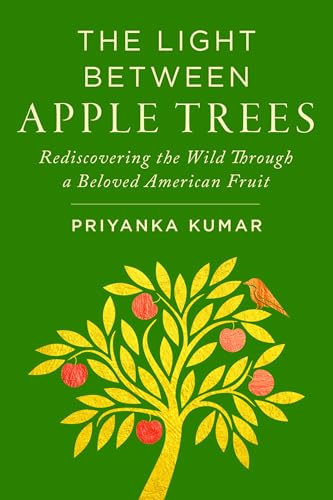
The Light Between Apple Trees is a quietly attentive work of nature writing that explores how cultivation and wildness are never as separate as we imagine.
Priyanka Kumar uses the apple so familiar it often fades into the background as a lens for examining land, inheritance, migration, and care. Rather than treating the fruit as symbol alone, she grounds the narrative in physical encounters: orchards, histories of breeding and grafting, labor, and loss. The result is a book that resists nostalgia while still honoring affection.
What stands out is Kumar’s attentiveness to contradiction. Apples are domesticated yet feral, global yet intimate, bound to commerce while deeply tied to memory. The prose moves fluidly between personal reflection, ecological observation, and cultural history without forcing them into neat alignment. Instead, the book allows tension to remain between stewardship and exploitation, belonging and displacement.
The writing is patient and unshowy, inviting the reader to slow down and notice what is often overlooked. This is not a manifesto, nor a sentimental pastoral, but a meditation on relationship: how humans shape landscapes, and how landscapes quietly shape us in return.
The Light Between Apple Trees will resonate most with readers who appreciate nature writing that is reflective rather than prescriptive, and who are drawn to stories where attention itself becomes an ethical act.