Living with AuDHD is like being a unicorn—misunderstood, contradictory, and often invisible to others. You shine with creativity and innovation, but struggle to fit in — always feeling 'too much'. Autism and ADHD pull you in opposite directions, creating a lifetime of contradictions no one else can see.
AuDHD isn’t listed in diagnostic manuals because until 2013, you couldn’t be diagnosed with both conditions — despite a co-occurrence rate of approximately 50-70%. These two neurotypes often clash, like opposing magnets in the brain.
ADHD craves novelty; autism resists change. ADHD misses details; autism hyper-focuses on them. ADHD perceives time as ‘now or not now’; autism sticks rigidly to schedules. ADHD seeks stimulation; autism is easily overwhelmed. ADHD thrives in chaos; autism needs structure. ADHD says yes; autism says no. Autism makes the rules, ADHD breaks them. If you’re exhausted reading this, just imagine what it’s like to live it.
Leanne Maskell was diagnosed with ADHD at 25, but it took 7 more years to learn she was also autistic. Blooming Differently chronicles her turbulent journey—from a childhood of vulnerability and trauma to a high-achieving model and lawyer, outwardly successful but inwardly struggling.
The book exposes the relentless burnout of not understanding your brain and the power of self-awareness in finally thriving. Today, Leanne is a successful author, coach, and National Specialist Coach of the Year.
More than just a memoir, this book offers practical insights for AuDHD individuals and those who support them—essential for psychiatrists, educators, and anyone seeking to understand neurodivergence.
With lived experience and professional expertise, Blooming Differently is an honest and transformative guide to rewriting the neurodivergent narrative.
I got my certified diagnosis for AuDHD this week at age 49, replacing the diagnosis I was given 20 years ago for bipolar (which never felt like it really fit, but all the doctors agreed it's what I had). So, what the heck is this thing and what does it mean for me?
First of all, this is beautifully written and the audio book is excellently narrated by the author. I just gave a poor review to "Welcome to AuDHD: How to Survive (and Thrive) as an Adult with Autism and ADHD" partly because I couldn't connect with the anecdotes of that author in a way that worked for me. I absolutely haven't experienced what this author has (wow), but the way she is able to dissect and explain her feelings and the reasons she reacted to things the way she did, I *could* relate to, allowing me to recognize different expressions of some of the same underlying tendencies. This book has the depth I was looking for, and is obviously informed by a lot of the coaching she has done. Highly recommended.
Leanne has a wonderful talent of making people feel truly seen and understood. ‘AuDHD: Blooming Differently’ blends her life experiences, scientific research and practical advice in such a validating and empowering way. I have learned so much from Leanne and I will be always be grateful to her for the wisdom she shares. She makes this world a better place. 🩷
I really enjoyed this book and there were certainly parallels from my own life that resonated that hadn’t been entirely captured in books solely focusing on autism and ADHD. Especially in the parts of the book that were written in a memoir format.
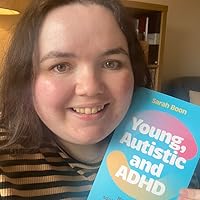
The only reason I’m giving 4 rather than 5 is that I have prior knowledge in this area and I was already familiar with lots that is covered in the book. There wasn’t too much that was new to me several years down the line after discovering my own AuDHD, plus publishing my own book about young people’s experiences of AuDHD last year!
However, younger Sarah would have benefited greatly from this book! I think for people just discovering their AuDHD or questioning if they are, this would be a 5* read!
It should be noted that the author is from the UK, so hearing some of the advice is like, "huh, interesting" from an American perspective on how to deal with the NHS's waiting lists. (Not anti-universal healthcare btw).
Conversely, her advice to seek HR for help? For resources? For advice? HR 👏 is 👏 not 👏 your 👏 friend 👏. You will have to go to them, but do your own research and err on the side of less disclosure.
I feel like all the advice and resources was at the end. This book is an autobiography/memoir, so if you just want resources/tips, probably get another book.
I appreciate that more books on this topic are gradually becoming available, but I wish this book had a co-author more experienced in science writing. I didn't find much of the autobiographical content engaging or frequently even relevant, and I wished that the science parts felt less like reading social media posts. I got the audiobook through audible and seriously considered returning it many times but ultimately powered through it.
DNF, Maybe it’s my own neurodivergent brain but I didnt care for the high level of the authors personal experiences that often felt like a reach to connect to AUDHD related characteristics, and some of the “tips” felt harmful and uneducated.
I would’ve given this book a lower rating, if it wasn’t for the fact that I believe it will help a lot of people and might save some lives.
While I appreciate the courage and honesty in being so frank about her often tough and traumatic experiences, a lot of them highlight particularities about the author’s character that are not at all universal or even typical to AuDHD, while being framed as though they were. There are many relatable elements to these anecdotes, and an open-minded person with AuDHD will have sympathy with most of them, but I would not dare show this to anyone unfamiliar with neurodivergence as an example of what the AuDHD experience is like. The book would also have gained a lot from more thorough editorialising. Scientific sources are quoted very loosely and liberally, and a lot of information is sprinkled in redundantly, while most of the helpful resources are provided at the very end.
That being said, it’s clearly a well-intentioned and affirming book, which is more than can be said about much of this genre.
Just the right combo for an AuDHD brain. There’s a consistency and predictability in each chapter’s layout - ending with bullet-point tips to summarize - along with the novelty of starting each one with her personal experiences and life stories. Was it her style of writing or the shared diagnoses that made me feel so seen in this book? Perhaps both. Either way, I’m grateful.
So much of this book made sense to me as I’ve just recently been diagnosed audhd at the end of last year. There are some very valuable bits of information and areas of support that I think people like myself will find helpful
Being in the AUDHD club is like no other club in the world. There are daily highs and lows but I wouldn't want to be anyone else! Listening to this book was like having a deep conversation with someone who just gets what this AUDHD life is really about. If you're in the club, LISTEN to this book ✅
very informative book—i’m glad i read this as an audiobook as well. i appreciated the balance between scientific discussions and personal anecdote. i think this book would’ve been more helpful earlier on in my journey of understanding my neurodivergence but the waitlist the library was hella long lol
What a confusing read. This book frames itself as a "help and education" kind of text but I still can't figure out who it's supposed to be aimed at. We're backflipping from advice for AuDHD people to parenting them to what to do if you think one of your students might have AuDHD... We're also going back and forth between deeply personal experiences and wild conjecture punctuated with academic references that I'm not convinced the author has read... I gave up on the Neuroscience section pretty early on when it became clear that she had no idea what she was talking about.
All in all there are some good things in this book, and some good points, but not remotely as many as there are typos and mistakes. It couldn't be THAT difficult to have an editor look it over, surely?
Part autobiography, part self-help and part carer advice, plenty about this book resonated. One star deducted because it's poorly edited (that's on the publisher not the author), but overlooking that, it's worth a read for anyone who is, suspects they might be or is being assessed for autism and/or ADHD, and the loved one of neurodivergent people
The book is valuable, but I wish it had a professional editor. In the current state, it is extremely repetitive. Also, it wouldn't hurt to extract the information on UK-specific difficulties and advice into a separate chapter. It really doesn't apply to most of us, you know ;)
This was an incredibly helpful book, full of insights about AuDHD and living life with it. I would highly recommend if you or someone you know has been recently diagnosed, or suspected of being AuDHD.
Solid read, some thoughtful perspective on Autism + ADHD. Recommend. Some of the author's experiences were very extreme, and I took this into account while reading. Most of the folks I'm thinking of did not have such troubling histories.
ahhh this was amazinggg 🥹 so beautifully written and easy to read and make sense of!
this book was so validating to my own personal experiences and was able to help make sense of myself and appreciate the positives of being neurodivergent
only reason giving it a 4 star is because I already knew some of the information that was provided in the book
I didn't realize until Maskell mentioned it in the text that she's the author of ADHD an A to Z. Given what I thought about that one, I was surprised how much more I got out of this one, but as someone who leans more into the autism than the adhd of audhd, having the autism included made way more connections to me. Maskell covers just about every aspect of audhd you can, from symptoms to childhood to teenage years to adult, diagnosis (including late), and gives a lot of her personal life as examples. I would still say that, like the previous book, the tips given at the end of the chapters are still a bit vague to me, not many are actionable as they are without dedication or outside help. But what benefitted me the most was having things I have thought or done also thought or done by another person, and understanding a lot of the social and psychological difficulties Maskell had as an undiagnosed audhd.
I found this very hard to get through, reading large sections without anything sticking. It was repetitive and unsequential eg Chapter 11 initially covered only the time the author knew she was ADHD and it was later in the chapter the diagnosis of autism was discovered. This was unexpected and she had been discussing AuDHD in previous chapters. Very much an autobiography and hence very personal. It needed editing as there were often sentences that did not make sense, mostly with extra words.
This book was great. It was so validating and really made you feel understood. It was a great balance of personal story and information. Highly recommend!
This is a review of the audiobook read by the author.
This book is a great resource, first and foremost, for anyone trying to navigate their own neurodivergence as an adult. Like the author, I have been assessed as having both ADHD and autism, though not until my 40s, and I found much validation in what she had to say and great strategies to put into practice. The book follows a set pattern of sharing her own experience, explaining key concepts and definitions, and then providing tips for the neurodivergent person themselves as well as loved ones. She moves through her own story more or less chronologically (e.g. how her symptoms presented in childhood, how she navigated young adulthood, her first diagnosis for ADHD, her second diagnosis for autism, etc.). Given how resent AuDHD is as a concept, this structure is well suited to provide a baseline for those who are new (which we all are) while still looking ahead. The author is well read, so in addition to her own thoughts, the books serves as a starting point for follow up reading and places to go.
She is also a coach for others with ADHD and/or autism, so while the book is mostly rooted in her own experiences as a young, Millennial woman from England, she is able to supplement it with the life experience of others. This is not a complaint or a limitation, just something to note. There were times that I, as an American, GenX male, found myself wondering how her stories would translate to the context of my life. However, AuDHD presents so differently in people that, even if our demographic profiles were identical, it would not be the case that her story would map specifically to mine. As the author writes, "if you have met one person with AuDHD, you have met one person with AuDHD".
Also, as she wrote the book so quickly (in the fever of a hyper-fixation, no doubt), a lot of her material is very recent, which is an advantage over some of the hallmark books of the autism and ADHD library (like Temple Grandin's), which while still relevant, do contain some outdated information.
All said, I would recommend the book to anyone trying to understand their own AuDHD journey (or something like it) as well as any loved ones, caregivers, etc. While I am an audiobook aficionado, I do think some folks would benefit from a copy of the book they could take notes on, so consider a hard copy if that's your thing.
As I’ve mentioned before, I tend not to rate or review books I’ve only listened to in audio form, because I have a higher tendency to zone out or miss things. That was less so with this book, and it is engaging enough that my attention rarely strayed from it.
I’ve read too many of these books to count by now, and so far this is one of the strongest. Few books about neurotype cover this much ground so concisely. I think we’ve reached a point now where the necessity of memoir in discussing neurodivergence has been made very clear, and this book excels at that more than any book I’ve read or listened to- including books I haven’t rated here. It also constantly brings the subject back around to the universal experiences of AuDHD people, with a razor focus on the important details while also adding small new factois I was shocked to hear, like the high rates of ADHD in Haiti vs the UAE. The book draws not only from a life of hard and chaotic lessons (same) but from experience as an ADHD coach, as many of the best of these books tend to.
It’s quickly become my go-to for recommending AuDHD reference material to people and if you have/are AuDHD or believe you might, I strongly encourage you to check this book out.
It took me a while to: a) get around to reading this and b) finish this. A) was due to PDA and my coach sending this to me to read, then B), ironically, was due to starting a reading log, telling myself I’d write notes on what resonated, holding myself to too high of a standard, and putting myself off.
This book is beautiful. The balance of memoir, connection of certain behaviours to AuDHD, understanding of the paradoxes of this dual-diagnosis, and relevant advice/support for both AuDHDers and their loved ones speaks to Leanne’s sincere desire to help others. I feel very lucky to be alive at the same time as her, and to be coached by someone who has learned from her.
Towards the end of the book, Leanne discusses identification of your values as key to self-acceptance for AuDHDers, and to me it is so important that she doesn’t simply discuss productivity or RSD (etc), but the importance of knowing yourself, showing up for yourself and being someone that you are proud of.
I feel seen, overwhelmed, grateful, and ready to cry.
Note to self: read her other book 2nd note to self: I want to read her Covid fiction ft. Boris Johnson and assorted cabinet members
I was particularly excited to read this book since I'm currently getting diagnosed. So , I was primed to like it before I even started reading it.
But personally I found it not very engaging, instead I thought it's very anecdotic and written in a way that it felt like the author pouring their life out without thinking too much about what they are saying. In other words, not very friendly to my ADHD brain which needs storytelling, originality and feeling engaged in order to keep reading.
Don't get me wrong, her experience resonates incredibly, and I absolutely admire her in terms of life experience. I just didn't find it engaging in the way it's been presented as a book. And I obviously skipped the diagnostic process bits that are only relevant to the UK. I also skipped most of the tips as they seemed quite basic and common sense to me aside from a couple good ones I hadn't thought of. And I skipped bits of her life story when it was getting unnecessarily long.
I do want to acknowledge the author, the content of the book is good, it's just the way it's wrapped that didn't convince me. Had it been a better-thought 100 page book instead of 300, it could have been 5 stars for me.
While not officially diagnosed with Autism, I am diagnosed with ADHD and reading about other women's experiences who for years have been misdiagnosed, first with anxiety, or depression, or bipolar, only to find out that they have BOTH ADHD and Autism, is very affirming for me.
I recognise myself in their struggles so much, as ADHD and Autism not only show up differently in women, making it harder to diagnose separately, they also somehow cancel each other out when it comes to outwardly showing symptoms.
Books like this are incredibly helpful for those who can't receive the right diagnosis due to poor access to health care, but also for those who struggle expressing their struggles to others, and can use this book as a guide.
Even though I don't have a diagnosis of Autism, this book (like others by AuDHD women) confirms my suspicions and also validates my experiences and my feelings about it.
I’ve been a fan of Leanne’s for a while now. I brought her into my work to do a talk on ADHD and Autism on international day of persons with disabilities in December last year, in January I started her ADHD coaching course, and I’ve just finished this book. While the book took me a while to get through, even as an audiobook, this reflects the nature of the book where you can put it down and pick it up (or play and pause) as you wish. It’s full of helpful tips for all sorts of different circumstances and symptoms, gives fantastic explanations of different facets of ADHD, and even ends most or all chapters with some helpful self reflective questions to ask yourself. Whether you’re just starting out on your ADHD discovery journey, or you are already sitting with a diagnosis or good understanding, this book is insightful, enlightening, and all round brilliant!
Finished and feeling relieved and supported and a little less lost. I don’t think anyone has described my own story this closely before. It was nice to hear another adult woman describe her own AuDHD experience, outside of the usual elementary school boy lens.
The first book I have finished in a long time, although it was a bit of a hyperfixation, but I did it. I like the way each chapter is structured, with her personal experience first, how it relates to AuDHDers, then important takeaways for AuDHDers and their loved ones.
Other reviews mention Autism Speaks. In the version I have, Autism Speaks was not mentioned. Maskell mentions Chat GPT twice in the book, saying that she has used it in the past, and saying at least once that it was unhelpful. She does not ever recommend Chat GPT to anyone.