

What do you think?

Sandman Mystery Theatre Recut Collection #1
Sandman: Teatr tajemnic. Tom 1
Pierwszy tom legendarnej serii, która wraca do pierwotnej postaci Sandmana jako zamaskowanego stróża sprawiedliwości z mrocznych ulic Nowego Jorku końca lat trzydziestych XX wieku. Wesley Dodds, spadkobierca fortuny, pojawia się w mieście po wieloletniej podróży po świecie. Nie może się pogodzić z faktem, że za fasadą demokratycznego społeczeństwa kryje się skorumpowany system, w którym bogaci wykorzystują biednych, a bandyci są bezkarni. Kierowany dziwnymi snami, nocami zakłada kostium Sandmana i staje do boju ze złem. Napotyka na swojej drodze odważną młodą kobietę, Dian Belmont, która też zwalcza przestępczość, ale czyni to otwarcie, bez maski. Czy będą ze sobą współpracować?
Scenariusz „Teatru Tajemnic” stworzył doświadczony autor, Matt Wagner, trzykrotny zdobywca Nagrody Eisnera za serię „Grendel”, która obok cyklu „Mag” należy do jego najbardziej znanych dzieł. Rysunkami zajmowało się kilku grafików, w tym Guy Davis, także kilkakrotny laureat Nagrody Eisnera, którego ilustracje polski czytelnik mógł podziwiać w takich tytułach jak „BBPO” czy „Hellblazer”. Album zawiera materiały opublikowane pierwotnie w zeszytach „Sandman Mystery Theatre” #1–12.
Scenariusz „Teatru Tajemnic” stworzył doświadczony autor, Matt Wagner, trzykrotny zdobywca Nagrody Eisnera za serię „Grendel”, która obok cyklu „Mag” należy do jego najbardziej znanych dzieł. Rysunkami zajmowało się kilku grafików, w tym Guy Davis, także kilkakrotny laureat Nagrody Eisnera, którego ilustracje polski czytelnik mógł podziwiać w takich tytułach jak „BBPO” czy „Hellblazer”. Album zawiera materiały opublikowane pierwotnie w zeszytach „Sandman Mystery Theatre” #1–12.
328 pages, Hardcover
First published June 21, 2016
About the author
Matt Wagner
963 books238 followersMatt Wagner is an American comic book writer and artist. In addition to his creator-owned series' Mage and Grendel, he has also worked on comics featuring The Demon and Batman as well as such titles as Sandman Mystery Theatre and Trinity, a DC Comics limited series featuring Batman, Superman, and Wonder Woman.
Ratings & Reviews
Friends & Following
Create a free account to discover what your friends think of this book!
Community Reviews
Displaying 1 - 30 of 54 reviews

June 12, 2023
A dark look at the 1930s through the eyes of a reimagined Sandman.
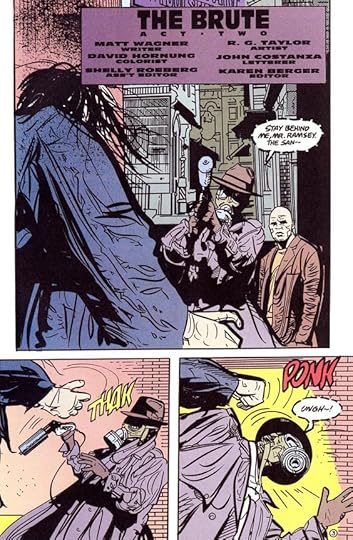
Before Neil Gaiman's Sandman, there was the original Sandman from the late 1930s named Wesley Dodd. Instead of being the god of Dreams, he was just an everyday mortal. A vigilante Batman-lite who ran around righting the wrongs of the day. That's not to say that this character didn't have his own distinct vigilante flair with his frightening mask and his gun full of knockout gas. He even appeared as a member of the Justice Society of America for a time. But the main thing I found exceptionally cool about the original was that his girlfriend (Dian) was his sidekick, not his damsel in distress.
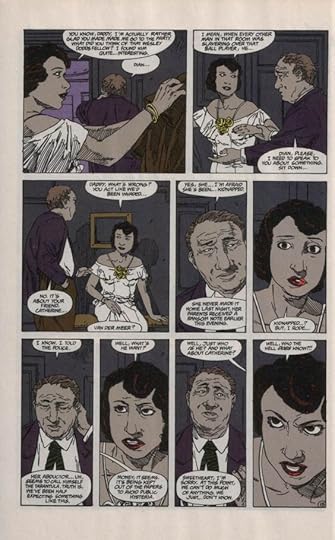
Wagner did a great job not only in bringing that relationship back to life but also in showcasing the seedy underbelly of New York in the 30s. There weren't any easy storylines in this, either. Incest, racism, rape, and pedophilia to name just a few of the harder to swallow parts of the overall plot.
However, none of it was gratuitous and all of it served to make the reader realize that a lot of things simply weren't all that better in the good old days.

I will say the art never really managed to be much more than just the bare bones of what I would consider kind of ok. It worked but...yech.
That's my only complaint, though. So if you're ok with the above-mentioned "triggers" then I'd say go ahead and dig in.
Recommended.
Before Neil Gaiman's Sandman, there was the original Sandman from the late 1930s named Wesley Dodd. Instead of being the god of Dreams, he was just an everyday mortal. A vigilante Batman-lite who ran around righting the wrongs of the day. That's not to say that this character didn't have his own distinct vigilante flair with his frightening mask and his gun full of knockout gas. He even appeared as a member of the Justice Society of America for a time. But the main thing I found exceptionally cool about the original was that his girlfriend (Dian) was his sidekick, not his damsel in distress.
Wagner did a great job not only in bringing that relationship back to life but also in showcasing the seedy underbelly of New York in the 30s. There weren't any easy storylines in this, either. Incest, racism, rape, and pedophilia to name just a few of the harder to swallow parts of the overall plot.
However, none of it was gratuitous and all of it served to make the reader realize that a lot of things simply weren't all that better in the good old days.
I will say the art never really managed to be much more than just the bare bones of what I would consider kind of ok. It worked but...yech.
That's my only complaint, though. So if you're ok with the above-mentioned "triggers" then I'd say go ahead and dig in.
Recommended.

July 12, 2023
During a meeting of the Justice Society of America, the gathered heroes discuss the agenda for the week, crime in the streets of New York, the sorry state of the Brooklyn Dodgers and Matt Wagner’s Sandman Mystery Theater, collected into book one, first published in 2016.
The Atom: … and so what I’m suggesting is that the pitcher does not come to the plate, does not bat, but rather another player, a designated batsman, bats in the pitcher’s stead.
Batman: That’ll never happen. So, Wagner’s Sandman Mystery Theater. Kind of gritty and dirty.
Dr. Fate: Have you seen New York these days? You think Gotham is bad, there are some sick twisted people walking around.
Wonder Woman: Agreed. Wagner throws a lot into this collection, this graphic novel, and it’s just about all bad. I did like that there is a strong female lead, Dian is not just a damsel in distress, she’s part of the crime fighting team.
Wildcat: And there is some steamy sex scenes! This is one hot ride!
Black Canary: Steamy sex scenes? Please! There’s some serious psychological problems, rape and even suggestions of pedophilia. There is also some disturbing scenes of misogynistic violence. Wagner describes a very seedy underground where crime and conspiracy to commit more crime is rampant.
Batman: Wagner does a good job of resurrecting Sandman as a hero, using 30s tech to fight crime. It’s not always perfect, or even pretty, but he gets the job done.
Wonder Woman: Not pretty is right, but the low level tech and antiquated procedures are fun to read. Though I was not crazy about the art.
Wildcat: Oh, I don’t know, there was some spicy nudey scenes.
Black Canary: What is it with you? Are you some demented perv?
Wildcat: I got your perv, right he-
Dr. Fate: Wildcat! Stand down! Diana was right, I was not thrilled with the art either, although I must confess that the style did lend itself to the setting and timeframe.
Atom: I actually kind of liked the art. And Sandman was an original member of the Justice Society.
Batman: At best, this is a cool reconstruction and recreation of the crime fighting days of yesteryear, but it can devolve into a cesspool of crime and bad behavior.
[Enter Sandman]
Dream: Hi, everyone! Have I got some news for all of you!
The Atom: … and so what I’m suggesting is that the pitcher does not come to the plate, does not bat, but rather another player, a designated batsman, bats in the pitcher’s stead.
Batman: That’ll never happen. So, Wagner’s Sandman Mystery Theater. Kind of gritty and dirty.
Dr. Fate: Have you seen New York these days? You think Gotham is bad, there are some sick twisted people walking around.
Wonder Woman: Agreed. Wagner throws a lot into this collection, this graphic novel, and it’s just about all bad. I did like that there is a strong female lead, Dian is not just a damsel in distress, she’s part of the crime fighting team.
Wildcat: And there is some steamy sex scenes! This is one hot ride!
Black Canary: Steamy sex scenes? Please! There’s some serious psychological problems, rape and even suggestions of pedophilia. There is also some disturbing scenes of misogynistic violence. Wagner describes a very seedy underground where crime and conspiracy to commit more crime is rampant.
Batman: Wagner does a good job of resurrecting Sandman as a hero, using 30s tech to fight crime. It’s not always perfect, or even pretty, but he gets the job done.
Wonder Woman: Not pretty is right, but the low level tech and antiquated procedures are fun to read. Though I was not crazy about the art.
Wildcat: Oh, I don’t know, there was some spicy nudey scenes.
Black Canary: What is it with you? Are you some demented perv?
Wildcat: I got your perv, right he-
Dr. Fate: Wildcat! Stand down! Diana was right, I was not thrilled with the art either, although I must confess that the style did lend itself to the setting and timeframe.
Atom: I actually kind of liked the art. And Sandman was an original member of the Justice Society.
Batman: At best, this is a cool reconstruction and recreation of the crime fighting days of yesteryear, but it can devolve into a cesspool of crime and bad behavior.
[Enter Sandman]
Dream: Hi, everyone! Have I got some news for all of you!

November 21, 2016
"Web-like strands of death attach themselves on the edge of my dream, there to ensnare innocence and hope."

Mention the name 'Sandman' to a comics enthusiast, and that person will more than likely immediately recall Neil Gaiman's version. The original Sandman however, a rather obscure character from DC's Golden Age, unfortunately doesn't leave that much of a footprint in the popular imagination. Not even Matt Wagner's film noir-inspired reboot - which partly coincided with Gaiman's legendary run in the nineties - was able to rectify this.
And this is a damn shame, for these comics (thank you Vertigo for reprinting these) provide quite the intriguing reading experience. Perhaps this collection will be a first step towards creating an entirely new fanbase. Fingers crossed.
Set in post-Depression New York, Sandman Mystery Theatre tells the story of Wesley Dodds, a reluctant inheritor of great wealth who, plagued every night by nightmarish (prophetic?) visions of darkness and evil, takes it upon himself to rid his city of its corrupt, criminal and greed-filled denizens. Insomniacs in search for an inspiring role model, look no further!
Donning a trench coat, fedora hat, an eery WW I gas mask and "armed" only with a gas gun (which fires a sleeping gas), other rudimentary inventions and his wits, the Sandman haunts the decadent streets of New York to track down those who abuse the weak, powerless and poor. Like other DC superheroes, the Sandman has a strict no-kill policy, and gives them over to the authorities.

This is a set-up I simply adore. Dodds has no superpowers, and isn't exacty a prime physical specimen. He's actually rather schlubby, unassuming and averse to violence, yet fiercely intelligent and resourceful. More of a private investigator with some unique tools than anything else. This makes what would otherwise just be a cheesy proposition feel grounded and more believable. It accepts and embraces its pulpy origins, but does something new with it.
As for the tales themselves (this collection contains 3 story arcs), I have few criticisms. All of them are hard-hitting (don't give this to kids, folks), tightly plotted, well-written and feel authentic. Especially in Dodds' ominous monologues, Wagner's feel for poetic language is apparent.
Additionally, Wagner inserted some great social commentary in here. Racism, sexism, urban apathy and capitalism (the variety bereft of any moral considerations) are criticized, yet in a not too obtrusive or preachy manner.
The one bone of contention I have (and which explains the lower rating), is the overall artwork. The first story arc "The Tarantula" has this gorgeous moody cartooning by Guy Davis, and I so wished he could have done all three of them. The other artists' work is decent enough, but looks rather uninspired and inconsistent in comparison. Davis clearly is also the better storyteller.
I'll let you decide for yourself which is better. From first to last: Guy Davis, John Watkiss, R.G. Taylor.

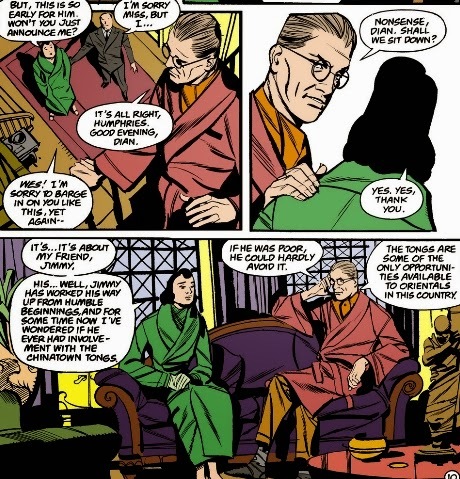
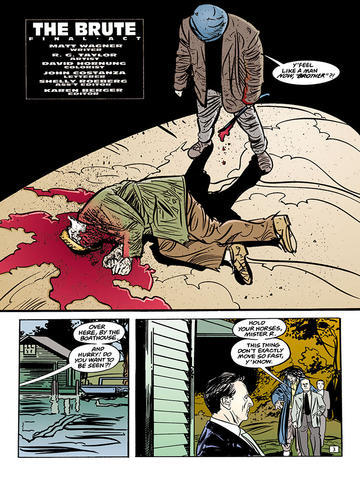
Hopefully the art quality will see a significant improvement in the next volume. Except for the first arc, only the strength of the writing and characters are keeping me interested for the moment. Perhaps that is enough, but we'll see. It's a visual medium after all.
Still, this is a strong recommendation to those thirsting for well-executed crime and noir fiction.
Mention the name 'Sandman' to a comics enthusiast, and that person will more than likely immediately recall Neil Gaiman's version. The original Sandman however, a rather obscure character from DC's Golden Age, unfortunately doesn't leave that much of a footprint in the popular imagination. Not even Matt Wagner's film noir-inspired reboot - which partly coincided with Gaiman's legendary run in the nineties - was able to rectify this.
And this is a damn shame, for these comics (thank you Vertigo for reprinting these) provide quite the intriguing reading experience. Perhaps this collection will be a first step towards creating an entirely new fanbase. Fingers crossed.
Set in post-Depression New York, Sandman Mystery Theatre tells the story of Wesley Dodds, a reluctant inheritor of great wealth who, plagued every night by nightmarish (prophetic?) visions of darkness and evil, takes it upon himself to rid his city of its corrupt, criminal and greed-filled denizens. Insomniacs in search for an inspiring role model, look no further!
Donning a trench coat, fedora hat, an eery WW I gas mask and "armed" only with a gas gun (which fires a sleeping gas), other rudimentary inventions and his wits, the Sandman haunts the decadent streets of New York to track down those who abuse the weak, powerless and poor. Like other DC superheroes, the Sandman has a strict no-kill policy, and gives them over to the authorities.
This is a set-up I simply adore. Dodds has no superpowers, and isn't exacty a prime physical specimen. He's actually rather schlubby, unassuming and averse to violence, yet fiercely intelligent and resourceful. More of a private investigator with some unique tools than anything else. This makes what would otherwise just be a cheesy proposition feel grounded and more believable. It accepts and embraces its pulpy origins, but does something new with it.
As for the tales themselves (this collection contains 3 story arcs), I have few criticisms. All of them are hard-hitting (don't give this to kids, folks), tightly plotted, well-written and feel authentic. Especially in Dodds' ominous monologues, Wagner's feel for poetic language is apparent.
Additionally, Wagner inserted some great social commentary in here. Racism, sexism, urban apathy and capitalism (the variety bereft of any moral considerations) are criticized, yet in a not too obtrusive or preachy manner.
The one bone of contention I have (and which explains the lower rating), is the overall artwork. The first story arc "The Tarantula" has this gorgeous moody cartooning by Guy Davis, and I so wished he could have done all three of them. The other artists' work is decent enough, but looks rather uninspired and inconsistent in comparison. Davis clearly is also the better storyteller.
I'll let you decide for yourself which is better. From first to last: Guy Davis, John Watkiss, R.G. Taylor.
Hopefully the art quality will see a significant improvement in the next volume. Except for the first arc, only the strength of the writing and characters are keeping me interested for the moment. Perhaps that is enough, but we'll see. It's a visual medium after all.
Still, this is a strong recommendation to those thirsting for well-executed crime and noir fiction.

April 27, 2020
I read Sandman Mystery Theatre off and on for the past months. Overall, it was well written and the characters were likeable and interesting. There were certain instances in the novel were it was very graphic and disturbing which i was not prepared for. However, the middle story was not as captivating as the other two. Generally, this was a great graphic novel and worth picking up!

July 1, 2016
Finally! Vertigo's Sandman Mystery Theatre gets reprinted!
Collecting three story arcs of four parts each, this book will appeal to fans of pulp, mysteries, and suspense stories. The writing is by far the best part: the plots are intelligent; the era (1938 New York City) is portrayed faithfully (not that I was there at that time!), even down to how the people speak - racist comments included. The arcs are just the right length: 4 issues. That gives the writer time to tell a good story, at a good pace, without having to unnecessarily stretch it out (... to six issues, let's say).
The art's not bad, though you won't be reading these stories for the art. Each story arc is illustrated by a different artist, so you get the unavoidable inconsistencies.
The stories are all appealing on their own, however the most powerful story of this bunch is by far the third one, The Brute. I like that the characters are evolving from one story to the next, and that with Dian Belmont, the District Attorney's daughter, this series has a strong female character. And you don't have to be a sleuth to figure out she'll realise (at some point) that Wesley Dodds and The Sandman are one and the same person.
I can't wait for Book 2!
Collecting three story arcs of four parts each, this book will appeal to fans of pulp, mysteries, and suspense stories. The writing is by far the best part: the plots are intelligent; the era (1938 New York City) is portrayed faithfully (not that I was there at that time!), even down to how the people speak - racist comments included. The arcs are just the right length: 4 issues. That gives the writer time to tell a good story, at a good pace, without having to unnecessarily stretch it out (... to six issues, let's say).
The art's not bad, though you won't be reading these stories for the art. Each story arc is illustrated by a different artist, so you get the unavoidable inconsistencies.
The stories are all appealing on their own, however the most powerful story of this bunch is by far the third one, The Brute. I like that the characters are evolving from one story to the next, and that with Dian Belmont, the District Attorney's daughter, this series has a strong female character. And you don't have to be a sleuth to figure out she'll realise (at some point) that Wesley Dodds and The Sandman are one and the same person.
I can't wait for Book 2!

December 19, 2018
Collects issues 1-12 of Sandman Mystery Theatre, written by Matt Wagner and Steven T. Seagle, which ran from 1993-1999. The story takes us to the 1930s to follow the adventures of Wesley Dodds, a quiet stay-at-home millionaire by day who donned a suit, trench coat, fedora, gas mask and gas gun by night to fight crime on the streets of New York City. This incarnation of the Sandman originally appeared in the golden age of comic books a little before Batman. Like Batman, he has a butler and a sidekick. However, in Wesley's case, his sidekick is an intelligent, capable woman named Dian Belmont, who is also Wesley's love interest. The comic has a very film noir style and some engaging mysteries. Often, Dian herself serves as the point-of-view character. Wesley is much more relatable than Batman. Although rich, he doesn't have unlimited coffers for miraculous inventions, plus he makes plenty of mistakes both as a detective and in his pursuit of Dian.

January 9, 2025
For many comic book readers today, the first thing that comes to mind when they hear the word Sandman is the series written by Neil Gaiman. This cycle has become a classic, often regarded as one of the greatest comics ever created. It tells the story of Dream, also known as Morpheus, the ruler of the Dreaming, an embodiment of all dreams and aspirations. The protagonist of this series is commonly referred to as Sandman.
What not everyone realizes, however, is that Neil Gaiman’s Sandman is actually the latest incarnation of a hero bearing that title. The first character to use the name was Wesley Dodds, a kind of early superhero. Unlike Morpheus, he had no powers but relied on his gas mask and a gun filled with a sedative.
The series Sandman Mystery Theatre, overseen by Matt Wagner—known for graphic novels like Trinity and Batman: The Dark Knight Returns—delivers a fresh take on the original Sandman. Artists such as Guy Davis, John Watkiss, and R.G. Taylor contributed to the visual storytelling.
Sandman Mystery Theatre doesn’t follow the modern structure of large “story arcs” spanning 5–6 issues. Instead, Matt Wagner opted for shorter, more episodic tales. These procedural-style stories focus on criminal investigations, such as kidnappings or murders, led by the protagonist, Wesley Dodds, aka Sandman. The stories are mostly self-contained, with the only connecting threads being the recurring characters and their development over time. It feels like watching a high-quality noir crime series, heavily influenced by the aesthetics of classic noir cinema.
The narrative left a strong impression on me. The entire story is steeped in a noir atmosphere, with references to Prohibition, the Great Depression, and Chinatown districts. The artwork reinforces this tone. While the twists aren’t always shocking, they lead to bittersweet endings, particularly in tales involving triads and illegal boxing matches, where doing the right thing doesn’t always pay off.
One surprising highlight is the female character, Dian Belmont. She’s written as a competent and dynamic character, aiding the police in a time when such roles were predominantly male. Despite physical limitations, her investigative skills and ability to connect dots make her more engaging than many of her male counterparts.
As for Sandman himself, Wesley Dodds is a refreshing departure from typical heroes. Despite his wealth, he is introverted and reserved, the polar opposite of Bruce Wayne’s flamboyant playboy persona. The dialogues are also well-crafted—concise and impactful—making the reading experience thoroughly enjoyable.
Who would I recommend Sandman Mystery Theatre to? Certainly not fans of Neil Gaiman’s Sandman. Instead, it’s perfect for those who appreciate strong crime stories. Additionally, fans of Batman, particularly those who enjoy the detective aspect of the character, will likely find much to admire here.
What not everyone realizes, however, is that Neil Gaiman’s Sandman is actually the latest incarnation of a hero bearing that title. The first character to use the name was Wesley Dodds, a kind of early superhero. Unlike Morpheus, he had no powers but relied on his gas mask and a gun filled with a sedative.
The series Sandman Mystery Theatre, overseen by Matt Wagner—known for graphic novels like Trinity and Batman: The Dark Knight Returns—delivers a fresh take on the original Sandman. Artists such as Guy Davis, John Watkiss, and R.G. Taylor contributed to the visual storytelling.
Sandman Mystery Theatre doesn’t follow the modern structure of large “story arcs” spanning 5–6 issues. Instead, Matt Wagner opted for shorter, more episodic tales. These procedural-style stories focus on criminal investigations, such as kidnappings or murders, led by the protagonist, Wesley Dodds, aka Sandman. The stories are mostly self-contained, with the only connecting threads being the recurring characters and their development over time. It feels like watching a high-quality noir crime series, heavily influenced by the aesthetics of classic noir cinema.
The narrative left a strong impression on me. The entire story is steeped in a noir atmosphere, with references to Prohibition, the Great Depression, and Chinatown districts. The artwork reinforces this tone. While the twists aren’t always shocking, they lead to bittersweet endings, particularly in tales involving triads and illegal boxing matches, where doing the right thing doesn’t always pay off.
One surprising highlight is the female character, Dian Belmont. She’s written as a competent and dynamic character, aiding the police in a time when such roles were predominantly male. Despite physical limitations, her investigative skills and ability to connect dots make her more engaging than many of her male counterparts.
As for Sandman himself, Wesley Dodds is a refreshing departure from typical heroes. Despite his wealth, he is introverted and reserved, the polar opposite of Bruce Wayne’s flamboyant playboy persona. The dialogues are also well-crafted—concise and impactful—making the reading experience thoroughly enjoyable.
Who would I recommend Sandman Mystery Theatre to? Certainly not fans of Neil Gaiman’s Sandman. Instead, it’s perfect for those who appreciate strong crime stories. Additionally, fans of Batman, particularly those who enjoy the detective aspect of the character, will likely find much to admire here.

April 12, 2019
I guess like most folks, I ultimately picked this book up after completing Neil Geiman's The Sandman, but my first time hearing of this character and being interested is his important cameo in Kingdom Come--one of the greatest superhero stories of all time.
Wesley Dodds was created in between the Superman and Batman, but is of the rich vigilante type of heroes. He's not the perfect crime-fighting machine, but he is good at thinking on his feet. The original advent of this character is not that interesting, but this "not-for-kids" reboot in the 1990s is very interesting to read. The world of this hero is a morally corrupt, late-1930s New York City. The book does not shy away from the reality of this world's crime which is not creepy clowns, but gangsters, white supremacists (on both sides of the law), incestuous-gangsters, pedophiles, serial killers....this is a pulp-noir with a guy wearing a mask who is fighting crime with the help of a then-imprisoned Lord of Dreams giving him tips.
I have to say despite the extreme nature of the stories and the shifting art-styles of the collection, the story stayed on-point and really explored called-out things about "the good ol' days" that people still try to deny and which most superhero comics try to down-play or gloss-over. Matt Wagner does a great job with the story (which improves my feelings of him from my last encounter in Batman/Superman/Wonder Woman: Trinity). There were different artists for each (three) story-archs, but Guy Davis was my favorite because his style brought a refreshing realism, that gave the comic a true crime-noir feel.
Wesley Dodds was created in between the Superman and Batman, but is of the rich vigilante type of heroes. He's not the perfect crime-fighting machine, but he is good at thinking on his feet. The original advent of this character is not that interesting, but this "not-for-kids" reboot in the 1990s is very interesting to read. The world of this hero is a morally corrupt, late-1930s New York City. The book does not shy away from the reality of this world's crime which is not creepy clowns, but gangsters, white supremacists (on both sides of the law), incestuous-gangsters, pedophiles, serial killers....this is a pulp-noir with a guy wearing a mask who is fighting crime with the help of a then-imprisoned Lord of Dreams giving him tips.
I have to say despite the extreme nature of the stories and the shifting art-styles of the collection, the story stayed on-point and really explored called-out things about "the good ol' days" that people still try to deny and which most superhero comics try to down-play or gloss-over. Matt Wagner does a great job with the story (which improves my feelings of him from my last encounter in Batman/Superman/Wonder Woman: Trinity). There were different artists for each (three) story-archs, but Guy Davis was my favorite because his style brought a refreshing realism, that gave the comic a true crime-noir feel.

Read
January 30, 20174 stars from Brad, read the full review at FANTASY LITERATURE
Disclaimer: just so you know, some of the books we review are received free from publishers
The Sandman Mystery Theatre is a near-perfect noir comic book series written in the 1990s by Matt Wagner, though the stories are set in the late 1930s. In some ways, Wagner is making a return to the older, original Sandman character created in 1939 (who also went by the name of Wesley Dodds), but the Sandman has had various incarnations since then, including Kirby’s in the 1970s. And of course, Neil Gaiman’s Sandman is the most famous of them all, but he simply took the name and completely reinvented the character as an immortal entity, also known as Morpheus and Dream. Wagner takes us back to the physical world, grounds us in reality, and writes the most subdued, somber, and plain Sandman ever to appear in comic books, and this approach is the genius behind The Sandman Mystery Theatre.
Wagner is no stranger to pulp stories: His most famous creation Grendel is an evil criminal mastermind based on pulp models, and some of the writer’s best work is his telling origin stories of The Shadow, The Spirit, Green Hornet, and the Lone Ranger, not to mention stories set in the early years of Batman’s crime-fighting days. All of these are well liked by readers and critics, and The Sandman Mystery Theatre is of equally high quality....4 stars from Brad, read the full review at FANTASY LITERATURE
Disclaimer: just so you know, some of the books we review are received free from publishers
The Sandman Mystery Theatre is a near-perfect noir comic book series written in the 1990s by Matt Wagner, though the stories are set in the late 1930s. In some ways, Wagner is making a return to the older, original Sandman character created in 1939 (who also went by the name of Wesley Dodds), but the Sandman has had various incarnations since then, including Kirby’s in the 1970s. And of course, Neil Gaiman’s Sandman is the most famous of them all, but he simply took the name and completely reinvented the character as an immortal entity, also known as Morpheus and Dream. Wagner takes us back to the physical world, grounds us in reality, and writes the most subdued, somber, and plain Sandman ever to appear in comic books, and this approach is the genius behind The Sandman Mystery Theatre.
Wagner is no stranger to pulp stories: His most famous creation Grendel is an evil criminal mastermind based on pulp models, and some of the writer’s best work is his telling origin stories of The Shadow, The Spirit, Green Hornet, and the Lone Ranger, not to mention stories set in the early years of Batman’s crime-fighting days. All of these are well liked by readers and critics, and The Sandman Mystery Theatre is of equally high quality....4 stars from Brad, read the full review at FANTASY LITERATURE

December 16, 2022
Comics engaging their pulp roots.
This is a fabulous first volume of stories from the Sandman Mystery Theater. The Golden Age Sandman is a comics contemporary of pulp vigilantes such as The Shadow, The Spider and the Phantom Detective. Matt Wagner, the writer of this series, had crafted three stories of the Sandman set in a post-World War I era that drapes the essence of Neil Gaiman's Sandman series across the shoulders of Wesley Dodds aka The Sandman. The stories are great and they are illustrated by artists who are the kind of journeymen who know how to set, frame and pace a story within the script which they have been given. These are pulp stories tangentially touching fantastic stories. If you read both the Sandman and Sandman Mystery Theater series you will find them a rich experience and neither of which abandons their genre to insult your intelligence.
This is a fabulous first volume of stories from the Sandman Mystery Theater. The Golden Age Sandman is a comics contemporary of pulp vigilantes such as The Shadow, The Spider and the Phantom Detective. Matt Wagner, the writer of this series, had crafted three stories of the Sandman set in a post-World War I era that drapes the essence of Neil Gaiman's Sandman series across the shoulders of Wesley Dodds aka The Sandman. The stories are great and they are illustrated by artists who are the kind of journeymen who know how to set, frame and pace a story within the script which they have been given. These are pulp stories tangentially touching fantastic stories. If you read both the Sandman and Sandman Mystery Theater series you will find them a rich experience and neither of which abandons their genre to insult your intelligence.

January 2, 2023
A film noir feast on graphic novel form
I loved it! The depth of authenticity for this period piece is simply spectacular. It's clear to me that the author has a great love for colloquial language and masterfully used it. At no time does it feel cartoonish; rather every word feels well placed to move the story forward. The artwork may seem random and like comic strips from The Sunday funnies, but here again the author and artists have done justice to an authentic period piece.
This is a masterpiece that deserves its entry into the ranks of the graphic novel goes like Mignola and Gaiman... A final nod to the subtle homage done to the protagonist's namesake... This Sandman stands on its own as an excellent hero!!!
I loved it! The depth of authenticity for this period piece is simply spectacular. It's clear to me that the author has a great love for colloquial language and masterfully used it. At no time does it feel cartoonish; rather every word feels well placed to move the story forward. The artwork may seem random and like comic strips from The Sunday funnies, but here again the author and artists have done justice to an authentic period piece.
This is a masterpiece that deserves its entry into the ranks of the graphic novel goes like Mignola and Gaiman... A final nod to the subtle homage done to the protagonist's namesake... This Sandman stands on its own as an excellent hero!!!
April 21, 2022
A must-read for ALL fans of Vertigo, Sandman, or even comics in general...
I don't often find myself surprised by the quality of a book, but I admit that I neglected reading this series to my detriment. Why is it only now, during their roughly 30th anniversary am I picking these up for the first time? This book captures the essence of the time, the desperation, the innocence, the vice of men and the dream-like quality of justice. I am not skilled enough to even describe what makes this story so good, but the elusive nature of that excellence is perhaps its most telling quality.
I don't often find myself surprised by the quality of a book, but I admit that I neglected reading this series to my detriment. Why is it only now, during their roughly 30th anniversary am I picking these up for the first time? This book captures the essence of the time, the desperation, the innocence, the vice of men and the dream-like quality of justice. I am not skilled enough to even describe what makes this story so good, but the elusive nature of that excellence is perhaps its most telling quality.

February 11, 2023
Pulpy goodness with interesting mix of artists. Closer to a 4.5 for me.
October 3, 2022
A different kind of Superhero
Great stories, he doesn’t have elaborate unrealistic gadgets & is only armed with a gas gun, I like the period setting as well, before computers, he has to improvise & use his wits more.
Great stories, he doesn’t have elaborate unrealistic gadgets & is only armed with a gas gun, I like the period setting as well, before computers, he has to improvise & use his wits more.

September 19, 2019
This comic didn't work for me at all. I found the artwork unattractive and offputting, the stories simplistically "edgy," and the whole thing a grind. I'm not on board for Volume 2.
July 18, 2024
every story arc hinges on rape and pedophilia
way over the line on content alone. only worth reading for the four issues of Guy Davis, the quality degrades sharply regardless
way over the line on content alone. only worth reading for the four issues of Guy Davis, the quality degrades sharply regardless

November 12, 2021
I'll start off by admitting that this is my first graphic novel. The closest I've come before this is the Archie and Friends comics that you're able to beg your parents for at the checkout line in the grocery store. (I'm not hating - I literally loved those.)
Buuuuut with that being said, this was an ok read for me. I didn't love it but I also didn't hate it. I've said before, but I really am a "judge a book by it's cover" type and totally picked this up because I looooved the cover artwork. The actual artwork inside...ehhhhhhhhhhhhhhh(takes deep breath)hhhhhhhhhhhh......it was pretty disappointing. I feel like a novel that uses photos to tell the story more than the words written within should have some engaging artwork. But it was just...meh. It did change for each of the three story lines to match with the overall tone, which I'll go ahead and give kudos for.
The stories themselves...I guess were just not exactly what I expected. It's just a batman wannabe that runs around with a gas mask in the 1930s and "solving" crimes in a way where you kinda expect to read "Well zoinks Scoobs!" on some of the big reveals.
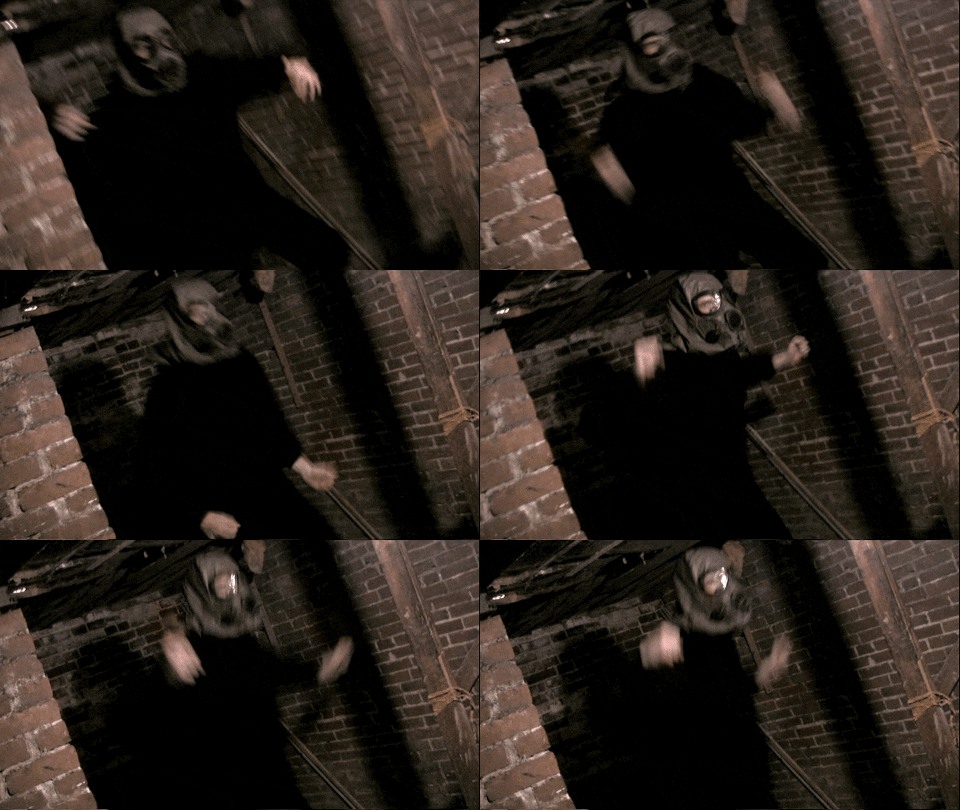
He gets caught sneaking around a lot so he's really not all that great at his job, (...he's supposedly rich but I don't know WHAT his actual job is) but luckily he's got knockout gas that he uses on literally everyone and never seems to run out of supply. While he's spraying his gas all willy-nilly he loves to mention "You can't escape the dark dreams of the Sandman." and then end scene...
Then there's the other main character, Dian, the overly clingy meddler in affairs. She never really seems to do anything productive, just gets all up in everyone's business and then goes to Wes crying about how taxing the events she placed herself into was...and then Wes calms her down and then out he goes for his vigilante work.
Anyhoo, it was interesting enough to keep reading until the end and if I saw book two I would most likely read it.
Buuuuut with that being said, this was an ok read for me. I didn't love it but I also didn't hate it. I've said before, but I really am a "judge a book by it's cover" type and totally picked this up because I looooved the cover artwork. The actual artwork inside...ehhhhhhhhhhhhhhh(takes deep breath)hhhhhhhhhhhh......it was pretty disappointing. I feel like a novel that uses photos to tell the story more than the words written within should have some engaging artwork. But it was just...meh. It did change for each of the three story lines to match with the overall tone, which I'll go ahead and give kudos for.
The stories themselves...I guess were just not exactly what I expected. It's just a batman wannabe that runs around with a gas mask in the 1930s and "solving" crimes in a way where you kinda expect to read "Well zoinks Scoobs!" on some of the big reveals.
He gets caught sneaking around a lot so he's really not all that great at his job, (...he's supposedly rich but I don't know WHAT his actual job is) but luckily he's got knockout gas that he uses on literally everyone and never seems to run out of supply. While he's spraying his gas all willy-nilly he loves to mention "You can't escape the dark dreams of the Sandman." and then end scene...
Then there's the other main character, Dian, the overly clingy meddler in affairs. She never really seems to do anything productive, just gets all up in everyone's business and then goes to Wes crying about how taxing the events she placed herself into was...and then Wes calms her down and then out he goes for his vigilante work.
Anyhoo, it was interesting enough to keep reading until the end and if I saw book two I would most likely read it.

September 1, 2023
During the second volume of Madame Xanadu, we meet a group of women in the 1940s whose wealthy fathers are all in danger of falling victim to a demon because ... yadda yadda during the Inquisition blah blah blah magic. It's a fun story (despite that description) that at the end reveals one of the characters connection with the Golden Age crime-fighting Sandman.
This is only an end of book reveal for readers like me who had never read Wagner's Sandman Mystery Theater. That character is one of the leads of SMT, the other being Sandman.
So I thought this was an ideal time to go back and read this series as part of my Vertigo Universe readthrough. And I think it was.
The art is not even very good for its era. The faces are wonky, the coloring is kind of off-putting, and when the artist switch happens halfway through the collection it gets more cartoony and becomes...differently unappealing to me. Neither is terrible but I would never seek out other work by the artists.
The story takes place about five years before Madame Xanadu, Volume 2: Exodus Noir (also by Wagner) and it introduces Dian Belmont and Wesley Dodds who will, but the end of the first collection be a crime solving team.
Wagner is a talented writer, and the dialogue and plot progression was breezy. Apart from the art, it's on par with the better, but not the best, Hellblazer stories. But with a more PG feel than Hellblazer's PG-13.
While I wouldn't, necessarily, recommend this to fans of Neil Gaiman's The Sandman, Vol. 1: Preludes & Nocturnes, I do think it would appeal to fans of Vertigo readers who prefer their supernatural thrillers more street level.
This is only an end of book reveal for readers like me who had never read Wagner's Sandman Mystery Theater. That character is one of the leads of SMT, the other being Sandman.
So I thought this was an ideal time to go back and read this series as part of my Vertigo Universe readthrough. And I think it was.
The art is not even very good for its era. The faces are wonky, the coloring is kind of off-putting, and when the artist switch happens halfway through the collection it gets more cartoony and becomes...differently unappealing to me. Neither is terrible but I would never seek out other work by the artists.
The story takes place about five years before Madame Xanadu, Volume 2: Exodus Noir (also by Wagner) and it introduces Dian Belmont and Wesley Dodds who will, but the end of the first collection be a crime solving team.
Wagner is a talented writer, and the dialogue and plot progression was breezy. Apart from the art, it's on par with the better, but not the best, Hellblazer stories. But with a more PG feel than Hellblazer's PG-13.
While I wouldn't, necessarily, recommend this to fans of Neil Gaiman's The Sandman, Vol. 1: Preludes & Nocturnes, I do think it would appeal to fans of Vertigo readers who prefer their supernatural thrillers more street level.

August 20, 2018
Kid 1 grabbed this at the library and insisted I read it.
This edition has three full stories: The Tarantula, the Face, and the Brute, and covers issues #1-12.
A different artist did the first story.
It was only after I’d finished it, that I read the foreword and realised that this edition is a reworking of the original comic from 1939. Reworked again, by Neil Gaiman into it’s current form. [Gaiman’s Dream appears in this Sandman’s dreams]
Which makes the fact that he has a human, female sidekick pretty ground breaking. Dian Belmont is the daughter of the DA and gets some inside information via her father, but she’s also smart, inquisitive and at a loose end after finishing college. She dates (and sleeps with *gasp*) a Chinese man, goes nightclubbing in Harlem, and seems pretty liberal for the time. She even kicks a guy in the groin when he tries to force himself upon her. [you go, girl]
She is the love interest of the Sandman, Wesley Dodds, and she knows his dual identity [she’s well on her way to working out by the end of the third story]. According to Wikipedia, “Later stories would reveal that the two remained together for the duration of their lives, though they never married.”
[Ha, independent to the end.]
The adventures expose her to a world of racism, incest, and child abuse, on top of the usual crime. [it is pretty brutal]
Wesley Dodds is also human; his secret weapon is a gas gun that allows him to question people before they fall unconscious. But he’s not immune to it’s effects, that’s why he wears the gas mask, as well as it hiding his face. His wealth allows him privacy and access to influential people, like Dian’s father. He can also purchase microphones to lower down chimneys and so. The bat-gadgetry of the time, I suppose.
4 stars
This edition has three full stories: The Tarantula, the Face, and the Brute, and covers issues #1-12.
A different artist did the first story.
It was only after I’d finished it, that I read the foreword and realised that this edition is a reworking of the original comic from 1939. Reworked again, by Neil Gaiman into it’s current form. [Gaiman’s Dream appears in this Sandman’s dreams]
Which makes the fact that he has a human, female sidekick pretty ground breaking. Dian Belmont is the daughter of the DA and gets some inside information via her father, but she’s also smart, inquisitive and at a loose end after finishing college. She dates (and sleeps with *gasp*) a Chinese man, goes nightclubbing in Harlem, and seems pretty liberal for the time. She even kicks a guy in the groin when he tries to force himself upon her. [you go, girl]
She is the love interest of the Sandman, Wesley Dodds, and she knows his dual identity [she’s well on her way to working out by the end of the third story]. According to Wikipedia, “Later stories would reveal that the two remained together for the duration of their lives, though they never married.”
[Ha, independent to the end.]
The adventures expose her to a world of racism, incest, and child abuse, on top of the usual crime. [it is pretty brutal]
Wesley Dodds is also human; his secret weapon is a gas gun that allows him to question people before they fall unconscious. But he’s not immune to it’s effects, that’s why he wears the gas mask, as well as it hiding his face. His wealth allows him privacy and access to influential people, like Dian’s father. He can also purchase microphones to lower down chimneys and so. The bat-gadgetry of the time, I suppose.
4 stars

June 11, 2025
Dzieło Wagnera wprawiło mnie w lekkie zdumienie, bowiem nie byłem świadom, iż przed Morfeuszem jako Sandmanem od Gaimana, był jeszcze ktoś inny. Wesley Dodds, który też nosił miano Sandman. Tylko ten miast być bóstwem, ma za broń gaz usypiający i swój umysł. Jest normalnym człowiekiem, ryzykującym sporo. Szczęśliwie może liczyć na pomoc innych, w tym Dian Belmont, która także powoduje u bohatera szybsze bicie serca.
Mamy tu trzy sprawy kryminalne, które potrafią zostać z czytelnikiem w wyobraźni. Już pierwsza sprawa jest bardzo klimatyczna. Ktoś morduje kobiety, a znajoma znajomej zostaje uprowadzona. Jej czas wydaje się być policzony. Komiks bywa naprawdę makabryczny. Potem lądujmy w Chinatown. Przypominam, że to lata 30. XX wieku, więc styl noir sączy się ze stronic. A tu ktoś odcina ze zbytnią chęcią głowy ludziom.
Trzecia opowieść z różnych względów była najmocniejsza, zwłaszcza że mamy tu przemoc wobec dzieci. Ta wersja Sandmana nie boi się zatem poruszać mocne tematy, ale całość wybrzmiewa przez to o wiele wiarygodniej/realistyczniej. Jedynym mój zarzut kieruję do warstwy wizualnej. Jest zwyczajnie brzydko. Z jednej strony pasuje to do ukazanej brutalności, z innej sprawia, iż całość czyta się miejscami mocno siermiężnie.
Niemniej jest to historia porządna, dobra, która potrafi nieco zaszokować, ze stronic których prawie dosłownie wylewa się klimat. Jedno w większych zaskoczeń tego roku...
Mamy tu trzy sprawy kryminalne, które potrafią zostać z czytelnikiem w wyobraźni. Już pierwsza sprawa jest bardzo klimatyczna. Ktoś morduje kobiety, a znajoma znajomej zostaje uprowadzona. Jej czas wydaje się być policzony. Komiks bywa naprawdę makabryczny. Potem lądujmy w Chinatown. Przypominam, że to lata 30. XX wieku, więc styl noir sączy się ze stronic. A tu ktoś odcina ze zbytnią chęcią głowy ludziom.
Trzecia opowieść z różnych względów była najmocniejsza, zwłaszcza że mamy tu przemoc wobec dzieci. Ta wersja Sandmana nie boi się zatem poruszać mocne tematy, ale całość wybrzmiewa przez to o wiele wiarygodniej/realistyczniej. Jedynym mój zarzut kieruję do warstwy wizualnej. Jest zwyczajnie brzydko. Z jednej strony pasuje to do ukazanej brutalności, z innej sprawia, iż całość czyta się miejscami mocno siermiężnie.
Niemniej jest to historia porządna, dobra, która potrafi nieco zaszokować, ze stronic których prawie dosłownie wylewa się klimat. Jedno w większych zaskoczeń tego roku...

November 13, 2016
As a huge fan of The Sandman, I have been peripherally aware of this series for a long time, but never managed to pick it up until now. I think going in I might have had unfairly high expectations for it. It isn't The Sandman, or even that universe - it's basically a 1930's radio serial in comic book form, with an emphasis on highlighting cultural and civil issues of the time in a realistic fashion while telling a decent mystery. Although Wesley Dodds is the Sandman here, the story actually focuses more on the perspective of Dian Belmont, an aging debutante without much purpose in her life. Through her interactions with Dodds and others, she begins to see the larger image, complete with its casual racism (towards blacks and Asians especially), denigration of the woman's role, unpleasant familial relations, and child abuse. This is not a pleasant book to read - these topics end up playing front and center in the three stories collected here. And the artwork has not aged well, especially in the second book, the Face, where the artwork was actually distracting. It's an interesting series, and not quite what I was expecting, but it has value in giving a more nuanced perspective of life in the 30's without the whitewashing.

May 26, 2017
A collection of comics from the very beginning of DC's Vertigo imprint.
I remember buying the first issue of this comic in 1993. And simply being too young to enjoy it.
Wesley Dodds is a wealthy man in the 1940s, and has bad dreams. To combat the dreams(or something? His reasons aren't specified) he spends his nights fighting criminals with a sleeping gas he's made.
Dodds and The Sandman first appeared in the 1940s, and were revived for this series.
Dian Belmont, daughter of the D.A., is always working on solving mysteries. And she keeps running into Wesley Dodds in the process.
Matt Wagner(Grendel) writes all three stories here. He makes each story revolve around timeless social issues. Poverty, racism, sexism, child abuse, etc.
Each story arc in this series has a different artist. This volume has work by Guy Davis, John Watkiss and R.G. Taylor. They all do a good job, but none particularly wowed me.
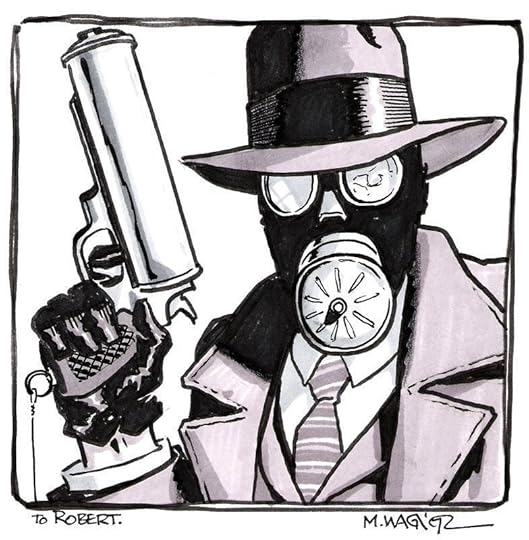
Bonus: How cool does the Sandman look?
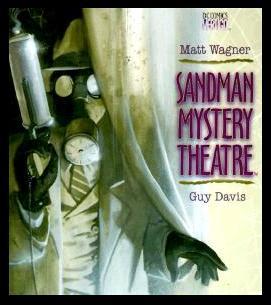
I remember buying the first issue of this comic in 1993. And simply being too young to enjoy it.
Wesley Dodds is a wealthy man in the 1940s, and has bad dreams. To combat the dreams(or something? His reasons aren't specified) he spends his nights fighting criminals with a sleeping gas he's made.
Dodds and The Sandman first appeared in the 1940s, and were revived for this series.
Dian Belmont, daughter of the D.A., is always working on solving mysteries. And she keeps running into Wesley Dodds in the process.
Matt Wagner(Grendel) writes all three stories here. He makes each story revolve around timeless social issues. Poverty, racism, sexism, child abuse, etc.
Each story arc in this series has a different artist. This volume has work by Guy Davis, John Watkiss and R.G. Taylor. They all do a good job, but none particularly wowed me.
Bonus: How cool does the Sandman look?
October 21, 2024
4.5 stars
Only the Sandman can see into the Dark Hearts of men (yes, it's mostly men) and bring them to justice...
The entire volume is written by Matt Wagner with art by Guy Davis on the first story "The Tarantula", John Watkins on "The Face" and lastly R.G. Taylor on "The Brute".
This is very much the darkest noir, dealing as the stories do with alcoholism, incest, kidnapping, revenge, racism, murder, prostitution, corruption, sexual assault, drugs and child abuse.
What keeps the whole endeavour from sinking below the weight of its (in)human (but (unfortunately) very human) subject matter is the slow building relationship between Wesley and Dian, a shining, humane light in the darkness that is 1930s New York.
Narratively, the only thing that made no sense to me was the introduction of 'the Brute' at the beginning of that eponymous storyline; it just doesn't fit in with the rest of the story, from a motivational and situational point of view. Otherwise, this is an excellent pulpy, well-written & drawn, comic book story, embodying the gristle of the B&W nostalgia of noir with much more modern sensibilities that don't just gloss over the worst excesses of the human race....
Only the Sandman can see into the Dark Hearts of men (yes, it's mostly men) and bring them to justice...
The entire volume is written by Matt Wagner with art by Guy Davis on the first story "The Tarantula", John Watkins on "The Face" and lastly R.G. Taylor on "The Brute".
This is very much the darkest noir, dealing as the stories do with alcoholism, incest, kidnapping, revenge, racism, murder, prostitution, corruption, sexual assault, drugs and child abuse.
What keeps the whole endeavour from sinking below the weight of its (in)human (but (unfortunately) very human) subject matter is the slow building relationship between Wesley and Dian, a shining, humane light in the darkness that is 1930s New York.
Narratively, the only thing that made no sense to me was the introduction of 'the Brute' at the beginning of that eponymous storyline; it just doesn't fit in with the rest of the story, from a motivational and situational point of view. Otherwise, this is an excellent pulpy, well-written & drawn, comic book story, embodying the gristle of the B&W nostalgia of noir with much more modern sensibilities that don't just gloss over the worst excesses of the human race....

August 23, 2020
I'm a sucker for genre blends of noir and super heroes. Bonus points if it features super hero noir in the classic golden age of comics and Hollywood period. More bonus points for stylized art. And even more for taking a classic super hero of the period and doing such a spin on it that it almost becomes its own thing. So, yeah, Wagner and Davis gets points for that.
As for the story itself, it's got twists and turns that show the heights of human depravity and how even a microscopic amount of human kindness.
Really, the thing I find strange about this is... Sandman Mystery Theater is... without question, a Super Hero book. Made by Vertigo. At a time when Vertigo was stripping the super hero elements out of books like Doom Patrol and Animal Man. Instead of trying to seem mature by jettisoning those ideas, it become mature by embracing and subverting them.
So yeah, if I can find a few more, I'm along for the ride. Technically, I already have but I'd have to skip a volume. (The used book store had volumes 1 and 3, not 2. Oh well.)
As for the story itself, it's got twists and turns that show the heights of human depravity and how even a microscopic amount of human kindness.
Really, the thing I find strange about this is... Sandman Mystery Theater is... without question, a Super Hero book. Made by Vertigo. At a time when Vertigo was stripping the super hero elements out of books like Doom Patrol and Animal Man. Instead of trying to seem mature by jettisoning those ideas, it become mature by embracing and subverting them.
So yeah, if I can find a few more, I'm along for the ride. Technically, I already have but I'd have to skip a volume. (The used book store had volumes 1 and 3, not 2. Oh well.)
June 14, 2017
A trio of noir tales featuring a very old and somewhat obscure DC Comics characters, the Golden Age Sandman Wesley Dodds as he and his love interest Dian Belmont investigate bizarre and baffling crimes in Depression-era New York City. The artwork doesn't always make things easy to follow or tell characters apart that aren't Wesley or Dian, but what is on display here are some well-written pulp-style adventures where the Sandman deals with things the character could never have dealt with in a 1940s comic book like racism, incest, sexual assault, and other things that stamp this book as the mature readers title for a modern audience that it is. Not for someone looking for straightforward superhero stories, but worth a look for fans of noir or the character in general.

August 30, 2025
A guy leaves his daughter alone with a bum who he just met and guess what happens? Exactly what you would think. Even though he is a boxer that has had his bell rung many times, it is hard to believe that a loving parent would be stupid enough to do this.
The way the two main characters relationship is forced in by her just getting all a flutter about everything and driving over to his place for a ten second conversation that could Cleary have been done over the phone is rediculous.
Things like these are just lazy and it feels like such a shame for around it there are legimate great and Intresting moments with Intresting mysteries at the core of each story. It is a joy to see the layers peel back.
The art style might not be the most appealing for me but the skill behind it is undeniable. It could have been great.
The way the two main characters relationship is forced in by her just getting all a flutter about everything and driving over to his place for a ten second conversation that could Cleary have been done over the phone is rediculous.
Things like these are just lazy and it feels like such a shame for around it there are legimate great and Intresting moments with Intresting mysteries at the core of each story. It is a joy to see the layers peel back.
The art style might not be the most appealing for me but the skill behind it is undeniable. It could have been great.
September 23, 2020
Pulp Noir Super Hero
Dark noir meets Golden Age Super Hero comics in this version of the classic character Sandman. The writing is brilliant, the characters well developed, and the stories are twisty and gritty.
The art varies with each storyline. This is both appropriate and jarring as the leads change somewhat drastically every four issues. However, the art of shifts for each story: ugly realism in the 1st, Oriental style lines in the 2nd, and Golden Age inspired lack of definition in the 3rd.
I preferred the 1st style, as it made everyone fittingly unattractive for their ugly world. But once I got used to it, the others were good as well.
Dark noir meets Golden Age Super Hero comics in this version of the classic character Sandman. The writing is brilliant, the characters well developed, and the stories are twisty and gritty.
The art varies with each storyline. This is both appropriate and jarring as the leads change somewhat drastically every four issues. However, the art of shifts for each story: ugly realism in the 1st, Oriental style lines in the 2nd, and Golden Age inspired lack of definition in the 3rd.
I preferred the 1st style, as it made everyone fittingly unattractive for their ugly world. But once I got used to it, the others were good as well.
This entire review has been hidden because of spoilers.

March 4, 2023
Would give 3.5 stars
Felt like a cross of batman, hardboiled detective novel, meets sensitive out of time character in the 30‘s to 40‘s America. Our two main pov characters Dian and Wesley Dodds are both people who do not quite fit neatly into the society around them for a variety of reasons. Where as the other characters around them are often examples of societal problems of the time.
All that said the dark plot points of villains are setup and resolved in a ways reminiscent of darker comic book or detective noir stories in some of the best ways. Looking forward to seeing how this series continues to play out.
Felt like a cross of batman, hardboiled detective novel, meets sensitive out of time character in the 30‘s to 40‘s America. Our two main pov characters Dian and Wesley Dodds are both people who do not quite fit neatly into the society around them for a variety of reasons. Where as the other characters around them are often examples of societal problems of the time.
All that said the dark plot points of villains are setup and resolved in a ways reminiscent of darker comic book or detective noir stories in some of the best ways. Looking forward to seeing how this series continues to play out.

February 1, 2018
Three solid noire stories. I won't call them mysteries because they're not that hard to figure out. This series is more focused on the characterization of Wesley Dodds as he continues to be haunted by dark dreams, balance his love life with Dian, and scour the dark underbelly of the city. There are various social issues of the time period such as racism, incest, and child abuse, but these social issues aren't approached in a fresh way; they're just kind of featured, which is a huge loss in terms of storytelling potential. Oh, well. I'm fine with what this series is: a pulp hero cleaning up corruption and filth in the 1930s.

August 16, 2020
It was at two stars until the last storyline, The Brute, which was comically, cynically bad. I keep hearing how this series touches on race and wealth inequality issues, but really it's just an excuse for characters to use slurs, and for the poor people to be desperate, abused and abusive pawns for plot contrivance.
The art's bad, too. Especially for the second storyline, The Face.
Dian, in many ways the real protagonist, is the best thing about the book, but even she gets annoying sometimes.
The art's bad, too. Especially for the second storyline, The Face.
Dian, in many ways the real protagonist, is the best thing about the book, but even she gets annoying sometimes.
Displaying 1 - 30 of 54 reviews