Taschen is an interesting publishing house. Founded in Germany in 1980, which happens to be the same year I was founded, they are known for an eclectic catalogue of beautiful books covering everything from art to history to pop culture.
One thing Taschen does, that I think is pretty unique is publish the same title in different formats and sizes, ranging from compact editions to enormous SUMO-sized volumes (that’s their term). The larger versions get expensive, so I opted for the smaller 45th Anniversary Edition.
As part of my current deep dive into all things Chinese (history, mythology, religion, politics, and culture) I came across Chinese Propaganda Posters.
At the moment I have several Chinese-themed books on the go:
The Monkey King: Journey to the West (which I’m loving)
China’s Leaders: From Mao to Now
Buddhism for Dummies (a reread)
And now, Chinese Propaganda Posters
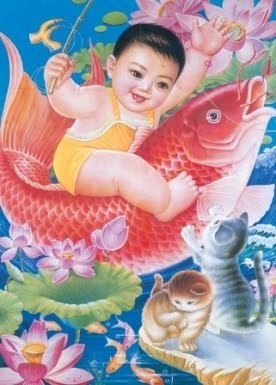
This book is essentially a historical catalogue of the only officially permitted art of its era: artwork that had to be authorized and aligned with the messaging of the Chinese Communist Party.
I love it! (not the messaging, but the collection).
Though, I did struggle with the rating and I’ll explain why…
On one hand, it delivers exactly what the title promises. A huge volume of more than 300 posters that are reproduced beautifully on high-quality paper, creating an incredible visual record of a particular period in Chinese history. I’m grateful that a book like this exists at all, as I can’t imagine there is a massive market clamouring for such a specialized collection.
The only reason I ultimately settled on four stars instead of five is that the book is really light on explanation and analysis. There are a handful of introductory essays that are good, but once those are finished the posters are largely left to speak for themselves. I was kind of hoping for more contextual information about each one.
I was also caught by surprise that this is actually a trilingual edition. Every caption and piece of text appears in English, French and German. I assume this was to allow Taschen to avoid producing separate print runs for different markets which makes perfect business sense but when I first opened the book I actually thought I’d received some kind of manufacturing error. :)
The artwork itself is technically impressive and often mesmerizing. Really it isn’t all that different from the idealized advertising art being produced in the West during the same period. The imagery presents a carefully crafted vision of Chinese society: prosperous workers, smiling families, patriotic citizens, and a bright collective future. Lots of smiling, smiling, smiling and a rather unified red and yellow colour palette.
These posters are very much products of their time. This style of political art has long faded from everyday life in China (though similar visual strategies still seems to be in use in North Korea).
The Chinese Civil War between the Communists and Nationalists was a complex and brutal conflict marked by suffering on all sides. Mao Zedong, who was once elevated to an almost god-like status during his rule, is viewed more critically today by the Chinese Communist Party.. The CCP’s modern stance seems to be often summarized as Mao being roughly “70 percent correct and 30 percent mistaken,”. They acknowledge disasters such as the Great Leap Forward (which contributed to the deadliest famine in human history, somewhere around 45 million deaths) and the Cultural Revolution, which caused massive damage to China’s educational, cultural, and historical institutions.
Overall, I’m extremely satisfied with this collection. While I would have appreciated more written commentary, the book succeeds brilliantly as a visual archive of an important period in modern history. It now sits happily on my shelf alongside my other Taschen volume on Japanese Woodblock Prints, and I expect I’ll return to both many times in the years ahead!
★★★★☆ (4/5)