

What do you think?

The English: A Social History 1066-1945
In this vivid and compelling book, Christopher Hibbert records the daily life of the English people from the days of the Norman Conquest until our own. Based on diaries, letters, memoirs, official reports, the works of modern social historians and the literature of every period, The English traces the development of English society over nine hundred years.
The chapters range far and wide over life in castles, palaces and monasteries, in the homes of rich merchants and in the hovels of peasants, describing the work and play of the inhabitants, their clothes and food and possessions, their servants and animals, their pleasures and suffering, their beliefs and attitudes, their schools, fairs, shops and markets, hospitals and prisons, theatres and churches, farms and factories, taverns and brothels. Every aspect of medieval and modern life is covered in detail.
We learn about medieval meals and games, poachers and priests, tournaments and pageants; fifteenth-century universities; sixteenth-century plagues and seventeenth-century libraries, music rooms, nurseries, and witch-hunts; eighteenth-century parsons, coachmen and doctors; nineteenth-century noblemen, factory girls and cricketers; twentieth-century maidservants, landladies and motorists.
The chapters range far and wide over life in castles, palaces and monasteries, in the homes of rich merchants and in the hovels of peasants, describing the work and play of the inhabitants, their clothes and food and possessions, their servants and animals, their pleasures and suffering, their beliefs and attitudes, their schools, fairs, shops and markets, hospitals and prisons, theatres and churches, farms and factories, taverns and brothels. Every aspect of medieval and modern life is covered in detail.
We learn about medieval meals and games, poachers and priests, tournaments and pageants; fifteenth-century universities; sixteenth-century plagues and seventeenth-century libraries, music rooms, nurseries, and witch-hunts; eighteenth-century parsons, coachmen and doctors; nineteenth-century noblemen, factory girls and cricketers; twentieth-century maidservants, landladies and motorists.
785 pages, Hardcover
First published February 1, 1987
About the author
Christopher Hibbert
160 books326 followersChristopher Hibbert, MC, FRSL, FRGS (5 March 1924 - 21 December 2008) was an English writer, historian and biographer.
He was a Fellow of the Royal Society of Literature and the author of many books, including Disraeli, Edward VII, George IV, The Rise and Fall of the House of Medici, and Cavaliers and Roundheads.
Described by Professor Sir John Plumb as "a writer of the highest ability and in the New Statesman as "a pearl of biographers," he established himself as a leading popular historian/biographer whose works reflected meticulous scholarship.
He was a Fellow of the Royal Society of Literature and the author of many books, including Disraeli, Edward VII, George IV, The Rise and Fall of the House of Medici, and Cavaliers and Roundheads.
Described by Professor Sir John Plumb as "a writer of the highest ability and in the New Statesman as "a pearl of biographers," he established himself as a leading popular historian/biographer whose works reflected meticulous scholarship.
Ratings & Reviews
Friends & Following
Create a free account to discover what your friends think of this book!
Community Reviews
Displaying 1 - 17 of 17 reviews

September 24, 2018
This is a honey of a book! The incredibly prolific and popular British author Christopher Hibbert (1924-2008) did nothing less than provide us a vast look at the English people from the time of the Norman Invasion to the end of the Second World War -- and all in the key of social history.
Though eminently readable, The English: A Social History, 1066-1945 is not a flawless book. Hibbert usually focuses on the upper or upper-middle classes first, and then walks his way down when and if possible. (This isn't really his fault, since the more privileged orders tended to leave better records.) Also, since the book is now going on 25 years old, its cessation at the end of World War II seems a little more arbitrary than it would have back in the Nineties. Nonetheless, I came very close to giving this very worthy history five stars instead of four.
It's a huge book -- just over 700 pages exclusive of Index and notes -- but episodic enough that the reader can dip in and out, selecting favorite eras and topics. Very well written, a quality Hibbert was renowned for. While hardcover editions have gotten prohibitively expensive, used softcover copies are still plentiful and cheap.
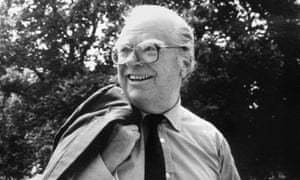
Photo: Christopher Hibbert
Though eminently readable, The English: A Social History, 1066-1945 is not a flawless book. Hibbert usually focuses on the upper or upper-middle classes first, and then walks his way down when and if possible. (This isn't really his fault, since the more privileged orders tended to leave better records.) Also, since the book is now going on 25 years old, its cessation at the end of World War II seems a little more arbitrary than it would have back in the Nineties. Nonetheless, I came very close to giving this very worthy history five stars instead of four.
It's a huge book -- just over 700 pages exclusive of Index and notes -- but episodic enough that the reader can dip in and out, selecting favorite eras and topics. Very well written, a quality Hibbert was renowned for. While hardcover editions have gotten prohibitively expensive, used softcover copies are still plentiful and cheap.
Photo: Christopher Hibbert

March 16, 2024
This books I. Divided into four sections, the Middle Ages, the Age of a Shakespeare and Milton, From defoe to Corbett, and From the Victorians to Modern Times. Each section has chapters on different aspects of life covering such subjects as homes, work, education, religion, recreation, the position of women in society, etc. There’s a lot of interesting information in every chapter. I think perhaps it is a pity he didn’t publish the four parts as separate volumes, as some chapters I felt could have done with a bit more detail. But generally it is very informative.

August 1, 2011
This is one of my favorite books of all time. It's been on my shelf for years, and I use it over and over again for reference. Social history fascinates me, and Hibbert covers lots of ground, never leaving out the good parts in favor of the drier stuff. His prose are lively and cordial, easy to understand. I highly recommend this book to anyone who wants to know the real life and times of the English.
April 5, 2020
This book was a gift from my parents on my 17th birthday and I still cherish it. It covers everything from food to entertainment to religion and education and is huge book (at 700 pages). But its very enjoyable to read (and to refer to as a reference book) of the social history of the English people from the Norman Quest until the end of WW2.

May 27, 2015
An enjoyable book perhaps now a little dated but nevertheless worth reading.

Read
October 22, 2020Interesting reading with lots of quirky history thrown in.
October 24, 2019
This was certainly an engaging book, although I am not sure how I would characterise its purpose. I read it from cover to cover at, as is my general practice, twenty-five pages per day. It survived this approach but was probably not ideally suited to it. I suspect it is better used as a general resource, for specific research needs or interests.
It has vast numbers of facts, so vast that I took ten pages of closely written notes. Unfortunately, that also meant few of the facts are now embedded in my memory.
Hibbert does not advertise any specific themes but I suppose the main idea I came away with was the consistent proclivity for people in power to expend, usually, most of their energies looking after their own desires, while those without power so often had their needs unmet. Since I am not of leftist persuasion, that was unexpected.
It has vast numbers of facts, so vast that I took ten pages of closely written notes. Unfortunately, that also meant few of the facts are now embedded in my memory.
Hibbert does not advertise any specific themes but I suppose the main idea I came away with was the consistent proclivity for people in power to expend, usually, most of their energies looking after their own desires, while those without power so often had their needs unmet. Since I am not of leftist persuasion, that was unexpected.

February 4, 2025
This is a brilliant, sweeping history of England and the English from the Norman conquest to the end of the second world war. Full of fascinating facts and statistics which ground the prose in reality. It captures well the trends and underlying changes which have swept through England and the life of the English over the almost 900 years following the Norman invasion. Rather than breaking history down into distinct periods, it takes in my opinion the more sensible approach of breaking it up into key areas - such as work or the house or law and order - and interpreting each period and the flows and changes across periods via this framing.

May 17, 2020
A great book for me to curl up with during the Covid 19 lockdown. Not too dry and very well organised in a range of headings which means that it will be easy to return to for reference or re- reading on specific issues in future. Highly recommended.
April 13, 2026
brilliant book. full of interesting stuff. a delight to read and created an interest in reading more on British history.

September 7, 2015
It's terribly difficult for a single book to do justice to a subject as vast as English social history. Christopher Hibbert managed to very nearly pull it off with this wonderful effort. I have a few reservations, but these mostly reflect my own tastes and interests rather than the book itself. For example, I found the details of medieval banquets rather tedious, but the chapters on transport and industry immensely engaging. I guess you could say that there is something for everybody here, and as a reference book "The English" is par excellence. The only real fault I can find is that, approaching 1945, Hibbert starts to pile on the pace and gloss over the details. I can speculate as to why he might have done this, but it seems a shame that the period of the two world wars, with its dramatic effects on the social fabric of England, and all the wealth of material documentation available, might have been given a bit more space and depth. This alone prevents me from awarding the book 5 stars. I would allowed 4 and a half, but Goodreads does not furnish us with this facility.

December 24, 2014
A great, comprehensive look at the life of an English man or woman from William the Conqueror to WW II. From education to food, from taxes to games, Hibbert covers as much as it is possible to cover almost 900 years in 700 pages. The book is divided up into four time periods--the Middle Ages, the times of "Shakespeare and Milton" and "Defoe to Cobbett," and lastly from the Victorians on. I could easily re-read this and so will not give it away as I normally do with books I have read.

January 13, 2010
One of the most engrossing unput-downable books I have ever read. Hibbert makes history sound like neighbourhood gossip - juicy, interesting and relevant. A superb writer - he must have a team of researchers to produce as much as he does.

September 1, 2013
Beautifully written, as are all his works... Hibbert is the natural successor to Trevelyan.

September 20, 2014
A great and extremely detailed history of English society, centered around the evolution of culture and habits as opposed to events

November 23, 2015
Enjoyable, lively writing and a wealth of information. Thorough footnotes. A classic historical text that doubles as an enjoyable read.

June 21, 2018
A massive book, it took awhile to push through as it covers a lot of ground.
Great reference book...worth the time.
Great reference book...worth the time.
Displaying 1 - 17 of 17 reviews