

What do you think?

Gregor Reinhardt #1
The Man from Berlin
Amidst the chaos of World War II, in a land of brutality and bloodshed…
One death can still change everything...
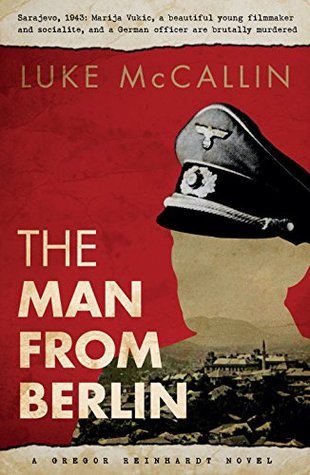
Sarajevo, 1943: Marija Vukic, a beautiful young filmmaker and socialite, and a German officer are brutally murdered.
Assigned to the case is military intelligence officer Captain Gregor Reinhardt. Already haunted by his wartime actions and the mistakes he’s made off the battlefield, he soon finds that his investigation may be more than just a murder - and that the late Yugoslav heroine may have been more treacherous than anyone knew.
Reinhardt manoeuvres his way through a minefield of political, military, and personal agendas and vendettas, as a trail of dead bodies leads him to a secret hidden within the ranks of the powerful – a secret they will do anything to keep.
But Reinhardt has rediscovered a purpose in life once lost, and he is determined to follow the case to the end, whatever the cost may be.
One death can still change everything...
Sarajevo, 1943: Marija Vukic, a beautiful young filmmaker and socialite, and a German officer are brutally murdered.
Assigned to the case is military intelligence officer Captain Gregor Reinhardt. Already haunted by his wartime actions and the mistakes he’s made off the battlefield, he soon finds that his investigation may be more than just a murder - and that the late Yugoslav heroine may have been more treacherous than anyone knew.
Reinhardt manoeuvres his way through a minefield of political, military, and personal agendas and vendettas, as a trail of dead bodies leads him to a secret hidden within the ranks of the powerful – a secret they will do anything to keep.
But Reinhardt has rediscovered a purpose in life once lost, and he is determined to follow the case to the end, whatever the cost may be.
448 pages, Paperback
First published July 2, 2013
About the author
Luke McCallin
16 books234 followersLuke McCallin was born in Oxford, grew up around the world and has worked with the United Nations as a humanitarian relief worker and peacekeeper in the Caucasus, the Sahel, and the Balkans. His experiences have driven his writing, in which he explores what happens to normal people--those stricken by conflict, by disaster--when they are put under abnormal pressures.
Ratings & Reviews
Friends & Following
Create a free account to discover what your friends think of this book!
Community Reviews
Displaying 1 - 30 of 298 reviews

July 17, 2017
”A good man, in the wrong place.”
Captain Gregor Reinhardt is a complex character. Having fought in WWI, with the belief that he was doing the right thing for his country, even winning medals for his bravery (including the Iron Cross), he now finds himself embroiled in events of WWII that are beyond his control, and have him questioning much of what he previously took for granted.
”He had to get moving, or face another evening that would end with him at the bottom of a bottle, or staring down the barrel of his pistol.”
Formerly with the Berlin Kriminalpolitzei (Kripo), Gregor Reinhardt is now in the Abwehr (military intelligence). Currently based in Sarajevo, he is assigned the case of investigating the murder of a popular and vivacious female journalist and film maker, Marija Vukic. Normally he would not be involved in a matter which is clearly a case for the local police. However in the same house, the body of Lieutenant Stefan Hendel is also found, and so a can of worms is well and truly opened.
”He saw himself as if from far away, with the eyes of the man he used to be, and he did not like what he saw. Pistol and glass. His two faithful companions.”
”You can’t do anything to me that I haven’t thought of doing myself…”
Gregor Reinhardt grapples with the man he has become through circumstance. The loss of his wife to illness, and his estranged son supposedly missing in action on the front in Leningrad, affect his judgement and he often questions who and what he has become throughout the course of the war. While he grapples with maintaining his integrity, he remains determined to solve the two murders.
”All of those men from different walks of life, professions, persuasions, and convictions. Lives like threads that came together in one place and time to form a particular pattern of experiences, a unique combination shared by no one else.”
War torn Europe is both a metaphoric and physical minefield. So many factions, father against son, friend against friend. Personal agendas and vendettas make finding the truth difficult. Throw in the growing underground resistance moment, and the two cases prove to become ever harder to solve, as more lies and cover-ups are unearthed.
”Was this what it meant to get old and jaded? He wondered.”
”You will do this deal with the devil?”
There are twists and turns in this story, particularly towards the latter half, where the pace quickened. As more of the web is unravelled and Gregor Rheinhardt unearths “secrets” that people would prefer remain hidden, and he is faced with moral questions of who we are and what makes us “tick”, what drives us to do what we do.
”Actions have consequences, and consequences must be endured.”
Yes, the killer of Marija Vukic & Stefan Hendel is discovered. An interesting twist which I didn’t see coming.
It’s inevitable that readers interested in this genre will make comparisons between this book and Philip Kerr’s Bernie Gunther series (of which I’ve read the first three books). I thoroughly enjoyed Luke McCallin’s writing, and will continue with this series.
Captain Gregor Reinhardt is a complex character. Having fought in WWI, with the belief that he was doing the right thing for his country, even winning medals for his bravery (including the Iron Cross), he now finds himself embroiled in events of WWII that are beyond his control, and have him questioning much of what he previously took for granted.
”He had to get moving, or face another evening that would end with him at the bottom of a bottle, or staring down the barrel of his pistol.”
Formerly with the Berlin Kriminalpolitzei (Kripo), Gregor Reinhardt is now in the Abwehr (military intelligence). Currently based in Sarajevo, he is assigned the case of investigating the murder of a popular and vivacious female journalist and film maker, Marija Vukic. Normally he would not be involved in a matter which is clearly a case for the local police. However in the same house, the body of Lieutenant Stefan Hendel is also found, and so a can of worms is well and truly opened.
”He saw himself as if from far away, with the eyes of the man he used to be, and he did not like what he saw. Pistol and glass. His two faithful companions.”
”You can’t do anything to me that I haven’t thought of doing myself…”
Gregor Reinhardt grapples with the man he has become through circumstance. The loss of his wife to illness, and his estranged son supposedly missing in action on the front in Leningrad, affect his judgement and he often questions who and what he has become throughout the course of the war. While he grapples with maintaining his integrity, he remains determined to solve the two murders.
”All of those men from different walks of life, professions, persuasions, and convictions. Lives like threads that came together in one place and time to form a particular pattern of experiences, a unique combination shared by no one else.”
War torn Europe is both a metaphoric and physical minefield. So many factions, father against son, friend against friend. Personal agendas and vendettas make finding the truth difficult. Throw in the growing underground resistance moment, and the two cases prove to become ever harder to solve, as more lies and cover-ups are unearthed.
”Was this what it meant to get old and jaded? He wondered.”
”You will do this deal with the devil?”
There are twists and turns in this story, particularly towards the latter half, where the pace quickened. As more of the web is unravelled and Gregor Rheinhardt unearths “secrets” that people would prefer remain hidden, and he is faced with moral questions of who we are and what makes us “tick”, what drives us to do what we do.
”Actions have consequences, and consequences must be endured.”
Yes, the killer of Marija Vukic & Stefan Hendel is discovered. An interesting twist which I didn’t see coming.
It’s inevitable that readers interested in this genre will make comparisons between this book and Philip Kerr’s Bernie Gunther series (of which I’ve read the first three books). I thoroughly enjoyed Luke McCallin’s writing, and will continue with this series.

January 11, 2022
The main character is Gregor Reinhardt, a German army captain who is asked to solve two murders in a small town in Yugoslavia during WWII. I really enjoyed it.

August 15, 2013
Captain Gregor Reinhardt was once a highly successful detective in the Berlin criminal police (KRIPO) until the Nazis took control of the police and he rejoined the army. He was also a decorated war veteran (WWI), and a holder of the Iron Cross. He is now a German intelligence officer (Abwehr) interrogating prisoners of war (not torturing them, which sets him apart from his colleagues) in the Balkans in early May 1943. When a leading woman Croat film-maker, German collaborator, Ustase (Croat fascist) sympathizer and hob-nobber with German officers is murdered savagely, along with a German officer, Reinhardt is assigned to investigate her murder, drawing on his old skill set. He is at a low ebb, and suicidal, due to what he considers to be his personal compromises with the German state, the death of his wife, and the loss of his estranged son with the German Sixth Army at Stalingrad.
The investigation becomes Reinhardt's opportunity to regain his personal honor, but it also puts him in constant danger. Not many want to see the crime solved in any but the most cynical and expedient way. The crime's cover-up is extensive, and involves the German military police, the German secret field police, the SS and SD, the Wehrmacht (the non-SS army), the Ustase, and even the resistance (internal and external) to the Germans. Reinhardt's personal sense of ethics and force of personality is strong and grows stronger. The people who oppose him are frightening in their brutality and cynicism. His moral choices are daunting. His physical risk is great and constant.
The book is deeply satisfying on every level. It is historically accurate, extremely well written (too well written, no doubt, for lovers of simple techno-thrillers), morally complex, and always exciting. It is the first of a series ("Reinhardt will march again") that I eagerly await.
It was a book that I read relatively slowly, partly because it is complicated and partly to make it last as long as possible. It is one of the two or three best books that I've read this year, and would make the top ten list for the last decade.
The investigation becomes Reinhardt's opportunity to regain his personal honor, but it also puts him in constant danger. Not many want to see the crime solved in any but the most cynical and expedient way. The crime's cover-up is extensive, and involves the German military police, the German secret field police, the SS and SD, the Wehrmacht (the non-SS army), the Ustase, and even the resistance (internal and external) to the Germans. Reinhardt's personal sense of ethics and force of personality is strong and grows stronger. The people who oppose him are frightening in their brutality and cynicism. His moral choices are daunting. His physical risk is great and constant.
The book is deeply satisfying on every level. It is historically accurate, extremely well written (too well written, no doubt, for lovers of simple techno-thrillers), morally complex, and always exciting. It is the first of a series ("Reinhardt will march again") that I eagerly await.
It was a book that I read relatively slowly, partly because it is complicated and partly to make it last as long as possible. It is one of the two or three best books that I've read this year, and would make the top ten list for the last decade.

January 22, 2017
If one could turn the clock back to the 1990s when men like Slobodan Milosovic and places like Srebrenica were in the news they would recall the horror that they felt. People could not fathom what the Serbs, Croats, and Muslims hoped to gain from all the violence, particularly since the origins of the conflict go back at least to the 4th century AD with the creation of the Byzantine Empire. The events of World War II are also part of the Balkan puzzle that we still grapple with today that are displayed in a very thoughtful and chilling manner in Luke McCallin’s novel THE MAN FROM BERLIN. The war forms the backdrop for the fight between the Ustase, Serb nationalists, and partisan forces as they struggle for the soul of postwar Yugoslavia.
On his third tour of Yugoslavia during World War II, Abwher Captain Gregor Reinhardt finds himself recovering from a drinking binge the night before when he summoned to report to Major Ulrich Freilinger to investigate the murder of an intelligence colleague, and a woman he was with. A number of problems immediately emerge, one, Reinhardt has not worked a murder case in over four years, and second, the Sarajevo Police Inspector Putkovic claimed his department had jurisdiction in the case, in addition it appeared that the policeman put in charge, Inspector Andro Padelin a member of the Ustase, was a racist and anti-Semite and cared only in solving the crime against Maija Vukic. Vukic was a well-known film maker and journalist who was a fervent supporter of a Croatian state and freedom from the Serbs. The fact she had once danced with Reinhardt at a Nazi Party function did not detract from his main goal of locating the killer of Stefan Hendel, the Abwher agent.
There are numerous candidates for the murderer. Was the individual a Chetnik, a Slavic Nationalistic guerilla force; an Ustase, Croatian fascist; a Yugoslav Royalist; or a member of the partisans under Jozip Broz Tito; or perhaps someone else? Reinhardt not only has to navigate these groups but there are also SS fanatics and some who want to get rid of Hitler on the German side. With so many contending groups fighting for control in the Balkans McCallin does a nice job conveying the contentious atmosphere that existed in Yugoslavia that permeates the novel. What is clear is that the politics of the Balkans throughout the war was byzantine and extreme.
The characters that McCallin creates are unique and at times very difficult to comprehend. They are people with principles or are they confused or in fact traitors. Whatever the truth may be the reader will develop respect for certain individuals and scorn for others. McCallin’s characters are indeed fascinating, among them are Dr. Muamor Begovic, a medical examiner for the Sarajevo police, but also a communist partisan. Major Becker, a nasty and sadistic individual who is second in command of the Feldgendarmerie or military police and a former Berlin Kripo detective with Reinhardt. Captain Hans Thallberg, an officer in the Geheime Feldpolizi (Secret Police) who admires Reinhardt and tries to assist him. Inspector Andro Padelin of the Sarajevo police or Ustase, ordered to work with Reinhardt. General Paul Verhein, the German commander 121st Jager, whose life journey and loyalties are hard to imagine. Among these individuals McCallin introduces many people from Reinhardt’s past. His wife Caroline, son Friedrich, Rudolph Brauer, his best friend, and Colonel Thomas Meissner, his mentor that provide insight into these person Reinhardt will become.
Reinhardt was a man who loved his country, but hated what it had become. He treasured the friends he made in the army, but grew to hate the uniform they wore. After the 1936 Olympics, Kripo, the Berlin police were integrated into the Gestapo and Reinhardt had refused to join. He was posted to Interpol because the Nazis needed his aura of professionalism and his solid reputation. Once it became clear he was working to perpetuate Nazism he became conflicted because he needed the money to pay for his wife’s medical treatments before she died. Colonel Meissner would step in and gets him transferred to the Abwher, German intelligence, which reflects what a flawed and conflicted man he was.
It is as an Abwher agent that McCallin develops Reinhardt’s character and the story that forms the core of the novel. As McCallin spins his tale it is a searing ride with a conclusion that is nuanced and compelling. It is a plot that should rivet the reader to each page, and fortunately the author brings his story to an ending in such a manner that he leaves enough room to create a sequel entitled, THE PALE HOUSE.
On his third tour of Yugoslavia during World War II, Abwher Captain Gregor Reinhardt finds himself recovering from a drinking binge the night before when he summoned to report to Major Ulrich Freilinger to investigate the murder of an intelligence colleague, and a woman he was with. A number of problems immediately emerge, one, Reinhardt has not worked a murder case in over four years, and second, the Sarajevo Police Inspector Putkovic claimed his department had jurisdiction in the case, in addition it appeared that the policeman put in charge, Inspector Andro Padelin a member of the Ustase, was a racist and anti-Semite and cared only in solving the crime against Maija Vukic. Vukic was a well-known film maker and journalist who was a fervent supporter of a Croatian state and freedom from the Serbs. The fact she had once danced with Reinhardt at a Nazi Party function did not detract from his main goal of locating the killer of Stefan Hendel, the Abwher agent.
There are numerous candidates for the murderer. Was the individual a Chetnik, a Slavic Nationalistic guerilla force; an Ustase, Croatian fascist; a Yugoslav Royalist; or a member of the partisans under Jozip Broz Tito; or perhaps someone else? Reinhardt not only has to navigate these groups but there are also SS fanatics and some who want to get rid of Hitler on the German side. With so many contending groups fighting for control in the Balkans McCallin does a nice job conveying the contentious atmosphere that existed in Yugoslavia that permeates the novel. What is clear is that the politics of the Balkans throughout the war was byzantine and extreme.
The characters that McCallin creates are unique and at times very difficult to comprehend. They are people with principles or are they confused or in fact traitors. Whatever the truth may be the reader will develop respect for certain individuals and scorn for others. McCallin’s characters are indeed fascinating, among them are Dr. Muamor Begovic, a medical examiner for the Sarajevo police, but also a communist partisan. Major Becker, a nasty and sadistic individual who is second in command of the Feldgendarmerie or military police and a former Berlin Kripo detective with Reinhardt. Captain Hans Thallberg, an officer in the Geheime Feldpolizi (Secret Police) who admires Reinhardt and tries to assist him. Inspector Andro Padelin of the Sarajevo police or Ustase, ordered to work with Reinhardt. General Paul Verhein, the German commander 121st Jager, whose life journey and loyalties are hard to imagine. Among these individuals McCallin introduces many people from Reinhardt’s past. His wife Caroline, son Friedrich, Rudolph Brauer, his best friend, and Colonel Thomas Meissner, his mentor that provide insight into these person Reinhardt will become.
Reinhardt was a man who loved his country, but hated what it had become. He treasured the friends he made in the army, but grew to hate the uniform they wore. After the 1936 Olympics, Kripo, the Berlin police were integrated into the Gestapo and Reinhardt had refused to join. He was posted to Interpol because the Nazis needed his aura of professionalism and his solid reputation. Once it became clear he was working to perpetuate Nazism he became conflicted because he needed the money to pay for his wife’s medical treatments before she died. Colonel Meissner would step in and gets him transferred to the Abwher, German intelligence, which reflects what a flawed and conflicted man he was.
It is as an Abwher agent that McCallin develops Reinhardt’s character and the story that forms the core of the novel. As McCallin spins his tale it is a searing ride with a conclusion that is nuanced and compelling. It is a plot that should rivet the reader to each page, and fortunately the author brings his story to an ending in such a manner that he leaves enough room to create a sequel entitled, THE PALE HOUSE.

September 22, 2014
The Man From Berlin – Great Crime thriller
The Man from Berlin by Luke McCallin is an amazing crime thriller and even better as it is a first novel. There is a lot of huff n puff calling this a literary thriller, is that just to make the anal retentive literary types like the book too. This is a great thriller and better than any of the crap those literary types could ever produce.
Captain Gregor Reinhardt is in the Abwehr a former detective in the Berlin Police and decorated war veteran, before being shunted around due to not being a Nazi Party member. He is trying to keep his head down and let the war pass him by. It is 1943 and he Reinhardt is trying to be an intelligence officer in Sarajevo in the allied Bosnia, a land he recognises as brutal and unforgiving.
When the murder of socialite film maker and German propaganda film maker the beautiful Marija Vukic and Abwehr Lieutenant Stefan Hendel, a murder that should be investigated by the Military Police or local police has been assigned to Reinhardt. Little does he know how much he will have to take on while investigating the murder as Reinhardt wants to do everything by the book gather the evidence and then find the killer charge him and hand him over to the authorities for them to deal with.
Reinhardt finds that even though the investigation should be straight forward not only is he competing against the corrupt nature of the local Sarajevo Police he has to deal with a corrupt Nazi from his past in Major Becker of the Military Police. All seem to be throwing more spanners in the works than seems necessary the more the investigation goes on the more he realises his own life is in danger.
As he gets closer to the truth the closer to death Reinhardt becomes he can see this and does not hide from it. Reinhardt is too honest to be blown off course whether it be the Army, SS, Military Police or Partisans. It literally does become a fight to the death who dares wins and even that is not that clear at the end.
A fantastic thriller based in the war with all the internal politics that caused so much fear during the war. This is a well researched thriller in the background, in the knowledge of wartime Sarajevo which brings realism to a classic thriller. For a first book this is an excellent example of the thriller genre written like a hard bitten master of thrillers. I do hope this is the first of many, so well written the prose is dripping in imagery an accomplished wordsmith!
The Man from Berlin by Luke McCallin is an amazing crime thriller and even better as it is a first novel. There is a lot of huff n puff calling this a literary thriller, is that just to make the anal retentive literary types like the book too. This is a great thriller and better than any of the crap those literary types could ever produce.
Captain Gregor Reinhardt is in the Abwehr a former detective in the Berlin Police and decorated war veteran, before being shunted around due to not being a Nazi Party member. He is trying to keep his head down and let the war pass him by. It is 1943 and he Reinhardt is trying to be an intelligence officer in Sarajevo in the allied Bosnia, a land he recognises as brutal and unforgiving.
When the murder of socialite film maker and German propaganda film maker the beautiful Marija Vukic and Abwehr Lieutenant Stefan Hendel, a murder that should be investigated by the Military Police or local police has been assigned to Reinhardt. Little does he know how much he will have to take on while investigating the murder as Reinhardt wants to do everything by the book gather the evidence and then find the killer charge him and hand him over to the authorities for them to deal with.
Reinhardt finds that even though the investigation should be straight forward not only is he competing against the corrupt nature of the local Sarajevo Police he has to deal with a corrupt Nazi from his past in Major Becker of the Military Police. All seem to be throwing more spanners in the works than seems necessary the more the investigation goes on the more he realises his own life is in danger.
As he gets closer to the truth the closer to death Reinhardt becomes he can see this and does not hide from it. Reinhardt is too honest to be blown off course whether it be the Army, SS, Military Police or Partisans. It literally does become a fight to the death who dares wins and even that is not that clear at the end.
A fantastic thriller based in the war with all the internal politics that caused so much fear during the war. This is a well researched thriller in the background, in the knowledge of wartime Sarajevo which brings realism to a classic thriller. For a first book this is an excellent example of the thriller genre written like a hard bitten master of thrillers. I do hope this is the first of many, so well written the prose is dripping in imagery an accomplished wordsmith!

May 21, 2021
The Man from Berlin (2013) (Gregor Reinhardt #1) by Luke McCallin was another attempt to fill the hole left by Philip Kerr's untimely death, and with it his long running character Bernie Gunter. Having read the opening one, sometimes two, titles in what I hoped might be similar series, I am delighted to say that this is the best one I have read so far.
The Man from Berlin is a slow burn of a novel. Whilst initially very procedural and detailed, it gradually builds up a head of steam until a memorable, action packed finale. The author evokes an excellent sense of place: Sarajevo and the Yugoslavian countryside felt particularly convincing.
Central character Gregor Reinhardt goes on an interesting and credible personal journey. From self loathing burnout to, well, I won't say as I don't want to spoil it for anyone yet to read this book. Suffice to say he ends this book having come to a profound realisation which should perfectly set up the subsequent books. I look forward to continuing his story. Indeed all the characters felt convincing as they contended with the brutal politics of wartime occupation.
4/5
More about The Man from Berlin....
Sarajevo, 1943, Marija Vukic, a beautiful young filmmaker and socialite, and a German officer are brutally murdered. Assigned to the case is military intelligence officer Captain Gregor Reinhardt. Already haunted by his wartime actions and the mistakes he's made off the battlefield, he soon finds that his investigation may be more than just a murder - and that the late Yugoslav heroine may have been more treacherous than anyone knew. Reinhardt manoeuvres his way through a minefield of political, military, and personal agendas and vendettas, as a trail of dead bodies leads him to a secret hidden within the ranks of the powerful – a secret they will do anything to keep. But Reinhardt has rediscovered a purpose in life once lost, and he is determined to follow the case to the end, whatever the cost may be.
The Man from Berlin is a slow burn of a novel. Whilst initially very procedural and detailed, it gradually builds up a head of steam until a memorable, action packed finale. The author evokes an excellent sense of place: Sarajevo and the Yugoslavian countryside felt particularly convincing.
Central character Gregor Reinhardt goes on an interesting and credible personal journey. From self loathing burnout to, well, I won't say as I don't want to spoil it for anyone yet to read this book. Suffice to say he ends this book having come to a profound realisation which should perfectly set up the subsequent books. I look forward to continuing his story. Indeed all the characters felt convincing as they contended with the brutal politics of wartime occupation.
4/5
More about The Man from Berlin....
Sarajevo, 1943, Marija Vukic, a beautiful young filmmaker and socialite, and a German officer are brutally murdered. Assigned to the case is military intelligence officer Captain Gregor Reinhardt. Already haunted by his wartime actions and the mistakes he's made off the battlefield, he soon finds that his investigation may be more than just a murder - and that the late Yugoslav heroine may have been more treacherous than anyone knew. Reinhardt manoeuvres his way through a minefield of political, military, and personal agendas and vendettas, as a trail of dead bodies leads him to a secret hidden within the ranks of the powerful – a secret they will do anything to keep. But Reinhardt has rediscovered a purpose in life once lost, and he is determined to follow the case to the end, whatever the cost may be.

April 30, 2017
Set in Sarajevo, in 1943, this novel features Captain Gregor Reinhardt, a previous detective in Berlin, who is now a member of military intelligence. This is obviously set in the Second World War and things are rarely clear cut and like so many crime novels set in this era, such as the fabulous Bernie Gunther series, there is little that is black and white in the beginning of this series either. For Reinhardt, who gained an Iron Cross in WWI, found his career in the police stalled after he refused to join the Party. His personal life is also in turmoil, after losing his beloved wife and the rejection of his son, Friedrich, who is a great believer in the National Socialists and is currently serving somewhere in Russia. Rumours about what is happening in Stalingrad are reaching the ears of those based in Sarajevo and it is obvious that the Russian front is somewhere to be avoided. However, the setting of Sarajevo provides a colourful and complicated backdrop to the story.
As far as the crime element of this novel is concerned, it involves the murder of a German officer, and Abwehr lieutenant, Stefan Handel, and a beautiful film maker and socialite, Marija Vukic. Reinhardt is told to work with a local investigator from the Sarajevo police, Andro Padelin. As well as this encumbrance, he also has to deal with Major Becker of the Military Police, which whom he shares a difficult history. His attempts to discover the truth about the murder ruffles more than a few feathers and Reinhardt has to tread carefully between his superior officers, the local police – who are extremely ruthless and seem keen to pin the murders on anyone they can beat into a confession - and the Partisans.
I did feel at times that the story was a little slow. Obviously, this is very much a literary mystery and I am always happy with historical detail. However, there is also a fine line between exploring themes and moving the action along and, at times, this stalled just a little. Still, it was an interesting novel, I liked the character of Reinhardt and I would certainly read on in this series as I would like to know more about him. I thought the author did an excellent job of exploring a lesser explored location and Sarajevo really came alive in this book. The ending also offered various possibilities for the series to continue and I will certainly look forward to continuing reading more.
As far as the crime element of this novel is concerned, it involves the murder of a German officer, and Abwehr lieutenant, Stefan Handel, and a beautiful film maker and socialite, Marija Vukic. Reinhardt is told to work with a local investigator from the Sarajevo police, Andro Padelin. As well as this encumbrance, he also has to deal with Major Becker of the Military Police, which whom he shares a difficult history. His attempts to discover the truth about the murder ruffles more than a few feathers and Reinhardt has to tread carefully between his superior officers, the local police – who are extremely ruthless and seem keen to pin the murders on anyone they can beat into a confession - and the Partisans.
I did feel at times that the story was a little slow. Obviously, this is very much a literary mystery and I am always happy with historical detail. However, there is also a fine line between exploring themes and moving the action along and, at times, this stalled just a little. Still, it was an interesting novel, I liked the character of Reinhardt and I would certainly read on in this series as I would like to know more about him. I thought the author did an excellent job of exploring a lesser explored location and Sarajevo really came alive in this book. The ending also offered various possibilities for the series to continue and I will certainly look forward to continuing reading more.

June 5, 2023
A new author for me but a story set in a favoured period of history, that of the war & inter-war era, so hoping I can get back on track after a coupla ho-hum reads…..
1943 Yugoslavia is our setting with Gregor Reinhardt as our man, a German Captain in the Abwehr, who in the opening paragraphs seems a troubled soul. We are soon introduced to a murder scene as relayed in the synopsis & so our tale begins.
The murdered duo are a German officer and a Yugoslav filmmaker/photographer who is much beloved by her people whose backstories/histories are relayed to us throughout the early investigation as our man Gregor & his local opposite number in the Yugoslavian police try to solve the case(es).
Its not long before we find that other agencies are in play with Reinhardt always seeming to be a step behind. His “alliance” with the local police is also slightly rocky to say the least. The political landscape is explored along the way revealing that the region is a mix of cultures/races that don’t always get along together even amongst their own kind. And worth a mention is the significance of an influx of high-ranking German officers who are in town at the time of the murder…. There’s a lot going on.
Alongside the investigation we also have our man’s backstory played out in snippets when he comes across an old acquittance/foe or finds himself in a certain situation which, ok, develop his character but do slow the story down a little in the opening exchanges & I did find it hard to gravitate to it early doors. But the “intrusions” become less as we go deeper into the story & in all it’s well balanced.
Very much a slow burn of a story which picks up in pace as we reach the conclusion. A conclusion I have to say which was really well done & had me turning the pages, ripping of the final 120 pages+ in one day.
Jus under the 4 stars at 3.75 rounded upto a 4 & a writer I’ll be following, very impressive debut if a little up n down in places in the early exchanges.
1943 Yugoslavia is our setting with Gregor Reinhardt as our man, a German Captain in the Abwehr, who in the opening paragraphs seems a troubled soul. We are soon introduced to a murder scene as relayed in the synopsis & so our tale begins.
The murdered duo are a German officer and a Yugoslav filmmaker/photographer who is much beloved by her people whose backstories/histories are relayed to us throughout the early investigation as our man Gregor & his local opposite number in the Yugoslavian police try to solve the case(es).
Its not long before we find that other agencies are in play with Reinhardt always seeming to be a step behind. His “alliance” with the local police is also slightly rocky to say the least. The political landscape is explored along the way revealing that the region is a mix of cultures/races that don’t always get along together even amongst their own kind. And worth a mention is the significance of an influx of high-ranking German officers who are in town at the time of the murder…. There’s a lot going on.
Alongside the investigation we also have our man’s backstory played out in snippets when he comes across an old acquittance/foe or finds himself in a certain situation which, ok, develop his character but do slow the story down a little in the opening exchanges & I did find it hard to gravitate to it early doors. But the “intrusions” become less as we go deeper into the story & in all it’s well balanced.
Very much a slow burn of a story which picks up in pace as we reach the conclusion. A conclusion I have to say which was really well done & had me turning the pages, ripping of the final 120 pages+ in one day.
Jus under the 4 stars at 3.75 rounded upto a 4 & a writer I’ll be following, very impressive debut if a little up n down in places in the early exchanges.

May 16, 2021
This is a difficult one to review because McCallin has clearly done lots of research into the complex politics of the setting of 1940s Sarajevo, but I found the book overall a slog to read. It's so slow moving, with everything described to death. No one can simply walk across a room but it has to be described in terms of how the light looks and how the dust motes are dancing.
The protagonist is an uptight and humourless Abwehr captain with all the usual characteristics: personal tragedy, alcoholism, suicidal tendencies, trauma that haunts his dreams, and (of course) he hates the Nazis and clashes with most of his colleagues. Yawn.
I disliked the way the female murder victim was portrayed and the way everyone all but says she deserved it for being a slut... there's some titillating stuff about her being into BDSM and voyeurism which is wholly gratuitous.
But really my issue is that I found this boring and dull. I started skimming at about 50% but even a shift beyond the city to where Tito's partisans are operating couldn't revive my enthusiasm, and the ending which is both lurid and boy's own felt unsatisfying.
The protagonist is an uptight and humourless Abwehr captain with all the usual characteristics: personal tragedy, alcoholism, suicidal tendencies, trauma that haunts his dreams, and (of course) he hates the Nazis and clashes with most of his colleagues. Yawn.
I disliked the way the female murder victim was portrayed and the way everyone all but says she deserved it for being a slut... there's some titillating stuff about her being into BDSM and voyeurism which is wholly gratuitous.
But really my issue is that I found this boring and dull. I started skimming at about 50% but even a shift beyond the city to where Tito's partisans are operating couldn't revive my enthusiasm, and the ending which is both lurid and boy's own felt unsatisfying.

March 22, 2019
Reinhardt is an ex-Berlin detective, now in the Abwehr in Sarajevo caught up in the murder of a woman journalist and a fellow officer. He's in the middle between partisans, local cops, Croats, Serbes, Communists, the army, and a former colleague who hates him. He's been through WWI and now his son is on the eastern front.
It's an intriguing story with just the right amount of setting detail. Reminiscent of Phillip Kerr's Gunther, this book is not as good as Kerr's original trilogy, but better than some of the later ones.
This may be one of those series where it's difficult to pass a final judgement until more than just the first book have been read, so I will move on to the second.
It's an intriguing story with just the right amount of setting detail. Reminiscent of Phillip Kerr's Gunther, this book is not as good as Kerr's original trilogy, but better than some of the later ones.
This may be one of those series where it's difficult to pass a final judgement until more than just the first book have been read, so I will move on to the second.

April 28, 2016
A while ago I saw two novels by Luke McCallin on a promotion and, in a fit of ‘why notness’ I bought them. The thing is, I may be solidly rooted in ancient history with most of my reading there, but every now and then I’m partial to a little World War 2 fiction. Michael Ridpath’s ‘Traitor’s Gate’ made it into my annual top 10. And I rather liked the look of a murder investigation in a WW2 setting.
First off, this is a novel with a fascinating and I might even hazard ‘unique’ viewpoint. Few works of fiction choose to take a member of the wartime German forces as a protagonist. Yes, I’ve seen a few, but not many. Because it’s a brave novelist who takes it on. Because there is a very fine line to walk with it. It’s hard to make the character sympathetic to a modern non-German, I think, because of inherent prejudices born of half a century of ‘White hat – black hat’ thinking. And if you try to make him too sympathetic you run the risk of losing credibility with the character. In that respect, McCallin has hit the sweet spot. Reinherdt is very realistic, and yet sympathetic. More so, I think, even than Ridpath’s hero. In fact as a character he reminds me of Korolev in William Ryan’s pre-war Russian thrillers.
And perhaps a word then about setting. Because in WW2 stories we are very familiar with England, France, Germany and Russia as settings. We’ve also seen North Africa, and on occasion Italy, and Greece. Yugoslavia is a new one on me, and really an incredibly rich and complex setting, with the territory itself almost torn apart by internecine wars, completely ignoring the Germans in overall control. Then there are Italians present, partisans, British in threat form at least. And Orthodox, Muslim and Catholic. And everyone hates everyone else. McCallin does an excellent job of painting 40s Yugoslavia. I wonder if he has spent time there? It certainly felt like he knew the place well.
The plot, then. We are immediately presented with a murder case which is given to Reinhardt as a member of the Abwehr to solve, because while one of the victims is a wealthy, spoilt, man-eating female local journalist, the other is also a German officer of the Abwehr. I have to admit that I was half way through the book before the investigation really picked up pace and we began to discover what was going on, but that was not a fault. The investigation is endlessly messed around with for political, personal and ethnic purposes and it is only when Reinhardt becomes truly galvanised in his role that things pick up speed. The plot is almost as complex as the setting and gives us something of an insight into just how difficult and labyrinthine the internal politics of wartime Germany and the wehrmacht actually were.
All in all, the novel was intricate, fascinating, and kept dragging me back. It is not the most pacy novel I’ve read, with some parts feeling a little languid, but when the action comes, it comes thick, fast and unforgiving. Similarly, while there are times when I felt the plot becoming a little muddled, all comes out well and the ending is very satisfying. And like all good whodunnits, many of the things that slip past early on as not vastly important actually do in the end have a place in the tale and a bearing on the case.
So the upshot is that as soon as I have the time, I shall be reading the second Gregor Reinhardt novel. If you have any interest in the war, or in complex murder investigations – and certainly if both – then you might well want to give the Man from Berlin a try. An absorbing read.
First off, this is a novel with a fascinating and I might even hazard ‘unique’ viewpoint. Few works of fiction choose to take a member of the wartime German forces as a protagonist. Yes, I’ve seen a few, but not many. Because it’s a brave novelist who takes it on. Because there is a very fine line to walk with it. It’s hard to make the character sympathetic to a modern non-German, I think, because of inherent prejudices born of half a century of ‘White hat – black hat’ thinking. And if you try to make him too sympathetic you run the risk of losing credibility with the character. In that respect, McCallin has hit the sweet spot. Reinherdt is very realistic, and yet sympathetic. More so, I think, even than Ridpath’s hero. In fact as a character he reminds me of Korolev in William Ryan’s pre-war Russian thrillers.
And perhaps a word then about setting. Because in WW2 stories we are very familiar with England, France, Germany and Russia as settings. We’ve also seen North Africa, and on occasion Italy, and Greece. Yugoslavia is a new one on me, and really an incredibly rich and complex setting, with the territory itself almost torn apart by internecine wars, completely ignoring the Germans in overall control. Then there are Italians present, partisans, British in threat form at least. And Orthodox, Muslim and Catholic. And everyone hates everyone else. McCallin does an excellent job of painting 40s Yugoslavia. I wonder if he has spent time there? It certainly felt like he knew the place well.
The plot, then. We are immediately presented with a murder case which is given to Reinhardt as a member of the Abwehr to solve, because while one of the victims is a wealthy, spoilt, man-eating female local journalist, the other is also a German officer of the Abwehr. I have to admit that I was half way through the book before the investigation really picked up pace and we began to discover what was going on, but that was not a fault. The investigation is endlessly messed around with for political, personal and ethnic purposes and it is only when Reinhardt becomes truly galvanised in his role that things pick up speed. The plot is almost as complex as the setting and gives us something of an insight into just how difficult and labyrinthine the internal politics of wartime Germany and the wehrmacht actually were.
All in all, the novel was intricate, fascinating, and kept dragging me back. It is not the most pacy novel I’ve read, with some parts feeling a little languid, but when the action comes, it comes thick, fast and unforgiving. Similarly, while there are times when I felt the plot becoming a little muddled, all comes out well and the ending is very satisfying. And like all good whodunnits, many of the things that slip past early on as not vastly important actually do in the end have a place in the tale and a bearing on the case.
So the upshot is that as soon as I have the time, I shall be reading the second Gregor Reinhardt novel. If you have any interest in the war, or in complex murder investigations – and certainly if both – then you might well want to give the Man from Berlin a try. An absorbing read.

February 14, 2015
Amazon's search engine generated this one as a recommendation last November when I went in search of the pub date for the next book in Philip Kerr's Bernie Gunther series. Since I'll have to wait till at least late April for the next book about Kerr's WWII era Berlin detective, I figured this might be a pale imitation, though something I might enjoy.
And I did, in fact, enjoy it, but not for any of the reasons I thought I would. Gregor Reinhardt, the hero of this book, is only marginally like Gunther--they're both former Kripo detectives who worked the Berlin beat and they both had stellar reputations as honest, smart cops. And both saw the Kripo change for the worse when the Nazis came to power in 1933. But though Reinhardt, like Gunther, refused to join the Nazi party, Gunther ends up stationed in Berlin, often working with the SS upper echelon, whereas Reinhardt finds himself serving as a menial middle man in an Abwher interrogation unit in Sarajevo.
The Reinhardt we meet at the beginning of the book is an alcoholic, suicidal wreck, a man who has lost his way, hates his life as a German officer and despises the leadership of his beloved country. He's barely hanging on. Then, one morning in May, 1943, he's called upon to solve the double murder of a German soldier and a glamorous, local beauty who is also the daughter of a Ustase (Croation fascist party) bigwig. In addition she's a hard living, high-profile Croatian filmmaker/photographer. It's Reinhardt's first real case since he left Kripo, and the unlikely vehicle through which he'll bring himself back from the abyss.
McCallin keeps the twists and turns coming so that the ending, as well as the solution to the murders, is a satisfying surprise. Almost no one is who they seem to be, except of course for the most evil of the Nazis and their fellow Croation thugs from the Ustase. But that's a niggling detail. The plot is complex enough to be satisfying without being convoluted, and Gregor Reinhardt is a satisfying enough substitute for Bernie Gunther. Less canny and nuanced, perhaps, but no less entertaining.
And I did, in fact, enjoy it, but not for any of the reasons I thought I would. Gregor Reinhardt, the hero of this book, is only marginally like Gunther--they're both former Kripo detectives who worked the Berlin beat and they both had stellar reputations as honest, smart cops. And both saw the Kripo change for the worse when the Nazis came to power in 1933. But though Reinhardt, like Gunther, refused to join the Nazi party, Gunther ends up stationed in Berlin, often working with the SS upper echelon, whereas Reinhardt finds himself serving as a menial middle man in an Abwher interrogation unit in Sarajevo.
The Reinhardt we meet at the beginning of the book is an alcoholic, suicidal wreck, a man who has lost his way, hates his life as a German officer and despises the leadership of his beloved country. He's barely hanging on. Then, one morning in May, 1943, he's called upon to solve the double murder of a German soldier and a glamorous, local beauty who is also the daughter of a Ustase (Croation fascist party) bigwig. In addition she's a hard living, high-profile Croatian filmmaker/photographer. It's Reinhardt's first real case since he left Kripo, and the unlikely vehicle through which he'll bring himself back from the abyss.
McCallin keeps the twists and turns coming so that the ending, as well as the solution to the murders, is a satisfying surprise. Almost no one is who they seem to be, except of course for the most evil of the Nazis and their fellow Croation thugs from the Ustase. But that's a niggling detail. The plot is complex enough to be satisfying without being convoluted, and Gregor Reinhardt is a satisfying enough substitute for Bernie Gunther. Less canny and nuanced, perhaps, but no less entertaining.

July 29, 2013
No doubt McCallin is a very talented writer! The thing is, the book could have finished a hundred pages sooner. I personally, felt like there was so much he was trying to convey it resulted in a lack clarity in his story telling. Unfortunately, I lost interest about 3/4 the way through the book...just so much peripheral detail I had a hard time focusing on the "story!"

February 27, 2017
Read this over the weekend. Very good crime/thriller stuff. The historic background is not so accurate like the author admitted it, but I could make an ideea about the intern struggle in the former Yugoslavian zone.
Not in the same humourus and ironic tone like Philip Kerr series, with more realistic characters, not blaming directly the Nazy, but still in the end going in another`s one boat.
The murder mystery wasn`t so complex or impressive, but it has been a fast and enjoying read.
A thing it`s clear, I will be back very soon to this writer`s work.
Not in the same humourus and ironic tone like Philip Kerr series, with more realistic characters, not blaming directly the Nazy, but still in the end going in another`s one boat.
The murder mystery wasn`t so complex or impressive, but it has been a fast and enjoying read.
A thing it`s clear, I will be back very soon to this writer`s work.

August 4, 2013
I enjoyed the Man from Berlin. It is a 'whodunit', but I find that very often whodunits are excuses to immerse ourselves in other cultures - after all, few people can dig deeper than homicide cops, and I guess novels about psychotherapists would be a bit static.
So this novel does a fine job of taking us somewhere else; first of all, the place is Sarajevo, which I've never visited and which is a character in itself with its incredibly complex ethnic and religious mixes. The time is 1943. And more importantly, the point of view is that of a German officer in the Abwehr (counterintelligence). I must say, after a whole existence of seeing Nazis portrayed as the ultimate, almost un-human evil, I was discombobulated when 'my' character, the protagonist Gregor Reinhardt casually went from swastika-decorated place to Hitler portrait decorated place, wore the Eagle, came across fascists without wiggling an eyebrow in all normalcy. That was a completely eerie experience.
Thankfully, Gregor Reinhardt is not a true Nazi, but a WWI veteran who endures dully, divorcing himself from his reality with the help of vast amounts of alcohol.
There is something almost farcical to investigating a murder in times of genocide. I wonder if the author introduced that 'irony' on purpose. I, knowing what was being done to millions of people at the time of the investigation could not have cared less about a dead German officer and a dead and sadistic fascist woman, however pretty. But we stick to it because the 'landscape' of the book is so unique, and also because, in the course of 3 days, Gregor Reinhardt will find himself again. It's always gratifying to see a rising character arc;0)
There are many characters in the book, I confess I was having a bit of trouble telling them apart being unfamiliar with German and Yougoslavian names. It was interesting to be on the 'wrong' side and see a variety of Nazi-era Germans, seeing them as human beings, not as cogs in a monolithic machine - because indeed that's what they were no matter how scary that thought can be. The research must have been momentous, and we as readers absorb it easily enough. There were times when the pace slowed a bit and a couple of incoherences, but nothing that got in the way of the telling.
I think the story of Gregor Reinhardt is far from over, and I look forward to following him, now that he has a true purpose...
So this novel does a fine job of taking us somewhere else; first of all, the place is Sarajevo, which I've never visited and which is a character in itself with its incredibly complex ethnic and religious mixes. The time is 1943. And more importantly, the point of view is that of a German officer in the Abwehr (counterintelligence). I must say, after a whole existence of seeing Nazis portrayed as the ultimate, almost un-human evil, I was discombobulated when 'my' character, the protagonist Gregor Reinhardt casually went from swastika-decorated place to Hitler portrait decorated place, wore the Eagle, came across fascists without wiggling an eyebrow in all normalcy. That was a completely eerie experience.
Thankfully, Gregor Reinhardt is not a true Nazi, but a WWI veteran who endures dully, divorcing himself from his reality with the help of vast amounts of alcohol.
There is something almost farcical to investigating a murder in times of genocide. I wonder if the author introduced that 'irony' on purpose. I, knowing what was being done to millions of people at the time of the investigation could not have cared less about a dead German officer and a dead and sadistic fascist woman, however pretty. But we stick to it because the 'landscape' of the book is so unique, and also because, in the course of 3 days, Gregor Reinhardt will find himself again. It's always gratifying to see a rising character arc;0)
There are many characters in the book, I confess I was having a bit of trouble telling them apart being unfamiliar with German and Yougoslavian names. It was interesting to be on the 'wrong' side and see a variety of Nazi-era Germans, seeing them as human beings, not as cogs in a monolithic machine - because indeed that's what they were no matter how scary that thought can be. The research must have been momentous, and we as readers absorb it easily enough. There were times when the pace slowed a bit and a couple of incoherences, but nothing that got in the way of the telling.
I think the story of Gregor Reinhardt is far from over, and I look forward to following him, now that he has a true purpose...

October 19, 2014
The Man from Berlin is a fairly lengthy, ambitious novel that charts the investigation into a double murder in Sarajevo in 1943 by a disaffected German officer and decorated First World War veteran, Captain Gregor Reinhardt. Reinhardt shares a similar history to Philip Kerr’s Bernie Gunther -- a successful homicide detective in Berlin’s Kripo who has little time for the Nazis and is forced out of the service in the wake of its takeover by the Gestapo. Reinhardt has a very different personality to Gunther, however, being standoffish, reflexive, somewhat passive and prone to self-loathing. Now working in the Abwehr he’s keeping his head low and serving out time. However, the investigation into the deaths of a fellow officer and a feisty femme fatale awaken his detective skills and his conscience. The great strengths of the story are the characterisation, and in particular Reinhardt, and the plot, with a number of compelling sub-plots, tension points, and twists. McCallin nicely portrays the tensions within the German forces and between Axis allies, and maps out the complicated terrain of Yugoslav politics and ethnic rivalries. The result is a story that has depth and resonance, as well as good sense of time and place, though occasionally the pace slows to crawl, the result of too much description and explication. Nonetheless, The Man From Berlin is a very good read, full of historical detail, with a fascinating backdrop and interesting murder case.

August 13, 2014
I really enjoyed the beginning of this book. The plot and murder scene were all very well constructed, and the historical context is very accurate. Any enthusiast of World War II history will jump write into McCallin's version of 1943 Sarajevo. Unfortunately, I don't think the book was able to live up to my expectations after its promising start. I felt it dragged on a bit too long and the resolution was far from satisfying. McCallin is clearly a talented writer, but I felt the last 100-150 pages of this book were almost superfluous. I really felt this book could have given so much more, especially considering how captivating the first 6 or 7 chapters were, but from there reading became a chore.

June 15, 2016
Splendid story. A former Berlin detective now serving as an army intelligence officer tasked with investigating the murders of a prominent Croat filmmaker and a German officer in wartime Sarajevo. I look forward to reading the next book in the series.

April 2, 2020
Too long, too convoluted, a protagonist too upright and too dull. Too bad, because the setup and setting had a lot of potential. Abandoned.

June 17, 2013
Captain Gregor Reinhardt is not what you would call a contented man.
An officer in the Abwehr, he can barely remember a time when he felt good about himself. When he was a proper policeman, back in Germany. When he was happily married to a good woman, before she died. When his estranged son still looked up to him, before he joined her in death.
When he had a government he could occasionally look up to, before the Nazis ruined it.
Now, posted to one of the most ethnically, religiously, and politically-divided areas in Europe — Sarajevo, in Yugoslavia — he spends his days carrying out orders he can’t live with, and spends his nights drunk and waiting for the moment where he’ll put his gun to his temple, again, and see if tonight’s his lucky night.
Not a great way to go through life, even in wartime. But then he”s handed a case that puts the poor hand he feels he’s been dealt in some perspective.
One of his fellow Abwehr officers has been found murdered in a woman’s apartment. The woman has also been murdered, and quite brutally. But what gives Reinhardt pause is that he knew her — a beautiful, lively, and politically-active woman, renowned throughout the higher echelons of the Reich for her patriotic film-making.
Reinhardt had danced with her, once, and she made him feel as though his troubles did not exist, so he figures the least he can do for her is find out what happened. But discovering that will be very difficult in this place and this time.
Promised “cooperation” by the local police, he’s partnered with a brutal thug who would rather pin the murder on someone from a long list of suspected communists, partisans, and Jews, and getting help from an old police colleague, now working in the SS, proves farcical at best. He runs into interference from the mob of other, higher officers in town, all preparing for a major offensive against the partisans, and not willing to be asked questions about their whereabouts from some impertinent little Captain. And he soon begins to wonder if his commanding officer is able, or willing, to tell him the whole truth,
As Reinhardt continues to investigate, in spite of all obstacles, he comes to understand that this is not merely an investigation into a murder. There is a secret, here — maybe several secrets. And people are willing to kill and kill again in order to keep them.
Can Captain Reinhardt persevere and find what has really happened in this divided town, or is this doomed to be yet another case where the truth is discarded in the name of a higher purpose he can’t believe in, anymore?
Saying that Luke McCallin’s debut novel is just an engrossing read is selling it short. The Man from Berlin presents a complex puzzle, filled with memorable characters with differing agendas, all coming together in an unforgettable investigation, worthy of comparison to Martin Cruz Smith and Alan Furst.
It may start out a bit slow, as the pieces must be assembled and examined, but once the kubelwagen gets moving, I defy anyone who likes wartime mysteries to put it down. If anything, you’ll be joining me in looking forward to Captain Reinhardt’s next assignment
An officer in the Abwehr, he can barely remember a time when he felt good about himself. When he was a proper policeman, back in Germany. When he was happily married to a good woman, before she died. When his estranged son still looked up to him, before he joined her in death.
When he had a government he could occasionally look up to, before the Nazis ruined it.
Now, posted to one of the most ethnically, religiously, and politically-divided areas in Europe — Sarajevo, in Yugoslavia — he spends his days carrying out orders he can’t live with, and spends his nights drunk and waiting for the moment where he’ll put his gun to his temple, again, and see if tonight’s his lucky night.
Not a great way to go through life, even in wartime. But then he”s handed a case that puts the poor hand he feels he’s been dealt in some perspective.
One of his fellow Abwehr officers has been found murdered in a woman’s apartment. The woman has also been murdered, and quite brutally. But what gives Reinhardt pause is that he knew her — a beautiful, lively, and politically-active woman, renowned throughout the higher echelons of the Reich for her patriotic film-making.
Reinhardt had danced with her, once, and she made him feel as though his troubles did not exist, so he figures the least he can do for her is find out what happened. But discovering that will be very difficult in this place and this time.
Promised “cooperation” by the local police, he’s partnered with a brutal thug who would rather pin the murder on someone from a long list of suspected communists, partisans, and Jews, and getting help from an old police colleague, now working in the SS, proves farcical at best. He runs into interference from the mob of other, higher officers in town, all preparing for a major offensive against the partisans, and not willing to be asked questions about their whereabouts from some impertinent little Captain. And he soon begins to wonder if his commanding officer is able, or willing, to tell him the whole truth,
As Reinhardt continues to investigate, in spite of all obstacles, he comes to understand that this is not merely an investigation into a murder. There is a secret, here — maybe several secrets. And people are willing to kill and kill again in order to keep them.
Can Captain Reinhardt persevere and find what has really happened in this divided town, or is this doomed to be yet another case where the truth is discarded in the name of a higher purpose he can’t believe in, anymore?
Saying that Luke McCallin’s debut novel is just an engrossing read is selling it short. The Man from Berlin presents a complex puzzle, filled with memorable characters with differing agendas, all coming together in an unforgettable investigation, worthy of comparison to Martin Cruz Smith and Alan Furst.
It may start out a bit slow, as the pieces must be assembled and examined, but once the kubelwagen gets moving, I defy anyone who likes wartime mysteries to put it down. If anything, you’ll be joining me in looking forward to Captain Reinhardt’s next assignment

May 4, 2017
Yugoslavia, 1943. Abwher (military intelligence) officer Gregor Reinhardt, a former police officer in Berlin, gets a case to solve: the murder of a german officer along a local female VIP- a member of the Ustachi.
For the depressive Reinhardt, a widower estranged with his son-currently MIA after Stalingrad, this murder is going to be the occasion to question himself as to where he stands with this war.
Within this on the whole classical frame-with false suspects and dramatic turns of events included- McCallin manages to develop a good plot with enough mystery, threats and action to keep the reader engaged till the end.
Of course the context used is no stranger to the interest one can have in the story. McCallin does a pretty good job retranscripting the squalid and oppressive atmosphere in nazi-occupied Yugoslavia. Tchetniks, Ustachis, partisans, Serbs, Croats, muslims, Germans, everybody hates everybody and competes in random violence to destroy one another. Resistance, collaboration and everything in between is the day to day life of people living under a blanket of fear and brutality. It gives a permanent ominous feeling on the story and accentuates tension for the better.
Reinhardt is an interesting character. In no way a super hero he tries to live with his depression day after day, all sensations muffled, before starting to feel alive again when the case starts to present aspects that some would like to put under the rug. He feels fear, he has doubts but he will have to overcome them to give a new sense to his actions and his life.
The rest of the cast is a little bit more archetypal- the cunning feldgendarm, the psycho SS, the charismatic general, the protective officer...-but it doesn't diminish the pleasure in any way.
For the depressive Reinhardt, a widower estranged with his son-currently MIA after Stalingrad, this murder is going to be the occasion to question himself as to where he stands with this war.
Within this on the whole classical frame-with false suspects and dramatic turns of events included- McCallin manages to develop a good plot with enough mystery, threats and action to keep the reader engaged till the end.
Of course the context used is no stranger to the interest one can have in the story. McCallin does a pretty good job retranscripting the squalid and oppressive atmosphere in nazi-occupied Yugoslavia. Tchetniks, Ustachis, partisans, Serbs, Croats, muslims, Germans, everybody hates everybody and competes in random violence to destroy one another. Resistance, collaboration and everything in between is the day to day life of people living under a blanket of fear and brutality. It gives a permanent ominous feeling on the story and accentuates tension for the better.
Reinhardt is an interesting character. In no way a super hero he tries to live with his depression day after day, all sensations muffled, before starting to feel alive again when the case starts to present aspects that some would like to put under the rug. He feels fear, he has doubts but he will have to overcome them to give a new sense to his actions and his life.
The rest of the cast is a little bit more archetypal- the cunning feldgendarm, the psycho SS, the charismatic general, the protective officer...-but it doesn't diminish the pleasure in any way.

August 8, 2017
An excellent noir novel about a reluctant member of the Abwehr, formerly a policeman in Berlin, hence the title, although the action takes place in Croatia where loyalties are divided and retaliation brutal. It was a thoughtful and complex novel and I'm happy to find out that McCallin has written a couple more.

April 15, 2014
Over-complicated, but might be acceptable as the launching pad for the series it started. Found the lead character flat; passive; uninteresting.

July 5, 2017
An absolute ripper of a novel.

June 11, 2020
A widowed ex-Berlin detective in German Military Intelligence based in Sarajevo is asked to investigate a double murder of a beautiful Croatian propaganda film maker and a fellow German officer. He has to tread a careful line between the Sarajevo police and other elements of the German forces. A clever and complex plot and a well drawn lead character - a bit slow moving for me to give 4 stars though.
September 19, 2026
WO2 in Bosnië.
Weer een onbekend kantje van deze grote oorlog.
Met een interessante nieuwe hoofdrolspeler.
Knap in elkaar gezet raadsel.
En er zijn nog 3 delen!
Weer een onbekend kantje van deze grote oorlog.
Met een interessante nieuwe hoofdrolspeler.
Knap in elkaar gezet raadsel.
En er zijn nog 3 delen!

May 17, 2020
So, there's a lot to unpack in this novel, but it's totally worth it. At its heart a murder mystery, Luke McCallin's book, the first in a series, is cloaked in a World War II plot that involves a dead propaganda filmmaker in Sarajevo and the German soldier, formerly a policeman (and the titular man from Berlin), who is assigned to solve the case. I found learning (a little) about the history and politics of the Bosnia-Herzevogina region really interesting. Totally complicated, but really interesting. As well, the intertwined relationships of all the different military forces, from the German Abwehr, SS and Feldgendarmerie staff to the local police force to Tito's Partisans, required some concentration on my part to keep straight, but when I committed to it, the story was its own reward.
The main protagonist in The Man From Berlin is Gregor Reinhardt, a decorated World War I veteran who serves in the current war as military intelligence in Sarajevo, trying to keep his head down and avoid the attention of his superiors as much as he can. A beleaguered man who lost his wife in 1938 and doesn't subscribe to the policies of the Nazi party, he feels direction-less, burnt-out, at the mercy of forces beyond his control. Because of his former duties as an officer in Berlin's Kripo, Reinhardt is tasked with liaising with the local authorities to discover who brutally stabbed and killed Marija Vukic (a Leni Riefenstahl-type militant filmmaker known to enjoy the favours of many senior officials throughout the Reich), as well as shooting to death a member of the German secret service who was with her. As you can expect, Reinhardt is given the runaround by various factions, and ends up fighting to save his own life from both German forces and the region's other groups before uncovering the ugly truth.
Reinhardt is a sympathetic character (though not blameless), beaten down by the Nazi regime, trying to hold on to some sense of morality and dancing around the idea of becoming part of the resistance while endeavouring to stay under the radar. Other people in the book are portrayed as equally grey, neither all bad nor good. McCallin did a good job of depicting the major players as human beings with very real flaws, attempting to justify the horrific actions they both witnessed and took part in. And the unsympathetic people – Marija Vukic, her charismatic lover, Reinhardt's counterpoint in the Croation Ustaše, the unbalanced SS major – are just as vividly drawn. I thought McCallin also did a really good job of bringing the city of Sarajevo and its surrounding environment to life, almost as if it were another character in the book, with a soul of its own. A troubled place, but one worth looking beyond the surface to its essence.
I am glad this is a series, as I look forward to finding out what happens to Gregor Reinhardt next.
The main protagonist in The Man From Berlin is Gregor Reinhardt, a decorated World War I veteran who serves in the current war as military intelligence in Sarajevo, trying to keep his head down and avoid the attention of his superiors as much as he can. A beleaguered man who lost his wife in 1938 and doesn't subscribe to the policies of the Nazi party, he feels direction-less, burnt-out, at the mercy of forces beyond his control. Because of his former duties as an officer in Berlin's Kripo, Reinhardt is tasked with liaising with the local authorities to discover who brutally stabbed and killed Marija Vukic (a Leni Riefenstahl-type militant filmmaker known to enjoy the favours of many senior officials throughout the Reich), as well as shooting to death a member of the German secret service who was with her. As you can expect, Reinhardt is given the runaround by various factions, and ends up fighting to save his own life from both German forces and the region's other groups before uncovering the ugly truth.
Reinhardt is a sympathetic character (though not blameless), beaten down by the Nazi regime, trying to hold on to some sense of morality and dancing around the idea of becoming part of the resistance while endeavouring to stay under the radar. Other people in the book are portrayed as equally grey, neither all bad nor good. McCallin did a good job of depicting the major players as human beings with very real flaws, attempting to justify the horrific actions they both witnessed and took part in. And the unsympathetic people – Marija Vukic, her charismatic lover, Reinhardt's counterpoint in the Croation Ustaše, the unbalanced SS major – are just as vividly drawn. I thought McCallin also did a really good job of bringing the city of Sarajevo and its surrounding environment to life, almost as if it were another character in the book, with a soul of its own. A troubled place, but one worth looking beyond the surface to its essence.
I am glad this is a series, as I look forward to finding out what happens to Gregor Reinhardt next.

September 13, 2014
Thank you to the person who sent me a review copy of this book – I enjoyed it immensely!
Captain Gregor Reinhardt is a former Berlin detective now an interrogator for the Abwehr in Sarajevo under German occupation in 1943. As a decorated WW1 veteran he is patriotic to his nation but extremely conflicted about Nazi behaviour in occupied countries. He is given an opportunity for redemption when asked to investigate the murders of another German officer and a beautiful Croatian film maker. His dogged, determined method leads to all sorts of secrets and places Reinhardt and others in great personal danger.
This is the first of a projected trilogy and in my view it is very successful. The plot is complex, even labyrinthine, but for me, that is a lot of the attraction. The working out of the mystery is intricate, logical and in the end convincing. I learnt a lot also about Bosnia during the Second World War. It is clear that the author really knows what he is writing about. Not the least interesting aspect is how events of WW2 influenced communist Yugoslavia and subsequently the civil war in Bosnia in the 1990s. Indeed the relationship between the Germans and their allies in the Ustase is also explored with great insight.
The novel has been compared with those of Philip Kerr and Alan Furst. I enjoy the WW2 novels of both these men, but in my view this is something quite different. You will not find the ‘Gumshoe’ type humour of Bernie Gunther here and you will find better plotting than in Furst’s novels. I found ‘The man form Berlin’ a serious pleasure. I will certainly be reading its successor, ‘The Pale House’ soon.
Captain Gregor Reinhardt is a former Berlin detective now an interrogator for the Abwehr in Sarajevo under German occupation in 1943. As a decorated WW1 veteran he is patriotic to his nation but extremely conflicted about Nazi behaviour in occupied countries. He is given an opportunity for redemption when asked to investigate the murders of another German officer and a beautiful Croatian film maker. His dogged, determined method leads to all sorts of secrets and places Reinhardt and others in great personal danger.
This is the first of a projected trilogy and in my view it is very successful. The plot is complex, even labyrinthine, but for me, that is a lot of the attraction. The working out of the mystery is intricate, logical and in the end convincing. I learnt a lot also about Bosnia during the Second World War. It is clear that the author really knows what he is writing about. Not the least interesting aspect is how events of WW2 influenced communist Yugoslavia and subsequently the civil war in Bosnia in the 1990s. Indeed the relationship between the Germans and their allies in the Ustase is also explored with great insight.
The novel has been compared with those of Philip Kerr and Alan Furst. I enjoy the WW2 novels of both these men, but in my view this is something quite different. You will not find the ‘Gumshoe’ type humour of Bernie Gunther here and you will find better plotting than in Furst’s novels. I found ‘The man form Berlin’ a serious pleasure. I will certainly be reading its successor, ‘The Pale House’ soon.

February 28, 2015
The early pages of The Man fromd World Berlin were fairly standard fare but once it got going this was a cracker of a thriller. The hero Gregor Reindhart is, like Bernie Gunther in the Philip Kerr novels, an ex cop from the Kripo in Berlin's Alexaderplatz. There the resemblance ends because where Gunther conceals his hatred of the Nazis with a worldly cynicism, Reindhart does it by a dogged determination to do his job despite interference from superior officers.
The Man from Berlin is set in Sarajevo and McCallin manages to help the reader understand the complex political make up of the former Yugoslavia during the Second World War - no mean feat that! The hero is a man with whom we can easily empathise and the other members of the cast are well-drawn. The plotting is deep but credible and gripping and this makes for a satisfying read if you're prepared to read slowly and steadily. No skim read here. An excellent book with, we're promised, more to come.
David Lowther. Author of The Blue Pencil (thebluepencil.co.uk)
The Man from Berlin is set in Sarajevo and McCallin manages to help the reader understand the complex political make up of the former Yugoslavia during the Second World War - no mean feat that! The hero is a man with whom we can easily empathise and the other members of the cast are well-drawn. The plotting is deep but credible and gripping and this makes for a satisfying read if you're prepared to read slowly and steadily. No skim read here. An excellent book with, we're promised, more to come.
David Lowther. Author of The Blue Pencil (thebluepencil.co.uk)

September 26, 2015
A murder mystery elevated beyond the usual by the setting and characters. Gregor Reinhardt is that semi-common and probably problematic trope of the "Good Nazi". Of course he isn't actually a Nazi at all, and despises the party that drove him to quit the Berlin police force in disgust, but it's a handy descriptor for the character archetype. He's a former cop and a veteran of the First World War now trying to ride out the second largely by keeping his head down, drinking too much, and contemplating suicide every night. But the book does a good job of adding layers to the "honourable German soldier serving an evil regime" stereotype, and the depiction of wartime Sarajevo is really well done and fascinating. It's also a nice reminder of how much Marshal Tito and the Yugoslav Partisans thoroughly owned. Apart from the one vaguely racist Asian character (and honestly, the depiction of him can be contributed to the prejudices of the characters if youre feeling charitable) I really liked this and would definitely read more.
Displaying 1 - 30 of 298 reviews