Jump to ratings and reviews
Rate this book

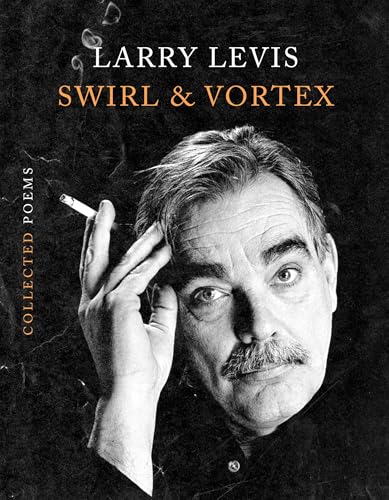
Swirl & Vortex: Collected Poems

Rate this book
All the blazingly original work by Larry Levis, “one of the greatest poets of a generation” (Carolyn Forché)

The poetry of Larry Levis increasingly occupies a legendary place of reverence among poets and readers—the spell of his reputation only continuing to widen in the thirty years since his death. From the briefer lyrics and deep image-making of his early books to the long sequences and operatic narratives of his last works, Levis’s poems have an unmistakable signature, a way of expressing the sweep of history, perception, and heartbreak. Over his career, his poetic lines broadened to accommodate the cinematic aperture of his observations on American empire, poverty, landscape, migrant workers, political violence, addiction, and art. Levis’s expansive poems came to resemble the interconnecting patterns just discernible in the eddies of a stream or the leaves circling in a wind.

Swirl & Vortex at last makes all of Levis’s poetry available in one definitive volume. This collection includes the five books published in Levis’s lifetime, a brilliant reconfiguration of Levis’s posthumous books, and unpublished late poems, edited and with an afterword by David St. John. To trace Levis’s poetic development into his extraordinary “late style of fire”—cut short by his early death—is one of the singular experiences in contemporary poetry. Swirl & Vortex is an essential collection by one of the great poets of the end of the twentieth century, and a transformative work spiraling out toward our future.

576 pages, Hardcover

Published February 3, 2026

Loading...
Loading...

About the author

Larry Levis

33 books60 followers
Larry Patrick Levis was born in Fresno, California, on September 30, 1946. His father was a grape grower, and in his youth Levis drove a tractor, pruned vines, and picked grapes in Selma, California. He earned a bachelor's degree from Fresno State College (now California State University, Fresno) in 1968, a master's degree from Syracuse University in 1970, and a Ph.D. from the University of Iowa in 1974.

Among his honors were a YM-YWHA Discovery Award, three fellowships in poetry from the National Endowment for the Arts, a Fulbright Fellowship, and a Guggenheim Fellowship.

Levis died of a heart attack in 1996, at the age of 49.

Ratings & Reviews

What do you think?
Rate this book

Friends & Following

Create a free account to discover what your friends think of this book!

Community Reviews

5 stars
17 (68%)
4 stars
5 (20%)
3 stars
2 (8%)
2 stars
0 (0%)
1 star
1 (4%)
Displaying 1 - 3 of 3 reviews
Profile Image for Amanda .
24 reviews
April 21, 2026
The man's got bars, idc what my friends say. RIP Larry, you would've loved Tumblr.
Profile Image for M. D.  Hudson.
184 reviews133 followers
June 8, 2026
This is not a book review. Rather I am reviewing a book review published in the New York Times on February 4, 2026:

He Died at 49. His Collected Poems Rank With the Best of the 20th Century.
Larry Levis’s work, gathered in the expansive new book “Swirl & Vortex,” was equally concerned with the soul and the void.
By Elisa Gabbert

Note that lede - "died at 49." This is, I think, important, because I cannot otherwise explain why Larry Levis is a literary-cultural phenomenon in contemporary American poetry, at least amongst the Poetry Professorariate of the early Baby Boomer era. For years - 30 plus years - I have heard of Levis, always spoken in hushed, reverent tones, as the great Poet Martyr of his generation, taken from us far too soon. As willing as the next guy to be humbled by the achievement of a Dead Poet, I approached Levis' temple with reverence, ready to be dazzled and saddened. But I don't get it, I just don't get it. As with many, many poets of his generation (Boomer white guys in creative writing departments) his writing can be defined as Joseph S. Salemi brilliantly puts it, the "Portentous Hush":

"Those of you who have read my criticism in the past know that I refer to this problem as "Portentous Hush." Portentous Hush is directly related to the unhealthy dominance of the ]yric mode, but is not identical with that phenomenon. It can infect any genre of verse. What is it, you ask? Well, Portentous Hush is an atmosphere, a tonality, an attitude. It is the tendency of contemporary verse to generate an air of highfalutin sanctity about itself, to pose before the reader as Something Of Great Importance, with capital letters. A poem in the grip of Portentous Hush has all the hieratic resonance of a prayer or an incantation. When you read such a poem you can hear the poet whispering to you, in a tone of hushed awe, something like the following: "This is a high and holy moment of deep significance, and you must pay reverent attention!" It doesn't matter what the poem is about. The real subject of such a poem is the celebration of its own heightened sensitivity."
http://www.expansivepoetryonline.com/...

In a typical gush-review of Levis I've encountered over the years, these moments of Portentous Hush are presented with an air of reverence, as if the quote actually embodies something fresh, new, exciting or otherwise not found in 55 million other poems written by Boomers from c. 1967+. Here are some examples from Gabbert's review:

Levis’s early poems are mostly short, wry, imagistic — full of darkness and shadow (“Once I saw my/shadow in water, and/glanced back, but I was gone”) and a melancholy Hemingway rain (“I am a used-car dealer … I am an old Cuban in the rain”). There’s a coolness that reminds me of Denis Johnson (“I steal a car and drive softly away”) or the mildly ironic sensibility of Charles Simic, an eye that sees the world a bit smaller than real size (“Ruled by the longings of toys/left under houses for years. Left as offerings. Dust”).

“The Rain’s Witness” is a variation on a line from one of the sections (“You witness the rain for weeks”), elevated to a name of its own. These marginal, mysterious decisions of ordering and naming are so personal, almost like pet names. They add so much style, a word that was important to Levis, who must have known its part in greatness. Style is defensible idiosyncrasy.

Poets often attach to certain words. Besides “style,” I associate Levis with “stillness,” “goodbye” and of course “rain,” “horses,” “trees,” “stars” and “fire,” words for things so elemental they lose their wordness — we can’t read them without seeing what they name. The earmarked words may be minor for everyone else. Take a word like “even,” as in “You do not even/Have a car anymore.” A small, connective word, but one used to express astonishment. Loss is total.

That last excerpt says it all - the “so elemental” recitation of concrete nouns - “rain,” “horses,” “trees,” “stars” and “fire” - attached with the ridiculous claim that just typing these words causes them to lose their "wordness." "Darkness and shadow!" Good grief. This exhausted poetic strategy is a half century old, at least, originating with the Deep Image aka Stones 'n' Bones school of poetry popularized by Robert Bly and, in his worst moments, the sometimes brilliant James Wright. These guys borrowed heavily from (ancient, mostly) Asian poetry (good) and the Euro-trash strum-und-drang of the inexplicably popular Tomas Tranströmer. W. S. Merwin, in another baffling instance of American Poetry Culture incoherence, embraced the Deep Image just as it was going out of fashion and became wildly successful with it, the New Yorker publishing dozens of his one-hand-clapping koans over the years, probably because their tiny word count made for good filler around the advertisements and cartoons. Merwin's "critics" also made up reasons for these drear, boring, pretentious and portentous poems were worth reading (or, as critics say, "celebrating").

But let me quickly add that Levis is not merely a Stones 'n' Bones guy - like so many of his poetic ilk, he adopted the "elemental" aspects of the Stones 'n' Bones poets - using, you know, stones and bones, along with light, water, trees, birds, etc. etc. - and tacked them onto a kind of denatured post-Confessional armature. Such poems are a plague on the literary culture, but being so easy to do, they are the go-to mode for the poetry professors and their ambitious MFA students. A half century! Here is Gabbert swooning in rapture to this worn-out, exhausted vein of versifying:

"A theme bridging parts is a productive apparatus that allows the poem to build beyond image and miniature scene, implying a world. We see it again in the wonderful sequence poem “Linnets 1–12,” gathered in a section titled “The Rain’s Witness” in Levis’s second book, “The Afterlife” (1977). Here the theme takes on the grandeur of a personal myth. “One morning with a 12 gauge my brother shot what he said was a linnet,” the poem begins. “Anyone could have done the same and shrugged it off, but my brother joked about it for days … He drove on the roads with a little hole in the air behind him.”

In the second section, Levis writes, “I find that I too am condemned, and must stitch together, out of glue, loose feathers, droppings, weeds and garbage I find along the street, the original linnet.” The poem changes form (from prose to lines and stanzas), changes subject like a dream. The poem is capacious and we trust we are still in the same dream. “It is peace time./You have no brother./You never had a brother.”

“The Rain’s Witness” is a variation on a line from one of the sections (“You witness the rain for weeks”), elevated to a name of its own. These marginal, mysterious decisions of ordering and naming are so personal, almost like pet names. They add so much style, a word that was important to Levis, who must have known its part in greatness. Style is defensible idiosyncrasy."

Gawd, even the title makes me cringe: "The Rain's Witness"! So...so twee. As somebody once said in answer James Taylor's "I've seen fire and I've seen rain.." "Yeah, me too." It's so predictable, so...easy. But the poem shows the Confessional Lite tactic of tacking on Deep Image "elementals": “I find that I too am condemned, and must stitch together, out of glue, loose feathers, droppings, weeds and garbage I find along the street, the original linnet.” "Condemned!" Of course you are, Larry, condemned to loose feathers and droppings. And the linnet too, of course. Not much left after a 12 gauge blast, I bet. But note how Gabbert justifies her praise - this too is as worn-out as the poem in question - "Here the theme takes on the grandeur of a personal myth... " Humbug!

So why Larry Levis now? Why this collection? Why the extravagant praise in what's left of the New York Times? The cultural-social aspects of these moments fascinate me, even if poems and poets do not. In an extra-literary sense, I think I do know what is going on. The apotheosis of Larry Levis to the summit of Mt. Parnassus is a desperate bid for the poets of the Baby Boomer Generation to make a claim for significance (or even mere relevance). This is because the poets of the Baby Boomers, like the poets of the Greatest and Silent Generations before them, have a big problem: they don't have, really, any poems. Sure, the quantity is there - nobody can say that these three generations didn't get busy and, like the Arsenal of Democracy, crank out the product. These middling, career-minded poets churned out thousands of books and millions of poems. The problem is, nothing is sticking and without a poem or three to stick to a particular poet you have...the 1870s-1880s? Go back before the Greatest Generation (b. c. 1920) and you have poets and poems: Bishop, Berryman, Lowell, Jarrell. Before these poets, Stevens, Moore, Eliot, Frost. All of these poets are famous, of course, but they all have actual, individual enduring poems attached to their reputations ("miles to go before I sleep.") When 9/11 happened, I remember finding it interesting that the poem everybody turned to was...W. H. Auden! When people want to conjure up the Decline and Fall they turn to the widening gyre of William Butler Yeats (b. 1864). The Greatest Generation was the first batch of poets who profited from the rise of the university creative writing programs and the first generation to substitute careers for poems - not intentionally, to be sure. They were old enough to have experienced the bad old days when poets mostly starved, unless you could put on a good show like Vachel Lindsey, Edna St. Vincent Millay, Dorothy Parker, or Carl Sandburg. But the university (especially with tenure) is so much more secure. Robert Frost was the pathfinder here, finding refuge in the university and such cushy places as Breadloaf after he was too old to be thoroughly corrupted.

For the Greatest Generation, let's take one of its most successful careerists, Donald Hall, who shortly before his death got one of those government gold medals, his bestowed by President Obama. Hall was a talented schmoozer and knew how to work the academic career path before it was even fully blazed. He was so comfy he was able to retire from the University of Michigan at age 57 and noisily return to the family farm, where he continued to crank out the verse and kept his hand in as a sort of free-range literary gad about. Married to a much younger poet (who happened to be a student of his - what an amazing coincidence), Jane Kenyon, she got cancer and he "got a book out of it" as the professors like to say, which was praised everywhere and was really just as bad as everything else Hall wrote, except that he exploited someone's death to give it pizzazz. When he died, I eagerly consulted the obituaries to see what poem of Hall's vast, undistinguished output would be chosen to represent the man and his work. I thought it possible I'd missed a gem buried within his many books, but nope, nothing to report. The Greatest / Silent Generations at least had James Wright and Donald Justice and Frank O'Hara, not as "famous" as Donald Hall, but far better poets. The Silent Generation is saved from utter obscurity by the flashing comet of Sylvia Plath (b. 1932) and, a far dimmer light, Anne Sexton (b. 1928) and, to me, the inexplicably prominent John Ashbery (b. 1927 - he is on the cusp of the Greatest Generation). But look at Plath's contemporaries: Grace Schulman (b. 1935), Diane Wakowski (b. 1937), Jean Valentine (1934-2020) - fabulously successful teaching careers but nothing of their work enduring. Mary Oliver (1935-2019) is culturally still in play - she's a kind latter-day Rod McKuen, appealing to the zeitgeist (all that love of nature) and all too easy moments of transcendence; nobody's going to mistaken her achievement for Elizabeth Bishop's. Charles Bukowski, for all his over-production, is one of the few Greatest Generation poets who can still be said to have a following (and he is, I suspect, eclipsing Allen Ginsburg for his generation's role of America's Poet Maniac).

But this development was gradual, and the Greatest/Silent Generation poets who became tenured hacks at least had a taste of what it meant to be a free-range poet outside of academia and Lowell, Bishop, Moore, Yeats, etc. were their exemplars. It was only by the 1960s when they were grown up that creative writing "industry" became established. But for the Boomers, all they ever knew was literary academia, with its relentless credentialing that replaced, you know, actual poems, professors "mentoring" professors. So by my count, Boomers are the third American generation to face cultural oblivion. My theory goes something like this: the Baby Boomer poets are aging out, and, careerists as they are, they do not like their place in American cultural history. Careerists all, they have no place really, and though they don't admit it publicly, they are, I think aware of it, again, they don't have any poems. Prizes, careers, tenure, books published galore, but beyond a few sports, such as the easy-peasy "Meditation at Lagunitas" by Robert Haas, again, they don't have any poems. Gargantuan careers, but...again...no poems. It could be said the Baby Boomers are in worse shape than Greatest and Silent - there are far more of the Boomers, too many clogging up the works with too many poems, so that even somebody of potential interest such as Norman Dubie are obscured by their own incontinence. Larry Levis died young, before he could over-produce, so he makes a good candidate for significance. A classic early Boomer (b. 1949), St. John is in the same situation; too many poems (though at 12 or 13 poetry collections, he is reticent by the practices of his prolific era) with not a one of them standing out of the crowd. He's part of the gerontocracy of (mostly) white people running the show (St. John still teaches, at UCLA, age 76 - from the obligatory Wikipedia article for old poet professors: "St. John has taught creative writing at Oberlin College and Johns Hopkins University. He currently teaches in the English Department at University of Southern California in Los Angeles, where he serves as Chair, and is one of the founding members of the USC PhD in Creative Writing & Literature. In 2017, he was elected a Chancellor of the Academy of American Poets."). A younger, more diverse group of poets is following, but because of institutional considerations (who's writing my letter of recommendation?), the system endures. And the system still cranks out a lot of verse, none of it, so far as I can tell, which is really sticking to the culture. Six decades of American Poetry's failure, and counting, the on-going efforts to make Larry Levis important notwithstanding. And so Auden's "low, dishonest decade" is where we turn, 80+ years later, or the rough beast slouching towards Bethlehem, 100+ years later when We the People feel the urge to to say the unsayable. Who's gonna versify the Sesquicentennial?

So what about the reviewer? The New York Times tells us: "Elisa Gabbert’s collections of poetry and essays include, most recently, “Normal Distance” and “Any Person Is the Only Self.” Her On Poetry columns appear four times a year." Wikipedia tells us she was born in 1979 and is not a Creative Writing professor - those jobs are either drying up or locked up by septegenarian tenured versifiers such as, for instance, David St. John (see above). Ah, the plight of Generation X! Maybe she truly likes these dreadful poems. Like so many of us, she made her name online: Gabbert is "is known within the online literary community for her social media presence and humor." which is damning with faint praise, "known" being such a debased term nowadays. She got in a controversy in 2015 over whether or not white straight men should still write, of if we should just pipe down and quit dominating the culture. This caused online blah-blah, as you'd expect; but her praise of Levis (and by extension David St. John) - both straight white guys - shows that perhaps she's learnt discretion is the better part of valor. But beyond the Web, she is a part of the Crumbling Poetry Establishment, however: "In February 2020, The New York Times announced Gabbert's appointment as its poetry columnist, succeeding David Orr's 15-year tenure. She wrote her first “On Poetry” column in March 2020." David Orr (b. 1974), despite his relative youth, carries the torch for the Confession Lite on into the 21st century; boring as all get out, his poetry is "beautifully crafted" it is no doubt described, somewhere. But why is Gabbert going on and on about Larry Levis? Is she bucking for a tenure-track job and needs to show the old fogies such as David St. John that she appreciates the right stuff? Is this how letters of recommendation get whelped? Heck if I know; the one time I asked a poet-professor (not David St. John) for a letter of recommendation, he turned me down!

And I should give Levis his due - compared to Robert Pinsky, Edward Hirsch, Jane Hirschfeld, etc., his verse can be muscular, I guess. But that's damning with faint praise for sure. Which is to say, still, I don't get the Larry Levis thing, at least not in a strictly literary sense, that is, I don't know why anybody should waste time bothering with them. “Swirl & Vortex” - even those two words juxtaposed fill me with reader's fatigue, mild depression, costiveness. My guess is, this review will not stir the battalions of Larry Levis fans to mount a defense. Perhaps because this is a bad, unfair (the book unread!) review buried deep in the bowels of Goodreads. Or perhaps because the fans of Larry Levis exist only in a closed environment of aging poet professors who are increasingly desperate to show that at least a few of those millions of American poems, c. 1965-2025 have any hope of enduring. On Goodreads so far (June 2026), this book got 22 ratings with an aggregate 4.73 star-score. An astounding 247 people "want" to read this. Really? Only two reviews have been posted, both very short, very positive, one by a poet-professor (b. 1973). Goodread's introduction features an Establishment "radical" professor hack: "All the blazingly original work by Larry Levis, “one of the greatest poets of a generation” (Carolyn Forché (b. 1950))" Whatever. Ask me in fifty years. Or five.
Profile Image for Paul Vermeersch.
Author 18 books54 followers
March 14, 2026
Here it is! A worthy upgrade to the much-loved The Selected Levis. Again, with David St. John as editor, this is a must for any Levis enthusiast, and the perfect opportunity for readers new to his works to start with a definitive volume. Levis may have left us too early, but we are fortunate to have his important work presented with such care.

Displaying 1 - 3 of 3 reviews