

What do you think?
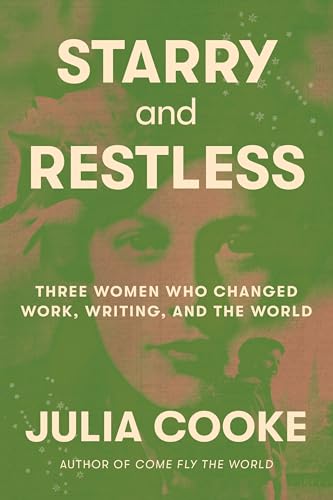
Starry and Restless: Three Women Who Changed Work, Writing, and the World
The page-turning story of three women reporters and the way they changed the world, work, and journalism.
She hid on a Red Cross boat to reach Omaha Beach on D-Day. She walked the abandoned streets of Hong Kong to take food to her daughter’s father, a prisoner of war. She fought off the advances of overzealous Yugoslavian diplomats, found overlooked details of world history in a dentist’s kitchen in Sarajevo. She traveled alone to Mexico. She traveled alone to Congo. She traveled alone to the American South. She married Hemingway. She married a Chinese poet-playboy-publisher, then married a British war hero. She fell in love with H. G. Wells. She gave birth and raised a child on her own. She landed on the front page of the newspaper. She wrote for the great magazines of her time—Vogue, The New Yorker, Harper’s Bazaar. She wrote a play. She wrote a memoir. She wrote a genre-breaking travel narrative. She wrote bestsellers. She wrote and wrote and wrote. She changed the very way we think about writing and the way journalists craft stories—which sources are viable, which details are important—and the way women move and work in the world.
She was Martha Gellhorn. She was Emily “Mickey” Hahn. She was Rebecca West. Each woman was starry-eyed for success, for adventure, and helped ensure that other starry and restless women could make unforgettable lives for themselves. They fought for their lives and their work. They were praised and criticized for it all.
In language as lively and nimble, in passages as intimate and adventurous, and with conviction as fierce and indefatigable as her subjects’ own, Julia Cooke’s Starry and Restless plays out the stories of three women across three decades and five continents. Martha, Mickey, Rebecca—journalists, authors, mothers, lovers, friends. These women didn’t just bear witness to the great changes of the twentieth century; their curiosity, grit, ambition, and stories changed the world.
She hid on a Red Cross boat to reach Omaha Beach on D-Day. She walked the abandoned streets of Hong Kong to take food to her daughter’s father, a prisoner of war. She fought off the advances of overzealous Yugoslavian diplomats, found overlooked details of world history in a dentist’s kitchen in Sarajevo. She traveled alone to Mexico. She traveled alone to Congo. She traveled alone to the American South. She married Hemingway. She married a Chinese poet-playboy-publisher, then married a British war hero. She fell in love with H. G. Wells. She gave birth and raised a child on her own. She landed on the front page of the newspaper. She wrote for the great magazines of her time—Vogue, The New Yorker, Harper’s Bazaar. She wrote a play. She wrote a memoir. She wrote a genre-breaking travel narrative. She wrote bestsellers. She wrote and wrote and wrote. She changed the very way we think about writing and the way journalists craft stories—which sources are viable, which details are important—and the way women move and work in the world.
She was Martha Gellhorn. She was Emily “Mickey” Hahn. She was Rebecca West. Each woman was starry-eyed for success, for adventure, and helped ensure that other starry and restless women could make unforgettable lives for themselves. They fought for their lives and their work. They were praised and criticized for it all.
In language as lively and nimble, in passages as intimate and adventurous, and with conviction as fierce and indefatigable as her subjects’ own, Julia Cooke’s Starry and Restless plays out the stories of three women across three decades and five continents. Martha, Mickey, Rebecca—journalists, authors, mothers, lovers, friends. These women didn’t just bear witness to the great changes of the twentieth century; their curiosity, grit, ambition, and stories changed the world.
448 pages, Hardcover
First published February 24, 2026
Ratings & Reviews
Friends & Following
Create a free account to discover what your friends think of this book!
Community Reviews
Displaying 1 - 30 of 43 reviews

May 13, 2026
There is a lot of - really interesting - information in this book - and I was happy to learn about the lives of these 3 truly intrepid women in the mid 20th century (West, Hahn, Gellhorn).
Similar to other readers, I was not convinced that putting the three of them together helped the cause. They did all know each other, all admiring the grande dame Rebecca West's enormous skill and influence, and they all occupied various outposts (and in-posts) reporting on WWII. They were all restless. And starry. But I don't think Cooke managed to weave their stories together.
The most detail was given to Emily "Mickey" Hahn, who had quite a storied life during the Japanese invasion of China as she wrote from Shanghai. This was, by far, the best, most engaging, most spirited biography of the book. I admit I'd heard nothing of Mickey before, which is a sad state of affairs considering what an amazing writer, and fearless person she was during such dangerous times. In contrast, West comes off somewhat colorless and even anxious, and Gellhorn seems to end up drained - this is what I got from the book, maybe it is/isn't true.
Overall, Cooke deserves many kudos to bringing 21st attention to these amazing women.
Similar to other readers, I was not convinced that putting the three of them together helped the cause. They did all know each other, all admiring the grande dame Rebecca West's enormous skill and influence, and they all occupied various outposts (and in-posts) reporting on WWII. They were all restless. And starry. But I don't think Cooke managed to weave their stories together.
The most detail was given to Emily "Mickey" Hahn, who had quite a storied life during the Japanese invasion of China as she wrote from Shanghai. This was, by far, the best, most engaging, most spirited biography of the book. I admit I'd heard nothing of Mickey before, which is a sad state of affairs considering what an amazing writer, and fearless person she was during such dangerous times. In contrast, West comes off somewhat colorless and even anxious, and Gellhorn seems to end up drained - this is what I got from the book, maybe it is/isn't true.
Overall, Cooke deserves many kudos to bringing 21st attention to these amazing women.
March 3, 2026
Starry and Restless offers a compelling exploration "how many people a woman can be in one life." By chronicling the trajectories of Rebecca West, Martha Gellhorn, and Emily Hahn—three seminal figures in the history of American journalism—the narrative provides a profound look at the challenges and triumphs inherent in the female experience. As an advocate for adventurous, independent travel, I found their stories deeply resonant and thought-provoking.
The book vividly illustrates the lives of these women, who acted as true iconoclasts during the mid-20th century. It is striking to consider their independence and defiance of social norms against the constraints of the 1940s, 50s, and 60s. The narrative spans a global scope, moving from Singapore and Mexico to the Spanish Civil War and New York City. Notably, the text highlights the origins of The New Yorker and details Martha Gellhorn’s pioneering work in reporting on racial violence in the American South, a significant contribution that compelled media outlets to address racial injustice.
Ultimately, Starry and Restless interrogates the perennial tension between professional ambition and personal expectations, specifically examining how career aspirations can conflict with traditional societal roles and motherhood. It poses the enduring question: Is it truly possible to "have it all"?
While I highly recommend the content, I found the audiobook format challenging to navigate. The intertwined narratives of the three subjects made it difficult to track specific details at times; I believe these complex, overlapping stories might be better served by a print or digital reading format for enhanced clarity.
Thank you NetGalley and the publishers for this advanced listener copy!
Rating: 4/5 Stars
The book vividly illustrates the lives of these women, who acted as true iconoclasts during the mid-20th century. It is striking to consider their independence and defiance of social norms against the constraints of the 1940s, 50s, and 60s. The narrative spans a global scope, moving from Singapore and Mexico to the Spanish Civil War and New York City. Notably, the text highlights the origins of The New Yorker and details Martha Gellhorn’s pioneering work in reporting on racial violence in the American South, a significant contribution that compelled media outlets to address racial injustice.
Ultimately, Starry and Restless interrogates the perennial tension between professional ambition and personal expectations, specifically examining how career aspirations can conflict with traditional societal roles and motherhood. It poses the enduring question: Is it truly possible to "have it all"?
While I highly recommend the content, I found the audiobook format challenging to navigate. The intertwined narratives of the three subjects made it difficult to track specific details at times; I believe these complex, overlapping stories might be better served by a print or digital reading format for enhanced clarity.
Thank you NetGalley and the publishers for this advanced listener copy!
Rating: 4/5 Stars

March 25, 2026
Interesting subjects -- three women who challenged early twentieth-century norms to live exciting lives circling the globe as journalists/writers. A triple biography in some ways, but also a commentary on social and professional double standards toward women. Well written and well researched. The author knows her subjects -- three women who are certainly worthy of being written about -- and does a nice job stringing their stories together.
That said, it seemed surprising to me that the book didn't include more of the actual writing of these women. There were occasional short quotes, but I would have enjoyed seeing some lengthier excerpts of their work here and there (even just a few block paragraphs), to get a better feel for their style as writers and their approach to the subjects they wrote about.
That said, it seemed surprising to me that the book didn't include more of the actual writing of these women. There were occasional short quotes, but I would have enjoyed seeing some lengthier excerpts of their work here and there (even just a few block paragraphs), to get a better feel for their style as writers and their approach to the subjects they wrote about.

Did Not Finish
April 3, 20264.1.2026
DNF@20%
Kindle/FLP OverDrive [449]
NetGalley Audiobook [Andi Arnt]
This just didn't work for me and I just don't know why [this would typically be my jam], but it just wasn't what I was hoping for. I will say the narrator is absolutely fantastic [and one of my favorites] and I'd recommend her for any book out there, but especially if you want the audio for this book.
Again, there really isn't anything wrong with this book, it is just me.
Thank you to NetGalley, Julia Cooke, and Macmillan Audio for providing the audiobook ARC in exchange for an honest review.
DNF@20%
Kindle/FLP OverDrive [449]
NetGalley Audiobook [Andi Arnt]
This just didn't work for me and I just don't know why [this would typically be my jam], but it just wasn't what I was hoping for. I will say the narrator is absolutely fantastic [and one of my favorites] and I'd recommend her for any book out there, but especially if you want the audio for this book.
Again, there really isn't anything wrong with this book, it is just me.
Thank you to NetGalley, Julia Cooke, and Macmillan Audio for providing the audiobook ARC in exchange for an honest review.
April 6, 2026
I enjoyed learning about Emily Hahn and I’m looking forward to reading more of her work. I didn’t think the juxtaposition of Hahn, Rebecca West and Martha Gelhorn worked very well, nor did the episodic presentation of the three careers. The Afterward was a hodgepodge of writers that Cooke didn’t have room for in the text - not sure why they had to be tacked on at the end. Listened to the audiobook - perhaps hard copy would have better.

June 28, 2026
wow, Ernest Hemingway really and truly is not shit, just as I always suspected

March 22, 2026
A fascinating history of three pioneering journalists, Rebecca West, Martha Gelhorn, and Mickey Hahn. The author does a great job weaving the three stories of these journalists throughout wars and continents. The great part of this book is that the author lets the voices of these three authors shine, making me want to read the original works.

April 14, 2026
Exquisitely written with incandescent observationsly honest observations about three courageous women who embraced the 20th century. Their writing recorded chaos in several genres. As women, writers, lovers, mothers, they mentored their circle and left a trail to blaze for working women and women writers.
Review of advance copy received from Netgalley
Julia Cooke, Starry and Restless Three Women Who Changed Work, Writing, and the World, Farrar, Straus and Giroux, February 2026.
Thank you, NetGalley, for providing me with this uncorrected proof for review.
I read Julia Cooke’s Come Fly the World and was thoroughly engaged. Starry and Restless Three Women Who Changed Work, Writing, and the World is even more impressive. This book stands out for its valuable insights and compelling storytelling about three remarkable women. It is one of the most valuable and engrossing books on my bookshelf; an engaging work to return to frequently; a story written by yet another amazing woman who has, with this work, brought together feminist understanding, dedication to thoughtful detail of the worlds in which Rebecca West, Martha Gellhorn and Mickey (Emily) Hahn worked, developed loving and complex relationships with women and men, became parents, and came to grips with their own feelings, faults, virtues and challenges.
The book is in four parts; Stranger Even to Myself; The Urgency of Geography; Never Do Your Own Housework; and The Most Powerful Magic I Knew. Each woman features in all the sections, with their location and the year providing the framework. In 1936-37 Rebecca West is in Yugoslavia; Mickey Hahn on her way to China; and Martha Gellhorn in Spain. The narrative spans the years from this period through the 1940s to the early 1950s and locations as varied as China, Cuba, England, Hong Kong, New York, Italy, Germany, the United States, Mexico, Taiwan and South Africa. The woman journalist is introduced after a prologue featuring Mickey Hahn on a journey to the Belgian Congo, a gun wrapped in a silk blouse.
In the introduction we learn that Rebecca West has been refused work on a London newspaper in 1911, because women were seen as unsuited to such work. A background to women’s journalism follows until, in 1930 Martha Gellhorn is introduced on her way to becoming a foreign correspondent. Further background and Mickey Hahn reappears – time and necessity have promoted her: journalism is now work that can be undertaken by women - but under special and sexist conditions. Other journalists are referred to, but Cooke keep her focus on Hahn, West and Gellhorn without losing her deftness in interweaving history, the work of a journalist, the way in which each woman addressed the challenges of work, personal and domestic environments, unwanted publicity just because they were women and their many achievements.
Cooke questions understandings of the introduction of particular journalistic features in the 1960s and 1970s – adeptly recognising a history that like so much of women’s history is forgotten, with those being regarded as the first, in reality following in the intrepid footsteps of women before her. This is no criticism of the newly revered, but an essential contribution to writing women’s history. Similarly, Cooke’s narrative resonates with truth telling; the women do not escape stories that might inspire criticism, but neither are they portrayed as other than capable, strong writers of authority, wit and talent.
The Afterword is a joy to read with Cooke’s lyrical style highlighting her dedication to telling Rebecca West’s, Martha Gellhorn’s and Mickey Hahn’s stories truthfully and with dedicated care. She enjoins once again with the broader context of the journalistic and writing world in which they starred. Here she frames her arguments about the history of journalism in ways that are all too familiar with women who seek to tell the real stories, those that include women, and often should star them. Of interest to this Australian reviewer is her reference to the Australian Dale Spender and her work in demonstrating the importance recognising that the women’s movement is not one that disappeared – there was always a women’s movement in the twentieth century.
Starry and Restless Three Women Who Changed Work, Writing, and the World is a wonderful read which is followed by notes that are well worth reading for the additional information that can be gleaned, recommended reading – another good source, and an index.
Thank you, NetGalley, for providing me with this uncorrected proof for review.
I read Julia Cooke’s Come Fly the World and was thoroughly engaged. Starry and Restless Three Women Who Changed Work, Writing, and the World is even more impressive. This book stands out for its valuable insights and compelling storytelling about three remarkable women. It is one of the most valuable and engrossing books on my bookshelf; an engaging work to return to frequently; a story written by yet another amazing woman who has, with this work, brought together feminist understanding, dedication to thoughtful detail of the worlds in which Rebecca West, Martha Gellhorn and Mickey (Emily) Hahn worked, developed loving and complex relationships with women and men, became parents, and came to grips with their own feelings, faults, virtues and challenges.
The book is in four parts; Stranger Even to Myself; The Urgency of Geography; Never Do Your Own Housework; and The Most Powerful Magic I Knew. Each woman features in all the sections, with their location and the year providing the framework. In 1936-37 Rebecca West is in Yugoslavia; Mickey Hahn on her way to China; and Martha Gellhorn in Spain. The narrative spans the years from this period through the 1940s to the early 1950s and locations as varied as China, Cuba, England, Hong Kong, New York, Italy, Germany, the United States, Mexico, Taiwan and South Africa. The woman journalist is introduced after a prologue featuring Mickey Hahn on a journey to the Belgian Congo, a gun wrapped in a silk blouse.
In the introduction we learn that Rebecca West has been refused work on a London newspaper in 1911, because women were seen as unsuited to such work. A background to women’s journalism follows until, in 1930 Martha Gellhorn is introduced on her way to becoming a foreign correspondent. Further background and Mickey Hahn reappears – time and necessity have promoted her: journalism is now work that can be undertaken by women - but under special and sexist conditions. Other journalists are referred to, but Cooke keep her focus on Hahn, West and Gellhorn without losing her deftness in interweaving history, the work of a journalist, the way in which each woman addressed the challenges of work, personal and domestic environments, unwanted publicity just because they were women and their many achievements.
Cooke questions understandings of the introduction of particular journalistic features in the 1960s and 1970s – adeptly recognising a history that like so much of women’s history is forgotten, with those being regarded as the first, in reality following in the intrepid footsteps of women before her. This is no criticism of the newly revered, but an essential contribution to writing women’s history. Similarly, Cooke’s narrative resonates with truth telling; the women do not escape stories that might inspire criticism, but neither are they portrayed as other than capable, strong writers of authority, wit and talent.
The Afterword is a joy to read with Cooke’s lyrical style highlighting her dedication to telling Rebecca West’s, Martha Gellhorn’s and Mickey Hahn’s stories truthfully and with dedicated care. She enjoins once again with the broader context of the journalistic and writing world in which they starred. Here she frames her arguments about the history of journalism in ways that are all too familiar with women who seek to tell the real stories, those that include women, and often should star them. Of interest to this Australian reviewer is her reference to the Australian Dale Spender and her work in demonstrating the importance recognising that the women’s movement is not one that disappeared – there was always a women’s movement in the twentieth century.
Starry and Restless Three Women Who Changed Work, Writing, and the World is a wonderful read which is followed by notes that are well worth reading for the additional information that can be gleaned, recommended reading – another good source, and an index.
Review of advance copy received from Netgalley
Julia Cooke’s latest book, tantalizingly titled Starry and Restless, is about the place of women in society and American journalism since the late 1800s and how it transformed during the war years. It is told through the lives of three journalists who blazed past a slew of reductive and gendered monickers at a critical juncture in American journalism to forge starry careers: Rebecca West, Emily (Mickey) Hahn, and Martha Gellhorn.
The trio was among the frontrunners of a new era of literary journalism when the world was on the brink of collapse. It was a time when gender roles were being questioned, and journalism was being redefined. They were among the few and the first to step into the future, shoving past a deeply gendered world. They were guided by itchy feet, a disdain for domesticity—though they all eventually succumbed to a version of it, and a love for the word and the world. Society was too small to contain these restless women; only the entire world would do.
Nested in the narrative are also accounts of Dorothy Thompson, Virginia Cowles, and the founding and the rise of The New Yorker, which was as instrumental in shaping the careers of these journalists as they were in shaping the fledgling magazine and what it came to stand for.
Nonconformists, West, Gellhorn, and Hahn thought for themselves, possessed their own style, and reveled in their individualism. They were known for their distinctive styles of writing that inspired and defined the emerging journalism. As war correspondents, they reported for newspapers and magazines. They also penned many books. Before Truman Capote and Joan Didion, there was West. Before Bruce Chatwin, creating her very own signature style of writing, was Hahn.
Their flings and relationships were as delectable as their writing, and their relationship with motherhood was contentious. They reported from the frontlines, where women were not allowed until the later years of the war, when there was some lenience. Their lives, as they continent hopped, overlapped with a common acquaintance orchestrating meetings among these women.
Cooke introduces the reader to West in Yugoslavia; Mickey, first in Congo and then Shanghai; and Gellhorn in Spain, where they are traveling solo as women.
West, Gellhorn, and Hahn were free spirits, unfettered by traditional roles; they make for captivating subjects. As is the case with women who swim upstream, they rarely belonged to groups or sisterhoods, though they mingled with high-profile individuals and formed lifelong friendships with select women.
While the premise of the book—three women in American journalism as it evolved—is strong, the organization of the book disrupts the narrative flow. Cooke’s choice of journalists is an exciting one, but, at times, their career paths, attitudes, and lifestyles are too similar to tell them apart.
This is not Cooke’s first foray into writing about iconic women in history who vaulted over traditional constraints. Her previous book was Come Fly the World: The Women of Pan Am at War and Peace. Similar to its predecessor, Starry and Restless is a well-researched and comprehensive multibiography, this time starring West, Hahn, and Gellhorn, three enduring names in American literary journalism.
The trio was among the frontrunners of a new era of literary journalism when the world was on the brink of collapse. It was a time when gender roles were being questioned, and journalism was being redefined. They were among the few and the first to step into the future, shoving past a deeply gendered world. They were guided by itchy feet, a disdain for domesticity—though they all eventually succumbed to a version of it, and a love for the word and the world. Society was too small to contain these restless women; only the entire world would do.
Nested in the narrative are also accounts of Dorothy Thompson, Virginia Cowles, and the founding and the rise of The New Yorker, which was as instrumental in shaping the careers of these journalists as they were in shaping the fledgling magazine and what it came to stand for.
Nonconformists, West, Gellhorn, and Hahn thought for themselves, possessed their own style, and reveled in their individualism. They were known for their distinctive styles of writing that inspired and defined the emerging journalism. As war correspondents, they reported for newspapers and magazines. They also penned many books. Before Truman Capote and Joan Didion, there was West. Before Bruce Chatwin, creating her very own signature style of writing, was Hahn.
Their flings and relationships were as delectable as their writing, and their relationship with motherhood was contentious. They reported from the frontlines, where women were not allowed until the later years of the war, when there was some lenience. Their lives, as they continent hopped, overlapped with a common acquaintance orchestrating meetings among these women.
Cooke introduces the reader to West in Yugoslavia; Mickey, first in Congo and then Shanghai; and Gellhorn in Spain, where they are traveling solo as women.
West, Gellhorn, and Hahn were free spirits, unfettered by traditional roles; they make for captivating subjects. As is the case with women who swim upstream, they rarely belonged to groups or sisterhoods, though they mingled with high-profile individuals and formed lifelong friendships with select women.
While the premise of the book—three women in American journalism as it evolved—is strong, the organization of the book disrupts the narrative flow. Cooke’s choice of journalists is an exciting one, but, at times, their career paths, attitudes, and lifestyles are too similar to tell them apart.
This is not Cooke’s first foray into writing about iconic women in history who vaulted over traditional constraints. Her previous book was Come Fly the World: The Women of Pan Am at War and Peace. Similar to its predecessor, Starry and Restless is a well-researched and comprehensive multibiography, this time starring West, Hahn, and Gellhorn, three enduring names in American literary journalism.

Review of advance copy received from Publisher
The problem with triple biographies is that you always run the risk of one subject overshadowing the other two. In Julia Cooke's Starry and Restless, Emily "Mickey" Hahn is a tough act to follow. Cooke tells the story of Hahn, Martha Gellhorn, and Rebecca West. Each of them is a somewhat forgotten female writers of the early to mid 20th century. There is certainly plenty for Cooke to cover, and she is mostly successful in providing the reader a real page turner.
The strengths of the book are considerable. Each one of these women led an interesting life to say the least. There is certainly a feminist angle to the narrative (for better and worse) which makes sense in a lot of ways. I believe Gellhorn is mostly remembered via her relationship with Ernest Hemingway. (Reminder: Great writer, not a great significant other.) I was completely unfamiliar with Hahn and West. Cooke is a talented writer who has a sixth sense for excellent word choice. Her prose can border on poetry at certain points, and it is a great advantage while juggling three lives.
The narrative is not perfect, however. There is the aforementioned issue of Hahn just being more interesting in my opinion. It's not that West and Gellhorn are not worth attention. It's just that Hahn jumps off the page. I often found myself waiting for the story to get back to her whenever she disappears. This leads to the second issue which is that Cooke probably needed a much larger page count. She recounts these women's lives, but it feels like she can't really dig into who they were. It felt often like Cooke had to tell you who these women were to move the narrative along instead of showing the reader who they are. She will also villainize other characters with a quick putdown without explaining why. My final criticism would be that Cooke fell in love with her subjects too much. She crosses the line at times from admiration to hero worship. There are multiple times where any neutral author should admit the women acted horribly and with little attention to how their actions hurt other people.
Overall, the negatives are far outweighed by the positives. This book has a lot to like and is definitely worth your time.
(This book was provided as an advance reader copy by FSG Books.)
The strengths of the book are considerable. Each one of these women led an interesting life to say the least. There is certainly a feminist angle to the narrative (for better and worse) which makes sense in a lot of ways. I believe Gellhorn is mostly remembered via her relationship with Ernest Hemingway. (Reminder: Great writer, not a great significant other.) I was completely unfamiliar with Hahn and West. Cooke is a talented writer who has a sixth sense for excellent word choice. Her prose can border on poetry at certain points, and it is a great advantage while juggling three lives.
The narrative is not perfect, however. There is the aforementioned issue of Hahn just being more interesting in my opinion. It's not that West and Gellhorn are not worth attention. It's just that Hahn jumps off the page. I often found myself waiting for the story to get back to her whenever she disappears. This leads to the second issue which is that Cooke probably needed a much larger page count. She recounts these women's lives, but it feels like she can't really dig into who they were. It felt often like Cooke had to tell you who these women were to move the narrative along instead of showing the reader who they are. She will also villainize other characters with a quick putdown without explaining why. My final criticism would be that Cooke fell in love with her subjects too much. She crosses the line at times from admiration to hero worship. There are multiple times where any neutral author should admit the women acted horribly and with little attention to how their actions hurt other people.
Overall, the negatives are far outweighed by the positives. This book has a lot to like and is definitely worth your time.
(This book was provided as an advance reader copy by FSG Books.)

November 28, 2025
3.5/5
This book aims to bring three celebrated reporters – Rebecca West, Emily ‘Mickey’ Hahn, and Martha Gellhorn – back into the spotlight. Admittedly, I had never heard of their names before, yet their grit and devotion to their work are unmatched, especially considering how women’s roles were heavily restricted from the public back then. The line between biographical and fictional narrative becomes blurred, eventually casting its charming spell, especially for those who are not a fan of historical nonfiction. Many facts and snippets of literary journalism can be found throughout the book, which interested me a great deal. However, I found that the story of Emily Hahn made the most impression on me, rather than those of the other two writers. It's not that the lives of West and Gellhorn are poorly written, but the timeline jumps are disjointed, and the writing is repetitive, unconnected, and harder to follow from one chapter to the next. Ironically, the inclusion of many well-known side characters in this book proves to be a double-edged sword: it dilutes the focus and occasionally goes off track. Their affair and marriage appeared somewhat narcissistic, with little acknowledgment of the perspectives of those affected by their actions. Although these women not endearing and are deeply flawed (also privileged in many ways), they are more admirable than many of their male companions. This book by Julia Cooke is full of life and deserves praises for reclaiming the contributions of these three fearless twentieth-century war journalists and underestimated writers.
Big thanks to Farrar, Straus and Giroux for an ARC via NetGalley in exchange for my honest review.
This book aims to bring three celebrated reporters – Rebecca West, Emily ‘Mickey’ Hahn, and Martha Gellhorn – back into the spotlight. Admittedly, I had never heard of their names before, yet their grit and devotion to their work are unmatched, especially considering how women’s roles were heavily restricted from the public back then. The line between biographical and fictional narrative becomes blurred, eventually casting its charming spell, especially for those who are not a fan of historical nonfiction. Many facts and snippets of literary journalism can be found throughout the book, which interested me a great deal. However, I found that the story of Emily Hahn made the most impression on me, rather than those of the other two writers. It's not that the lives of West and Gellhorn are poorly written, but the timeline jumps are disjointed, and the writing is repetitive, unconnected, and harder to follow from one chapter to the next. Ironically, the inclusion of many well-known side characters in this book proves to be a double-edged sword: it dilutes the focus and occasionally goes off track. Their affair and marriage appeared somewhat narcissistic, with little acknowledgment of the perspectives of those affected by their actions. Although these women not endearing and are deeply flawed (also privileged in many ways), they are more admirable than many of their male companions. This book by Julia Cooke is full of life and deserves praises for reclaiming the contributions of these three fearless twentieth-century war journalists and underestimated writers.
Big thanks to Farrar, Straus and Giroux for an ARC via NetGalley in exchange for my honest review.

August 9, 2026
Was inspired to write a poem by Julia Cooke's nonfiction book, Starry and Restless. I hope to find books by the women writers she discussed, especially Rebecca West and her book about treason.
---
The Stranger In Me~~~~~~
-----
How do we know ourselves if we always stay the same soul?
Can we understand our limits, our strong points, our failures?
We surely must change our perspective, at least, don't you think?
If, that is, we want to understand ourselves, even as bad players,
-----
I've read that one becomes a stranger when they are travelers,
that they form new ways of thinking of the world and themselves.
Where is this stranger in me, I ask you, if I cannot actually travel??
Am I doomed to remain the same soul like a dolly set on the shelf?
--------
You may say it's a restless soul who must seek out new places.
If it's new faces they desire, you might call them lost souls as well.
.But is it really so bad to be restless, curious about who you could be,
to not settle for sameness and break out of the trappings of hell?
-------
A few women find themselves happiest on the road, able to write;
they write for readers who'll never see or hear the things they can.
Why are their names not known to us today, but only the male writers?
How can only men be restless and women seen instead as hysterics?
----------
I like to think I'm a world traveler when I enjoy reading my books;
like all restless women I explore to embrace the stranger in me.
Also like them I write from my own perspective of what I know;
I'm a woman with stars in her eyes and I will show you how starry!
Jan Peregrine 2026
---
The Stranger In Me~~~~~~
-----
How do we know ourselves if we always stay the same soul?
Can we understand our limits, our strong points, our failures?
We surely must change our perspective, at least, don't you think?
If, that is, we want to understand ourselves, even as bad players,
-----
I've read that one becomes a stranger when they are travelers,
that they form new ways of thinking of the world and themselves.
Where is this stranger in me, I ask you, if I cannot actually travel??
Am I doomed to remain the same soul like a dolly set on the shelf?
--------
You may say it's a restless soul who must seek out new places.
If it's new faces they desire, you might call them lost souls as well.
.But is it really so bad to be restless, curious about who you could be,
to not settle for sameness and break out of the trappings of hell?
-------
A few women find themselves happiest on the road, able to write;
they write for readers who'll never see or hear the things they can.
Why are their names not known to us today, but only the male writers?
How can only men be restless and women seen instead as hysterics?
----------
I like to think I'm a world traveler when I enjoy reading my books;
like all restless women I explore to embrace the stranger in me.
Also like them I write from my own perspective of what I know;
I'm a woman with stars in her eyes and I will show you how starry!
Jan Peregrine 2026

March 19, 2026
The three journalists' lives described in Julia Cooke's Starry and Restless are unbelievably thrilling: Rebecca West's, Martha Gelhorn's and Emily Hahn's. In fact, even in this day and age, they are downright unbelievable. Their careers as war correspondents are no less breathtaking today when they continue to have few counterparts. There were the great women in the Vietnam War and a few years later there was Christiane Amanpur in Bosnia, etc. Today, there is Clarissa Ward from CNN in the Middle East and very few others.
Martha Gelhorn, before during and after her marriage to Ernest Hemingway, reported from the front in the Spanish Civil War, from Omaha Beach during WWII, and from Dachau immediately after. Mickey Hahn, an international beauty who floated around with a pet monkey on her shoulder, reported from China before and in the midst of the Japanese occupation. Rebecca West traveled around Eastern Europe during the siege, reported from London during the blitz and, later, from the Nuremberg trials.
All three enjoyed and sometimes suffered love lives we almost struggle not to envy. West's only child was the offspring of a long adulterous affair with H.G. Wells. Hahn was married to a stunningly handsome Chinese poet while perhaps also married to an English officer. And of course there was Gellhorn with Hemingway and many others.
At the end of the day, I understood why my own well traveled, busy, successful life seemed so . . . well . . . dull.
Martha Gelhorn, before during and after her marriage to Ernest Hemingway, reported from the front in the Spanish Civil War, from Omaha Beach during WWII, and from Dachau immediately after. Mickey Hahn, an international beauty who floated around with a pet monkey on her shoulder, reported from China before and in the midst of the Japanese occupation. Rebecca West traveled around Eastern Europe during the siege, reported from London during the blitz and, later, from the Nuremberg trials.
All three enjoyed and sometimes suffered love lives we almost struggle not to envy. West's only child was the offspring of a long adulterous affair with H.G. Wells. Hahn was married to a stunningly handsome Chinese poet while perhaps also married to an English officer. And of course there was Gellhorn with Hemingway and many others.
At the end of the day, I understood why my own well traveled, busy, successful life seemed so . . . well . . . dull.

March 15, 2026
Starry and Restless by Julia Cooke follows the careers, adventures, love lives, and relentless travels of Rebecca West, Martha Gellhorn, and Emily “Mickey” Hahn — three journalists who were allergic to staying put. Picture three women who collectively sneaked onto D-Day hospital ships, roamed China with a pet, and filed dispatches from war zones while the rest of the world was still figuring out how to pack a suitcase. These women were propelled by curiosity, ambition, and sheer nerve, reporting from the world’s most dangerous corners at a time when most female writers were being handed recipes to review instead of press passes. Cooke weaves their stories together in alternating chapters, and her deep research into unpublished notes and letters gives the whole thing the vivid, propulsive feel of a novel. The first half absolutely flies — Hahn gallivanting through China, Gellhorn charging headfirst into the Spanish Civil War, and West making her way through a crumbling Yugoslavia. Things mellow slightly once domesticity nudges its way in, but none of these women ever stops chasing the horizon. A sparkling, inspiring biography about women who refused to be boring. Highly recommended.

January 30, 2026
Lengthy and well-researched biographies of three female reporters who traveled, wrote extensively, and bucked conventions. They pushed the boundaries of what was "acceptable" writing (and behavior!) from women of their generation.
Overall, I found the stories of the women's lives interesting, but I was frequently muddled about the subject, timeline, and their various husbands and partners. This could be the result of my listening to the audiobook. The narration is good, but the audio chapters were not digitally titled for easy reference in this advance copy.
What stood out: the women were frequently underpaid and underestimated. Their unconventional lifestyles made them the subject of gossip. But they were able to make a living back when few women correspondents were writing from the front lines about the human side of war and risking their lives to do so. Inspiring reading for anyone who is not sure if they can take on a challenge to do something unexpected.
My thanks to the author, publisher, @MacmillanAudio, and #NetGalley for early access to the audiobook of #StarryandRestless for review purposes. Publication date: 24 February 2026.
Overall, I found the stories of the women's lives interesting, but I was frequently muddled about the subject, timeline, and their various husbands and partners. This could be the result of my listening to the audiobook. The narration is good, but the audio chapters were not digitally titled for easy reference in this advance copy.
What stood out: the women were frequently underpaid and underestimated. Their unconventional lifestyles made them the subject of gossip. But they were able to make a living back when few women correspondents were writing from the front lines about the human side of war and risking their lives to do so. Inspiring reading for anyone who is not sure if they can take on a challenge to do something unexpected.
My thanks to the author, publisher, @MacmillanAudio, and #NetGalley for early access to the audiobook of #StarryandRestless for review purposes. Publication date: 24 February 2026.

May 22, 2026
Story of three women in the 1930's and 40s who were journalists and reported from different parts of the world. Emily Hahn, who I had never heard of, but who was immensely popular in her day, wrote form China even as the Japanese were taking over the country. She lived in Shanghai and only returned to the US after the war. Martha Gelhorn, who famously was the third wife of Ernest Hemingway--meeting him in Spain covering the Spanish war against Franco. She went off to Europe in 1944 and reported on the aftermath of the war, personal stories of refugees. Rebecca West, a British woman who was also very popular and wrote about Yugoslavia before the war and many novels that were best sellers. Their stories are weaved through the story of the way women journalists were perceived and the struggles they had in the early days. Each woman also lived private lives that ran against traditions. Emily Hahn married a Chinese man who already had a wife; Martha left Ernest to cover the war, lived in Mexico and London and adopted a child as a single woman; and Rebecca had a child with H. G. Wells but never married him.

May 20, 2026
Extensively researched and beautifully composed on the lives of journalists Martha Gellhorn, Mickey Hahn and Rebecca West author Julia Cooke reveals what made these pioneers rise above in Starry and Restless: Three Women Who Changed Work, Writing and the World. Love the title. An exceptional tribute to three women who loved writing and made it their career at at time in history when women were being told to stay home. These women traveled covering history's most compelling moments often at their own peril. Gellhorn's quote sums up it... "I like writing. In the end it is the only thing which does not bore or dismay me, or fill me with doubt...it's what I know absolutely to be good in itself." This book confirms why journalism is so vital to our democracy, to the rest of the world especially when it seems to be under attack in the United States. We need the younger generation to become a fresh version of journalism who defy the odds, are heroic and report the news. We desperately need them and their integrity.

Review of advance copy received from Netgalley
Three books in one! Martha Gellhorn, Mickey Hahn and Rebecca West were all international reporters in the 30's and beyond, covering wars and more for decades, writing for The New Yorker, Colliers and other publications. Their lives intersected as they formed a sorority of brave women who were determined to pursue their craft despite the risks, the obstacles, and the many forms of prejudice they faced. Julia Cooke tells each story from multiple angles. We learn about what these women were like at work, in their romantic relationships, and as mothers. Cooke also gives us some dramatic and entertaining anecdotes along the way. Truly incredible what these women were able to do in their time. Or anytime!
I received an ARC from NetGalley.
I received an ARC from NetGalley.
May 21, 2026
3.5
I really enjoyed learning about each of these women individually. Each of their stories was interesting on its own, and the author clearly did her research on these women.
My issue comes in the set up of this book. She tried to weave the stories together, jumping between the three of them as the book progressed, and I dont think she was very successful. It felt clunky. The women were all somewhat connected but the stories didnt feel connected. It felt choppy and really slowed the pacing of the book overall.
I learned a lot, and they really were interesting women that I knew very little about. The book is worth the read, it juat would have benefited a lot from a different set up.
I really enjoyed learning about each of these women individually. Each of their stories was interesting on its own, and the author clearly did her research on these women.
My issue comes in the set up of this book. She tried to weave the stories together, jumping between the three of them as the book progressed, and I dont think she was very successful. It felt clunky. The women were all somewhat connected but the stories didnt feel connected. It felt choppy and really slowed the pacing of the book overall.
I learned a lot, and they really were interesting women that I knew very little about. The book is worth the read, it juat would have benefited a lot from a different set up.

Review of advance copy received from Netgalley
I would like to thank Netgalley and the publisher for providing me with an audio ARC.
This was a fascinating look into the lives of these reporters. It delves into how these women pushed against the boundaries in writing and societal expectations for them. This book follows their personal and work lives, which were very fascinating to learn about. I wasn't family with these women going into this book and was glad for the chance to get to know them. The narrator was also excellent and highly engaging to listen to.
This was a fascinating look into the lives of these reporters. It delves into how these women pushed against the boundaries in writing and societal expectations for them. This book follows their personal and work lives, which were very fascinating to learn about. I wasn't family with these women going into this book and was glad for the chance to get to know them. The narrator was also excellent and highly engaging to listen to.

April 7, 2026
I have read biographies of each of these women before so this is a summary of their lives. I skipped though the book to read each women’s story as complete rather than going from one to the other. Maybe I missed some of their relationships but that seems more important for maybe Hahn and West than Gellhorn. They wanted to be mothers but their relationship with their children was problematic—and the children were raised by nannies or in boarding schools.
May 18, 2026
Interesting read about the lives of three women journalists: Martha Gelhorn, Rebecca West and Mickey Hahn. Prior to reading this book I knew the most about Gelhorn and was tangentially familiar with West, but had not heard of Hahn. Hahn’s story captivated me, especially her wartime experiences in China. All three of these women were giants in their field and I’m glad to see them getting the recognition they deserve.
June 28, 2026
I loved the subject and learning about the three women a lot. I think we need more stories like this but combining all three and the mid changes did not work well for me. However, the book itself has interesting information and was a good read! It’s worth reading it if you want to learn about these three women, I just wish it focused on either one at a time or expanded on their stories a bit more.
March 4, 2026
“I myself have never been able to find out precisely what feminism is: I only know that people call me a feminist whenever I express sentiments that differentiate me from a doormat.”
― Rebecca West
ICONIC DIVA BEHAVIOR!! I loved learning about these amazing women who changed the landscape of journalism and literature. They all led exciting lives and refused to compromise on their goals & needs. Thank you to Julia Cooke for introducing me to these women because now I have added all of their published books to my TBR. I especially look forward to reading Black Lamb & Grey Falcon by Rebecca West since I am from the Balkans (Albania). Another thing that stood out to me was that these women wrote both journalism and fiction, this is not common in today's literary landscape. However, it does confirm again for me how important it is for art and politics to be intertwined. As someone who has worked in local government and is a writer, I enjoy reading books that involve both. I enjoyed the pace of the book once I locked in on who everyone was. There were a few side characters that I have already forgotten, but it's okay the book wasn't about them anyways. Excited to read more from Julia Cooke! I read an ARC from NetGalley.
― Rebecca West
ICONIC DIVA BEHAVIOR!! I loved learning about these amazing women who changed the landscape of journalism and literature. They all led exciting lives and refused to compromise on their goals & needs. Thank you to Julia Cooke for introducing me to these women because now I have added all of their published books to my TBR. I especially look forward to reading Black Lamb & Grey Falcon by Rebecca West since I am from the Balkans (Albania). Another thing that stood out to me was that these women wrote both journalism and fiction, this is not common in today's literary landscape. However, it does confirm again for me how important it is for art and politics to be intertwined. As someone who has worked in local government and is a writer, I enjoy reading books that involve both. I enjoyed the pace of the book once I locked in on who everyone was. There were a few side characters that I have already forgotten, but it's okay the book wasn't about them anyways. Excited to read more from Julia Cooke! I read an ARC from NetGalley.

July 20, 2026
These three women—all journalists, in a time when women were largely shut out of the profession except for fluffy articles—led interesting lives but I just didn't care enough about them to finish the book. Too many extraneous details. Stuck with it for more than 100 pages and then decided to be done.
September 8, 2026
While I was searching for a memoir for a school project, I stumbled upon this book. While not a memoir, I thoroughly enjoyed reading this and seeing the ins and outs of historical moments in writing for Women. A fluid and well-connected story entails the women credited with some of the most foundational ideas that were unheard of at the time. A definite must-read.
August 28, 2025
A fascinating account of 3 journalists lives in the 20th century - female pioneers. Amazing accounts of the work they did and the restless adventures including the Spanish civil war and World War II. Amazing. Thank you to the author. Thank you to #netgalley and the publisher for an ARC.
March 12, 2026
The first 70% was great, but after the war it really lagged for me. Also, even though the three women were friends/acquaintances at different parts of their lives, they never worked together, and so the choice to write a book about all 3 of them was a bit incongruous for me.

May 12, 2026
I did not know about any of these women, so this was all new and interesting. They overlapped quite a bit with famous male writers (Hemingway pops up a lot), and they seem to be just as prolific, so it is frustrating that we know the men and not the women generally.
Displaying 1 - 30 of 43 reviews