

What do you think?
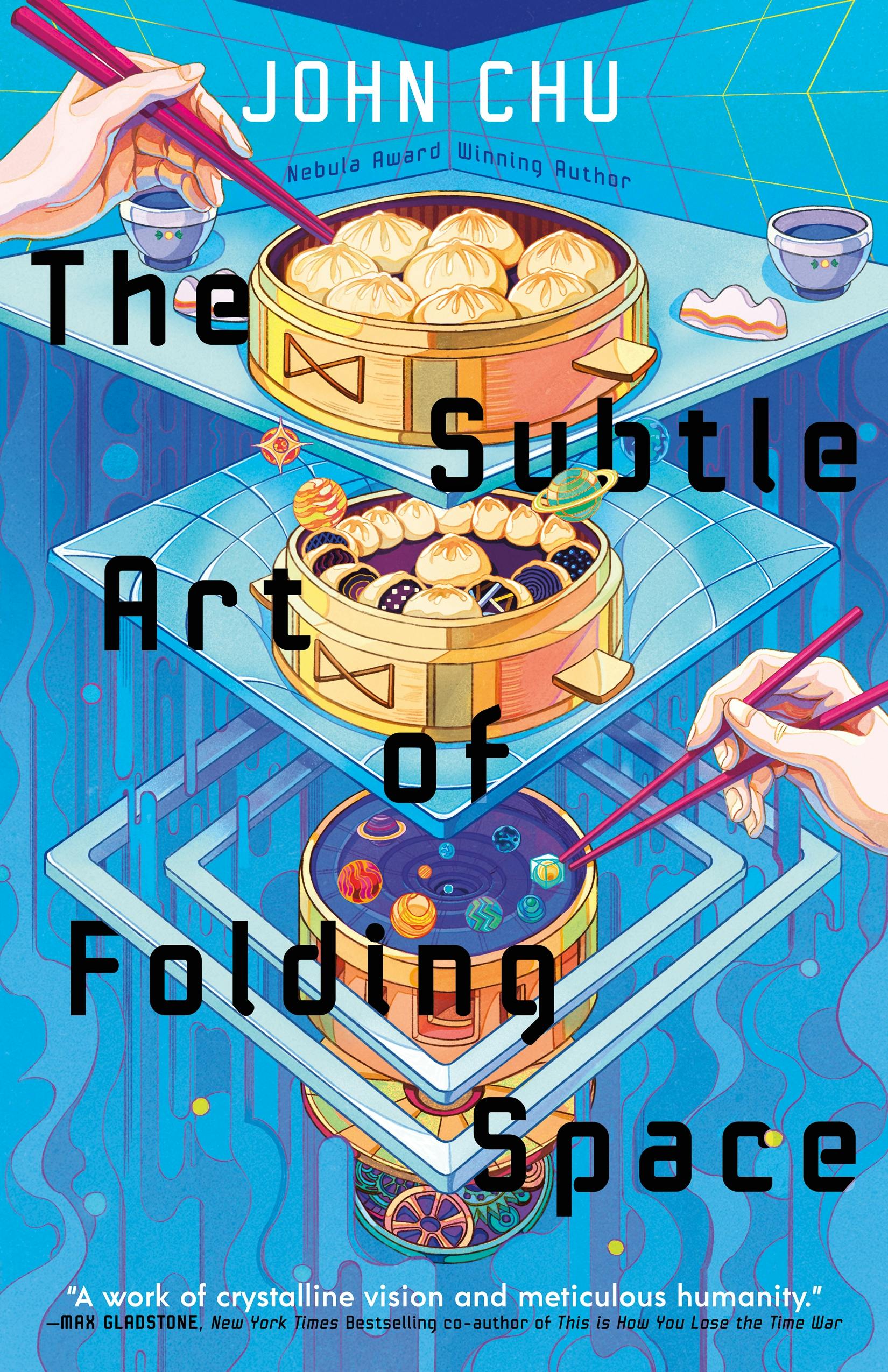
The Subtle Art of Folding Space
The Subtle Art of Folding Space , is the exhilarating debut science fiction novel from Nebula and Hugo-winning author John Chu channels unhinged physics, generational trauma, and the comfort of really good dim sum. This isn't your usual jaunt through quantum physics.
Ellie’s universe, and this one, is falling apart. Her ailing mother is in a coma; her sister, Chris, accuses her of being insufficiently Chinese between assassination attempts; and a shadowy cabal of engineers is trying to hijack the skunkworks, the machinery that keeps the physics of each universe working the way it’s supposed to.
Daniel, Ellie's cousin, has found an illicit device in the skunkworks—one that keeps Ellie's comatose mother alive while also creating destabilizing bugs in the physics of this universe. It's not a good day.
If she can confront her mother’s legacy and overcome her family’s generational trauma, she just might find a way to preserve the skunkworks and reconcile with her sister…but digging into her family’s past is thornier than it seems, and the secrets she uncovers will force Ellie to choose between her family and the universe itself.
Ellie’s universe, and this one, is falling apart. Her ailing mother is in a coma; her sister, Chris, accuses her of being insufficiently Chinese between assassination attempts; and a shadowy cabal of engineers is trying to hijack the skunkworks, the machinery that keeps the physics of each universe working the way it’s supposed to.
Daniel, Ellie's cousin, has found an illicit device in the skunkworks—one that keeps Ellie's comatose mother alive while also creating destabilizing bugs in the physics of this universe. It's not a good day.
If she can confront her mother’s legacy and overcome her family’s generational trauma, she just might find a way to preserve the skunkworks and reconcile with her sister…but digging into her family’s past is thornier than it seems, and the secrets she uncovers will force Ellie to choose between her family and the universe itself.
227 pages, Hardcover
First published April 7, 2026
About the author
John Chu
80 books178 followersJohn Chu is a microprocessor architect by day, a writer by night. His fiction has appeared or is forthcoming at Boston Review, Bloody Fabulous, Asimov's Science Fiction, Apex Magazine and Tor.com. His story "The Water That Falls on You from Nowhere" won the 2014 Hugo Award for Best Short Story.
Ratings & Reviews
Friends & Following
Create a free account to discover what your friends think of this book!
Community Reviews
Displaying 1 - 30 of 697 reviews

Review of advance copy received from Netgalley
Thank you so much to Netgalley and the publisher, Tor, for providing me with an eARC in exchange for an honest review! Release date April 7th, 2026.
Ellie's family all work on the skunkworks, the thing that creates the physics for the universe. Her mother, a famous builder of the skunkworks, recently passed away after a long time in a coma. She was in that coma because of some fix someone put in the skunkworks, which Ellie found and removed. Now there's something wrong with the physics of the universe; Ellie and her cousin will have to try to figure out what's wrong with it while dodging 4ssassination attempts from Ellie's sister.
This was one of my most anticipated releases of the year - beautiful cover, fantastic synopsis, award-winning author. Unfortunately, this is likely to be one of my least favorite books of the year. I haven't DNFed a book in over 2 years. Last year, after I read one of my least favorite books of all time and didn't DNF it, I promised myself I would start DNFing. I would've to this, were it not for review and it being on my phone, meaning I could read it without eating into my normal reading. If I had picked this up at the library, I would've put it back on the shelf after the first page.
I'd like to start out with the fact that the synopsis from the publisher is WRONG. It's flat out incorrect. It says that Ellie's mother IS in a coma, that a wrench in the skunkworks is KEEPING her alive. That is incorrect. Ellie has already removed the device in the skunkworks BEFORE THE BOOK BEGINS and her mother is ALREADY DEAD. The thing I was excited about in this book was her having to choose the universe over her mom and deal with her complicated legacy. In reality, Ellie is mostly just going from skunkworks worker to worker with her cousin trying to figure out who put the thing there. The book has very little to do with the mom at all. I'm disappointed that the team here got the synopsis and focus of the book so wrong because it led me to believe this would be something I would like.
This book was, frankly, nonsense to me. I read the whole thing and it made zero sense. I've seen some people say that it was too physics-y, and as a person with an engineering degree who took extra physics for fun, I'll tell you that the confusion of this book has nothing to do with the "science". Other than mentioning quantum mechanics and quarks abstractly, this has no science to it. That's not the complaint: the complaint is that the book does not explain what the world is even remotely. There is next to no explanation as to what these characters do in the skunkworks, and figuring out who broke it is most of the plot, so the "investigation" makes no sense. The characters have different magical powers that are never explained and are introduced apropos of nothing. Suddenly, the main character can summon fire in her hands - why? Is that normal? A lot of the plot of this book is her sister trying to kill her, as she has tried for years, now with car bombs. What is the situation in this world that this seems to be semi-normal? Why are there like four car bombs throughout the book, why doesn't she try other ways? How does she know where the main character is regardless of what car she's in? How can Daniel make random schematics of bombs they haven't seen appear in the air? How are they disarming them? Why do I have to read this same scene like five times? Why are there no other characters that we see make big hyperbolistic actions like this? The fact that nothing in this book is explained makes it so that plot and stakes mean nothing. You don't understand the problem, let alone the solution or the steps they take to get there or the forces we basically never see that we are up against. It's massively ironic that a book that makes sure you get a paragraph-long description of what a table looks like (this happens with mulitiple tables) neglects to explain an iota of the world.
Otherwise, Ellie is a character with very little personality. Daniel is very strangely the focus of this, and the way he keeps getting described as super buff and hot is weird considering its from his cousin's point of view. I thought the dialogue felt really stilted. I was looking forward to how this was going to address the complicated relationship Ellie had with her mother, but that was basically absent from the book. There's a couple of nods to it, but it's mostly talking about the abuse her sister heaps on her. This wouldn't be bad if it wasn't for the car bomb of it all - yet again, that part makes no sense. We also only see her in two scenes, which is weird.
What did I like about this book? The descriptions of food were nice, although they happened a lot at the beginning of the book and nothing in the back half. There was one scene, the first time we see Ellie and Chris together, that was a good drama in between a gaslightee and gaslighter. That's it.
Overall, this book made didn't make sense to me at any point. This author is known for short stories, and must not be used to having to actually explain the story, which was sorely needed. Really questioning what the editing team was doing here.
Ellie's family all work on the skunkworks, the thing that creates the physics for the universe. Her mother, a famous builder of the skunkworks, recently passed away after a long time in a coma. She was in that coma because of some fix someone put in the skunkworks, which Ellie found and removed. Now there's something wrong with the physics of the universe; Ellie and her cousin will have to try to figure out what's wrong with it while dodging 4ssassination attempts from Ellie's sister.
This was one of my most anticipated releases of the year - beautiful cover, fantastic synopsis, award-winning author. Unfortunately, this is likely to be one of my least favorite books of the year. I haven't DNFed a book in over 2 years. Last year, after I read one of my least favorite books of all time and didn't DNF it, I promised myself I would start DNFing. I would've to this, were it not for review and it being on my phone, meaning I could read it without eating into my normal reading. If I had picked this up at the library, I would've put it back on the shelf after the first page.
I'd like to start out with the fact that the synopsis from the publisher is WRONG. It's flat out incorrect. It says that Ellie's mother IS in a coma, that a wrench in the skunkworks is KEEPING her alive. That is incorrect. Ellie has already removed the device in the skunkworks BEFORE THE BOOK BEGINS and her mother is ALREADY DEAD. The thing I was excited about in this book was her having to choose the universe over her mom and deal with her complicated legacy. In reality, Ellie is mostly just going from skunkworks worker to worker with her cousin trying to figure out who put the thing there. The book has very little to do with the mom at all. I'm disappointed that the team here got the synopsis and focus of the book so wrong because it led me to believe this would be something I would like.
This book was, frankly, nonsense to me. I read the whole thing and it made zero sense. I've seen some people say that it was too physics-y, and as a person with an engineering degree who took extra physics for fun, I'll tell you that the confusion of this book has nothing to do with the "science". Other than mentioning quantum mechanics and quarks abstractly, this has no science to it. That's not the complaint: the complaint is that the book does not explain what the world is even remotely. There is next to no explanation as to what these characters do in the skunkworks, and figuring out who broke it is most of the plot, so the "investigation" makes no sense. The characters have different magical powers that are never explained and are introduced apropos of nothing. Suddenly, the main character can summon fire in her hands - why? Is that normal? A lot of the plot of this book is her sister trying to kill her, as she has tried for years, now with car bombs. What is the situation in this world that this seems to be semi-normal? Why are there like four car bombs throughout the book, why doesn't she try other ways? How does she know where the main character is regardless of what car she's in? How can Daniel make random schematics of bombs they haven't seen appear in the air? How are they disarming them? Why do I have to read this same scene like five times? Why are there no other characters that we see make big hyperbolistic actions like this? The fact that nothing in this book is explained makes it so that plot and stakes mean nothing. You don't understand the problem, let alone the solution or the steps they take to get there or the forces we basically never see that we are up against. It's massively ironic that a book that makes sure you get a paragraph-long description of what a table looks like (this happens with mulitiple tables) neglects to explain an iota of the world.
Otherwise, Ellie is a character with very little personality. Daniel is very strangely the focus of this, and the way he keeps getting described as super buff and hot is weird considering its from his cousin's point of view. I thought the dialogue felt really stilted. I was looking forward to how this was going to address the complicated relationship Ellie had with her mother, but that was basically absent from the book. There's a couple of nods to it, but it's mostly talking about the abuse her sister heaps on her. This wouldn't be bad if it wasn't for the car bomb of it all - yet again, that part makes no sense. We also only see her in two scenes, which is weird.
What did I like about this book? The descriptions of food were nice, although they happened a lot at the beginning of the book and nothing in the back half. There was one scene, the first time we see Ellie and Chris together, that was a good drama in between a gaslightee and gaslighter. That's it.
Overall, this book made didn't make sense to me at any point. This author is known for short stories, and must not be used to having to actually explain the story, which was sorely needed. Really questioning what the editing team was doing here.
Did Not Finish
May 7, 2025Note to self: do not pick up books based on a gorgeous cover alone as it will lead you to genres that you never read and make you feel dumb because you don't understand anything. Dnf on page 64.

May 27, 2026
You know what, I haven’t rated a book with two stars this year yet, so … there you go.
My, what a book.
I’m trying to find the right words, but I just didn’t understand the book, so I’m not sure how much sense this review makes.
Well, I understood the plot. But I didn’t understand the meaning of the individual elements or how this whole system of “universe repair” works. I don’t know if it’s the author’s fault or mine. I’d just say that my brain would have to be wired differently to understand the mechanisms of this book. The “explanations” are just like a foreign language to me. Some examples:
The skunkworks that lives in the innermost universe generates the outermost universe, whatever “innermost” and “outermost” mean when the universes are arranged in a loop.
The skunkworks is constantly speculating multiple possible futures. Ideally, only the correct one is committed to become the present, which becomes the past and what the skunkworks uses to speculate possible futures. The rest are all flushed away. Those futures never happen.
Someone opens their refrigerator and cold air comes out. It does whether anyone wants it to or not. To steal the cold, a hypothetical cold thief only has to know how to open the door. A covert channel is intentional. It’s as if the cold thief has surreptitiously drilled into the refrigerator and added a camouflaged system of pipes and pumps to sneak the cold out. Ultimately, the only real difference between a side channel and a covert channel is whether whoever built the thing that lets the cold air out meant for the cold air to escape.
So, when you read a story where you don’t understand the world, don’t understand how the characters get around and why they communicate with each other in such a strange way, it’s already very frustrating.
On top of that, the relationship between Ellie, her sister, and her mother is described in a repetitive manner.
I mean, I already understood that the first time around; for me, it would have made more sense to describe the world here in greater detail.
The plot could have been interesting, but it actually bored me. Ellie and Daniel are sent all over the place, and the big reveal at the end has zero consequences for the villains.
All in all, this is a story about mommy issues.
Endless repetitions. Ellie refuses to believe that her sister is crazy and voluntarily walks into the trap. Here, too, there’s no real resolution. Things are just the way they are and will probably continue as before.
Oh yeah, and in between, there’s a lot of eating.
Oh, and Daniel is gay—great—seems to me like that’s just in the book to add another element that’s just there.
So I made it to the end of the book; I paid for it, so I didn't want to leave it unfinished. Good for me—I did a great job. Quickly reading something good so the frustration doesn't really set in.
My, what a book.
I’m trying to find the right words, but I just didn’t understand the book, so I’m not sure how much sense this review makes.
Well, I understood the plot. But I didn’t understand the meaning of the individual elements or how this whole system of “universe repair” works. I don’t know if it’s the author’s fault or mine. I’d just say that my brain would have to be wired differently to understand the mechanisms of this book. The “explanations” are just like a foreign language to me. Some examples:
The skunkworks that lives in the innermost universe generates the outermost universe, whatever “innermost” and “outermost” mean when the universes are arranged in a loop.
The skunkworks is constantly speculating multiple possible futures. Ideally, only the correct one is committed to become the present, which becomes the past and what the skunkworks uses to speculate possible futures. The rest are all flushed away. Those futures never happen.
Someone opens their refrigerator and cold air comes out. It does whether anyone wants it to or not. To steal the cold, a hypothetical cold thief only has to know how to open the door. A covert channel is intentional. It’s as if the cold thief has surreptitiously drilled into the refrigerator and added a camouflaged system of pipes and pumps to sneak the cold out. Ultimately, the only real difference between a side channel and a covert channel is whether whoever built the thing that lets the cold air out meant for the cold air to escape.
So, when you read a story where you don’t understand the world, don’t understand how the characters get around and why they communicate with each other in such a strange way, it’s already very frustrating.
On top of that, the relationship between Ellie, her sister, and her mother is described in a repetitive manner.
I mean, I already understood that the first time around; for me, it would have made more sense to describe the world here in greater detail.
The plot could have been interesting, but it actually bored me. Ellie and Daniel are sent all over the place, and the big reveal at the end has zero consequences for the villains.
All in all, this is a story about mommy issues.
Endless repetitions. Ellie refuses to believe that her sister is crazy and voluntarily walks into the trap. Here, too, there’s no real resolution. Things are just the way they are and will probably continue as before.
Oh yeah, and in between, there’s a lot of eating.
Oh, and Daniel is gay—great—seems to me like that’s just in the book to add another element that’s just there.
So I made it to the end of the book; I paid for it, so I didn't want to leave it unfinished. Good for me—I did a great job. Quickly reading something good so the frustration doesn't really set in.

May 24, 2025
Not enough SciFi contends with how hard people work to keep everything from falling out of the sky. Chu steps up to that challenge with a spirited exploration 'behind the scenes' of how fragile our world is (and the maintenance it requires). It bends physics and genres alike. It's a book we need right now. I know people are going to be giddy when they crack this one open.
I received a free copy of this book from the publisher.
I received a free copy of this book from the publisher.

Review of advance copy received from Publisher
2.5 Stars
I make a policy to read and review as many new science fiction releases as possible each year. So naturally I was excited to pick this up, especially with such a delicious cover.
Unfortunately I found this one much weaker than I hoped. The story just felt very… silly which is not my personal preference. I understand that this one was intended to be a fun science fiction novel but the tone just didn't work for me. I found the characters a bit over the top and not particularly realistic.
I wanted to love this one but unfortunately it just didn't work for me as much as I wanted. There were some interesting ideas that I would love to see explored in a different narrative.
Disclaimer I received a copy of this book from the publisher.
I make a policy to read and review as many new science fiction releases as possible each year. So naturally I was excited to pick this up, especially with such a delicious cover.
Unfortunately I found this one much weaker than I hoped. The story just felt very… silly which is not my personal preference. I understand that this one was intended to be a fun science fiction novel but the tone just didn't work for me. I found the characters a bit over the top and not particularly realistic.
I wanted to love this one but unfortunately it just didn't work for me as much as I wanted. There were some interesting ideas that I would love to see explored in a different narrative.
Disclaimer I received a copy of this book from the publisher.

Did Not Finish
April 24, 2026DNF @ 11%
Brain no want book. No thank you please. Have a nice day.
Brain no want book. No thank you please. Have a nice day.

October 30, 2025
This is more like a 3.5 rounded up for the fun I had with it. This is a messy book though, so please know that before diving in sight unseen. My husband asked me what this book was about when we were standing in line for something, so I took a crack at summarizing it for him. Here's my best attempt:
So, there's an underlying system behind everything called the Skunkworks. And when I mean everything, I mean really everything, for this universe. It also connects with other universes, to further complicate things. Ellie is one of the people tasked with keeping the Skunkworks going, along with her cousin Daniel. Ellie's mother is dying though, and Daniel's keen sense of the Skunkworks obligates him to show Ellie that a strange setup was created to keep her mother alive (barely, in pain). This setup is also impacting the Skunkworks in other, less obvious ways, creating bugs and glitches in the system that manifest themselves as issues with universal physics. Ellie chooses to dismantle this system, alienating her from her sister Chris, her family, and other maintainers of the Skunkworks in the process. Ellie wants to make things right with Daniel's help, but it involves digging around to discover who set up the system in the first place and uncovering uncomfortable family truths in the process.
So, right off the bat, I want to say that I had a lot of fun with this book. Ellie and Daniel are great together (as cousins, weirdos), and their interplay made up most of my enjoyment of this book. Alongside their antics is the rest of the book though, and I had problems with it. I couldn't figure out if I'm too dumb for whatever science the author was presenting here, or if that's what the author was counting on so I wouldn't ask too many questions. Because there's a lot of at least science-adjacent terminology and situations here, and I came out the other side not entirely sure if I grasped what I had just read.
I also found Ellie and Chris's relationship problematic at best, but maybe that was the point. Ellie's blinders regarding Chris are astronomically large, and I was frustrated at several points of the book where Daniel and others would try and get her to confront the fact that Chris was not a good person, and Ellie would refuse. By the end of the book I think a resolution was supposed to happen, but even that felt unfinished, leaving me unsatisfied with things as they stood.
But in spite of the glaring flaws above, I really did enjoy reading this book. I'm not sure I can point to why, but I did. There's a lot of familial guilt to unpack here, and Daniel makes a good foil to Ellie, and I enjoyed them together.
Thanks to NetGalley and the publisher for providing me with a free eCopy in exchange for an honest review.
So, there's an underlying system behind everything called the Skunkworks. And when I mean everything, I mean really everything, for this universe. It also connects with other universes, to further complicate things. Ellie is one of the people tasked with keeping the Skunkworks going, along with her cousin Daniel. Ellie's mother is dying though, and Daniel's keen sense of the Skunkworks obligates him to show Ellie that a strange setup was created to keep her mother alive (barely, in pain). This setup is also impacting the Skunkworks in other, less obvious ways, creating bugs and glitches in the system that manifest themselves as issues with universal physics. Ellie chooses to dismantle this system, alienating her from her sister Chris, her family, and other maintainers of the Skunkworks in the process. Ellie wants to make things right with Daniel's help, but it involves digging around to discover who set up the system in the first place and uncovering uncomfortable family truths in the process.
So, right off the bat, I want to say that I had a lot of fun with this book. Ellie and Daniel are great together (as cousins, weirdos), and their interplay made up most of my enjoyment of this book. Alongside their antics is the rest of the book though, and I had problems with it. I couldn't figure out if I'm too dumb for whatever science the author was presenting here, or if that's what the author was counting on so I wouldn't ask too many questions. Because there's a lot of at least science-adjacent terminology and situations here, and I came out the other side not entirely sure if I grasped what I had just read.
I also found Ellie and Chris's relationship problematic at best, but maybe that was the point. Ellie's blinders regarding Chris are astronomically large, and I was frustrated at several points of the book where Daniel and others would try and get her to confront the fact that Chris was not a good person, and Ellie would refuse. By the end of the book I think a resolution was supposed to happen, but even that felt unfinished, leaving me unsatisfied with things as they stood.
But in spite of the glaring flaws above, I really did enjoy reading this book. I'm not sure I can point to why, but I did. There's a lot of familial guilt to unpack here, and Daniel makes a good foil to Ellie, and I enjoyed them together.
Thanks to NetGalley and the publisher for providing me with a free eCopy in exchange for an honest review.
June 19, 2025
Jo Walton gave this April 2026 book high marks: "This is a story about a family, and rewriting the underlying physics of the universe." I've liked his shorts along these lines, so I'll plan to read this one when the library gets a copy, about a year from now.
Her review is at https://reactormag.com/jo-waltons-rea...
Read that first.
Started reading yesterday, 5-11-26. Just as good as I expected. Literal Steampunk Physics! This short novel (or long novella) is a direct outgrowth of his famous Award-winning short "Hold Time Violations" (2015), which is the opening chapter. Unsurprisingly, the book is structured as linked vignettes and short stories. A fixup of (mostly) previously unpublished stories! Characters are great: Ellie the engineer. Chris, her truly awful elder sister. How awful is she? She tells her sister the wrong date for their mother's funeral! Cousin Daniel, an amiable man-mountain who's a Maintainer in the Skunkworks.
If this isn't already on your TBR, it should be. Not to be missed! Trust me on this. Great cover art too, plus mouth-watering Taiwanese food! For me, a 4+ star read. I'll be re-reading this down the line. Not to be missed, if you have liked Chu's stories. Or for fans of twisty, recomplicated SFF.
==============
Notes & bonus:
Novel excerpt: https://reactormag.com/excerpts-the-s...
If this doesn't get you going, likely not your kind of book.
SFF Debut of the Month: https://www.libraryjournal.com/story/...
Most of his short fiction is available on the web: https://johnchu.net/bibliography.html
"John Chu is a microprocessor architect by day, a writer, translator, and podcast narrator by night."
Her review is at https://reactormag.com/jo-waltons-rea...
Read that first.
Started reading yesterday, 5-11-26. Just as good as I expected. Literal Steampunk Physics! This short novel (or long novella) is a direct outgrowth of his famous Award-winning short "Hold Time Violations" (2015), which is the opening chapter. Unsurprisingly, the book is structured as linked vignettes and short stories. A fixup of (mostly) previously unpublished stories! Characters are great: Ellie the engineer. Chris, her truly awful elder sister. How awful is she? She tells her sister the wrong date for their mother's funeral! Cousin Daniel, an amiable man-mountain who's a Maintainer in the Skunkworks.
If this isn't already on your TBR, it should be. Not to be missed! Trust me on this. Great cover art too, plus mouth-watering Taiwanese food! For me, a 4+ star read. I'll be re-reading this down the line. Not to be missed, if you have liked Chu's stories. Or for fans of twisty, recomplicated SFF.
==============
Notes & bonus:
Novel excerpt: https://reactormag.com/excerpts-the-s...
If this doesn't get you going, likely not your kind of book.
SFF Debut of the Month: https://www.libraryjournal.com/story/...
Most of his short fiction is available on the web: https://johnchu.net/bibliography.html
"John Chu is a microprocessor architect by day, a writer, translator, and podcast narrator by night."

Did Not Finish
March 20, 2026Absolutely gutted that this is a DNF for me at about 24%. I had this pretty high up on my 2026 anticipated list, mainly because I've really enjoyed Chu's shorter work.
I think this DNF comes from a combination of two things: the wildly inventive but also brain hurting physics of the world building, and the family dysfunction and trauma. Mainly that second part. I can live with world building that my brain doesn't quite understand, but the relationship between the main character and their sibling was just...too much for me to handle emotionally. Way, way too much.
This book absolutely has its audience and it fully deserves to reach that audience. This one didn't work for me, but John Chu's writing is so strong that I will absolutely checking out whatever he writes next.
Many thanks to NetGalley and Tor Books for the eARC. The Subtle Art of Folding Space will be released on April 7th, 2026.
I think this DNF comes from a combination of two things: the wildly inventive but also brain hurting physics of the world building, and the family dysfunction and trauma. Mainly that second part. I can live with world building that my brain doesn't quite understand, but the relationship between the main character and their sibling was just...too much for me to handle emotionally. Way, way too much.
This book absolutely has its audience and it fully deserves to reach that audience. This one didn't work for me, but John Chu's writing is so strong that I will absolutely checking out whatever he writes next.
Many thanks to NetGalley and Tor Books for the eARC. The Subtle Art of Folding Space will be released on April 7th, 2026.

June 6, 2026
To be brief.. the title and cover were my favorite parts of this book. While not terrible, I found nothing overly interesting, either.

June 6, 2026
Girl, stop talking about how big and beefy and strong your cousin is

October 24, 2025
I received a free copy from Tor Books via Netgalley in exchange for a fair review. Release date April 7th, 2026.
I was struck by this book's gorgeous cover, as well as the crunchy premise that invites comparisons to Everything Everywhere All At Once. In The Subtle Art of Folding Space, Ellie is dragged back into the world of the maintainers that fix the plumbing of the multiverse by her abusive sister as her mother is dying. With the help of her enigmatic cousin Daniel, Ellie is swept into an investigation into the maintainers' many secretive factions, which threatens the stability of the multiverse.
This book is set in a magical realism flavored world where ordinary people know about the skunkworks as an obscure factoid, but people rarely bother to learn if their parents weren't already maintainers. Like attending Chinese school to learn Mandarin as a schoolchild when neither of your parents speak it. The fact that nobody bothers to learn these skills when it literally allows its practitioners to teleport stretches the bounds of belief a bit. But it allows Chu to casually slide the most bonkers bits of worldbuilding into the plot completely deadpan, which I adored. Particularly in the writing of Cousin Daniel, who's been saturated in the eccentric world of the skunkworks for longer than Ellie. Daniel is furiously and somewhat unsuccessfully Clark Kenting it, while hiding a deep streak of ruthless competence and an outrageously eclectic skill set which manifests at convenient times. He's very much the sort of character Diana Wynn Jones would write.
While the frenetic complexity of the worldbuilding is fun, the heart of The Subtle Art of Folding Space is about abuse. I'd say Ellie's much older sister Chris and her constant assassination attempts were comically villainous, if it wasn't for how throughly she has Ellie sucked into it. My personal definition of abuse is that it's when someone you love has you convinced that you deserve to be hurt. Chris has, very painfully, convinced not only Ellie but also their entire social and familial circle that Ellie is the disreputable black sheep and Chris the golden child. This extends from strongly implying that Ellie abandoned their dying mother to convincing their entire family that Ellie isn't fluent in Mandarin. Meanwhile, Ellie vainly hopes that she can fix their relationship if she can just be nice enough to Chris. It's a bit painful to watch her take the very tentative first step towards saying screw Confucius and cutting her sister off over the course of the book.
An absolutely effervescent gem of worldbuilding where the universe is run by pipes that go gloop gloop and quantum physics is a bug fix installed last century, shot through with a deeply felt and very messy family drama that makes the arcane question of saving the world much more immediate. The book ends with obvious hooks for a sequel, and I'm very excited to see where Chu takes this series next. Recommended.
I was struck by this book's gorgeous cover, as well as the crunchy premise that invites comparisons to Everything Everywhere All At Once. In The Subtle Art of Folding Space, Ellie is dragged back into the world of the maintainers that fix the plumbing of the multiverse by her abusive sister as her mother is dying. With the help of her enigmatic cousin Daniel, Ellie is swept into an investigation into the maintainers' many secretive factions, which threatens the stability of the multiverse.
This book is set in a magical realism flavored world where ordinary people know about the skunkworks as an obscure factoid, but people rarely bother to learn if their parents weren't already maintainers. Like attending Chinese school to learn Mandarin as a schoolchild when neither of your parents speak it. The fact that nobody bothers to learn these skills when it literally allows its practitioners to teleport stretches the bounds of belief a bit. But it allows Chu to casually slide the most bonkers bits of worldbuilding into the plot completely deadpan, which I adored. Particularly in the writing of Cousin Daniel, who's been saturated in the eccentric world of the skunkworks for longer than Ellie. Daniel is furiously and somewhat unsuccessfully Clark Kenting it, while hiding a deep streak of ruthless competence and an outrageously eclectic skill set which manifests at convenient times. He's very much the sort of character Diana Wynn Jones would write.
While the frenetic complexity of the worldbuilding is fun, the heart of The Subtle Art of Folding Space is about abuse. I'd say Ellie's much older sister Chris and her constant assassination attempts were comically villainous, if it wasn't for how throughly she has Ellie sucked into it. My personal definition of abuse is that it's when someone you love has you convinced that you deserve to be hurt. Chris has, very painfully, convinced not only Ellie but also their entire social and familial circle that Ellie is the disreputable black sheep and Chris the golden child. This extends from strongly implying that Ellie abandoned their dying mother to convincing their entire family that Ellie isn't fluent in Mandarin. Meanwhile, Ellie vainly hopes that she can fix their relationship if she can just be nice enough to Chris. It's a bit painful to watch her take the very tentative first step towards saying screw Confucius and cutting her sister off over the course of the book.
An absolutely effervescent gem of worldbuilding where the universe is run by pipes that go gloop gloop and quantum physics is a bug fix installed last century, shot through with a deeply felt and very messy family drama that makes the arcane question of saving the world much more immediate. The book ends with obvious hooks for a sequel, and I'm very excited to see where Chu takes this series next. Recommended.
April 11, 2026
Thanks to NetGalley and Macmillan Audio for providing me with an ALC.
I picked this book up for its absolutely gorgeous cover. Sadly the story itself didn't capture my attention as much. It's a pet peeve of mine when "science fiction" novels never actually explain the world's mechanics based on concrete scientific principles. I really hate it when the word "quantum" is just thrown around here and there just to make it sound cool and futuristic. Even apart from this, the story felt a little random. I did like the character interactions between Ellie and Daniel and the messed up sibling dynamics with Chris. But apart from that, they're just running around trying to find who messed up the system and for some reason detonating and reverse engineering car bombs so many times. The ending also felt a little abrupt. I wish the world building was explained in more detail. All we know is that the skunkworks controls the universe and some of the divisions that help in its functioning. We're not really given context on a lot of other things. The food descriptions were nice and the family reconciliation etc. was done well. I would recommend this to anyone looking for a chill novel about two cousins fixing a futuristic world and coming to terms with family issues.
The audiobook narration was done well and improved my reading experience. The narrator brought out the emotions effectively.
I picked this book up for its absolutely gorgeous cover. Sadly the story itself didn't capture my attention as much. It's a pet peeve of mine when "science fiction" novels never actually explain the world's mechanics based on concrete scientific principles. I really hate it when the word "quantum" is just thrown around here and there just to make it sound cool and futuristic. Even apart from this, the story felt a little random. I did like the character interactions between Ellie and Daniel and the messed up sibling dynamics with Chris. But apart from that, they're just running around trying to find who messed up the system and for some reason detonating and reverse engineering car bombs so many times. The ending also felt a little abrupt. I wish the world building was explained in more detail. All we know is that the skunkworks controls the universe and some of the divisions that help in its functioning. We're not really given context on a lot of other things. The food descriptions were nice and the family reconciliation etc. was done well. I would recommend this to anyone looking for a chill novel about two cousins fixing a futuristic world and coming to terms with family issues.
The audiobook narration was done well and improved my reading experience. The narrator brought out the emotions effectively.
April 10, 2026
Smiling because it’s over, crying because it happened

February 15, 2026
Early copy courtesy of NetGalley and the publisher.
3.5 stars
The Subtle Art of Folding Space is one of those big-idea sci-fi novels that feels both wildly imaginative and slightly unruly at the same time.
If you’re the kind of reader who can let complex fictional science and multiverse mechanics wash over you without needing to fully diagram them, this could be a really fun ride. If you need the physics to lock cleanly into place in your mind, you may find yourself fighting the current.
The premise is genuinely compelling — fractured universes, a shadowy engineering cabal, a device that keeps a comatose mother alive while destabilizing reality itself. But beneath the unhinged physics is a much more grounded story about grief, generational trauma, cultural identity, sibling strain, sacrifice, and the complicated inheritance of family. Those emotional undercurrents are where the novel feels most confident.
At times, though, the execution felt chaotic and imbalanced. The vision is there — ambitious, multi-faceted, thoughtful — but the structure could have used tightening. Some of the jagged corners might have benefited from a steadier editorial hand, smoothing the pacing and clarifying the mechanics so the emotional stakes could shine more consistently.
Messy? Yes. But also earnest and imaginative. I didn’t love it, but I’m glad I read it — and I’m curious to see what Chu does next.
3.5 stars
The Subtle Art of Folding Space is one of those big-idea sci-fi novels that feels both wildly imaginative and slightly unruly at the same time.
If you’re the kind of reader who can let complex fictional science and multiverse mechanics wash over you without needing to fully diagram them, this could be a really fun ride. If you need the physics to lock cleanly into place in your mind, you may find yourself fighting the current.
The premise is genuinely compelling — fractured universes, a shadowy engineering cabal, a device that keeps a comatose mother alive while destabilizing reality itself. But beneath the unhinged physics is a much more grounded story about grief, generational trauma, cultural identity, sibling strain, sacrifice, and the complicated inheritance of family. Those emotional undercurrents are where the novel feels most confident.
At times, though, the execution felt chaotic and imbalanced. The vision is there — ambitious, multi-faceted, thoughtful — but the structure could have used tightening. Some of the jagged corners might have benefited from a steadier editorial hand, smoothing the pacing and clarifying the mechanics so the emotional stakes could shine more consistently.
Messy? Yes. But also earnest and imaginative. I didn’t love it, but I’m glad I read it — and I’m curious to see what Chu does next.

May 31, 2026
The Subtle Art of Folding Space by John Chu is an ambitious science-fiction novel with beautiful prose and a strong emotional core, though it didn't fully work for me.
The novel's greatest strengths are its characters and themes. I particularly enjoyed the relationships between Ellie, Daniel, and Chris, as well as the exploration of family, grief, cultural identity, and generational trauma.
However, I found the world-building frustratingly vague. The story introduces fascinating concepts involving folded space, parallel realities, and the Skunkworks organization, but many of these ideas remain under explained. I also grew tired of the frequent use of quantum terminology, which often felt more like a catch-all explanation than a meaningful scientific framework.
The plot itself felt somewhat scattered. While the central mystery kept me reading, much of the narrative consists of characters reacting to crises without a clear sense of direction, and the ending felt abrupt. I also found some of the interpersonal conflicts repetitive, with similar emotional tensions recurring throughout the novel.
Despite these issues, I appreciated the book's imagination and emotional sincerity. While I wished the world-building and plot had been more fully developed, the strong writing and family dynamics made it a worthwhile read.
The novel's greatest strengths are its characters and themes. I particularly enjoyed the relationships between Ellie, Daniel, and Chris, as well as the exploration of family, grief, cultural identity, and generational trauma.
However, I found the world-building frustratingly vague. The story introduces fascinating concepts involving folded space, parallel realities, and the Skunkworks organization, but many of these ideas remain under explained. I also grew tired of the frequent use of quantum terminology, which often felt more like a catch-all explanation than a meaningful scientific framework.
The plot itself felt somewhat scattered. While the central mystery kept me reading, much of the narrative consists of characters reacting to crises without a clear sense of direction, and the ending felt abrupt. I also found some of the interpersonal conflicts repetitive, with similar emotional tensions recurring throughout the novel.
Despite these issues, I appreciated the book's imagination and emotional sincerity. While I wished the world-building and plot had been more fully developed, the strong writing and family dynamics made it a worthwhile read.

September 24, 2025
WARNING: This book will make you hungry, and also maybe a little confused but mostly hungry!
Ellie is a maintainer, responsible for preserving the delicate infrastructure that enforces the rules of her universe. Unfortunately, rival forces are at work, her mother is dying, and her sister is...a complicated individual. When her cousin Daniel finds a particularly unusual discrepancy, Ellie's issues with her family take on a new danger, and all that's at stake is the structure of the universe.
It's always been a little weird to me how often fiction glorifies sibling relationships, particularly between sisters, so I find myself drawn to the few books that feature siblings at their most ruthless (Gifted & Talented by Olivie Blake comes to mind). Chris being super messed up makes their dynamic more interesting, because yes Chris is the person who knows Ellie best but that also enables her to hurt Ellie the worst. Daniel, Belt, and Adhi were all delightful, super colorful characters as well. It's basically impossible to review to book without specifically shouting out the world-building, most of which definitely went over my head but it's just gorgeous and really unique feeling.
I'm all for books just boldly doing something wildly different, but it's a big plus that this book happens to also be really good and succeeds in what it's doing (though what exactly that is, I couldn't tell you)!
Thank you to John Chu and Tor Books for this ARC in exchange for my full, honest review!
Happy reading!
Pre-review: Another gift from Tor, you guys are the loml <3333
Ellie is a maintainer, responsible for preserving the delicate infrastructure that enforces the rules of her universe. Unfortunately, rival forces are at work, her mother is dying, and her sister is...a complicated individual. When her cousin Daniel finds a particularly unusual discrepancy, Ellie's issues with her family take on a new danger, and all that's at stake is the structure of the universe.
It's always been a little weird to me how often fiction glorifies sibling relationships, particularly between sisters, so I find myself drawn to the few books that feature siblings at their most ruthless (Gifted & Talented by Olivie Blake comes to mind). Chris being super messed up makes their dynamic more interesting, because yes Chris is the person who knows Ellie best but that also enables her to hurt Ellie the worst. Daniel, Belt, and Adhi were all delightful, super colorful characters as well. It's basically impossible to review to book without specifically shouting out the world-building, most of which definitely went over my head but it's just gorgeous and really unique feeling.
I'm all for books just boldly doing something wildly different, but it's a big plus that this book happens to also be really good and succeeds in what it's doing (though what exactly that is, I couldn't tell you)!
Thank you to John Chu and Tor Books for this ARC in exchange for my full, honest review!
Happy reading!
Pre-review: Another gift from Tor, you guys are the loml <3333

May 10, 2026
This book is supposed to be about Ellie, but in reality, half of this book is adjectives and adverbs about how dangerously attractive and buff her cousin, Daniel, is. Or what he’s like. Or how he usually acts. Or how he’s perceived. This was so prevalent that the book felt like Daniel should have been the real protagonist here. I felt like the author was obsessed with Daniel and forgot to give Ellie any personality.
This book was supposed to have generational trauma, which would have been a really interesting topic to explore through the lens of several physics warping universes. There was barely any discussion of Ellie and her sister’s relationship with their mom, despite it being one of the only plot points. This book was really about a comic book villain: Ellie’s sister, Chris. Chris’s motivations didn’t make sense, nor did Ellie’s want to be “real sisters” with her. Ellie claims filial piety, but just claiming filial piety doesn’t justify accepting assassination attempts. The characters motivations and relationships just fell completely flat.
The world building was non existent. Throwing around physics terms doesn’t make a science fiction book. Nothing is explained, it’s essentially just “physics magic”. There was a strong food focus in the beginning, which was promptly forgotten about in the second half.
Finally, why are you using the term skunkworks???? Skunk Works is an already established program in Lockheed Martin. They are exceptionally famous in the engineering space. This just made me confused and think the author was lazy.
Don’t get tricked by the beautiful cover for this one.
This book was supposed to have generational trauma, which would have been a really interesting topic to explore through the lens of several physics warping universes. There was barely any discussion of Ellie and her sister’s relationship with their mom, despite it being one of the only plot points. This book was really about a comic book villain: Ellie’s sister, Chris. Chris’s motivations didn’t make sense, nor did Ellie’s want to be “real sisters” with her. Ellie claims filial piety, but just claiming filial piety doesn’t justify accepting assassination attempts. The characters motivations and relationships just fell completely flat.
The world building was non existent. Throwing around physics terms doesn’t make a science fiction book. Nothing is explained, it’s essentially just “physics magic”. There was a strong food focus in the beginning, which was promptly forgotten about in the second half.
Finally, why are you using the term skunkworks???? Skunk Works is an already established program in Lockheed Martin. They are exceptionally famous in the engineering space. This just made me confused and think the author was lazy.
Don’t get tricked by the beautiful cover for this one.

Want to Read
March 4, 2026got the audiobook arc for this gorgeous book so i'm sat!

March 8, 2026
NetGalley provided me early access to the audiobook, which I was excited to try based on the premise and cover. The narration was good, supported by rich character descriptions that brought each person to life — some more successfully than others. From the timbre of a character’s voice to the drape of their clothes, the physical descriptions were vivid, yet little was offered little in the way of backstory to provide context for their behavior or circumstances.
The author’s ability to paint a scene is undeniable: the rooms, clothes, the flavors of each dish are all vividly drawn — but this stands in contrast to the lack of effort applied to the mechanics of this world. Where many sci-fi authors clearly research their science subject to lend plausibility to their worlds, this book felt like the opposite — no real attempt to earn the reader’s buy-in. The family drama reads like Big Little Lies: overwritten and overwrought, yet never quite justifying the intensity. In this case, focused on murder games and the inter-dimensional physics maintained or molested by a group of otherwise ordinary folks who date and brunch like the rest of us.
Ultimately, this book didn’t work for me. It has so much potential, but the execution felt clumsy. Perhaps others will have fewer hangups.
The author’s ability to paint a scene is undeniable: the rooms, clothes, the flavors of each dish are all vividly drawn — but this stands in contrast to the lack of effort applied to the mechanics of this world. Where many sci-fi authors clearly research their science subject to lend plausibility to their worlds, this book felt like the opposite — no real attempt to earn the reader’s buy-in. The family drama reads like Big Little Lies: overwritten and overwrought, yet never quite justifying the intensity. In this case, focused on murder games and the inter-dimensional physics maintained or molested by a group of otherwise ordinary folks who date and brunch like the rest of us.
Ultimately, this book didn’t work for me. It has so much potential, but the execution felt clumsy. Perhaps others will have fewer hangups.
April 29, 2026
It is with a heavy heart that I confess, the only thing I really connected to was the cover.

May 6, 2026
I felt like this book had a lot of ideas, but was kind of poorly executed. It was at least short, but the plot didn't totally make sense. The idea of a group that maintains the reality of the physics of the other universes is interesting, and the stuff about familial relationships was kind of interesting, but I felt myself just plodding through it. Glad it was short.

June 19, 2026
DNF at 20%
Clumsy. Concept never took flight. Characters wooden.
Clumsy. Concept never took flight. Characters wooden.

April 7, 2026
Great characters and interesting family dynamics but the sci-fi part of this book makes absolutely no sense. Overly complicated concepts with zero explanation. I couldn’t visualize anything that was happening and didn’t understand why anyone was doing anything or how the whole system worked. I feel like this needed a really strong developmental editor to shape the world building; there are some really fascinating ideas introduced here, but they weren’t executed to their full potential.

May 31, 2026
The prose in The Subtle Art of Folding Space is honestly beautiful at times. John Chu writes with this soft, layered elegance that gives even ordinary scenes emotional texture, and the atmosphere throughout the novel feels intimate in a way a lot of science fiction never quite manages. There’s warmth in the language, patience in the character interactions, and a kind of emotional attentiveness that makes the quieter moments land naturally.
The central premise also had enormous potential for me. A form of space-manipulation technology treated almost like an inherited artistic craft, deeply tied to family tradition, cultural expectation, immigration, identity, and generational pressure—that’s a genuinely fascinating foundation for a novel. The idea that interstellar infrastructure could depend not on cold industrial systems but on specialized practitioners carrying emotional and cultural burdens across generations immediately gives the world a distinctive personality.
And there are moments where the book really taps into that potential beautifully. The relationship between technology and ritual, the tension between personal autonomy and family obligation, the way memory and migration shape identity across time and distance—all of that material felt thoughtful and emotionally sincere.
But the further the novel went on, the more the characterization and interpersonal dynamics started wearing me down. A huge amount of the conflict revolves around repeated cycles of emotional misunderstanding, avoidance, family tension, suppressed communication, reconciliation attempts, and then further emotional conflict again. Individually, those moments often work well enough, but the repetition eventually made the story feel emotionally circular for me rather than progressively deepening. It started feeling like the same interpersonal rhythms were being revisited again and again without enough variation or escalation.
And honestly, that became frustrating because the larger plot itself had the potential to be genuinely great. The political and technological implications of folding space, the cultural importance of the practitioners, the broader interstellar setting—all of it hinted at a much larger and more dynamic science fiction story sitting just beneath the surface. But the novel repeatedly pulls back inward toward personal and familial conflict instead.
That inward focus clearly works for many readers, and I can absolutely appreciate what Chu was aiming for emotionally. The problem for me was more the balance. After a while, the emotional conversations and recurring relational tensions started overshadowing the broader speculative elements I found more compelling.
At the same time, I never stopped admiring the writing itself. Even when the story structure wasn’t fully working for me, the prose continued carrying a lot of grace and emotional intelligence. Chu has a very distinctive voice—gentle, reflective, quietly lyrical—and it gives the book a strong sense of identity.
There’s also something refreshing about science fiction that’s willing to slow down and focus on family, cultural inheritance, grief, and emotional labor rather than constant action or spectacle. I just found myself wishing the novel trusted its larger conceptual framework a little more instead of repeatedly narrowing back into similar interpersonal conflicts.
The imagination behind the world, the elegance of the prose, and the emotional sincerity were all genuinely compelling. I just never felt the narrative itself fully evolved into something as powerful as the ideas and writing style suggested it could have been.
The central premise also had enormous potential for me. A form of space-manipulation technology treated almost like an inherited artistic craft, deeply tied to family tradition, cultural expectation, immigration, identity, and generational pressure—that’s a genuinely fascinating foundation for a novel. The idea that interstellar infrastructure could depend not on cold industrial systems but on specialized practitioners carrying emotional and cultural burdens across generations immediately gives the world a distinctive personality.
And there are moments where the book really taps into that potential beautifully. The relationship between technology and ritual, the tension between personal autonomy and family obligation, the way memory and migration shape identity across time and distance—all of that material felt thoughtful and emotionally sincere.
But the further the novel went on, the more the characterization and interpersonal dynamics started wearing me down. A huge amount of the conflict revolves around repeated cycles of emotional misunderstanding, avoidance, family tension, suppressed communication, reconciliation attempts, and then further emotional conflict again. Individually, those moments often work well enough, but the repetition eventually made the story feel emotionally circular for me rather than progressively deepening. It started feeling like the same interpersonal rhythms were being revisited again and again without enough variation or escalation.
And honestly, that became frustrating because the larger plot itself had the potential to be genuinely great. The political and technological implications of folding space, the cultural importance of the practitioners, the broader interstellar setting—all of it hinted at a much larger and more dynamic science fiction story sitting just beneath the surface. But the novel repeatedly pulls back inward toward personal and familial conflict instead.
That inward focus clearly works for many readers, and I can absolutely appreciate what Chu was aiming for emotionally. The problem for me was more the balance. After a while, the emotional conversations and recurring relational tensions started overshadowing the broader speculative elements I found more compelling.
At the same time, I never stopped admiring the writing itself. Even when the story structure wasn’t fully working for me, the prose continued carrying a lot of grace and emotional intelligence. Chu has a very distinctive voice—gentle, reflective, quietly lyrical—and it gives the book a strong sense of identity.
There’s also something refreshing about science fiction that’s willing to slow down and focus on family, cultural inheritance, grief, and emotional labor rather than constant action or spectacle. I just found myself wishing the novel trusted its larger conceptual framework a little more instead of repeatedly narrowing back into similar interpersonal conflicts.
The imagination behind the world, the elegance of the prose, and the emotional sincerity were all genuinely compelling. I just never felt the narrative itself fully evolved into something as powerful as the ideas and writing style suggested it could have been.

Did Not Finish
April 16, 2026Gonna go ahead and trust GoodReads on this one and just DNF.
I think I read 3/4 chapters. I don’t know what hell is going on. It’s about a girl who fixes machinery that spawns universes? And occasionally has to survive assassination attempts from her sister?
I just struggled to visualize any of it and at the end of the day fixing machinery isn’t something I care to read too much about?
Honestly I don’t think I ever read this blurb. I assumed based on the cover that this was a full length novel based on his short story with the food magic. (My fault I know.) the few descriptions I got of food were really good but I’m not about to struggle through a whole book for just that. I’ve got too much else I’d rather be reading right now.
I think I read 3/4 chapters. I don’t know what hell is going on. It’s about a girl who fixes machinery that spawns universes? And occasionally has to survive assassination attempts from her sister?
I just struggled to visualize any of it and at the end of the day fixing machinery isn’t something I care to read too much about?
Honestly I don’t think I ever read this blurb. I assumed based on the cover that this was a full length novel based on his short story with the food magic. (My fault I know.) the few descriptions I got of food were really good but I’m not about to struggle through a whole book for just that. I’ve got too much else I’d rather be reading right now.

May 9, 2026
The science fiction premise is neat: there are people who maintain the multiple universes so that they run smoothly and 'our' universe doesn't get corrupted. The explanations of how they do this literally involves hand-waving. It's pretty cool if you can follow it.
But the characters. Oh, my. We have the Kind, Considerate and Capable sister, and the Toxic, Abusive and Evil sister. The mother who tells the kind one to just get along with the toxic one. The 'big lunk' of a cousin who is the kind sister's best friend and sidekick, who has Mad Universe Warping powers that manifest as delicious (mostly Asian) food. The food in this book is, without a doubt, yummy.
But the shallowness of the characters really put me off. It's not a spoiler to say that the characters don't change their stripes. You know who's the good one and who's the bad one right from the get go. There's a lot of sibling rage and a fair amount of arguing and gaslighting.
This novel grew out of an impressive short story (I remember it) where depth of characterization didn't really matter. But it does in a novel, and it didn't get expanded. A pity.
But the characters. Oh, my. We have the Kind, Considerate and Capable sister, and the Toxic, Abusive and Evil sister. The mother who tells the kind one to just get along with the toxic one. The 'big lunk' of a cousin who is the kind sister's best friend and sidekick, who has Mad Universe Warping powers that manifest as delicious (mostly Asian) food. The food in this book is, without a doubt, yummy.
But the shallowness of the characters really put me off. It's not a spoiler to say that the characters don't change their stripes. You know who's the good one and who's the bad one right from the get go. There's a lot of sibling rage and a fair amount of arguing and gaslighting.
This novel grew out of an impressive short story (I remember it) where depth of characterization didn't really matter. But it does in a novel, and it didn't get expanded. A pity.

April 28, 2026
2.5
“Why the universe keeps working is something most of the mourners don’t even know to think about. If clean water always comes out when you turn on the spigot, you don’t care about the infrastructure that gets the water from the reservoir to the tap and makes sure the water is safe to drink.”
For me this book was a “great premise, didn’t love the execution” sort of read. The idea was so interesting, with the universe being something that needed to be maintained by a select group of people in a quantum physics skunkworks. A mysterious device is found which is keeping the protagonist’s cancer-ridden mother alive but is also destabilizing the universe in countless untold ways. The main character has to make a difficult choice and deal with the consequences, while trying to figure out why the device existed and who built it.
This premise sounded unhinged and nerdy in the best sorts of way, but the execution left a lot to be desired for me. The characters often felt shallow and one-dimensional, and with the family trauma and cultural expectations they each dealt with, I expected more layers to their motives and decisions. There was also a lot (a lot) of repetition. From a sibling’s mistreatment of multiple family members to the daunting size of a cousin, there were many sentences and phrases that were repeated over and over to the point where it took me out of the story. I also wanted more world building and explanation about the types of people maintaining the universe. While I don’t necessarily need a physics lesson, a bit of science background and explanation into characters suddenly seeming to have magical powers would have been appreciated and helpful.
While I did enjoy the premise, I think that a bit more revision and polishing could have made this book a better finished product. That being said, I enjoyed the adventure, the cousin relationship, the food descriptions, and the toxic sibling interactions. While this book isn’t for me, maybe it will be your next favorite, so I’d recommend checking out other reviews before you decide whether to read it. Thanks so much to Tor/Forge for the advanced copy!
“Why the universe keeps working is something most of the mourners don’t even know to think about. If clean water always comes out when you turn on the spigot, you don’t care about the infrastructure that gets the water from the reservoir to the tap and makes sure the water is safe to drink.”
For me this book was a “great premise, didn’t love the execution” sort of read. The idea was so interesting, with the universe being something that needed to be maintained by a select group of people in a quantum physics skunkworks. A mysterious device is found which is keeping the protagonist’s cancer-ridden mother alive but is also destabilizing the universe in countless untold ways. The main character has to make a difficult choice and deal with the consequences, while trying to figure out why the device existed and who built it.
This premise sounded unhinged and nerdy in the best sorts of way, but the execution left a lot to be desired for me. The characters often felt shallow and one-dimensional, and with the family trauma and cultural expectations they each dealt with, I expected more layers to their motives and decisions. There was also a lot (a lot) of repetition. From a sibling’s mistreatment of multiple family members to the daunting size of a cousin, there were many sentences and phrases that were repeated over and over to the point where it took me out of the story. I also wanted more world building and explanation about the types of people maintaining the universe. While I don’t necessarily need a physics lesson, a bit of science background and explanation into characters suddenly seeming to have magical powers would have been appreciated and helpful.
While I did enjoy the premise, I think that a bit more revision and polishing could have made this book a better finished product. That being said, I enjoyed the adventure, the cousin relationship, the food descriptions, and the toxic sibling interactions. While this book isn’t for me, maybe it will be your next favorite, so I’d recommend checking out other reviews before you decide whether to read it. Thanks so much to Tor/Forge for the advanced copy!

Did Not Finish
April 5, 2026DNF @ 30%
As someone new to the science fiction genre, I really wanted to love this one because the premise sounded so fun. Unfortunately, this was way too confusing for me to follow. Chapter after chapter was filled with blocks of text that read like this:
“A skunkworks generates an entire universe. Physical laws don't apply to only three specific chemical compounds. This mechanism changes the universe she lives in so much more than they intended. It's like making mashed potatoes when all you have is dynamite. They wanted mashed potatoes so much they blew the potatoes up.”
And unfortunately the zany, extremely technical writing style just didn’t click for me. I also struggled to feel connected to our main character, Ellie, and her cousin, Daniel — their dialogue always felt stilted to me.
I really hope this book finds a readership who loves it — unfortunately this just isn’t for me. Thank you to Tor Books & NetGalley for the ARC!
As someone new to the science fiction genre, I really wanted to love this one because the premise sounded so fun. Unfortunately, this was way too confusing for me to follow. Chapter after chapter was filled with blocks of text that read like this:
“A skunkworks generates an entire universe. Physical laws don't apply to only three specific chemical compounds. This mechanism changes the universe she lives in so much more than they intended. It's like making mashed potatoes when all you have is dynamite. They wanted mashed potatoes so much they blew the potatoes up.”
And unfortunately the zany, extremely technical writing style just didn’t click for me. I also struggled to feel connected to our main character, Ellie, and her cousin, Daniel — their dialogue always felt stilted to me.
I really hope this book finds a readership who loves it — unfortunately this just isn’t for me. Thank you to Tor Books & NetGalley for the ARC!

March 18, 2026
Thank you so much to the Macmillan Early Listeners Program for this review ALC!
Typically, I’m not a sci-fi person, but this cover drew me in! I mean, hello, it is GORGEOUS!
This was an interesting read, especially with all of the talks of what may be holding our universe together. Ellie seems like a character who has an intimate knowledge of both the physics studied and the physics she understands in her role maintaining everything behind the scenes. I enjoyed those elements a lot, even though they absolutely took a little bit more brain power on my part to understand.
It was also nice to see all of the relationships between characters. Granted, I was consistently feeling like Ellie’s relationship with her sister was a bit naive. Like she continued to want a relationship with an abuser, which does feel like realism. One element of relationships that I didn’t necessarily love was how her descriptions of her cousin, Daniel, always felt like there was a little bit of a sexual undertone to them. Like oh he’s so strong and la la la la la. That was just a little confusing for me.
I think the narrator did a great job of representing all of the characters in clear ways. I really appreciated that as a listener.
This book will absolutely push me to try out some more sci-fi soon!
Typically, I’m not a sci-fi person, but this cover drew me in! I mean, hello, it is GORGEOUS!
This was an interesting read, especially with all of the talks of what may be holding our universe together. Ellie seems like a character who has an intimate knowledge of both the physics studied and the physics she understands in her role maintaining everything behind the scenes. I enjoyed those elements a lot, even though they absolutely took a little bit more brain power on my part to understand.
It was also nice to see all of the relationships between characters. Granted, I was consistently feeling like Ellie’s relationship with her sister was a bit naive. Like she continued to want a relationship with an abuser, which does feel like realism. One element of relationships that I didn’t necessarily love was how her descriptions of her cousin, Daniel, always felt like there was a little bit of a sexual undertone to them. Like oh he’s so strong and la la la la la. That was just a little confusing for me.
I think the narrator did a great job of representing all of the characters in clear ways. I really appreciated that as a listener.
This book will absolutely push me to try out some more sci-fi soon!
Displaying 1 - 30 of 697 reviews