An enthralling new biography of Alexander the Great, written as an intimate, present portrait of the way his world saw him and the price he paid to become history's greatest military mind.
Alexander the Great: a wide-eyed boy from the hills of Macedon who ruled most of the known world by his mid-twenties. For centuries, historians, refugees, poets, and explorers have told his story, and yet Alexander himself has remained a mystery.
But over the last few years, a series of remarkable discoveries has changed everything. From the bottom of the Mediterranean Sea and the dust of Central Asian hillsides, the remains of Alexander's cities have emerged. The diaries of Babylonian astronomers who knew him have been deciphered. The tombs of his ancestors have been unearthed. Now, for the first time since antiquity, it is possible to tell a different story. The story of a young man whom almost no-one noticed, until the day he became king. A king who became a hero, a hero who became a living god, and a god who died broken-hearted in Babylon.
Using cutting-edge research and a unique narrative approach, Alexander thrusts readers into Alexander the Great's world in ways which have never before been possible: to see the same stars wheeling overhead, feel the desert wind, and experience the full horror of battle. Alexander is a cinematic work of non-fiction, a revelatory retelling of one of the most famous and elusive stories in history.
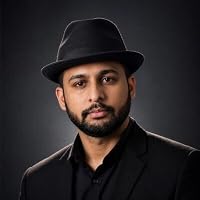
Edmund Richardson is Professor of Classics at Durham University. He was named one of the BBC New Generation Thinkers. He is the author of 'Alexandria: The Quest for the Lost City' (Bloomsbury) and 'The King's Shadow: Obsession, Betrayal, and the Deadly Quest for the Lost City of Alexandria' (2022) (St Martin's Press).
Whew! This is a BIG book which is brimming with information on Alexander, The Great! He was considered to be one of the greatest military leaders, strategists, and commanders. Alexander: God, King, Man is a wonderful and intriguing biography about a young man who became King at the age of twenty. He went on to build an enormous empire which spanned from Greece to India. He died young following a mysterious illness which many still speculate about the cause.
This book was expertly and extensively researched. This book focuses on his rise to power and how he set out to conquer the world. His brutal military battles, his conquests, his power, and ultimately his death. Some biographies can be dry and feel so dense with information. I found this biography to be riveting, and I enjoyed how the author presented the information. The author relied and both old and recently unearthed information on Alexander. I found this book to not only be educational but also intriguing, interesting, and captivating. I love learning more about people who once lived and did tremendous things during the times that the person lived. The author does not shy away from showing both the good and bad things that Alexander, The Great, did in his quest for power.
If you want to learn more about Alexander, The Great, enjoy biographies, or even books on ancient wars, this book will be right up your alley.
Thank you to St. Martin's Press and NetGalley who provided me with a copy of this book in exchange for an honest review. All the thoughts and opinions are my own.
Thank you to NetGalley and St. Martin’s Press for providing me with an advance copy of Alexander: God, King, Man by Edmund Richardson in exchange for my honest review.
I was pleasantly surprised by Alexander: God, King, Man by Edmund Richardson. Richardson truly brings Alexander the Great to life through his engaging writing style and meticulous research.
Many readers avoid biographies because they expect them to be tedious, dry, or slow-paced, but this book is anything but that. Richardson takes readers on a fascinating journey, following Alexander from his childhood through his rise to the throne and his conquest of much of the known world by his mid-twenties. I felt as though I was right alongside Alexander throughout his remarkable life.
Incorporating recent archaeological discoveries adds fresh perspective and depth, making this an engaging and insightful biography. I highly recommend it to anyone interested in history or Alexander the Great.
Very interesting. An easy read which covers Alexanders conquests fully without glossing over the bad bits. Makes me wonder why Alexander, who pillaged his way across the Middle East and whose empire collapsed on his desth, is know as the Great whilst Gengis Khan, who who did the same from the other direction but left behind an Empire which survived long after he died, is known as a barbarian?
“They ask you, O Prophet, about Dhul-Qarnayn (the Two-Horned One). Say, ‘I will relate to you something of his narrative.’
Surely We established him in the land, and gave him the means to all things.
So he travelled a course,
until he reached the setting point of the sun, which appeared to him to be setting in a spring of murky water...
Then he travelled a different course,
until he reached the rising point of the sun. He found it rising on a people for whom We had provided no shelter from it...
Then he travelled a third course...”
—Qur'an, 18:83–92.
This book follows Alexander and his army as they crisscrossed the ancient world from the sands of Egypt to the monsoons of the lands beyond the Hindu Kush.
One may be forgiven for thinking that a new book about Alexander is just going to be another exercise in creative retelling of the same old story. This account, however, is more than the exploits of the son of Ammon in the East, it's also about the stories those exploits were built on and the stories that later attached to them. And it's equally about the mortal god from the north as it is about the world he changed forever.
The book's treatment of its subject covers many points but keeps returning to three themes in particular, which I address below:
I/ Pothos:
The author's Alexander is essentially a man consumed by pothos, a word he describes as such:
"Pothos, the Greeks called it: one of the most beautiful and untranslatable words in the language. It means a desire so great that it bursts your heart, a longing which nothing in the world can satisfy. Legend had it that Eros, the god of desire, had two brothers: Himeros, who embodied desire which could be attained, and Pothos, who embodied desire for the unattainable. When pothos cannot be appeased and it can never be appeased, it becomes destructive; it eats away at a person until, eventually, it becomes a desire to die: the only way to make peace with impossible longing... More and more, to those around him, Alexander seemed to be in the grip of pothos"
According to this description, it's this unquenchable thirst which one can't get rid of no matter how hard one tries that drove Alexander to devour more lands, absorb more territory, and go further than any Greek or European before him. The defeat of the Persian satrapal army at Granicus opened up Asia Minor to him, and it wasn't enough. Overcoming Darius' army at Issus brought the entirety of the lands west of the Euphrates into his hands, and it wasn't enough. He was crowned a pharaoh in Memphis, named a son of Ammon by the god's oracle in Siwa, and still it wasn't enough. He chased Darius to the very ends of his empire, and even that could not satisfy him.
What first was a quest for liberation ( liberating the Greeks of Asia Minor), later turned into conquest and eventually became annihilation, as the restlessness within him to outshine his father, outdo his mythical ancestors, and ultimately seek his own apotheosis drove him ever further East, in search of the edge of the world and the ocean which the ancients believed surrounded it. But there was no edge to be found... The lands kept stretching before him, with ever more mountains to cross and ever more lands to conquer, and in his failure to find an end, conquest increasingly gave way to bloodlust, leading to massacres against what were essentially farming communities and sparsely populated areas.
II/ Brave New World:
One of the main claims our author makes is that Alexander reshaped the world more profoundly than anyone before him, so that in his wake nothing remained the same, both for the good and for the bad.
On the one hand, destruction followed wherever his armies went. As the author puts it:
"Almost no one emerged from Alexander's world unscathed. Ruined cities dotted his empire, from Greece to India: Thebes, Tyre, Gaza, Persepolis and others which were destroyed so completely that even their names have been lost. The graves of his murdered friends were scattered across the known world: Parmenion, Philotas, Cleitus, Callisthenes. Most of the Alexandrias he founded were places their citizens longed to escape from. Even the Tower of Babel, the great ziggurat of Babylon, had been left a heap of rubble after he failed to restore it. Alexander had hoped to remake the world. Instead, he left it in ruins."
But Alexander's conquest also changed the world for the better in ways that went beyond destruction. The very pothos that rendered him restless also ended up creating the conditions that allowed for cross cultural pollination and a vast transfer of knowledge throughout the known world. And it was a two way street, for as Babylonian astronomical knowledge and Indian ideas and philosophies made their way to Greece, Macedonian ideas, tactics and weapon design were incorporated and integrated by the conquered, specifically in the Far East.
III/ The Man With A Thousand Faces:
Alexander was as much a performer as he was a leader of men. The author insists throughout his narrative that Alexander thrived on stories, and that he led precisely because he was so convincing in selling them, both auteur and actor playing a part in his own script. He was a PR man par excellence: playing the quintessential Macedonian to his men, a lover of liberty to the Greeks, a god and son of a god to his newly conquered subjects, and a great king and the rightful inheritor of the Achaemenid title to the Persians.
But for a man so obsessed with his image and with the way he was perceived by others, there was perhaps no greater irony than what happened to his image after his death. The stories left behind about him increasingly drifted away from history and into the fantastical, taking on a life of their own in what would later become known as the Tales of Alexander (or the' Alexander Romance'). From there, Alexander's legend travelled far beyond the world he had conquered, finding its way into the traditions of later Christians, Jews and Muslims, who each made the king their own. In the Qur'an for example, Alexander appears in the guise of Dhul Qarnayn (the "two horned one"), a name which echoes the horns of Amun that Alexander himself had worn in his imagery and which continued to be associated with him long after his death. In trying to imagine the long forgotten past, later generations had simply remade Alexander in their own image.
There are two things that I liked the most about this new treatment of Alexander. The first is in terms of context. Richardson uses the different theatres of Alexander's campaign as a vehicle for giving us glimpses into the cultures and societies that Alexander encountered and conquered. The author takes us into the religious worlds of Mesopotamia and Egypt, and we are shown the stories, beliefs and traditions that existed behind the places through which Alexander passed.
The second thing I appreciated was the way the author brings together a wide range of material and approaches to the evidence. He draws on newly translated sources, archaeological discoveries and modern reinterpretations of ancient evidence, going as far as applying modern knowledge and understanding to what fragments of information can be salvaged from the surviving material. For example, the psychological effects of prolonged combat are brought into the discussion of the breakdown of Alexander's veterans after years of campaigning, modern technology and computer models are used to reconstruct the movement of Alexander's army through the Gedrosian Desert. Alexander's death, too, is approached through the lens of modern medicine ( the author arguing that he died from complications of typhoid).
It is this combination in addition to the author's ease in conveying the material that made for an exquisite read. I can't recommend this enough!
Related books:
'Alexander the Great and Persia: From Conqueror to King of Asia' by Joseph Stiles (which focuses on Alexander's Ostpolitik).
'Alexander the Great' by Philip Freeman (because it's as wonderfully written as the one that's the subject of this review).
This new biography of Alexander the Great covers how he took control of the bankrupt kingdom of Macedonia after his father's assassination, maintained that control through a series of bloody conquests over the rest of Greece, Egypt, and the Persian Empire, before concluding with his spiraling downfall in Babylon. The book incorporates new information from recent archaeological discoveries and aspires to debunk of some fictions surrounding Alexander. The prose is engaging and exciting, almost like reading an epic fantasy.
Although I think Alexander: God, King, Man is a decent presentation of Alexander’s life, particularly his military expansion, the book is mostly concerned with deconstructing and debunking the representation of Alexander within fictional works from his own time and in the centuries following his death. I think Richardson does a good job of sifting the realities from the fantasies.
Masterful book. Probably one of the most vivid narrative books to ever been written about such an ancient subject lol, not only a vivid and in depth portrait of Alexander but Richardson uses hundreds of sources from twelve different languages to really just bring alive the various locations of Alexander’s journey, on top of also just writing spectacular narrative prose, such a great book
Overall, I am very pleased with this book. In terms of pros: Richardson does a good job recreating the tone and atmosphere of the ancient world. He takes ancient religion and culture seriously and on its own terms. He digs into Babylonian astronomy, Sumerian religion, Indian philosophy and more in order to help explain what Alexander’s conquests would have meant to the people in his world, and to him. Richardson does a great job retelling the battles. If you’ve read a few Alexander biographies, the large set pieces can feel a little stale and well-trod. He punches them up with some good conjecture and color, but without turning it into a Michael Bay movie. His version of the Battle of the Hydaspes, in particular, was very good. Richardson also sheds some light on aspects of the campaign that are not typically forefronted in other works. He gives some good space to the role of Callisthenes as a court historian, and subsequent attempts to fill that role by others. He highlights the atrocities and general lack of clarity in the Afghan campaign, as the army descended into darkness and madness. He notes the beginnings of Hellenization, especially in the meeting of Greek and Indian culture. The book is rarely boring, even when it shifts away from Alexander and the main narrative. In terms of cons: It is not a particularly in-depth psychological portrait of Alexander (which is something I think the book is attempting to give). Richardson's case relies on largely unsupported assertions about what Alexander's emotional or mental state must have been, but from ancient sources that are not entirely trustworthy on the subject. He makes clear claims, but then later says that the sources themselves are so muddy that it’s largely impossible to reconstruct some facts and certainly personal motivations and views. Some of the asides are distracting and feel a little too much like filler He does the flash-forward/flashback trick that killed the Alexander movie from the early 2000s, but without any particular purpose. There is no special reason why he should use Alexander's emotional and mental state before Issus, rather than the moment he becomes a god in Egypt, or any other moment. The book’s weakest chapters are probably the first two, where he deploys this narrative device for no real purpose that I could see.
Overall, a very interesting and readable biography that will appeal to students of the ancient world and laypeople alike. A good introduction to the subject, but not the last word.
This was an easy historical read for beginers to Alexander but also offerred something for those who have read any of the number of biographies on the man who would be a god for the author pulls together new information from achaeology, new scientific tecniques and other technological advances as well as some modern reinterpretations of old sources. It wasn't an academic history of dry facts but was written in a very readable style. Richardson included sketches of what people might have felt and thought that seemed realistic based on knowable information such as the arduous nature of long distance travel, the difficulties of getting food and water, and the mental wear of long term combat. Sometimes I think he went a little too far in conjecture of what people thought.
I thought he did a good job of including the beliefs of Alexander and his troops as well as the different peoples that Alexander encountered. Often that is an underplayed or neglected in academic studies. While it is impossible to know how each person was affected by their beliefs, if it was deeply engrained in much of what they did every day and shaped how they thought and acted, only occasional was something they observed or just played lip service to, the sources do seem to suggest that it deeply influenced Alexander and others. Sometimes it effected if they would go to battle one day or not. To ignore those belief or just give them as color does not do give those ideas the proper respect they deserve. We know people today are willing to die for religious beliefs. To not at least acknowledge how deeply that can effect people leaves out a part of the whole picture.
I was also glad to see that the writer acknowledged the destruction Alexander and his troops brought the areas he went to. Sometimes it is easy to get lost in "Alexander Romance" without remembering that real people, lots of real people died and sufferred after the acts of Alexander and all that went with him. At the same time, there were some advances and changes that occurred after Alexander that can't be considered all bad.
Thanks to Netgalley and the publisher for an ARC in exchange for an honest opinion.
A very good biography of Alexander. History books like this always have to straddle a thin line between being too strictly academic and leaning only on what little direct information we have surviving (which in Alexander's case is less than many -- most are only tertiary accounts, though there's a lot of them), or by trying to fill out the world and environment by talking about how people were thinking and feeling which, in most cases, we simply can't know.
This book does an excellent job of straddling that line, providing additional information on things we knew from the time from environmental clues like archaeological evidence, and while I think it occasionally dips a little too far into the emotional appeal side (by which I mean, the "so and so was miserable, dirty, tired, and his feet were sore" territory), it only does so when it feels like it can support it with evidence or where it feels justifiable (though for purists this may still go too far).
As a big fan of Alexander who's read probably too many history books about the guy for someone not actually working on anything related to him, I found this both very accurate to what I've seen and also very immersive. Great work.
Thank you St. Martin’s Press and NetGalley for providing an e-ARC in exchange for an honest review.
Edmund Richardson did a phenomenal job at telling the story of Alexander the Great during his rise to power and to his ultimate downfall. Richardson laid out the timeline of Alexander with historical and factual evidence. Unlike other biographers, Richardson showed not only the good side of Alexander that made him to be so great and god-like, but he also showed the bad side and the mortal side of Alexander.
Personally, I didn’t know much about Alexander, and I wanted to learn more about him. I feel like this book is the perfect introduction to his legacy, especially if you are looking for factual and unbiased opinion about Alexander. It is raw, unfiltered, honest biography of Alexander the Great, and I highly recommend this book!
*** now longlisted for the Baillie Gifford Prize ***
This is a standout example of history writing: beautiful prose, a near-perfect balance of background and foreground, dynamic storytelling -- neither too stiff, nor too pandering. That it reads as historical fiction, in the best possible way, is testament to Richardson's skill and craft not only as a historian but a fantastic writer in his own right. Highly recommended.
-- with many thanks to St. Martin's Press for an ARC via NetGalley
In my ever-present obsession with Alexandros III, I had to pick up this recently published biography and relive his life. The biggest difference between this and some other books is how Edmund Richardson tries to ground Alexander in reality, dispel myths, and use more recent archaeological and historical evidence to give us a more realistic impression of Alexander. That being said, for me, Alexander is all about the legend and myth surrounding him. The legends mixed with history are what make his story and history so interesting, and Richardson does acknowledge that along the way, but he also demystifies elements of this.
Perception of Alexander's legacy
One of the elements that Richardson focuses on is lasting legacy versus Alexander's lifetime. A great example of that is the city of Alexandria in Egypt. We often associate the accomplishments and history of that city with Alexander the Great; however, the Pharos lighthouse, the famous library, and the overall city were actually established far after his death during the Ptolemaic dynasty, founded by Ptolemy, who was one of Alexander's closest companions having grown up in his court circle.
Another aspect of legacy was how temporary a campaign of conquest actually was. Alexander conquered city after city, installed governors, but not long after those governors would forget their loyalties and those cities would no longer truly be Alexander's. During the campaign Alexander left Antipater in charge, who was Alexander's father's right hand man and helped initially secure Alexander's ascension. Olympias did not trust Antipater and lost some influence in court, so there was quite a bit of tension, and it limited Alexander's ability to truly rule as emperor. Alexander relied on others just as the many kings who went to fight in the Trojan War had with their homes. An example readers will know is Odysseus, who left rule to his wife Penelope, his son Telemachus, and his old friend Mentor. The difference is that Alexander never came home, and his empire split and his legacy was lost to warring factions. He was so focused on conquest that he spent no time at all truly ruling an empire, which is Richardson's main point.
Crafting the myth
An interesting point came into the craft of myth surrounding Alexander during his campaign. When taking a huge detour through the desert to visit the oracle at Siwa, a path Perseus and Heracles had taken, he is welcomed as son of Amun, syncretized with Zeus. When his companions and soldiers ask him for details, he shrouds the details within enough mystery that it rings true. This claim of divine lineage wasn't just something Alexander claimed, but rather the Egyptians had a prophecy surrounding him, his father Philipos claimed lineage from Heracles, and his mother Olympias claimed lineage from Achilles. Alexander carried this understanding as reality.
During his campaign, as the army reached Nysa (modern day Jalalabad in Afghanistan), Alexander gathered his soldiers and claimed the city was Dionysus's city. This was the first time since leaving Greece that they had seen ivy and vines growing. Nonnus would later write the epic Dionysiaca (see my review of it), which tells the story of Dionysus waging a similar campaign from Greece to India, and Alexander lets that legend linger to add more to the mystery. He's following in the footsteps of a deity. A Head of Dionysos from that region, ancient Gandhara in modern day Pakistan, is sometimes on display at the Metropolitan Museum of Art in New York City.
Legacy and myth come together
In centuries to come, the myth would turn into the first work of prose fiction in any European language: The Alexander Romance. Alexander wouldn't be named the Great for at least another century, and his legend would continue to grow and enter the stories and books of many peoples. Different cultures would shape these stories in different ways, incorporating their own stories or legends. You can read more about it in my earlier review of the Greek Alexander Romance.
I gave this a middling rating because in the end this read like a fact book, a dispelling of myth book, and not the point of reading a story about Alexander. We know the myths are just myths, but we don't want to be told that. I'd much rather read Fire From Heaven and The Persian Boy by Mary Renault again than this. That being said, this was well written, and Richardson does put the facts and everything together. He does seem to move quickly and diverge out of chronology at each stop of the journey to give us a view of the lasting impact Alexander had in each city. So despite my lack of 'enjoyment', it's still a good book and worth reading if you want to learn the history and story of Alexander end to end.
Alexander God King Man by Edmund Richardson is the kind of historical biography that makes a familiar figure feel surprisingly new. What I loved most is that Richardson does not simply move through Alexander’s victories and dates. He brings the ancient world alive through atmosphere, small human details, different voices and the people surrounding Alexander, so the story feels immediate rather than distant. The opening at Babylon and Issus is especially powerful because the stars, the astronomers, the armies, the fear and Alexander’s own uncertainty all come together before the larger story unfolds. The book takes us through Alexander’s childhood, his relationship with Philip and Aristotle, his rise to the throne, his campaigns, his friendships, his ambitions, his encounters with different cultures and the growing distance between Alexander and the people who followed him. I particularly enjoyed how Richardson allows Alexander to remain complicated. He can appear courageous and brilliant in one moment and deeply troubled or vulnerable in another, and the book never reduces him to a simple hero or villain. The attention given to people such as Hephaestion, Darius, Barsine, Olympias and the ordinary soldiers gives the story a much larger emotional world. The descriptions of battles are vivid, but the quieter moments often stayed with me even more because they reveal the person behind the legend. I also really appreciated the way the book acknowledges how difficult Alexander is to understand because the surviving sources come from different cultures, periods and perspectives. Richardson treats those sources as pieces of a much larger puzzle rather than pretending that there is only one unquestionable version of Alexander. The maps, images, timeline, cast of characters, bibliography and extensive notes add another wonderful layer and make the whole experience feel deeply researched and carefully constructed. What makes the book especially moving is the contrast between the enormous scale of Alexander’s achievements and the very human figure underneath them. The story begins with a frightened young man standing beneath the stars and eventually reaches the end of his life in Babylon and the fragmentation that followed his death. For me, that gives the book its real emotional weight. This is not simply a story about conquest. It is a story about ambition, identity, friendship, power, mortality and the strange distance between the legend a person leaves behind and the imperfect human being who actually lived it. Richardson’s prose has a strong narrative rhythm and a wonderful ability to make history feel intimate. I finished the book with the feeling that I had not simply read about Alexander but had spent a long time walking beside him through an extraordinary and often brutal world.
"His campaign would transform the world: from the stars in the sky to the words on this page to the dreams in our heads, Alexander reshaped reality more profoundly than almost everyone else in history."
I am positively impressed by this biography. Professor Richardson is a classicist—I am not sure if he is a specialist in ancient Macedonia specifically—but the amount of his research and the passion that permeates the volume are admirable. However, do not expect a conventional, strictly factual biography. The historical accuracy is fairly solid—even allowing for the limitations of my own fact-checking—though perhaps not flawless or entirely free of minor inaccuracies (certain details are rounded off for narrative purposes and cannot be directly verified. There is no way we should allow ourselves to know how Alexander felt before Issus, Philotas was not that popular, there is no way to know if Alex and Hep called each other "Achilles" and "Patroclus" back in Mieza). Yet, the author chooses to imbue the narrative with such emotional depth and drama (not in a cheap, commercial way) that the text almost feels like a novel, without ever sacrificing the precision of the research or the historical reconstruction. The portrait of Alexander that emerges resonates deeply with me—with one notable exception of the leader’s "charismatic" side and his ability to galvanize the masses; these qualities are less prominent here, overshadowed by a figure defined by the restlessness of a perpetual, insatiable quest (for self-discovery, for the world, and for possession). An extensive exploration of languages, cultures, and religions beyond ancient Greece and Macedonia helps weave an evocative, richly detailed tapestry of humanity's greatest adventure. The author’s forays into the characters' inner lives are always measured and tasteful—even if historically unverifiable—and Richardson manages to avoid easy judgments (something Lane Fox did frequently, much to my annoyance). It is an elegiac, intimate, and evocative perspective, yet one that ultimately does not undermine the veracity of the account. I was particularly moved by the final chapter, "Starlight," which is dedicated to the deaths—paired not by coincidence—of Alexander and Hephaistion, the latter portrayed here as the person Alexander truly loved. Their bond ("Best of friends, sometimes lovers, always wrapped up in one another") is likened to the legendary pair from Babylonian epic: Gilgamesh and Enkidu. Verses from that ancient work are woven in to bring Alexander’s life to a close. Heart-wrenching. Ultimately, your appreciation of this work (which is, in any case, truly well-crafted) depends on your taste regarding "tone." Personally, I really enjoyed it.
I am not a fan of books that start at the end and then uses flash backs — again and again — to previous events, especially with biographies. I’d rather a more linear style, showing what events led up to A or B, rather than a more scattered approach. But that’s just me; other readers may have no issues with it. There are a lot of battles in this book (go figure!) and they’re covered simply, and in a way that makes it easy for me to grasp. I’m not good with chapters of tactics and maneuverings, my brain just doesn’t translate it well, so a simple overview — which this book did — was a more pleasant read.
There’s also a lot of work showing how the many problems Alexander faced developed, how ignoring troubles or being unused to ruling affected his policies, and how those policies led to the near disasters he faced more than once. However, the book does make some suppositions as to Alexander’s thoughts, mood, opinions, and sensationalizes some scenes. I think it’s best to accept those slightly fictionalized moments for what they are, but appreciate the detail and research that went into chronicling Alexander’s life and accomplishments.
I’ve always liked Alexander, and have read several books detailing his exploits and adventures, so there were several things in this book that was already familiar to me, but there’s also new information and new discoveries that were fun to read about. I also appreciate the way in which the book was written — very conversational and approachable. I think for most people this will be an enjoyable read.
Thank you so very much to Net Galley and the publisher for the ARC!
“Alexander” was fascinating. I had a general familiarity with Alexander the Great, including that he was tutored by Aristotle, his military victories, the extent of his empire, the importance of his new capital, Alexandria, and the influence he and his empire had on the world. However, the book was full of information that was new to me. The author debunks some myths and places various significant events in the wider context.
The account of the siege of Tyre was fascinating, with the engineering feats by the Macedonians and the Phoenicians and the terrifying offensive weaponry employed, especially by the Phoenicians. Diades, the engineering genius of the Macedonian army should be better known. It was also interesting to learn about stories involving Alexander that were fabricated and the reasons for those tall tales.
I particularly enjoyed the discussion of the great Library of Alexandria (which was founded by Ptolemy, Alexander’s successor), as well as the broader discussion of ancient libraries and the practice of book collecting.
Other interesting content: the Egyptian baboon scam; Tales of Alexander and development of prose fiction in Europe; the not so good Samaritans; Babylonian math and base sixty as the basis for 60 seconds in a minute, 60 minutes in an hour, and 360 degrees in a circle; the translation of cuneiform (which occurred in the 1800s, two millennia after Alexander); parody recipes from Susa; influential cities (Susa, Persepolis, Taxila) and individuals (Chandragupta, Darius, Porus, Kalyana) in other kingdoms/parts of the ancient world; war elephants.
A really fun read. It is a bit too dramatized, though, and at times almost enters the realm of the novel. I occasionally felt like I was reading Mary Renault.
That being said, very few popular books can still teach me new things about Alexander the Great, and Richardson’s book managed to do that. He goes on all sorts of interesting side quests, like discussing Berber Alexander Romances I knew nothing about, or bringing in material that is only slightly relevant to the subject at hand, such as quoting the Epic of Gilgamesh while writing about Hephaestion’s death. Stuff like this made the book really engaging and kept my attention for most of it.
I can say that this is a strong contender to overtake Philip Freeman’s book as my favorite popular history book on Alexander. I should probably give it four stars, because it does get certain things wrong and ignores some recent scholarship in a few areas, which is a little embarrassing considering that I am not a classicist at all. It also often prefers telling a good, dramatized story to communicating the history as carefully as it could.
But it is so much fun that I am going to give it five stars anyway.
I think you should go into it not really expecting a conventional history book, but rather a well-written and somewhat dramatized biography of Alexander by a classicist who is going to tell you lots of interesting facts along the way, many of which are barely related to the topic at hand.
Poucas figuras históricas foram tão sepultadas sob o peso do próprio mito como Alexandre. O grande mérito deste livro — e aquilo que o torna uma obra verdadeiramente magnífica — é a recusa do retrato monolítico. Não temos aqui nem a hagiografia romântica de Hollywood nem a autópsia fria e poeirenta do arquivo académico.
O autor desmonta a lenda através da tensão trágica que o próprio título anuncia. O *Deus*, erguido na convicção íntima de uma filiação divina entre Aquiles e Ámon; o *Rei*, mestre implacável da táctica militar e da engrenagem política que devorou o império persa; e, por baixo de tudo, o *Homem* — a carne mortal, a paranoia crescente, o luto desmedido por Heféstion e o cansaço dos veteranos à beira do Indo, antes do colapso febril na Babilónia aos 32 anos.
Erudito sem ser árido, implacável no tratamento das fontes e com um fôlego narrativo digno da tragédia clássica. Facilmente um dos livros mais lúcidos, absorventes e memoráveis que li nos últimos anos. Cinco estrelas indiscutíveis.
I have a huge problem when a read history, no matter who or what's it about, I go down a rabbit hole. This book was no different. As I was reading, I found things I wanted to know more about, so down the rabbit hole I went.
Richardson went in depth with somethings and with others I wanted more information. Overall though, his book is well researched. He leaves you with a bibliography that will let you explore Alexander deeper.
Richardson made Alexander come alive for me. I came away thinking he was egotistical, a psychopath, and a man more concerned about conquering lands than his own home of Greece and the Greek people. If you read Alexander, you may find what you expect, or you may find someone completely different. I found someone I wasn't expecting.
Published September 29, 2026
Thanks to Netgalley, St. Martin's Press, and Edmund Richardson for the E-ARC. All thoughts and opinions are my own.
I think this book got the right balance between narrative prose/page-turning dramatization, lots of sources with citations, and little tangents about incorrect myths. I also liked that (unlike some other biographies) this was less about Alexander the Great, with ‘great’ being interpreted as admirable. Alexander was great for his achievements, with all the positive and negative consequences that entailed. Great battle victories, great strategies and great war crimes. However, I wouldn’t call it an “intimate, present portrait.” It had very little about what Alexander was like as a person; as a child, as a friend to the people closely around him, his thoughts and his motivations. It was more about the many stories surrounding him. Though, of course, any intimate thoughts would have been guessing based on what we do know, and that would be treading the line between the book’s non-fiction approach and fiction.
After reading this exciting and well researched tale of Alexander, I am reminded that those who do not understand history are doomed to repeat it. Richardson has pulled together a great many resources from different eras to tell an invigorating story of Alexander the Great's excellent adventures taking over the known world. Knowing just enough about Alexander, I found myself googling many "facts" to learn more. Fascinating tidbits are on nearly every page. From counting the enemy's dead by cutting off their penises, to the wonders of Babylon and finally Egyptian mummification, it is an amazing narrative of a bloodthirsty time.
I spent way to much time on a beautiful weekend engrossed in this Netgallery early version of this book. Please add maps and direct links to footnotes in the final verson.
This is outside of my normal reading preferences, but I am so glad I had the opportunity to receive an e-arc from NetGalley and the publisher.
Edmund Richardson has a great writing style to deliver such a historical saga, not shying away from the ugly parts of Alexander's life. This was a palatable read and presents information without hiding behind floral fluff. The inclusion of other historic references helped weave just how interconnected this history is with maybe more familiar materials taught in schools.
4/75/5 star rating, rounded down simply for the fact that I feel like it's a very brief examination of the three main touchpoints of the title. We learn how he becomes God, King, and Man, but briefly. I would love more, but the onus would be on me for that now.
Still, a delightful introduction into the world of Alexander the Great.
Alexander;, God, King, man, by Edmund Richardson, the book follows Alexander from his school days with Aristotle, to his lucky stumble into being king, his very naïve first steps, all the way until his ultimate end. There’s many highs and lows but mostly I was just surprised to see the low opinion that so many had of Alexander. I’ve always thought everyone loved him including his sister Cleopatra but I guess that’s why these books are written for people like me if you think you know Alexander’s story trust me when I say you do not there is so much in this book that shocked me it will probably surprise others who think they know his tail. A definite recommend. #NetGalley, #TheBlindReviewer,#myHonestReview,
I had a small amount of knowledge concerning the life and experiences of Alexander, so I took this as an opportunity to learn more about the man who I was introduced to as a child as Great. This book is comprehensive and gives a very detailed account of Alexander's rule and his victories. I appreciated the details given, and the reasoning behind some of the decisions made by Alexander and his men. This book is a precise read, with a great deal of detail put into footnotes; which while making a fantastic research tome, does not lend for lighthearted reading. I learned considerably more than I had anticipated but would not be rushing to read more from this author.
Give a mouse a cookie and he’ll as for a glass of milk. Give Alexander a swath of land to rule and he’ll weep over the stars in the sky and that he cannot conquer a single one of them. Okay, maybe that’s just our buddy Alex. Can I call you Alex? Probably not, considering how many men he had tortured and chopped apart. Anyway!
I am not a stranger to dry academic text, I have cut my teeth on them. I am also no stranger to biographies of Alexander the Great, my favorite historical figure to read about. I can tell you this is far from dry, and far up the list of great retellings of Alexander’s life. Is it long? Yes. As it should be. It still barely manages to grasp the magnitude of a man who was (and arguably still is) the most powerful man in human history. I continue to bristle that stories of Alexander seem to be relegated to movies, when his life has always fit better into a twenty season HBO series with enough money to make a Targaryen weep. The writing doesn’t feel like a biography, it’s a juicy, interesting narrative that Alexander’s life deserves. It’s also not hyperbolic and treats facts with the gravity they deserve, with ample citations, a heavy credibility, and many really interesting visual citations included.
If your dad, husband, or you yourself is a history buff, run run run to put this under the tree for Christmas. If you love history but most biographies make you want to scratch your eyes out, this is your book.
Alexander the Great began as an overlooked boy from Macedon—yet by his mid-twenties, he ruled much of the known world. Now, new discoveries and recently deciphered records make it possible to tell his story differently, from king to hero to living god, in this sweeping and immersive biography. This book delves more deeply into the history of the conquered territories than other treatments I've seen, with Alexander seeming less like a liberator and more like a butcher. The book also touches on the impact of Alexander's conquests on European history.
Thanks, NetGalley, for the ARC I received. This is my honest and voluntary review.
As a Classics major, I have previously studied Alexander, but I'm always looking for new perspectives of his life and eventual demise, which triggered significant changes in the ancient world. Richardson does a great job of showing the man behind the legend and his evolution from a young king into what I would consider one of the world's most historical military figures.
Richardson effectively incorporates archaeological discoveries and ancient sources, making for an immersive and engaging telling of Alexander the Great's story.
Thank you to St. Martin's Press and NetGalley for the ARC in exchange for an honest review!
My family and I have recently become interested in Alexander as a historical figure. I wanted to read this book to get some historical facts about the man. Wow...I was impressed how easy to read this book was. I expected lots of facts and figures, but not the authors absolutely readable take on Alexander's life and times. Lots of history and information, not only about Alexander, but the people who influenced him and were part of his circle.
I would read more historical books if they were as engrossing as this work. Lots of footnotes and other information that showed the author did his due diligence in learning about the era.
An okay narrative history, but unfortunately the inclusion of digressions on numerous topics is wearying rather than charming; while the inclusion of what I can only imagine are speculative scenes depicting Alexander's emotional state, as well as popular but unlikely tall tales undermines the book as reliable history. (Diogenes meeting Alexander and telling him to 'get out of my sun' is just a folk tale; that a philosopher bit off his own tongue and threw it in the face of his captor is a common claim made of several people.) The sense of Alexander's increasing tyranny and meglomania is good but a lot is lost around it.