

What do you think?
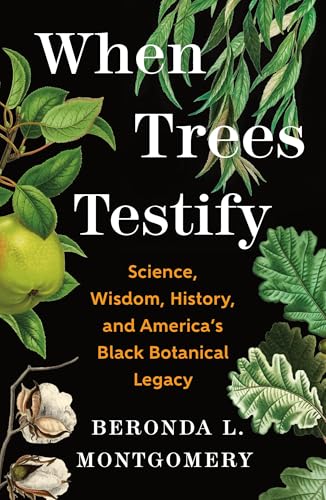
When Trees Testify: Science, Wisdom, History, and America’s Black Botanical Legacy
How the Word Is Passed
meets Braiding Sweetgrass in a cultural and personal reclamation of Black history and Black botanical mastery, told through the stories of long-lived trees.
The histories of trees in America are also the histories of Black Americans. Pecan trees were domesticated by an enslaved African named Antoine; sycamore trees were both havens and signposts for people trying to escape enslavement; poplar trees are historically associated with lynching; and willow bark has offered the gift of medicine. These trees, and others, testify not only to the complexity of the Black American narrative but also to a heritage of Black botanical expertise that, like Native American traditions, predates the United States entirely.
In When Trees Testify, award-winning plant biologist Beronda L. Montgomery explores the way seven trees—as well as the cotton shrub—are intertwined with Black history and culture. She reveals how knowledge surrounding these trees has shaped America since the very beginning. As Montgomery shows, trees are material witnesses to the lives of enslaved Africans and their descendants.
Combining the wisdom of science and history with stories from her own path to botany, Montgomery talks to majestic trees, and in this unique and compelling narrative, they answer.
The histories of trees in America are also the histories of Black Americans. Pecan trees were domesticated by an enslaved African named Antoine; sycamore trees were both havens and signposts for people trying to escape enslavement; poplar trees are historically associated with lynching; and willow bark has offered the gift of medicine. These trees, and others, testify not only to the complexity of the Black American narrative but also to a heritage of Black botanical expertise that, like Native American traditions, predates the United States entirely.
In When Trees Testify, award-winning plant biologist Beronda L. Montgomery explores the way seven trees—as well as the cotton shrub—are intertwined with Black history and culture. She reveals how knowledge surrounding these trees has shaped America since the very beginning. As Montgomery shows, trees are material witnesses to the lives of enslaved Africans and their descendants.
Combining the wisdom of science and history with stories from her own path to botany, Montgomery talks to majestic trees, and in this unique and compelling narrative, they answer.
320 pages, Hardcover
First published January 20, 2026
Ratings & Reviews
Friends & Following
Create a free account to discover what your friends think of this book!
Community Reviews
Displaying 1 - 30 of 304 reviews

Review of advance copy received from Netgalley
This was a beautiful book, and sad.
***
Pre-Read Notes:
I love popular science books, and I really love trees. The concept of this book, which braids natural history (trees) and human history (Black American science history), sounded interesting to me.
"Encountering one of the massive, hundreds-of-years-old oak trees that still stand in a variety of places in the United States can feel life changing. The first time I visited the campus of Hampton University, a historically Black college and university in Virginia, I came upon a majestic, thickly canopied oak tree . The sheer size of this being took my breath away." p129
Final Review:
(thoughts & recs) This is an interesting piece of nonfiction because of the form. Considering the history of different recognizable tree species in the US through the dizzying lens of USian history of slavery and racism creates a memorable read. I may have come for the trees but I stayed for my fellow humans and the history we all share.
WHEN TREES TESTIFY is a good choice for readers who enjoyed Sasha Bonét's THE WATERBEARERS. For fans of memoir that apply a historical lens.
My Favorite Things:
✔️ "That day, I feared that I would have to confront one of my greatest fears: that non-Black Americans who might not understand the deep and lasting trauma of chattel slavery to the enslaved and their descendants in the United States would be going about the land with joy and reckless curiosity, rather than a deep appreciation for the disturbing, but very real, history that continued to soak the soils." p11 She inviting us in here, but requesting reverence.
✔️ This book is revealing in a few different ways, one being the extensive wisdom it contains on survival botony. Like this: "We also learned the critical lesson of distinguishing blackberry bushes from poison oak. Mom taught me the concept of “if there are three, let it be.” This worked because poison oak, which makes clustered fruit that could be mistaken for unripe blackberries, has compound leaves with three leaflets, whereas wild blackberry was in the “if there are five, let it thrive” category of plants that are not likely to be harmful and possess compound leaves with five leaflets." p48
✔️ My favorite section was the one on oaks. I grew up with a giant old oak on my yard and I remember it like a friend. "Quercus virginiana, the southern live oak, is perhaps the most widely recognized species. Some of the iconic photos of large, spreading southern live oaks that are hundreds to a thousand years old are the Q. virginiana species from the southeastern part of the United States where the trees are prevalent. They persist in this area for hundreds of years due to the generally warmer winter climates of this region. Distinct from deciduous varieties, live oaks maintain leaves on their branches throughout much of the year. In the spring, as new leaves are produced, their emergence and expansion results in the dropping of the prior year’s leaves." p128
✔️ I adored the section on the Apple tree, specifically the passages about St. Nicholas and Christmas bags.
Content Notes: racism, racist language, casual racism, institutional racism, slavery, intergenerational trauma, white supremacy,
Thank you to the author Beronda L. Montgomery, Henry Holt & Co., and NetGalley for an accessible digital copy of WHEN TREES TESTIFY. All views are mine.
***
Pre-Read Notes:
I love popular science books, and I really love trees. The concept of this book, which braids natural history (trees) and human history (Black American science history), sounded interesting to me.
"Encountering one of the massive, hundreds-of-years-old oak trees that still stand in a variety of places in the United States can feel life changing. The first time I visited the campus of Hampton University, a historically Black college and university in Virginia, I came upon a majestic, thickly canopied oak tree . The sheer size of this being took my breath away." p129
Final Review:
(thoughts & recs) This is an interesting piece of nonfiction because of the form. Considering the history of different recognizable tree species in the US through the dizzying lens of USian history of slavery and racism creates a memorable read. I may have come for the trees but I stayed for my fellow humans and the history we all share.
WHEN TREES TESTIFY is a good choice for readers who enjoyed Sasha Bonét's THE WATERBEARERS. For fans of memoir that apply a historical lens.
My Favorite Things:
✔️ "That day, I feared that I would have to confront one of my greatest fears: that non-Black Americans who might not understand the deep and lasting trauma of chattel slavery to the enslaved and their descendants in the United States would be going about the land with joy and reckless curiosity, rather than a deep appreciation for the disturbing, but very real, history that continued to soak the soils." p11 She inviting us in here, but requesting reverence.
✔️ This book is revealing in a few different ways, one being the extensive wisdom it contains on survival botony. Like this: "We also learned the critical lesson of distinguishing blackberry bushes from poison oak. Mom taught me the concept of “if there are three, let it be.” This worked because poison oak, which makes clustered fruit that could be mistaken for unripe blackberries, has compound leaves with three leaflets, whereas wild blackberry was in the “if there are five, let it thrive” category of plants that are not likely to be harmful and possess compound leaves with five leaflets." p48
✔️ My favorite section was the one on oaks. I grew up with a giant old oak on my yard and I remember it like a friend. "Quercus virginiana, the southern live oak, is perhaps the most widely recognized species. Some of the iconic photos of large, spreading southern live oaks that are hundreds to a thousand years old are the Q. virginiana species from the southeastern part of the United States where the trees are prevalent. They persist in this area for hundreds of years due to the generally warmer winter climates of this region. Distinct from deciduous varieties, live oaks maintain leaves on their branches throughout much of the year. In the spring, as new leaves are produced, their emergence and expansion results in the dropping of the prior year’s leaves." p128
✔️ I adored the section on the Apple tree, specifically the passages about St. Nicholas and Christmas bags.
Content Notes: racism, racist language, casual racism, institutional racism, slavery, intergenerational trauma, white supremacy,
Thank you to the author Beronda L. Montgomery, Henry Holt & Co., and NetGalley for an accessible digital copy of WHEN TREES TESTIFY. All views are mine.

February 8, 2026
With her late January 2026 When Trees Testify: Science, Wisdom, History, and America’s Black Botanical Legacy botanist (in other words plant biologist) Beronda L. Montgomery enlighteningly (and also at times painfully) combines and fuses together personal memoir, history and science to skilfully examine the significance of trees in Black (in African American) history and culture (focusing on seven trees in particular, on pecan, sycamore, willow, poplar, oak, mulberry and apple trees, each of which, along with the cotton shrub bears witness to enslavement, a legacy of racism but that these trees are also symbols of emancipation, perseverance and self determination).
Thus and yes, yes, yes, a totally wonderful, educational as well as delightfully engaging personal reading experience When Trees Testify: Science, Wisdom, History, and America’s Black Botanical Legacy has been (and a book that I am not only going to be hugely treasuring but which I will also be reading more than once since for one my first perusal of When Trees Testify: Science, Wisdom, History, and America’s Black Botanical Legacy was rather majorly rushed and that for two I have indeed adored Montgomery's text, her themes and contents so much, to such and extent that rereading When Trees Testify: Science, Wisdom, History, and America’s Black Botanical Legacy would both be an absolute textual delight and also to be honest a total necessity, something I not only want to do but also need to do).
And especially for my academic reading self with a PhD in German language and literature, I am definitely, I am certainly massively appreciating and also very much enjoying Beronda L. Montgomery textually showing me, telling me, nicely minutely dissecting in and throughout When Trees Testify: Science, Wisdom, History, and America’s Black Botanical Legacy and using science, history, memoir in wonderful and natural combination how trees (in general) have traditionally served the Black community as shelters, for community gatherings, for education, activism and even for worship (that sycamores for example with their huge trunks becoming hollow as they age once served as hiding places for slaves escaping from their "masters" and that part of the Underground Railroad is known as the Sycamore Trail for said reason).
But yes, Montgomery in When Trees Testify: Science, Wisdom, History, and America’s Black Botanical Legacy equally so (and necessarily) shows and describes how certain tree species (but of course through no fault of their own so to speak) also have tragic and traumatic associations (that for example poplars do have a horridly sordid history of being lynching trees and which according to When Trees Testify: Science, Wisdom, History, and America’s Black Botanical Legacy was immortalised in Billie Holiday’s 1939 protest song Strange Fruit and how in the West African kingdom of Dahomey, an oak tree became known as the Tree of Forgetting because of the sadly putrid tradition of marching captives around it several times to stress the importance of forgetting their homes and their families before departing for a life of slavery in the so-called New World). And while as a total tree lover and tree fanatic, these negative associations are bien sûr majorly personally uncomfortable, I am also both massively glad and hugely appreciative of Beronda L. Montgomery showing both the positives and the negatives regarding trees and American Black history and culture in When Trees Testify: Science, Wisdom, History, and America’s Black Botanical Legacy (that she does not ever downplay slavery, racism and that trees were often used for nefarious and inhumane purposed against African Americans), and yes, how Montgomery in When Trees Testify: Science, Wisdom, History, and America’s Black Botanical Legacy weaves in her scientific expertise and her experiences growing up around trees in Arkansas to deliver a poignant and singular account of Black American history and culture, this is totally textually lovely, this is totally verbally wonderful (and also makes my rating for When Trees Testify: Science, Wisdom, History, and America’s Black Botanical Legacy solidly five stars and that I do very very warmly and highly recommend When Trees Testify: Science, Wisdom, History, and America’s Black Botanical Legacy).
Thus and yes, yes, yes, a totally wonderful, educational as well as delightfully engaging personal reading experience When Trees Testify: Science, Wisdom, History, and America’s Black Botanical Legacy has been (and a book that I am not only going to be hugely treasuring but which I will also be reading more than once since for one my first perusal of When Trees Testify: Science, Wisdom, History, and America’s Black Botanical Legacy was rather majorly rushed and that for two I have indeed adored Montgomery's text, her themes and contents so much, to such and extent that rereading When Trees Testify: Science, Wisdom, History, and America’s Black Botanical Legacy would both be an absolute textual delight and also to be honest a total necessity, something I not only want to do but also need to do).
And especially for my academic reading self with a PhD in German language and literature, I am definitely, I am certainly massively appreciating and also very much enjoying Beronda L. Montgomery textually showing me, telling me, nicely minutely dissecting in and throughout When Trees Testify: Science, Wisdom, History, and America’s Black Botanical Legacy and using science, history, memoir in wonderful and natural combination how trees (in general) have traditionally served the Black community as shelters, for community gatherings, for education, activism and even for worship (that sycamores for example with their huge trunks becoming hollow as they age once served as hiding places for slaves escaping from their "masters" and that part of the Underground Railroad is known as the Sycamore Trail for said reason).
But yes, Montgomery in When Trees Testify: Science, Wisdom, History, and America’s Black Botanical Legacy equally so (and necessarily) shows and describes how certain tree species (but of course through no fault of their own so to speak) also have tragic and traumatic associations (that for example poplars do have a horridly sordid history of being lynching trees and which according to When Trees Testify: Science, Wisdom, History, and America’s Black Botanical Legacy was immortalised in Billie Holiday’s 1939 protest song Strange Fruit and how in the West African kingdom of Dahomey, an oak tree became known as the Tree of Forgetting because of the sadly putrid tradition of marching captives around it several times to stress the importance of forgetting their homes and their families before departing for a life of slavery in the so-called New World). And while as a total tree lover and tree fanatic, these negative associations are bien sûr majorly personally uncomfortable, I am also both massively glad and hugely appreciative of Beronda L. Montgomery showing both the positives and the negatives regarding trees and American Black history and culture in When Trees Testify: Science, Wisdom, History, and America’s Black Botanical Legacy (that she does not ever downplay slavery, racism and that trees were often used for nefarious and inhumane purposed against African Americans), and yes, how Montgomery in When Trees Testify: Science, Wisdom, History, and America’s Black Botanical Legacy weaves in her scientific expertise and her experiences growing up around trees in Arkansas to deliver a poignant and singular account of Black American history and culture, this is totally textually lovely, this is totally verbally wonderful (and also makes my rating for When Trees Testify: Science, Wisdom, History, and America’s Black Botanical Legacy solidly five stars and that I do very very warmly and highly recommend When Trees Testify: Science, Wisdom, History, and America’s Black Botanical Legacy).

January 20, 2026
I liked this book but didn't love it. It tried to be a lot of things at once—part memoir, part survey of Black American history, part science writing—but I don't think the author quite succeeded at fusing the three in a satisfying way.
First the good: From the contributions of indigenous Africans' and enslaved people's botanical knowledge in the development of American agriculture, to the establishment of a free Black farming community in New Mexico (of all places), to the use of cotton root bark and apple seeds by enslaved women as abortifacients, I learned so much from this book, even though I'd consider myself pretty well versed in African-American history already. In addition, the powerful idea that trees almost literally transform suffering into beauty through the process of photosynthesis, by converting the breath of those who stood (or hung) under them into wood and flowers and oxygen, will stay with me for forever.
Now the not so good: If Montgomery had written a straight memoir, focusing on her family's roots in Arkansas and the connections to Black American history more generally, with tangential nods to the importance of specific trees to those stories, I think this book would have worked better for me. But she did the inverse, centering each chapter of the book on a tree species and then making connections from there. Sometimes that was successful—the chapter about the cotton shrub was my favorite—but more often than not, the connections drawn were either generic or repetitive. Willows and oaks and poplars and sycamores grew "strange fruit" as the sites of lynchings. Bark and seeds and leaves and roots were used as medicine and as poison. Enslaved people's botanical knowledge was exploited for cultivating pecans and silkworms and apples and cotton. When so many chapters said the same thing, it started to feel like writing for that sake of filling up pages rather than to add substance—especially unfortunate given the author's apparently rich family history that was not given nearly enough attention.
Overall, I thought the history and the science in When Trees Testify were equally fascinating. I just wish it had leaned into the family history rather than forcing a tree-centered narrative structure that, in my view, was clunky and redundant.
I won this book in a Goodreads giveaway. Thanks to Henry Holt for the advanced review copy.
First the good: From the contributions of indigenous Africans' and enslaved people's botanical knowledge in the development of American agriculture, to the establishment of a free Black farming community in New Mexico (of all places), to the use of cotton root bark and apple seeds by enslaved women as abortifacients, I learned so much from this book, even though I'd consider myself pretty well versed in African-American history already. In addition, the powerful idea that trees almost literally transform suffering into beauty through the process of photosynthesis, by converting the breath of those who stood (or hung) under them into wood and flowers and oxygen, will stay with me for forever.
Now the not so good: If Montgomery had written a straight memoir, focusing on her family's roots in Arkansas and the connections to Black American history more generally, with tangential nods to the importance of specific trees to those stories, I think this book would have worked better for me. But she did the inverse, centering each chapter of the book on a tree species and then making connections from there. Sometimes that was successful—the chapter about the cotton shrub was my favorite—but more often than not, the connections drawn were either generic or repetitive. Willows and oaks and poplars and sycamores grew "strange fruit" as the sites of lynchings. Bark and seeds and leaves and roots were used as medicine and as poison. Enslaved people's botanical knowledge was exploited for cultivating pecans and silkworms and apples and cotton. When so many chapters said the same thing, it started to feel like writing for that sake of filling up pages rather than to add substance—especially unfortunate given the author's apparently rich family history that was not given nearly enough attention.
Overall, I thought the history and the science in When Trees Testify were equally fascinating. I just wish it had leaned into the family history rather than forcing a tree-centered narrative structure that, in my view, was clunky and redundant.
I won this book in a Goodreads giveaway. Thanks to Henry Holt for the advanced review copy.
![Profile Image for laurel [the suspected bibliophile].](https://i.gr-assets.com/images/S/compressed.photo.goodreads.com/users/1645808644i/7494844._UX200_CR0,6,200,200_.jpg)
May 31, 2026
One thing I love is listening to/reading scientists talking about their shit, especially when the scientists can write.
The way Montgomery describes the intersection of science and history is so gorgeous. I'd never thought about the fact that trees take in CO2 and live for centuries, and that therefore they preserve our breath and the breath of our ancestors and those who have lived in a place before us. So amazing.
Science and history also intersect when talking about specific plants and the histories they share with specific communities, in this case, the Black community in the United States. So many plants are entwined with Black history for good and bad, and Montgomery unpacks how this history bleeds through to today.
Anywho, a really lovely read.
The way Montgomery describes the intersection of science and history is so gorgeous. I'd never thought about the fact that trees take in CO2 and live for centuries, and that therefore they preserve our breath and the breath of our ancestors and those who have lived in a place before us. So amazing.
Science and history also intersect when talking about specific plants and the histories they share with specific communities, in this case, the Black community in the United States. So many plants are entwined with Black history for good and bad, and Montgomery unpacks how this history bleeds through to today.
Anywho, a really lovely read.

November 15, 2025
"Trees hold the transformed breath of decades of human life... and testify to history and those of their past"
I learned so much American history and botany through this book. The recency of Jim Crow and sharecropping was something that really struck me while reading this book. Montgomery is GenX (she talks about being in high school in 1989) and in the cotton chapter she talks about how her mother was forced to miss school during the spring to go work the cotton fields supporting her family.
Montgomery featured 8 different plants: Pecans, sycamore, willow, poplar, mulberry, oak cotton and apple trees. With each chapter she wove together (1) her own personal history (and sometimes a travelogue) (2) the botany and biochemistry of the plant and (3) the history of the plant specifically with respect to Black Americans.
I found this structure extremely effective. I learned a lot of botany that I didn't know in an accessible and interesting way! I particularly enjoyed learning about how plants are grafted. I didn't know how that worked!
In general I was struck by the number of Black botanists who were enslaved that held so much botanical knowledge.
It reminded me a bit of the book BLACK IN BLUES where Imani Perry talks about the enslaved botanists who made the cultivation of indigo possible.
A few parts of history that will stick with me: (1) Enslaved women chewing cotton roots to prevent pregnancy (2) Blackdom, New Mexico as a Black settlement outside Roswell, NM where Jim Crow was not in effect. In Blackdom, Black Americans grew Apple Trees for their crop. (3) I had no idea that Mulberry trees were cultivated for silk production!
One small note is that there is a brief HP reference in the Willow chapter.
The setting of this book is primarily Little Rock, Arkansas, but the author also travels to many locations including Charleston, South Carolina and Blackdom, New Mexico (outside of Roswell, NM).
I highly recommend this book! Thank you for Holt books for the ARC in exchange for an honest review.
I learned so much American history and botany through this book. The recency of Jim Crow and sharecropping was something that really struck me while reading this book. Montgomery is GenX (she talks about being in high school in 1989) and in the cotton chapter she talks about how her mother was forced to miss school during the spring to go work the cotton fields supporting her family.
Montgomery featured 8 different plants: Pecans, sycamore, willow, poplar, mulberry, oak cotton and apple trees. With each chapter she wove together (1) her own personal history (and sometimes a travelogue) (2) the botany and biochemistry of the plant and (3) the history of the plant specifically with respect to Black Americans.
I found this structure extremely effective. I learned a lot of botany that I didn't know in an accessible and interesting way! I particularly enjoyed learning about how plants are grafted. I didn't know how that worked!
In general I was struck by the number of Black botanists who were enslaved that held so much botanical knowledge.
It reminded me a bit of the book BLACK IN BLUES where Imani Perry talks about the enslaved botanists who made the cultivation of indigo possible.
A few parts of history that will stick with me: (1) Enslaved women chewing cotton roots to prevent pregnancy (2) Blackdom, New Mexico as a Black settlement outside Roswell, NM where Jim Crow was not in effect. In Blackdom, Black Americans grew Apple Trees for their crop. (3) I had no idea that Mulberry trees were cultivated for silk production!
One small note is that there is a brief HP reference in the Willow chapter.
The setting of this book is primarily Little Rock, Arkansas, but the author also travels to many locations including Charleston, South Carolina and Blackdom, New Mexico (outside of Roswell, NM).
I highly recommend this book! Thank you for Holt books for the ARC in exchange for an honest review.

June 23, 2026
a must-read for readers who enjoyed braiding sweetgrass, and then some.
montgomery creates a well-crafted blend of memoir, history, and botanical science into an extremely informative and enjoyable (sometimes somber) exploration of the Black history of botanical science in america.
i also really enjoyed the narrator, so i def rec the audiobook!
montgomery creates a well-crafted blend of memoir, history, and botanical science into an extremely informative and enjoyable (sometimes somber) exploration of the Black history of botanical science in america.
i also really enjoyed the narrator, so i def rec the audiobook!

January 18, 2026
As a Black American I am aware of the relationship and history we have/share with trees. Yet, I still learned so much from this book. Part memoir, history, and botany. Montgomery shares with us her experiences with several different species of trees growing up and then shows us the history that Black Americans have with the same trees. It does get a little repetitive but it doesn’t take away from the information she shares as a whole. We overlook the complicated history of something as unassuming as a tree because of the beauty we see in it. Two things can be true at once and it’s important to acknowledge these things.

February 11, 2026
Overall a good and interesting book! I did prefer the historical and scientific portions to the memoir portions however. I also feel like the book could've benefitted from some more thoughtful structuring of the three different approaches within each tree chapter, as sometimes the (lack of) transition between a memoir/historical section to the scientific section was jarring. One section I remember went from in one sentence discussing a very horrible historical moment to the next sentence translating the Latin genus name of a tree, which was disorienting.

May 9, 2026
4.5 stars.
Beautiful and haunting book that discusses the beauties of nature and the history of white supremacy while interweaving a personal narrative from the author. Perfect for fans of Robin Wall Kimmerer!
Beautiful and haunting book that discusses the beauties of nature and the history of white supremacy while interweaving a personal narrative from the author. Perfect for fans of Robin Wall Kimmerer!

April 27, 2026
I received an advance copy via LibraryThing Early Reviewers.
In this personable work of nonfiction, Montgomery addresses the complicated relationship between plants and Black people within America. Going back and forth between personal and family stories, scientific insights, and historical accounts, she creates an eye-opening narrative. No question, it also makes for a hard read, as trees and lynchings are a frequent topic, as are the horrors of slavery and all that existence entailed. A bit near the end depicting how the author's own mother reacted to a cotton plant is quite chilling. The lingering trauma is real, but ultimately, this is a story of hope, because plants such as apple trees also offered means of independence as the 20th century began. Montgomery's own presence as an expert in her field also demonstrates a powerfully reclaimed legacy.
In this personable work of nonfiction, Montgomery addresses the complicated relationship between plants and Black people within America. Going back and forth between personal and family stories, scientific insights, and historical accounts, she creates an eye-opening narrative. No question, it also makes for a hard read, as trees and lynchings are a frequent topic, as are the horrors of slavery and all that existence entailed. A bit near the end depicting how the author's own mother reacted to a cotton plant is quite chilling. The lingering trauma is real, but ultimately, this is a story of hope, because plants such as apple trees also offered means of independence as the 20th century began. Montgomery's own presence as an expert in her field also demonstrates a powerfully reclaimed legacy.

September 30, 2025
When Trees Testify is Beronda L. Montgomery’s exploration of trees that are a prominent part of Black history in the United States.
Montgomery delves into a mix of personal connections to these selected species of trees, Black history connected to them, and information about the scientific makeup of the trees themselves.
Over the course of the book she introduces us to the pecan, sycamore, willow, poplar, mulberry, oak, and apple trees as well as the cotton shrub. Some of these trees share many similarities, some are very different. Many can be found not just in the southern United States but across the country and in other parts of world. They all have a shared history with those who breathed the oxygen they respirated, something given freely that was one of the only things given to Black people that suffered the indignity of having so much taken away.
Montgomery explores how the trees could bring Black people together and drive them away. How Black people used their knowledge for better farming and harvesting practices that often didn’t benefit them and medicinal and healing practices that did. Stories about the man who grafted pecan trees to commercialize them, how enslaved women would use parts of these trees to prevent pregnancy, the massacre of a Black community in Arkansas, and Blackdom, a community of Black people in New Mexico who grew apples as part of their crops are all fascinating stories.
Throughout the book she provides personal touches, tying in her own memories of gathering pecans and mulberries, holiday fruit bags with apples and oranges, and hiding away under a massive willow tree appropriately named Willow. I have my own memories of an apple tree that I was devastated to see die the first year it bore fruit. A maple tree I grew from a seed that had grown massive by the time we moved away from my childhood home. The blossoms and picking cherries from the cherry tree in our front yard. The oak tree my grandfather put a wooden swing on, and a pine tree near my grandparents’ home my brother and I would hide under, nestled in the fallen needles and enjoying the scent of the tree mixed with the nearby honeysuckle.
Occasionally it does feel like Montgomery strays too far away from the interconnected theme of trees to focus more heavily on Black history or her own personal connection to a tree. The chapter on poplars, I suspect, was particularly difficult to write and features heavily on the tree’s close connection with the many lynchings that have taken place over the years. It doesn’t seem to explore the tree itself to the same detail as other chapters.
In the chapter about apples and the conclusion, Montgomery starts exploring the role of Black people and their relationship with trees in modern times. I think doing this for each type of tree, as a form of looking to the future while exploring the past and present would have added an extra layer of depth that would have made the book even more interesting.
You probably weren’t expecting a book that combines trees and Black history, but this book makes it work, providing a unique approach to learning more about a group of people who haven’t often had their story told.
A complimentary copy of this book was provided by the publisher. All thoughts and opinions are my own.
Montgomery delves into a mix of personal connections to these selected species of trees, Black history connected to them, and information about the scientific makeup of the trees themselves.
Over the course of the book she introduces us to the pecan, sycamore, willow, poplar, mulberry, oak, and apple trees as well as the cotton shrub. Some of these trees share many similarities, some are very different. Many can be found not just in the southern United States but across the country and in other parts of world. They all have a shared history with those who breathed the oxygen they respirated, something given freely that was one of the only things given to Black people that suffered the indignity of having so much taken away.
Montgomery explores how the trees could bring Black people together and drive them away. How Black people used their knowledge for better farming and harvesting practices that often didn’t benefit them and medicinal and healing practices that did. Stories about the man who grafted pecan trees to commercialize them, how enslaved women would use parts of these trees to prevent pregnancy, the massacre of a Black community in Arkansas, and Blackdom, a community of Black people in New Mexico who grew apples as part of their crops are all fascinating stories.
Throughout the book she provides personal touches, tying in her own memories of gathering pecans and mulberries, holiday fruit bags with apples and oranges, and hiding away under a massive willow tree appropriately named Willow. I have my own memories of an apple tree that I was devastated to see die the first year it bore fruit. A maple tree I grew from a seed that had grown massive by the time we moved away from my childhood home. The blossoms and picking cherries from the cherry tree in our front yard. The oak tree my grandfather put a wooden swing on, and a pine tree near my grandparents’ home my brother and I would hide under, nestled in the fallen needles and enjoying the scent of the tree mixed with the nearby honeysuckle.
Occasionally it does feel like Montgomery strays too far away from the interconnected theme of trees to focus more heavily on Black history or her own personal connection to a tree. The chapter on poplars, I suspect, was particularly difficult to write and features heavily on the tree’s close connection with the many lynchings that have taken place over the years. It doesn’t seem to explore the tree itself to the same detail as other chapters.
In the chapter about apples and the conclusion, Montgomery starts exploring the role of Black people and their relationship with trees in modern times. I think doing this for each type of tree, as a form of looking to the future while exploring the past and present would have added an extra layer of depth that would have made the book even more interesting.
You probably weren’t expecting a book that combines trees and Black history, but this book makes it work, providing a unique approach to learning more about a group of people who haven’t often had their story told.
A complimentary copy of this book was provided by the publisher. All thoughts and opinions are my own.

May 20, 2026
This had all the makings of a terrific book - I love trees, learning about black history and social justice, and memoirs. However, I simply didn't enjoy reading it. I don't know why. I'm disappointed when this happens these days since I don't get through as many books as I use to!
Audiobook: 8h 3m
Audiobook: 8h 3m

February 15, 2026
I learned so much in this book! I'm very impressed by how the author managed to make it a very personal book while also being so informative about both history and botany! The writing is enjoyable and I'll definitely be on the look out for Beronda L. Montgomery next books! I listened to the audiobook and the narrator was very nice to listen to.
Thank you, Netgalley and Macmillan Audio for providing me with an ARC in exchange for an honest review
Thank you, Netgalley and Macmillan Audio for providing me with an ARC in exchange for an honest review
July 2, 2026
This is prob one of the best books I’ve read in a looong time soooooo genius and thought provoking and emotional. It was so good AND she was at MSU for many years!! So some interesting local stuff too.

January 25, 2026
very interesting and well written book, a combo of memoir botany and history, all tied together well and overall very original. both frank and important discussion of anti-Black violence and history in the US, along with joy and empowerment of Black individuals. very readable and i enjoyed the audiobook!

Review of advance copy received from Goodreads Giveaways
Thank you to Henry Holt and the Author for the physical ARC of this book.
I was so excited to have won this book in a giveaway, it's just one of those books that I really enjoyed holding while reading.
The author does a fantastic job of infusing personal stories and history of tree in 8 different chapters. Each chapter focuses on one tree or shrub (cotton) but other botanicals get mentioned just the eight are the main events.
Montgomery does a thoughtful job of discussing the tree and giving you information about the tree while giving you historical information about it at the same time and infusing personal stories about herself and generations past.
It's only seven days in and I can already see this in my top 10 of 2026.
I was so excited to have won this book in a giveaway, it's just one of those books that I really enjoyed holding while reading.
The author does a fantastic job of infusing personal stories and history of tree in 8 different chapters. Each chapter focuses on one tree or shrub (cotton) but other botanicals get mentioned just the eight are the main events.
Montgomery does a thoughtful job of discussing the tree and giving you information about the tree while giving you historical information about it at the same time and infusing personal stories about herself and generations past.
It's only seven days in and I can already see this in my top 10 of 2026.

January 25, 2026
In When Trees Testify, Beronda L. Montgomery explores Black history through the stories of seven trees and the cotton shrub, blending botany, cultural history, and personal reflection. Each chapter centers on a different tree—pecan, sycamore, poplar, willow—revealing how they bear witness to enslavement, resistance, medicine, and Black botanical mastery.
The structure is episodic, but the impact accumulates. Montgomery thoughtfully reclaims knowledge long overlooked, reminding us that trees are not just scenery—they are living archives. After this book, even a quiet stand of trees feels like testimony.
The structure is episodic, but the impact accumulates. Montgomery thoughtfully reclaims knowledge long overlooked, reminding us that trees are not just scenery—they are living archives. After this book, even a quiet stand of trees feels like testimony.

February 26, 2026
Trees are often literally in the landscape but in this thoughtful book, they take center stage. Montgomery gives a brief history of several trees and also links them to her own history.
You might know Billie Holiday's "Strange Fruit," but you might not know the significance of poplar trees in lynchings. Or, you might know the general medicinal properties of some trees but not the specifics.
This isn't an exhaustive history but Montgomery is a good storyteller and I learned more about trees and social history than I knew before. You might learn more too!
You might know Billie Holiday's "Strange Fruit," but you might not know the significance of poplar trees in lynchings. Or, you might know the general medicinal properties of some trees but not the specifics.
This isn't an exhaustive history but Montgomery is a good storyteller and I learned more about trees and social history than I knew before. You might learn more too!

November 7, 2025
I was eager to read Beronda Montgomery's second book following her first, "Lessons from Plants", one of my personal favorites. I had high hopes for "When Trees Testify" and was not disappointed! I absolutely savored every chapter and consider it one of my top favorite reads of this year. "Braiding Sweetgrass" by Robin Wall Kimmerer is also one of my all-time favorites and "When Trees Testify" is a fantastic companion read. I love how both Montgomery and Kimmerer recognize that they are often under-represented as women of color in their field, but are inspired by ancestral knowledge and childhood experiences to share why plants and nature can foster both a meaningful and scientific sense of wonder in our lives. I am a big fan of Montgomery's writing style of grounding each tree reflection to a personal experience and historical context for Black Americans, while still including the science background. I personally crave learning about science, but also enjoy drawing deep meaning from it. Unfortunately, Montgomery shares about her lifetime journey of carrying the weight of horrific injustice inflicted upon her ancestors, which the trees are often witness to. She shares important lesser-known history and leaves the reader with a sense of hope that ancestral reverence and knowledge is also the key to self-emancipation and healing. Montgomery's second book has solidified her as one of my favorite authors!
Thank you to NetGalley and Macmillan Publishers for allowing me to read an advanced copy in exchange for an honest review.
Thank you to NetGalley and Macmillan Publishers for allowing me to read an advanced copy in exchange for an honest review.

March 31, 2026
2.5-Black history related via memoir using snippets of botany and trees as the jumping off point. An interesting concept but I was hoping for way less personal memoir and way more plant science. So while it held some interest, I could have done with a lot less childhood memories of playing under a willow tree.
March 1, 2026
“…the trees held not only their childhood memories but their captured breath in the form of the wood making up the massive tree trunks.” This idea at the foundation of this books begins this multigenerational, storied, scientific, beautiful narrative about America’s Black botanical legacy. Montgomery moves through different trees and plants that serve as the anchors of every chapter to explore the science, history, and personal stories related to that tree and in a greater fabric about the history of slavery, sharecropping, racism, and the often painful relationship between all of this and these plants. The book reminded me a lot of How the Word is Passed and how Clint Smith also moved between places to tell a greater story about the ways this country has failed and continues to fail to properly address its ugly founding, history, and present. The same trees that once held “strange fruit” are still alive today. Trees that served as stops on the Underground Railroad are still around today. And yet our country continues to try to suppress information and stories like those told in this book.
Montgomery quotes Tiya miles, “in our times, trees are the only remaining physical [and living] markers of the lives, lives, and freedom struggles of enslaved people.” And that is why I am so glad that Brenda Montgomery shared this story with us.
Montgomery quotes Tiya miles, “in our times, trees are the only remaining physical [and living] markers of the lives, lives, and freedom struggles of enslaved people.” And that is why I am so glad that Brenda Montgomery shared this story with us.
September 8, 2026
As an adjunct history instructor and retired National Park Ranger, I was familiar with much of the history included in the book, but putting it in context with the Black botanical legacy and the natural and cultural history of the different species of trees and the cotton shrub gave me a very different perspective. The chapters on the cotton shrub and apple trees were ones that I found very insightful.
The five stars is for the printed book. If I had only listened to the audiobook as I initially intended, I would have given fewer stars. Fortunately, I heard Dr. Montgomery give a virtual talk through my library’s online speaker series midway through the book and enjoyed her presentation very much, much more than the audiobook narrator’s style. The narrator, Melinda Seward, was too performative for me, with an oratory style more common in poetry readings that was often distracting to me for both the history and the science that the author conveys. After the virtual author’s talk, I bought a printed copy and went back to reread sections that I was particularly intrigued by and finished reading with the printed book. I would listen to the sample first if you are thinking about doing the audiobook. Preference for narrators can be as particular as preference for authors and definitely can enhance or detract from one’s experience with any book.
The five stars is for the printed book. If I had only listened to the audiobook as I initially intended, I would have given fewer stars. Fortunately, I heard Dr. Montgomery give a virtual talk through my library’s online speaker series midway through the book and enjoyed her presentation very much, much more than the audiobook narrator’s style. The narrator, Melinda Seward, was too performative for me, with an oratory style more common in poetry readings that was often distracting to me for both the history and the science that the author conveys. After the virtual author’s talk, I bought a printed copy and went back to reread sections that I was particularly intrigued by and finished reading with the printed book. I would listen to the sample first if you are thinking about doing the audiobook. Preference for narrators can be as particular as preference for authors and definitely can enhance or detract from one’s experience with any book.

August 18, 2026
This is a beautifully written and extremely accessible book that explores the intersection of history, science, knowledge, and memoir, successfully merging genres. I've read quite a few books recently that merge cultural criticism with memoir, and sometimes I feel like the memoir portion dominates and can be repetitive - not so here. She interweaves stories from both her childhood and present day in a way that feels organic and doesn't take away from the broader narrative. I also liked the framing of the book around the exploration of seven different trees. She especially does an exceptional job of returning to the dissonance, or tension, between the beauty of nature and trauma experienced in relation to nature. She obviously loves trees, but she expresses both the positive and negative ways in which trees are a part of the history of Black Americans. She also talks a lot about the legacy of Black Americans in Botany and how that history has been erased. I knew I would like this book & learn things, but I was pleasantly surprised about how much I learned outside of the realm of science from a scientist :) - definitely recommend!

August 26, 2026
I originally came across When Trees Testify: Science, Wisdom, History, and America’s Black Botanical Legacy after reading Braiding Sweetgrass. I was very late to Braiding Sweetgrass, but I absolutely loved it, and afterward I went looking for books that might offer a similar combination of science, history, culture, and storytelling. When Trees Testify was exactly what I was hoping to find.
The chapters loosely follow a structure that I really enjoyed. Beronda L. Montgomery begins with something personal, connects that experience to a particular plant, explores the historical significance surrounding that plant, and then brings in the science. The chapters on pecans and willow trees were particular favorites of mine.
As a historian and educator, I was most interested in the book's exploration of Black botanical knowledge. We often talk about the skills and labor Africans brought to the Americas through the transatlantic slave trade, but this book pushed me to think more deeply about the knowledge people carried with them. Botanical and agricultural expertise survived alongside the people who possessed it, was passed through generations, and became intertwined with American agriculture, foodways, medicine, and culture.
I knew far less about the science going in and found it fascinating. Montgomery explores how trees respond to their environments, store carbon, and even communicate information. I'm not typically reaching for books about plant science, but I loved it here.
If you enjoyed Braiding Sweetgrass, I think this is absolutely worth picking up. I'd also recommend it to gardeners, readers interested in Black history, and especially history teachers. Don't let the science component scare you away. I walked away with so many historical anecdotes, new ideas to explore, and other books I now want to read.
The chapters loosely follow a structure that I really enjoyed. Beronda L. Montgomery begins with something personal, connects that experience to a particular plant, explores the historical significance surrounding that plant, and then brings in the science. The chapters on pecans and willow trees were particular favorites of mine.
As a historian and educator, I was most interested in the book's exploration of Black botanical knowledge. We often talk about the skills and labor Africans brought to the Americas through the transatlantic slave trade, but this book pushed me to think more deeply about the knowledge people carried with them. Botanical and agricultural expertise survived alongside the people who possessed it, was passed through generations, and became intertwined with American agriculture, foodways, medicine, and culture.
I knew far less about the science going in and found it fascinating. Montgomery explores how trees respond to their environments, store carbon, and even communicate information. I'm not typically reaching for books about plant science, but I loved it here.
If you enjoyed Braiding Sweetgrass, I think this is absolutely worth picking up. I'd also recommend it to gardeners, readers interested in Black history, and especially history teachers. Don't let the science component scare you away. I walked away with so many historical anecdotes, new ideas to explore, and other books I now want to read.

July 14, 2026
I got through more than 90% of the book & really really enjoyed it! I didn’t realize how heavy it would be until I started reading, but the history of our country lives within the trees around us & it is a dark history they hold. I admire the author, a botanist by training whose family is rooted rural Arkansas, for her ability to surmount academic language and blend narrative for an emotional, personal generational history of these United States through the eyes of the plants who made the country that we know and live in today.

July 25, 2026
A blend of science & history, this is a reflective look at botany and its complicated relationship with African Americans. Looking forward to meeting the author at National Book Festival.

February 28, 2026
Lovely, eye-opening read with a good balance of black history and dendrology. I appreciated Montgomery’s linking of epigenetic theory with chattel slavery, and I’m grateful for the opportunity to be made uncomfortable by how little I know/understand about the depths of racial trauma. I will continue to try to learn more, be better, and speak up.

March 6, 2026
A heavy theme. With occasional reflections of the healing power we enjoy in relationships with trees and other plants, Montgomery balances family and autobiographical stories with deeply painful moments of race-based injustice that is rooted in specific time and place across the US and occasional globally far-afield mentions to places such as Benin.

September 6, 2026
if you’ve talked to me over the past ~month you already know how I feel about this book!!
I think everybody, especially Americans, should read this book. I learned so much and while some aspects were obviously harrowing it was such a brilliant and important read. 10 billion stars
I think everybody, especially Americans, should read this book. I learned so much and while some aspects were obviously harrowing it was such a brilliant and important read. 10 billion stars

March 14, 2026
“My hope is that in recognizing and owning a deep history and expertise in botany and plant growth, we may seed new joy and commitment on the part of African Americans in engaging with plants and the natural world.”
This book brings together childhood memories, history, and science in a way that makes trees feel alive with meaning. One of the things that stood out to me most is how she connects personal experiences, like growing up around pecan trees and eating pecans with her family, with deeper scientific explanations and historical stories. It creates this strong sense of awe and reverence for trees and for the knowledge that surrounds them.
Throughout the book she often moves between family memory and botany. Something a grandparent might say about why pecan husks do not open, like saying a frost got them or the season was too dry, turns out to line up with scientific explanations about how drought or freezing affects the tree. Moments like that make it clear that knowledge about plants has long existed in everyday cultural experience of African Americans, even before scientists studied it formally.
She also asks really powerful questions about what trees might remember. When branches bend in response to signals and grow differently because of hormones like auxin, plants are in a sense responding to and storing the effects of what happened to them. That idea leads her to reflect on the darker parts of history. If trees respond to damage and stress, what do trees that witnessed violence remember? She wonders about trees used for lynchings and whether their branches remember bearing what Billie Holiday called “strange fruit.” She also thinks about trees that sheltered enslaved people fleeing through forests and whether those trees somehow hold that history too.
The chapter about pecan trees was especially interesting. She talks about Antoine, an enslaved gardener in Louisiana who successfully grafted pecan trees in the mid nineteenth century. His work made it possible to reliably grow high quality pecans and helped create the modern pecan industry. At the same time, the historical record barely preserves anything about him except that he was described as a skilled gardener and grafter. The story also reminds us that Indigenous peoples were already using pecans long before that. Even the name pecan likely comes from an Algonquin word meaning a nut that requires a stone to crack. It shows how agriculture in the United States is built on knowledge from many cultures that is often overlooked.
The book also shows how trees were connected to survival and resistance. Sycamore trees could grow large and hollow enough for people to hide in while escaping slavery. Their pale trunks reflect moonlight, which helped guide people traveling along rivers at night on their way to freedom. Other trees had painful associations. Poplar trees were sometimes sites of lynching, and Montgomery reflects on the emotional weight of encountering that imagery today. She even connects that history to science, describing how poplar trees release chemicals when damaged and how nearby trees respond to those signals. It raises the haunting idea that trees communicate distress to each other.
There are also many examples of how trees have been sources of medicine, shelter, and cultural meaning. Willow bark contains salicylic acid, which led to the development of aspirin. Indigenous communities used willow for treating pain and inflammation long before modern medicine isolated the compound. Magnolia trees sometimes signaled safe houses along the Underground Railroad. Willow trees could even mark burial grounds for enslaved people, acting as living memorials.
Another theme that runs through the book is how the history of slavery reshaped the landscape itself. Cotton farming, which depended on enslaved labor, required clearing enormous areas of forest. The expansion of plantations meant that both people and ecosystems were uprooted. The exploitation of land and the exploitation of people were deeply connected.
What I appreciate most about the book is how it makes trees feel like witnesses to history. Through photosynthesis they literally incorporate carbon from the breath of people who lived around them. They respond to stress, communicate chemically with nearby plants, and can live for centuries. Because of that, they exist across generations of human stories.
By bringing together botany, personal memory, and Black history, Montgomery creates a way of looking at trees that feels both scientific and deeply reflective. It makes you think differently about the natural world and about how much history might be quietly standing around us in forests, orchards, and city streets. I really enjoyed this!
QUOTES
“Some seasons, the husks of many of the nuts would not open, and when I would inquire why, one of my grandparents would say usually one of two things: either "it was a dry one" or the "frost got 'em." Their word was more than enough for. me. However, in the way that often happens with Indigenous or alternatively culturally shared knowledge, scientists have felt a need to experiment to document such hypotheses. In so doing, they have confirmed that a lack of water late in the season for pecan trees or the premature freezing of a pecan stand can result in "stick tights," a condition marked by failure of the husks to open, which results in a need for mechanical removal to access the mature nutmeat inside.”
“Chris experienced the presence of her ancestor likely without even knowing that, based on the science of photosynthesis, his breath may have been captured in the trunk she touched.”
“In seminal, work with these trees, scientists Ian Baldwin and Jack Schultz demonstrated that poplar trees that were damaged due to leaf removal—an experimental technique used to mimic natural herbivory, or consumption of leaves by insects or animals-produced compounds that serve to deter herbivory by making insects that feed on them sick." Of note, the damaged poplar trees also communicated with other nearby poplars, as demonstrated by unwounded trees that grew near damaged ones also accumulating higher levels of the deterrent phenolic compounds.*2 As poplars signal when a stressful encounter has occurred, to prepare the neighboring trees to protect themselves, we see that these trees can share information about damage and distress. It leaves one to wonder whether—or perhaps hope that—trees that bore strange fruit also talk" to other trees about these tragedies.”
“Enslaved African Americans drove the deforestation that began with colonization and intensified in order to clear land for cotton growth. Intertwined with the clearing of the land for long-term cotton-based plantation agriculture, enslavers and landowners benefitted from the labor of the enslaved through the temporal profit that they gained from selling the lumber that was felled to clear fields." The uprooting of trees was intermixed with the uprooting of Africans from their homes and histories.”
“D uring their enslavement, African Americans tended apple trees, among other plants or crops, to grow fruit for direct consumption largely by their enslavers
and other white Americans. Apples were also used for producing the alcoholic or "hard" ciders commonly consumed by enslavers.2 President Jefferson had prized apple orchards at his Monticello plantation that depended upon the care and cultivation of the people he enslaved. These individuals had abilities to propagate the apple trees and also developed needed cider-making skills.
Jupiter Evans was one of the individuals enslaved by Jefferson whom we know by name. Evans was a trusted, expert bottler of Jefferson's hard cider.26 Another man enslaved by Jefferson was George Granger, who was an orchard caretaker and who, together with his wife, also made and bottled cider for Jefferson's consumption and use.”
“In her homestead in Auburn, New York, the adult Harriet Tubman indeed followed up on this childhood commitment. Tubman planted rows of apple trees along the road to her home in approximately 1869. She also had an orchard with apple and other fruit trees, including peaches, figs, and pears.2 In 1881, Tubman ordered hundreds of fruit trees for her homestead's fruit orchards.29 Even now, a tour of her New York home, which is part of the Harriet Tubman National Historical Park, allows you to see remnant apple trees and orchards.”
“Why do seeds and fruit pits contain this substance at all?
Why do plants synthesize and store amygdalin? The chemical is stored in plant cells compartmentalized away from the hydrolytic enzymes that convert it to hydrogen cyanide, but when plant tissues containing amygdalin and its hydrolytic enzymes are disrupted or wounded-for example, by insects or other herbivores munching on them-hydrogen cyanide can be produced. The toxic effect this compound has on her-bivores, thus, can serve as a deterrent to herbivores' ingesting the plant products and as a way for the plant to protect itself: a powerful natural defense mechanism. As hydrogen cyanide produced from hydrolysis of amygdalin is also purported to have antibacterial properties, its accumulation in apple trees or other plants would also protect wounded leaves from attack by microbes. Amygdalin has other purposes in unwounded tissues. For example, it is proposed to serve as a storage pool of reduced nitrogen that can be chemically converted to essential compounds such as amino acids, which are needed by seedlings post-seed germination or at other critical stages of plant growth or development. As amygdalin has been identified in the soils of orchards after multiple generations of growing stone fruit trees, and its presence inhibits apple tree seedling establishment, it is possible that this compound's accumulation in the soils of Blackdom might have exacerbated the impact of the worm infestations that resulted in mass devastation of orchards there in 1916 and beyond.”
This book brings together childhood memories, history, and science in a way that makes trees feel alive with meaning. One of the things that stood out to me most is how she connects personal experiences, like growing up around pecan trees and eating pecans with her family, with deeper scientific explanations and historical stories. It creates this strong sense of awe and reverence for trees and for the knowledge that surrounds them.
Throughout the book she often moves between family memory and botany. Something a grandparent might say about why pecan husks do not open, like saying a frost got them or the season was too dry, turns out to line up with scientific explanations about how drought or freezing affects the tree. Moments like that make it clear that knowledge about plants has long existed in everyday cultural experience of African Americans, even before scientists studied it formally.
She also asks really powerful questions about what trees might remember. When branches bend in response to signals and grow differently because of hormones like auxin, plants are in a sense responding to and storing the effects of what happened to them. That idea leads her to reflect on the darker parts of history. If trees respond to damage and stress, what do trees that witnessed violence remember? She wonders about trees used for lynchings and whether their branches remember bearing what Billie Holiday called “strange fruit.” She also thinks about trees that sheltered enslaved people fleeing through forests and whether those trees somehow hold that history too.
The chapter about pecan trees was especially interesting. She talks about Antoine, an enslaved gardener in Louisiana who successfully grafted pecan trees in the mid nineteenth century. His work made it possible to reliably grow high quality pecans and helped create the modern pecan industry. At the same time, the historical record barely preserves anything about him except that he was described as a skilled gardener and grafter. The story also reminds us that Indigenous peoples were already using pecans long before that. Even the name pecan likely comes from an Algonquin word meaning a nut that requires a stone to crack. It shows how agriculture in the United States is built on knowledge from many cultures that is often overlooked.
The book also shows how trees were connected to survival and resistance. Sycamore trees could grow large and hollow enough for people to hide in while escaping slavery. Their pale trunks reflect moonlight, which helped guide people traveling along rivers at night on their way to freedom. Other trees had painful associations. Poplar trees were sometimes sites of lynching, and Montgomery reflects on the emotional weight of encountering that imagery today. She even connects that history to science, describing how poplar trees release chemicals when damaged and how nearby trees respond to those signals. It raises the haunting idea that trees communicate distress to each other.
There are also many examples of how trees have been sources of medicine, shelter, and cultural meaning. Willow bark contains salicylic acid, which led to the development of aspirin. Indigenous communities used willow for treating pain and inflammation long before modern medicine isolated the compound. Magnolia trees sometimes signaled safe houses along the Underground Railroad. Willow trees could even mark burial grounds for enslaved people, acting as living memorials.
Another theme that runs through the book is how the history of slavery reshaped the landscape itself. Cotton farming, which depended on enslaved labor, required clearing enormous areas of forest. The expansion of plantations meant that both people and ecosystems were uprooted. The exploitation of land and the exploitation of people were deeply connected.
What I appreciate most about the book is how it makes trees feel like witnesses to history. Through photosynthesis they literally incorporate carbon from the breath of people who lived around them. They respond to stress, communicate chemically with nearby plants, and can live for centuries. Because of that, they exist across generations of human stories.
By bringing together botany, personal memory, and Black history, Montgomery creates a way of looking at trees that feels both scientific and deeply reflective. It makes you think differently about the natural world and about how much history might be quietly standing around us in forests, orchards, and city streets. I really enjoyed this!
QUOTES
“Some seasons, the husks of many of the nuts would not open, and when I would inquire why, one of my grandparents would say usually one of two things: either "it was a dry one" or the "frost got 'em." Their word was more than enough for. me. However, in the way that often happens with Indigenous or alternatively culturally shared knowledge, scientists have felt a need to experiment to document such hypotheses. In so doing, they have confirmed that a lack of water late in the season for pecan trees or the premature freezing of a pecan stand can result in "stick tights," a condition marked by failure of the husks to open, which results in a need for mechanical removal to access the mature nutmeat inside.”
“Chris experienced the presence of her ancestor likely without even knowing that, based on the science of photosynthesis, his breath may have been captured in the trunk she touched.”
“In seminal, work with these trees, scientists Ian Baldwin and Jack Schultz demonstrated that poplar trees that were damaged due to leaf removal—an experimental technique used to mimic natural herbivory, or consumption of leaves by insects or animals-produced compounds that serve to deter herbivory by making insects that feed on them sick." Of note, the damaged poplar trees also communicated with other nearby poplars, as demonstrated by unwounded trees that grew near damaged ones also accumulating higher levels of the deterrent phenolic compounds.*2 As poplars signal when a stressful encounter has occurred, to prepare the neighboring trees to protect themselves, we see that these trees can share information about damage and distress. It leaves one to wonder whether—or perhaps hope that—trees that bore strange fruit also talk" to other trees about these tragedies.”
“Enslaved African Americans drove the deforestation that began with colonization and intensified in order to clear land for cotton growth. Intertwined with the clearing of the land for long-term cotton-based plantation agriculture, enslavers and landowners benefitted from the labor of the enslaved through the temporal profit that they gained from selling the lumber that was felled to clear fields." The uprooting of trees was intermixed with the uprooting of Africans from their homes and histories.”
“D uring their enslavement, African Americans tended apple trees, among other plants or crops, to grow fruit for direct consumption largely by their enslavers
and other white Americans. Apples were also used for producing the alcoholic or "hard" ciders commonly consumed by enslavers.2 President Jefferson had prized apple orchards at his Monticello plantation that depended upon the care and cultivation of the people he enslaved. These individuals had abilities to propagate the apple trees and also developed needed cider-making skills.
Jupiter Evans was one of the individuals enslaved by Jefferson whom we know by name. Evans was a trusted, expert bottler of Jefferson's hard cider.26 Another man enslaved by Jefferson was George Granger, who was an orchard caretaker and who, together with his wife, also made and bottled cider for Jefferson's consumption and use.”
“In her homestead in Auburn, New York, the adult Harriet Tubman indeed followed up on this childhood commitment. Tubman planted rows of apple trees along the road to her home in approximately 1869. She also had an orchard with apple and other fruit trees, including peaches, figs, and pears.2 In 1881, Tubman ordered hundreds of fruit trees for her homestead's fruit orchards.29 Even now, a tour of her New York home, which is part of the Harriet Tubman National Historical Park, allows you to see remnant apple trees and orchards.”
“Why do seeds and fruit pits contain this substance at all?
Why do plants synthesize and store amygdalin? The chemical is stored in plant cells compartmentalized away from the hydrolytic enzymes that convert it to hydrogen cyanide, but when plant tissues containing amygdalin and its hydrolytic enzymes are disrupted or wounded-for example, by insects or other herbivores munching on them-hydrogen cyanide can be produced. The toxic effect this compound has on her-bivores, thus, can serve as a deterrent to herbivores' ingesting the plant products and as a way for the plant to protect itself: a powerful natural defense mechanism. As hydrogen cyanide produced from hydrolysis of amygdalin is also purported to have antibacterial properties, its accumulation in apple trees or other plants would also protect wounded leaves from attack by microbes. Amygdalin has other purposes in unwounded tissues. For example, it is proposed to serve as a storage pool of reduced nitrogen that can be chemically converted to essential compounds such as amino acids, which are needed by seedlings post-seed germination or at other critical stages of plant growth or development. As amygdalin has been identified in the soils of orchards after multiple generations of growing stone fruit trees, and its presence inhibits apple tree seedling establishment, it is possible that this compound's accumulation in the soils of Blackdom might have exacerbated the impact of the worm infestations that resulted in mass devastation of orchards there in 1916 and beyond.”
Displaying 1 - 30 of 304 reviews