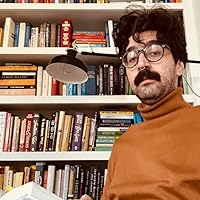
The earth is not a dead, mute landscape but an eloquent, living being. Sometimes it just takes a spade, a packet of seeds, and a pair of sturdy boots to realize it. The philosopher Byung-Chul Han spent three springs, summers, autumns, and winters in his secret garden in Berlin, devoting himself to daily gardening in all weathers. For Han, gardening is a form of silent meditation, a lingering in stillness. It gives you a different sense of time. Every plant has its own time that is specific to it, and the garden is a space in which these multiple temporalities overlap and cut across one another. The longer he worked in the garden, the more respect he developed for the earth and for its enchanting beauty.
Gardening taught him what care for others means. Each organism has its own consciousness of time passing; each organism lives in its own micro-universe. Step by step, Han receded from himself and the world, moving closer and closer to an exuberant, divine nature which we are increasingly in danger of losing.
Through this rich meditation on plants, soil, gardening, and time, Han unfolds a way of relating to and tending the earth that is in sharp contrast to the brutal, incessant exploitation of our planet that we see all around us today.
Byung-Chul Han, also spelled Pyŏng-ch'ŏl Han (born 1959 in Seoul), is a German author, cultural theorist, and Professor at the Universität der Künste Berlin (UdK) in Berlin, Germany.
Byung-Chul Han studied metallurgy in Korea before he moved to Germany in the 1980s to study Philosophy, German Literature and Catholic theology in Freiburg im Breisgau and Munich. He received his doctoral degree at Freiburg with a dissertation on Martin Heidegger in 1994.
In 2000, he joined the Department of Philosophy at the University of Basel, where he completed his Habilitation. In 2010 he became a faculty member at the HfG Karlsruhe, where his areas of interest were philosophy of the 18th, 19th and 20th century, ethics, social philosophy, phenomenology, cultural theory, aesthetics, religion, media theory, and intercultural philosophy. Since 2012 he teaches philosophy and cultural studies at the Universität der Künste Berlin (UdK), where he directs the newly established Studium Generale general-studies program.
Han is the author of sixteen books, of which the most recent are treatises on what he terms a "society of tiredness" (Müdigkeitsgesellschaft), a "society of transparency" (Transparenzgesellschaft), and on his neologist concept of shanzai, which seeks to identify modes of deconstruction in contemporary practices of Chinese capitalism.
Han's current work focuses on transparency as a cultural norm created by neoliberal market forces, which he understands as the insatiable drive toward voluntary disclosure bordering on the pornographic. According to Han, the dictates of transparency enforce a totalitarian system of openness at the expense of other social values such as shame, secrecy, and trust.
Until recently, he refused to give radio and television interviews and rarely divulges any biographical or personal details, including his date of birth, in public.
Han has written on topics such as attention deficit hyperactivity disorder, borderline, burnout, depression, exhaustion, internet, love, pop culture, power, rationality, religion, social media, subjectivity, tiredness, transparency and violence.
Geen filosofische, afgemeten essays deze keer, maar een doorleefd tuindagboek waarin ik een andere Byung-Chul Han leerde kennen. Als verweer tegen de onvermijdelijkheid van een digitaal bestaan, sociale media, presteren, produceren en consumeren - de neoliberalistische pijnpunten zeg maar, die de filosoof in zijn groeiende, populaire oeuvre telkens vanuit een andere ooghoek belicht - begon hij zo'n tien jaar geleden met het aanleggen van en werken in zijn Berlijnse tuin.
Hij heeft niet per se groene vingers, maar documenteert zich wel graag over wat er groeit en wat hij wil planten. En zo zingt hij hier als een te laat geboren romanticus zijn 'Lied von der Erde', of zoals hij het zelf verwoordt: hij tuiniert 'In praise of the earth'. Dat betekent vooral heel zintuiglijk zijn tuin beleven door erin te wroeten, te ruiken, te kijken, er dag en nacht, in elk seizoen de schoonheid van op te zoeken.
Af en toe duikt er toch eens een geliefde filosoof op, maar veel vaker zijn het dichters of componisten wiens hulp hij inschakelt om zijn onvoorwaardelijke tuinliefde te verwoorden en kracht bij te zetten. En verrassend: ook voor ergernis, haat en lelijkheid is er plaats in zijn notities. Zo heeft hij bijvoorbeeld een hekel aan eikenbladeren in de herfst omdat ze alles bedekken en in tegenstelling tot andere, fijn-generfde blaadjes niet snel willen vergaan en zo als een uniforme laag zijn tuinzicht vol nuances gaan ontsieren. Daar trekt hij dan de parallel met een van zijn terugkerende filosofische mantra's: 'de hel van hetzelfde'.
Toch blijft het leidmotief dat van de schoonheid en de zorgzaamheid voor de aarde en de natuur. Boeddhistisch zou ik het niet noemen - Byung-Chul Han is trouwens katholiek en schrijft hier eerder over God dan over Boeddha. Maar het heeft wel iets van een spirituele reis, een meditatie geworteld in de alledaagse verwondering die ook ikzelf ervaar in onze momenteel prachtig volle, bescheiden tuin. Dankzij dit boekje blijf ik er de laatste dagen zelfs nog iets langer in rondlopen en rondkijken.
Big fan of the man; a thoughtful collection of musings from an aging philosopher but nothing new here, it gets a bit tedious in the second half; be sure to check out his excellent collection of works on the commodification of everything: The Burnout Society, The Crisis of Narration and What is Power?.
“We have a lot to say, a lot to communicate because we are someone. We have forgotten silence and how to keep silent. My garden is a place of silence. I make silence in my garden”
Poetry, politics and prose are intricately woven into his ‘eternal garden’….The inhabitants of which take on humanlike qualities, from endearing to appalling.
The book is basically split into two halves, where the first is Han meditating on his favourite flowers and plants while sprinkling in some philosophical ideas here and there, and the second are his journal entries across a year (from 2016 through 2017) detailing his tending of his garden. This is definitely pretty personal for Han given his reclusive nature - he details among the texts the names he would give his children (if he had any), how his tending of the garden made him a deist, and his visit to Seoul to see his dying father.
I feel like Han is clearly a romantic guy, and there were moments in this book that felt quite charming. But I also can't help but feel that at times the little bits of philosophy and the connections between his garden and the digital life felt impromptu and almost arbitrary. In the end I feel like I did get an experience of sincerity and of something intimate, but at the same time it was not necessarily something that culminated into a main idea.
“The garden for which you work gives much back. It gives me being and time” (10).
“I am thinking about the hand of the gardener. What does it touch? It is a loving, waiting, patient hand. It touches what is not there yet. It guards the distance” (63).
Out of all the works by Byung Chul Han this is the most strange as the first few chapters are about topics that would relate to earth such as gardening defying modern ego driven life because different plants blossom at different times with each requiring different kinds of attention not being able to be optimized, a critique of Kant viewing attention as a feminine virtue with the most interesting part being how he states that gardening brings back the enchanted nature of earth when he talks about digging into the old roots of a plant with it inspiring his mind to wonder or how studying the earths natural history inspires great reverence toward her. Besides this small section of the book Han spends the rest of it musing about the different plants in his garden with each chapter named after plants in his garden with the book having beautiful drawings of them at the start of each chapter. The final chapter is a diary her wrote from 2016-17 about his time in his garden, time spend in south Korea and Italy with small references to philosophical topics like Walden or how digitization removes the sense of being in the world by closing us off in screens that don’t have the heaviness of earths time and temperature that the garden has. Overall I was surprised when I read this book as I wasn’t expecting such a personal look into the life of one of today’s great minds with me enjoying taking my time reading such an interesting book.
The closing words of this book are “ we should spare her and treat her well. We should praise her instead of brutally explaining her beauty obliged us to treat her with care. I have learned this and experienced it.”
In Praise of the Earth is one of Han’s most sensitive and personal books. I can sense in it much of the inception of Vita Contemplativa and his later works. The second part—the diary—is a bit repetitive but still enjoyable, and some passages add depth to the first section. 4.5
En vakker bok, jeg hadde helt sikker likt den mye bedre hadde den vært skrevet av en annen forfatter.
I "In Praise of the Earth" er delt i to. Første del er en rekke mikroessay som omhandler ulike plantearter og aspekter ved å drive en egen personlig hage. Siste halvdel er en dagbok, som også fungerer litt som mikroessay, selv om formen fører oss nærmere B-Ch. H., slik han kommer nærmere Jorden.
Problemet med boken slik jeg ser det er at det later til at han går i de samme syndene som han selv kritiserer tidligere i forfatterskapet. Han besjeler hagen og blomstene i den - noen planter blir fine, andre stygge og hans eget og det mennesklige blikket blir premisset. Hagen blir en synekdoke på verden som helhet, på tross av at det angivelig er en ingjerdet hage midt i berlin. Hagen er tom for det Hverven omtaler som "ville verdier" og fylles kun med B-CH. H. sine verdier. Han omtaler noen blomster og naturfenomener som fine, andre som stygge - han hater andre.
Det later dermed til at en reell "Annen" ikke er til stede. Og tankene mine går tilbake til "saving beauty", som det nå later til at han har glemt. Det vakre B-CH. H. ser i Hagen er han selv. Det hjelper ikke at han finner Gaia selv, Gud, i hagen og han erklærer seg som religiøs. Han prater om denne autoerotikken i the philosophy of zen buddhism, hvordan vestlige religioner med mål om å bli ett med Gud er narsissistiske. Fra jord har du kommet, til jord skal du bli...
At han ser Gud in en hage mitt i Berling, en hage som uansett hvor vill den der, vil leve på menneskets og ikke sine egne premisser finner jeg ironisk. Jeg opplever at andre ser på denne boken som B-CH. H. sin løsning på problemene han tegner opp i sine andre bøker. Det jeg leser, er en mann som resignerer inn i sitt eget sinn og dyrker en autoerotisk filosofi som ikke fører til politisk handling.
Noe som ser ut til å underbygge dette er et merkelig innslag i boken, av et brev B-CH. H. har sendt inn til en koreansk journalist. Her kritiserer han en av Koreas presidentkandidater:
Moon will divide Korea. In Korean, Moon-jae also means "problem". A problematic child, in Korean, is Moon-jae-a. Moon-jae wil not be able to solve Korea's urgent problems. He is a problem himself.
Han går videre å beskrive navnene til de andre kandidatene og knytter dem symbolsk opp til blomstene han har i sin egen hage...
det står ingen ting om journalisten endte opp med å publisre brevet eller ikke.
I believe this is the very first time I gave 4-star rating to Han's book. The book is great, but the impact is less than Han's other books. The long descriptions of flowers (which are hard to visualize) pack the major portion of the book. One thing I'll definitely do when I get older is gardening.
This is Han's report of his tryst with gardening, and what it has done to him. Interacting with earth taught him how beautiful and sacred nature is. This beautiful earth... and we are exploiting it without mercy.
He is especially keen on nurturing flowers and plants that bloom during the freezing winter season. - winter aconites - snowdrops - winter heath - witch hazel.
"Maybe mortality is the bitter price we have to pay for having separated from the earth, for being able to move around freely, for being independent, free-standing selves. Freedom, then, is probably mortality."
Anaphrodisiacs (some plants that help to decrease your sexual desire) - Monk's pepper - and rue, hops, liquorice, foxtail (amaranthus)
Hyperion by Keats, and the flower poem by Rilke.
"I love this late blooming lily. Everything that is late has a scent. The toad lilies are beginning to bloom. They are also late bloomers."
What parents who send their children to mainstream private schools fail to see—or choose to ignore—is that money cannot buy a soul and therefore cannot provide one. These schools resemble commercial enterprises fused with farms populated by every variety of herd animal far more than they resemble disciplined academies. As a result, their primary focus and purpose are economic rather than intellectual. What they systematically manufacture are not original minds capable of critical thought, but individuals who think very little, accumulate an assortment of ornate certificates, and present themselves as “thinkers.” Along the way, each student is directly or indirectly indoctrinated with liberal-democratic values, producing individuals who are excessively social, extroverted, materialistic, hedonistic, and superficial. Their inner worlds are neglected and crushed beneath the pressures of success and performance, and so they never develop into mentally mature adults. In the most honest terms, these institutions are capitalist factories designed to produce perfectly conformist consumers for economic profit: asleep and content with it, since, on paper, the money they paid allows them to appear as geniuses.
Byung-Chul Han writes about his extraordinary garden in the form of essays and diary entries. He seems to be a profoundly introspective and sensitive person who took up gardening not too very long ago. He is proud of the astounding progress he has made, and talks freely and intelligently about the love he has for his flowers, shrubs, and trees. The variety he takes care of is extensive; he has poured his heart into this, all the while teaching and writing many other books. He gardens in all seasons, including during Berlin's cold winter. I am quite envious of the plants that he manages to get to flower in that freezing season! I have no such luck.
Han is a philosopher of great merit. It is a joy to read his disdain with people who have exploited the earth for money's sake. He has no patience with them. I haven't read any of his other work, but I am so pleased to see that someone like him is sharing his own rather intimate experiences with nature so freely with ordinary people like me. He uses poetry, song, prayer, and prose to express something he obviously cares deeply about.
A philosophical and mystical encounter with the earth, gardens, plants (especially flowers), seasons, weather, and so on. Romantics with their obsession with blue flowers and of nature’s enchantment, Rilke and his connections between roses and angels, Heidegger’s earth as part of the fourfold and human dwelling, Nietzsche’s naming of things (flower’s names here), Eastern gardening (especially Japan, Korea, and China), and so on - all bring a close connection between us the mortals and the earth (seen here as the primordial garden) and provide a glimpse of the gods and of the divine here. Everything digital, abstract, and of course any form of earth exploitation destroy all of these.
Han's In Praise of the Earth makes the most sense read in the context of Han's other earlier works, which are sharply critical of "the burnout society" and the digitalization of modern life. Here Han provides an escape route through sustained attention to the natural world. In Han's case this involves spending time in his "secret garden" in Berlin, time that is beautifully described in the diary entries in the second of the book.
I expected more thoughts I guess? Like I've heard so many things about this author that I expected a deep dive into his mind about the earth and all that. It was basically just a journal about gardening, not much depth to it.
Poetic and beautifully engaging at times, at times an interesting review of some of his own theory in concise and simpler terms, but some of his worst writing (out possible just the worst translation?).
After a few months and even a break, I finally finished. Way more meditative and philosophical than I was expecting. I enjoyed some of the writing and thoughts in life and nature, I might come back to it later when it calls to me.