Jump to ratings and reviews
Rate this book

Mistress Koharu

Rate this book
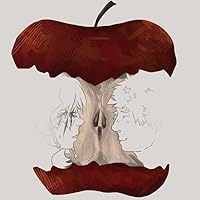
Akira, a meticulous editor at a major publishing house in Tokyo, harbors a secret: he lives with Koharu, a Hungarian-made love doll. Each night, he speaks to her and finds a long-sought solace in her presence—a comfort he cannot attain even in the arms of real women in his life. But when Kyoko, an intelligent subtitle translator, enters his life, everything changes. A single confession to Koharu about his attraction to Kyoko sets off a chain of disturbing events that spiral into the unexpected.

256 pages, Paperback

First published January 1, 2022

9 people are currently reading
373 people want to read

About the author

Noboru Tsujihara

13 books5 followers
Noboru Tsujihara (辻原 登 Tsujihara Noboru?, born 1945) is a prize-winning Japanese Novelist.

1990 Akutagawa Prize for Mura no namae (村の名前, A Village's Name)[1]
1999 Yomiuri Prize for Tobe kirin (Fly, Kirin!)
2000 Tanizaki Prize for Yudotei Enboku (遊動亭円木)
2005 Kawabata Yasunari Prize for Kareha no naka no aoi honoo (枯葉の中の青い炎, Blue Flames Among the Dry Leaves)

(from Wikipedia)

Ratings & Reviews

What do you think?
Rate this book

Friends & Following

Create a free account to discover what your friends think of this book!

Community Reviews

5 stars
3 (5%)
4 stars
15 (28%)
3 stars
18 (33%)
2 stars
12 (22%)
1 star
5 (9%)
Displaying 1 - 12 of 12 reviews
Profile Image for Paul Fulcher.
Author 2 books1,961 followers
December 23, 2025
Mistress Koharu (2025) is Kalau Almony’s translation of a 2022 novel by Noburu Tsujihara.

This is the September 2025 book from the brilliant Republic of Consciousness Book of the Month club, which raises funds that support the UKs most exciting annual book prize, as well as showcasing a collection of books from the vibrant small independent press scene. It is published by Honford Star, and is their entry to the 2026 Queen Mary Small Press Fiction Prize, the rebrand of the Republic of Consciousness Prize.

As Almony’s highly informative Translator’s Note makes clear, this required far more research than would be typical due to its unusual use of “obsessive citation” - see below.

The subject matter is also striking as the eponymous Koharu is a live-sized and top-of-the-range love doll.

The central character of the novel is Akira. Turning 40, he works in the editorial department of a large publishing house, and lives alone in an apartment. He has a form of friends-with-benefits relationship with the owner of his favourite bar, visiting her flat once a month for intense sex (techniques she learned at the hand of a Michael Hutchence to her Kylie before having a brief porn career), and, rather to her disturbance, leaving her money afterwards. But his daily and most-nightly companion is Koharu.

Akira graduated as a literature major from the humanities department of his university, with his undergraduate thesis on Chikamatsu Monzaemon, the playwright of bunraku puppet theater and kabuki plays. Even before this doll arrived, he had decided that he would call her Koharu—the name of the heroine of Chikamatsu’s The Love Suicides at Amijima.

After he began living with Koharu, Akira made a discovery. Something unrelated to the workings of sex, something to do with sleep.

The expression “Dutch wife,” the predecessor of the term “love doll,” came from Dutch-occupied Indonesia, where Dutchmen sought to improve their troubled sleep in the hot tropical nights by sleeping with body pillows made of bamboo. These “bamboo wives” inspired the name of the dolls later made for sex. And what Akira discovered was that, when he slept spooning with Koharu, she served to drastically improve his sleep.


In the opening pages of the novel we are taken on an almost Sebaldian chain of association that takes in the manga artist Tsuge Yoshiharu, a 20 year old essay collection by Tomioka Taeko “Personal Life and the i-novel”, the Gregory Peck film “In Cape Fear”, the (real-life) Orient Industries, and traditional Hungarian Mayto embroidery - with detailed references on each - and indeed it’s that chain of association, rather than his single-status libido, that we are led to believe led Akira to purchase and live with the doll.

This is a novel where if a character walks down from A to B every notable building they pass is described including some facts about it. The restaurants/cafes/bars featured (and all of the characters’ social lives seem to revolve around these) are real places, again described in detail. And references to books, movies etc also abound. Almony’s translators afterword comments:

“Mistress Koharu is full of evocative images, and the plot is thrilling. But it is the book’s obsessive citation that links everything together. All the references trace out the characters and the world they live in, both physical and cultural. They also provide the reader a seemingly infinite selection of overlapping paths to wander, each offering a new view of something in the text you thought you understood.

My job as translator then was to recreate this map in all its glorious excessiveness. I had to capture to the best of my ability this wide range of references and make them legible to an English-language reader, to give them the tools to peel back the layers of reference and see what they can find in this strange nesting doll of a book. The references didn’t need to be (in fact they shouldn’t be) too blatant. That would rob the reader of the mystery and the opportunity to explore. But they did need to be there and be accessible enough to be found with some effort.”

As just one example - plucked randomly from the pages - a scene where “he was distracted by a red diesel engine pulling a line of green gasoline tankers” would have (more than) sufficed, becomes:

A brick red diesel engine pulling a long line of green Taki 1000 gasoline tankers slowly approached on a freight track. It was a freight train commonly known as the Beitan, carrying jet fuel from the US Navy Fuels Distribution Center south of Anzen Station to the Yokota Base.

Since the railway lines at the US Navy Fuels Distribution Center were not electrified, only diesel trains could make that leg of the trip. So here at Anzen Station, the load would be transferred to an electric train. The Beitan, now filled with jet fuel, would be pulled by an electric train from Anzen Station, along the Nambu Line from Hama-Kawasaki Freight Station, then along the Musashino Freight Line, rejoin the Nambu Line at Fuchu Honcho, and then passing through Haijima Station, arrive at Yokota Base. About half of the Musashino Freight Line runs underground, passing through tunnels below the Tama Hills, and whether on a street map or trainline map appears as a dotted line.


In many respects it is very effective - it creates atmosphere and perhaps also reflects the obsessive nature of almost every character in the book (one mental accuses Akira of mansplaining when he gives her the detailed history of some tea ceramics, but she is the same person who is compiling the exhaustive dictionary of every bar and restaurant in the area).

And it is done to such an extent it moves beyond mere exposition to an art. Although for this reader at least there were too many references to make the effort suggested to peel them back and explore - so whether I missed some key elements I am unsure.

The thrilling plot (per Almony) can end up taking a little of a backseat. But this is a complex - and violent - life quadrilateral with Akira juggling, and seemingly oblivious to the mutual resentment this might cause, relationships with Koharu, the bar owner and (the one where he is being manipulated) a woman (a freelance film subtitler by profession) he meets at the bar, but who has actually been stalking him for months, even moving to a flat where she could spy on him with binoculars (although she never managed to see Koharu in action).

And Koharu herself is not a passive observer in this. From the first pages, and something that slightly surprises Akira but he shrugs off, she turns out to be capable of limited speech and movement - and in a sentient not mechanical fashion. And unknown to Akira - although again he doesn’t seem as spooked as he should - she has been actually leaving the apartment when he is at work to spy on him and his female companions.

And with a stalker, at least four murders or attempted murders (from more than one character) and sexual blackmail from another bar denizen, there is enough here for the richest of Hollywood scripts - which in his book would be subtitled into Japanese by the stalker, and then discussed in detail with reference to the lead character’s and director’s filmographies by the others.

If I had a concern with the plot it is the gender politics: while Akira is ultimately at the centre of the tangle, it can come across as one ordinary man and three crazy women (or two crazy women and a crazy love-doll).

She stared at Akira’s paling face and said, “Viszlát, kedvesem,” goodbye, my dear, and returned to the burning room. 

A fascinatingly different novel, if frustrating at times. 3.5 stars rounded to 4 for the distinctiveness.

The publisher - Honford Star

Honford Star is committed to bridging literary worlds, celebrating the richness of East Asian literature. Our goal is to respect the authenticity and diversity of these narratives, bringing them to a global audience through collaborative partnerships with skilled translators, artists, and designers.
Profile Image for Gainze.
45 reviews1 follower
September 1, 2025
(3.5) Such a beautiful cover. Story was boring at times, I feel like the author had a little too much to say, the story could have been 100 pages shorter, there’s a lot of excessive details and summaries of movies, poems, essays, etc. Without all of the unnecessary bits it would have been a great story but like I said they just extended the book and it just went on for so long…
7 reviews
November 4, 2025
The story was really good. But the never ending references, movie titles, directors and back stories that were not related to the main story was very tiring.
Profile Image for Zuzu Zain.
141 reviews
Read
September 23, 2025
Apakah ini.
Rasa macam Akira agak charming. Dan faham je kenapa dia beli doll tu. Tapi otak ni tak boleh nak faham kenapa si Koharu tu boleh bergerak macam manusia dan pi jenjalan. Dan kenapa penulis nak create konflik antara koharu, chiyako (tak ingat tetiba nama dia chiyako ke chikoko) dan kyoko. Sebab, koharu kan doll. Dan yaaaa memang la koharu tu safe space untuk Akira, tapi apa yang susah sangat nak buang Koharu. Tak faham genre apa ni. Art berat kut eh.
Profile Image for Plainqoma.
701 reviews17 followers
December 13, 2025
Mistress Koharu is unquestionably one of the strangest books I've read, it's fascinating, a little too much, and impossible to describe. It's about Akira's loneliness, and how one day he decided to find a "partner" in the form of a doll. It's not your usual doll, it's been humanised to the point where it can talk, walk, and even express emotions.

It's completely silly at one point, and I'm wondering how the main character can simply dismiss the foolishness of it.
This is definitely a magical realism genre, or a demonic thriller with possessed characters, lol just joking. However, as the narrative progresses, a woman appears in his life.

Kyoko, the compulsive stalker translator, and Chikako, the pub owner, who he occasionally has an affair. Additionally, each has a unique narrative and is not the typical type of woman he considers. As I read this, there is simply too much information about films, books, locations and the history of the doll that connects the stories from each of the characters. However, if I had to sum up the plot of the book, you can actually sense where it is going and ends.

To be honest, I think I would have liked a shorter version in which Akira's life was impacted by the excitement of the unhinged women's actions. If you can relate to all of the authors' tales and facts, this is probably a much more enjoyable read. It's the kind of book where you will sort of go into a rabbit hole.

Giving this 3.8/5 ⭐️
Thank you @honford_star for sending this my way.
Profile Image for Hollow kiwi.
115 reviews
December 18, 2025
I've never encountered a novel so desperate to distract from its main plot, constantly trying to lose itself. The author draws out off-topic subjects at seemingly every opportunity. Examples include: a multi-paragraph explanation regarding subtitling rules when all that needed to be conveyed was that the character writes subtitles for a living, ridiculously unnecessary amounts of backstory for side characters, a whole eight pages dedicated to describing a conspiracy magazine which isn’t relevant to the plot whatsoever. You could lose a collective 150ish pages and have higher quality content remaining EASILY.

Koharu, the subject of the novel, barely features and it’s such a waste. There's definitely an obvious feminist read, but it’s all ground that’s been trodden before in many better novels and none of it gets any depth anyway. I purchased this over 'Annie Bot' (since both pertain to a love doll but I wanted to support the underdog) and feel like I chose the wrong novel. Complete and utter vapid letdown.
Profile Image for Anthony.
301 reviews7 followers
September 22, 2025
3.5* The story itself is good and quite dark but it's lost amongst pages of over description about locations, theatre, films and philosophy. I ended up skim reading everything non core story related sadly. There is a story in there but it's only about a third of the book.
Profile Image for Ariel C..
521 reviews3 followers
November 8, 2025
when great books with fantastic potential flop, a piece of my soul dies. unfortunately this was one of them - incredible and intriguing at times, and a total snooze fest at other points. definitely could've been a novella!! would've liked it more if it were.
Profile Image for Farah Solhi.
1 review
September 19, 2025
The worst book ever. Honestly. Dont bother spending your hard-earned money for this book. I cannot stressed enough how useless and lost this book is.
8 reviews
January 1, 2026
Written in an interesting way with lots of tangents into things unrelated to the plot but I liked it because in real life not everything is relevant to the plot
Displaying 1 - 12 of 12 reviews

Can't find what you're looking for?

Get help and learn more about the design.