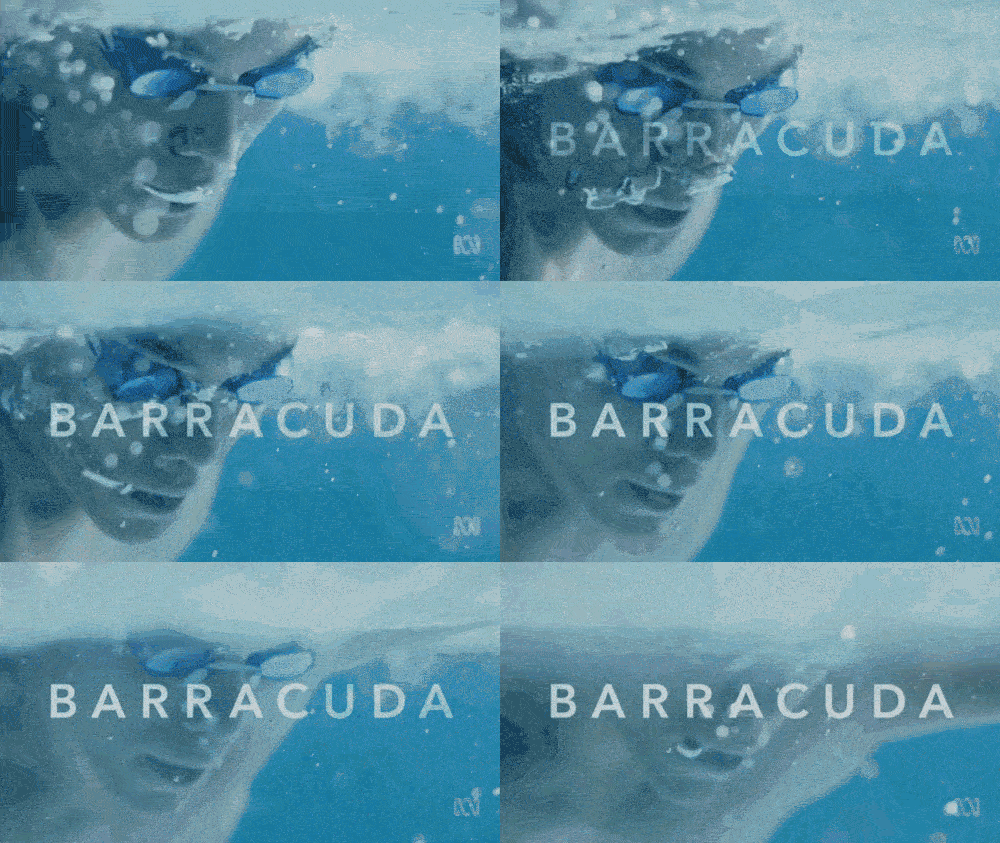
In Barracuda, Christos Tsiolkas tells a tragic story of a 14year old boy, Danny Kelly; his hopes and dreams of becoming a ‘golden boy, representing Australia in the Olympic games in the swimming competitions. Born into a working class family with Greek and Scottish parents, Danny earned a scholarship to a prestigious boys school for his strength in swimming. Danny was being bullied in his new school, but he’s caught on early that the only way to earn respect is to adapt ruthless attitude and more importantly, he must succeed in the pool. In Danny’s mind, failure is not an option - he is the ‘Barracuda’, the strongest, the fastest, the best – but when faced with failure, he can’t deal with it, he becomes destructive.
The story is told in the three stages of Danny’s life; from his earlier years when he was driven, dedicated and full of hope; to his middle years and his down fall, he’s thoughts and behaviour at this time were brutal and sickening, he became paranoid and violent; it then switches to the present years, a man in his 30’s, broken, deeply ashamed, and who is seeking redemption and a purpose in life. These stages were told out of sequence and there was a slight unknown to it. Danny had the perfect chance in life, he was surrounded a supportive family – who weren’t pushy – and childhood friends whom liked Danny for who he is (not if you win or lose). Seeing these different stages earlier on, it had me thinking what could’ve possibly happened to a man, full of hopefulness to hit rock bottom so severely?
However, in saying that, the structure didn’t suit me. With a book like this I would’ve liked to have grown WITH Danny through these stages, yet some how I felt like I was only seeing fragments of life, not the whole picture. I was terribly annoyed. In my opinion, Christos is an amazing storyteller and Barracuda (like The Slap) is a multilayer storyteller that does cover so many important issues/themes you can talk about and debate on; racialism, parenting, homosexuality, class, sports and Australian culture and beliefs – and the list goes on - I could feel myself disconnecting with it and losing interest.
If you are a bit hesitant to read a Christos Tsiolkas book, because of what you’ve heard or experience with The Slap, Barracuda is certainly gentler. There is a softness, balance with the distinctive characters and eloquently described backdrop, places that were familiar to me (being Melbourne born and raised) and I could visually see the contrast – richness of Toorak and working class of Coburg/Reservoir.
I personally preferred The Slap, I think the characters and the plot were tightly developed and well written. Barracuda was okay for me - some remarkable and thought provoking moments came of it, and some not so good.