Jump to ratings and reviews
Rate this book

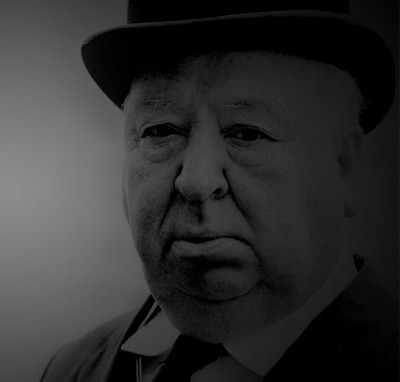
Alfred Hitchcock

Rate this book
Alfred Hitchcock was a strange child. Fat, lonely, burning with fear and ambition, his childhood was an isolated one, scented with fish from his father's shop. Afraid to leave his bedroom, he would plan great voyages, using railway timetables to plot an exact imaginary route across Europe. So how did this fearful figure become the one of the most respected film directors of the twentieth century?

As an adult, Hitch rigorously controlled the press's portrait of himself, drawing certain carefully selected childhood anecdotes into full focus and blurring all others out. In this quick-witted portrait, Ackroyd reveals something more: a lugubriously jolly man fond of practical jokes, who smashes a once-used tea cup every morning to remind himself of the frailty of life. Iconic film stars make cameo appearances, just as Hitch did in his own films. Grace Kelly, Carey Grant and James Stewart despair of his detached directing style, and, perhaps most famously of all, Tippi Hedren endures cuts and bruises from a real-life fearsome flock of birds.

Alfred Hitchcock wrests the director's chair back from the master of control and discovers what lurks just out of sight, in the corner of the shot.

279 pages, Hardcover

First published April 2, 2015

99 people are currently reading
1534 people want to read

About the author

Peter Ackroyd

184 books1,493 followers
Peter Ackroyd CBE is an English novelist and biographer with a particular interest in the history and culture of London.

Peter Ackroyd's mother worked in the personnel department of an engineering firm, his father having left the family home when Ackroyd was a baby. He was reading newspapers by the age of 5 and, at 9, wrote a play about Guy Fawkes. Reputedly, he first realized he was gay at the age of 7.

Ackroyd was educated at St. Benedict's, Ealing and at Clare College, Cambridge, from which he graduated with a double first in English. In 1972, he was a Mellon Fellow at Yale University in the United States. The result of this fellowship was Ackroyd's Notes for a New Culture, written when he was only 22 and eventually published in 1976. The title, a playful echo of T. S. Eliot's Notes Towards the Definition of Culture (1948), was an early indication of Ackroyd's penchant for creatively exploring and reexamining the works of other London-based writers.

Ackroyd's literary career began with poetry, including such works as London Lickpenny (1973) and The Diversions of Purley (1987). He later moved into fiction and has become an acclaimed author, winning the 1998 James Tait Black Memorial Prize for the biography Thomas More and being shortlisted for the Booker Prize in 1987.

Ackroyd worked at The Spectator magazine between 1973 and 1977 and became joint managing editor in 1978. In 1982 he published The Great Fire of London, his first novel. This novel deals with one of Ackroyd's great heroes, Charles Dickens, and is a reworking of Little Dorrit. The novel set the stage for the long sequence of novels Ackroyd has produced since, all of which deal in some way with the complex interaction of time and space, and what Ackroyd calls "the spirit of place". It is also the first in a sequence of novels of London, through which he traces the changing, but curiously consistent nature of the city. Often this theme is explored through the city's artists, and especially its writers.

Ackroyd has always shown a great interest in the city of London, and one of his best known works, London: The Biography, is an extensive and thorough discussion of London through the ages.

His fascination with London literary and artistic figures is also displayed in the sequence of biographies he has produced of Ezra Pound (1980), T. S. Eliot (1984), Charles Dickens (1990), William Blake (1995), Thomas More (1998), Chaucer (2004), William Shakespeare (2005), and J. M. W. Turner. The city itself stands astride all these works, as it does in the fiction.

From 2003 to 2005, Ackroyd wrote a six-book non-fiction series (Voyages Through Time), intended for readers as young as eight. This was his first work for children. The critically acclaimed series is an extensive narrative of key periods in world history.

Early in his career, Ackroyd was nominated a Fellow of the Royal Society of Literature in 1984 and, as well as producing fiction, biography and other literary works, is also a regular radio and television broadcaster and book critic.

In the New Year's honours list of 2003, Ackroyd was awarded the CBE.

Ratings & Reviews

What do you think?
Rate this book

Friends & Following

Create a free account to discover what your friends think of this book!

Community Reviews

5 stars
119 (12%)
4 stars
445 (45%)
3 stars
351 (35%)
2 stars
60 (6%)
1 star
8 (<1%)
Displaying 1 - 30 of 172 reviews
Profile Image for Jeffrey Keeten.
Author 5 books252k followers
June 23, 2015
”Give them pleasure - the same pleasure they have when they wake up from a nightmare.”
---Alfred Hitchcock


 photo hitchcock20bird_zpsn8hblxek.jpg

TCM a year or so ago decided for a month to stream Hitchcock movie on the weekends. I was able to catch several of his movies I’ve never seen before and watch some old favorites. To say which is my favorite is impossible, but the first movie of his that I ever watched was The Birds and I never forgot it. I was somewhere around ten years old when I saw the movie. We lived in the country and the large elm trees surrounding our property were always full of noisy blackbirds and sparrows. Barn swallows and pigeons lived in the rafters of the barns. Swallows, as I soon learned, had no fear and if they didn’t want me in “their barn” they would launch themselves at my head screeching past my ears like miniature subsonic jets.

You can imagine how a boy with an overactive imagination and who occasional was dive bombed by deranged swallows might be powerfully affected by a movie about birds turning into killers. I had nightmares about that movie for years. So many in fact that when I was older every time the dream projectionist would load it up again it was like seeing an old friend.

I didn’t know who this man was who cost me so many pleasant nights of sleep until I left the farm and went to college. It was quite a revelation finding movie shops which allowed me to rent movies when I wanted to watch them instead of waiting for some programmer who worked for one of the three channels we could get on our TV to put on a movie I wanted to watch. (Technically we got four channels, but most days the fourth one just rolled.)

 photo Janet20Leigh_zps7dkgm8nf.jpg
The audiences screamed with her.

Psycho is a movie that no one can forget. I was so fortunate to watch the movie without having any idea of what was going to happen. One of the advantageous of being culturally deprived in the sticks. I’m not surprised to learn that audiences were terrified by this movie. ”The filmmaker Peter Bogdanovich recalled that Psycho is the moment in movies when for the first time movies weren’t safe. I remember coming out of the screening and feeling I’d been raped or something, or mugged, it was absolutely terrifying, no one recovered from that shower scene, you couldn't hear the soundtrack because the audience was screaming through the entire forty-five seconds. I never heard those violins.”

I was stunned that someone would kill someone so beautiful, and do so in such a brutal fashion. Suddenly showers had become kill chutes, blind boxes, with the sound of water cascading around our ears to mask the sound of someone approaching. And then:

SCREECH SCREECH SCREECH

Hitchcock loved his blondes. He was quoted as saying ”Blondes make the best victims. They're like virgin snow that shows up the bloody footprints” He liked to abuse them as well. His relationship with Tippi Hedren took a pathological turn when she spurned his advances for wanting more than a working relationship. The scene in The Birds where the birds attack her in the attic was filmed over and over again until people were becoming ill on the set from the abuse that Tippi was receiving. It was nothing less than torture.

AGAIN AGAIN AGAIN.

 photo Tippi_zpse34hk7xp.jpg

The situation with Hedron could be attested to a spurned want-to-be lover, but in To Catch a Thief Peter Ackroyd reports that Hitchcock insisted that the scene where Grant grabs Grace Kelly rather roughly be filmed over and over again until she was bruised. It leads me to suspect that Hitch may have enjoyed seeing his icy blondes get hurt.

Hitch insisted that he saved Kelly’s career by casting her in roles that softened her image. ”He once explained to a journalist that ‘she’s sensitive, disciplined and very sexy. People think she’s cold. Rubbish! She’s a volcano covered with snow.

He is such a clever round little man. He knows how to build the tension and then give it an extra twist so the audience is totally under his control. He shot Rope in continuous ten minute takes that had the actors practically coming unglued with tension. One mistake and they had to start all over. The anxiety from the actors is conveyed to the audience. It was a trick or gimmick that didn’t really improve the film except for the fact that the tension the actors were displaying was real. It does make a great discussion point for film classes. Jimmy Stewart swore he'd never work for Hitch again, but thank goodness he changed his mind and gave us the spectacular Rear Window and the fascinating Vertigo.

Hitchcock was not an easy man to deal with. He was highly creative, insecure, high strung, temperamental, sarcastic, phobic, and stubborn just to name a few of his characteristics. This meant that he needed a very special person with the patience and the ability to ride the waves of his changing disposition . ”Her liveliness did much to dispel his nervous fear, of which she was well aware, and it is doubtful whether he would have been able to make his way in the world without her support.” That woman would be his wife Alma. Hitchcock would never have been Hitchcock without her.

 photo alfred-hitchcock-psycho-and-birds_zps3g1zbvhq.jpg

He did not particularly like his customers, the movie going public. He was in fact as disparaging of them as he was actors (cattle). The moron millions he called them. ”This was a paradox of his position. He needed to consult the tastes of his audience, and to a certain extent pander to them, while at the same time he believed himself to be an artist rather than a mere entertainer; this would encourage odd contortions on his part.” I once had a friend say that one should never meet their heros because they rarely prove to be who you think they are. Your vision of them will never match the reality. I also had another acquaintance who said that writers should never meet their readers. They are not that person who you have in your mind of who you are writing for. Obviously Hitch met his viewing public and found them not worthy of the magic he was always trying to create.

The writer Edgar Allan Poe inspired him to be creative. Hitch had some intuitive thoughts about Poe that resonated with me. ”I felt an immense pity for him because, in spite of his talent, he had always been unhappy.” Artists and writers tend to be more sensitive than the average person which means they are prone to larger emotional responses to setbacks, roadblocks, and losses.

 photo Beware20the20Birds_zpszhimbjgg.jpg

Peter Ackroyd is a novelist so I had no doubts this book would be highly readable. The book is full of interesting facts about Hitchcock and his films. His foibles and his brilliance are all on display. He was a strange man, difficult to ignore, sometimes difficult to like, but always pushing himself to be better. He changed film, and now when a film is suspenseful, original, with a great twist then, invariably, someone will say it has Hitchcock elements. I plan to read The Dark Side Of Genius: The Life Of Alfred Hitchcock in the very near future. I’m hoping for even more revelations about quite possibly one of the strangest men to ever work behind a camera.

If you wish to see more of my most recent book and movie reviews, visit http://www.jeffreykeeten.com
I also have a Facebook blogger page at: https://www.facebook.com/JeffreyKeeten
Profile Image for Barbara.
1,775 reviews5,296 followers
October 24, 2021


Alfred Hitchcock was born into an English working class family in 1899 and grew up in some of London's poorer districts, among small houses, assorted shops, daily laborers, and crowded streets smelling of the Thames River.


Little Alfred Hitchcock

Alfie (as his family called him) had a passion for roaming and claims to have journeyed all over London - via bus and train - by the age of eight. The scenes of churning London neighborhoods remained with Hitchcock for life, and he re-created them in many of his films.


London in the early 1900s

Hitchcock's family was devoutly Catholic and he was educated in Catholic schools, became an altar boy, and embraced the strict tenets of the faith.


As a result, Hitchcock had an anxious disposition and was uncomfortable about his body. Hitchcock often claimed that - apart from conceiving his daughter Patricia - he was celibate for life. Hitchcock was also fat and not especially handsome, which probably affected his self-image and relationships with women.


Alfred Hitchcock was self-conscious about his body

From an early age Hitchcock loved public entertainments, especially plays and films, and began reading trade papers as a teenager. He was obsessed with themes of horror, violence, crime, and criminals, and became a devotee of the works of Edgar Allan Poe.


By the age of 22, Hitchcock went to work for a London-based film company and - by volunteering to do every job available - began to learn the nuts and bolts of movie-making. Hitchcock's future wife Alma Reville also worked for the film company and, after they married, became Hitchcock's most trusted partner - both personal and professional. By the middle of his career, Alfred Hitchcock was one of the most well-known, popular, and respected directors in the world.


Alfred Hitchcock and his wife Alma Reville


Alfred Hitchcock directing a movie

This biography by Peter Ackroyd touches on many aspects of the director's life and provides a detailed overview of Hitchcock's movies. Ackroyd talks about each of the surviving (and a few lost) Hitchcock films, and describes how Hitchcock's background, upbringing, education, religion, personal foibles, likes, dislikes, hirings, firings, studios, producers - and of course Alma's input - impacted them.


One critic observes: Hitchcock’s artistry reached its apex with his San Francisco–set tale of an acrophobic investigator (James Stewart) who falls hard for the mysterious blond (Kim Novak) he’s been hired to tail. Sexual obsession, shifting identities and, of course, a pesky fear of heights all play a part in this hallucinatory masterpiece."

Even in the midst of making a movie Hitchcock was always on the hunt for his next project, and he had 'favorite people' he liked to work when possible. This included certain script writers, photographers, dress designers, composers, actors, and so on. Moreover, Hitchcock often developed crushes on his beautiful female stars, whom he would cosset, groom, and converse with constantly - bestowing so much attention that they were often uncomfortable. Hitchcock's wife Alma was well aware of this quirk, and sometimes commiserated with and apologized to the ladies.

Some of Hitchcock's favorite actresses were: Kim Novak, Eva Marie Saint, Janet Leigh, Grace Kelly and Tippi Hedren.


Kim Novak


Eva Marie Saint


Janet Leigh


Grace Kelly


Tippi Hedren

Hitchcock's early movies were silent black and white productions, but as new technologies became available the filmmaker happily switched to talkies, and then technicolor. Hitchcock began his career in England, where he did well. But the director was always seeking increased commercial success and more money, and he eventually moved to California.....to make Hollywood movies.

Whenever possible Hitchcock liked to control all aspects of his films, including the story, the script, the locations, the lighting, the camera angles, the sound effects, the editing, the music, the length, etc. Though he sometimes filmed on location Hitchcock preferred to work in a studio, where he was more comfortable and had access to his favorite things (like steak and salad for lunch every day).


Hitchcock was meticulous about storyboarding, planning, and blocking every scene of his movies. By contrast, the auteur took a kind of minimalist approach with respect to actors. Most stars of Hitchcock films noted that the great man rarely commented on their performances - good, bad, or otherwise. Hitchcock just told them what was expected and let them get on with it, which many found disconcerting.


Alfred Hitchcock and Jimmy Stewart


Alfred Hitchcock and Sean Connery


Alfred Hitchcock and Tippi Hedren

Hitchcock also had a lighter side, and he liked to tell ribald stories and play practical jokes. During one production Hitchcock left a different 'dead body' in an actress's trailer every day, to see which elicited the best response. More evidence of Hitchcock's humor could be seen in his opening and closing remarks for the TV series "Alfred Hitchcock Presents", where he tended to be droll and sarcastic.


Alfred Hitchcock laughing with Janet Leigh

Hitchcock achieved worldwide fame and popularity, and many of his films are considered classics. Toward the end of his career Hitchcock received two prestigious awards: a "Lifetime Achievement Award" from the American Film Institute, and a "KBE" (Knight Commander of the Most Excellent Order of the British Empire) from Queen Elizabeth.

I enjoyed the book, which was fun and informative. I liked reading about the nitty-gritty of Hitchcock's film-making and appreciated the stories about famous actors, including Cary Grant, Joan Fontaine, Paul Newman, Grace Kelly, Jimmy Stewart, Anna Massey, James Mason, Kim Novak, Tippi Hedren, Joseph Cotton, Eva Marie Saint, Anthony Perkins, Ingrid Bergman....and many more.

Reading the book brought to mind some of my favorite Hitchcock movies, like The Lady Vanishes, Rebecca, Suspicion, Spellbound, The Paradine Case (which wasn't a big success...but I liked it), Strangers on a Train, Dial M For Murder, Rear Window, The Man Who Knew Too Much, Vertigo, North by Northwest, Psycho, The Birds, Marnie (which was said to be too cerebral for mass appeal), and Frenzy. I now plan to re-watch some of these films via the magic of streaming and DVDs.

Overall, this is an interesting, enlightening, and entertaining book, recommended for fans of biographies, film buffs, and especially Alfred Hitchcock devotees.

Thanks to Netgalley, the publisher, and the author for a copy of this book.

You can read my book reviews at:
http://reviewsbybarbsaffer.blogspot.com/

Movie Posters from some Alfred Hitchcock films


Profile Image for Erin *Proud Book Hoarder*.
2,961 reviews1,194 followers
February 13, 2017
Alfred Hitchcock is 'the man' of suspenseful directing. He needs little introduction, for some of his movies have made infamous, long-lasting impressions. This well-done biography focuses on the unusual eccentricities of the prestigious director, his artful and quick directing styles, low self-esteem and obsessions. The ending gives a sobering, depressing conclusion that I can’t get out of my head.

I typically prefer memoirs because of their more intimate tone, but Peter Ackroyd’s writing style in this biography is well done. Neither dry nor dully academic, he indulges in details for every film Hitchcock did, from directing to acting to box office result. Obviously much research has been done to formulate such a thorough book. It is not all-conclusive, however, and leaves some personal issues out.

While not a textbook on technical details, people interested in directing and film-making should find this one worthy. The biographer discusses small techniques Hitchcock learned abroad and explored with different movies, where he experimented, and his unusual kookiness behind the camera.

From this book the main impression is that Hitchcock was an unhappy man for much of his life. Film was not only his career, but his only major hobby, and he used it not only as a creative outlet, but as an escape from life’s worries and humdrum. It’s surprising to learn he is so serious since I saw his humor while introducing so many episode of Alfred Hitchcock Presents (which he apparently enjoyed quite a bit), and because of the stories of him being such a merciless prankster on film sets. In fact, his practical jokes and nearly constant pranks sometimes alienated him from crew members permanently.

The biographer talks about his early childhood and into his final years, detailing that he was apparently obsessed with time and routine, nervous and high strung. Whenever an ailment affected his longtime wife and companion Alma, he fell apart weeping and claiming he could not go on. He attributed strength and structure to their relationship.

Due to his worries over illness and sickness, disaster and doom, the smallest things could set him off. Some of his isolation was self-induced. It was speculated that his extreme anxiety and large array of fears may have prompted him to get the help of artificial means long before proper anxiety and antidepressant drugs were created. This, mixed with his lifestyle, could be why he kept falling asleep so easily in between dinner conversations on the movie set.

I had the fortune of hearing Tippi Hedrin speak at a movie convention a few years back. Yes, she's still beautiful. She clearly did not care much for Alfred Hitchcock. She seemed to find him creepy, talking about wanting to distant herself from him after some weird story about her daughter and a doll or something like that. She didn't come across as too impressive herself at the convention, alienating several fans by being less than friendly to them unless they showed interest in her animal rescue organization. One of the staff called it the "Old Hollywood" attitude. When I did get to her part of the biography, I see that he did get unhealthily, oddly obsessed with her. She wasn’t the only one apparently, but from the sound of it she was the worst case.

I was also surprised to hear Daphne DuMaurier hated his version of Jamaica Inn, a film he did very early in his career and on assignment, to be followed by Rebecca, again not a film he had much enthusiasm for. While she wasn’t a fan of his films, he claimed not to be a big fan of her writing, despite choosing The Birds years later when he had it made. He did change pretty much everything in the story. Keeping with his nearly endless fears, he had a phobia of birds.

There's something fascinating about Hitchcock, weird stories aside. He was a man behind so many sensational movies that, although they may show age, never lose luster. This short book tells a lot. Every movie is discussed and notes are made about the production, methods, box office, relationships within the movie, and how each idea was conceived. Being a fan of his suspense works, I was especially excited about Psycho and The Birds.

I’m happy Psycho actually got made, as apparently the studio Paramount was against the idea and thought the idea a failure. Hitchcock ended up subsidizing the project and to his surprised delight, it made him more money than any other. While he enjoyed making the film, he felt it a failure at some points and was always a little dumbfounded at how well it was received. He purposely hired actors who weren’t well known in order to make as much profit as possible since he figured the movie would either bomb or struggle or break even. These behind the scenes trivia pieces make this book a joy to read.

I’m surprised to learn how poorly The Birds did. I always considered that one of his most famous works, but apparently it wasn’t at the time. It's weird how some movies do poorly when they first come out, but go on to become cult classics.

That ending, though. Brutally sad. Not only for the aging and pain and death, but for his realizations and viewpoint of life, co-workers, and inner struggles. Age can be cruel, but that wasn't the only reason this was a sobering, depressing ending. Hate to hear how he went out. He may have had his issues, but I sensed a genuinely unhappy man throughout most of his life, choosing to invest almost all his time in movies as a distraction. When he was nearing the end, he became more brutal and experimental with his urges in showing violence in his films, including toward women. He became emotionally unbalanced.

“An old colleague, Hume Cronyn, recalled in these later years that Hitchcock had become “a sad and rather isolated figure. I visited him often and found him weeping. He said not only that the work was not proceeding well, but that he never went out, never saw anyone, was never invited anywhere.”

I looked up alfredhitchcock.com and the picture on the home page struck me as such a depressed expression:


“Another actor on set, John Forsythe, said that “He was no longer the great brain that sat in the chair watching…He would go away for fifteen or twenty minutes, and lie down if he could, and it was sad to see.”

Ugh, my heartstrings!

It was definitely a bleak finish for a great director. If you are interested in the man behind the camera, I highly recommend this book. It’s not complete with every detail, but it’s surprisingly adept with most of them. You get a genuine feel for the emotions with a man who preferred isolation and hiding behind a false silhouette.

Received from Netgalley in exchange for an honest review
Profile Image for Diane S ☔.
4,901 reviews14.6k followers
October 16, 2016
3.5 I feel as if I grew up with this man's movies, his were the first that left me terror stricken, The Birds, watching with my cousins, Psycho, Vertigo, Rear Window, his filmmaking was genius. His youth pointed the way to how he developed as a filmmaker and a man. Overweight, friendless, terrified of enclosed places he made his way to movie theaters, where short films were shown, silent films in the beginning of course. He became a control freak, cruel taskmaster, loved blonde women and loved to see their terrified faces when filming, often going over and over a scene.

While we can see from his youth, the person he grew into, this short bio never really gets to the heart, the emotional center, an in depth look into Hitchcock as a person. The scenes and writing on his filmmaking were outstanding and I loved reading those, but I read this feeling something was missing. So in one way I loved this book, reading and hearing about all the old movies, stars, his favorites, I was disappointed that I still don't have a grasp in Hitchcock the man. As a lover of his films this was interesting and well done, so one's enjoyment will depend on what they want to get out of this book.

ARC from publisher.


Profile Image for Jim.
581 reviews117 followers
November 21, 2016
I grew up watching Alfred Hitchcock movies. "North By Northwest", "The Birds", "Rear Window", "Vertigo", and of course "Psycho". He was the "Master of Suspense". And of course there was his television show which he always started by wishing you "Good Evening". So when I saw this biography I was looking forward to learning more about one of my favorite directors. Unfortunately after reading this brief (288 pages) story of his life I am left feeling sad. But I am trying to keep things in perspective. This is only one authors story and it is indeed brief.

Hitchcock was born in 1899 in a working class neighborhood of London's East End. His father was a greengrocer. He had an older brother and sister. The family was strict Catholic and at one time Alfred was an altar boy. As a boy he had a love of trains and traveling around London and this was reflected in the movies he was to make. His career in film started around 1920 and it was there that he met Alma Reville whom he married in 1927. Alma was not just his wife. She was his partner in film making. He relied on her and she often provided him with advice that contributed to the movies we treasure.

I had heard stories prior to reading this book about his relationships with some of his female stars. Ingrid Bergman, Grace Kelly, Janet Leigh, Tippi Hedren, etc. During the filming of "Marnie" the professional relationship between Hedren and Hitchcock ended bitterly. According to the author there were hints of unwanted sexual advances by Hitchcock. Apparently many found him difficult to work with. Actors, film crew, screenwriters. It had to be done his way. There were times when he would pout, sulk, or even walk off the set.

The author at one point even hinted that Hitchcock may have taken opiates. He mentioned several times in the book about Hitchcock's drinking. From a flask while on set and filming. From a bottle of brandy stashed in a bathroom later in life. Late in life there were apparently other instances of unwanted sexual advances towards secretaries that may have been paid off and may have been dismissed as "senility". At the end of his life it sounded, according to the author, that he was very lonely and bitter. I would be interested in reading more about his life. It is hard to believe this is the same man who brought me so much entertainment. Of course I never met the man but I would like to get another perspective on Alfred Hitchcock's life before passing judgement.

Thank you to Goodreads and Doubleday for this giveaway.
Profile Image for Vivian.
2,919 reviews483 followers
November 3, 2016
Once the narrative is set in motion it never stops for a moment. That is the true music of Alfred Hitchcock.

Hitchcock came of age during World War I. Shy, overweight, and effeminate by East End London standards he was often alone and quietly observed his world rather than interacting with it. Themes from his childhood emerged and were replayed in his films: fear of authority figures, fascination with the murder and rape of women, and serial killers. His interest in film was obvious: the theatrical nature, the framing relates back to his youth and experiences with the stage.

He greatly influenced cinematography. Breaking to the second character while the first is still speaking to highlight the quicker pace and advantage of talkies over silent film. He developed the "traveling shot" or "crane shot", the ten minute take, and the MacGuffin.

For Hitchcock the camera was the premier character in the movie. Many actors would complain through the years that they felt ignored by the director that they were irrelevant or puppets, not true, but they were subordinate to the camera. The camera's eye, the angles, the light, the abstract formalism was critical to Hitchcock; character motivation he could care less about. When actors inquired, he'd state the motivation was their paycheck.

Hitchcock's famous advice to actors: "Do nothing."

More difficult than it sounds, and allows the audience to project onto the character what they want.

Hitchcock came to America after achieving success in England under contract to Selznick. The difference in modus operandi, Hitchcock did not enjoy the American version of producers fiddling with dailies and changing his very specific vision. The first film, Rebecca ended up winning the 1940 Oscar for Best Film, which Selznick received the statuette. Additionally, the old Hollywood studio traditions of renting out contracted talent saw Hitchcock sold for double his contract price to work for others. Resentment aside, the diminished supervision/interference suited Hitchcock fine.

Again, war was marching across Europe and criticism of Hitchcock from his homeland was particularly painful. Labeled a deserter, though forty and unfit for combat, previous good friends and colleagues from his London years turned on him. His new work was derided by the British press as "glossy and vulgar", chasing nothing but profit. The irony was that Hitchcock did do some propaganda film work for the Ministry of Information, but wouldn't refute the accusations because it was a hurtful attack from one he didn't expect, most likely. It would be another 30-40 years before the opinion of Hitchcock's work changed.

By 1942, Hitchcock had head billing on promotional materials, and he never lost it: Alfred Hitchcock's Suspicion.

Imagine having writers like Dorothy Parker, Thornton Wilder, Raymond Chandler, John Steinbeck scripting your films, though many others snubbed offers. Salvador Dali imagining a dream sequence, which ironically ended up on Spellbound's cutting room floor.

"He really scored the sound effects the way a musician writes for instruments."

Deaths of his mother, Emma and shortly thereafter brother, William had a profound effect. While there are no recorded comments, Hitchcock rapidly lost over 100 lbs., enough that Selznick was concerned. Shadow of a Doubt (1943) was the film he was planning and filmed during this period. It is also the most critically acclaimed and the one, though he didn't praise things, he intimated was his favorite.

"Hitchcock seems to have been obsessed with beautiful blondes but the women he liked were feisty, witty--even foul-mouthed--characters such as Carole Lombard or Tallulah Bankhead."

Both anxious and eager to strike out on his own and rid himself of Selznick's interference, Hitchcock finally in 1947 started his own company with long time colleague Sidney Bernstein, Transatlantic Pictures. The first picture was Rope. Due to the controversial material, Cary Grant and Montgomery Clift passed on playing the leads, homosexuals. The parts went to relative unknowns, but one surprise, Jimmy Stewart took the pivotal role of the students' teacher/mentor.

I am not self-indulgent where content is concerned," he said. " I am self-indulgent about treatment. I'd compare myself to an abstract artist. My favorite is Klee."
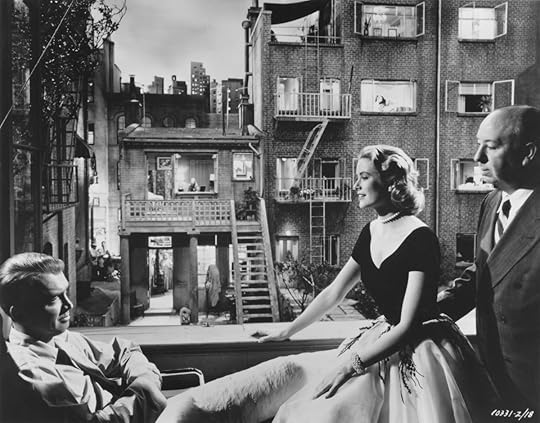

The complaint by actors that the camera was the lead in films continues. Hitchcock continued to develop and the ten minute takes in Rope added to tension of the shots; everyone was terrified of messing up the closer to the end of the take they got. This translated into the film. Hitchcock was a grand manipulator of the actors either by the manner in which he treated them or ignored them, or the technical pre-eminence that made them feel like a puppet playing before it's eye. Unfortunately, Under Capricorn, Transatlantic Pictures second film, a vehicle written for Ingrid Bergman flopped resulting in bankruptcy.

Hitchcock planned ahead and a series of studio relationships transpired. The most notable, for me, but also considered the Golden Age of Hitchcock was his tenure with Paramount. By 1954, Rear Window was released to critical and box office acclaim.


October, 1955 Alfred Hitchcock Presents debuted. He was set to take on television. The team he'd built over the years carried on. This brought him financial stability, and for one of his anxious temperament was a boon. But, Hitchcock's declining health and more terrifying, Alma's health scares upset him more. In his late years, he began to see how far he'd fallen behind in the trends of cinematography, disheartened and absolutely petrified of Alma deserting him in death he withered quickly.

For readers interested in Hitchcock, his movie progress, relationships with his crew and stars, Hollywood tinder, and some of the origins of his motifs then I strongly recommend this biography. It is both informative and entertaining to read; you never feel once like you have to choose between the two while reading.

Hitchcock once summarized the difference between his English and American periods as one between spontaneity or instinct, and calculation.


~~ARC provided by NetGalley~~
Profile Image for Jim Dooley.
915 reviews68 followers
December 17, 2024
Peter Ackroyd's "brief" biography of ALFRED HITCHCOCK is both rewarding and frustrating. Not being "in depth," there are plenty of life details that are "left on the cutting room floor." This makes for a very brisk read, allowing the Readers who mainly want to know more about Hitchcock's involvement with his films the opportunity to get to "the good stuff" very quickly.

Also, Alfred Hitchcock's life (especially his dark side) has been so mythologized that the stories are often spread as gospel. The writer effectively takes a little time for reflection regarding those things that have not been proven. For instance, Hitchcock often told of how his father had arranged for him to be briefly locked in jail while young to teach him what would happen to delinquent boys. This was supposed to have also instilled a fear in Hitchcock of policemen. However, Ackroyd pauses to consider whether the story really makes sense, considering the very high regard in which Hitchcock's father held him.

Much has been made of Tippi Hedren's accusations of sexual harassment against Hitchcock, and his retaliatory actions when his overtures were rebuffed. While not specifically taking sides, Ackroyd does remind the Reader of instances when Hitchcock used questionable techniques to "get under the skin" of actresses if they failed to reach a needed emotional performance level. It is left to the Reader to decide on an interpretation.

I think there is little doubt that Hitchcock often explored his personal neuroses in many of his motion pictures. In a way, they became a form of therapy. Ackroyd does follow that thread.

At the same time, the scant details often left me very unsatisfied. In discussing Hitchcock's various films, Ackroyd often reveals some "nugget" that very much intrigued me. But then, he moves on. In other instances, he ignores questions that could have been very revealing. For instance, in discussing Hitchcock's final film, FAMILY PLOT, he mentions key members of the cast. However, when filming started, the role played by William Devane was being played by Roy Thinnes. The story goes that Hitchcock had always wanted Devane ... yet I'm guessing that there is an intriguing backstory there which isn't mentioned.

I did discover one error. Ackroyd mentions that in deciding to make PSYCHO, Hitchcock wanted his own distinctive version of the very low budget black and white horror films that produced excellent financial returns. Ackroyd specifically mentions "The Fly" and "The Blob." Actually, both of those films were in color.

For those who are interested in a very high level overview of the Director's life, ALFRED HITCHCOCK will be perfect. Ackroyd also takes a more balanced approach when relating rumors that can't be confirmed. Those desiring to dig much deeper will need to look elsewhere.
Profile Image for Tracey.
458 reviews90 followers
February 29, 2016
Did Peter Ackroyd get inside the mind of the man as Hitchcock got inside us with his films which range from his first real film which was a silent movie called The lodger Ivor Novello was the star and you can see some if Hitchcock's much loved themes even in this early outing through the early days of the talkies and into glorious technicolor.
Ackroyd has written a book which is more a filmography than a biography but some little snippets do come through like how Hitchcock was a bully and a control freak, how he became obsessed with his leading ladies, how violence and voyeurism towards women was in most films he directed with the terror on the victims face shown in close up and unusual camera angles. He was a technical genius and devised methods never seen before to accomplish his 'art' with the camera, for it was art and passion if somewhat seedy and dark.
He liked to think of his audience 'glued to their seats with terror'
He had his favorites Ingrid Bergman for one and Cary Grant whom some think he would have loved to have been. But he wasn't, he was a sad, depraved mentally at least, grossly overweight leviathan of a man who happened to know how to scare the hell out of millions of people.
His masterpiece Psycho is still one of the darkest films I've ever seen, and the ending of it is second to non.
So as a Hitchcock fan I'd say yes I really appreciated the book , but for me it wasn't the biography I thought it would be.
So the answer is no to my question at the top of this review , but I wonder if anyone could or would actually want too....
Profile Image for Tracey.
1,115 reviews291 followers
May 21, 2016
And yet more feet of clay appear on icons. Perversion, perverseness, promiscuity… oh well. I suppose it was naïve to think, for example, Grace Kelly didn't have that many affairs. So, when I have no more illusions left, does that mean I'm finally all grown up, or … I'm dead?

Anyway. The image of Hitchcock that I have always had was of a confident cuddly genial funny teddy bear of a man, brilliant at what he did. In this short biography, Peter Ackroyd dismantles all of that and more.

It was extremely readable; it retained my interest as it traveled briskly from Alfred Hitchcock's birth and childhood and education to his early career, odd courtship and marriage, and growth as a director. And then film by film it outlines the rest of his life. I saw a review which complained about the book being merely a filmography – but given Hitchcock's obsessive drive to always be working, it would be difficult to frame the book in any other way. His life was a filmography.

I've loved so many of the Hitchcock films - Lifeboat? Come on – that it was a little (wait for it) disillusioning to read about how they came about. It was well-written, if somewhat superficial; it was fascinating – but, overall, a sad story, which I am going to do my best to forget it by the next time I see a Hitchcock film. Moving on.

The usual disclaimer: I received this book via Netgalley for review.
Profile Image for Christine.
7,224 reviews569 followers
May 15, 2016
Disclaimer: ARC via Netgalley

So I love North by Northwest, that whole scene on Mount Rushmore, or to be more exact the fake Mount Rushmore, but that wasn’t my first introduction to Hitchcock. It was actually a rerun of his television series. I even went through a phrase of recording every Hitchcock movie that bad its way onto to television (this was the VCR days).

But I have to admit that Psycho has never been a favorite of mine.

Ackroyd’s biography of Hitchcock is brief – along the lines of one’s about Poe, Collins, and Turner. In many ways, these brief biographies are wonderful because of the amount of information jammed into them.

Ackroyd’s biography of Hitchcock does not attempt to hide the director's more difficult character traits, such as his obsession with some female leads, such as Tippi Hedren. Ackroyd does this by building on Hitchcock’s past as well as showcasing the development of the film industry, in particular the differences between British and American film industry.

Ackroyd’s biography also includes a look a Hitchcock’s place in film history. In other words, he makes the case for Psycho. In particular, he points out that all those messages we see in Hitchcock’s films might not be what we think. (See hubby, I win the whole argument we had about The Birds. And honesty was I the only one rooting for the birds at moments?).

Perhaps the most touching aspect of the biography is Ackroyd’s decryption of Hitchcock's wife Alma. In fact, I want to read a biography of her.

This is one Ackroyd’s better lives.
Profile Image for Sassa B.
18 reviews1 follower
May 22, 2016
I don't think I'll finish this meagre biography. Sure, Ackroyd does give information about Hitchcock - yet, he is so dispassionate and neutral that one never gets a true chance to understand what Hitchcock's creative genius was about. The whole resembles an article written for an encyclopedia, but not an artist's biography. Worse than this: I have the feeling that Ackroyd himself is convinced he wrote a good book - so smug is his tone.
Profile Image for Graham.
1,550 reviews61 followers
June 3, 2021
I'm a big fan of Peter Ackroyd thanks to his History of England series and Hitchcock is also one of my favourite directors, so this book was a no-brainer for me. It's not huge on biographical detail but maybe that's because the man himself remains something of an enigma. Ackroyd's method is to explore his career via his films, exposing what each of them say about the man and his working processes and psychology. It's great at bringing to life the figures featured and the film analysis is very entertaining too. The only real complaint here, and it's not much of one, is that this is such a short book that I finished it in three sessions, and I would have liked something a little meatier, but there's no faulting the quality and readability of the writing.
Profile Image for Hugh.
21 reviews
August 20, 2024
Great book about one of Britain’s greatest directors!
Profile Image for DC Merryweather.
61 reviews6 followers
April 14, 2016
Okay, who put a gun to Peter Ackroyd's head and forced him to dash off an Alfred Hitchcock biography?
This book is a brisk skim through Hitchcock's film career, through which it paints the man as a fearful but ambitious loner with a crude, cruel sense of humour. We're told that he was stand-offish with actors, some whom would get frustrated at being given scant direction, but who could also be creepy and controlling with young, inexperienced leading actresses. He wasn't adventurous, and hated location shooting, which is why his films invariably used a lot of studio-bound rear-projection and matte painted backdrops, which made his later films look old-fashioned on release. He was a populist who played down how he was influenced by German Expressionism, and dismissed French New Wave as "Awful Vague", then cried tears of pride when Francois Truffaut flattered him with praise. He shunned celebrity lifestyle and preferred the peace and quiet of family life, yet was also and egotist who quickly developed a taste for self-publicity, eventually becoming trapped in his glib, droll public persona. He meticulously planned and thought-through his films beforehand, then, when actually filming them, sat back and said very little. There were stories of him snoozing through scenes, or talking to interviewers, not even looking at what was being filmed. His final years were sad as fuck.
I mean, that seems enough for a biographer to dig their teeth into, you would think, but Ackroyd never really does. What I've listed is about as detailed as much of it gets in regards to getting under Hitchcock's skin. As I've said, it's more about his film career than his private life. But, even then: big filmography, short book. The stories behind later iconic films, such as Vertigo, Psycho, and The Birds, are panned for gold a little more thoroughly than most, but this is essentially an inessential, minor book on one of cinema's greatest, most famous, most fascinatingly contradictory, and troubled movie directors.
Profile Image for Elizabeth.
987 reviews111 followers
June 16, 2017
Alfred Hitchcock by Peter Ackroyd
Alfred Hitchcock was a strange child. Fat, lonely, burning with fear and ambition, his childhood was an isolated one, scented with fish from his father's shop. Afraid to leave his bedroom, he would plan great voyages, using railway timetables to plot an exact imaginary route across Europe. So how did this fearful figure become the one of the most respected film directors of the twentieth century?

As an adult, Hitch rigorously controlled the press's portrait of himself, drawing certain carefully selected childhood anecdotes into full focus and blurring all others out. In this quick-witted portrait, Ackroyd reveals something more: a lugubriously jolly man fond of practical jokes, who smashes a once-used tea cup every morning to remind himself of the frailty of life. Iconic film stars make cameo appearances, just as Hitch did in his own films. Grace Kelly, Carey Grant and James Stewart despair of his detached directing style, and, perhaps most famously of all, Tippi Hedren endures cuts and bruises from a real-life fearsome flock of birds.

What did I think of it:
5 stars
I loved it, loved reading about his life , the movies he made, and the people that played in them, there's so much information about him in this book that I didn't even know, and movies that he made that I didn't even know about, and I thought I had seen most of them, ok so I'm only 39 years old but I grew up watching his movies with my Dad, my all time 2 favorites are The Birds and To to catch a thief 1955, so if your a big fan of his movies or know some one how is then you need to check the book out, plus I love the black and white photos that's in it, With that said I would also love to say that I received this book from NetGalley in exchange for my honest opinion and review and that these are 100 % my own thoughts to what is truly a great book
Profile Image for Nikki in Niagara.
4,383 reviews171 followers
July 16, 2016
Superb! I am a huge Hitchcock fan and have read much about his movies and life. Yet I still knew I must read Ackroyd's "Brief Life" of the director because of the enjoyment I got out of his brief life take on Poe. This is not an extensive biography, hence the name of Ackroyd's biographical series "A Brief Life", however, it is tremendously full and detailed. Ackroyd takes the "auteur" approach of a director by telling Hitchcock's life story chronologically movie by movie. It is as much a history of his work as it is of himself. Written in an engaging narrative the author manages to give detailed information on every movie Hitchcock made always including screenwriter, what book (story) if any it was based on, cameraman, music writer and actors. Starting with a brief section on his early life from birth, it doesn't take long until the book moves on to Hitch's first movie. The information is comprehensive and does give spoilers on plot for every movie and most books. Through reading this I've found that I've seen every Hitchcock movie, at least once, except for one silent film and one early British movie which didn't ring any bells for me either by name or plot. Even if you know a lot about Hitchcock already this is a must read for fans as it includes fantastic information on his personal life, relationship with daughter and wife and his many obsessive relations with some of his female stars.
Profile Image for Toni.
823 reviews265 followers
July 10, 2016
I don't know if this is the best biography of Alfred Hitchcock ever written but I certainly enjoyed immensely. Very detailed about his life and his start in films. The best for me was all the bits of info, and I mean bits, on every film he made. Just loved it.
For example, in "Rear Window" he had Raymond Burr, a famous actor and important character in the film, do a scene dressed and made up as David Selznik, Hitch's original film partner at the start of his career. He even had a voice coach train Burr to sound like Selznik! Just wonderful stuff.
If you're a film buff, and love Hitchcock's suspense films, don't pass this up. Also includes great photos.
Thank you Netgalley.
Profile Image for Daniel Kukwa.
4,742 reviews123 followers
November 25, 2015
I'm not sure if this book is a biography or a filmography...and I'm not sure the author quite knows what he is after. It's quite the hybrid: concise, yet abrupt. Fascinating, yet yearning for more intimate, in-depth detail. It falls between several stools, and while it's never boring, it's extremely frustrating.
Profile Image for Lauren Stoolfire.
4,773 reviews296 followers
June 9, 2018
The first 20% of this biography on one of my favorite classic director's was actually quite boring. Overall, it didn't really present all that much new to me information, but it's a good starting place to learn about Hitchcock and his work. My favorite aspect is learning about his earlier movies. I have to admit though that the audiobook narrator did a fantastic Alfred Hitchcock impression.
Profile Image for MountainAshleah.
937 reviews49 followers
April 6, 2017
As promised, a brief life of the director. Straightforward and stays away from psychiatric analysis, although it's obvious Hitchcock had even more twists and turns than I'd expected, even beyond the obsession with his leading ladies.
Profile Image for Mark.
Author 67 books173 followers
December 12, 2017
A fairly thorough re-telling of the Hitchcock story though I don’t think it’s as in-depth as the cover quotes seem to give it credit for. Going into detail about his childhood, it paints the picture of an anxious child waiting to grow into an anxious man well, but it’s clear all the research was done by other biographers (brief mention is made of Hitchcock’s siblings, dismissed as making “little impression” on the great man yet they turn up later and, indeed, live in his house). The Hollywood years are well documented, especially the period after the war, though the book is rather abrupt at the end - “Frenzy” gets short shrift, as does the Master’s passing (and that of his wife Alma). It gets the stars because of Hitchcock and his incredible story (and filmic legacy) and is worth a reading if you’re interested in the great director but it does have the feel of a clever cut-and-paste job for large chunks of it (and suffers from quite a lot of typoes), which is a shame.
Profile Image for Cara.
76 reviews27 followers
July 10, 2018
hmmm. Well, I definitely want to know more about the ladies of Hollywood now. I didn't know much about Hitchcock before and this was a good primer, covering his whole life and going into plenty of detail about his movies and his movie making process, while still tackling his personal life and relationships.

This book certainly did not make me a fan of Hitchcock as a person but has ignited a stronger interest in seeing more of his films and especially in learning more about the actresses of early Hollywood.
938 reviews2 followers
November 11, 2021
Finished Alfred Hitchcock by Peter Ackroyd, a short biography written in 2015. I have three distinct memories of Hitchcock from the 50’s and 60’s, North by Northwest (1959), Psycho (1960) and his TV series Alfred Hitchcock Presents 1955-1962. All of his movies startled and Psycho scared the bejesus out of me. I really enjoyed this biography. Hitchcock is a giant of cinema dating to his innovative work all the way back to silent films. In this book one gets a sense of the life that created the person who entertained millions with his impressive movies (tv shows), all with a droll sense of humo
Profile Image for Oisín.
210 reviews8 followers
August 18, 2023
Well written and with a good balance of Hitchcock's life and work, the main problem with this biography is that it bangs on its own rather shallow thesis over and over again. I'm not sure how many times I need to be reminded in a 250 page book that Hitchcock didn't provide feedback to his actors, or that he didn't consider himself an artist. Moreover, his films and his infamous treatment of many of his leading women are analysed quite sparingly - nothing resembling an opinion ever emerges - rendering it quite workmanlike in its design.

Still a fun read; his sense of humour comes through well, and the descriptions of his antics on set are quite endearing.
Profile Image for Noah.
136 reviews
February 24, 2024
3.5

A well written autobiography on Hitchcock which is perfect for those just beginning to be interested in his life. More of a jumping off point as it’s not heavily detailed (but then it’s only around 250 pages) it still provides a thorough account of Hitchcock’s life and career
Profile Image for Shawn Bourdo.
125 reviews1 follower
April 1, 2020
Easy overview that tracks his career film by film. Not a ton of details that you might not know from listening to commentaries on the Blu-Rays. But still nice to get a concise look at his whole career.
211 reviews1 follower
November 17, 2019
Good enough. More of a filmography which was good in its own right. Got to know Hitchcock much better. Interesting character that made several really good films. Would be a good book for film students.
448 reviews4 followers
September 29, 2020
This book was exactly as much as I wanted to hear about Hitch.
Profile Image for Britt.
86 reviews5 followers
February 2, 2023
I can’t remember a time when I didn’t love Alfred Hitchcock. I grew up watching his movies. I have multiple dvd AH collections. So I really enjoyed this book.

It told the story of his life and broke down the filming on his movies, even ones that aren’t super famous.

It was so interesting to hear quotes from actors and others that have worked with him.

Now excuse me while I go binge watch his movies 🎥
Displaying 1 - 30 of 172 reviews

Can't find what you're looking for?

Get help and learn more about the design.