

What do you think?

Life & Times
Lumumba: Africa’s Lost Leader
Patrice Lumumba (1925–61) was one of the most famous leaders of the African Independence Movement. After his murder, he became an icon of anti-imperialist struggle, and his picture, along with those of Che Guevara and Ho Chi Minh, was brandished around the world at demonstrations in the 1960s.
This second edition of the only full biography of Lumumba presents his life and quest for the Congo’s liberation, which influenced how the Cold War would be fought in Africa and the nature of the independence granted to huge swaths of the globe after 1945. For those fighting for freedom, Lumumba became a figure of resistance against the imperial colonizers of the world. Including new archival material and information gained from British intelligence, this new edition is a valuable introduction to a pivotal figure of the twentieth century.
This second edition of the only full biography of Lumumba presents his life and quest for the Congo’s liberation, which influenced how the Cold War would be fought in Africa and the nature of the independence granted to huge swaths of the globe after 1945. For those fighting for freedom, Lumumba became a figure of resistance against the imperial colonizers of the world. Including new archival material and information gained from British intelligence, this new edition is a valuable introduction to a pivotal figure of the twentieth century.
198 pages, Paperback
First published June 1, 2008
About the author
Leo Zeilig
27 books53 followersLeo Zeilig is a researcher and writer of books on African politics and history. His books include a biography of Patrice Lumumba, Africa's Lost Leader (Haus Books, 2008) and a history of social movements on the continent, Revolt and Protest (I. B. Tauris, 2012). His most recent non-fiction book is a biography of Frantz Fanon, Philosopher of Third World Liberation (I.B Tauris, 2016). Leo is currently working on a study of Thomas Sankara. Eddie the Kid is his first novel and his second, An Ounce of Practice. has just been published by HopeRoad.
Ratings & Reviews
Friends & Following
Create a free account to discover what your friends think of this book!
Community Reviews
Displaying 1 - 18 of 18 reviews

July 30, 2020
This book is not very long but it's so interesting.
Patrice Lumumba: Africa's Lost Leader is a biography of Patrice Lumumba, yet another African leader that I've never heard of but really should have. Born in Belgian ruled Congo, Lumumba climbed up the social ladder and realized something is deeply wrong. The book highlights the way he changed his perspective, from wishing to live an equal life with the Belgians to wanting the Belgians to leave and create an independent Congo.
His attempts succeeded but in 1960 Lumumba was met with political issues and inner turmoil. So Lumumba turned to the USA and the UN for help. When they did not help him, he was left without many choices and turned to the Soviet Union. At that point, it was said that he was on their side in the Cold War. He was overthrown by the Belgians and executed.
I realize this biography might not be entirely objective as it describes Lumumba entirely in a positive light but it's hard not to be upset by this. I mean, rebuilding a country after colonialism is a huge challenge and Lumumba seemed very up for it. He was so in love with everything Congo could become and it's just so tragic that he was assassinated before he could live out those dreams. In general, the foreign involvement is still something that feels very prominent when discussing African politics and it's not great.
And of course, playing this "what if" game is meaningless but after Lumumba was killed, he was replaced by Joseph Mobutu who turned out to be very corrupt. He had an extensive record of human rights violations but hey, he was also very against communism so America didn't involve itself anymore. Once the Cold War ended, Congo ceased being an important ally and therefore, there was less support which ultimately led to him being overthrown.
Only in 2006 did Congo have its first multi-party elections. To this day, with a 18/100 ranking at FreedomHouse, it's hard to say things are politically fine. This book doesn't get into modern day Congo and its troubles but even by briefly reading online, it does not seem to be the country Lumumba had dreamed of. Congo has so many natural resources and it's frustrating to think that health crises, a colonialist legacy and political strife keep hurting them. Man, I've got to study international development.
To conclude, Patrice Lumumba: Africa's Lost Leader is an interesting book. I think it's great for beginners as it discusses both the historical context and Lumumba's life. I found it well written and definitely learned quite a bit!
What I'm Taking With Me
- In 2002, Belgium formally apologized for their role in Lumumba's death. I'm kind of curious how Belgians are dealing with this nowadays.
-Also, Lumumba's kids apparently did not accept the apology. And now, in 2020, his daughter is fighting to get his teeth back from the Belgians (which is a sentence so bizarre yet true).
-Is it messed up to say that Lumumba is also ridiculously attractive? Like, look at him, what even is this?
--------------------------------
It's only the morning of this fast and I already feel dehydrated, this is not great.
Review to come! It's time to ponder all the years of Jewish tragedy (and how much I want water).
Patrice Lumumba: Africa's Lost Leader is a biography of Patrice Lumumba, yet another African leader that I've never heard of but really should have. Born in Belgian ruled Congo, Lumumba climbed up the social ladder and realized something is deeply wrong. The book highlights the way he changed his perspective, from wishing to live an equal life with the Belgians to wanting the Belgians to leave and create an independent Congo.
His attempts succeeded but in 1960 Lumumba was met with political issues and inner turmoil. So Lumumba turned to the USA and the UN for help. When they did not help him, he was left without many choices and turned to the Soviet Union. At that point, it was said that he was on their side in the Cold War. He was overthrown by the Belgians and executed.
I realize this biography might not be entirely objective as it describes Lumumba entirely in a positive light but it's hard not to be upset by this. I mean, rebuilding a country after colonialism is a huge challenge and Lumumba seemed very up for it. He was so in love with everything Congo could become and it's just so tragic that he was assassinated before he could live out those dreams. In general, the foreign involvement is still something that feels very prominent when discussing African politics and it's not great.
And of course, playing this "what if" game is meaningless but after Lumumba was killed, he was replaced by Joseph Mobutu who turned out to be very corrupt. He had an extensive record of human rights violations but hey, he was also very against communism so America didn't involve itself anymore. Once the Cold War ended, Congo ceased being an important ally and therefore, there was less support which ultimately led to him being overthrown.
Only in 2006 did Congo have its first multi-party elections. To this day, with a 18/100 ranking at FreedomHouse, it's hard to say things are politically fine. This book doesn't get into modern day Congo and its troubles but even by briefly reading online, it does not seem to be the country Lumumba had dreamed of. Congo has so many natural resources and it's frustrating to think that health crises, a colonialist legacy and political strife keep hurting them. Man, I've got to study international development.
To conclude, Patrice Lumumba: Africa's Lost Leader is an interesting book. I think it's great for beginners as it discusses both the historical context and Lumumba's life. I found it well written and definitely learned quite a bit!
What I'm Taking With Me
- In 2002, Belgium formally apologized for their role in Lumumba's death. I'm kind of curious how Belgians are dealing with this nowadays.
-Also, Lumumba's kids apparently did not accept the apology. And now, in 2020, his daughter is fighting to get his teeth back from the Belgians (which is a sentence so bizarre yet true).
-Is it messed up to say that Lumumba is also ridiculously attractive? Like, look at him, what even is this?
--------------------------------
It's only the morning of this fast and I already feel dehydrated, this is not great.
Review to come! It's time to ponder all the years of Jewish tragedy (and how much I want water).

February 11, 2023
"Patrice Lumumba (1925–61) is perhaps the most famous leader of the African independence movement. After his murder in 1961 he became an icon of antiimperialist struggle..."
Lumumba: Africa’s Lost Leader was an OK book, but the writing was a bit too dry for my tastes...
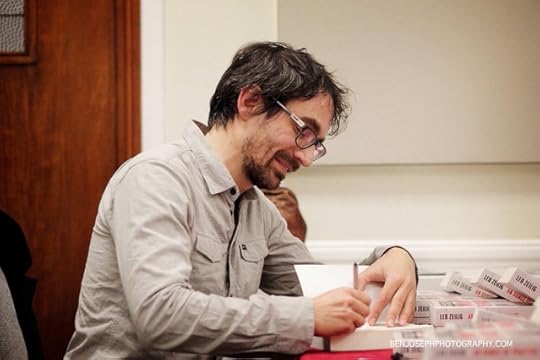
Author Leo Zeilig is a writer and researcher. He has written extensively on African politics and history, including books on working-class struggle and the development of revolutionary movements and biographies on some of Africa's most important political thinkers and activists.
Leo Zeilig:
The book gets off to a bit of a shaky start, by not including a traditional introduction or preface. Instead, the author drops the quote above and then jumps in head first to the book proper.
I am admittedly very picky about how readable a book is, and my ratings are always heavily weighted to reflect this criterion. Unfortunately, that will see this one punished pretty harshly here...
The quote above continues:
A pivotal figure in a tense geopolitical time; Lumumba was suspected of being a communist by many in the western intelligence communities. The author as well as others have disputed this assertion. [From his Wikipedia page:]
There were many failed plots hatched by covert agencies to assassinate him. [Again; from Wikipedia:]
The book describes his macabre death in the following quote:
***********************
I was not a fan of the style that Lumumba was presented in. Despite its short length, I found my attention wandering numerous times. The book reads like a long-form encyclopedia article.
I would not recommend it.
2 stars.
Lumumba: Africa’s Lost Leader was an OK book, but the writing was a bit too dry for my tastes...
Author Leo Zeilig is a writer and researcher. He has written extensively on African politics and history, including books on working-class struggle and the development of revolutionary movements and biographies on some of Africa's most important political thinkers and activists.
Leo Zeilig:
The book gets off to a bit of a shaky start, by not including a traditional introduction or preface. Instead, the author drops the quote above and then jumps in head first to the book proper.
I am admittedly very picky about how readable a book is, and my ratings are always heavily weighted to reflect this criterion. Unfortunately, that will see this one punished pretty harshly here...
The quote above continues:
"...His picture was brandished on demonstrations in the 1960s across the world along with Che Guevara and Ho Chi Minh. His life and the independence that he sought for the Congo made him a pivotal figure of the 20th century. Lumumba’s life marked out some of the key post-war fault lines in the second half of the 20th century; how the Cold War would be fought in Africa and the nature of the independence granted to huge swaths of the globe after 1945. For those fighting in liberation struggles, Lumumba became a figure of resistance to the imperial division of the world."
A pivotal figure in a tense geopolitical time; Lumumba was suspected of being a communist by many in the western intelligence communities. The author as well as others have disputed this assertion. [From his Wikipedia page:]
There were many failed plots hatched by covert agencies to assassinate him. [Again; from Wikipedia:]
The book describes his macabre death in the following quote:
"...Finally death came. On 17 January Lumumba was flown to Elisabethville with two fellow prisoners Maurice Mpolo and Joseph Okito. Already beaten and tortured he was dragged by Katangan forces commanded by a Belgian, to Villa Brouwe. Here he was tortured again, as Tshombe decided how to kill him. Later in the evening they were thrown into a military vehicle and driven to a nearby wood. A Belgian officer assembled and commanded three firing squads, while another Belgian organised the execution site. Patrice Lumumba and his two comrades, Mpolo and Okito, were shot one after the other. Tshombe was present. Then Gerard Soete, a Belgian police officer, unearthed the bodies from their shallow grave, chopped each body into pieces and then dissolved them with canisters of acid. When there was no more acid remaining the body parts were burnt. The bloody deed was done and independence had finally been broken.
The Belgian government’s investigation into the assassination of Lumumba in 2001 reported that ‘the Belgian government deemed a speedy independence necessary in order to protect Belgian interests’."
***********************
I was not a fan of the style that Lumumba was presented in. Despite its short length, I found my attention wandering numerous times. The book reads like a long-form encyclopedia article.
I would not recommend it.
2 stars.

August 18, 2016
Super interesting, especially since the book follows clearly the transformation of Lumumba's views and actions over time. The writing was a little messy at times, so that could have been better. But this is a nice short introduction that I would recommend to anyone who wants to learn more about struggles for independence and anti-colonialism.

December 22, 2020
Without dignity there is no liberty, without justice there is no dignity, and without independence there are no free men.-Patrice Lumumba
When Patrice Lumumba was murdered by a combination of Belgians, Congolese, American, and the British, it sent shockwaves throughout the world (In 2001 a Belgian commission determined that no less than 4 different groups were plotting to kill him at the time of his murder).
Just three years earlier, Lumumba was languishing in prison for embezzlement. His country remained firmly in the grip of Belgium who along with other countries was busying themselves by stripping the Congo of its vast mineral resources while brutally repressing and segregating the population. By 1960 however, Lumumba had become the preeminent voice for his country’s independence, becoming its Prime Minister.
As with many independence movements during the Cold War however, it would eventually be betrayed by global corporations unwilling to surrender vast profits, and more tragically its own people, men like the infamous Joseph Mobutu, who took their money in exchange for handing them the country and installing them in power.
This short biography of Lumumba’s life and times is accessible and informative, if not hagiographic at times, and provides a context for Lumumba’s rise and Western powers obsession with the Cold War and colonialism that led to his downfall. It is one of the great ironies of this age of Cold War hysteria that, much like with Ho Chi Minh in Vietnam, Lumumba was extremely reluctant to throw his lot in with he communists. Most of his writings before 1957, and some after, urged cooperation with Belgian authorities while urging them to treat Congolese with more respect and economic opportunities. It was only when his pleas were ignored (including entreaties to the United States for help, something else he shared with Ho Chi Minh), that he became increasingly more strident in his demands to expel all colonial forces.
“Lumumba left the Congo to solicit support from America on 22 July; but he came away with the conclusion that there was nothing to be gained from the West. President Dwight Eisenhower refused to see him, regarding him already as man lost to the Soviets. Those who spoke to him explained that they expected business to continue as usual. For years America had been buying their uranium from Belgium, and why should anything change? Lumumba responded that Belgium did not produce any uranium.”
As for the Russians:
“On socialist ideas he was dismissive: ‘Our country has much greater need of ‘builders’ than of squabblers, pamphleteers and purveyors of communist slogans.’”
Lumumba was without a doubt a visionary and a man I have the utmost respect for. Like most great men however, he was not perfect and glossing over his faults does him no service. Lumumba was married three times, one to a 15 year old girl. While local customs perhaps come into play here, and Lumumba in his public speeches advocated for more empowerment for Congolese women, it is still not something history looks back kindly on.
And Lumumba did in fact embezzle from his company. A fact he and the author excuse as being necessary due to the low wages he was being paid. While that may be true, Lumumba was also part of a group of Congolese at the time known as the evoule (a small group of Congolese allowed by the Belgian colonial authorities to have limited interactions with whites and make a relatively decent salary) who while paid less than the Belgian civil service workers, still made considerably more than the majority of Congolese. Wanting to have the money to send your children to a private boarding school (as Lumumba wished for his children) is admirable, but certainly is well within a gray area as to the necessity of law breaking to achieve it. Is it a crime to steal from someone who you believe is in effect stealing from you?
But ultimately these are minor points. Patrice Lumumba lived an extraordinary life and remains to this day for many a shining example of freedom and dedication to one’s ideals. I’d like to finish this review with a letter Lumumba wrote to his wife from prison, soon before his murder. It is ostensibly addressed to her but it could very well be read as a letter to the Congo, or even a letter to all who fight for freedom around the world.
My dear companion,
I write you these words without knowing if they will reach you, when they will reach you, or if I will still be living when you read them. All during the length of my fight for the independence of my country, I have never doubted for a single instant the final triumph of the sacred cause to which my companions and myself have consecrated our lives. But what we wish for our country, its right to an honourable life, to a spotless dignity, to an independence without restrictions, Belgian colonialism and its Western allies, who have found direct and indirect support, deliberate and not deliberate, among certain high officials of the United Nations, this organization in which we placed all our confidence when we called for their assistance, have not wished it.
They have corrupted certain of our fellow countrymen, they have contributed to distorting the truth and to besmirching our independence. What else might I say? That dead, living, free, or in prison on the order of the colonialists, it is not I who counts. It is the Congo, it is our people for whom independence has been transformed into a cage where we are regarded from the outside sometimes with benevolent compassion, sometimes with joy and pleasure. But my faith will stay unbreakable. I know and I feel to the depth of my being that sooner or later my people will get rid of all their interior and exterior enemies, that they will rise up like a single person to say no to a degrading and shameful colonialism and to reassume their dignity under a pure sun. We are not alone. Africa, Asia, and free and liberated people from every corner of the world will always be found at the side of the Congolese. They will not abandon the fight until the day comes when there are no more colonizers and mercenaries in our country. To my children whom I leave and whom perhaps I will see no more, I wish that they be told that the future of the Congo is beautiful and that it expects from them, as it expects from each Congolese, to accomplish the sacred task of reconstruction of our independence and our sovereignty; for without dignity there is no liberty, without justice there is no dignity, and without independence there are no free men. No brutality, mistreatment, or torture has ever forced me to ask for grace, for I prefer to die with my head high, my faith steadfast, and my confidence profound in the destiny of my country, rather than to live in submission and scorn of sacred principles. History will one day have its say, but it will not be the history that Brussels, Paris, Washington, or the United Nations will teach, but that which they will teach in the countries emancipated from colonialism and its puppets. Africa will write its own history, and it will be, to the north and to the south of the Sahara, a history of glory and dignity. Do not weep for me, my dear companion. I know that my country, which suffers so much, will know how to defend its independence and its liberty. Long live the Congo! Long live Africa!
Patrice

May 25, 2024
I learned a lot from this book. I appreciate that it was sectioned by relevant topics and themes, not merely chronology.

September 26, 2016
This is a fairly quick and easy book to read.It is largely a summary of the life of Patrice Lumumba, never really going into any real detail about his politics or life. Overall it was not a bad book, but there are numerous grammatical errors made either through bad editing or issues with translation. If you have heard of Patrice Lumumba, but do not really know who he is, this will give you a brief introduction.
It starts by looking at legacy of Belgian colonialism and the environment Lumumba was born into, it then looks at his early life, introduction into politics, political beliefs and his ultimately his murder. At no point does it go into any real depth about what he truly stood for with any genuine backing, such as quotes from his contempories, his writings or genuine evidence of his stance, that is not to say it is completely lacking in any of the above methodologies to help emphasize who he was, but they are not comprehensive enough to really make the reader understand who Lumumba was.
This book is an introduction into the life of Lumumba, but not much more, the context surrounding the position he took at such a pivotal time in African history is completely missing, unless the reader already understands this, nevertheless, it is informative enough to at least make the reader want to learn more about Patrice Lumumba.
It starts by looking at legacy of Belgian colonialism and the environment Lumumba was born into, it then looks at his early life, introduction into politics, political beliefs and his ultimately his murder. At no point does it go into any real depth about what he truly stood for with any genuine backing, such as quotes from his contempories, his writings or genuine evidence of his stance, that is not to say it is completely lacking in any of the above methodologies to help emphasize who he was, but they are not comprehensive enough to really make the reader understand who Lumumba was.
This book is an introduction into the life of Lumumba, but not much more, the context surrounding the position he took at such a pivotal time in African history is completely missing, unless the reader already understands this, nevertheless, it is informative enough to at least make the reader want to learn more about Patrice Lumumba.

April 13, 2015
With a seething incrimination of colonialism and the behavior of the Belgians, this book struck me as a interrogative look at the motives of the USA as well as the UK. The Congolese hero, Lumumba, lives on in the telling of his story.
"Religion makes you grovel as it emancipates you. And then it offers you salvation: the better world it holds out to you is a sham, but the religious authorities most necessarily teach that it can be entered through your merits regardless of the colour of your skin. No matter how many men of the cloth try to hide the fact, the egalitarianism of the Gospel works as a destructive agent in the colonies." - Jean-Paul Sartre
To make you forget you were a man
They taught you to sing God's praises.
And all these hymns, setting your calvary to rhythm,
Made you hope for a better world.
But in your heart as a human being, all you asked for
Was your right to live and your share of happiness.
- Lumumba
Lumumba's father was a Catholic peasant.
"Religion makes you grovel as it emancipates you. And then it offers you salvation: the better world it holds out to you is a sham, but the religious authorities most necessarily teach that it can be entered through your merits regardless of the colour of your skin. No matter how many men of the cloth try to hide the fact, the egalitarianism of the Gospel works as a destructive agent in the colonies." - Jean-Paul Sartre
To make you forget you were a man
They taught you to sing God's praises.
And all these hymns, setting your calvary to rhythm,
Made you hope for a better world.
But in your heart as a human being, all you asked for
Was your right to live and your share of happiness.
- Lumumba
Lumumba's father was a Catholic peasant.

September 29, 2014
This little book is a good introduction to Patrice Lumumba's life and deeds. Although far from being an authoritative work about Lumumba, it manages to offer an insight on the main personal aspects of him.
His evolution from being a moderate nationalist into a revolutionary, and his eventual demise and murder is covered briefly and succinctly.
I'd say this is a good biography, all the more since there seems to be few English biographies out there. As this one draws a lot from more comprehensive works written in French.
His evolution from being a moderate nationalist into a revolutionary, and his eventual demise and murder is covered briefly and succinctly.
I'd say this is a good biography, all the more since there seems to be few English biographies out there. As this one draws a lot from more comprehensive works written in French.
February 25, 2020
Lumumba my Idol
How could the country be independent politically,but economically they were not independent as the Belgians were plundering their resources for their own benefit. Lumumba was standing up for his country but no one came to his aid.
How could the country be independent politically,but economically they were not independent as the Belgians were plundering their resources for their own benefit. Lumumba was standing up for his country but no one came to his aid.
January 6, 2017
Good intro book. References several great pieces for future reading if you are interested.
February 15, 2022
Really just a cursory overview on the life of Patrice Lumumba. Which is understandable as much of the scholarship on Lumumba is inaccessible to English readers.
Still doesn't excuse the litany of inexcusable gaffes that expose shoddy research.
At one point the author states that Lumumba after the May 1960 elections, entered a coalition with Joseph Kasa Vubu of ABAKO. This isn't just true. Lumumba's party (MNC-L) entered a coalition with Antoine Gizenga's PSA and not ABAKO. That coalition is the reason why Lumumba earned the position of Prime Minister of the Congo and Antoine Gizenga, Deputy Prime Minister. Kasa Vubu being named President by Lumumba did not point to any coalition with the MNC-L and ABAKO but rather a reconcilatory gesture to Kasa Vubu and the ABAKO as show of national unity on the part of Lumumba.
Another such error is when the author, makes the rather shocking claim that UN representative to the Congo, Rajeshwar Dayal, placed Lumumba under house arrest in September 1960. This just made me cringe. Lumumba was inadvertently under house arrest not on Dayal's orders but Mobutu's. In fact, it's because of Dayal and the UN that Mobuto failed to illegally arrest Lumumba from the PM's residence. Ghanaian UN troops on orders from Dayal protected the interior of Lumumba's residence to prevent Mobuto's soldiers from rushing in to kidnap Lumumba. Due to this, in retaliation, Mobuto ordered his men to camp outside (on the perimeter) of Lumumba's residence- in effect circling the UN troops protecting Lumumba. So yes, Lumumba was in effect under house arrest but not due to Dayal's actions but rather Mobuto who had troops waiting outside to kidnap/arrest Lumumba whenever the opportunity arose.
For me, the definitive proof that the author really didn't invest much in this product was when he erroneously captioned a picture of Lumumba with Maurice Mpolo as "....Patrice Lumumba with Joseph Mobuto". I know I'm nitpicking here, but for historical biographies such as this it's little mistakes like this that erode the confidence of the reader in the authenticity of the account.
I gave 3 stars because despite the preventable shortcomings of the book, it did prove very useful in further informing me on Patrice Lumumba, a personality I greatly admire. The strength of this book is the well informed chronology of Lumumba's life in Stanleyville and his life as a youth leader before fully embracing overt politics. It's a bit ironic as I found the ideological analysis of Zeilig in interpretating the currents surrounding Lumumba's actions far more insightful than the intended biography (which like I stated is quite bare). The discussion on Lumumba and MNC-L's lack of appreciation for Class Struggle is one that I no doubt would be revisiting in the future.
Still doesn't excuse the litany of inexcusable gaffes that expose shoddy research.
At one point the author states that Lumumba after the May 1960 elections, entered a coalition with Joseph Kasa Vubu of ABAKO. This isn't just true. Lumumba's party (MNC-L) entered a coalition with Antoine Gizenga's PSA and not ABAKO. That coalition is the reason why Lumumba earned the position of Prime Minister of the Congo and Antoine Gizenga, Deputy Prime Minister. Kasa Vubu being named President by Lumumba did not point to any coalition with the MNC-L and ABAKO but rather a reconcilatory gesture to Kasa Vubu and the ABAKO as show of national unity on the part of Lumumba.
Another such error is when the author, makes the rather shocking claim that UN representative to the Congo, Rajeshwar Dayal, placed Lumumba under house arrest in September 1960. This just made me cringe. Lumumba was inadvertently under house arrest not on Dayal's orders but Mobutu's. In fact, it's because of Dayal and the UN that Mobuto failed to illegally arrest Lumumba from the PM's residence. Ghanaian UN troops on orders from Dayal protected the interior of Lumumba's residence to prevent Mobuto's soldiers from rushing in to kidnap Lumumba. Due to this, in retaliation, Mobuto ordered his men to camp outside (on the perimeter) of Lumumba's residence- in effect circling the UN troops protecting Lumumba. So yes, Lumumba was in effect under house arrest but not due to Dayal's actions but rather Mobuto who had troops waiting outside to kidnap/arrest Lumumba whenever the opportunity arose.
For me, the definitive proof that the author really didn't invest much in this product was when he erroneously captioned a picture of Lumumba with Maurice Mpolo as "....Patrice Lumumba with Joseph Mobuto". I know I'm nitpicking here, but for historical biographies such as this it's little mistakes like this that erode the confidence of the reader in the authenticity of the account.
I gave 3 stars because despite the preventable shortcomings of the book, it did prove very useful in further informing me on Patrice Lumumba, a personality I greatly admire. The strength of this book is the well informed chronology of Lumumba's life in Stanleyville and his life as a youth leader before fully embracing overt politics. It's a bit ironic as I found the ideological analysis of Zeilig in interpretating the currents surrounding Lumumba's actions far more insightful than the intended biography (which like I stated is quite bare). The discussion on Lumumba and MNC-L's lack of appreciation for Class Struggle is one that I no doubt would be revisiting in the future.
March 2, 2025
Having grown up in Africa, I had heard Patrice Lumumba's names often, but it was not until I flew back from Africa earlier last month and watched "Soundtrack to a Coup D' Etat" which details all the actions that led to his assassination in 1960, that I wanted to read more about this man. Both the book and the movie help one understand the man more. The book was updated in 2015 and gives more background on investigations that have been done on his death. The book is only 148 pages long, but it brings out the context of Congo's colonial history and the life of Congo's first president. I think it is one of the few biographies written in English. I found it to be a well-written scholarly study and a good introduction to this important man of Africa.

December 30, 2025
I read this book over a weekend, I had a little bit of background knowledge but this book did an excellent job contextualizing Lamumba’s life. Although the formatting could be distracting to some readers, I found the organization of the information very efficient, allowing for little points of context to be elaborated on while not confusing the biographical narrative. I found the focus on the United Nation’s role in Lamumba’s fascinating (and horrifying), and it was not a piece of the story I was previously aware of.

January 7, 2023
What I can. say positively about this book is it has a dearth of well-sourced facts that paint a balanced picture of Lumumba's complex character
However, these are weakly supported by analysis and utterly let down by the absence of a storyline or flair. If you're a historian of Lumumba then I'm sure this is a useful read, but if you're interested in reading a compelling book that illustrates Lumumba's incredible story, this will let you down.
However, these are weakly supported by analysis and utterly let down by the absence of a storyline or flair. If you're a historian of Lumumba then I'm sure this is a useful read, but if you're interested in reading a compelling book that illustrates Lumumba's incredible story, this will let you down.

December 22, 2020
This book set out what it meant to do and It's ok. You really get the sense how linked his life and Congo are. I guess I was hope for a more personal account of Lumumba but it told me more than I knew about his history and death. It's a good jumping point for those who want to know about him and the early fight for Congo independence.
December 24, 2022
This book opened my eyes to what a hero this man is

December 7, 2023
A short no-nonsense biography of Patrice Lumumba - makes you curious to learn more
Just the details about his education and drive: He must have been a brillant man
Just the details about his education and drive: He must have been a brillant man

July 8, 2025
Good and short, non-fiction biography of Patrice Lumumba, which I read for context for a short story I wrote.
Displaying 1 - 18 of 18 reviews