

What do you think?

What We Owe the Dead
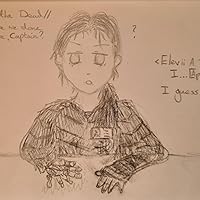
In a desperate attempt to lower the temperature of Earth’s atmosphere, humanity has built cooling mega-siphons. These colossal structures now hold the last remnants of civilization. High above the scorching plains of Antarctica, in one of these vertical habitats, Security Captain Elevii A. Tarkka is tasked with a seemingly unremarkable investigation.
What We Owe the Dead is a gripping detective novel set in a dystopian surveillance society. It is a philosophical fiction that explores the themes of personhood, the cultural significance of games, and our duties to the dead.
What We Owe the Dead is a gripping detective novel set in a dystopian surveillance society. It is a philosophical fiction that explores the themes of personhood, the cultural significance of games, and our duties to the dead.
200 pages, Hardcover
First published March 28, 2025
Ratings & Reviews
Friends & Following
Create a free account to discover what your friends think of this book!
Community Reviews
Displaying 1 - 13 of 13 reviews

May 15, 2025
Heerlijke leeservaring: fantastische sfeer, compleet zijn eigen ding, goeie story-telling.
Erg aanbevolen!
(Meteen ook gekeken voor een andere novelle van de auteur, die hij in zijn nawoord noemt. Kost blijkbaar 200+ euro 🙃🙃🙃🙃)
Erg aanbevolen!
(Meteen ook gekeken voor een andere novelle van de auteur, die hij in zijn nawoord noemt. Kost blijkbaar 200+ euro 🙃🙃🙃🙃)
June 28, 2025
At first glance, this is just a detective novel where the detective investigates another detective. Except, it's not at all.
It's a cleverly-disguised vehicle inviting the reader to consider a central philosophical premise: what *do* we owe the dead?
This novella reads, as another reviewer has said, like an ancient Greek play set in a believable near-future setting. I hope Gualeni turns his talents to full-length novels, perhaps even a follow-up to this book. I'd be very interested to see what he can do in longer form!
It's a cleverly-disguised vehicle inviting the reader to consider a central philosophical premise: what *do* we owe the dead?
This novella reads, as another reviewer has said, like an ancient Greek play set in a believable near-future setting. I hope Gualeni turns his talents to full-length novels, perhaps even a follow-up to this book. I'd be very interested to see what he can do in longer form!
March 14, 2026
In our current era of rapid technological advancement and AI development, this book offers a much needed pause for reflection. While it is fundamentally a highly engaging detective novel, it transcends its genre. It serves as a powerful lens through which to examine the trajectory of our civilization.
One of the most interesting aspects of the novel is Gualeni's use of games within the narrative. Rather than serving as mere entertainment, these games act as a useful tool to explore society's history and values. Not do they deepen the core mystery, but also help readers to think critically about how our current culture and value will be transmitted (or distorted) over time across the generations.
Gualeni masterfully weaves a story that forces us to consider the sacrifices and decisions that built our present day. It acts like a mirror that prompts us to ask how future generations will view and judge us. Very fun, thought-provoking read that stays with you long after the final page. Highly recommended for anyone looking for a though-provoking murder mystery.
One of the most interesting aspects of the novel is Gualeni's use of games within the narrative. Rather than serving as mere entertainment, these games act as a useful tool to explore society's history and values. Not do they deepen the core mystery, but also help readers to think critically about how our current culture and value will be transmitted (or distorted) over time across the generations.
Gualeni masterfully weaves a story that forces us to consider the sacrifices and decisions that built our present day. It acts like a mirror that prompts us to ask how future generations will view and judge us. Very fun, thought-provoking read that stays with you long after the final page. Highly recommended for anyone looking for a though-provoking murder mystery.

January 10, 2026
The worldbuilding aspect is incredible and the narrating style was so refreshing to read, but where this novel lacks is unfortunately the main story. As with most detective novels, my main issue usually lies in having an interesting case but failing to properly wrap it up or having it be significantly less satisfying than everything prior.
I'm also not a fan of the author having to justify why they wrote the book the way they did and why the story was the way it was; it makes me come away feeling like they knew they could've done something better but ultimately chose not to.
I'm also not a fan of the author having to justify why they wrote the book the way they did and why the story was the way it was; it makes me come away feeling like they knew they could've done something better but ultimately chose not to.
August 18, 2026
A treat for anyone who loves both mysteries and philosophical dilemmas. What We Owe the Dead merges an intriguing dystopian-detective investigation with existential questions about cyborg sentience and moral obligations to past and future humans - piecing together both a fun narrative puzzle and the deeply engaging question of personhood itself. Stefano Gualeni's story invites you to think critically through a playful and humorous way… and it's also a beautiful object: the binding, the colour, the illustrations. A wonderful book!
November 8, 2025
it makes me think about the right time to throw away things my nanny left, and if there ever is a right time. I'm gonna struggle to get rid of this book.... quite meta

February 26, 2026
picked this up on a whim because i found the format intriguing. i was reading it concurrently with the murderbot series and i think they were quite complementary. the world-building felt dystopian enough - giant cooling towers at the poles in an overheated overheated earth, alien remnants found once the polar permafrost has melted. i imagined the towers to be a bit like in Stray (the video game). made me think a lot about what we owe a dying earth.
i was annoyed by all the strikeouts, despite understanding their function. the thematic parallels between games, life and death could have been written better.
i was annoyed by all the strikeouts, despite understanding their function. the thematic parallels between games, life and death could have been written better.
August 4, 2025
"Dystopian detective story to feed your inner philosopher"
This book combines philosophy and fiction by telling a philosophical story that's wearing a detective's trench coat and post-apocalyptic hat. If you're 1) craving a philosophical read and 2) hiding from plain and dry philosophical theories, then I'd highly recommend that you give this book a go.
Alternatively, if you'd just like to feel as though you've broken into a locked cabinet to steal some case notes you weren't supposed to see, this one's got you covered.
This book combines philosophy and fiction by telling a philosophical story that's wearing a detective's trench coat and post-apocalyptic hat. If you're 1) craving a philosophical read and 2) hiding from plain and dry philosophical theories, then I'd highly recommend that you give this book a go.
Alternatively, if you'd just like to feel as though you've broken into a locked cabinet to steal some case notes you weren't supposed to see, this one's got you covered.

June 25, 2025
I loved everything about this book. The universe the author creates is set in the future, but not so far off that you can't relate to it. I really enjoyed the original format, the small size of the book and the way the story is told. It blends philosophical ideas with a playful touch. It's one of those books that you keep thinking about even after you've finished it. The characters and the key philosophical concept will stay with you for a long time.

June 11, 2026
The general vibe and non traditional structure do all of the heavy lifting for this book. I liked what the author said in the afterword about using their books and games to explore philosophical ideas but I fear they didn't do nearly enough exploring of What We Owe The Dead to really justify itself. That said, even if I didn't find the depth I hoped for, the novel still moves quickly with a breezy intrigue that has me curious about the author's other works.
October 25, 2025
I think I wanted more from the ending of the story. While everything was wrapped up fully, the plot itself felt incomplete in some ways. That said, parts 2 and 3 definitely made me feel more comfortable with the concluding message that we were supposed to receive from this story. This book was very interesting, perceptive, and thought-provoking

March 10, 2026
This ingeniously offbeat riff on the detective novel, set in a post eco-disaster surveillance dystopia, will tickle the brains of those lovers of philosophical speculative fiction looking for something adjacent to Phillip K. Dick, Kafka, and Mark Danielewski. 8/10

April 12, 2025
What We Owe to the Dead feels like an ancient Greek play set in a sci-fi universe, telling the story of a character who feels almost irrelevant, revealing that the true tragedy lies not in grand heroic arcs but in the mundane/everyday connections we often overlook.
It’s like catching glimpses of fleeting moments through a window... Scenes that make you wonder: What kind of realities have we normalised?
How have we desensitised ourselves to the point where such futures become possible?
The author makes the reader a bystander, forced to witness but unable to act.
What makes this book truly special for me is how the characters become casually familiar like old friends you didn’t expect to miss so much. Even when the story gets heavy, it is filled with bittersweet moments and unexpected humour, making it both heartfelt and thought-provoking.
The snappy dialogues and the unique illustrations add even more personality to the story!
It is a lovely mix of deep ideas and relatable moments, leaving you both questioning and oddly comforted. I strongly recommend ^^
It’s like catching glimpses of fleeting moments through a window... Scenes that make you wonder: What kind of realities have we normalised?
How have we desensitised ourselves to the point where such futures become possible?
The author makes the reader a bystander, forced to witness but unable to act.
What makes this book truly special for me is how the characters become casually familiar like old friends you didn’t expect to miss so much. Even when the story gets heavy, it is filled with bittersweet moments and unexpected humour, making it both heartfelt and thought-provoking.
The snappy dialogues and the unique illustrations add even more personality to the story!
It is a lovely mix of deep ideas and relatable moments, leaving you both questioning and oddly comforted. I strongly recommend ^^
Displaying 1 - 13 of 13 reviews