

What do you think?

Spitfires: The American Women Who Flew in the Face of Danger During World War II
Bloomsbury presents Spitfires by Becky Aikman, read by Laurel Lefkow.
"A bold and soaring work of history . . . whip-smart, deeply researched, and beautifully written.” —Jonathan Eig, Pulitzer Prize-winning author of A Life
“A soaring narrative.”—Keith O'Brien, New York Times bestselling author of Fly Girls
The heart-pounding true story of the daring American women who piloted the most dangerous aircraft of World War II through the treacherous skies of Britain.
They were crop dusters and debutantes, college girls and performers in flying circuses—all of them trained as pilots. Because they were women, they were denied the opportunity to fly for their country when the United States entered the Second World War. But Great Britain, desperately fighting for survival, would let anyone—even Americans, even women—transport warplanes. Thus, twenty-five daring young aviators bolted for England in 1942, becoming the first American women to command military aircraft.
In a faraway land, these “spitfires” lived like women decades ahead of their time. Risking their lives in one of the deadliest jobs of the war, they ferried new, barely tested fighters and bombers to air bases and returned shot-up wrecks for repair, never knowing what might go wrong until they were high in the sky. Many ferry pilots died in crashes or made spectacular saves. It was exciting, often terrifying work. The pilots broke new ground off duty as well, shocking their hosts with thoroughly modern behavior.
With cinematic sweep, Becky Aikman follows the stories of nine of the women who served, drawing on unpublished diaries, letters, and records, along with her own interviews, to bring these forgotten heroines fully to life. Spitfires is a vivid, richly detailed account of war, ambition, and a group of remarkable women whose lives were as unconventional as their dreams.
"A bold and soaring work of history . . . whip-smart, deeply researched, and beautifully written.” —Jonathan Eig, Pulitzer Prize-winning author of A Life
“A soaring narrative.”—Keith O'Brien, New York Times bestselling author of Fly Girls
The heart-pounding true story of the daring American women who piloted the most dangerous aircraft of World War II through the treacherous skies of Britain.
They were crop dusters and debutantes, college girls and performers in flying circuses—all of them trained as pilots. Because they were women, they were denied the opportunity to fly for their country when the United States entered the Second World War. But Great Britain, desperately fighting for survival, would let anyone—even Americans, even women—transport warplanes. Thus, twenty-five daring young aviators bolted for England in 1942, becoming the first American women to command military aircraft.
In a faraway land, these “spitfires” lived like women decades ahead of their time. Risking their lives in one of the deadliest jobs of the war, they ferried new, barely tested fighters and bombers to air bases and returned shot-up wrecks for repair, never knowing what might go wrong until they were high in the sky. Many ferry pilots died in crashes or made spectacular saves. It was exciting, often terrifying work. The pilots broke new ground off duty as well, shocking their hosts with thoroughly modern behavior.
With cinematic sweep, Becky Aikman follows the stories of nine of the women who served, drawing on unpublished diaries, letters, and records, along with her own interviews, to bring these forgotten heroines fully to life. Spitfires is a vivid, richly detailed account of war, ambition, and a group of remarkable women whose lives were as unconventional as their dreams.
368 pages, Audible Audio
First published May 6, 2025
About the author
Becky Aikman
5 books100 followersAuthor of Off the Cliff: How the Making of Thelma & Louise Drove Hollywood to the Edge. She also wrote Saturday Night Widows: The Adventures of Six Friends Remaking Their Lives. Becky was a journalist for Business Week and Newsday. She lives in Brooklyn.
Ratings & Reviews
Friends & Following
Create a free account to discover what your friends think of this book!
Community Reviews
Displaying 1 - 30 of 371 reviews

March 15, 2025
There is a wonderful movement right now in history where more books are being published that focus on women's stories. I am always up to read about someone or something which has generally been overlooked. The one issue I have noticed is that some authors will forget to make their subjects human. A tendency towards heroine worship leads to bland books that strip the humanity from people who were complicated and often do not fit neatly into contemporary narratives. Luckily, Becky Aikman does not fall into this trap with her exceptional Spitfires.
The book focuses on American women pilots who ferried aircraft in England at the beginning of World War II. The job was obviously dangerous and these women had to go to England because the U.S. was not allowing women to be pilots in the war effort. Aikman makes two decisions here which make the book such an easy and enjoyable read. First, she doesn't get caught in the minutiae of the war and the planes. She keeps her descriptions short, sweet and gets back to the truly important part of the narrative, the women themselves.
As mentioned, Aikman presents these women as the complex humans they are with warts and all. One is a closeted lesbian whose singular focus makes her hard to engage with. Another is a relentless social climber who refuses to connect with her fellow pilots. One is the quintessential partyer who spends as much time at the bar as she does flying. All of them are also driven at a time when their options were few and their ambition made them stand out for both good and bad. Aikman masterfully juggles many different characters but doesn't overwhelm the reader. It is a delicate balancing act, but she nails it and the book is that much better for it.
(This book was provided as an advance copy by Netgalley and Bloomsbury USA.)
The book focuses on American women pilots who ferried aircraft in England at the beginning of World War II. The job was obviously dangerous and these women had to go to England because the U.S. was not allowing women to be pilots in the war effort. Aikman makes two decisions here which make the book such an easy and enjoyable read. First, she doesn't get caught in the minutiae of the war and the planes. She keeps her descriptions short, sweet and gets back to the truly important part of the narrative, the women themselves.
As mentioned, Aikman presents these women as the complex humans they are with warts and all. One is a closeted lesbian whose singular focus makes her hard to engage with. Another is a relentless social climber who refuses to connect with her fellow pilots. One is the quintessential partyer who spends as much time at the bar as she does flying. All of them are also driven at a time when their options were few and their ambition made them stand out for both good and bad. Aikman masterfully juggles many different characters but doesn't overwhelm the reader. It is a delicate balancing act, but she nails it and the book is that much better for it.
(This book was provided as an advance copy by Netgalley and Bloomsbury USA.)

August 30, 2025
I found this nonfiction book slow at the beginning, and gradually knew some of the spitfires will bite the dust and some would live a long life with something to talk about. I simply love learning about women who are feminists, often before the word was properly coined or used.

May 30, 2025
Spitfires sheds light on some amazing American women that took to the sky during WWII as part of the Aircraft Transport Auxiliary in Great Britain. Prior to reading this book, I had no idea that women flew during the war. Much of their history has been lost to time and the fact that this occupation was, and is, male dominated. These women had to continually fight to prove they were capable of handling their duties although they had amazing backgrounds. I can’t wait to learn even more about these women.
June 6, 2025
Before I get into my review, I feel like I need to give a bit of background about myself.
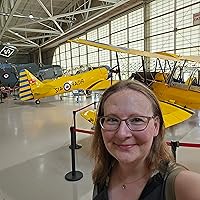
I'm a former Air Cadet, and I still work with my old squadron. The Air Cadet Program is a partnership between the Air Cadet League and the Department of National Defense. Many years of ground school aside, I've flown Schweitzer 2-32 and 2-33 gliders, Piper P-140 Cherokees, and Cessna C-172N models. As well, the Canadian Warplane Heritage Museum is my other home. I list all this so you can understand why I'm cranky with my review.
The author, bless her, constantly used "spin" and "spiral" interchangeably. No. Big no. They are NOT the same thing. In a spin, the aircraft is in a stalled-state, with the corkscrew maintaining its size and distance. Will a spin kill you? It can, but it'll take a while, and you'll likely be recovered long before you need to worry. A spiral, however, will kill you PDQ if you don't recover quickly. The aircraft will push, and can exceed, its Never Exceed Speed (VNE), and will disintegrate if you're really unlucky while the corkscrew tightens and your speed increases. Of the two, the spiral is more dangerous and deadly than the spin. And now you understand why they are not the same thing, and why reading her describe a spiral but call it a spin is a massive aggravation.
Next, for the love of God, stop calling these beautiful machines ships. They're planes or aircraft, not dirigibles. Referring to an amphibious aircraft as a flying boat is acceptable as it's also meant to spend time on water. A Spitfire or a Hurricane, however, is not a damn airship or an amphib, so quit referring to the aircraft as things that they're not!
Finally, this, unfortunately, makes me question just how well the author actually researched her book, along with the legitimacy of her research. On page 183, she references "High Flight," which is a sonnet of significance to every pilot. She said the writer was Canadian. Wrong. The poet, who was relegated to nothing more than a footnote at the back of the book, was Pilot Officer John Gillespie Magee Jr. He was born in Shanghai to AMERICAN parents, but flew in the RCAF during WW2. He was killed in training at 19 years old, not long after writing "High Flight". Thank you for suggesting that he's ours, however, seeing that glaringly obvious error made me wonder just how much else of this book was inaccurate or incorrect. For the record, "High Flight" is basically General Cadet Knowledge Lesson #2 (after the rank structure) for recruits. Not going to lie, I was legitimately offended by how much she disrespected P.O Magee. Read the poem. You'll understand. Also, I'm amazed she never bothered with the Airman's Grace, written by Father John MacGillvary, which is also a big deal for pilots, and is always recited at every important Mess. But she did a FUBAR to Magee, so I shouldn't be surprised that MacGillvary got the shaft.
I also noticed that the book had a ton of issues that were missed by editors. Spelling, double words, incorrect ones (such as "though" when "through" was needed). Perhaps don't cheap out on editing, and make sure the editor actually fact checks. You know, so the screwups are not only caught, but less obvious.
Overall, I'm disappointed with this book. I was so excited to read it, because of my passion for aviation, and also because my degree is in English & Military History. But seeing at least 3 massive in-your-face inaccuracies is problematic. I've given this 3 stars as a benefit-of-the-doubt grade for the depiction of the female pilots, but I'm not confident that they were portrayed accurately either. This book is probably better suited to a 2.5/5.
I'm a former Air Cadet, and I still work with my old squadron. The Air Cadet Program is a partnership between the Air Cadet League and the Department of National Defense. Many years of ground school aside, I've flown Schweitzer 2-32 and 2-33 gliders, Piper P-140 Cherokees, and Cessna C-172N models. As well, the Canadian Warplane Heritage Museum is my other home. I list all this so you can understand why I'm cranky with my review.
The author, bless her, constantly used "spin" and "spiral" interchangeably. No. Big no. They are NOT the same thing. In a spin, the aircraft is in a stalled-state, with the corkscrew maintaining its size and distance. Will a spin kill you? It can, but it'll take a while, and you'll likely be recovered long before you need to worry. A spiral, however, will kill you PDQ if you don't recover quickly. The aircraft will push, and can exceed, its Never Exceed Speed (VNE), and will disintegrate if you're really unlucky while the corkscrew tightens and your speed increases. Of the two, the spiral is more dangerous and deadly than the spin. And now you understand why they are not the same thing, and why reading her describe a spiral but call it a spin is a massive aggravation.
Next, for the love of God, stop calling these beautiful machines ships. They're planes or aircraft, not dirigibles. Referring to an amphibious aircraft as a flying boat is acceptable as it's also meant to spend time on water. A Spitfire or a Hurricane, however, is not a damn airship or an amphib, so quit referring to the aircraft as things that they're not!
Finally, this, unfortunately, makes me question just how well the author actually researched her book, along with the legitimacy of her research. On page 183, she references "High Flight," which is a sonnet of significance to every pilot. She said the writer was Canadian. Wrong. The poet, who was relegated to nothing more than a footnote at the back of the book, was Pilot Officer John Gillespie Magee Jr. He was born in Shanghai to AMERICAN parents, but flew in the RCAF during WW2. He was killed in training at 19 years old, not long after writing "High Flight". Thank you for suggesting that he's ours, however, seeing that glaringly obvious error made me wonder just how much else of this book was inaccurate or incorrect. For the record, "High Flight" is basically General Cadet Knowledge Lesson #2 (after the rank structure) for recruits. Not going to lie, I was legitimately offended by how much she disrespected P.O Magee. Read the poem. You'll understand. Also, I'm amazed she never bothered with the Airman's Grace, written by Father John MacGillvary, which is also a big deal for pilots, and is always recited at every important Mess. But she did a FUBAR to Magee, so I shouldn't be surprised that MacGillvary got the shaft.
I also noticed that the book had a ton of issues that were missed by editors. Spelling, double words, incorrect ones (such as "though" when "through" was needed). Perhaps don't cheap out on editing, and make sure the editor actually fact checks. You know, so the screwups are not only caught, but less obvious.
Overall, I'm disappointed with this book. I was so excited to read it, because of my passion for aviation, and also because my degree is in English & Military History. But seeing at least 3 massive in-your-face inaccuracies is problematic. I've given this 3 stars as a benefit-of-the-doubt grade for the depiction of the female pilots, but I'm not confident that they were portrayed accurately either. This book is probably better suited to a 2.5/5.

March 15, 2026
I was really excited to read this book since I love WWII stories based on true events. The premise of women pilots risking their lives during the war sounded incredibly promising.
While the history itself is fascinating and the women featured in the book are undeniably brave and admirable, the execution didn’t fully work for me. The book mostly introduces each pilot, explains how she became a flyer, and briefly touches on her wartime experience and what happened afterward. Because of this structure, it sometimes felt repetitive and a bit drawn out, and I struggled to stay engaged even though the subject itself is so interesting.
It’s not a bad book by any means, and I’m glad these women’s stories are being told, but unfortunately it didn’t captivate me as much as I had hoped.
While the history itself is fascinating and the women featured in the book are undeniably brave and admirable, the execution didn’t fully work for me. The book mostly introduces each pilot, explains how she became a flyer, and briefly touches on her wartime experience and what happened afterward. Because of this structure, it sometimes felt repetitive and a bit drawn out, and I struggled to stay engaged even though the subject itself is so interesting.
It’s not a bad book by any means, and I’m glad these women’s stories are being told, but unfortunately it didn’t captivate me as much as I had hoped.

August 12, 2025
This is a Non-Fiction book. I read this book by listening to audiobook. I really enjoyed reading this book, and I love getting to know the girls in this book. I loved the little bit of WWII that was in this book.

April 21, 2025
A peek into the lives of several women who piloted planes for the Air Transport Auxiliary (ATA) in Britain during WWII. Women were not permitted to fly for military in USA. A few years into the War, the Women Airforce Service Pilots (WASP)was formed in the USA… but it was clear to see the woman were not afforded the same luxury as those in the ATA. These women were pioneers before their time— some wanted to further their aviation careers while others wanted to simply support the war efforts. The women were able to fly several planes they never flown before. Women came from all sorts of backgrounds. I was enthralled to hear how some came from nothing and made a name for themselves. The women often struggled with having their career and conforming to societal pressures to have traditional families. Final thoughts: an engaging read from start to finish! Heart wrenching to hear some women learn their loved ones were killed in battle and yet, they leaned into their work to keep going. I liked how the book weaved the story between the woman’s background and the progression of the war. I do still wish Ann would have gotten back with POW Bill… wonder if their love story would have survived had he not been captured. Highly recommend to anyone looking for an insight to the brave women who flew spitfires! #spitfires #beckyaikman #goodreadsgiveaway #goodreads #history #ata #womenpilot #ww2 #highlyrecommended #jillianhereforthebooks
This entire review has been hidden because of spoilers.

June 17, 2025
Spitfires by Becky Aikman dives into the group of 25 aviators who were denied the right to fly for the US during WWII, and so, headed to England to fly for the ATA (Air Transport Auxiliary), becoming the first US women to command military aircraft.
This was a fantastic and in-depth look into the lives of some inspiring and incredibly brave women who refused to take no for an answer and took on the dangerous work of ferrying aircraft, all for the chance to fly.
I've read a lot of biographies on early female pilots, including accounts of the WASPs, as well as some fictional stories featuring female ATA pilots, but this was my non-fiction account of these specific women, and it was fascinating. Whether they recognized it or not, they paved the way for those of us who came along later, and it was an honour to be able to read their stories and remember their lives.
While there were a few pilots featured more prominently than others, we got to see the background for many of these women, what motivated them to join the ATA, as well as their experiences flying during the Second World War. There were quite a few names and individuals to follow along with, but Aikman did a good job briefly recapping when switching back and forth between stories.
This book was engaging, detailed, and well-researched. The writing was excellent, flowing smoothly and capturing my attention throughout. Full of delightful stories and anecdotes about these mesmerizing women, as well as some fascinating aviation history, I would highly recommend diving into this one!
Also, 𝘈𝘦𝘵𝘩𝘦𝘳𝘪𝘴 𝘈𝘷𝘪𝘥𝘪 is my new favourite motto. I need it on a t-shirt!
Thanks to Bloomsbury Publishing for my gifted copy.
This was a fantastic and in-depth look into the lives of some inspiring and incredibly brave women who refused to take no for an answer and took on the dangerous work of ferrying aircraft, all for the chance to fly.
I've read a lot of biographies on early female pilots, including accounts of the WASPs, as well as some fictional stories featuring female ATA pilots, but this was my non-fiction account of these specific women, and it was fascinating. Whether they recognized it or not, they paved the way for those of us who came along later, and it was an honour to be able to read their stories and remember their lives.
While there were a few pilots featured more prominently than others, we got to see the background for many of these women, what motivated them to join the ATA, as well as their experiences flying during the Second World War. There were quite a few names and individuals to follow along with, but Aikman did a good job briefly recapping when switching back and forth between stories.
This book was engaging, detailed, and well-researched. The writing was excellent, flowing smoothly and capturing my attention throughout. Full of delightful stories and anecdotes about these mesmerizing women, as well as some fascinating aviation history, I would highly recommend diving into this one!
Also, 𝘈𝘦𝘵𝘩𝘦𝘳𝘪𝘴 𝘈𝘷𝘪𝘥𝘪 is my new favourite motto. I need it on a t-shirt!
Thanks to Bloomsbury Publishing for my gifted copy.

July 6, 2025
A comprehensive telling of the lives of some of the 25 American women who flew as ferry pilots for the Brits during WWII-the ATA- Air Transport Auxiliary. They were denied the opportunity in the US. Eventually the USA created the WASP- Women Airforce Service Pilots but it was a an organization with very limited opportunity and control that couldn't match the ATA in pay, duty, and airframe access. The ATA received equal pay- a first as well as flying dozens of aircraft. Often times the pilot would have no introduction to a plane until her first flight in it!
With so many women's lives being told it got a little confusing keeping track of them. Some real characters and very diverse backgrounds (there were black women pilots but they were denied service in ATA and WASP) but all loved to fly and wanted to be free from the expectations and obligations society forced on them. They were truly free in the air and in the UK.
With so many women's lives being told it got a little confusing keeping track of them. Some real characters and very diverse backgrounds (there were black women pilots but they were denied service in ATA and WASP) but all loved to fly and wanted to be free from the expectations and obligations society forced on them. They were truly free in the air and in the UK.
May 18, 2025
I loved these true stories of brave women during WW2. The obstacles and prejudice against women pilots was explained in detail. Many of these women pilots led extraordinary lives during the evenings too, making connections and thinking ahead about what they wanted to pursue after the war.
I’m glad the author included information about how long each one lived and who decided to pursue traditional roles as a wife and who decided to always choose independence.
I’m glad the author included information about how long each one lived and who decided to pursue traditional roles as a wife and who decided to always choose independence.

May 13, 2025
Leading The Way Ahead
My parents were archetypal … Dad flew bombers in the South Pacific and survived, Mom had a “girl job” as a beautician before and during the war, met Dad, who said “no wife of mine is going to work” so she quit her job. Another cookie-cutter 1950s family was born.
The heroic women in these pages didn’t buy the cookie cutter. They took their flying skill to the desperate UK and set an alternative standard of excellence that helped save the world from fascism and proved women could achieve great things outside the home.
They came up against enemy and friend alike and triumphed.
This book celebrates women who dared to think big and then achieved great things. One must dream it before one can do it. On a recent regional flight on a Boeing 737-800, both flight deck crew were women. It was a smooth flight. Thanks, to those in this book who took the first steps.
This is an interesting and meaningful read.
My parents were archetypal … Dad flew bombers in the South Pacific and survived, Mom had a “girl job” as a beautician before and during the war, met Dad, who said “no wife of mine is going to work” so she quit her job. Another cookie-cutter 1950s family was born.
The heroic women in these pages didn’t buy the cookie cutter. They took their flying skill to the desperate UK and set an alternative standard of excellence that helped save the world from fascism and proved women could achieve great things outside the home.
They came up against enemy and friend alike and triumphed.
This book celebrates women who dared to think big and then achieved great things. One must dream it before one can do it. On a recent regional flight on a Boeing 737-800, both flight deck crew were women. It was a smooth flight. Thanks, to those in this book who took the first steps.
This is an interesting and meaningful read.
July 14, 2025
Well-written, readable history of the American women pilots who served in the UK during WWII when the US Air Force refused women as pilots of any aircraft. Individual women are followed for the duration of service - 3 to 4 years, until the war ended and they returned to the US fully qualified to fly twin engine bombers...and the USAF still refused to enlist them. Fascinating details about flights in inclement weather, some that ended in death (reconstructed) while some lived to tell about their near-death flights. Social and living conditions detailed also. Really well done.
March 30, 2026
Truly remarkable women.

June 6, 2025
I gave 2 stars more because I felt misled into reading it, otherwise I would give it 3 stars. I grew up in McKeesport hearing about Helen Richey. The Pittsburgh Post Gazette ran a review about this book called "The Flying Woman of McKeesport" highlighting Helen Richey of McKeesport, leading me to believe she'd be a bigger part of the book. 3 accidents and she was let go from the program...that was pretty much it. Her part in the book only amounted to several sentences.
This entire review has been hidden because of spoilers.

March 11, 2026
Spitfires: The American Women Who Flew in the Face of Danger During World War II tells the story of the women who were members of the Air Transport Auxiliary (ATA) during the war. The book mainly focuses on the American women in the ATA. At that time, there was no opportunity for women to fly for the military in the United States. Like many other occupations during this era, flying was seen as a "male" job, with a few exceptions like stunt flying or flight instruction.
An American woman named Jackie Cochran was given the go-ahead by the RAF to recruit women who would be capable of ferrying the aircraft needed for the war effort in Europe. Many accepted, as this was the only way for them to fly for the war. Even with their outstanding success, women were still given very diminutive tasks when the U.S. eventually created the WASP (Women Airforce Service Pilots), and that program was shut down rather quickly.
As someone who loves learning about WWII aviation, I have read a number of books on the topic, but they have almost all been about what men accomplished. What I didn’t know was that many of the planes those men flew arrived to them thanks to women. It’s sad to read about how these women proved themselves over and over, yet still faced obstacle after obstacle. Even today, women pilots—and women in general, constantly have to prove they belong in male-dominated careers. Hopefully, one day that will no longer be the case and future generations can look back and think, "Thank god we are past that."
An American woman named Jackie Cochran was given the go-ahead by the RAF to recruit women who would be capable of ferrying the aircraft needed for the war effort in Europe. Many accepted, as this was the only way for them to fly for the war. Even with their outstanding success, women were still given very diminutive tasks when the U.S. eventually created the WASP (Women Airforce Service Pilots), and that program was shut down rather quickly.
As someone who loves learning about WWII aviation, I have read a number of books on the topic, but they have almost all been about what men accomplished. What I didn’t know was that many of the planes those men flew arrived to them thanks to women. It’s sad to read about how these women proved themselves over and over, yet still faced obstacle after obstacle. Even today, women pilots—and women in general, constantly have to prove they belong in male-dominated careers. Hopefully, one day that will no longer be the case and future generations can look back and think, "Thank god we are past that."

March 31, 2026
Before reading this book, I knew nothing about the Air Transport Auxiliary (ATA), a British civilian organization that ferried aircraft during World War II, so I certainly did not know that they employed female pilots. Aikman focuses on the contingent of American female aviators who joined the ATA for a variety of reasons, taking advantage of the unique opportunity presented to gain aviation experience and independence.
The writing itself was fairly dry, and so many women were introduced and described that it was sometimes difficult to keep each individual straight. But the bravery and audaciousness of these women is inspiring. I enjoyed the care given to understanding the varied motivations of the women covered, and the way class and financial stability played into the opportunities the women received and sought out before and during the war.
I also want to note my personal connection to this topic, which made this read more special for me: My Mom passed away when I was a teenager, but she was a hobbyist pilot of gliders and single engine planes. I would have loved to talk to her about the precedent set by these women.
The writing itself was fairly dry, and so many women were introduced and described that it was sometimes difficult to keep each individual straight. But the bravery and audaciousness of these women is inspiring. I enjoyed the care given to understanding the varied motivations of the women covered, and the way class and financial stability played into the opportunities the women received and sought out before and during the war.
I also want to note my personal connection to this topic, which made this read more special for me: My Mom passed away when I was a teenager, but she was a hobbyist pilot of gliders and single engine planes. I would have loved to talk to her about the precedent set by these women.

April 1, 2026
Amazing! I have read other books about the women in early aviation, but I had never heard of the ATA girls. I was familiar with Jacquline Cochran and her early exploits, but I had never heard about her contributions in WWII. Bringing together female pilots in England to act as a ferrying service for the RAF, seeing as the US had no interest in women doing anything much militarily. These women were amazing. This book was amazing. For a nonfiction, I didn’t want it to end.
Becky Aikman brought these heroines back to life in such a way that you wanted to know them. You wanted to be them. Another fantastic story about a little known group of women risking it all for themselves and for humanity.
Becky Aikman brought these heroines back to life in such a way that you wanted to know them. You wanted to be them. Another fantastic story about a little known group of women risking it all for themselves and for humanity.

February 1, 2026
This was a really great dive into the world of female pilots in WWII!
Having worked in McKeesport previously, I was very familiar with Helen Richey and her contributions to women in aviation. I found her portion of this story to be incredibly interesting, and I was very excited to learn more about the pioneering women like Richey!
Author Becky Aikman does a really great job of introducing the reader to these women while also depicting the world in which they were living. Issues surrounding gender, class, and mental health are address in a way that is easily understandable without being repetitive and redundant. Aikman also perfectly displays that variety of women who made up the ATA - at one point talking about a woman who's biggest dream is to be a wife and a mother, then talking about a woman who cringes at the thought of giving up her piloting for marriage. Aikman's descriptions make it easy for the reader to find something of themselves in every pilot mentioned.
Having worked in McKeesport previously, I was very familiar with Helen Richey and her contributions to women in aviation. I found her portion of this story to be incredibly interesting, and I was very excited to learn more about the pioneering women like Richey!
Author Becky Aikman does a really great job of introducing the reader to these women while also depicting the world in which they were living. Issues surrounding gender, class, and mental health are address in a way that is easily understandable without being repetitive and redundant. Aikman also perfectly displays that variety of women who made up the ATA - at one point talking about a woman who's biggest dream is to be a wife and a mother, then talking about a woman who cringes at the thought of giving up her piloting for marriage. Aikman's descriptions make it easy for the reader to find something of themselves in every pilot mentioned.
March 8, 2026
This was a narrative non-fiction about American women who were denied roles in the US military during WW2. These women joined the British Air Transport Auxiliary (ATA) where the ferried warplanes like Spitfires (hence the title) and Mustangs. Their work led to the development of the WASP organization. This book told the tales of these heroic women in a way that kept me interested. I read it as my first book of Women's History Month.

March 12, 2026
It was ok. I wanted to like this book, but I just found the writing so dry. Every chapter felt like the same chapter. Not to take away from the accomplishments of the very brave women (and men) who showed up under daunting circumstances and delivered, but I just found this book incredibly difficult to get through.
March 31, 2026
What an amazing glimpse into a part of history that is often forgotten. Aikman did an amazing job at writing this narrative nonfiction.
While it did seem slow at first and I quite regretted not keeping track of everyone with a sticky note, this book did not fail to provide an engaging and informative history of women pilots during WW2.
Totally recommend!
While it did seem slow at first and I quite regretted not keeping track of everyone with a sticky note, this book did not fail to provide an engaging and informative history of women pilots during WW2.
Totally recommend!

March 26, 2026
We read this for my library book club and I'm so glad we did. I loved learning about these pioneers in American women's aviation. I would love to read a more detailed biography of some of these women.

April 16, 2026
Another excellently researched and compellingly written historical non-fiction book! I really enjoyed reading about these fabulously interesting American women who volunteered to fly for the British Air Transport Auxiliary during World War Two. There, they were tasked with moving all sorts of planes (often including, on short notice, types of planes they had never flown before) from Point A to Point B in the United Kingdom in order to free up airmen to serve in the Royal Air Force.
Aikman, aided by diaries written by the women, as well as extensive research and interviews with the pilots' loved ones, does a wonderful job bringing these women to life, exploring their reasons for joining the ATA (many of them were simply desperately keen to fly at a time when piloting careers for women were incredibly scarce, but some were motivated by a desire to leave behind their pasts and chart adventurous new futures for themselves), their personalities, and their (sometimes tumultuous) relationships. I've read so many World War Two books that get caught up in the logistics of war and the minutiae of guns and ships and battalion movements that this book, with its focus on the individual women who were ATA pilots, was a welcome surprise. I got to feel like I really understood who these individual women were - what kept them up at night, what they lived for, who they were to their friends, families, and lovers.
Aikman, aided by diaries written by the women, as well as extensive research and interviews with the pilots' loved ones, does a wonderful job bringing these women to life, exploring their reasons for joining the ATA (many of them were simply desperately keen to fly at a time when piloting careers for women were incredibly scarce, but some were motivated by a desire to leave behind their pasts and chart adventurous new futures for themselves), their personalities, and their (sometimes tumultuous) relationships. I've read so many World War Two books that get caught up in the logistics of war and the minutiae of guns and ships and battalion movements that this book, with its focus on the individual women who were ATA pilots, was a welcome surprise. I got to feel like I really understood who these individual women were - what kept them up at night, what they lived for, who they were to their friends, families, and lovers.

May 22, 2026
It was my choice for our book club. I was disappointed that we did not learn as much about the nine women as I would have liked. The history lovers thought it was a great story and enjoyed it. It led to a very interesting discussions and we all learned lots.
August 29, 2025
4.5. A bit on the Long side but very interesting. I never knew about the spitfire women!
October 15, 2025
Fantastic book about remarkable women.

March 10, 2026
A triumph. Stories you would find far-fetched if it was written in fiction, but this narrative nonfiction will keep you interested throughout. Sad that for so long the trailblazing heroism of these women were lost in history.

March 15, 2026
Slow until midway through. I would have loved less background on the women and more information on what the women did in the war.

March 15, 2026
Grand and remarkable.
March 23, 2026
Audiobook- great read, loved all the women’s stories in this book.
Displaying 1 - 30 of 371 reviews