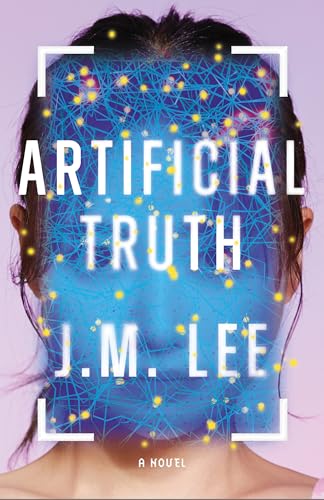
Artificial Truth had such an interesting premise, but unfortunately, the execution didn’t work for me.
The story follows Minju after the death of her first husband, KC, a brilliant technology executive who devoted his final years to creating an advanced artificial intelligence called Allen. After Minju remarries, strange things begin happening that suggest KC may not be as gone as everyone believes. Someone or something appears to be watching Minju and her new husband, Junmo, and manipulating their lives from beyond the physical world.
That setup sounds like the beginning of an incredible technological thriller. However, the book spent so much time explaining artificial intelligence, programming, algorithms and the philosophy behind the technology that I struggled to stay invested. The amount of technical detail repeatedly interrupted the story rather than strengthening it.
The final portion reveals a genuinely compelling thriller hiding underneath all of that information. The connections between KC, Allen, Minju and Junmo finally come together, and the questions surrounding KC’s death and how much control Allen has been exercising give the ending real momentum. Unfortunately, by the time the book reached that point, I didn’t care enough about the characters or what was happening to feel the tension the story needed.
The ideas were there, but the emotional connection wasn’t. The characters often felt like vehicles for discussing technology rather than real people whose fear, grief and relationships I could become invested in. I also wonder whether some of that emotional depth or urgency may have been lost in the translation from Korean to English.
The ending proved that this could have been a great thriller, but it arrived too late and wasn’t executed in a way that made me care about the outcome. Essentially Minju and Junmo outsmart Allen/KC and prepend to fight and die to live off the grid with no technology. Two stars for an ambitious and timely premise that ultimately felt more technical than thrilling.