Jump to ratings and reviews
Rate this book
Rate this book

Perhaps the most distinctive aspect of The Boatloads is its overt references to church and Christianity. Dan Albergotti’s references are not mere proselytizing, though. In fact, the first poem in the book, “Vestibule,” tells the story of the author’s teenage experience making love to his girlfriend in a university chapel, saying: “Lord of this other world, let me recall that night. / Let me again hear how our whispered exclamations / near the end seemed like rising hymnal rhythm / and let me feel how those forgotten words came / from somewhere else and meant something.”

Dan Albergotti teaches at Coastal Carolina University in Conway, South Carolina.

92 pages, Paperback

First published April 1, 2008

2 people are currently reading
64 people want to read

About the author

Dan Albergotti

10 books15 followers
Links
Dan Albergotti poems at From the Fishouse (audio)
Dan Albergotti on The Writer's Almanac (audio)

Bio
Dan Albergotti is the author of The Boatloads (BOA Editions, 2008), selected by Edward Hirsch as the winner of the 2007 A. Poulin, Jr. Poetry Prize. His poems have appeared in The Cincinnati Review, Shenandoah, The Southern Review, The Virginia Quarterly Review, and other journals. He has been a scholar at the Sewanee and Bread Loaf writers’ conferences and a fellow at the Virginia Center for the Creative Arts. In 2008, his poem “What They’re Doing” was selected for Pushcart Prize XXXIII: Best of the Small Presses. A graduate of the MFA program at UNC Greensboro and former poetry editor of The Greensboro Review, Albergotti currently teaches creative writing and literature courses and edits the online journal Waccamaw at Coastal Carolina University in Conway, SC.

Ratings & Reviews

What do you think?
Rate this book

Friends & Following

Create a free account to discover what your friends think of this book!

Community Reviews

5 stars
45 (59%)
4 stars
20 (26%)
3 stars
8 (10%)
2 stars
2 (2%)
1 star
1 (1%)
Displaying 1 - 13 of 13 reviews
Profile Image for Michael Liaw.
7 reviews3 followers
Read
June 28, 2008
Dan Albergotti’s first book, The Boatloads is a collection filled with persistence and mystery.

The book begins with “Vestibule,” a poem that places a first sexual experience in a university chapel, making an argument for the sacredness of the heart and the body. He sticks to what he knows, that,

we lay below the alter and preached a quiet sermon
not just on the divinity of skin, but on the grace
of the heart beneath. It was the only homily
we knew, and our souls were beatified.


And he does not shy away from putting occasional cynicism in the reader’s face, sometimes at an uncomfortable proximity. He makes no apologies, saying “and if you say sentiment and cliché, then that is what you say,>/i>” and that these experiences meant something “something, if only to the single moth…
The book then launches into the heart of various and very human struggles. There is a woman going through the motions of life after the death of her husband and “sometimes she wakes up singing” (The Chiming of the Hour), or the tiniest of things in life to be appreciated such as “forgiveness, the benefit of the doubt, the next line,” (Among the Things He Does Not Deserve), skimming through the list that prompts the reader to stop and chew on each small joy.

The book closes with the title poem “The Boatloads” introducing Charon, the boatman in Dante’s Inferno, wearied from ferrying an unexpectedly large number of dead people across into the underworld. Charon attempts this in an orderly fashion but in the end, he is forced to “abandon formality” and begins to load the boat with “you and you and you and you and you.” This is Albergotti’s stark reminder that even the sacredness of the heart he praises in this opening poem meets an inevitable and undiscriminating end.
To that anonymous and ever present end, the collection takes you through biblical stories that struggle with the absence of God (When the World Was Only Ocean) and even when he is present, a confusing one (Book of the Father); or the accounts of Gods that do not know their names, singing

Our lords make us sing it.
And then they write it down.
See how the lords are writing us.
They are wise and mad.
They sing our lines again and again.
See how they miraculously die.

The entry into the spiritual through the natural is met with equal if not colder results. Through the heron who is “far from the songs, from the blood,/from all the voices that beg for mercy” (The Mystery of the Great Blue Heron) or the egret to whom he is “asking this egret to reveal all his secrets//to me, to tell me how the night says nothing,/to show me how time stops with his white movement” (The Egret and the Dawn), Albergotti does not give up on what he calls “the cold rhetoric of the air” (Rhetoric) insisting on an answer. The answer that he knows well he will not find, offering then, in my favorite poem, “Still Bound” how to engage in his poems, and our lives,

…Most days, [the eagle] lights
on my shoulder, clenching her talons in the flesh,
and right away begins ripping down into my chest,…
yet some days, she will light on the rock beside me
…she cuts it out clean
those days and almost seems sorry to leave


That is, that our experiences are profoundly mysterious and that “the day is long when you’re growing a heart.

Profile Image for Jake Adam.
Author 11 books64 followers
March 24, 2008
If you're a fan of Jack Gilbert, this book is for you. Albergotti is a self-proclaimed student of Gilbert, and one of the most careful poets I know. These poems, which reward both the casual and the more probing reading, reveal their excellences again and again.
Profile Image for Diann Blakely.
Author 9 books49 followers
Read
August 19, 2013
Albergotti, I must admit, first caught my attention when he selected my second collection of poems, *Farewell, My Lovelies*, for review in *First Draft*, which is published by the Alabama Writers Forum. Albergotti’s was the most psychologically astute reading I received, eerily more revealing of me, I’ve come to think, than the poems themselves when I was writing them and even after seeing them in print. So of course I snapped up his book, which won a publication prize named for my first editor, Al Poulin, Jr. Reading Albergotti’s poems elated me; indeed, I felt that it was a sign of downright grace that this ranging yet restrained sensibility had turned itself in the direction of my own work a few years ago.

"My path has been strangely circuitous. I grew up unhappily in Florence, South Carolina. I often call that a 'cruel historical irony.' The irony? The Albergotti family can be traced back to origins in Florence, Italy. My hometown is not the sister-city of Firenze; in fact, it may be its cultural antithesis.

Words helped. I found escape in the stories and poems I was assigned to read in middle school. They provided alternative worlds to live in for a while, and almost always the alternative was better. It wasn’t long before I was trying to create such worlds myself. My teen poetry was as dreadful, I’m sure, as most. But even at that age I understood that poetry was much grander than anyone’s whining. Coleridge and Keats had already taught me that.

I managed to get out of Florence, but not by very far. I earned Bachelor’s and Master’s degrees in English at Clemson, then a PhD at South Carolina. And the whole time, I only took one creative writing course despite the fact that I continued to write poems regularly—not as a pastime, but as the central work of my life.
Here we come to the part of the story where I must acknowledge that I’m one lucky bastard. After the PhD, and after five years of teaching in English departments in Tuscaloosa and Auburn, Alabama, I looked in the mirror and saw that I was not a critic, nor was meant to be. (Is it too perfectly Dantean that I was 35 years old when I found myself in this darkened wood?) I was fortunate at the time to be encouraged by a very dear friend to pursue poetry for real, and I applied to MFA programs in creative writing. I say I’m a lucky bastard because I ended up at the perfect program (UNC-Greensboro), having unwittingly prepared myself to make the most of it by studying poetry with a breadth and depth only two graduate degrees could provide. This unusual sequence (MA to PhD to MFA) wasn’t planned, but it worked out perfectly for me.

And now I return to the strange circuitousness of the path. After the MFA, I landed a teaching job at Coastal Carolina University in Conway, South Carolina, less than 55 miles from Florence. That’s where I am now, Associate Professor in the Department of English and editor of the online literary journal *Waccamaw Review*. My first collection, *The Boatloads*, won the A. Poulin, Jr. Poetry Prize in 2007 and was published by BOA Editions in 2008. It’s strange to have returned to an area so near my childhood home, but I’m happy in Conway. And I continue to be happy creating other worlds through poems. I rarely visit Florence."

(originally published at *Swampland*)
Profile Image for Roxanne.
Author 1 book59 followers
April 10, 2008
This is the very lovely first book of my friend Dan. I am just so impressed by the beauty and lyricism of Dan's work. The whole book is so thoughtful, each poem lending to and taking from every other poem. Very interconnected, very well thought out, very tightly knit. Dan's meditations on God and death and joy really touched me. The final poem, the title poem, I was really impressed by--although I really don't think you should read that one first, I think that would spoil the whole thing. You just have to go read the whole book. Overall, really lovely and a pleasure to read.
Profile Image for sage short.
107 reviews23 followers
September 25, 2021
favorites were among the things he does not deserve, the present, day eight, still bound, moon daughter, the mystery of the great blue heron, when the world was only ocean, lesson of the elements: water, the egret and the dawn, things to do in the belly of the whale, and revision
Profile Image for T.tara Turk-Haynes.
59 reviews8 followers
July 5, 2019
While I loved the beautiful dimensions of the religion inspired poems (they were like modern Khalil Gibran questions surrounding circumnstance but never faith), I really loved the poems like "Moon Daughter" that were so personal, I felt almost like a peeping tom. Very well done.
Profile Image for Terri.
379 reviews29 followers
October 24, 2008
Dan Albergotti achieved that rare accomplishment: he took something that I've always known and made me think about it in a new way. His book is full of mystery and wonder. It is both deeply spiritual and deeply cynical. It is a feast.
Profile Image for Ross.
Author 7 books9 followers
October 1, 2009
A beautiful and, at times, haunting book. I was surprised at how fiercely these poems grabbed me. I'm waiting for some UNC student or professor to return this book to the library, so I can assign it to my students...
Profile Image for Sarah Key.
379 reviews9 followers
April 5, 2012


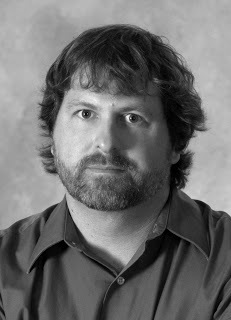
My friends and I nicknamed Dan Albergotti "Smiling Dan," so I have to admit it is a little humorous seeing how stern he looks in this photo.
Profile Image for Brittany Wilmes.
359 reviews9 followers
April 8, 2017
I found a new favorite poem in this collection: "Among the Things He Does Not Deserve."
Profile Image for Hallie.
440 reviews3 followers
May 26, 2022
I have not read much poetry in my life. My experience lies with Dickinson, Rilke, Oliver — all large enough to essentially be known by their last names only. I say that to note that I rate this as someone who has circled poetry cautiously, fearing it a bit. How can a couple words on one line mean what that person is interpreting them as? I've never understood.

Albergotti was introduced to me by way of a coworker. She shared "Things to Do in the Belly of the Whale" with our team under the guise of analyzing through a narrative medicine lens. Under that pretext, I interpreted it as someone's actions after being given a terminal illness diagnosis. But I found the poem so moving — this line especially:
Be thankful you are here, swallowed with all hope,
— that I decided I wanted to read more by Albergotti. I sought out Boatloads because it's the collection that "Belly of the Whale" calls home.

Boatloads is a collection of poetry that circle religion and/or death in some way. The opening poem, "Vestibule" catches the narrator and his girlfriend In The Act on an altar in a church. The beast — no, not Satan, the one with two backs — has made a home in a holy, sacred space. Albergotti dips his poems in reality time and again, making the reader wonder, "Is this poem autobiographical?" (Vestibule certainly reads that way to me, as do "Affirmation of Faith," "The Osprey and the Late Afternoon," "Notes for a Poem in which God Does Not Appear," "Lost Birds," "The Egret and the Dawn," "All the Birds in Unison," and "Stones and Shadows.")
There are several other poems, as well, that reference "a pale daughter." I would argue these are about a stillborn daughter, though I don't know if it's Albergotti's or a religious figure I don't know enough about to define.

There are other poems that detour completely from reality, living entirely in religion or mythology — "Song of the Gods," "Still Bound," "Another Song of the Gods," "Testimony," "Book of the Father," "When the World Was Only Ocean," "Corinthians," "Methuselah Dead," "The Maenads," and the titular poem, "The Boatloads."

I found myself most drawn to a strange grouping of these, but in listing them out, I think I would say they all subvert faith. In "Vestibule," as I mentioned, he and his girlfriend make love in a church. "Bad Language" picks at words used in the Bible and what we know them to mean now. I was particularly amused by "Day Eight," in which the Lord is stricken with regret at his creation. The story of "The Safe World," is that everything happens to keep you safe is just chance. The woman of "The Maenads," very clearly will kill you, but you need to kiss her anyway. Though "Things to Do in the Belly of the Whale" clearly references Jonah, it's also about modern-day life, with "reports" and "gears." And finally, "The Boatloads": An imagining of what the Ferryman, Charon, must have gone through as the world grew more populated and more souls appeared at the riverside. There is no faith here.

In all, a collection I am glad I purchased, rather than checked out. I will definitely be reading some of these again.
Profile Image for Diana Iozzia.
347 reviews49 followers
July 5, 2019
“The Boatloads”
Written by Dan Albergotti
Review written by Diana Iozzia

“The Boatloads” is a short collection of modern romantic and religious poetry written by Dan Albergotti, a winner of the A. Poulin, Jr. Poetry Prize. This writer includes allusions to many films, books, myths, classic literature, and more. The symbolism, metaphors, similes, and personifications take inspiration from those sources, creating new and interesting poetic themes. Personally, I do not often read religious poetry, but I felt that this collection was still adult and serious, with topics such as sex, rape, murder, abuse, aging, and more, rather than only fluffy vignettes about angels.

This was a very interesting collection to read, and I look forward to reading more by this writer. I was thoroughly surprised and yet fulfilled. I enjoyed the voice of this author, one of wisdom and candor about life and death. There is a sweet, melodic flow of the verses, leading most poems to sound like a lullaby. I had chosen this book from a little library, and I am glad to have found it.

Here are the poems I enjoyed most. The ones with asterisks beside them are my favorites.

“Vestibule”
“The Chiming of the Hour” *
“Turning Back” *
“What Everything Could Be”
“Song of the Gods”, “Another Song of the Gods”
“Testimony”
“The Eve of Ever After”
“Moon Daughter”
“Song 378” *
“What Else Means Death” *
“Exeunt”
“The Maenads”
“Lessons of the Elements: Earth” *
“Song 437” *
“The Boatloads”
Displaying 1 - 13 of 13 reviews

Can't find what you're looking for?

Get help and learn more about the design.