
What do you think?
Rate this book


84 pages, Paperback
First published January 1, 1917


The soul of the world had opened and I fantasized that everything wicked, distressing and painful was on the point of vanishing….all notion of the future paled and the past dissolved. In the glowing present, I myself glowed. The earth became a dream; I myself had become an inward being, and I walked as in an inward world.

Without motherland, without happiness he was; he had to live completely without love and without human joy. He had sympathy with no man, and with him and his mopping and mowing no man had sympathy. Past, present and future were to him an insubstantial desert, and life was too small, too tiny, too narrow, for him. For him there was nothing which had meaning, and he himself in turn meant something to nobody. Out of his great eyes there broke a glare of grief in overworlds and underworlds. Infinite pain spoke from his slack and weary moments. A hundred thousand years old he seemed to me, and it seemed to me that he must live for eternity, only to be for eternity no living being. He died every instant and yet he could not die. For him, there was no grave with flowers on it.
Perhaps there were a few repetitions here and there. But I would like to confess that I consider man and nature to be in lovely and charming flight from repetitions, and I would like further to confess that I regard this phenomenon as a beauty and a blessing. Of course, one finds in some places sensation-hungry novelty hunters and novelty worshippers, spoiled by overexcitement, people who almost every instant covet joys that have never been seen before. The writer does not write for such people, nor does the composer compose for them, nor does the painter paint for them. On the whole I consider the constant need for delight and diversion in completely new things to be a sign of pettiness, lack of inner life, of estrangement from nature, and of a mediocre or defective gift of understanding. It is little children for whom one must always be producing something new and different, only in order to stop their being dissatisfied. The serious writer does not feel called upon to supply accumulations of material, to act the agile servant of nervous greed; and consequently he is not afraid of a few natural repetitions, although of course he takes continual trouble to forfend too many similarities.
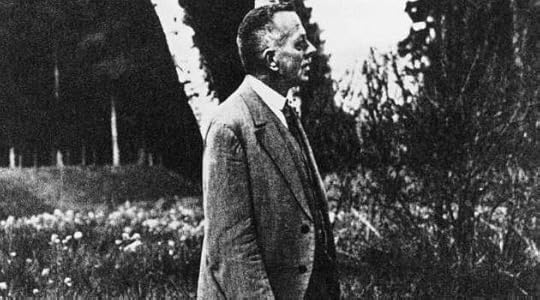
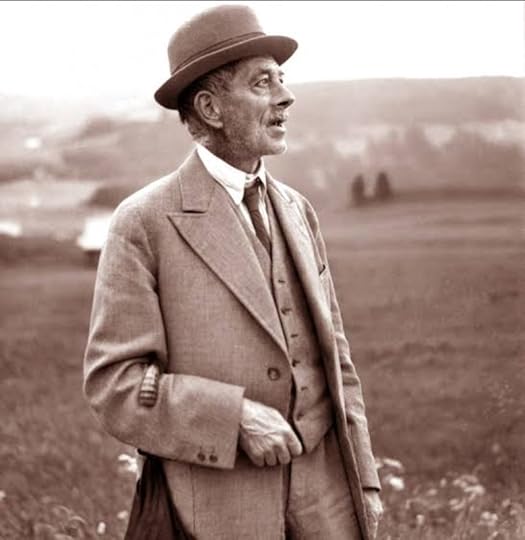
’Walking is for me not only healthy, it is also of service—not only lovely, but also useful.’The walks around town have become an essential component of the narrators writing process, a segment he holds in higher regard than the actual act of writing. ‘Without walking I would be dead, and would have long since been forced to abandon my profession,’ he writes. ‘A pleasant walk most often veritably teems with imageries, living poems, attractive objects, natural beauties, be they ever so small.’ It is a time for inspiration, of intense soul searching, where one can appreciate their small place in a world so great and beautiful. Although others question his walks as being the sign of a lazy man, he is proud of them and considers them a high point of industriousness. The reader sees how his emotional and intellectual state is so tied to his walks and the world around him as the bright, welcoming sky raises his spirits, while oppressive encounters with offensive others instantly plunge him into fear and sadness. It is in the solitude of nature where he finds himself most at peace, and the ineffable beauty of the natural world quickly assuages any dark thoughts and pulls him to ecstatically aware of his place in the present.
The soul of the world had opened and I fantasized that everything wicked, distressing and painful was on the point of vanishing….all notion of the future paled and the past dissolved. In the glowing present, I myself glowed.These walks instill a near-religious experience in him and allow him to comfortably—and without the fear of shadows, pain and phantoms but guided by warmth and love instead—move inward into his soul and true self where he can extract the essentials needed to produce his literature. ‘In the sweet light of love I believed I was able to recognize—or required to feel—that the inward self is the only self which really exists.’
Is not all music, ever the most niggardly, beautiful to the person who loves the very being and existence of music? Is not almost any human being you please - even the worst and most unpleasant - loveable to the person who is a friend of man?What he argues for is a polite society where we accept we all have weaknesses.
I here implement a policy of softheartedness, which has a beauty that is not to be found anywhere else; but I consider a policy of this sort to be indispensible. Propriety enjoins us to be careful to deal as severaly with ourselves as with others, to judge others as mildly as we judge ourselves…The narrator attempts to practice what he preaches and always checks himself when he lets his indignation get out of hand and apologizes to the reader. ‘Abuses of writing should not be practiced,’ he often says, and keeps his promise to return to criticize himself just as he does those around him. When this moment arrives, it is utterly heart wrenching and leaves the reader drenched in sorrow and pity, yet full of blossoming adoration.



![Profile Image for s.penkevich [hiatus-will return-miss you all].](/_next/image?url=https%3A%2F%2Fi.gr-assets.com%2Fimages%2FS%2Fcompressed.photo.goodreads.com%2Fusers%2F1735525095i%2F6431467._UX200_CR0%2C11%2C200%2C200_.jpg&w=128&q=75)


