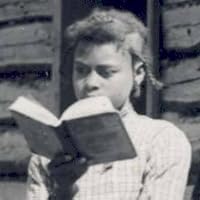
Prior to the 1960s, when African Americans had little access to formal political power, black popular culture was commonly seen as a means of forging community and effecting political change.
But as Richard Iton shows in this provocative and insightful volume, despite the changes brought about by the civil rights movement, and contrary to the wishes of those committed to narrower conceptions of politics, black artists have continued to play a significant role in the making and maintenance of critical social spaces. Iton offers an original portrait of the relationship between popular culture and institutionalized politics tracing the connections between artists such as Paul Robeson, Lorraine Hansberry, Richard Pryor, Bob Marley, and Erykah Badu and those individuals working in the protest, electoral, and policy making arenas. With an emphasis on questions of class, gender and sexuality-and diaspora and coloniality-the author also illustrates how creative artists destabilize modern notions of the proper location of politics, and politics itself.
Ranging from theater to film, and comedy to literature and contemporary music, In Search of the Black Fantastic is an engaging and sophisticated examination of how black popular culture has challenged our understandings of the aesthetic and its relationship to politics.
One of the most exhaustive and thorough chronicling of Black popular culture and it's affect on the political psyche of American society I've ever read. Richard Iton offers a tour de force of scholarship, encyclopedic knowledge of cultural data, and provocative analysis to come to some profound conclusions about Race, pop-culture, and American Politics. A must read.
The examination of pop culture from this perspective is something I hadn't seen before, and it was really refreshing. Written well with many notes for reference, I enjoyed it.
Iton’s In Search of the Black Fantastic does little in terms of exploring Black American writing that functions in fantastical modes, but the book does do an excellent job exploring the fantastical nature of Black writers across genres imagining themselves into places that many people, especially members of previous generations, would have thought impossible.
Stunning in its depth and solid in its delivery. Poses questions and offers suggestions that I'd never encountered and because of this, I was impressed. If concerned about the history or the future of Black America, a certain read.
Also, the author has a very clear written voice that a reader can appreciate. It is only towards the end of his work that the voice wavers and is looking for a suitable anchor. Otherwise, solid.
the language is elusive, but dictionaries help. honors the value in artistic creation...makes you feel works in a whole new way. officially takes the cake for most heady book i've ever read, making A Theory of Justice read like Junie B. Jones