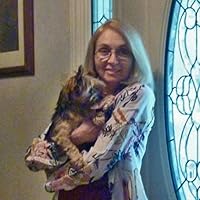
On the surface, her childhood seemed normal—even idyllic. Linda grew up in the iconic immigrant community of Brighton Beach, Brooklyn, with her parents and a gifted older brother. But she spent her days at home alone with a mother who suffered major bouts of depression. At such times, young Linda was told, "Your mother…she’s not herself today." Those words did little to help Linda understand what she was witnessing. Instead, she experienced the anxiety and hyper-vigilance that often take root when secrecy and shame surround a family member who is ill.
She’s Not Herself is a journey to make sense of the effects of multi-generational traumas. Shapiro is ultimately able to forgive (without forgetting) those who left her to fend for herself—and to provide readers with the wisdom of a seasoned psychotherapist who has examined human vulnerability in its many disguises and has moved through it all with dignity and hope. The result is a memoir of love, loss, loyalty, and healing.
What others are saying:
"An honest and compelling story by a brave and gifted writer." Wally Lamb, author of She’s Come Undone and I Know This Much Is True; winner of the National Alliance for the Mentally Ill's Kenneth Johnson Award for the anti-stigmatization of mental illness
"A Story that applies to us all—truthful, carefully crafted, and created with a clear-eyed affection.” David Watts, MD, poet, writer, musician, NPR commentator
"A riveting tale wrapped in elegant prose. A very human story—one of hope and perseverance that resonates deeply within the soul." Peggy Sanders, retired journalist, award-winning author
“Lyrical and powerful in its use of story telling to subvert secrets and create new selfhood, this is a beautifully written memoir in the tradition of Eat, Pray, Love, Swallow The Ocean, Three Little Words, or Lucky Her Last Death.” Rachel Fichter, editor-at-large
"For Shapiro's amazing recall and deep penetration into her past, this memoir reminds me of Remembrance of Things Past, and for its ease of readability, A Tree Grows in Brooklyn.” P. Topping, linguist
"Inspiring and eloquent…vividly captures the cultural context of an immigrant family living with the trauma of mental illness and its effect on all family relationships.” Joseph Giordano, LCSW, co-editor, Ethnicity and Family Therapy
"A compelling tale of human tragedy and triumph told with empathy and love, without sentimentality…offering a sense of awe for the human spirit.” Pamposh Dhar, founder of the Terataii Reiki and Counseling Centre, Singapore, Reiki healer/teacher/counselor/blogger
"One feels privileged to share each of the traumas that Shapiro, her mother, and her mother before her had to endure. As to the writing, such complete recall is preserved for all time. Look to your laurels, Marcel Proust." Frederick Rolf, actor, director, co-author, translator, Berlin-Shanghai, New York: My Family's Flight From Hitler
"Not another 'woe is me' account of dysfunction, but rather a heroic account of mastery and grace, which the general reading public as well as students and professionals will benefit from reading.” Roberta Temes, PhD, author of several books, including Learning How to Write a Memoir in Thirty Days
"With extraordinary insight and honesty, Shapiro shares with us her journey from infinite pain to knowledge, healing, and forgiveness without a trace of melodrama. A truly inspiring read!" R.G.Sterling, musician, educator
Behavioral psychotherapist, oral historian, lecturer, and author, Linda Appleman Shapiro earned her B.A. in literature from Bennington College, a Master’s degree in Human Development/Counseling from the Bank Street College of Education, and a Master Certification in Neuro-Linguistic Programming from the New York Institute of N.L.P. She has further certifications in Ericksonian Hypnosis and Substance Abuse/Addictions Counseling.
Shapiro is a contributing author in the casebook, Leaves Before the Wind: Leading Applications of N.L.P.
In private practice for more than thirty years, Shapiro also served as a senior staff member at an out-patient facility for addicts and their families. As an oral historian, she has documented the lives of many of New York’s elderly.
Her blog of three years, A Psychotherapist’s Journey, Shapiro was named Top Blogger in the field of mental health by WELLsphere.
Married to actor and audiobook narrator George Guidall, Shapiro and her husband live in Westchester County, New York. They have two daughters and two grandchildren.
I love survival memoirs and this is certainly one of the best I’ve read. It resonated with me and touched me in many ways: the author and I both grew up in the 1940s and 1950s, we were both children of immigrant parents – hers from Russia, mine from Lithuania and Poland. And most important of all we both had to find a way to grow up and thrive while our mothers were never themselves. The author’s mother suffered from post traumatic stress disorder and depression, my mother battled with possible manic depression (undiagnosed). Her mother attempted suicide several times; my mother constantly threatened it. We both had adored older brothers who essentially left us with the burden of our mothers. And we grew up at a time when adults kept secrets from their children so we never really knew, but always suspected, what was really going on in our homes. Yet, despite it all, we both went on to get educated even though we were “girls,” get married, and have families and careers, deciding not to live an invisible life like many other women of our generation.
In fact Linda Appleman Shapiro, says, “As difficult as my childhood was, I see it now as a gift from which I can draw strength and compassion.” This gift was the “healing power of forgiving.” With that she went on to become a psychotherapist who for over thirty years has helped others.
Bravo, author Shapiro. Your excellent writing will help many, many others find the strength to overcome the struggles they are dealt.
This quote from She’s Not Herself says it all: “For me, it wasn’t until I was married and had children that I was truly able to see how deeply affected I was by my childhood. Now, after more than thirty years as a psychotherapist, forty-six years as a wife, forty-four years as a mother, and thirteen years as a grandmother, I hold on to the one belief I consider to be most valuable: the need to honor the parts of our selves that are healthy, the parts that are strong, even when unpredictable situations—our own physical or emotional stressors or those of our loved ones—catch us off guard.”
Madeline Sharples, author of Leaving the Hall Light On
This is a powerful book on multiple levels. It captures life in Brighton Beach, Brooklyn, in the 1940s/1950s. It capsulizes the incredible story of one Russian Jewish family's immigration to the United States. And most of all, it tells the story of a young girl who had to navigate life with a mother who suffered from post traumatic stress disorder (largely as a result of the aforementioned immigration) and depression. The young girl not only navigates life with her depressed mother, but goes on to become a psychotherapist who has overcome her own traumas and helps others. All in all, a very powerful and inspiring book.
When Linda Appleman Shapiro was a child, her mother would say and do things that confused and frightened her. In post-war Brighton Beach, Brooklyn, mental illness was rarely acknowledged, and doctors had little understanding of how to treat it. All Linda’s father would tell her was, “Your mother…she’s not herself today.” Linda grew up believing that she had no right to ask questions, that she should never cause trouble for anyone else—that she had to be perfect.
As a young adult, though, fears that she would become like her mother spurred Shapiro to examine her family’s story more closely. She grew to understand the trauma her mother endured as a child in Russia during World War I. With the assistance of therapy, Shapiro acknowledged what she had missed in her childhood, and she found the voice she had silence. She also developed great compassion for her mother. Ultimately, Shapiro decided to help other families by becoming a therapist herself.
There are few books that speak to the children of mentally ill parents as thoughtfully as this one does. Shapiro shows how trauma affects families through generations, yet she offers hope that things can change. But this book is about more than just Shapiro’s relationship with her mother: it explores Linda’s delight with school and learning; her experience with first love and her relationship with her husband; and her efforts to define herself through work and family. It evokes an iconic immigrant community in Brooklyn with colorful stories from a memorable era. She’s Not Herself is a beautiful coming-of-age story that has the immediacy of a child’s perspective and the wisdom of an adult’s.
Just couldn't put this book down! The writer's honesty and simple, unpretentious recounting of her life in a family unable to deal with on-going trauma takes you on the journey with her as she navigates through conflcting realities to ultimately become herself, an insightful, feeling person, an empathic therapist, a wonderful mother and an extroaordinary wife. As her husband, and a narrator of over 1200 audiobooks, I urge you to take the journey with her. Also, check out those wedding pictures taken 46 years ago. George Guidall
I was absolutely amazed by this memoir. Linda Appleman Shapiro did such a lovely job writing about a difficult childhood that she ultimately sees as being a gift.
The fact she can describe her mother's mental illness and how it effected the entire family (included her attempts at suicide) and come out of the situation with the strength and perseverance to consider it a gift is the true gift! Shapiro's ability to engage me as a reader and draw me into a time period and a story so foreign to my upbringing really kept me wanting more.
I read the book years ago and was moved and inspired by it - most recently I listened to it on Audible and it was an even more emotional experience. The Audible version was narrated by the author herself (just before her 80th birthday) as well as her husband, the king of audio books, George Guidall himself!
When reading this book, I was impressed with Shapiro's ability to put into words what must have been such a difficult period in her life. Listening to the book being read by Shapiro herself quite often moved me to tears. I don't want anyone to think this is a sad story - because ultimately, Shapiro went on to help so many others because of her resilient spirit.
When I read or hear the quote "My Trauma Does Not Define Me" I think immediately of Linda Appleman Shapiro and how she has managed to be a light in the darkness.
I absolutely give "She's Not Herself" 5 stars as a written book and 10 stars as an audio book!
I really enjoyed this memoir of a woman whose mother suffered from mental illness. She captured her younger years very well and I felt the fear and confusion she must have felt as well. The book also has some very touching moments, which showed me that Shapiro's mother really was doing the best she could, given her illness. I left with strong feelings of connections to Linda and her family.
In addition to dealing with the topic of mental illness, this book also does a nice job of sharing some of the experiences of Russian immigrants in the 1920-1940s. I enjoyed this aspect of the book and only wish there had been even more of this -- mostly because I find it is difficult to find accounts of this time period that are written as well as this memoir.
It was a quick read, and despite what could be a very heavy, depressing topic, I am left with feelings of hope.
"She's Not Herself" by Linda Appleman Shapiro is an exquisitely written personal memoir about growing up haunted by a mother's attacks of mental illness and living with pain and fear too deep to express. Yet this heartbreaking story also bears witness to the author's ability to make choices -- courageous choices that enabled her to move beyond the trauma of her childhood and young adult life, and become a compassionate healer of others. The story is told in vivid detail, rich imagery, and never a hint of self-pity. You simply cannot put it down. It is a must-read for all who have experienced the deep scarring of family mental illness, addiction, depression, or simply a lack of communication. Ultimately, this story is a triumph of the human spirit. Highly recommended.
I won this book in a First Reads Giveaway & so very happy that I did!
This book is wonderful, I couldn't stop reading & talking about it with everyone I know!
It begins with Linda's childhood & her parent's histories and follows her & her family into adulthood. The story is compelling and touching, not to mention well-written & very thought provoking.
I also have a close family member who suffered mental illness during the 60's & on. I found myself with tears through most of the chapters wondering if this was how my father & his siblings had experienced childhood living with my mentally ill grandmother. It opened my eyes to many things I had never fully understood about my family before.
I think this is a book that everyone needs to read, even if you dont have mental health issues within your family this book gives you a better understanding of those that do & the importance of life choices.
This is a memoir of a Jewish girl named Linda who grew up living in the Brighton Beach section of Brooklyn, NY. She lived with her parents and older brother. It frightened her when her mother was "having a bad day" which was all she was told, she never questioned what was happening and learned to keep this secret to herself. On her mother's bad days her father would not allow her mother to stay home alone and would drop her off with a relative so that he could go to work. Sometimes her mother would have to be taken to the hospital where she would get "treatments". Linda's life was affected by all of this and she goes into detail of growing up in this environment. This book was very well written and held my interest throughout. It read more like a novel than a memoir. I felt very bad for Linda having a childhood like this, but happy that she was able to persevere and get help to deal with this as an adult. Thank you to the author Linda Appleman Shapiro for sharing your story.
After recently reading a self-help book by a psychotherapist that left me absolutely aghast that the author was counseling others, when she so obviously needed counseling herself, I was reluctant at first to read another book so soon by another psychotherapist. But I always love reading about Brooklyn in the 1940s-1960s decades, so I got this book and hoped for the best. While She's Not Herself wasn't the best memoir I've ever read, it was certainly an excellent one; and ended up being actually part memoir, part case study of a child who grew up with a mentally ill mother.
Like many children of her time, Linda Shapiro, who was born in 1941, kept quiet about her mother's problems. She learned to do so by following the examples of others in her family. Such family problems like mental illness, alcoholism and divorce were kept secret. Children, like Mrs. Shapiro, were often stoical, vowing they'd never become like their problem parent, hoping one day they'd be free of it all, but not clearly seeing how that would happen. School and lessons, such as dancing or acting, were two ways of temporarily escaping family problems, and the author was fortunate that her Jewish immigrant parents highly valued education. Although not particularly religious, her parents even allowed her to go to Hebrew school, when she requested to do so. She did not tell them, though, that why she wanted to do so was to hopefully bring God more closely into the family and cure her mother's mental illness.
Even though Mrs. Shapiro talks a lot about her mother's problem, this book does not solely concentrate on that matter. She's also describing life in Brighton Beach, her father, her brother, her extended family, her ancestors, schools, friends, neighbors. The book is a memoir in the truest sense of the word, and has some lovely family pictures. There are hints that a psychotherapist is writing this story when her childhood and teen years are being described, but they are very soft hints. It's in her 20s when there is more talk about psychotherapy and such, but for herself, not for her mother. Like many strong kids in families with a major problem and secret, the author discovered it was the twenties that brought on severe personal crises, not the child and teen years. This was probably partly due to the fact that she was away from home, and not spending so much time concentrating on family matters, but instead more fully concentrating on her own life. It ends up one can't simply think their way through life, regardless of how well one thinks, and how much time one has invested in thinking about life.
In the lovely afterword of this book, the author states she believes everyone must "reach out" for "professional guidance" to break a "family cycle of despair". That I don't agree with, because so many people have overcome bad or sad childhoods without the help of psychotherapists or any other professional counselors. Moreover, there have been more than a few people harmed by counseling, such as those who ended up with counselors who desperately needed psychiatric help themselves. This is not to bash "professional guidance" or discourage anyone from getting such guidance; it's to point out that there are many, many ways of overcoming childhood and family despair. Professional counseling is one way, but certainly not the only way. Some individuals do so by writing memoirs. While Linda Shapiro appeared to have resolved her childhood and family issues long before writing this memoir, I have little doubt that reading it will help others, or at least give them a good, insightful book to read.
(Note: I received a free ARC of this book from NetGalley.)
I was interested in this storyline. It has been recognised that there is a higher rate of emotional and behavioural difficulties in children who’s parents suffer from poor mental health. Shapiro has taken this very difficult subject and tackled it with honesty and emotion. Beautifully written account of her childhood and the impact of her mothers mental health. In a world where many are quoted as saying how resilient children are it is so important to realise that this is often not the case. Mental health and the impact it can have on others around you, not just the sufferer, is such an important issue which should not be ignored. I was given a free copy of this book by NetGalley in exchange for an honest review.
Every so often I go through the Nonfiction titles at NetGalley and discover a book or two which catch my eye. What I read in the description that made me download the book was the author's honesty about the good and bad she experienced as a child. The author didn't use this as an opportunity to besmirch her mother's memory or present the situation in biased light. I felt that she tried to give as much insight into the internal war that her mother was fighting while living through decades in which depression and mental illnesses weren't openly discussed or treated as they are now.
The book was told through Linda's experiences and recollections of her childhood, but other family members and friends added more information and possible reasons behind more than a few of the events that took place throughout the years. Her father and brother had a system in place to deal with Miriam's "episodes" before Linda was born. During this particular decade there wasn't much advancement in the area of mental illness and treatments. It was suggested by her own doctor that Miriam having another baby would help fill her days with enough tasks to keep her from not feeling well, their particular familial code for those times when the depression overwhelmed her. When seeking to alleviate the worst of the episodes, Linda would be sent to her friend's house until her father returned to tell her that Miriam was in the hospital. There the protocol for such illnesses included different medications and electroshock therapy. For awhile these things would work, but ultimately the cycle of good days giving away to bad would begin anew.
As Linda graduated high school and enrolled in college, she enacted strict rules for herself to keep from becoming like her mother. Much of her college years eased the heavy weight she'd felt as a child while living at home until her last year of college when she fell in love with someone who brought out the fears she'd buried. With encouragement from her brother and his wife, Linda sought treatment from several therapists until she found one that helped her to understand what she had been through in her life as well as the various episodes her mother endured. Understanding people was the driving force in Linda going back to school and making a positive mark on the world as well as being open about the stigma that mental illness left on people who endured them or the caretakers who attempted to ease the bad times.
Overall, this memoir was very eye-opening about how the author and her family cared for her mother during some of the worst episodes she remembered from her childhood. With both love and honesty, the author recounted both wonderful memories of her mother and the safe, loving environment that shaped her life and the uneasiness that seeped into their home when the restless nights and mumblings would signal another episode of her mother not feeling well. For a family dealing with these issues in decades and a part of society where talking about depression or mental illness wasn't well received, Linda, her brother and her father did as well as they could to keep their family unit together. It was interesting to see how Linda chose to fight her own depression after coming to terms with the help of therapists and newer, more effective types of treatments. It was easy to feel close to the author and her family while reading the highs and lows of their life, cheering them on during the good times and wanting to comfort them during the rougher moments. If you're an adult child of a parent with mental illness or simply want to know more about the topic, this is definitely a book to be on your need-to-read list.
Title: Publisher's Read She’s Not Herself by Linda Appleman Shapiro
Reviewed by S. Davis May 16, 2015 4 p.m.
The best thing about memoirs is getting into the mind of another person and viewing the world from his or her perspective. In Linda Appleman Shapiro’s memoir She’s Not Herself: A Psychotherapist’s Journey Into and Beyond Her Mother’s Mental Illness, she does exactly this. The reader gets to grow up along with Linda and understand events as she understood them at various stages in her life.
It is evident from the very first chapter of the memoir how from an extremely young age, Linda always felt the need to take care of her mother because her mother could not take care of herself. The insights the author is able to make decades after these events have taken place show just how much Linda has grown to understand herself as well as her mother’s depression.
The memoir reads similarly to a journal in that the author seems to be working through her own issues as she is writing them down. This made it easier for me to connect with Linda and the story of her childhood in a way that I could not have connected if the memoir were simply bare facts.
I loved going through the journey of Linda’s life with her throughout the memoir not just because of how easy it was to follow along, but how vivid her memories were. She has such a way with words and storytelling that made me feel as though I were standing right alongside her in her memories. Having had a similar childhood, Linda’s story really made me feel like I’m not alone. She hooked me from the very first sentence and let me go reluctantly at the end.
I would recommend this book to anyone who grew up with less-than-ideal parents, or who fears of becoming like their own parents. In fact, I would recommend this book to anyone who wishes to understand depression better than a textbook could convey.
She’s Not Herself is worthy of five out of five stars, hands down.
Linda Appleman Shapiro writes with courage and honesty about a painful subject -- her mother's mental illness, the secret Linda was forced to keep as a little girl growing up in Brooklyn in the 1940s and 50s. Her descriptions of her mother's illness and its effect on her family are absolutely true to life -- I know, because I grew up in strikingly similar circumstances, in the same era, in a nearby part of Brooklyn, and my parents were East European Jewish immigrants like Linda's. Fortunately, we live in different times now -- though mental illness has sadly not entirely lost its stigma, it is not hidden in the same way it was half a century ago. Treatment today is more effective and more humane (though we still have a long way to go). This eye-opening book gives fascinating insights into how depression and associated psychological conditions were dealt with in a particular time, place, and culture. Linda Appleman Shapiro tells her story with compassion, grace and eloquence, with no hint of mawkish sentimentality, and brings her story up to date with strength and optimism. A real triumph, highly recommended.
Linda Appelman Shapiro writes courageously of her life as a first generation American Jew with a mother who suffered from severe depression or bipolar disorder. In an all too familiar story, because children live with terrifying, unpredictable parents every day, she writes honestly and openly about the devastating effects her mother's illness had upon her own self-image and self-worth, and of her own journey to understand herself, realize that she was not doomed to become her mother, and go on to live a productive and fulfilling life.
This is an important story, and the author is to be commended for sharing her painful story. She is not alone in growing up and feeling as she did, and many readers will see themselves in her mirror. However, at times the writing is stilted and pedantic. This is a minor distraction. This book is not meant to be great literature. It is meant to be the story of a painful personal journey, and in that regard, it succeeds admirably.
There are mentions of electroshock therapy, suicide attempts, hospitalization, and mental health throughout the entirety of this memoir; if those subjects unsettle you, I’d advise against reading it.
Shapiro’s mother experienced mental illness in a time when women had little agency, one in which she was powerless to refuse the treatments that did little but bandage her wounds. It’s easy to understand how that life shaped her daughter so much, and as Shapiro herself writes, it forced her into the role of caregiver which lead her into her careers and ultimately helped her to succeed in life.
There’s little I can say that’s negative about this book - Shapiro has a strong voice and is an incredibly reliable narrator. Anyone interested in mental health and/or memoirs should consider it.
This entire review has been hidden because of spoilers.
I really enjoyed this book. She’s Not Herself is a memoir of a woman whose mother suffered from PTSD and depression. It’s an honest depiction of navigating life with a family member who suffers from mental illness. Although the author was deeply affected by these childhood experiences, she went on to become a psychotherapist and has been able to help others.
This was an incredibly powerful book. Even if you don’t have close family or friends that suffer from mental health issues, I think this book provides a good foundation for a better understanding of those who do suffer. Especially in this time when mental illness still carries a stigma, it’s important that we listen when people are courageous enough to tell their stories. Highly recommend this book.
This story helped me fill in some of the gaps in my own memories about growing up in the fifties with a depressed mother. I had more than a couple of aha moments during the sections about the author’s early childhood. I recognized my mother’s demeanor in Shapiro’s description of her mother after shock treatments. The book became less satisfying as Shapiro moved into descriptions of her college days and adulthood, because the writing became more analytical. Still, I recommend it to anyone who grew up with a parent or relative who suffered from mental illness, especially in the days when nobody in the family talked about it, and shock treatments were common.
This heartfelt and sometimes harrowing story of a daughter who grew up as the caretaker of a psychotically depressed, frequently hospitalized, and occasionally delusional mother is hard to put down.
The specificity with which the author remembers childhood events and the labyrinthine journey to find out how her mother's illness affected her is fascinating. Amazing that she was able to do it in fewer than 200 pages.
The author became a psychotherapist herself, so she knows intimately the vagaries of the brain.
I may not have a story identical to Linda's to the extent that it wasn't my mum, but I identify very much with her childhood. Linda's is a story above all of survival in the midst of extreme trauma and near loss of one's own sanity. That she survives and even thrives, to get to the point of working to help people in similar situations or even worse, speaks volules of the resilence imbued in our human nature. Her's is equally a sad story of painful traditions sometimes corroborated by religion, but it ends with a lot of hope. This book will definitely make a very good read.
Given the current horrific War, my memoir is being recommended (book and/or audiobook) to help in the long healing process for those, like my parents, who survived WWI. “SHE’S NOT HERSELF” is about war, family separation, loss, and the interruption of generational traumas—moving through and beyond them to a modicum of healing. My hope is that it will be helpful force those who are directly or indirectly being effected by today’s war.
I received this book in exchange for an honest review. I found this book to be a well written memoir on living with someone who suffered from mental illness. I could really relate, as I have bipolar disorder myself, and it can be difficult for the people who have it, as well as those that they love. This was an amazing depiction of what that life is like. I love memoirs that I can relate to on a personal level. Extraordinary book! I highly recommend
It was a good read. As the daughter of a woman who also struggled with mental illness and depression I thought I would connect a bit more with this author. I did in many ways but felt something was missing. Maybe she was sheltered more then I or maybe my mothers story was more tragic and violent at times. Whatever the reason I felt the real tragedy behind mental illness seemed to be a bit watered down. Never the less it was a good book.
The beginning captured my attention, but convincing the reader that she has had a tragic childhood and an unusually difficult life does not work for me. I found her story progressively boring and annoying, although I did finish reading it. She has had difficult times in her life, yes, but she has also lived a life with the advantages of health and intellect. Even in her worst times, she has always been loved and part of a good-intentioned and caring family.
I probably would not have given this book five stars except for the fact that it so closely mirrors my own childhood. Like the author I was named for Linda Darnell and like the author I had a mother who was not always herself. Fortunately my father and grandmother helped me to always feel loved and never burdened with adult responsibilities. I have always felt that my mother's depression was a defining part of my life.
A survival story. First generation Linda with parents from Russia tries to understand a very depressed, sometimes suicidal mother in a family that did not feel a need to explain adult behaviors to children. When healthy mom doted. When in an unbalanced episode she was out of control and went to hospital for treatments. Shock therapy. Linda does not learn the full extent of her mothers sickness til she is an adult and becomes a therapist herself.
This is an excellent read for those who have mental illness in their family. The feelings expressed by the author are feelings that many can relate to. It is not a fix it but a book that helps all those who have experienced a family member with mental illness to deal with their feelings in an honest way.
Couldn't finish this. The narrative is written in a style of "bits & pieces" with little regard for timelines. The style is a first person POV presented in the form of vignettes. The style was just to off putting. Maybe I'll come back to it another time.