Jump to ratings and reviews
Rate this book

Mandriões No Vale Fértil

Rate this book
Terceira obra de Albert Cossery, data de 1947. É o romance em que este autor dedica ao seu tema predilecto - o ódio sarcástico ao trabalho - uma maior amplitude filosófica. Numa vivenda a pedir obras, nos arredores de uma grande cidade egípcia, mora uma família singular: um ancião, os seus três filhos e um tio que ali encontrou refúgio depois de ter delapidado na borga toda a fortuna. Uma mocinha, parente afastada do ancião, prepara-lhe as refeições e faz a lida da casa - lida essa reduzida ao mínimo, porque a personagem central da narrativa é o sono.

221 pages, Paperback

First published January 1, 1948

20 people are currently reading
1034 people want to read

About the author

Albert Cossery

27 books263 followers
Albert Cossery (November 3, 1913 – June 22, 2008) was an Egyptian-born French writer of Greek Orthodox Syrian and Lebanese descent, born in Cairo.

Son of small property owners in Cairo, at the age of 17, inspired by reading Honoré de Balzac, Albert Cossery ( Arabic: البرت قصيري) emigrated to Paris. He came there to continue his studies which he never did devote himself to, writing and settled permanently in the French capital in 1945, where he lived until his death in 2008.

In 60 years he only wrote eight novels, in accordance with his philosophy of life in which "laziness" is not a vice but a form of contemplation and meditation. In his own words: "So much beauty in the world, so few eyes to see it." At the age of 27 he published his first book, Les hommes oubliés de Dieu ("Men God Forgot"). During his literary career he became close friend of other writers and artists such as Lawrence Durrell, Albert Camus, Jean Genet and Giacometti.

Cossery died on June 22, 2008, aged 94.
His books, which always take place in Egypt or other Arab countries, portray the contrast between poverty and wealth, the powerful and the powerless, in a witty although dramatic way. His writing mocks vanity and the narrowness of materialism and his principal characters are mainly vangrants, thieves or dandies that subvert the order of an unfair society.

Ratings & Reviews

What do you think?
Rate this book

Friends & Following

Create a free account to discover what your friends think of this book!

Community Reviews

5 stars
159 (26%)
4 stars
269 (44%)
3 stars
141 (23%)
2 stars
27 (4%)
1 star
2 (<1%)
Displaying 1 - 30 of 66 reviews
Profile Image for Ilse.
552 reviews4,442 followers
November 11, 2025
In praise of slothfulness

Three brothers, Galal, Rafik and Serag, live together with their father Hafez and their wistful uncle Mustapha at the outskirts of Cairo. The family is well-known and highly regarded in the neighbourhood, as having elevated the art of laziness to another dimension. Legends go around on the oldest brother Galal that he has been sleeping for seven years, only waking up to eat. But as Oscar Wilde wrote, ‘to do nothing at all is the most difficult thing in the world’ and their somnambulist world pivoting around the delights of sleep as a drug of oblivion is threatened by the wish of the youngest brother, Serag to free himself from the smothering arms of sleep and to venture looking for work (the horror!). Also the plans of the father Hafez to remarry are alarming, as a woman can only cause trouble when coming into a house ruining a state of sleep established since eternity: 'Uncle Mustapha, why do you play the fool? A child would understand. How can we sleep with a woman in the house? A woman who runs in and out all day, arranging everything around her. She’ll want everything right and proper to impress the neighbours. She’ll begin by getting a maid. Imagine it, Uncle Mustapha, a maid in the house! It makes me tremble! Without counting all her relatives! They’ll come to visit us. We’ll have to get up and dress to meet them. We might even talk to them. What kind of life would that be, I ask you! Rafik, the middle brother, had once been on the verge of marrying the prostitute Imtissal, but could in time change his mind as such would have meant he would have to earn a living by working, which would have killed him.

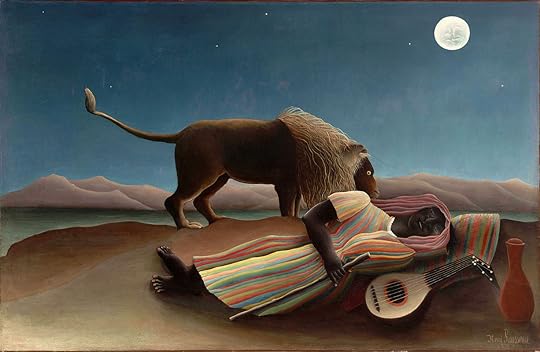
By painting the indolent life of this ‘nest of Oblomovs’ (dixit the Dutch translator fittingly describes this bunch of arch sloths in her post-face to the book) the Egyptian-French writer Albert Cossery (1913–2008) derides work ethics, exposing society’s obsessive preoccupancy with work and ambition by creating a topsy-turvy world, where masterful inactivity is extolled and attributed high status and work is something to be shunned at all costs, as disgraceful and repulsive.

1280px-Henri-Rousseau-010

Particularly the dreamlike scenes in which the youngest, naïve Serag considers the (theoretical) possibility of work (how to know if it really exists if one has never seen it?) and so becomes the outlier in the family are sweetly absurdist, the inversion having optimal, ironic effect, for instance when his father gets wind of his audacious plans: 'What do I hear? You want to work! What do you dislike in this house? Ungrateful son! I have fed you and dressed for years and here are your thanks!'

Cossery’s tale is one of refusal of what he sees as a form of voluntary servitude, underpinned by a snappy, wayward view on freedom in which idleness is the ultimate wisdom and work is slavery, so-called progress bringing only subjugation. A labouring humanity is a trapped humanity. Possession means nothing, freedom means everything, and is there anything that curtails one’s freedom more than having to work to earn a living?

This novel is to be read with caution, it is not unlikely that one might hiccup with laughter here and there and I would recommend to make sure one can yawn ahead in peace and to have a pillow and a soft blanket at hand as the sleepiness of the brothers is pretty contagious(z-z-z-z-z-z-z-z-z).
Profile Image for Luís.
2,371 reviews1,367 followers
June 2, 2025
Opening this book by Albert Cossery, the iconoclast who wields derision and humor, is to have in your hands an abrasive text, always far from the beaten track, short, which spoils nothing and which offers maximum pleasure.
Profile Image for Laurent De Maertelaer.
804 reviews163 followers
January 7, 2017
Het onwaarschijnlijke verhaal van een 'nest Oblomovs', een lethargisch en weemoedig huishouden belegerd door de slaap. Een moederloze familie in een klein Egyptisch dorp - een vader en zijn drie volwassen zoons - zijn allemaal 'aristocraten van de ziel' en geketend door een verlammende, nietsontziende luiheid. Ze slapen reuzengaten in de ene na de andere dag. Gelukkig zijn ze bemiddeld genoeg om niet te hoeven werken. Wanneer de oude Hafiz wil hertrouwen bewegen zijn zoons hemel en aarde om het huwelijk te dwarsbomen, uit schrik dat hun mooie leventje van stilte, rust en slaap zal verstoord worden. Even grote paniek ontstaat er wanneer Siraag, de jongste zoon, naar de stad wil gaan om te werken, godbetert. Een absurdistisch meesterwerk, met Cossery's vaste ingrediënten: humor, korte zinnen, schitterende dialogen, uitgediepte personages van vlees en bloed, zuiderse sloomheid en de onweerstaanbare drang naar vrijheid. Opnieuw een schitterende vertaling van Mirjam de Veth.

Cossery, geboren in Cairo in 1913, woonde sinds 1945 in Parijs waar hij zijn intrek nam op een kamertje van het Hotel La Louisiane in de Rue de la Seine, Saint-Germain-des-Prés. Hij bleef daar wonen tot aan zijn dood in 2008. Hij schreef in het Frans, dit is zijn romandebuut, uit 1947. In 1940 hielp zijn vriend Henry Miller hem om een eerste bundeling verhalen uit te geven: 'Les Hommes oubliés de Dieu' (eveneens uitgegeven door Coppens & Frenks in Nederlandse vertaling als 'De mensen die God vergat', en evenzeer een aanrader). Andere grootheden die Cossery tot zijn vriendenkring mocht rekenen: Albert Camus, Jean Genet en Lawrence Durrell. Lees deze man.
Profile Image for Teresa.
1,492 reviews
July 4, 2017
Sem me cansar muito, o melhor que posso dizer sobre este livro, e o Senhor Cossery, é: ADORO-OS!

Para os mandriões, que não queiram ir ver a sinopse e se interessem saber do que trata, ainda arranjei forças para a copiar:

"Terceira obra de Albert Cossery, data de 1947. É o romance em que este autor dedica ao seu tema predilecto - o ódio sarcástico ao trabalho - uma maior amplitude filosófica. Numa vivenda a pedir obras, nos arredores de uma grande cidade egípcia, mora uma família singular: um ancião, os seus três filhos e um tio que ali encontrou refúgio depois de ter delapidado na borga toda a fortuna. Uma mocinha, parente afastada do ancião, prepara-lhe as refeições e faz a lida da casa - lida essa reduzida ao mínimo, porque a personagem central da narrativa é o sono."

... e para transcrever uma frase de Albert Cossery. Mas sugiro que pessoas muito sensíveis não abram o spoiler...

Profile Image for Lobstergirl.
1,921 reviews1,435 followers
September 1, 2015

While reading Laziness in the Fertile Valley I had urges to go chop wood, wash a random person's car, scrub the refrigerator, pen a college-level organic chemistry text, anything to differentiate myself from the beyond-pathological degree of sloth depicted in this family of hideous ne'er-do-wells. What I ended up doing was, obviously, sit on my butt and turn pages.

The story follows an elderly Egyptian father who never leaves his top floor bedroom, a decrepit uncle, and three sons: Rafik, who mostly lazes around the house but occasionally bestirs himself to molest the teenage cook; Galal, who hasn't changed out of his filthy pajamas in seven years; and Serag, the youngest, who has occasional aspirations of leaving his somnolent house and traveling to the big city (Cairo). Even when Rafik or Serag leave the house, they are not able to walk far without being overcome by narcolepsy, and they often have to sit down and sleep wherever they are. As a prostitute who used to be in love with Rafik explains, "They'd rather wet their pants than unbutton their trousers - it's too tiring." The only person in the house who does any work is Hoda, the girl hired to cook the family meals. Hoda is not well treated:

"Well, you bitch, is lunch ready?" asked Rafik.
"It's ready," said Hoda. "You can sit down at the table."
"Hurry up, you daughter of a whore!"

The other story line, aside from Serag's semi-energetic intention to leave, is the elderly father's desire to marry a young woman. He has hired a matchmaker, and we learn that she has found a 16-year-old girl for him, but there's one problem: he has an enormous, revolting hernia between his legs. When the rest of the family learns about the hernia, they are overjoyed, realizing that the marriage will never come to pass and that their home will remain female-free, not counting little servant Hoda.

Some feel this is a satire, but I'm not convinced. The Afterword explains that Albert Cossery was born in Cairo into a Greek Orthodox family of Syro-Lebanese descent. His father was just wealthy enough that he didn't need a job, and woke at noon each day. Cossery inherited his father's habits, after the war moving to Paris, waking late, and sitting in the Café de Flore for hours doing nothing; when waiters inquired if he was bored, he answered, "I am never bored when I'm with Albert Cossery."


Albert Cossery had several thousand sexual conquests in his long life.
Profile Image for    ‍ΟυΛιΠο   .
49 reviews
July 9, 2018
ο πρίγκηπας της αδράνειας Αλμπέρ Κοσσερυ καταφέρνει να συναρπάσει με ένα παράδοξο μυθιστόρημα στο οποίο εξυμνειται η αδράνεια. Μέσα από την ληθαργικη κατάσταση των χαρακτήρων αναδεικνύεται η έντονη πολεμική του Κοσσερυ σε κάθε είδους χειρωνακτικής ή μη εργασίας.. Ο ίδιος σφοδρος πολέμιος της δουλειάς που περηφανευοταν πως δεν δούλεψε ούτε ένα λεπτό καταρρακωνει την μάστιγα της δουλειάς η οποία φτάνει να παίρνει τα όρια της σκλαβιάς.
εκκεντρικός, ευρηματικός και με ένα μαύρο χιούμορ αγκαλιάζει την τεμπελιά ανάγοντας την σε πανανθρώπινο και ύψιστο αγαθό..

μεταφέρθηκε και στον ελληνικο κινηματογράφο , δυστυχώς αποδίδοντας μια πολιτικο-ιδεολογικη χροια
Profile Image for Pedro.
238 reviews665 followers
Read
June 17, 2025
The most impressive thing about this 1947 novel was the fact that the gay character was treated with more respect than the women. Sadly for him, while women were mere domestic receptacles for penises, he was left wanting.

Also very impressed by a hernia playing such an important role in a story. Bravo!! 👏🏼
Profile Image for jeremy.
1,202 reviews309 followers
October 16, 2013
albert cossery's works do not tend to vary that much in theme, style, or character. the cairo-born french author's third novel (of the eight he wrote over six decades), laziness in the fertile valley (les fainéants dans la vallée fertile), is about a family of good-for-nothing layabouts (or might they be malingerers?), unemployed one and all, that predominantly spend their time sleeping. the youngest of the three sons, serag, daydreams of labor, idealizes the notion of work, and is forever plotting his escape to the city where he believes he'll find employment (and perhaps redemption).

while there are more than a few moments of great humor, cossery's novel (published when he was 35) may be too similar to his other works to stand out as an exceptional offering. although cossery does make some keen observations on society, progress, business, and success, laziness in the fertile valley fails to rouse as easily as both the jokers or the colors of infamy do. here again are very weak female characters; thin, disposable creations that serve mostly as male interest or annoyance. if you've read other cossery novels (and know what to expect from his fiction), there's much to like in laziness, but this may not be the best one to start with for the uninitiated.
he felt lighter, as though moved by a gentle, tranquil power that seemed to have taken possession of him. to have grasped this elemental truth, hidden at the bottom of life - the way of the least effort - filled him with pride and gratitude. he felt as though he were floating in a decaying world that hadn't yet discovered its true nature. the stupidity of men was boundless. why did they have to struggle, always vicious and discontented, when the sole wisdom lay in a careless, passive attitude.

a very brief foreword by henry miller precedes the lengthier, more explanatory afterword by anna della subin.

*translated from the french by william goyen (the late author of the house of breath)
Profile Image for Tosh.
Author 14 books776 followers
January 23, 2014
I'm not a man that has a lot of heroes, but if I was going to choose one hero, it would be Albert Cossery. A wrier who is devoted to watching pretty girls from cafes and being lazy. With those two high-standard activities, this is a writer I will follow from heaven to hell. "Laziness in the Fertile Valley" is another one of his masterpieces that deals with a set of characters who prefer to do nothing when 'something' appears and shows its ugly heard. What we have here is a family of men, who one, the older brother prefers and does only a great deal of sleeping. Waking up for the occasional meal, and then back to bed. The younger brother, foolishly has a desire to go out of the house and find work, and the Dad, is busy arranging a marriage, but has to deal with some rather old guy's specific problems.

Cossery, Egyptian born, but lived most of his adult life in Paris cafes - mostly all located in the St. Germain des Prés section of Paris, is a writer who according to Anna Della Subin in her informative afterword enclosed in this book, came from a family of lazy people. His grandfather, for instance, refused to leave his bedroom. For me this is a much desired lifestyle. There is a tinge of jealousy when I read Cossery's novels, but alas, the enjoyment I get from them is a sense of bliss.
Profile Image for Camille .
305 reviews187 followers
November 7, 2020
Dans la vallée fertile, les hommes dorment. Ce n'est pas forcément qu'ils le souhaitent, mais les paupières de Serag sont si lourdes que parfois, il douterait presque de sa volonté de sortir de la maison familiale à la recherche d'un travail. Et les reproches du paresseux Rafik, son frère, et le sommeil sans fond de Galag, qui dort depuis 7 ans d'un sommeil aux profondeurs de contes de fées, ne font rien pour l'encourager.
Non, les meilleures volontés sont impuissantes face au poids de la somnolence. L'usine, dans laquelle Serag voudrait travailler, ne se construit pas. L'artiste, qui est son ami, ne peint plus qu'une couleur. Même les enfants dorment, sans jamais crier.
Autour des hommes ensommeillés, les femmes évoluent, répondant à leurs désirs. Elles sont les servantes qui lavent et qui cuisinent, les prostituées qui couchent, les entremetteuses qui soulagent même de l'effort de trouver l'amour, les éveillées que personne ne reconnaît.
Dans les ruines de l'usine, seul l'enfant qui a faim n'a d'autre choix que de rester pleinement conscient, yeux grands ouverts sur sa misère.

Premier roman de Cossery pour moi, une très belle découverte !
Profile Image for bruna.
85 reviews4 followers
November 19, 2024
isto é suposto ser uma sátira sobre o capitalismo ou uma bomba de misoginia? respeito quem consegue ler clássicos e ignorar a forma depravada como estes autores retratam mulheres nas suas obras e a violência sexual que elas sofrem, mas eu não consigo. desculpem
Profile Image for Bambino.
127 reviews5 followers
September 6, 2019
Primeira leitura no Palheiro, talvez em 2013, a dormir na Ramona. Noite da papoila na mesa de Ouija encontrada no lixo, de feltro verde com o pentagrama no meio, com um pé central. Missão falhada de 5000 nos dados. Viagem no tempo.

Segunda leitura na Vicentina, no Verão da horta da vida, em 2016.

Terceira agora, no Inverno da Miopericardite, na casa da Sisterna.

*

Excelente tradução. Leitura fluída como o trajecto de uma locomotiva incandescente a cair da estratosfera para dentro de um oceano de manteiga.

Segue-se uma crítica bastante pobre, desnorteada e falsamente pessimista. Posso desculpar a minha inépcia com o facto de ter arrancado um dente do siso e de me recusar, estoicamente, a tomar qualquer tipo de medicamento.

*

A melhor estruturada e mais consistente obra de Cossery - nenhum pormenor a mais nem a menos. É a menos revolucionária das suas obras mesmo quando ilustra, com uma subtileza sarcástica magistral, alguns dos aspectos que infectam as sociedades modernas.

Podemos limitar-nos a assimilar esta obra sem entrar em grandes interpretações e saborear o seu efeito narcótico, poético e cómico. Mas eu não resisto a entrar em comparações. Fico sempre estupefacto quando os leitores consideram estes mandriões como uma anomalia, real ou ficcional, digna de ríspida censura. O seu sono parece-lhes uma obscena recusa do acto de viver. Contudo, basta uma réstea de auto-observação para constatar que esta construcção de Cossery pode ser uma metáfora perfeita da civilização ocidental - essa quimera burguesa, ociosa e perdida da realidade.

Sim, estes mandriões burgueses são pouco diferentes do típico cidadão do primeiro mundo. Com o pão garantido e a líbido saciada, o Homem ocidental moderno sucumbe ao sono - todos os dias, a toda a hora. Deixemo-nos de hipocrisias. Que são, afinal, as drogas que quase todos consomem (álcool, tabaco, açúcar, estimulantes e calmantes, etc), os jogos de computador, e a multiplicidade de vídeos completamente irrelevantes e plenos de violência e ignorância? Que são os best-sellers da literatura pop, os blockbusters de Hollywood, e as intermináveis seasons de séries completamente estéreis? O que são as nossas peregrinações constantes aos templos do consumo para comprarmos, quase sempre, o que nem precisamos ou o que já possuímos? O que são todos estes vícios senão fugas ao instinto, ao desconhecido, aos vertiginosos caminhos da vida animal com todos os seus milagres e perigos? Passar uma tarde a dormir ou passar uma tarde no shopping são actividades igualmente estéreis - a primeira opção talvez seja mais louvável porque polui menos e não alimenta a máquina capitalista que a todos nos devora.

À parte do fundamental contacto social, a maior parte dos nossos rituais são uma forma diferente de adormecimento. Entre as gerações mais modernas, que têm inúteis aparatos luminosos a pairarem-lhes em frente à cara, a toda a hora, o factor de interacção humana quase deixa de existir. Portanto, quase toda a gente que observamos durante o dia está tão adormecida quanto os mandriões de Cossery.

Vejamos o triste exemplo de um dos negócios mais rentáveis do mundo: a pornografia. A maior parte dos homens passa muito mais tempo a ver outros a copularem do que a copular. Muitas dessas pobres criaturas abdicaram do amor real para se perderem em labirintos de perversões virtuais. Parece-me muitíssimo mais grave ver um minuto de pornografia do que dormir a mais longa das sestas.

Resta uma diferença flagrante entre estes recrimináveis preguiçosos e as activas criaturas modernas: o trabalho. Contudo, a vastíssima maioria dos trabalhos não passa de embrutecimento físico ou intelectual, e mera remuneração para financiar os nossos rituais de consumo e estupidificação. Infelizmente, há poucos trabalhos criativos.

Há também uma anomalia a considerar: Rafik. Este adiciona uma componente idealista à preguiça e, consequentemente, perde-se numa visão burguesa, parasitária, esquizofrénica, absurda. Os outros, a gozarem do património do velho Hafez em silêncio, evitam tal erro. Mas a reclusão de Rafik parte do medo, de um sentimento de superioridade, e da ignorância.
Nesta construcção de Cossery (ao contrário da maioria das suas obras) o personagem mais cerebral, mais idealista, é o menos revolucionário de todos.

Preguiça à parte, encontramos na derradeira fuga de Serag um dos outros cancros da nossa sociedade: uma doentia necessidade de conforto. Quantas vezes não sentimos na pele aquele medo de abandonar o porto seguro e velejar contra as vozes de familiares, amigos e sociedade? Quantas garras paternas não mantiveram os próprios filhos trancados, na ignorância e na infelicidade, querendo apenas protegê-los?
É absurda e egoísta a forma como o velho Hafez prefere o filho fechado em casa, a dormir. Contudo, quantos pais não tratam os filhos como meras projecções do seu próprio ego e os condenam a estudar o que não querem, a enforcarem-se em empréstimos bancários sanguinários, a recusar a sua própria identidade pessoal, sexual ou ideológica, e a viverem enterrados no tédio profundo e fatal de quem não seguiu os próprios sonhos? A resposta é assustadora e paira diante dos nossos olhos, todos os dias, em todo o lado.

Claro que estes meus argumentos são um pouco exagerados e pessimistas. Há coisas fantásticas que nasceram das democracias capitalistas e do seu ritmo alucinado. Não há nada de errado em moderadas doses de adormecimento. E é claro que a abulia destes personagens, apesar da sua beleza poética e cómica, é uma completa negação da vida. Não pretendia defendê-los, da mesma forma que não defendo o rumo que as sociedades ocidentais estão a seguir. Com tudo isto pretendia, unicamente, remexer a estagnada superfície do nosso sono.
Profile Image for Lukáš Palán.
Author 10 books234 followers
June 30, 2019
Bom dia.

Další knížka od Cosseryho a zase za osm. Tentokrát popisuje život jedné rodiny, která celej den jen chrápe a když se vzbudí, tak se zhrozí, že jsou vzhůru a jdou zase spát. Připomínalo mi to kámoše Spacáka - ten se taky probouzel jen když někdo zacinkal dvouma Bráníkama. Jako v každé rodině, i tady je černá ovce - Serag totiž chce jít pracovat. To se všema málem sekne, takhle bláznivej nápad neměl nikdo už tři generace. Ale Serag vypadá, že to fakt chce, dokonce i chodí z domu ven a je vzhůru v jiný čas než na oběd a večeři. #drama

Aby toho nebylo málo, starej od rodiny se chce oženit, což všem dost vadí, protože žena v domě znamená řev a tak by nemohli spát. Nedej bože by třeba museli do sprchy nebo vyprat jednou za rok povlečení. #drama2

Cossery byl nejlínější člověk na světě a tahle knížka je prej dost autobiografická. V tom případě mu gratuluju. Zábavný čtení.


Profile Image for Tom.
1,171 reviews
December 8, 2013
Cossery was the King of Sloth. Where others shun and demonize laziness, Cossery makes it divine--none of his characters work, and all find it repulsive. The family of men in "Laziness"--three brothers, their father and uncle--spend most of their time sleeping or eating. The eldest (and sleepiest) brother, Galal, sometimes even neglects to wake up to eat. The plot is thin: will their father spoil everything and marry (women demand activity and a social life!); will the youngest brother, the rebel, Serag, actually carry out his threat to leave the house and find a job? The delights of sleep are amply illustrated. The unpleasantness of toiling for food and money are recounted. Whether 'tis better to bed a woman or just sleep debated. . . Some years ago, I read that Cossery, who only published six books in his 94-year life, claimed to write about a page a month--enough to turn out about one book a decade.
Profile Image for Sophie.
150 reviews9 followers
August 2, 2016
Livre acheté à la librairie de l'Institut du Monde Arabe (sur les conseils de la fiche du libraire qui disait qu'il ferait s'étrangler les traders capitalistes ...) et commencé de suite à l'ombre des arbres du merveilleux jardin temporaire. Ce livre, outre effectivement le contre-pied formidable au capitalisme qu'il décrit, donne envie de s'abandonner au sommeil avec la langueur (tellement bien décrite) des personnages.
Profile Image for Frank D'hanis junior.
193 reviews13 followers
June 26, 2021
Een schrijver die volgens het nawoord verrukt was dat jonge mensen zijn boeken ontdekten en hij er zo misschien een aantal kon redden van een kantoorbaan. De luiaards is een sterk werk, niet voorgedreven door een verhaal, maar door de filosofische ideeën erin, de sterke personages en de sfeer die de nogal sobere stijl van Cossery oproept. Hoogtepunt van het boek waren voor mij de groteske momenten waarop de eertijds tirannieke vader Hafiz met een meloengrote breuk te bed ligt en droomt van een huwelijk met een jong meisje. Ook Galaal, de oudste zoon van het gezin die enkel nog wakker wordt om te eten, was een zeer memorabel personage.
3 reviews3 followers
September 25, 2012
الرواية تنضح بالميزوجينية والطبقية، والميزآنثروبية/كراهية البشر. كنت أطالع صفحة الكاتب على ويكي واكتشفت أنه يتبنى وجهة النظر الاستعمارية تجاه الشرق، فالشرق كسول، لو حظى بالأملاك يفضل النوم على العمل. ووجهة النظر هذه في حد ذاتها تسطّح وتضع غشاوة على الظلم العالمي/الطبقي وعلى معاناة العمال في العالم كله والعالم الثالث بشكل خاص، ولا أعرف كيف يتبنى الكاتب وجهة النظر التافهة هذه، إلا اذا كان يعبّر عن وجهة نظره من الفقاعة التي يعيش بها أبطال الرواية أنفسهم.

من حيث الحبكة فهي تستوحي كثيرا من الارث العالمي (كرواية الأخوة كارامازوف) لكن دون النقد الاجتماعي والطبقي والسيكولوجي العميق وحسّ الحقوقية والعدالة الذي في كتاب دستويفسكي، يتبنى الكاتب -بأسلوب سرد الراوي العليم- موقفا آباثياً كارهاً للبشر وللمهمشين بشكل خاص، فالنساء في الرواية ذوات شخصية "توراتية" همّهن الوحيد هو تعكير صفو الحياة أو الهاء الأبطال من الذكور عن أهدافهم "العليا، سواء كانت هذه الأهداف "النوم" أو العمل والحرية. والشحاذون مجرد مخلوقات مازوخية تنتهج مسلك تعذيب الذات لكسب الشفقة من باب المهنة والاحتراف، لا يجلب قُصيري شخصيات مصرية تعاني الظلم بل يجلب شخصياته التي تعاني كأفراد ضمن قطيع البشرية العريض المجبول على الوضاعة والعذاب. ويتخذ موقفا محتقرا من هذه البشرية العريضة التي بلا ملامح أو هدف، رواية عجيبة متطرفة في بطرياركيتها، فالأبطال لا يواجهون السلطة الأبوية إلا حين صارت تهدد هذه السلطة النظام نفسه الذي أسسته، ويمكن للقارئ اكتشاف الجذور الأصيلة لحزب كنبة متطرّف في هذا النص.
Profile Image for sarah ann.
25 reviews1 follower
April 3, 2017
I wish there were more. I feel like "Laziness in the Fertile Valley" is just one part of a greater saga. What happens when Serag and Hodo meet up with the child in the city?

To me, this read like an allegory of sorts. I liked the remoteness of the work, looking in on rather than being among the characters. It is so lovely to be moved but not knocked over the head with anything too powerful. "Laziness in the Fertile Valley" presented a sterile sequence of events, in a similar veins as the removed tone of Camus' "L'Etranger." Looking forward to learning more about Cossery and his other works.
Profile Image for حسين.
Author 17 books96 followers
July 4, 2009
فلسفة الكسل هي فلسفة التخاذل والإنسحاب

الرواية بشكل ما دي بتأرخ لفترة من فترات معتقداتي الشخصية
حيث إن أقل جهد كنت بأقوم بيه كنت بأستعد له بالنوم
وأكأفي نفسي على فعله بالنوم

بنيّة الرواية ضعيفة للغاية لكنها بتطرح أفكار مهمة جداً مفيش حد هيقدر يطرحها تاني
Profile Image for Vincent.
54 reviews1 follower
January 28, 2021
3.5
Certainement pas mal mais j’ai quand-mème préféré Un complot de saltimbanques.
Profile Image for André Pereira.
10 reviews7 followers
December 15, 2022
The government, his father had told him, would have the rebels arrested. Was he a rebel? Was his desire to get a job and join the working men a revolutionary act?

How was getting out of bed today, folks? Wished for a few more minutes dating your pillow?
Imagine the following: a society where sleeping is the only and sole goal of one’s life, and working is perceived as revolutionary and obnoxious. How would you like that? Familiar thought? Please take my advice and don’t push your imagination too hard, as you might receive a warning from Albert Cossery, this book’s author. Besides, he has already imagined all that for you, so keep your brain free and healthy for other tasks.

This book presents a paradox upfront: sleep plays the main role here but rarely are we allowed to yawn. In fact, you can skip your next visit to the gym because the novel will keep your cheek muscles and abs fit due to the hard laughing you will get from it. The plot revolves around a family of three brothers - Serag, Rafik and Galal - who live together with their father Hafez, their uncle Mustapha, and Hoda, a young housemaid who is in love with Serag. But beware, this is not your standard family. Their only occupation is sleeping, doing it all day long, waking up only for eating, exchanging a couple of words with each other and little else. As George Clooney emanates charm, the members of this family emanate drowziness, infecting everyone around them.

Not much happens in this novel - it wouldn’t be about laziness otherwise. In fact, the novel can be described as an apology of slothfulness. As a friend of Serag’s puts it: This strange idleness, in my opinion, is a supreme and distinguished art. He believes that doing nothing at all is an art in itself and I believe that this is very much in line with Cossery’s own opinion about work and modern society. Or society at all. For him, people make themselves busy with unimportant and useless tasks (or so called work) in order to achieve a sense of importance and productivity, thus neglecting life in its splendour, never being able to just exist. To just exist and to live without any concrete goals or future perspectives. Galal, the eldest of the three brothers, resumes this idea very clearly at some point, stating that There is nothing important enough to get me out of bed. This is also the guy about whom the myth goes that he has been sleeping for the past seven years. C'mon, let's pay some respect here.

Now, I must say that I felt something was not complete about this novel, as I expected Cossery to delve deeper and philosophize about how a workless society, the one he so eagerly dreams of, would actually work out (no pun intended). Instead, he only places a lazy and workless family among normal people, working people if you will. No hard judgements though, it is the philosopher within me (or shall I say the lazy?) who wants to know more about the author’s take on a world where working is not even a remote possibility. Besides, there are still hints of a cultural study into a workless society in this book, if nothing else, through his lightly dark humour.

Easily digestible, witty and provocative, this book will give you bursts of laughter. The humour is delightful, dark and nonsensical, and I am certain you would like to meet a family where having diabetes is leverage for a good marriage, where tongs are needed to open your brother’s eyes and get him out of bed, or where even wishing to find a job is an ignoble behaviour.

And now, off to work!
Profile Image for George K..
2,759 reviews371 followers
March 26, 2023
Βαθμολογία: 9/10

Τρίτο βιβλίο του Αλμπέρ Κοσερί που διαβάζω, μετά την πολύ ωραία συλλογή διηγημάτων "Ξεχασμένοι απ' το Θεό" που διάβασα τον Μάιο του 2016 και το υπέροχο μυθιστόρημα "Ζητιάνοι και περήφανοι" που διάβασα τον Σεπτέμβριο του 2018, και δηλώνω και πάλι ενθουσιασμένος. Δεν ξέρω, ο Κοσερί έχει κάτι στη γραφή του, στο μαύρο χιούμορ του, στον κυνικό τρόπο σκέψης του, στο στιλ αφήγησης, γενικά στις ιστορίες του, που με αφήνει πάντα κατάπληκτο. Η αλήθεια είναι ότι μάλλον θα περνούσε αρκετός καιρός ακόμα μέχρι να διάβαζα τελικά το βιβλίο, αν δεν μάθαινα ότι την επόμενη Κυριακή η ΕΡΤ2 θα προβάλλει την ταινία "Οι τεμπέληδες της εύφορης κοιλάδας" του Νίκου Παναγιωτόπουλου. Με το που το έμαθα, ξετρελάθηκα και φυσικά άρπαξα το βιβλίο για να το διαβάσω, γιατί πάντα όταν υπάρχει η δυνατότητα, θέλω να διαβάζω το βιβλίο πρώτα και μετά να βλέπω την ταινία που βασίζεται σ' αυτό. Όπως και να 'χει, ευτυχώς τα έφεραν έτσι τα πράγματα και διάβασα το βιβλίο, που ήταν πραγματικά καταπληκτικό, υπέροχο, κωμικοτραγικό, κυνικό, που παρά τους τεμπέληδες και τους υπναράδες πρωταγωνιστές του δεν βαρέθηκα στιγμή, ούτε μου ήρθε να κοιμηθώ ή έστω να χασμουρηθώ. Υπέροχη γραφή, εξαιρετικό χιούμορ, μπόλικη τροφή για σκέψη, χαρακτήρες και σκηνικά που δεν ξεχνάς εύκολα, γενικά είναι ένα βιβλίο που έχει αρκετά πράγματα να προσφέρει σε όσους θέλουν να διαβάζουν κωμικοτραγικές και περίεργες ιστορίες. Και είναι κρίμα, πραγματικά κρίμα που δεν έχουν μεταφραστεί άλλα βιβλία του Κοσερί, όπως για παράδειγμα το "La Violence et la dérision" (aka "The Jokers") ή το "Un complot de saltimbanques" (aka "A Splendid Conspiracy"), μιας και είναι/ήταν ένας εξαιρετικός συγγραφέας με δικό του ύφος και στιλ. Αλλά τι να κάνεις...
Profile Image for Mariana Ferreira.
156 reviews63 followers
May 26, 2024
Insólito, maravilhosamente engraçado e pungente.

No meio de um cenário kafkiano de produtividade invertida( o sono, a quietação, são os valores absolutos e o trabalho alvo de desprezo e vergonha), um membro da família dos famosos e (ricos) mandriões de um vale sem nome, sonha a sua fuga e, com curiosidade, devaneia acerca do que será, realmente trabalhar. Afinal, o seu irmão Rafik diz que lá fora há homens que se levantam às quatro da manhã para ir trabalhar nas fábricas, nas minas, sem parar - mas tal não poderá ser verdade, apenas um mito para o assustar, acredita, inocentemente, Serag.

Ao mesmo tempo, como se não bastasse esta abstrusa e dissidente excentricidade, um casamento ameaça a tranquilidade de toda a família sonífera, uma vez que tal implicará todo um conjunto de desassossegos e, no pior cenário, a necessidade de trabalhar para suprir os luxos de tal mulher.

A par de um sarcasmo cínico e corrosivo, temos claro, como batuque de fundo, uma dolorosa verdade - o sono nada mais é que evasão de uma realidade que suga todas as forças vitais do homem em nome de um progresso crescente. O cansaço fácil, omnipresente -uma doença sem nome facilmente confundida com preguiça. A ânsia de vida, possibilidades - um grito interior contra o marasmo de uma existência tanto inerte (permitida pela herança) como estupidficante (por excessiva ação/ destino dos homens sob a égide da necessidade).

O equilíbrio entre humor e dor na escrita de Cossery é sublime e, pelas entre-linhas, vai semeando uma espécie de compaixão.
Profile Image for Rebecca.
318 reviews31 followers
June 8, 2021
Mi ci è voluto del tempo per capire come mi sentissi nei confronti di questo romanzo, e discuterne col GdL della biblioteca mi ha in parte aiutata a metterlo più a fuoco.

La storia ruota attorno a una famiglia la cui unica occupazione è darsi all'ozio: Galal non si muove più dal suo letto, Raifk ha rinunciato a sposare la donna della sua vita per non dover lavorare, il padre non esce più dalla sua camera e lo zio non è molto diverso per attitudine. Solo il figlio minore, Serag, sembra desiderare qualcosa di diverso - significative le lunghe passeggiate a visitare una fabbrica la cui costruzione, però, è ormai interrotta. Il racconto ruota attorno all'incombere dell'arrivo di una donna in casa, che sconvolgerebbe gli equilibri di sonno e ozio dei suoi abitanti.

È un racconto a tratti divertente, soprattutto quando si concentra sulle (dis)avventure dei personaggi che tentano in tutti i modi di scacciare il mostro della fatica o di giustificare il loro modus vivendi, però l'indolenza mostrata è molto cruda e degradante. Dà una sensazione di vita vissuta a metà.

Tuttavia, ciò che mi ha lasciata più con l'amaro in bocca è stato il finale, che pensavo avrebbe portato a una svolta che, invece, si traduce in un'altra dormita. Ha senso, considerando il tono del libro, ma la parte di me più romantica e speranzosa avrebbe letto volentieri uno sfogo diverso della tensione costruita.

3/5 ⭐
Profile Image for Granny Sebestyen.
497 reviews23 followers
September 7, 2020
"Les fainéants dans la vallée fertile" d'Albert Cossery (203P)
Ed. Joelle Losfeld
Bonjour les fous de lectures.....
Livre lu dans le cadre du défi "je noircis mon planisphère".
Découverte d'un auteur égyptien.
On parle d'une famille, une tribu d'hommes, le père et les trois fils dont l'occupation principale est de dormir.
Le père, Hafez, vit cloîtré à l'étage où il contemple sa hernie tout en rêvant à des projets de mariage.
Le fils ainé, Galal, ne se réveille que le temps de se sustenter ( et encore, pas tous les jours).
Le cadet, Rafik, entre deux sommes, s'oblige à rester éveiller pour chasser l'entremetteuse chargée de découvrir la future épouse.
Il a choisi le sommeil pour fuir les réalités de l'existence et le "monde misérable" qui l'entoure.
Et enfin, le benjamin Serag.
Celui-ci en a assez de cette vie oisive et veut absolument travailler.
Cette idée étonne le reste de la famille et trouble leur sommeil.
Serag réussira-t-il a prendre son envol?
Récit humoristique et rempli de dérision vis-à-vis du peuple égyptien dont fait partie l'auteur.
Agréable découverte sur l'art de cultiver l'oisiveté
On dit qu'Albert Cossery se serait inspiré de sa propre famille pour écrire ce roman?
Displaying 1 - 30 of 66 reviews

Can't find what you're looking for?

Get help and learn more about the design.