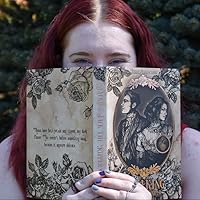
It began with whispers in a dimly lit room. In the 1840s, the Fox Sisters—and the legions of mediums they inspired—ignited the Spiritualist movement that swept through Victorian parlors and presidential campaigns alike. Contacting the dead wasn't merely a parlor It was a political statement, a declaration of self that still echoes. Séances attracted suffragists and scientists, skeptics and charlatans, giving women a voice in a society that often refused to hear them. But as Spiritualism surged, it also blurred the lines between faith, fraud, feminism, and financial opportunity, drawing figures as varied as Harry Houdini, Victoria Woodhull, and even modern self-help gurus into its ever-expanding orbit.
From wartime séances to the rise of televangelists, from Victorian ghosts to goop-approved wellness rituals, When We Spoke to the Dead unearths the forgotten roots of today's obsession with manifestation, mysticism, and the power of belief. Exploring America's deep-seated hunger for the unseen—whether through politics, personal empowerment, or grief—this book traces how the supernatural, once condemned as heresy, became the ultimate commodity.
Step inside the séance room. The spirits have been waiting.
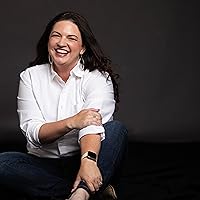
Ilise S. Carter is freelance writer, consulting copywriter to the beauty industry, and sideshow performer based in New York City. She has written for Allure, New York Times, Racked, Wall Street Journal, and others, with a focus on pop culture. In addition, she’s spent over a decade as a consulting copywriter for beauty brands such as Shiseido, bliss, Laura Mercier, Avon, L’Oréal, and Madame CJ Walker, specializing in brand voice and identity. As her stage persona, The Lady Aye, she has worked as professional sideshow performer (sword swallower, fire eater, blockhead, and pain-proof girl) and MC with acts ranging from Rob Zombie to Cirque du Soleil, and has appeared on TV’s Gossip Girl, Oddities, The President Show, Mysteries at the Museum and Dickinson. Carter holds a BA in American Studies from Barnard College at Columbia University and a Certificate in Film Production from NYU.
3.5 stars.The title and tag line of this book are a misnomer - its less a history of Spiritualism's women having a voice, and more of an exploration of "spooky Americana" and how the contemporary commercialization of ghosts, witches, holistic medicine, "voodoo" and psychics has roots in new religious movements (such as Spiritualism).
I do appreciate the cultural/historical contexts of the Civil War, women's suffrage, abolitionism, eugenics, and colonialism/racism/white saviorism. I also enjoyed learning about figures like Harriet Wilson, Leonora Piper, etc. But overall the book lacks a cohesive narrative or point of view. The author hasn't decided whether this is feminist perspective, spiritual/wellness industry critique, historical research, travelogue, or creative nonfiction. She dips her toe into a variety of perspectives and topics with skepticism and snark, while insisting that she's withholding judgment.
She is very forthcoming with her critiques of everything from Disneyland's Haunted Mansion, to ghost tours, to chiropractors but she gives very weak framing of the contemporary, sincere religious practice of Spiritualism, Witchcraft/Neo-paganism, Hoodoo/Rootwork and syncretic religions such as Vodun, Orisha, Santeria, and Candomblé (which she lumps altogether under the problematic term "voodoo" - without the thoughtful critique of this word, as she offers in other sections). She mentions Christian Science in passing but neglects Theosophy and the entire New Thought movement.
This book might work better for me if she explored these religions, through a feminist lens, as a means of empowerment for women through American history, social upheaval and change. Instead she floats through Lily Dale, Salem, and New Orleans without really connecting with the people she meets or their beliefs or practices in a meaningful way. Her personal stories were distracting as there was no real personal growth arc or revelations. I don't dislike the author's writing persay, the book just lacks a clear enough structure, theme, or through line for me. Still worth the read for all the information presented though.
Digital ARC from NetGalley
If you are interested in these topics I would also recommend...
For feminist history:
Out of the Shadows: Six Visionary Victorian Women in Search of a Public Voice by Emily Midorikawa
Radical Spirits: Spiritualism and Women's Rights in Nineteenth-Century America by Ann Braude
For spiritual travelogue/memoir:
And Your Daughters Shall Prophesy: Stories from the Byways of American Women and Religion by Adrian Shirk
For creative non-fiction with personal perspectives and connection with contemporary Spiritualists:
The In-Betweens: The Spiritualists, Mediums, and Legends of Camp Etna by Mira Ptacin
Lily Dale: The Town That Talks to the Dead by Christine Wicker
The title and cover certainly piqued my interest, as I had recently read another book on Transcendalism.
I was hoping to learn more about Spiritualism as a movement, and was intrigued by the historical aspects promised. However, I felt that the author inserted herself into the narrative too often, and presented her opinions and personal feelings as facts. Some of her connections -- voodoo, politics, Poe, Houdini -- were tenuous at best.
Still, I'm glad for the opportunity to preview it and learn something new!
I picked this up as a side read for the Goodreads banner collecting challenge (my last book to complete the current set, yay) and also because it sounded really interesting.
Now, I feel a teensy bit bamboozled by the title, because When We Spoke to the Dead was more about the author, than the titular topic.
And the thing is, had she written a separate memoir, I would've read it, no questions asked, but what ended up happening here is that right when we were about to go deep into a subject, the author would mention how that relates to her situation, or she'd share her opinions on it (totally fine in moderation) and the thread would be lost.
The book often went into not-necessarily-related historical details, which sometimes made sense, other times didn't.
I finished When We Spoke to the Dead feeling like it barely scratched the surface of Spiritualism, and "how it gave women their voice". But the tidbits of it we did get were truly interesting, I just wish the book was a little less jumpy. Perhaps a revised edition will be out in the future, with even more research and stronger connections? One can only hope.
Unfortunately I DNF'd this audiobook. The audio quality was great and the narrator was easy to listen to but the content of the book reads more like an opinion piece than storytelling or providing information. Its clear the author doesn't believe in the supernatural and that's fine but this just isn't what I expected from this book. Its like "its okay, I have spiritual friends" kind of writing. I'm open to a lot of ideas and would not necessarily say I believe in it all, and enjoy reading things from different perspectives but this just felt like the author was very much low-key making fun of people that do believe in spiritualism.
Thank you to the author, Ilise S. Carter, and Netgalley for this free audiobook.
Thanks so much to NetGalley for the free Kindle book. My review is voluntarily given, and my opinions are my own.
While I am not convinced there are ghosts, I allow that it is possible. So I read these books, not because I believe, but because of the history behind it. Love learning about all different kinds of historical facts.
I really enjoyed the chapter on the Salem witch trials. Although I am sure I must have read about it at some point, I couldn't recall anything about the last person tried in Salem for being a witch. Killed, yes, but not tried. The whole thing was very interesting.
Also, I really loved reading about the divorce of Cora V.L. Hatch. Funny that I don't follow any celebrity drama, but I love reading about the historical stuff. I think it's because it's easier to find out what is actually true about people who have been dead for centuries than it is about people alive today.
Definitely would recommend this book, whether you are just a history buff or a true believer.
Fascinating at times, especially the chapters on the Fox Sisters, Salem, and New Orleans voodoo—those sections really showed how spiritualism intersected with feminism and politics. But the book leans heavily on the author’s ruminations, which slowed the pace and made me skim. I wanted more storytelling, less opinion. Still, it’s a thought-provoking look at how women used séances to carve out a voice in a world that didn’t want to hear them.
While I did generally enjoy this book, I found many of the vignettes got somewhat lost in the telling. Overall, none of the chapters delved as deep as I hoped and the final chapter was a little more out there than I was expecting as a serious skeptic myself.
CW: sexism, misogyny, grief, death, death of a parent, medical trauma, racism, racial slurs, antisemitism, slavery, pandemic, [minor:] child death, cancer
This purported topic of this book is a topic I genuinely would enjoy learning more about. However I feel this book went into a lot more than just spiritualism and left me wanting more in spiritualism itself. The book also seemed to be driven a lot more by emotion than fact. Which was fine (and interesting at times) because I had heard that it was a lot of her opinions prior to starting rhe book. Overall, i just felt it was lacking something.
This book is about Spiritualism, the movement in the mid-19th Century that lasted until the early 20th, and, akin to New Thought, won, as so many of its precepts are so blended into conventional wisdom (in the United States at least) that seeing it takes effort.
In particular, the book is a Feminist history of Spiritualism, focusing on major female players, and primarily the Fox Sisters, though it includes people like Madame Laveau to establish that Black America invented everything worthwhile about the U.S..
History is mixed with journalism and a sprinkle of travelog as the author interviews current practitioners and current and historical sites. It veers into the gonzo as the inciting event is the author's own loss of her father, and the author's grief in general about him and about others is an companion story.
The writing is stellar. Insightful and sharp, it makes for a real page-turner. I love it to the point of envy. Contra some other reviewers, I thought the more journalistic (and journal-y) parts to be the best in the book. The sense of personal narrative and insight works, both telling a good story and providing interstitial material that connects up bits that might otherwise come over as forced. It feels awesome.
As for it as a history, it is flawed. The premise is great. There is a lot of material here. The section on Beecher–Tilton is well-executed. The author is willing to take a go at the philosophy of science questions that paranormal research has influenced, which I think is a topic worth better recognition, and something that is often avoided due to its difficulty. The history of chiropractic practice never ever gets old. But the book failed my citation dive test repeatedly. There are marvelously unfounded assertions here, not necessarily wrong but either offered up without critical care or without supporting evidence, occasionally (as with sexuality) contradictory in its way to present the subjects of the tale in a better light.
See, what rattles my chains is the "both sides"-ing. I specifically had big hopes of this book in that I understand the author was a performer, and if there is one place where the 'to catch a thief' rule applies, it is with the supernatural. It is as if my dead mom was global warming, where people who otherwise show great intelligence and expertise lose their ****** critical facility and make absolute fools of themselves. A huckster will see the trick right away and not get taken.
There is a manner in which I get personally riled up about it. The author suggests that Spiritualism and its derivatives should be looked at like a lot of history, as a mixture of good and bad. I cannot accept that during wartime, with an anti-science administration propelled to power through conspiratorial thinking. But in a more general manner, I think that it breaks the author's project. It is only under con and hustle that spiritualism can bear a Feminist interpretation.
To throw the title back at the author, if there are ghosts, then American women were silent. Teaching the question devalues what sort of skill and canny that these women had. Even if you dial it back to a benign ignorance on their part, and a sort of desire to participate in the religious experience, the result is to devalue the agency that these women were stealing like Prometheus, and instead paint them like copycats of more patriarchal religious experience.
Instead, the book's route is to poke at the foma, and note the weird things that happen, which...well, there is a moment in the closing chapter that blows the author's credibility for me, in her acceptance of a cold reading that, based on all the facts I know about the author, would be about as risky as saying to BookToker that they had strong feelings about The Secret History.
And that is the thing, as a memoir or document of lived experience, great! I want that sort of material. It is fun and I want to read more of it and more like it. As a way of interpreting the past, not so much.
My thanks to the author, Ilise S. Carter, for writing the book, and to the publisher, Sourcebooks, for making the ARC available to me.
This was so close to being a DNF for me. What saved it is the fact that there is actually really interesting information in here...but the way it is laid out nearly broke my brain.
For starters, this book is split into chapters based on general topic. So you're reading about events completely out of order, which was frustrating. A person would get mentioned, but you'd need to wait another three chapters before you actually learned anything about them. Within these chapters it felt like I was reading tangents that sometimes linked up together, and sometimes felt so separated that I was confused why they were in the same chapter. For example, in the chapter titled "Salem: Mass. Hysteria" we start discussing the author's trip to Salem and how it commodifies witchcraft before skipping entirely over the history of Salem to discuss Ouija boards....of which the connection is that there is a Ouija board museum in Salem.
This leads into my next issue with this book....that for a book with the subtitle stating it's about how ghosts and spiritualism gave women their voice it has shockingly little content about how spiritualism changed or impacted women's role in society. In the chapter on Salem/Ouija boards the main connection to women was about how the sister-in-law of one of the owners of the Kennard Toy company came up with the name and idea to patent the board. That's it. Earlier we learned about Victoria Woodhull, the first female who ran for US president. While her story is very interesting, the only connection given to spiritualism is that at one point or another she held seances for money. So yes, the information given was interesting, but the way it was laid out and delivered frankly baffled me and made it hard to get through. It also felt like a collection of facts roughly about spiritualism that the author found interesting rather than a discussion of spiritualism and women's history.
I did enjoy the discussions on how modern day ghost hunting is filled with bros, how health tonics from Goop are similar to the olden day "tonics" that were sold, and how while the author was very openminded about modern day spiritualism, she was definitely not here for chiropractors.
I'm not going to recommend this, just based on how frustrating it was to parse through. While there was some cool stuff in there, I'm sure there are other books that are better written you can find that info and more.
This wasn’t quite what I expected. I went in hoping for more witch history, but it leaned more into spiritualism and the roots of talking to the dead in America. That said, I still really enjoyed it. The way it tied séances to feminism, politics, and even modern self-help culture was fascinating. It’s more about belief, power, and how women carved space for themselves in a world that didn’t want to listen until the spirits made them. Creepy, empowering, and surprisingly relevant.
DNF at 26%. Really wished I could have finished this for the Goodreads challenge, but I was falling asleep with my eyes open. It’s a mix of the author’s experience and opinions with historical one-liners.
I wanted to like this, but I would have DNFed if not for the goodreads challenge.
Ostensibly about spiritualism and mediums, actually just a list of social justice critiques. It's not even that I particularly disagree with most of what she has to say, but it's constant and clumsy. Plenty of histories draw past issues to the present, but the tangents this goes on wander far from the alleged content. It felt more like a checklist of post-2020 social issues to hit with a thin veneer (or veil, I s'pose) of content around it.
I'm not opposed to connecting the bigotries of the past with the issues of the present, but many of the connections were tenuous at best, or required a pretty mangled reading of the past to fit the modern point. It was more like an extended op-ed with spirtualist examples than a history of spiritualism.
FINAL EDIT: 1.75 stars. I'm being generous here, as it's obvious Carter did a fair amount of research and a lot of it *is* in the book, but then she undermines a whole lot of it by using herself as emotional evidence with unnecessary anecdotes and conjecture. (I think one of my favorites is when she mentions that something "became a circus," and then had to include that *she's* worked sideshows for a great deal of her life, so *she's* in a position to tell you that most people don't use that phrase correctly, but *she* does, almost like a minority reclaiming a slur that's used against them.)
Also very few chapters actually seem to cover much on the topic that the chapter title pretends that it's about, but I guess that makes sense as very little of the book is actually about "How ghosts gave American women their voice," unless we consider that because of ghosts and Spiritualism, Ilise S Carter was allowed to have a pointless personal rant about Gwyneth Paltrow shoved into this book. ("Our shared reality, our actual, literal life-and-death reality, has become something of a "Choose Your Own Adventure" debate, and I blame Gwyneth Paltrow. Okay, not entirely Gwyneth Paltrow, but she's not helping, and I;ll totally own up to the fact that I don't like her for reasons that have nothing to do with the damage she's doing. We're about the same age, went to similar high schools, and I feel like I know her cool-girl type who would get away with bullying weirdos like me. I worked for her hairdresser when I was in college, and I met her exactly once for only a brief moment before she became big, and I wasn't impressed.") Fascinating. What does this have to do about the history of Spiritualism? *shrug*
Again, there are plenty of stuff that...seem to touch on the history of Spiritualism, tangentially. But certain segments of the book, like the above, feel more like "modern opinion with historical garnish".
--- "Get in there and make it about you" -this author, probably.
I've barely made it into chapter one and the constant "quirky" lines and footnotes and her "am I relatable, readers?" anecdotal injections of her life are making this a slog to get through. I then unfortunately looked up her author page and saw that she was born in 1973, making the "how do you do, fellow kids" tone give me the heebie jeebies. You don't have to a boring tax accountant just because you're in later middle age, but damn, maybe lay off all the "I was a goth! I was a punk! I have a heart of darkness!" It's cringe. I can't even focus on the actual information you're supposedly trying to give us on the topic your book is supposedly about because I'm irritated by being constantly jump scared by you talking at me about things in your life and your personal beliefs and politics where they aren't warranted that I don't give a shit about.
---
EDIT: "For all its 'We the People' hoopla, the fledgling American experiment really hadn't accounted for what 50 percent of the population were going to do with themselves besides marry and have babies."
Here's a sample sentence in Chapter 2 that I just read. It's a common tone throughout the book so far. She's sometimes uplifting women, she's often complaining about the men. You can argue that you can't talk about women's voices historically without talking about the oppression, but I'd take it all more seriously if it didn't always sound so flippantly smug.
Disclaimer: I did receive a copy of the audiobook through NetGalley for free, however I am writing this review entirely voluntarily and my opinions are my own. Thank you to the author/publisher/NetGalley for the chance to review!
This is a pretty interesting read about the author’s relationship with spiritualism and research on the historical relationship with women and their prevalence in spiritual practice. I loved the connections Carter makes between women’s fights for freedoms and women’s leading of the charge on much of spirituality we know today. I think Carter touched on some great things including intersectionality with feminism and race equality.
This was a pretty good introduction of some aspects of base level feminist theory. It’s a great place to get a little bit of knowledge on why women have historically actually turned to spirituality and not just how patriarchal structures have explained it previously.
I think there could have been a little more historical context told and a little less of the author’s personal experiences, but I also completely understand that the stories told are the reason for this book in the first place, so I’m a little more soft on that aspect.
Overall, a pretty well written book that intertwines the author’s personal experiences with spirituality and sexism with a historical perspective of the same topics, with a healthy dose of skepticism around spiritualism.
Much like other reviews, the title and tagline just feels a little misleading. The author seemed to have a lot of opinions, which is completely fine, however, it seemed to get in the way of the history she was trying to tell.
Overall, it really isn’t what I expected. It felt like the history veered off in different directions when I thought more of the focus would be on calling to the spirits. In fact, it feels like very little of what I expected when picking up a book titled “When We Spoke to the Dead”.
This is a one star for me. I found myself skimming most of the book and quite frankly skipping most of it. This was more of an opinion piece by the author. Some stories were ok, but most were very bland.
An entertaining and informative overview of Spiritualism. I disagree with other reviews about the author including her own biographical details; I found Carter's personal story to be an engaging, connective thread. I didn't want a dense book on the subject, and I also personally connected with the author's point of view, so there wasn't much for me to dislike. As a pop culture fan myself, I also enjoyed that framing as well. I will definitely read "The Red Menace" next. (Thank you to my beloved Allison for getting me a copy of this book!)
Such an interesting book. I learned so much that I didn’t know and it kept me intrigued the entire time. I couldn’t put it down and now my house is so clean!
Get in loser, we’re going on a Spiritualist road trip!
This is a fun primer on the history of Spiritualism in America and a lovely travelogue of the author’s hands-on, experiential approach to researching the subject.
If you’re pretty familiar with the history of Spiritualism, there isn’t a lot of concrete information here that you haven’t seen before. That said, if you’re new or new-ish to the topic this is a great place to start, and Carter’s travelogue approach is so well done that there is also a lot here for those of us already familiar with the general history of the subject.
It’s odd to me that so many reviewers were put off by the personal aspects of this story, as I thought that those were the best parts of the book. While I agree that authors inserting themselves into nonfiction can be a problem or detract from the material, here I felt Carter’s personal anecdotes and observations actually greatly enhanced the material. And she does make clear at the start of the book that she is using herself and her experiences as a framing device, and she does an excellent job of explaining why she felt this made sense.
I loved the way she immersed herself in the material, and that the path she found to becoming, shall we say, spiritually curious, was so deeply relatable. I also thought that despite being for the most part a skeptic, she was open-minded and deeply respectful of practitioners, believers, and even those who just want to believe.
It’s also worth recognizing that this is a very well thought out exploration of grief, and I loved that Carter was so thoughtful and honest about grief as an experience, as well as that she brings humor and lightness her discussions to lighten the heft of the material without ever dismissing it or treating it casually.
*I received an ARC of this book in exchange for an honest review.*
I enjoyed the beginning. I liked the author’s writing style. But…
I expected a look at the Spiritualist movement and how it advanced women’s rights and women’s voices in the public sphere. What I got was a snarky look at “spooky” entertainment (Spiritualism, Voodoo, hauntings, ghost hunting, etc.), presented with clear condescension masked as humor. Sprinkled throughout we had way too much of the author’s opinions and information about herself. After reading the fourth or fifth time that she’s a sword swallower, I wanted to shout that we get it already. I felt like she couldn’t go two pages without talking about herself.
The historical aspects tracing the rise of Spiritualism were interesting. But not once did the author explore any of it. There’s no discussion as to how these Spiritualists and mediums convinced so many people that they were talking to deceased family and friends. The visit to Louisiana to supposedly look at Voodoo and such doesn’t actually delve into it beyond superficial tourism, with tours any of us can take. The author doesn’t interview practitioners to try to understand it or why it was important specifically for women. And so it goes.
By midway through, I was irritated with the tone. I wanted a deep exploration into the ways in which the Spiritualist movement helped empower women. Instead, what I got was a kind of travelog that read like an opinion piece, and some history I could get from Google.
Our story starts in the 1840s with the Fox Sisters and extends to truly even now! the stories of mediums who have been inspired and the spiritualist movement!
This story covers 4 F’s
🧡 Feminism
⭐️ Faith
🎈 Fraud
💵 And Financial Opportunity
This story unravels the beliefs and attitudes of mystics, mysticism, and more! How spirits gave women a voice when one was not freely had! It also expands and explains upon spiritualism and witchcraft and how throughout history these two have been intertwined as well as explains their differences!
Part history, part memoir, part travelogue, this book is an entertaining dive into American spiritualism and the ways it lingers with us today. As a history buff, I didn’t find much new when it comes to the history (though I was surprised to learn that chiropractic practice has its roots in spiritualism). That said, I really enjoyed it for the parallels Carter draws to our own time.
She shows how spiritualism first took hold during political upheaval and mass death (the Civil War then, Covid now), amid widespread distrust of authority. Just like today, that environment created fertile ground for charlatans to profit from people’s fears and needs, often spreading misinformation in the process. Those echoes made the story feel immediate and relevant. I also appreciated her focus on how spiritualism gave a voice to people who were often marginalized, especially women. Her disco analogy—that the movement began as a form of expression for the underprivileged, only to be co-opted and dismissed once it became a punchline—was spot on.
What resonated most with me was that Carter balanced a genuine curiosity about ritual and practice of spiritualism, while still being firmly rooted in a belief in science.
Overall, this is a fun, smart, and accessible primer on spiritualism in the U.S. and its lasting effects today. If you’re curious about the topic, definitely read (or listen to) this book!
Thanks to NetGalley and Tantor Audio for an advance copy of the audiobook in exchange for my honest review.
I listened to this on audiobook, which ended up being a great way to consume it because the author’s style is so approachable and conversational. The central thesis of this book is connecting spiritualism (mediumship, healing crystals, etc) with a way for women to have more agency in moments in time where that feels impossible or at least fraught. Carter weaves the historical research with personal experiences in an engaging and relatable way that kept me listening.
Where I think this one falls short is in arguing for the impact of her thesis. She certainly does a good job of creating parallels to the past and present, and makes good arguments around how women’s agency is often tied to moments where science and systems fail them. But the core point doesn’t quite stick the landing. However, I would happily read more of Carter’s work because it was an enjoyable listen and I did learn a lot about historical practices of spiritualism that I thought were fascinating
On other platforms I’ve given this a 3.75 or a 3.5 depending on the level of nuance their systems allow. I’m rounding up here because I generally had a good time reading this one.