"Crucible' is a sprawling, mural-like novel that engages with the process, the spirit and especially the conflicts of breakneck industrial progress.. . . [with] a dynamic vision of American history." — Sam Sacks, The Wall Street Journal
From the Oscar-nominated filmmaker comes a complex and sweeping historical novel about Henry Ford — the Elon Musk of his day — and his attempt to rule not only an automotive empire but the rambunctious city of Detroit. It is an epic tale ranging from the 1920s through the second World War, featuring violent labor disputes, misbegotten jungle expeditions, a tragic race riot, and the gestapo tactics of Ford’s private army . . .
Already the gateway for illegal Canadian liquor during Prohibition, the Motor City becomes a crucible for American class conflict during the Great Depression, with an army of laid off Ford workers drifting into the ranks of the burgeoning union movement — Henry Ford's worst nightmare. To keep the hundreds of thousands still employed by him in thrall, the man who was formerly 'America's favorite tycoon' recruits black laborers migrating from the deep South to serve as 'strike insurance', and gives Harry Bennett, pugnacious as he is diminutive, free reign over the legion of barroom brawlers and ex-cons who make up the company’s 'Security Department'.
The Model T mogul has also bought a sizable chunk of Brazil's Amazonian rainforest, vowing to grow his own rubber for tires, but stubbornly refusing to include a botanist in his troop of would-be jungle tamers. As a series of biological plagues descend on the Fordlandia plantation, the racial melting pot he has created in Detroit begins to boil over, and not even the Sage of Dearborn can control the forces that have been unleashed.
The novel's cast — Ford workers black and white and their families, young radicals, cynical newsmen, gangsters, Brazilian rubber tappers, cameos from boxer Joe Louis and muralist Diego Rivera — create the tapestry of differing points of view that John Sayles has become famous for, the events portrayed fundamental to the country we live in today.
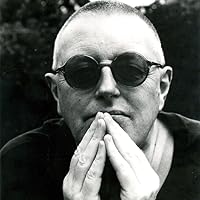
John Thomas Sayles is an independent film director, screenwriter, novelist and short story writer who frequently plays small roles in his own and other indie films.
Always a fan of John Sayles and in his newest book he takes a look at a tumultuous 15 year period in Ford Motor Company. Expertly weaving historical fact with fiction we follow a multitude of characters in both the corporate Ford World, both Henry and Edsel Ford individually, the development and eventual abandonment of Fordlandia in Brazil, auto workers, rise of the Unions, as well as race relations, company riots and race riots. Only one as talented as Sayles can tie all of this together, but yet it also made me want more as there are individuals and stories that could have use a better ending - a minor point to be sure. My only criticism is that there are neither any chapters in the book, nor do we know where we are in the 15 year timeline as dates are not included. But it truly is a masterful work filled with so many fascinating facts on Ford history, along with truly unforgettable characters.
This is a tough one to rate. The subject was fascinating (and partially familiar) to me, but the execution left me struggling to get through it. According to the dust jacket, the author is an independent film maker and screenwriter. I feel that this might have made a better movie. There are no chapters. There are so many people that when I got to page 36, I went back to make a character map (at that point I already had 36 people's names). The book did give me a lot of new information and details that I want to investigate further. I do look forward to meeting him at Booktopia.
A historical fiction account of the Ford company. Henry and Edsel Ford in the center of employees unionizing, race relations, war and setting up a village in Brazil. There is a lot covered in this book. It did overwhelm me. I thought the writing was good but choppy almost like a screenplay. It lost me when going from storyline to storyline. I was fascinated with the Bravil storyline. This would make a great streaming series.
This is a story about Henry Ford when his star is starting to wane. As the Depression hits Detroit and automobile sales, his mass firings salary reductions lead to an uproar, including massive hunger protests at the factory. His actions also heightens ethnic tension in the city, because Ford has hired African-Americans who worl for less pay angering white workers; then in bad times he lays off black workers first angering that community. Ford employs ex-cons and gangsters from the Chicago Mob to keep a id on the restive employees.
Menwhile he's trying to build a rubber plantation in the Amazon rainforest of Brazil, so that he can wrest control of the rubber industry for tires. Not run by people familiar with the plants, blights and bad soil conditions cause chaos as does a food riot by the indigenous employees.
The book is filled with characters, many real historical figures. The interrelationship of Henry Ford and his much put upon son Edsel is interesting. Union leader Walter Reuther and boxer Joe Louis make cameos. All in all a great story.
Crucible by John Sayles published January 20th with Melville House and is described as ‘an epic tale ranging from the 1920s through the second World War, featuring violent labor disputes, misbegotten jungle expeditions, a tragic race riot, and the gestapo tactics of Ford’s private army…’
Having previously read the very potent and challenging 2025 novel by John Sayles, To Save The Man, I knew that Crucible was going to be another insightful and complex read. As a Corkonian, my interest in Henry Ford possibly comes from a slightly different perspective than other readers. In 1847 Henry Ford’s father, William Ford, emigrated from Ballinscarthy in West Cork. The local community is very proud of it’s connection to the Ford family, with a stainless steel silver Ford Model T unveiled in the village centre in 2000. In 1917, Henry Ford built the first Ford manufacturing plant outside of the United States in Cork city. At the time, it is said that he was insistent on Cork as a location, conscious of the poverty in the city at the time. Initially tractors were manufactured in the Cork plant but, after 1921, cars were also built there. Fords closed its doors in 1984, with a devasting impact on the local economy. With nearly 1000 lay-offs at the time its history still reverberates with many families today. A distillery took over the famed landmark of Fords in Cork a number of years ago with the whole marina area undergoing huge regeneration in recent times. Crucible doesn’t mention the Cork connection, as it’s not relevant to Sayles’ account, except with a reference to Corktown, a neighbourhood of Detroit, named for the immigrants who settled there following the Great Irish Famine (1845-1852).
Merriam Webster dictionary defines a crucible as ‘a severe test’ or ‘a place or situation in which concentrated forces interact to cause or influence change or development’, making the title perfectly fitting to the tale that unfolds. With the downturn in the US economy in the 1930s, Detroit, which was the car manufacturing hub of the US, was left devastated by rampant unemployment. With car sales plummeting, families were left penniless and devastated. It was at this time that the union movement began to find its feet. Disenfranchised workers were encouraged to strike and the city experenced some very difficult periods. Henry Ford, was quite tyrannical in his approach to running his business and was prepared to take any action in order to keep his factory, The Ford River Rouge, running at all times. The largest industrial complex of its day, using advanced assembly lines and with a workforce peaking over 100,000 at one point, The Rouge was known as ‘a city within a city’. Self-sufficiency was key to Henry Ford’s thinking so he purchased acres of the Brazilian rainforest with the intention of growing his own rubber for tyres. He even developed a town there, Fordlandia, which still exists today, albeit now more or less abandoned. Henry Ford was a phenomenal ideas man but, unfortunately, at times, was quite Machiavellian in his determination to achieve his objectives.
Pre-, during and post- World War Two were tumultuous years for the Ford family, as society shifted and the workers demanded equality and improved conditions. Over a fifteen year period and through the eyes of a vast cast of characters, John Sayles vividly portrays the zeitgeist of the time in Detroit and beyond. Blending fact and fiction, with surprising cameos from many well-known names, including Diego Rivera and his wife Frida Kahlo, Walt Disney and boxer Joe Louis, the reader is provided with insights into the complexities of Henry Ford’s personaility and work ethic. A capitalist, an entrepreneur, and I suspect a frustrated inventor, Henry Ford was a powerful player in US politics and business for many years. He had one son, Edsel, who tragically died in his forties, leaving Henry Ford with the predicament of succession. Now, run by a mix of investors and family, his ancestors still have control over many of the impacting decisions made today. His legacy will live on and with Crucible, John Sayle puts his own imprint on the life and times of this extraodinary and controversial figure.
Crucible is truly a fascinating and educational read. The burgeoning labour movement, the influx of African American workers, racketeering, Prohibition, anti-semeticism and so much more are all central to the narrative of this epic tale. Crucible is a novel bursting with well-researched and carefully considered threads, all combining into an immersive, smart and authentic storyline. Powerful historical fiction.
Detroit (or "The Paris of the Midwest") was red-hot in the first half of the 20th century. Henry Ford's assembly line innovations helped make the city an industrial powerhouse that played a key role in the Great Migration, European immigration, and World War II.
Covering the period immediately following the end of World War I through the end of World War II, Sayles' complex and aptly-titled 'Crucible' weaves together an array of fictional characters with meticulously researched real-life historical events and individuals to create a volatile mix that is uniquely "American". This being John Sayles, race, class, politics, and environmental issues are constantly at the forefront of the plot.
A warning: The writing style here is sort of (intentionally) choppy, with sections abruptly ending (sometimes in mid-sentence) to completely change gears (and sometimes, countries) and the sheer number of characters so high that the story can get disorienting. But once I got into Sayles' groove, I did not want to stop; it all does come together in the end. I found 'Crucible' to be somewhat similar to his earlier 'Union Dues' (1975), but much more successfully executed and fleshed out.
3.5 stars. Honestly, I really appreciate everything this book is trying to do. Spanning the mid to late 20s depression era all the way to the end of World War II, this book covers history in a way that is unique. The over 30 different character perspectives and jumps from point of view made it a very difficult read. It became a slow read due to this, but I genuinely did enjoy it. I ended up treating the many various characters' perspectives' snippets as short stories, and I found myself deeply moved by many. Whether it was a humble Jewish character, a young black boy, or a poor white man, the plight of these characters was revealing and engaging. In the end, I have to lower my rating because as my book club has implied, he bit off a bit more than he can chew, but regardless, this book is appropriate for the current political climate and it truly opens your eyes.
Interesting vignettes of the Ford Motor Company from the 1920s through the war. Henry Ford was not a very nice person, nor were the people he surrounded himself with. Learned a lot including about the Rubber Plantation he established in Brazil. Choppy and doesn't flow but an interesting read, especially for a Detroiter.
I really was interested in the premise of this book but when chapter one is a whole third of the book im out. Audiobook format this is honestly so boring and for my patience I will allow myself to DNF for once
A novel that seems as truthful as history. Into the caldron of 1930s Detroit goes the Ford Motor Co., labor disputes, racial tensions, and a quixotic plan to harvest rubber in South America. Think of this as Ragtime for another age.
John Sayles sets out with a huge canvas to fill, and it is the fortunes of the Ford motor company from the end of the Great War to the uncertain times of a post-war world where both Hitler and Hirohito have been humbled, but Stalin remains the one world leader with unassailable power.
The key points of the early pages are the stock market crash of 1929 and Henry Ford’s bizarre attempt to buy up swathes of Amazonian rain forest to produce his own rubber. The Americans sent out there are overwhelmed by a number of factors, including the human problems that hundreds of indigenous peasants are unable to adapt to Henry Ford’s production line work ethic, and the purely botanical fact that rubber trees are not a quickly growing commodity yielding instant rewards. Ford has despatched his minions to the Brazilian jungle to produce cheap rubber. He has no concept of the place. This is not a treasure trove of natural wonder described in a whispered David Attenborough voice-over. It is – for the Americans – a hell slithering with giant ants, poisonous spiders, caimans that will rip the arm off an unwary dabbler, ferocious heat, endless rain, decay, and the sense that humans are, at best, merely clinging on to life by their fingernails.
John Sayles has painted a picture of Henry Ford, warts and all, which both appalls and captivates.Does Sayles take sides? Yes, of course he does, given his CV, but his partiality does not diminish the power of his prose. There is a deep irony, however, when we read of the funeral procession for the left wing activists killed in an anti Ford protest march. Simultaneously, thousands of miles away, Stalin was systematically starving millions of Ukrainians with one hand, while butchering political opponents with the other, all in the name of the Great Socialist Ideal which the idealistic American marches seem to be calling for. Sayles’ narrative points up this and many other many ironies and moral dilemmas for historians. The chief example, for me, was that of the human brutality of the industrial process which, for us Brits, began in the remorseless cotton mills and iron foundries centuries ago.
Here, in 1930s Detroit, the assembly line is unrelenting and unforgiving: a momentary lapse of concentration can destroy a man’s leg, his hands, or his sight. There was no such thing as Health and Safety in the middle years of the 20th century. And yet, and yet. Were things any better in Stalin’s Soviet Union? Were his political commissars and better than Harry Bennett’s thugs? The novel will be on the shelves labeled ‘fiction’, but is peopled by real life characters almost too outrageous to have been invented by a mere author. We have Ford himself, a strange mix of psychopath and philanthropist; Harry Bennett, his unscrupulous enforcer who would have been at home working for Reynhardt Heydrich; Jerry Buckley, the charismatic radio host assassinated in 1930.
Crucible is a reminder that, amidst all the formulaic production line American fiction that sells by the million on supermarket shelves, there are still good writers out there.’sprawling’and ‘epic’ were adjectives once used to describe novels or films with huge breadth and compass. In this sense, Crucible certainly ‘sprawls, but along the way Sayles pens a kind of love letter to the racial and cultural blend of ordinary people who were striving to become Americans by taking Henry Ford’s dollar, the Sicilians, the dirt-poor Blacks forced to emigrate north, the ex-European Jews, the resilient Poles, the flint-hard Scots and their Irish cousins. In his afterword, however Sayles eschews sentimentality, particularly in view of the savage Detroit race riots of 1943:
“..enormous social and economic forces rushed together in that city, making it more a high-pressure crucible than a genteel American melting pot.”
For all that Henry Ford is not one of history’s most lovable characters, we should not forget his pragmatism. Criticised by many then and now for his apparent Nazi sympathies, we must not forget that it was his factories which produced the B24 Liberator bombers, the thousands of jeeps and Sherman tanks which helped bring about the fall of the Third Reich.
Crucible is a magnificent novel. The publicist warned me that it was ‘rather long’, but not a page, paragraph or sentence dragged. As a portrait of mid 20th century America, it is simply astonishing. Published by Melville House, it is available now.
By anyone’s account, John Sayles has had a successful career. Whether he’s writing and directing films (Matewan, Eight Men Out, The Brother from Another Planet), rewriting schlock horror movies (Piranha), or publishing historical novels set in distant lands and comfortable shores, he always finds an audience. Sayles has been nominated twice for the Academy Award for Best Original Screenplay and once for the National Book Award, so he has the aura of American literati shining around his head.
Following the publication of 2025’s TO SAVE A MAN, Sayles is back with CRUCIBLE, a story that centers on Henry Ford, the legendary industrialist who made automobiles a must-have item in a growing America. However, it’s also a heavy look at the issues raised from his policies and manufacturing processes, dipping into the beginnings of the climate crisis that currently is destroying hectares of natural wonder all across the globe.
DEADLINE: DETROIT --- the central gateway for illegal Canadian liquor during the Great Depression, and perhaps the core of the new class conflict, workers hoping to join in a union to ensure good business practices and pay as Ford’s empire grows. Pretty rich stuff, right? But then it turns into a climate crisis story as well. Ford has hundreds of thousands of employees, so he begins to recruit Black laborers migrating from the South to serve as strike insurance and finds a Security Department head, the small but feisty Harry Bennett, to be his henchman over a group of violent ex-cons and fighting drunks who make up his crew.
As the racial melting pot in Detroit begins to boil over, Ford decides to head down to the Amazon, where he has bought a sizable chunk of the rainforest in order to control a steady supply of rubber to make his own tires. However, he won’t pay a botanist to work with the men clearing the land down there, and they encounter (and create) issues that require a steadier hand than Ford’s greedy one. The story that evolves from these dual disasters includes boxer Joe Louis, artist Diego Rivera, rubber tappers, radicals, newsmen, gangsters, and the account of the rise of America’s first great industrialist and greedy corporate miser.
Sayles’ work is often pointed, political and historical. He doesn’t mince words when it comes to what he thinks about these situations, but there is no overarching moral designation made by him. His characters are so vibrant that they tell the story very well themselves, and readers never feel like they are being lectured to about the obvious themes and issues that are represented here. Instead, the adventure of a Sayles book is the immersive quality and the gorgeous sense of context that he requires of his plots. It’s a behind-the-scenes look, a photoplay of ridiculous inattention and horrific authoritarianism, but it’s put inside a snow globe of America and its neighbors during a very difficult time.
CRUCIBLE is a beautifully written, engaging, funny and, yes, moral tale without forgetting that it wants so badly to entertain and teach in equal measure. Henry Ford and his world have never been built into a better story. The cinematic resonance of Sayles’ work also helps readers sink into the environment and find a foundation there that is relatable, teachable and exciting. This is an especially important book for this time, and it may remind the world that it is sinful to replay history that need not be repeated.
It's not enough that John Sayles is the acknowledged godfather of American independent cinema. He hasn't merely spent the last half century with his life partner and co-producer, Maggie Renzi, scraping together shoestring budgets to put small films into the world. As often as not, they've taken big swings to tell complex stories examined from as many points of view as possible. And whenever Sayles encounters a story too ambitious, too broad in scope or historical reach to squeeze into a two-hour movie — screw it, he just writes a novel, without time or page constraints, every bit as rich and full and attentive to detail as the stories he tells onscreen.
So it's no surprise that the writer-director of Matewan and Eight Men Out has a Steinbeckian affinity for the working class and the various ways labor is exploited by capital, nor that the Oscar-nominated auteur of Lone Star can weave together subplots illustrating the multilayered conflict between race, religion, ideology and class in America and elsewhere, as he does here with Crucible.
Set between the stock market crash of '29 and the end of World War II, between the streets of Detroit and the jungles of Brazil, the novel is dense with interconnected stories populated by sympathetic, fully drawn characters struggling to survive and provide for their families as they serve at the pleasure of one man, automobile magnate Henry Ford, the antagonist and the closest thing Crucible has to a central character. Even when Ford is not on the page, his enterprising and oppressive spirit looms over the proceedings, inexorable, inescapable. His name alone is synonymous with our notion of a Great Man or a Titan of Industry — visionary, innovator — but Sayles doesn't even let the ink dry on the introductory paragraph before revealing him to be a mirthless, tightfisted scold who imposes his will on everyone who lives and toils in his long shadow. (Allusions to Ford's antisemitism, Nazi appeasement, and union-busting tactics follow soon thereafter.)
It's hard to imagine that Sayles left any stone unturned here, but on the off chance he did, you won't miss it. Crucible is as richly detailed, thoughtfully constructed and illuminating as any work of historical fiction I've read.
This sprawling novel embraces fifteen pivotal years of Detroit history, with numerous historical and fictional characters from every part of society, located in Detroit, Dearborn, and Brazil.
It jumps from storyline to storyline, almost overwhelming as you try to keep track of all that is happening.
Detroiters will glory in recognizing locations and familiar history: the rise of the unions, Walter Reuther, the River Rouge plant (which I recalled from class trips), Blackbottom, Belle Isle with its now restored aquarium, Willow Run and Rosie the Riveter, the Tigers and Hank Greenberg.
And at the center, Henry Ford, anti-semite and genius, innovator and heavy handed dictator, the man who offered thousands of African Americans and immigrants and Southerners a better life while putting money above workers, his goons patrolling their personal lives. Ford’s drive for independence, to provide his own raw materials, led to his Fordlandia in the Amazon forest. It was ill thought out, with no research, led by unqualified men.
It is an exciting story, a human story, an essential story. Workers demanding safety and fair pay for back breaking, unhealthy jobs. African Americans and Jews shunted into ghettos, watching their backs. Prohibition and gangsters. Diego Rivera painting the mural on the walls of the Detroit Institute of Art that so outraged people it was nearly whitewashed over, his wife and greater artist Frida Kahlo dismissed in the newspaper as “also a painter”.
…he was one of the richest men in America and accustomed to getting his way… from Crucible by John Sayles
Reading Crucible you realize there is nothing new under the sun. The problems of a hundred years ago are still with us. Some of the gains made then we have lost, are losing.
“As the novel displays, enormous social and economic forces rushed together in that city,” Sayle writers, “making it more a high-pressure crucible than a genteel American melting-pot.”
Thanks to the publisher for a free book through NetGalley.
Reading Crucible feels less like settling into a novel and more like being tossed into the middle of a very long conversation where everyone already knows each other, and no one bothers to explain who’s who.
Before you start, grab a notebook and pencil. Seriously. This book jumps between characters and subplots like it’s allergic to transitions. You’ll get a few paragraphs with one group, then suddenly you’re somewhere else with entirely different people and zero warning. No headers. No cues. Just confusion until you read long enough to piece together where (and with whom) you’ve landed. There are so many characters and storylines that keeping track becomes a full-time job. And while this story spans roughly 15 years, you’d never know it because dates are apparently forbidden. Time passes, events happen, and you’re left squinting at the page thinking, “Was this before or after… whatever that thing was?”
Here’s the frustrating part: the writing is genuinely good. Sayles clearly has talent, depth, and a strong grasp of his subject. Which makes the chaos feel unnecessary. A few simple fixes: adding character names to sections, including dates, trimming extraneous character details, would have turned this from overwhelming to outstanding.
Oddly enough, I kept thinking this would work much better as a movie. On screen, a face appears and you instantly know who it is. Scene change? Obvious. Timeline? Visual cues. Problem solved. In the end, Crucible is ambitious, well-written, and exhausting. It’s a great story buried under too many characters and not enough signposts. If you enjoy literary scavenger hunts, you might love it. If not… start sharpening that pencil.
I received a complimentary copy of this book. Opinions expressed in this review are completely my own. Thank you to Melville House and NetGalley for the ARC.
A fantastic read that beautifully intersects the social, political and business context of Detroit from the 1920's through 1945. It is centered around Henry Ford and his business dealings - from his anti-labor practices to his decimation of Brazil's rubber trees to build "Fordlandia" and his exploitation. He had a goon enforcer in Harry Bennett who with his thugs were union busters and promoted violence as a way to suppress any dissent. I had heard about Harry Bennett because I grew up in Ann Arbor, near Ypsilanti, and I learned he lived in a castle-like fortress near to where I grew up. Apparently he used to drive down the main road with tiger cubs in his convertible. This novel is fiction yet reads like non-fiction because of all the appearances such as Paul Robeson (who is there for a solidarity demonstration for the UAW), Joe Louis, Diego Rivera and Frida Kahlo (Diego was commissioned to do murals at Detroit Institute of Arts) among many others. Father Coughlin is also a character here - -famously anti-Semitic and racist just like Henry Ford. Ford gave the most dangerous jobs in the foundry to the black employees which plays a role in the novel. Sayles gives us an overview through beautifully written scenes of historic moments in labor and civil rights struggles in Detroit. The book goes back and forth from Detroit to Fordlandia in Brazil and I really liked that each chapter is separated by an old Ford advertisement. His detail is impeccable - he describes Hudson's Maurice Salad and Canadian Cheese Soup which I remember well from my childhood when we would go downtown Detroit to Hudson's. This book is poignant, political, historical and just a great read. I highly recommend this book.
Thank you to Netgalley and Melville House Publishing for an ARC and I left this review voluntarily.
Spectacular historical fiction - again, as I have written before, giving us insight into something forgotten or lost in our history (which is why historical fiction is such an important genre).
This book takes on the history of the Ford Motor Company between the 1920s-1940s. Henry Ford has launched a plan to create a rubber plantation in the Brazilian rainforest called Fordlandia, to grow his own rubber. This part of the story involves the local man, João, hired to run the plantation and the American man and Ford employee, Jim, who’s sent to manage the clearing of the land. The undertaking is fraught with problems: blight on the trees, worker revolt and a romance between João’s son, Flavio, and Jim’s daughter, Kerry. While things happen in Brazil, things happen in Michigan where the multicultural workers in the First plants are upset over working conditions and call a wildcat strike. Both the American and Brazilian workers are being exploited (my word). These revolts test the powers that be. Subplots also abound: it’s the Prohibition Era and Diego Rivera is making his brilliant murals in the Detroit Institute of Art.
This is an epic novel exploring the plight of workers, the dehumanizing of their work efforts - all in the name of capitalism and greed (which in today’s context seems to be returning). The book is rich in story and history. It’s difficult to look away when reading from what is happening in this book as the message is so striking and sad. The book also captures the period of American industrialization and offer a glimpse into why the wealth of the billionaires are built on the backs of the worker who get shafted all the time. Greed is America’s great sin.
Thank you NetGalley and Melville House Publishing for giving me the honor to read this fantastic ARC.
"As the Depression hits Detroit, Henry Ford — who doesn't like change — finds himself having to confront the crash of the economy, which he blames on the Jews. But his mass firings and severe salary reductions lead to an uproar, including massive hunger protests at the factory. It also heightens ethnic tension in the city, because Ford, who resisted hiring African-Americans in the first place, lays them all off first. Can his private army — consisting of ex-cons and gangsters from the Chicago Mob — keep things under control?
And what about the rubber plantation he's trying to build in the Amazon rainforest of Brazil, so that he can wrest control of the rubber industry for tires? It's off to a disastrous start, with a food riot by the indigenous employees that led to Ford having to borrow the Brazilian army. There also seems to be a blight affecting the thousands of newly planted rubber trees . . . John Sayles presents this epic saga with a cast of characters featuring many of the real historical figures involved, including fascinating character studies of Henry Ford, his beleaguered son Edsel, the ex-cop running Ford's huge, private "security" force, Harry Bennett, and appearances by union leader Walter Reuther and boxer Joe Louis. It is also a stirring portrayal of the people who toiled in the hyper-monotonous jobs of the factories in Detroit and the Brazilian plantation. Piercing the image of one of our most vaunted historical figures, and bringing forth the brave and inspiring story of the people who actually built Ford's empire, Crucible is the kind of griping, revealing look at the American character that John Sayles has become famous for."
I could not make it through the entire book. It was impossible to follow.
A book with big ambitions can be fun to read, and this one was, but it also leaves lots of space for criticism and flaws. There is a lot that this book does right: vivid characters, excellent scene setting, and (for the most part) a good grasp of the particular historical period in Detroit. On the downside, it feels choppy and like there are about 10 stories too many packed into the book so that you wish there was more attention paid to your favorite one. Some of the stories start to feel like "token" representation by the end of the book (like the idealistic young Jewish woman who joins the Communist Party and is disillusioned by the end, or the "I-saw-it-coming-from-a-mile-away" death in the riots.) And there are some really sloppy things that somehow no one corrected in earlier drafts: mixing up the locations of St. Ignace and Mackinaw City so they are inverted to the opposite peninsula early in the book make me suspect lots of the facts. And I found other mistakes as I was reading and that just bums me out. (Wayne State University is referred to as Wayne University, and there were even some typos and spelling mistakes that show a failure in copyediting.)
That said, there are some really compelling stories told in the book: the sections set in Brazil were more nuanced than I thought they would be (if you know anything about the fiasco of Fordlandia from Greg Grandin's book then you know what I was expecting). And I felt like I learned details about the power of industry and the rise of Unions from this book that I hadn't read previously.
Sayles is a movie director who writes books too. His recent novel about oil development on Native land, Yellow Earth, was one of my favorite reads recently so I jumped on this book that somehow had slipped beneath my feed of coming book promos and hot reviews. from the start of Sayles' books you know he is a movie maker. the scope is cinematic, the language is visual. the dialogue reads like a prototype for a script. the story Sayles tells is the sort you might hear from people at a bar or from your Uncle who has worked colorful jobs, a sort of history of the world they dont teach you in school. Crucible operates on a few levels, part of the action occurring in Brazil in an attempt to begin a rubber plantation, part of it back in Detroit and Dearborn as organized labor and the influx of African American workers come on the scene. an interesting read, would no doubt make a great film. some of the subjects might be more interesting in a non-fiction treatment and there are a few good options mentioned in the acknowledgements. there was a feeling that Crucible was written in a hurry to comment specifically on our current times. without being too obvious, the parallels of authoritarianism and business practices and the power of emerging technology to overwhelm the status quo, and the role of potentially bad actors harnessing those forces for their own gain--- in a quasi mythic fantasy--- seemed hard to ignore.
The last line written by the author, John Sayles, in his ‘Acknowledgements’, explains the title: “As the novel displays, enormous social and economic forces rushed together in that city, making it more a high-pressure crucible than a genteel American melting pot.”
This is the story of the people of Detroit, of Henry Ford and the auto industry, of the socio-economic challenges of the late 1910s through the 1940s. Sayles also includes Fordlandia and its occupants in Brazil as a part of this story, a story in itself that many have never heard.
We learn just what a narcissist Ford was, how different his son Edsel was, the pressure on “young Henry” (the grandson) to make the company more successful. Sayles has parallel stories going throughout the book, including the black population of Detroit/Dearborn (including the late-arriving blacks from the South), the working white class of the city who also worked at Ford, the management and decision making of the Brazil Ford people, the efforts of the Communist Party and the unions in the 1930s, the Detroit riot of …., and so much about Harry Bennett, (Ford’s Steven Miller), Ford’s enforcer, capo, right-hand man and his thugs/enforcers.
I see this story not as great social history but as anthropology, for it does open up the view into the period that is covered; it does not do a great job of depth into any parts of its story. I appreciated the book; most in my book club did not. I would recommend this book to someone from Michigan—probably not to others…
The films Matewan and Lone Star made me a fan of John Sayles, but I somehow missed his many books. Crucible is up to high expectations, full of labor struggles (a la Matewan) but more panoramic. On this broader canvas, covering the time from the Great Depression through World War II, and in settings stretching from factory sites in Dearborn to Fordlandia, the rubber plantation in Brazil, Ford himself looms more as a presence than a character, feeding the anti-Semitism, racism, classicism, xenophobia and even Nazi sympathizing that seem to permeate this world within a world. A good (and more active) stand-in for Fordism is Harry Bennet, the Old Man’s fixer, willing to do anything to put Ford first, enlisting ex-bootleggers, arming ex-cops, cutting pay, cutting hours, battling labor organizers and wildcat strikes. In the other corner, like local boy Joe Louis, are the AFL and the CIO (still separate rivals), the Communist Party, and the workers themselves, scraping by, constantly driven and watched, fired if they so much as stick their hands in their pockets. There are little fires everywhere and even, towards the end, a big conflagration as “the thing that’s been cooking for years has finally boiled over,” but not a plot as such, just simmering struggles and strife. What may be most remarkable about this account of corporate control and income inequality is not how much has changed from almost a century ago, but how little.
Crucible is a story of Henry Ford's company across 15 years in the early 1900's, and includes a lot of details from the era. It is obvious that Sayles did his research in writing this novel and I found that it is a great account of what it was like in that time period.
Taking that into consideration, it is a complex read. There are so many characters that you are introduced to (by page 25 there were already like 15 different characters), there are no chapters so it all just reads like an uninterrupted script. Prior to reading this, I read a review that described it as a screenplay which I agree with, because there seems to be no organization in the different plot lines in the novel. This is not a book that you can easily pick back up after not reading it for some time because of the way the novel is written. Another layer of difficulty is that different characters are referenced in different ways that make it difficult to follow if you do not keep track of the characteristics of the people in the novel.
Since this novel used real people from the time period in the story, it was fun to go to Google to research some of the events, people, or things that were brought up in the book, and if you enjoy that kind of enrichment from an author, it is definitely for you.
I really believe this should be a 3, but because of the amount of research and attention to detail was so apparent from the author in writing the novel, it gets a four.
Received ARC from Melville House Publishing & NetGalley in exchange for an honest review.
Crucible is an interesting and uniquely framed slice of U.S. history, especially for readers curious about Ford Motor Company, Dearborn, and the industrial and political landscape of early Detroit. I walked away having learned quite a bit (something I always appreciate in historical fiction) and the premise itself is compelling.
Where the book struggled for me was the execution. The writing style and overall format were distracting, especially in the beginning. Sayles introduces a large number of characters very quickly, and with no chapter breaks or headings to help orient the reader, it becomes difficult to track who is who. Perspectives shift abruptly and inconsistently, sometimes after a brief paragraph, other times after many pages. These transitions often launch straight into dialogue without signaling whose viewpoint we’ve landed in. It takes a beat every time to re-establish the narrator.
New characters also appear with little setup or context, and some are mentioned by name only to vanish again. Others seem introduced with the weight of importance but never become meaningful to the story, creating moments where I found myself wondering, Wait, was I supposed to know this person?
Overall, Crucible offers a fascinating piece of history and an original story, but its structure and style make it a challenging read. A worthwhile experience, but not an effortless one.
Sayles has written a sprawling, mural-like novel about Detroit from the 1920s through WWII. It is a complex and sweeping historical novel about Henry Ford—the Elon Musk of his day—and his attempt to rule not only an automotive empire but the city of Detroit, itself. It features violent labor disputes, misbegotten attempts to grow rubber trees in Brazil, a tragic race riot, and the gestapo tactics of Ford’s security force led by Harry Bennett.
Sayles includes Rosa Schimmel, a daughter of Eastern European Jewish immigrants who becomes involved in union organizing efforts. There is Zeke Crowder, a factory-floor worker, who like most Black Ford employees, was thrust into the most dangerous jobs. Sayles has readers learn about Fordlandia, the company’s ill-fated attempt to farm rubber trees in Brazil. Readers learn about: Henry Ford’s enchantment with Nazism; Diego Rivera’s painting of the murals at the Detroit Institute of Art; Joe Louis’ heavyweight title; and much more.
Sayles states in the acknowledgements that Detroit during this era was “more a high-pressure crucible than a genteel American melting pot”. Sayles’ message is that unchecked corporate power is a path to the mistreatment of humans, but that people have the capacity (in this case unionism) to retain their dignity.
This is an interesting tale of the reach of Henry Ford thru the automobile industry from 1930 - 1945 and his fight against all things union, Jewish, African American to name a few. Henry Ford was Ford Motors and ran it as his personal fiefdom, period. During the period covered in this book, the Depression, the fight to stop unionization of the automobile industry and WWII all occurred and much to the chagrin of Henry Ford. Ford was paranoid about most things and had an army of enforcers throughout his factories and elsewhere. This story focuses on mix of people around Ford's orbit including his head enforcer, the Detroit area press, multiple workers in his factories, unionizers and a man sent to the Brazilian Amazon jungle to more efficiently produce rubber from trees. Ford's hatred of many "peoples" drives his decisions and directly affects the previously mentioned group as well their family situation. Henry Ford was a great industrialist but his inner workings was driven by bias and distrust and this book captures it very well. No safe space here. Enjoy.
This book should have been right up my alley, since I commuted to my job with Ford Motor Company in Dearborn for 40 years. I did enjoy the mentions of well- known “Detroit things”—Belle Isle, Hudson’s, the Diego Rivera murals at the Detroit Institute of Arts, Detroit Tigers, Greenfield Village. But beyond that, the reading was a real slog. I practiced speed-reading skills learned (for some reason) in 7th grade. So many characters, scenes flipping between Michigan and Brazil, 15 years in almost 500 pages.
I completely agree with other reviewers who said this book reads more like a screenplay for a movie or miniseries. I would enjoy a movie or miniseries more than the book because the characters and scene changes would be easier to follow. 3 stars
P.S. While Sayles did a pretty good job with Detroit history and landmarks, I have a hard time getting past his description of the ceiling of the Belle Isle Aquarium “painted a bluish green”. Nope. Detroiters know that the Aquarium ceiling is made of blue-green glass tile.
This book is made in a lab for me. 1920s-1940s Detroit, auto industry, John Sayles is an excellent filmmaker (go watch alone Star!).
But it didn't come together for me. I think that's partly due to the structure - Sayles follows 10+ characters, 4-5 threads. It's all brilliantly laid out, but the short bursts of story with each group blunt momentum. You're with a thread right up to something big happening, then you cut away, then by the time you catch back up with the old thread - something major and exciting has happened "off screen." It's a little choppy. It also means you don't get a lot of time or detail with any one thread.
That being said, Sayles is a wonderful writer. Obviously, he has a knack for choreographing major set pieces. And if you're from Michigan, it's like a Marvel-level of Easter eggs - Corktown! congress st! Belle isle aquarium! tiger Stadium!
Fantastic historical fiction spanning 15 years from 1930 to 1945. Based in Detroit, the story focuses on the Ford Motor Company and the fledgling UAW efforts to unionize the company. The novel also has a parallel story about Henry Ford's attempts to build a rubber tree plantation in the Amazon jungle. Real life characters such as Henry and Edsel Ford, Harry Bennett, Joe Louis, Walter Reuther and Frank Murphy among others have roles. The story also provides POV from African American, immigrant and Jewish characters who either work on the assembly line or help with union organization. Newspaper reporters, mobsters and politicians make the novel realistic and entertaining. Major historical events in Detroit's history--from prohibition to the battle of the overpass to the race riot in 1943--are prominently featured. For anyone who is a fan of historical fiction, I'd highly recommend this novel.